

Improved Angiogenesis in Response to Localized Delivery of Macrophage-Recruiting Molecules
Open accessThe DOI matches its Crossref record; 78 of the 78 references it cites were found in a registry or an index.
Abstract
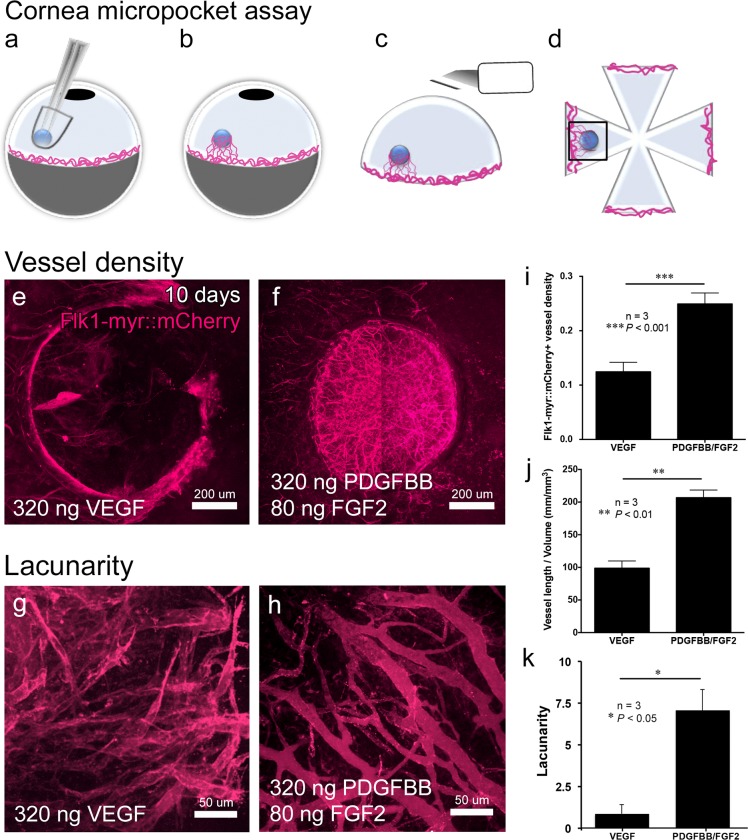
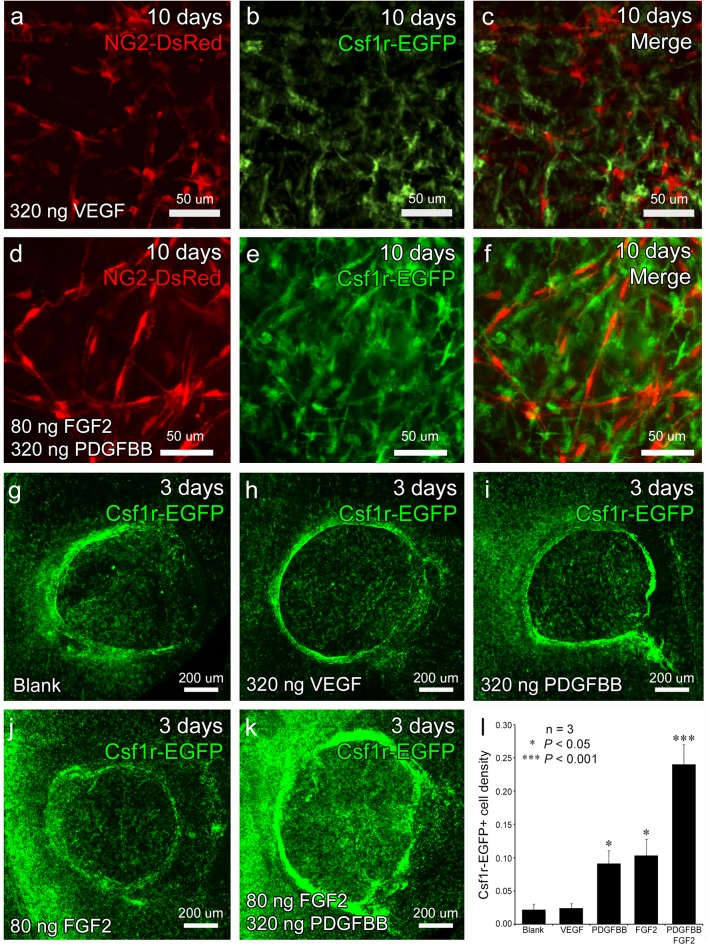
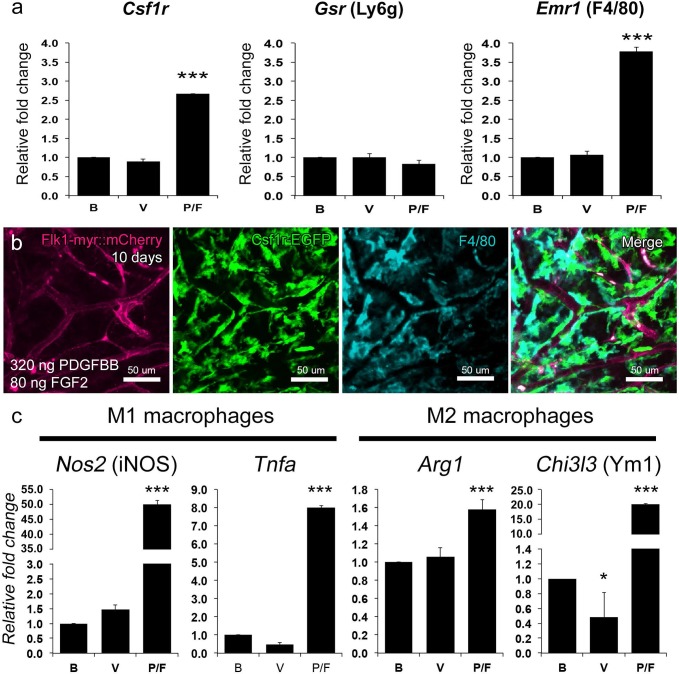
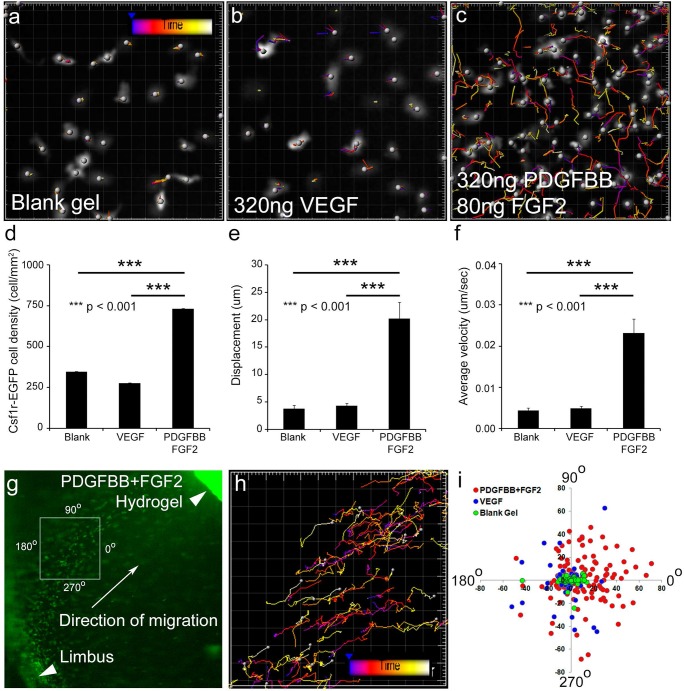
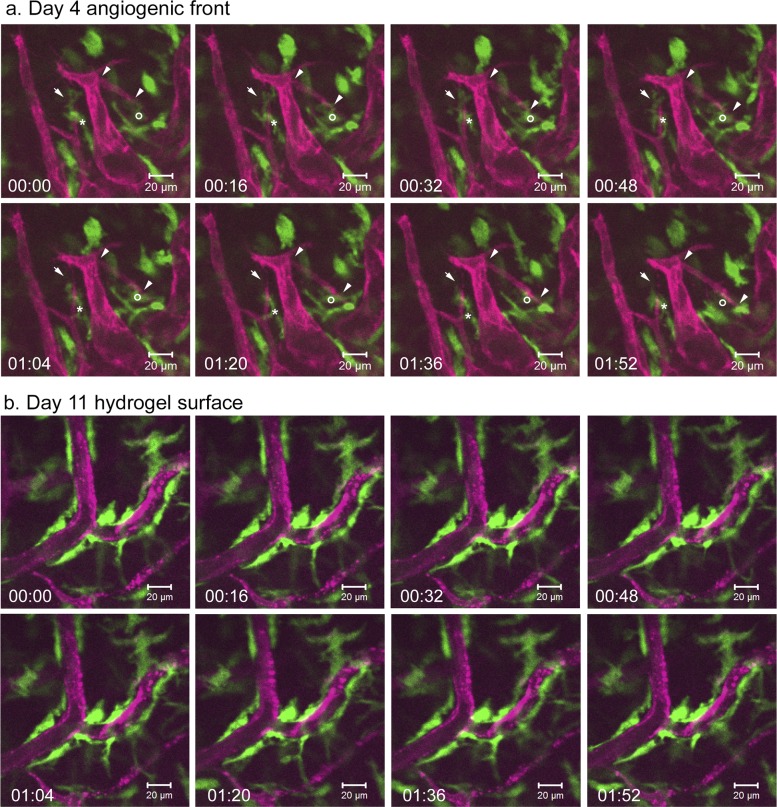
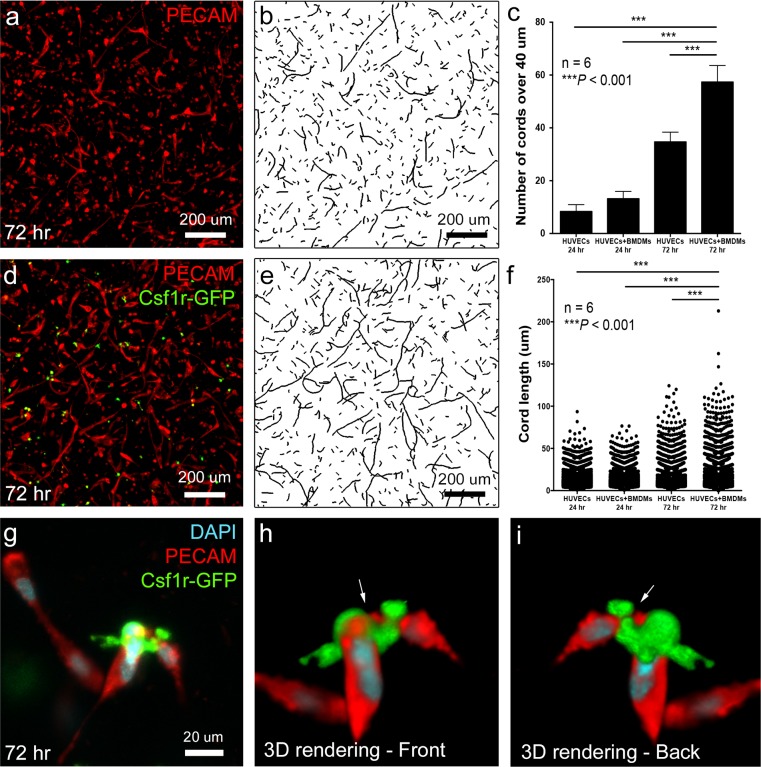
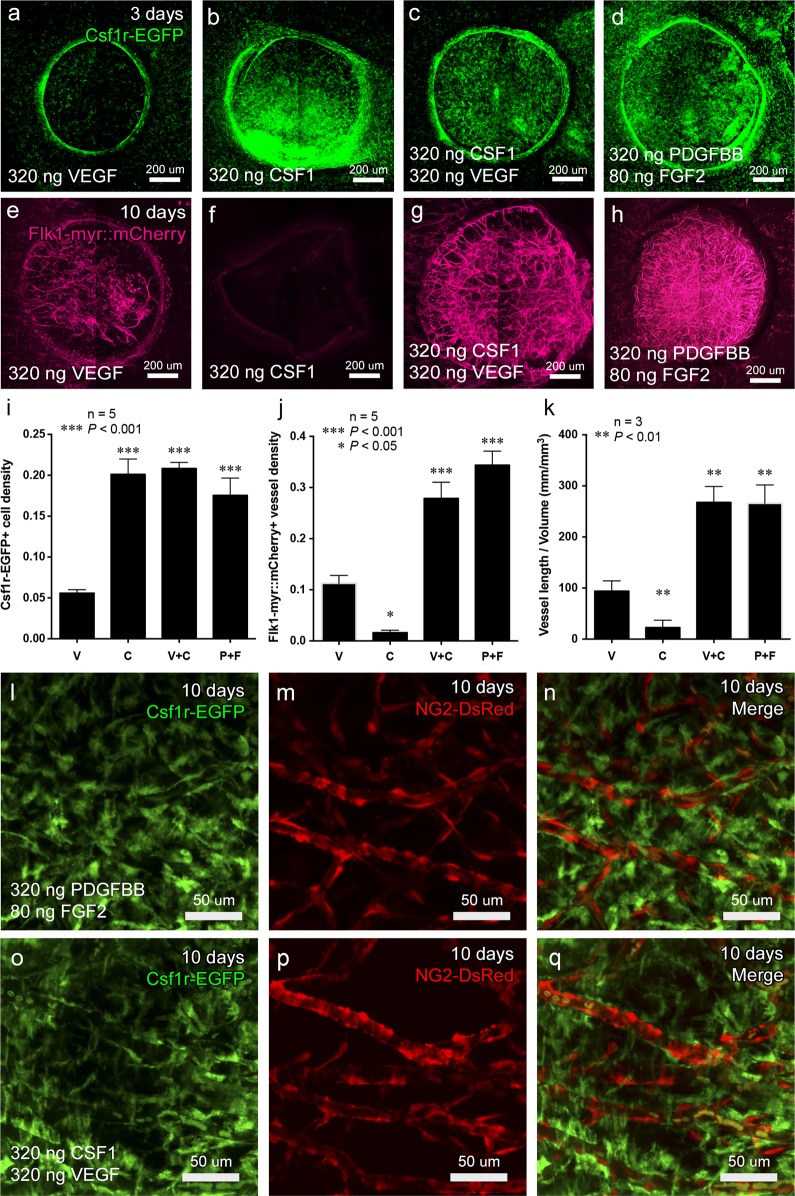
Successful engineering of complex organs requires improved methods to promote rapid and stable vascularization of artificial tissue scaffolds. Toward this goal, tissue engineering strategies utilize the release of pro-angiogenic growth factors, alone or in combination, from biomaterials to induce angiogenesis. In this study we have used intravital microscopy to define key, dynamic cellular changes induced by the release of pro-angiogenic factors from polyethylene glycol diacrylate hydrogels transplanted in vivo. Our data show robust macrophage recruitment when the potent and synergistic angiogenic factors, PDGFBB and FGF2 were used as compared with VEGF alone and intravital imaging suggested roles for macrophages in endothelial tip cell migration and anastomosis, as well as pericyte-like behavior. Further data from in vivo experiments show that delivery of CSF1 with VEGF can dramatically improve the poor angiogenic response seen with VEGF alone. These studies show that incorporating macrophage-recruiting factors into the design of pro-angiogenic biomaterial scaffolds is a key strategy likely to be necessary for stable vascularization and survival of implanted artificial tissues.
Overview
The claims and statistics of this paper haven’t been checked yet.
Free: it reads the open-access text and checks the first 5 claims that cite a source we can check. Create a free account to check every claim.
Integrity signals
Registry
Cites
Statistics
Figures
Verification
Claims the paper makes
The claims and statistics of this paper haven’t been checked yet.
Free: it reads the open-access text and checks the first 5 claims that cite a source we can check. Create a free account to check every claim.
Claims other papers make about this one
Each is checked against this paper’s own text: does it say what the citing paper says it does?
The cited source says what the claim attributes to it.
In the citing paper
“live imaging found PDGF‐ββ/FGF‐2 to stimulate macrophage infiltration several days before robust vessel formation and pericyte recruitment, with involvement of both M1 and M2 macrophages.”
From Unraveling and Harnessing the Immune Response at the Cell–Biomaterial Interface for Tissue Engineering Purposes (2024) · cites this paper as [248]
The cited source says what the claim attributes to it.
In the citing paper
“Macrophage‐mediated CSF1 recruitment improved angiogenic response of VEGF, providing a robust and stable angiogenic response similar to PDGF‐ββ/FGF‐2 induced vessels.”
From Unraveling and Harnessing the Immune Response at the Cell–Biomaterial Interface for Tissue Engineering Purposes (2024) · cites this paper as [248]
Self-check
Percentages, sums and reported differences re-computed from the paper’s own numbers.
The self-check needs the paper’s full text.
Citations
Cites
A new mathematical model for relative quantification in real-time RT-PCR
Pfaffl, M. W. (2001) · Nucleic Acids Research · doi:10.1093/nar/29.9.e45 · Cited by 34,610
Macrophage Diversity Enhances Tumor Progression and Metastasis
Qian, B.-Z., & Pollard, J. W. (2010) · Cell · doi:10.1016/j.cell.2010.03.014 · Cited by 5,188 · cited 1×
“Specifically, macrophages have been shown to be a source of mitogens and angiogenic factors [35,36] and some studies have suggested that they proceed ahead of sprouting vessels and form tunnels to guide neovascularization in vivo [37,38].”
BackgroundThe M1 and M2 paradigm of macrophage activation: Time for reassessment
Martinez, F. O., & Gordon, S. (2014) · F1000Prime Reports · doi:10.12703/p6-13 · Cited by 4,689 · cited 1×
“Indeed, our analysis of PDGFBB/FGF2-recruited macrophages showed no evidence of skewing from inflammatory M1 to reparative M2 macrophage types, although it is possible that this reflects a need to identify new molecular markers that identify macrophage populations which promote stable angiogenesis in vivo [72].”
BackgroundMacrophage biology in development, homeostasis and disease
Wynn, T. A., Chawla, A., & Pollard, J. W. (2013) · Nature · doi:10.1038/nature12034 · Cited by 4,684
Basic and Therapeutic Aspects of Angiogenesis
Potente, M., Gerhardt, H., & Carmeliet, P. (2011) · Cell · doi:10.1016/j.cell.2011.08.039 · Cited by 2,771 · cited 1×
“An essential first step in the vascularization of transplanted artificial tissues is the induction of a rapid host angiogenic response in which new blood vessels form from pre-existing vessels [7].”
BackgroundRole of platelet-derived growth factors in physiology and medicine
Andrae, J., Gallini, R., & Betsholtz, C. (2008) · Genes & Development · doi:10.1101/gad.1653708 · Cited by 2,438
Transcriptional regulation of macrophage polarization: enabling diversity with identity
Lawrence, T., & Natoli, G. (2011) · Nature Reviews Immunology · doi:10.1038/nri3088 · Cited by 2,284 · cited 1×
“While our data clearly point to a pro-angiogenic role for macrophages, it is important to consider their tremendous heterogeneity in terms of gene expression and cellular function [70,71].”
Backgroundthe Immunological Genome Consortium, Gautier, E. L., Shay, T., Miller, J., Greter, M., Jakubzick, C., Ivanov, S., Helft, J., Chow, A., Elpek, K. G., et al. (2012) · Nature Immunology · doi:10.1038/ni.2419 · Cited by 1,972 · cited 1×
“While our data clearly point to a pro-angiogenic role for macrophages, it is important to consider their tremendous heterogeneity in terms of gene expression and cellular function [70,71].”
BackgroundTissue-engineered autologous bladders for patients needing cystoplasty
Atala, A., Bauer, S. B., Soker, S., Yoo, J. J., & Retik, A. B. (2006) · The Lancet · doi:10.1016/s0140-6736(06)68438-9 · Cited by 1,833 · cited 1×
“Most recent clinical successes in tissue replacement are restricted to avascular (cartilage and cornea) [1,2] and thin tissues (skin and bladder) [3,4] that can rely on simple diffusion prior to vascularization post-transplantation.”
BackgroundPolymeric system for dual growth factor delivery
Richardson, T. P., Peters, M. C., Ennett, A. B., & Mooney, D. J. (2001) · Nature Biotechnology · doi:10.1038/nbt1101-1029 · Cited by 1,752 · cited 1×
“Data showing increased pericyte investment suggested that PDGFBB may influence vessel stability by directly recruiting perictytes, but PDGFBB did not have the same synergistic angiogenic effect with VEGF when delivered simultaneously [23,24] arguing that the synergies between PDGFBB and FGF2 may relate to factors othe…”
Background
Cited by
Monocytes and macrophages in tissue repair: Implications for immunoregenerative biomaterial design
Ogle, M. E., Segar, C. E., Sridhar, S., & Botchwey, E. A. (2016) · Experimental Biology and Medicine · doi:10.1177/1535370216650293 · Cited by 378
Macrophages: An Inflammatory Link Between Angiogenesis and Lymphangiogenesis
Corliss, B. A., Azimi, M. S., Munson, J. M., Peirce, S. M., & Murfee, W. L. (2016) · Microcirculation · doi:10.1111/micc.12259 · Cited by 356
“In a recent study, codelivery of CSF1 with VEGF-A in a hydrogel implant induced more robust angiogenesis and pericyte recruitment to neovessels in the murine corneal pocket angiogenesis model than VEGF-A alone [117].”
BackgroundMacrophages of diverse phenotypes drive vascularization of engineered tissues
Graney, P. L., Ben-Shaul, S., Landau, S., Bajpai, A., Singh, B., Eager, J., Cohen, A., Levenberg, S., & Spiller, K. L. (2020) · Science Advances · doi:10.1126/sciadv.aay6391 · Cited by 281
“Prior work has shown that macrophages physically interact with blood vessels and contribute to fusion of sprouting vessels (20, 21) and can form functional vascular channels that mimic blood vessels but lack ECs (32).”
BackgroundResultEngineering the multiscale complexity of vascular networks
O’Connor, C., Brady, E., Zheng, Y., Moore, E., & Stevens, K. R. (2022) · Nature Reviews Materials · doi:10.1038/s41578-022-00447-8 · Cited by 271
Olingy, C. E., San Emeterio, C. L., Ogle, M. E., Krieger, J. R., Bruce, A. C., Pfau, D. D., Jordan, B. T., Peirce, S. M., & Botchwey, E. A. (2017) · Scientific Reports · doi:10.1038/s41598-017-00477-1 · Cited by 225
“Hydrogel vascularization in response to growth factor delivery (platelet-derived growth factor and fibroblast growth factor) in the cornea was accompanied by accumulation of macrophages that produce both M1-and M2-associated mRNA transcripts, such as Tnfa and Arg1 , respectively 33 .”
BackgroundMethod
Metadata
- Authors
- Hsu, C.-W., Poché, R. A., Saik, J. E., Ali, S., Wang, S., Yosef, N., Calderon, G. A., Scott, L., Vadakkan, T. J., Larina, I. V., West, J. L., & Dickinson, M. E.
- Affiliations
- Baylor College of Medicine (US)
- Rice University (US)
- Duke University (US)
- Corresponding author
- Dickinson, Mary E.
- ORCID
- Venue
- PLOS ONE
- Publisher
- Public Library of Science (PLoS)
- Published
- 2015-07-01
- Volume
- 10
- Issue
- 7
- Pages
- e0131643
- ISSN
- 1932-6203 (ISSN-L)
- PMC
- PMC4489184
- OpenAlex
- W818280876
- Cited by
- 56
- References
- 78
- Citations by year
- 2026: 2 · 2025: 3 · 2024: 4 · 2023: 4 · 2022: 3 · 2021: 5 · 2020: 5 · 2019: 3 · 2018: 11 · 2017: 6 · 2016: 8 · 2015: 2
- FWCI
- 9.07
- Type
- journal article
- Language
- en
- Open access
- gold
- doi.org
- Licence
- Locations
- PLoS ONE (publishedVersion, cc-by)
- Europe PMC (PubMed Central) (publishedVersion, cc-by)
- PubMed Central (publishedVersion, cc-by)
- PubMed (publishedVersion)
- DOAJ (DOAJ: Directory of Open Access Journals) (submittedVersion, cc-by-sa)
- Figshare (submittedVersion, cc-by)
- Rice Research Repository (Rice University) (submittedVersion, cc-by)
- Funders
- American Heart Association
- Cancer Prevention and Research Institute of Texas (RP120713, RP120713-P3)
- National Heart, Lung, and Blood Institute (R01HL097520, R01HL120140)
- National Eye Institute (F32EY019436, R21EY020632)
- National Institute of General Medical Sciences (R25GM069234)
- National Institute of Biomedical Imaging and Bioengineering (R01EB016629, P20EB007076)
- Topics
- Health Sciences › Medicine › Surgery › Tissue Engineering and Regenerative Medicine
- Life Sciences › Biochemistry, Genetics and Molecular Biology › Molecular Biology › Angiogenesis and VEGF in Cancer
- Physical Sciences › Materials Science › Biomaterials › Hydrogels: synthesis, properties, applications
- Keywords
- angiogenesis, macrophage recruitment, PDGF-BB, FGF2, vascular endothelial growth factor, CSF-1, anastomosis, intravital microscopy, biomaterial scaffolds, tissue engineering
- MeSH terms
- Becaplermin, Animals, Cell Movement, Cells, Cultured, Cornea, Humans, Macrophages, Fibroblast Growth Factor 2, Neovascularization, Physiologic, Hydrogels, Proto-Oncogene Proteins c-sis, Tissue Engineering, Vascular Endothelial Growth Factor A, Endothelial Cells, Angiogenesis Inducing Agents, Mice, Tissue Scaffolds, Human Umbilical Vein Endothelial Cells
About these checks
Registry, retraction, Cites and statistics results are computed, not judged, with one exception: a printed reference that no index lists is read once by a model before it counts as a citation error. Claims are extracted by a model and kept only when their quote appears verbatim in the text; each cited source is then checked, with a model’s help, for whether it says what the claim relies on. Those verdicts can be wrong — read the claim’s quote and the cited source before relying on one.
Statistics and arithmetic are recomputed, not judged.
Confidence bands are shown only for fields calibrated on our annotated test set. None is calibrated yet, so no band is shown.
What counts as a claim ›How we measure confidence ›How we check this ›
Are you an author, or do you see a problem with this page? Request a review
Data sources
Bibliographic data: Semantic Scholar, OpenAlex, Crossref.
Contains information from the Semantic Scholar Academic Graph Datasets, made available under the ODC Attribution License (ODC-BY 1.0).
Semantic Scholar’s data is described in: Kinney, R., et al. (2023). The Semantic Scholar Open Data Platform. arXiv:2301.10140.
