

Organisational Factors Induce Prolonged Emergency Department Length of Stay in Elderly Patients – A Retrospective Cohort Study
Open accessThe DOI matches its Crossref record; 47 of the 47 references it cites were found in a registry or an index.
Abstract
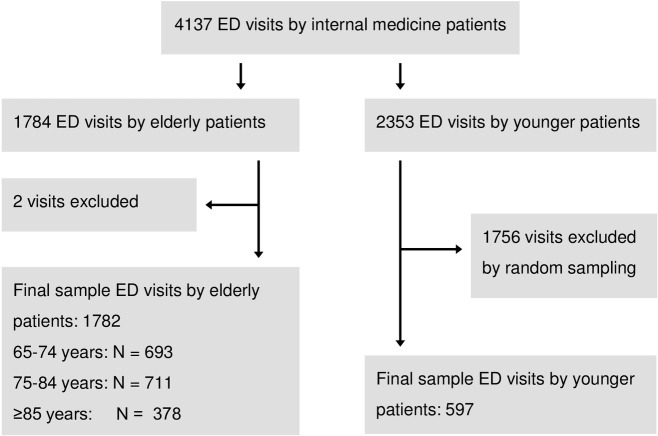
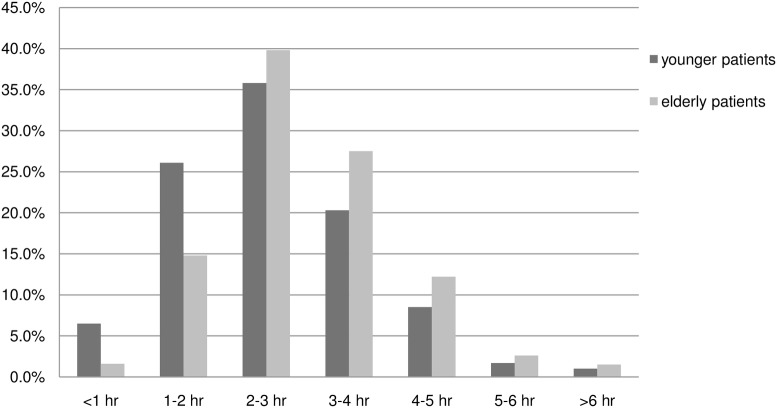
STUDY OBJECTIVE: To assess the association of patient and organisational factors with emergency department length of stay (ED-LOS) in elderly ED patients (226565 years old) and in younger patients (<65 years old). METHODS: A retrospective cohort study of internal medicine patients visiting the emergency department between September 1st 2010 and August 31st 2011 was performed. All emergency department visits by internal medicine patients 226565 years old and a random sample of internal medicine patients <65 years old were included. Organisational factors were defined as non-medical factors. ED-LOS is defined as the time between ED arrival and ED discharge or admission. Prolonged ED-LOS is defined as ≥75th percentile of ED-LOS in the study population, which was 208 minutes. RESULTS: Data on 1782 emergency department visits by elderly patients and 597 emergency department visits by younger patients were analysed. Prolonged ED-LOS in elderly patients was associated with three organisational factors: >1 consultation during the emergency department visit (odds ratio (OR) 3.2, 95% confidence interval (CI) 2.3-4.3), a higher number of diagnostic tests (OR 1.2, 95% CI 1.16-1.33) and evaluation by a medical student or non-trainee resident compared with a medical specialist (OR 4.2, 95% CI 2.0-8.8 and OR 2.3, 95% CI 1.4-3.9). In younger patients, prolonged ED-LOS was associated with >1 consultation (OR 2.6, 95% CI 1.4-4.6). Factors associated with shorter ED-LOS were arrival during nights or weekends as well as a high urgency level in elderly patients and self-referral in younger patients. CONCLUSION: Organisational factors, such as a higher number of consultations and tests in the emergency department and a lower seniority of the physician, were the main aspects associated with prolonged ED-LOS in elderly patients. Optimisation of the organisation and coordination of emergency care is important to accommodate the needs of the continuously growing number of elderly patients in a better way.
Overview
The claims and statistics of this paper haven’t been checked yet.
Free: it reads the open-access text and checks the first 5 claims that cite a source we can check. Create a free account to check every claim.
Integrity signals
Registry
Cites
Statistics
Figures
Verification
Claims the paper makes
The claims and statistics of this paper haven’t been checked yet.
Free: it reads the open-access text and checks the first 5 claims that cite a source we can check. Create a free account to check every claim.
Claims other papers make about this one
Each is checked against this paper’s own text: does it say what the citing paper says it does?
The check wasn’t confident either way, so it gives no verdict — never disputed.
In the citing paper
“The pre-analytical phase is notoriously prone to delays and errors, accounting for an estimated 60-70% of all laboratory mistakes.”
From Impact of Laboratory Turnaround Time on Clinical Decision-Making and Patient Outcomes (2024) · cites this paper as [10]
Experimental — accuracy not yet measuredThe check wasn’t confident either way, so it gives no verdict — never disputed.
In the citing paper
“Inefficient phlebotomy services, whether due to understaffing, poor scheduling, or large geographical distances in a hospital campus, are a primary cause.”
From Impact of Laboratory Turnaround Time on Clinical Decision-Making and Patient Outcomes (2024) · cites this paper as [10]
Experimental — accuracy not yet measuredThe check wasn’t confident either way, so it gives no verdict — never disputed.
In the citing paper
“Unreliable or congested specimen transportation systems (e.g., pneumatic tubes) further add to delays [10,21].”
From Impact of Laboratory Turnaround Time on Clinical Decision-Making and Patient Outcomes (2024) · cites this paper as [10]
Experimental — accuracy not yet measured
Self-check
Percentages, sums and reported differences re-computed from the paper’s own numbers.
The self-check needs the paper’s full text.
Citations
Cites
Gnjidic, D., Hilmer, S. N., Blyth, F. M., Naganathan, V., Waite, L., Seibel, M. J., McLachlan, A. J., Cumming, R. G., Handelsman, D. J., & Le Couteur, D. G. (2012) · Journal of Clinical Epidemiology · doi:10.1016/j.jclinepi.2012.02.018 · Cited by 1,176 · cited 1×
“Polypharmacy was defined as the use of five or more different medications [31].”
The Effect of Emergency Department Crowding on Clinically Oriented Outcomes
Bernstein, S. L., Aronsky, D., Duseja, R., Epstein, S., Handel, D., Hwang, U., McCarthy, M., John McConnell, K., Pines, J. M., Rathlev, N., et al. (2009) · Academic Emergency Medicine · doi:10.1111/j.1553-2712.2008.00295.x · Cited by 1,147 · cited 1×
“In addition, prolonged ED-LOS reduces patient satisfaction and has a negative impact on the quality of care and the adherence to ED guidelines [3,13].”
Aminzadeh, F., & Dalziel, W. B. (2002) · Annals of Emergency Medicine · doi:10.1067/mem.2002.121523 · Cited by 1,119 · cited 2×
“The average 30-day mortality rate of elderly patients following an ED visit is 10% [25,28].”
Chalfin, D. B., Trzeciak, S., Likourezos, A., Baumann, B. M., & Dellinger, R. P. (2007) · Critical Care Medicine · doi:10.1097/01.ccm.0000266585.74905.5a · Cited by 1,022 · cited 1×
“The association of prolonged ED-LOS with poor patient outcome has been studied in various settings and patient groups, demonstrating diverse results [19 – 22].”
A conceptual model of emergency department crowding
Asplin, B. R., Magid, D. J., Rhodes, K. V., Solberg, L. I., Lurie, N., & Camargo, C. A. (2003) · Annals of Emergency Medicine · doi:10.1067/mem.2003.302 · Cited by 972 · cited 2×
“ED crowding leads to prolonged emergency department length of stay (ED-LOS), delay in treatment and a worse medical outcome, such as a longer hospital stay and a higher mortality rate [3,5,8,10 – 12].”
Increase in patient mortality at 10 days associated with emergency department overcrowding
Richardson, D. B. (2006) · Medical Journal of Australia · doi:10.5694/j.1326-5377.2006.tb00204.x · Cited by 826 · cited 1×
“ED crowding leads to prolonged emergency department length of stay (ED-LOS), delay in treatment and a worse medical outcome, such as a longer hospital stay and a higher mortality rate [3,5,8,10–12].”
The Association Between Length of Emergency Department Boarding and Mortality
Singer, A. J., Thode Jr, H. C., Viccellio, P., & Pines, J. M. (2011) · Academic Emergency Medicine · doi:10.1111/j.1553-2712.2011.01236.x · Cited by 664 · cited 1×
“Therefore, ED-LOS is marked as an important quality indicator of emergency care [14–18].”
Older Patients in the Emergency Department: A Review
Samaras, N., Chevalley, T., Samaras, D., & Gold, G. (2010) · Annals of Emergency Medicine · doi:10.1016/j.annemergmed.2010.04.015 · Cited by 652 · cited 3×
“These findings contradict other reviews, in which factors such as comorbidity, atypical presentation and polypharmacy were mentioned to be of major influence in ED evaluation of elderly patients [26,27].”
Frequent Users of Emergency Departments: The Myths, the Data, and the Policy Implications
LaCalle, E., & Rabin, E. (2010) · Annals of Emergency Medicine · doi:10.1016/j.annemergmed.2010.01.032 · Cited by 643 · cited 1×
“ED crowding leads to prolonged emergency department length of stay (ED-LOS), delay in treatment and a worse medical outcome, such as a longer hospital stay and a higher mortality rate [3,5,8,10 – 12].”
Emergency department crowding and thrombolysis delays in acute myocardial infarction
Schull, M. J., Vermeulen, M., Slaughter, G., Morrison, L., & Daly, P. (2004) · Annals of Emergency Medicine · doi:10.1016/j.annemergmed.2004.05.004 · Cited by 407 · cited 1×
“The association of prolonged ED-LOS with poor patient outcome has been studied in various settings and patient groups, demonstrating diverse results [19–22].”
Cited by
Elderly emergency patients presenting with non-specific complaints: Characteristics and outcomes
Wachelder, J. J. H., Stassen, P. M., Hubens, L. P. A. M., Brouns, S. H. A., Lambooij, S. L. E., Dieleman, J. P., & Haak, H. R. (2017) · PLoS ONE · doi:10.1371/journal.pone.0188954 · Cited by 96
Self-citationBrouns, S. H. A., Mignot-Evers, L. A. A., Derkx, F., Lambooij, S. L. E., Dieleman, J. P., & Haak, H. R. (2019) · BMC Emergency Medicine · doi:10.1186/s12873-018-0217-y · Cited by 87
Self-citationBarrios, M. A. O., & Alfaro-Saíz, J.-J. (2020) · International Journal of Environmental Research and Public Health · doi:10.3390/ijerph17082664 · Cited by 102
Long emergency department length of stay: A concept analysis
Andersson, J., Nordgren, L., Cheng, I., Nilsson, U., & Kurland, L. (2020) · International Emergency Nursing · doi:10.1016/j.ienj.2020.100930 · Cited by 57
“In these cases, long EDLOS was used as risk factor - testing its contribution to decreased patient satisfaction [6], crowding [21] and decreased patient safety [34–36].”
BackgroundMethodLee, K., Min, H. S., Moon, J. Y., Lim, D., Kim, Y., Ko, E., Kim, Y. S., Kim, J., Lee, J., & Sung, H. K. (2022) · BMC Emergency Medicine · doi:10.1186/s12873-022-00745-y · Cited by 58
Predictors of a long length of stay in the emergency department for older people
Sweeny, A. L., Keijzers, G., O'Dwyer, J., Arendts, G., & Crilly, J. L. (2020) · Internal Medicine Journal · doi:10.1111/imj.14441 · Cited by 41
Belayneh, A. G., Temachu, Y. Z., Messelu, M. A., & Gebrie, M. H. (2023) · BMC Emergency Medicine · doi:10.1186/s12873-023-00804-y · Cited by 43
“Previous studies showed that evaluation by a medical student or non-trainee professional is associated with prolonged EDLOS [4].”
BackgroundHan, D. K., Kang, B., Kim, J., Jo, Y. H., Lee, J. H., Hwang, J. E., Park, I., & Jang, D. (2019) · International Wound Journal · doi:10.1111/iwj.13266 · Cited by 40
“With emergency department (ED) overcrowding becoming a global norm,(5,6) prolonged ED length of stay (LOS) is increasingly becoming a serious problem.(7) Prolonged ED LOS has repeatedly been shown to be associated with poor outcomes in numerous conditions, including acute coronary syndrome, stroke, sepsis, and resusci…”
BackgroundSir, Ö., Hesselink, G., Bogaert, M. V. D., Akkermans, R., & Schoon, Y. (2019) · Emergency Medicine International · doi:10.1155/2019/4937827 · Cited by 30
“[7], that is, LOS at the ED larger or equal to the 75th percentile of LOS at the ED.”
BackgroundResultInfluentialUse of data mining techniques to classify length of stay of emergency department patients
Sarıyer, G., Taşar, C. Ö., & Cepe, G. E. (2019) · Bio-Algorithms and Med-Systems · doi:10.1515/bams-2018-0044 · Cited by 28
Beckerleg, W., Wooller, K. R., & Hasimjia, D. (2019) · Canadian Journal of Emergency Medicine · doi:10.1017/cem.2019.435 · Cited by 25
Barrios, M. A. O., & Alfaro-Saíz, J.-J. (2020) · PLoS ONE · doi:10.1371/journal.pone.0234984 · Cited by 30
Vrijsen, B. E. L., Haitjema, S., Westerink, J., Hulsbergen-Veelken, C. A. R., van Solinge, W. W., & ten Berg, M. J. (2022) · BMC Emergency Medicine · doi:10.1186/s12873-022-00763-w · Cited by 20
“evaluation by medical students or trainees, and sequential specialist consultations [4, 5].”
BackgroundAnalyzing Main and Interaction Effects of Length of Stay Determinants in Emergency Departments
Sarıyer, G., Ataman, M. G., & Kızıloğlu, İ. (2019) · International Journal of Health Policy and Management · doi:10.15171/ijhpm.2019.107 · Cited by 21
“The independent variables had the following levels: • Gender: male, female • Age: age ≤14, age: [15-64], age ≥65 • Mode of arrival: walk-in, by ambulance”
BackgroundResultInfluentialO’Shaughnessy, Í., Robinson, K., Whiston, A., Barry, L. A., Corey, G., Devlin, C., Hartigan, D., Synnott, A., McCarthy, A., Moriarty, E., et al. (2024) · Clinical Interventions in Aging · doi:10.2147/cia.s434641 · Cited by 23
“8 Compared to younger patients, older adults living with frailty presenting to the ED experience longer ED stays 9 and demonstrate higher rates of adverse outcomes such as functional decline, 10 unplanned 30-day ED re-attendance, 11 and inpatient mortality.”
BackgroundDoupe, M. B., Chateau, D. G., Chochinov, A., Weber, E. J., Enns, J. E., Derksen, S. A., Sarkar, J., Schull, M. J., de Faria, R. L., Katz, A., et al. (2018) · Annals of Emergency Medicine · doi:10.1016/j.annemergmed.2018.04.001 · Cited by 23
Pobrotyn, P., Susło, R., Witczak, I., Rypicz, Ł., & Drobnik, J. (2019) · Archives of Medical Science · doi:10.5114/aoms.2018.81132 · Cited by 17
“Elderly patients are typically characterized by the longest average length of stay (LOS) [6], which can only to a limited extent be attributed to modifiable hospital organization-related issues [8]; sometimes this can be associated with hospital-independent factors, including high levels of stress among informal careg…”
BackgroundRisk factors of admission in 72-h return visits to emergency department
Liu, S.-W. (2020) · Tzu Chi Medical Journal · doi:10.4103/tcmj.tcmj_155_20 · Cited by 16
“The literature has shown that diagnostic tests and consultations are positively correlated to ED LOS [16-18].”
BackgroundInfluentialPatients with mental health conditions in the emergency department: Why so long a wait?
Sweeny, A. L., Keijzers, G., O'Dwyer, J., Stapelberg, N. J. C., & Crilly, J. L. (2020) · Emergency Medicine Australasia · doi:10.1111/1742-6723.13543 · Cited by 15
Statistical analysis of factors influencing patient length of stay in emergency departments
Ba-Aoum, M. H., Hosseinichimeh, N., Triantis, K. P., Pasupathy, K. S., Sır, M. Y., & Nestler, D. M. (2023) · International Journal of Industrial Engineering and Operations Management · doi:10.1108/ijieom-10-2022-0056 · Cited by 21
Brouns, S. H. A., Wachelder, J. J. H., Jonkers, F., Lambooij, S. L. E., Dieleman, J. P., & Haak, H. R. (2018) · BMC Emergency Medicine · doi:10.1186/s12873-018-0160-y · Cited by 12
Self-citationEmergency Department Length of Stay for Older Adults With Dementia
Nothelle, S. K., Slade, E. P., Zhou, J., Magidson, P. D., Chotrani, T., Prichett, L. M., Amjad, H., Szanton, S. L., Boyd, C. M., & Wolff, J. L. (2023) · Annals of Emergency Medicine · doi:10.1016/j.annemergmed.2023.09.022 · Cited by 12
Mowbray, F., Heckman, G. A., Hirdes, J. P., Costa, A. P., Beauchet, O., Eagles, D. A., Perry, J. J., Sinha, S. K., Archambault, P. M., Wang, H., et al. (2023) · Journal of the American College of Emergency Physicians Open · doi:10.1002/emp2.12876 · Cited by 11
“Poor self-reported healthh 255 (24) 19 (26.”
Impact of Geriatric Admissions on Workload in the Emergency Department
Kłosiewicz, T., Rozmarynowska, M., Konieczka, P., & Mazur, M. (2023) · Healthcare · doi:10.3390/healthcare11040593 · Cited by 11
Elders’ Experiences During Return Visits to the Emergency Department
Han, C.-Y. S., Lin, C., Goopy, S. E., Hsiao, Y., & Barnard, A. (2017) · Nursing Research · doi:10.1097/nnr.0000000000000226 · Cited by 9
“As a result, elders experience health deterioration after they return home and higher rates of admission after an ED return visit (Brouns et al., 2015).”
BackgroundZaboli, A., Pfeifer, N., Solazzo, P., Marsoner, T., Scola, G., Malloth, M., Toccolini, E., Ciccariello, L., Magnarelli, G., & Turcato, G. (2020) · International Emergency Nursing · doi:10.1016/j.ienj.2019.100826 · Cited by 10
Kremers, M. N. T., Mols, E. M., Simons, Y. A. E., van Kuijk, S. M. J., Holleman, F., Nanayakkara, P. W. B., & Haak, H. R. (2020) · PLoS ONE · doi:10.1371/journal.pone.0242603 · Cited by 9
“Secondly, patients with a LOS-ED 4 hours had a better understanding of the diagnosis.”
BackgroundInfluentialSelf-citationBrouns, S. H. A., van der Schuit, K. C. H., Stassen, P. M., Lambooij, S. L. E., Dieleman, J. P., Vanderfeesten, I., & Haak, H. R. (2017) · PLoS ONE · doi:10.1371/journal.pone.0173387 · Cited by 7
“However, additional factors may contribute to longer ED-LOS, such as consultations by different specialties and the experience of the physician, which may only influence ED-LOS in a small number of patients and not ED crowding in general [29,30].”
BackgroundSelf-citationNo age thresholds in the emergency department: A retrospective cohort study on age differences
Fuchs, C., Çelik, B., Brouns, S. H. A., Kaymak, U., & Haak, H. R. (2019) · PLoS ONE · doi:10.1371/journal.pone.0210743 · Cited by 9
Self-citationZamzami, A. M., Felimban, A. A., Khojah, I. M., & Bakhsh, A. A. (2024) · Signa Vitae · doi:10.22514/sv.2024.019 · Cited by 5
Beckerleg, W., Saraqini, D. H., Kwok, E. S. H., Hamdy, N., Battram, E., & Wooller, K. R. (2020) · Journal for Healthcare Quality · doi:10.1097/jhq.0000000000000235 · Cited by 4
Factors Influencing Satisfaction with the Emergency Medical Services between Adults and the Elderly
Gil, E., & Oh, H. L. (2017) · Korean Journal of Adult Nursing · doi:10.7475/kjan.2017.29.1.12 · Cited by 4
EMERGENCY DEPARTMENT LENGTH OF STAY AND DISPOSAL OF PATIENTS IN CHITWAN MEDICAL COLLEGE, NEPAL
Lamsal, D. R., Raut, K. B., & Adhikari, P. (2019) · Journal of Chitwan Medical College · doi:10.3126/jcmc.v9i4.26899 · Cited by 3
Factors associated with emergency department length of stay of internal medicine patients
Vonk, S., Leermakers, J., Logtenberg, S. J. J., & Sankatsing, S. U. C. (2021) · Emergency Care Journal · doi:10.4081/ecj.2021.9570 · Cited by 5
van der Velde, M. G. A. M., Jansen, M. A. C., de Jongh, M. A. C., Kremers, M. N. T., & Haak, H. R. (2023) · PLoS ONE · doi:10.1371/journal.pone.0290733 · Cited by 4
“LOS-ED is therefore associated with the number of consultations during the ED-visit, a higher number of diagnostic tests and experience of the evaluating physician [20].”
BackgroundSelf-citationBadheeb, A. M., Almutairi, M. A., Almakrami, A. H., Aman, A. A., Al-Swedan, A. D., Alrajjal, K., Seada, I. A., Bakar, A. A., Alkarak, S., Ahmed, F., et al. (2024) · Cureus · doi:10.7759/cureus.64684 · Cited by 6
“Similarly, a Dutch study indicated that organizational characteristics such as more consultations, testing in the ED, and lower physician seniority were associated with prolonged lengths of stay in the ED [8].”
BackgroundJang, D., Lee, D. K., Shin, J., Jo, Y. H., & Park, S. M. (2021) · The American Journal of Emergency Medicine · doi:10.1016/j.ajem.2021.05.072 · Cited by 4
Bucak, İ. H., & Almış, H. (2016) · Telemedicine Journal and e-Health · doi:10.1089/tmj.2016.0213 · Cited by 4
“Brouns et al. 17 reported that more than one consultation and a large number of tests being requested prolonged length of stay.”
Factors affecting patient length of stay in the emergency unit: A scoping review
Firman, F. , Irwan, A. M., & Buckenmeyer, A. C. (2025) · International Emergency Nursing · doi:10.1016/j.ienj.2025.101607 · Cited by 2
Zafar, M. H., Rehman, T. A. Z. U., Khan, M. S., Ahmed, S., & Shariff, A. H. (2022) · Cureus · doi:10.7759/cureus.27592 · Cited by 4
“It reflects the increasing demands on the system and organizational deficiencies as well as the complexities of patient management related to the severity of the condition [8-10].”
BackgroundClaassen, L., Ritter, L. M., Latten, G. H. P., Zelis, N., Cals, J., & Stassen, P. M. (2024) · International Journal of Emergency Medicine · doi:10.1186/s12245-024-00629-x · Cited by 2
“[27–29].”
ResultSelf-citationMerahi, M. K., Argaw, R., Worku, A., Molla, T., Abayneh, B., Mathewos, N., Amare, B., Kassahun, S., Mekuria, K. N., & Elssa, M. W. (2025) · PLoS ONE · doi:10.1371/journal.pone.0329316 · Cited by 2
Impact of Laboratory Turnaround Time on Clinical Decision-Making and Patient Outcomes
Alanazi, A. G. J., Hanbouli, T. M. H. A., Albarqi, A. S. M., Aldoghmani Turki Kateb, D., Rowili, N. H. O. A., Jhory, K. E. A., Bokhari, A. M. K., Alanazi, A. A., Alenezi, T. M. R., Alawidia Ahmad Issa, A., et al. (2024) · International Journal of Computational and Experimental Science and Engineering · doi:10.22399/ijcesen.4675 · Cited by 1
“Delays here can stem from logistical issues (e.g., inefficient phlebotomy rounds, slow pneumatic tube systems), clerical errors (mislabeling, requiring re-draw), or inappropriate sample collection (hemolyzed, clotted, or insufficient samples) [10].”
Keskpaik, T., Talving, P., Kirsimägi, Ü., Mihnovitš, V., Ruul, A., & Starkopf, J. (2023) · European Journal of Trauma and Emergency Surgery · doi:10.1007/s00068-023-02263-3 · Cited by 3
“Other investigators have found that elderly patients spend more time in the ED that is associated with multiple tests or consultations and low seniority of treating physician [32].”
Backgroundvan der Ven, M., Looman, N., Kafadji, N. E. A., Dalloyaux, S., Sir, Ö., Braspenning, J., Fluit, C., Kuijer‐Siebelink, W., & van Asselt, D. (2025) · SSM - Qualitative Research in Health · doi:10.1016/j.ssmqr.2025.100566 · Cited by 1
Quality and organisation of acute care in internal medicine
Kremers, M. N. T. (2022) · Research Publications (Maastricht University) · doi:10.26481/dis.20220707mk · Cited by 1
Predicting adverse outcomes in older medical emergency department patients
Zelis, N. (2020) · Research Publications (Maastricht University) · doi:10.26481/dis.20201216nz
Consultation length in ambulatory clinic of Belgrade Emergency Medical Service
Živanović, S., & Petrov-Kiurski, M. (2020) · AFMN Biomedicine · doi:10.5937/afmnai38-28252
“found that due to multiple tests and consultations with other specialists the median treatment time for the elderly was 158 minutes versus 130 min in younger patients (18).”
Lee, K., Min, H. S., Moon, J. Y., Lim, D., Kim, Y., Ko, E., Kim, Y. S., Kim, J., Lee, J., & Sung, H. K. (2022) · Research Square · doi:10.21203/rs.3.rs-1694387/v1
Lumintu, I., Rohman, H., & Annisa, R. (2024) · J TI UNDIP JURNAL TEKNIK INDUSTRI · doi:10.14710/jati.19.3.115-121
“Unlike traditional methods, simulation enables a detailed exploration of patient flow and resource allocation, making it highly relevant for Anna Medika, where the exact causes of prolonged LOS are not fully understood (Brouns et al., 2015; Franklin et al., 2021).”
An Updated Scoping Review of Factors Associated with Length of Stay in Emergency Department
Kurhayati, K., Emaliyawati, E., & Trisyani, Y. (2025) · Journal of Multidisciplinary Healthcare · doi:10.2147/jmdh.s525451 · Cited by 10
Nothelle, S. K., Slade, E. P., Magidson, P. D., Prichett, L. M., Finney, A. G., Chotrani, T., Amjad, H., Szanton, S. L., Boyd, C. M., & Wolff, J. L. (2025) · BMC Emergency Medicine · doi:10.1186/s12873-025-01353-2
Factors influencing emergency resuscitation room length of stay of elderly patients
Wang, J., Qin, W., Zhang, Q., Zheng, J., & Zhou, W. (2025) · Hong Kong Journal of Emergency Medicine · doi:10.1002/hkj2.70044
Bo, E. D., Cominotto, F., Geri, A. B., Spanò, M., Cuda, A., & Sanson, G. (2025) · Health Services Management Research · doi:10.1177/09514848251393484 · Cited by 1
Soto, D. J., Lundberg, C. W., D’Agostino, E., Wirth, S., Wendel, S. K., Amidon, R. F., Catalino, M. P., Lobo, J. M., Anderson, R. T., Brady, W. J., et al. (2025) · JCO Oncology Practice · doi:10.1200/op-25-00508
Wierzbicka, M., Świątek, D., Porębski, A., Markowski, J., Ciuba, K., Makuszewska, M., Niemczyk, K., Dżaman, K., Czerwaty, K., Mikaszewski, B., et al. (2025) · Frontiers in Medicine · doi:10.3389/fmed.2025.1690442
“Consequently, reducing hospital stays has become a key strategy to ensure sustainable healthcare delivery without compromising quality (8, 11).”
Lee, K.-S., Min, H. S., Moon, J. Y., Lim, D., Kim, Y., Ko, E., Kim, Y. S., Kim, J., Lee, J., & Sung, H. K. (2022) · Figshare · doi:10.6084/m9.figshare.21592484
Claassen, L., Ritter, L. M., Latten, G. H. P., Zelis, N., Cals, J., & Stassen, P. M. (2024) · Figshare · doi:10.6084/m9.figshare.25608864
Self-citationClaassen, L., Ritter, L. M., Latten, G. H. P., Zelis, N., Cals, J., & Stassen, P. M. (2024) · Figshare · doi:10.6084/m9.figshare.25608689
Self-citationNoël, G. (2019) · theses.fr (ABES) · doi:10.70675/3aef1803z3dd4z42ffza884z8b78f0a239cb · Cited by 1
Trim the Wait, Open the Gait : Better ED Rate
Gaur, M., Chakraverty, S., & Sharma, A. (2026) · Global Journal of Guntur Medical College · doi:10.25259/gjgmc_12_2026
Metadata
- Authors
- Brouns, S. H. A., Stassen, P. M., Lambooij, S. L. E., Dieleman, J., Vanderfeesten, I. T. P., & Haak, H. R.
- Affiliations
- Máxima Medisch Centrum (NL)
- Maastricht University Medical Centre (NL)
- Eindhoven University of Technology (NL)
- Corresponding author
- Brouns, Steffie H. A.
- Venue
- PLOS ONE
- Publisher
- Public Library of Science (PLoS)
- Published
- 2015-08-12
- Volume
- 10
- Issue
- 8
- Pages
- e0135066
- ISSN
- 1932-6203 (ISSN-L)
- PMC
- PMC4534295
- OpenAlex
- W1886045940
- Cited by
- 61
- References
- 47
- Citations by year
- 2026: 1 · 2025: 9 · 2024: 8 · 2023: 7 · 2022: 6 · 2021: 2 · 2020: 10 · 2019: 11 · 2018: 2 · 2017: 4 · 2016: 1
- FWCI
- 2.27
- Type
- journal article
- Language
- en
- Open access
- gold
- doi.org
- Licence
- Locations
- PLoS ONE (publishedVersion, cc-by)
- Europe PMC (PubMed Central) (publishedVersion, cc-by)
- PubMed Central (publishedVersion, cc-by)
- PubMed (publishedVersion)
- TU/e Research Portal (publishedVersion, other-oa)
- TU/e Research Portal (submittedVersion)
- Research Publications (Maastricht University) (submittedVersion, cc-by)
- DOAJ (DOAJ: Directory of Open Access Journals) (submittedVersion, cc-by-sa)
- TU/e Research Portal (submittedVersion, other-oa)
- Research Publications (Maastricht University) (submittedVersion, other-oa)
- Funders
- Technische Universiteit Eindhoven
- Topics
- Health Sciences › Medicine › Emergency Medicine › Emergency and Acute Care Studies
- Health Sciences › Nursing › Leadership and Management › Hospital Admissions and Outcomes
- Health Sciences › Medicine › Emergency Medicine › Trauma and Emergency Care Studies
- Keywords
- emergency department length of stay, elderly patients, organizational factors, internal medicine patients, diagnostic testing, physician seniority, non-specialist physicians, self-referral
- MeSH terms
- Adult, Age Factors, Aged, Aged, 80 and over, Emergency Medical Services, Emergency Service, Hospital, Humans, Length of Stay, Middle Aged, Patient Admission, Risk Factors
About these checks
Registry, retraction, Cites and statistics results are computed, not judged, with one exception: a printed reference that no index lists is read once by a model before it counts as a citation error. Claims are extracted by a model and kept only when their quote appears verbatim in the text; each cited source is then checked, with a model’s help, for whether it says what the claim relies on. Those verdicts can be wrong — read the claim’s quote and the cited source before relying on one.
Statistics and arithmetic are recomputed, not judged.
Confidence bands are shown only for fields calibrated on our annotated test set. None is calibrated yet, so no band is shown.
What counts as a claim ›How we measure confidence ›How we check this ›
Are you an author, or do you see a problem with this page? Request a review
Data sources
Bibliographic data: Semantic Scholar, OpenAlex, Crossref.
Contains information from the Semantic Scholar Academic Graph Datasets, made available under the ODC Attribution License (ODC-BY 1.0).
Semantic Scholar’s data is described in: Kinney, R., et al. (2023). The Semantic Scholar Open Data Platform. arXiv:2301.10140.
