

Playing 20 Questions with the Mind: Collaborative Problem Solving by Humans Using a Brain-to-Brain Interface
Open accessThe DOI matches its Crossref record; 25 of the 27 references it cites were found in a registry or an index.
Abstract
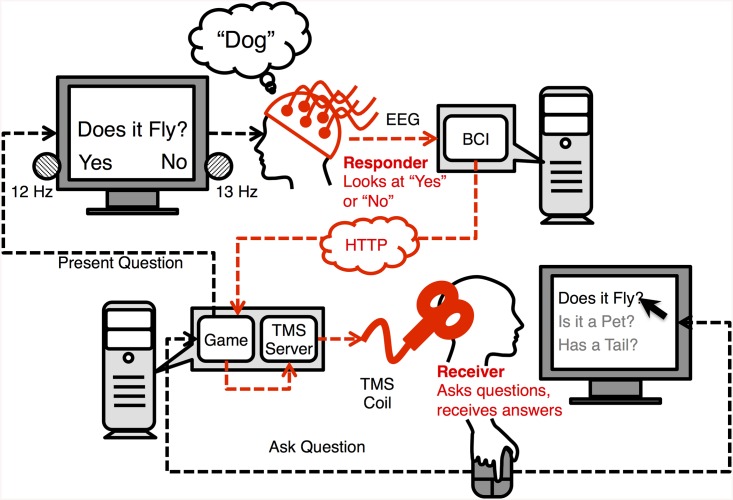
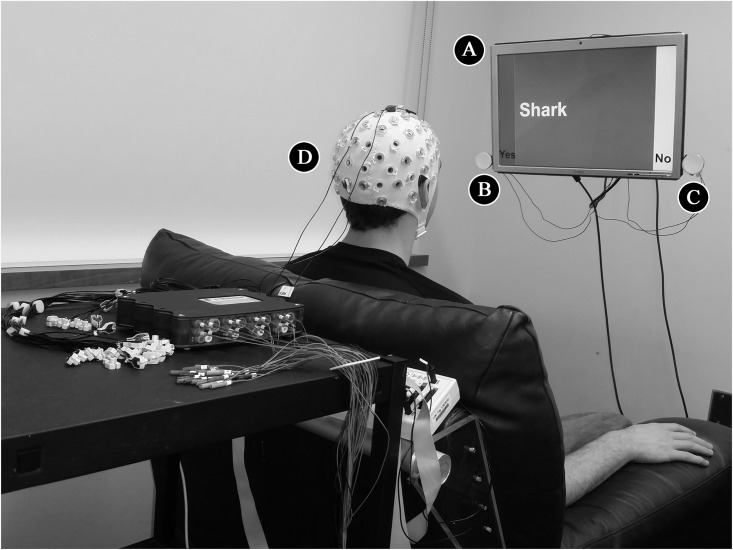
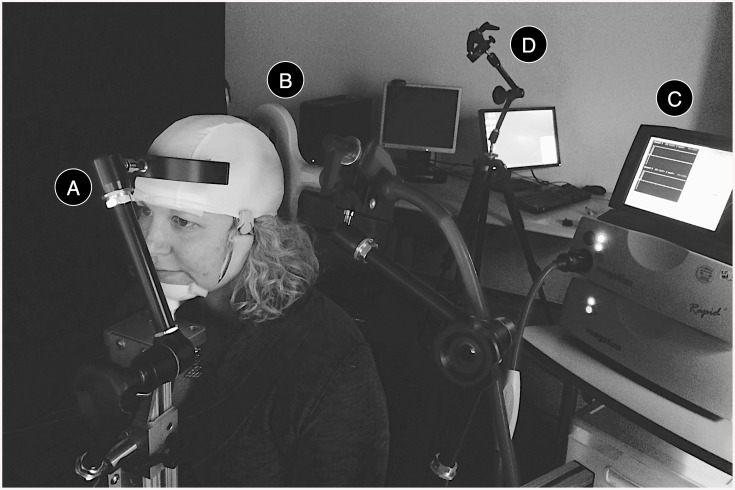
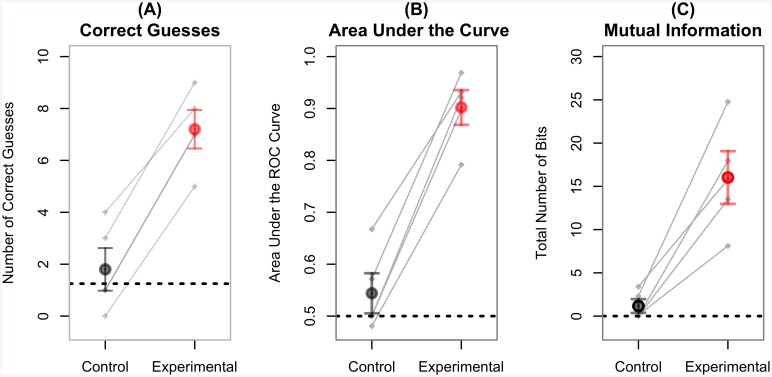
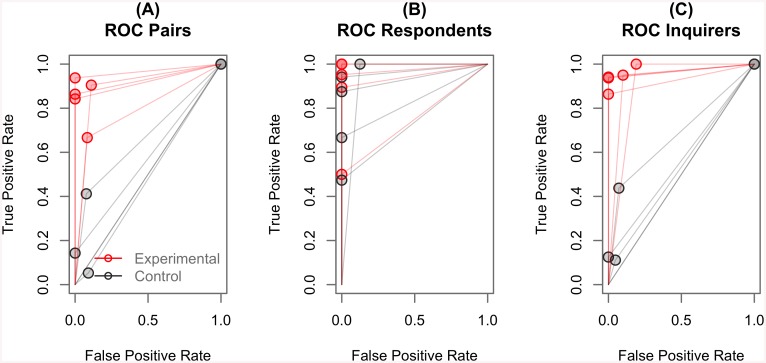
We present, to our knowledge, the first demonstration that a non-invasive brain-to-brain interface (BBI) can be used to allow one human to guess what is on the mind of another human through an interactive question-and-answering paradigm similar to the "20 Questions" game. As in previous non-invasive BBI studies in humans, our interface uses electroencephalography (EEG) to detect specific patterns of brain activity from one participant (the "respondent"), and transcranial magnetic stimulation (TMS) to deliver functionally-relevant information to the brain of a second participant (the "inquirer"). Our results extend previous BBI research by (1) using stimulation of the visual cortex to convey visual stimuli that are privately experienced and consciously perceived by the inquirer; (2) exploiting real-time rather than off-line communication of information from one brain to another; and (3) employing an interactive task, in which the inquirer and respondent must exchange information bi-directionally to collaboratively solve the task. The results demonstrate that using the BBI, ten participants (five inquirer-respondent pairs) can successfully identify a "mystery item" using a true/false question-answering protocol similar to the "20 Questions" game, with high levels of accuracy that are significantly greater than a control condition in which participants were connected through a sham BBI.
Overview
The claims and statistics of this paper haven’t been checked yet.
Free: it reads the open-access text and checks the first 5 claims that cite a source we can check. Create a free account to check every claim.
Integrity signals
Registry
Cites
Statistics
Figures
Verification
Claims the paper makes
The claims and statistics of this paper haven’t been checked yet.
Free: it reads the open-access text and checks the first 5 claims that cite a source we can check. Create a free account to check every claim.
Claims other papers make about this one
Each is checked against this paper’s own text: does it say what the citing paper says it does?
The cited source says what the claim attributes to it.
In the citing paper
“Stocco and colleagues5 extended these results by showing that a Sender and a Receiver can iteratively exchange information using a BBI to identify an unknown object from a list, using a question-and-answer paradigm akin to “20 Questions.””
From BrainNet: A Multi-Person Brain-to-Brain Interface for Direct Collaboration Between Brains (2019) · cites this paper as [5]
The cited source says what the claim attributes to it.
In the citing paper
“First, the degree of interactivity has been minimal; for example, in the case of the “20 Questions” BBI5, the Sender only responds to the question the Receiver chooses, and the Receiver’s performance does not affect the Sender’s decision.”
From BrainNet: A Multi-Person Brain-to-Brain Interface for Direct Collaboration Between Brains (2019) · cites this paper as [5]
The cited source says what the claim attributes to it.
In the citing paper
“Because of ethical and safety considerations, existing human BBIs rely on non-invasive technologies, typically electroencephalography (EEG), to record neural activity and transcranial magnetic stimulation (TMS) to deliver information to the brain.”
From BrainNet: A Multi-Person Brain-to-Brain Interface for Direct Collaboration Between Brains (2019) · cites this paper as [5]
The cited source says what the claim attributes to it.
In the citing paper
“As noted in previous studies from our group1,5,14, raw accuracy can be an inadequate measure of performance because it does not differentiate the kind of mistakes being made, i.e., whether they are misses or false positives.”
From BrainNet: A Multi-Person Brain-to-Brain Interface for Direct Collaboration Between Brains (2019) · cites this paper as [5]
Self-check
Percentages, sums and reported differences re-computed from the paper’s own numbers.
The self-check needs the paper’s full text.
Citations
Cites
Elements of Information Theory
Cover, T. M., & Thomas, J. A. (2001) · Wiley eBooks · doi:10.1002/0471200611 · Cited by 36,808
An introduction to ROC analysis
Fawcett, T. (2006) · Pattern Recognition Letters · doi:10.1016/j.patrec.2005.10.010 · Cited by 21,879 · cited 4×
“increase in the false positive rate [18]).”
BackgroundMethodInfluentialROCR: visualizing classifier performance in R
Sing, T., Sander, O., Beerenwinkel, N., & Lengauer, T. (2005) · Bioinformatics · doi:10.1093/bioinformatics/bti623 · Cited by 3,200
BCI2000: A General-Purpose Brain-Computer Interface (BCI) System
Schalk, G., McFarland, D. J., Hinterberger, T., Birbaumer, N., & Wolpaw, J. R. (2004) · IEEE Transactions on Biomedical Engineering · doi:10.1109/tbme.2004.827072 · Cited by 3,024 · cited 1×
“Signal processing and data storage were managed through the BCI2000 software package [17].”
MethodNunez, P. L., & Srinivasan, R. (2006) · doi:10.1093/acprof:oso/9780195050387.001.0001 · Cited by 2,531
Elements of Information Theory
Nalewajski, R. F. (2011) · Perspectives in Electronic Structure Theory · doi:10.1007/978-3-642-20180-6_8 · Cited by 2,309
Electric Fields of the Brain: The Neurophysics of EEG
Nunez, P. L., & Harth, E. (1982) · Physics Today · doi:10.1063/1.2915137 · Cited by 2,232
Steady-state visually evoked potentials: Focus on essential paradigms and future perspectives
Vialatte, F.-B., Maurice, M., Dauwels, J., & Cichocki, A. (2010) · Progress in Neurobiology · doi:10.1016/j.pneurobio.2009.11.005 · Cited by 1,066 · cited 1×
“The respondent’s answer was identified from real-time EEG recordings using steady-state visually-evoked potentials (SSVEPs), which are stable oscillations of neural activity in the visual cortex that match the frequency of flashing visual stimuli [10], and which yield among the highest information transfer rates in no…”
MethodSelective attention to stimulus location modulates the steady-state visual evoked potential.
Morgan, S. T., Hansen, J. C., & Hillyard, S. A. (1996) · Proceedings of the National Academy of Sciences · doi:10.1073/pnas.93.10.4770 · Cited by 593 · cited 1×
“There is, in fact, experimental evidence suggesting that reduced attention has detrimental effects on both SSVEP detection [22] and phosphene perception [23].”
BackgroundA Dynamically Optimized SSVEP Brain–Computer Interface (BCI) Speller
Yin, E., Zhou, Z., Jiang, J., Yu, Y., & Hu, D. (2015) · IEEE Transactions on Biomedical Engineering · doi:10.1109/tbme.2014.2320948 · Cited by 254 · cited 1×
“A larger difference between the frequencies would not have necessarily improved accuracy as many previous experiments have demonstrated effective SSVEP-based BCIs with frequency differences less than or equal to 1 Hz [14,15], with some using frequency differences as small as 0.”
Cited by
Progress in Brain Computer Interface: Challenges and Opportunities
Saha, S., Mamun, K. A., Ahmed, K., Mostafa, R., Naik, G. R., Darvishi, S., Khandoker, A. H., & Baumert, M. (2021) · Frontiers in Systems Neuroscience · doi:10.3389/fnsys.2021.578875 · Cited by 365
“For human brain-to-brain interface applications [23], [150], one may define an upper bound for research depths keeping in mind the necessity of ethical utilization of this technology.”
BackgroundNeurotechnologies for Human Cognitive Augmentation: Current State of the Art and Future Prospects
Cinel, C., Valeriani, D., & Poli, R. (2019) · Frontiers in Human Neuroscience · doi:10.3389/fnhum.2019.00013 · Cited by 178
“Of course, all of the above mentioned studies present a number of limitations, including the fact that the communication is restricted to very limited type of information, and that the ITR is very low (for a discussion of some of the limits see for example Stocco et al., 2015).”
BackgroundBrainNet: A Multi-Person Brain-to-Brain Interface for Direct Collaboration Between Brains
Jiang, L., Stocco, A., Losey, D. M., Abernethy, J. A., Prat, C. S., & Rao, R. P. N. (2019) · Scientific Reports · doi:10.1038/s41598-019-41895-7 · Cited by 190
Self-citationSecurity in Brain-Computer Interfaces: State-of-the-Art, Opportunities, and Future Challenges
Bernal, S. L., Celdrán, A. H., Pérez, G. M., Barros, M. T., & Balasubramaniam, S. (2021) · ACM Computing Surveys · doi:10.1145/3427376 · Cited by 131
“er et a l. [150] B rainet Grau et al. [149] BtB P oliet al. [151] Brainet Rao et al. [107] BtB ais-V er t l.[15] B t, raine Kyr izset l. [156] tI , raine R am krishn n et l. [108] rainet Stoccoet al. [159] BtB Zhang et al. [105] BtI Li et al. [164] BtB Hosseini et al. [172] BtI He et al. [71] BtI Saboor et al.[177] Bt…”
BackgroundOn the Necessity of Ethical Guidelines for Novel Neurotechnologies
Goering, S., & Yuste, R. (2016) · Cell · doi:10.1016/j.cell.2016.10.029 · Cited by 94
“Brain-to-brain interface experiments (Stocco et al., 2015), while still primitive in many respects, demonstrate the possibility of sending neural activity from one person’s brain directly into another person’s brain.”
Background
Metadata
- Authors
- Stocco, A., Prat, C. S., Losey, D. M., Cronin, J. A., Wu, J., Abernethy, J. A., & Rao, R. P. N.
- Affiliations
- University of Washington (US)
- Corresponding author
- Stocco, Andrea
- Rao, Rajesh P. N.
- Venue
- PLOS ONE
- Publisher
- Public Library of Science (PLoS)
- Published
- 2015-09-23
- Volume
- 10
- Issue
- 9
- Pages
- e0137303
- ISSN
- 1932-6203 (ISSN-L)
- PMC
- PMC4580467
- OpenAlex
- W2264340605
- Cited by
- 57
- References
- 27
- Citations by year
- 2025: 1 · 2024: 3 · 2023: 4 · 2022: 3 · 2021: 20 · 2020: 7 · 2019: 5 · 2018: 2 · 2017: 4 · 2016: 8
- FWCI
- 2.80
- Type
- journal article
- Language
- en
- Open access
- gold
- doi.org
- Licence
- Locations
- PLoS ONE (publishedVersion, cc-by)
- Europe PMC (PubMed Central) (publishedVersion, cc-by)
- PubMed Central (publishedVersion, cc-by)
- PubMed (publishedVersion)
- DOAJ (DOAJ: Directory of Open Access Journals) (submittedVersion)
- Funders
- W. M. Keck Foundation
- Topics
- Life Sciences › Neuroscience › Cognitive Neuroscience › EEG and Brain-Computer Interfaces
- Life Sciences › Neuroscience › Neurology › Transcranial Magnetic Stimulation Studies
- Life Sciences › Neuroscience › Cognitive Neuroscience › Tactile and Sensory Interactions
- Keywords
- brain-to-brain interfaces, collaborative problem solving, 20 questions game, EEG, transcranial magnetic stimulation, visual cortex stimulation, question answering, sham stimulation
- MeSH terms
- Adult, Brain, Electroencephalography, Evoked Potentials, Visual, Female, Humans, Male, Problem Solving, Transcranial Magnetic Stimulation, Young Adult
About these checks
Registry, retraction, Cites and statistics results are computed, not judged, with one exception: a printed reference that no index lists is read once by a model before it counts as a citation error. Claims are extracted by a model and kept only when their quote appears verbatim in the text; each cited source is then checked, with a model’s help, for whether it says what the claim relies on. Those verdicts can be wrong — read the claim’s quote and the cited source before relying on one.
Statistics and arithmetic are recomputed, not judged.
Confidence bands are shown only for fields calibrated on our annotated test set. None is calibrated yet, so no band is shown.
What counts as a claim ›How we measure confidence ›How we check this ›
Are you an author, or do you see a problem with this page? Request a review
How to cite
Cite CoChat for the checks on this page, and the paper for its own findings.
- This page
- CoChat. (2026). Citation check: Playing 20 Questions with the Mind: Collaborative Problem Solving by Humans Using a Brain-to-Brain Interface. https://app.cochat.ai/papers/10.1371/journal.pone.0137303
- The paper
- Stocco, A., Prat, C. S., Losey, D. M., Cronin, J. A., Wu, J., Abernethy, J. A., & Rao, R. P. N. (2015). Playing 20 Questions with the Mind: Collaborative Problem Solving by Humans Using a Brain-to-Brain Interface. PLOS ONE. https://doi.org/10.1371/journal.pone.0137303
Data sources
Bibliographic data: Semantic Scholar, OpenAlex, Crossref.
Contains information from the Semantic Scholar Academic Graph Datasets, made available under the ODC Attribution License (ODC-BY 1.0).
Semantic Scholar’s data is described in: Kinney, R., et al. (2023). The Semantic Scholar Open Data Platform. arXiv:2301.10140.
