

Cell Wall N-Linked Mannoprotein Biosynthesis Requires Goa1p, a Putative Regulator of Mitochondrial Complex I in Candida albicans
Open accessThe DOI matches its Crossref record; 48 of the 48 references it cites were found in a registry or an index.
Abstract
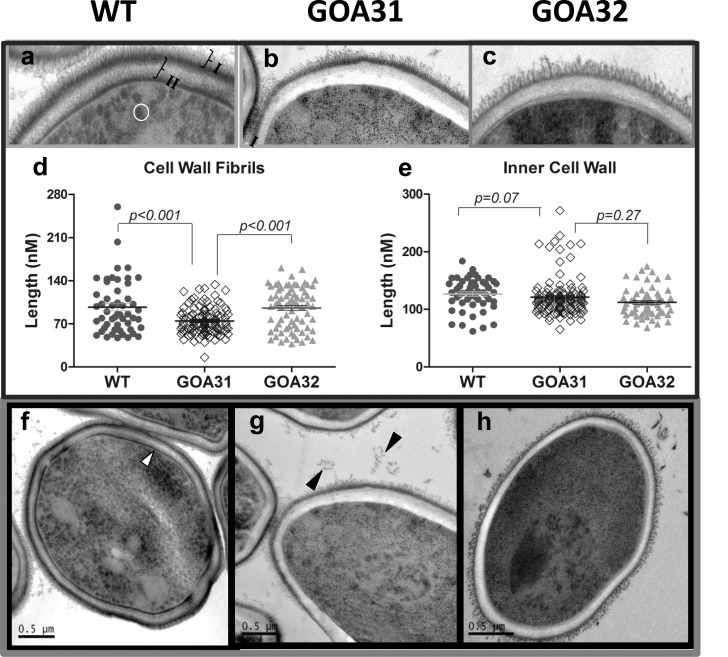
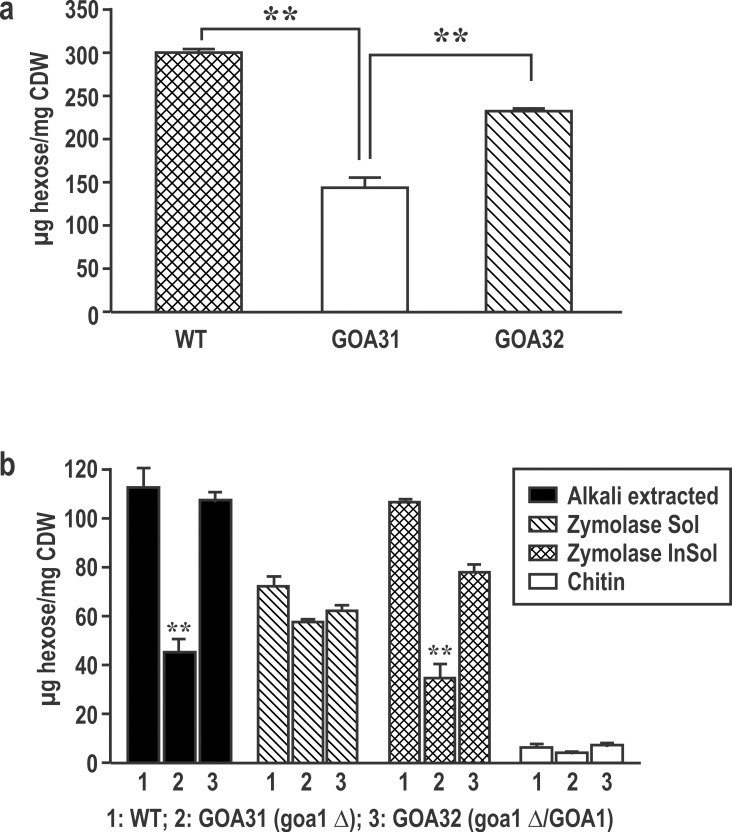
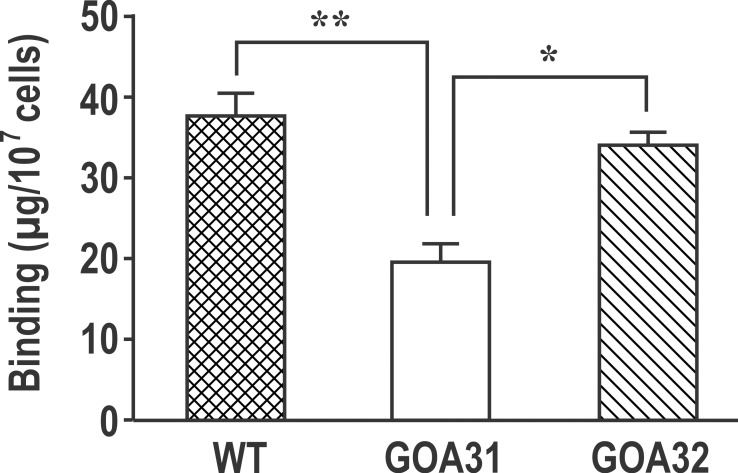
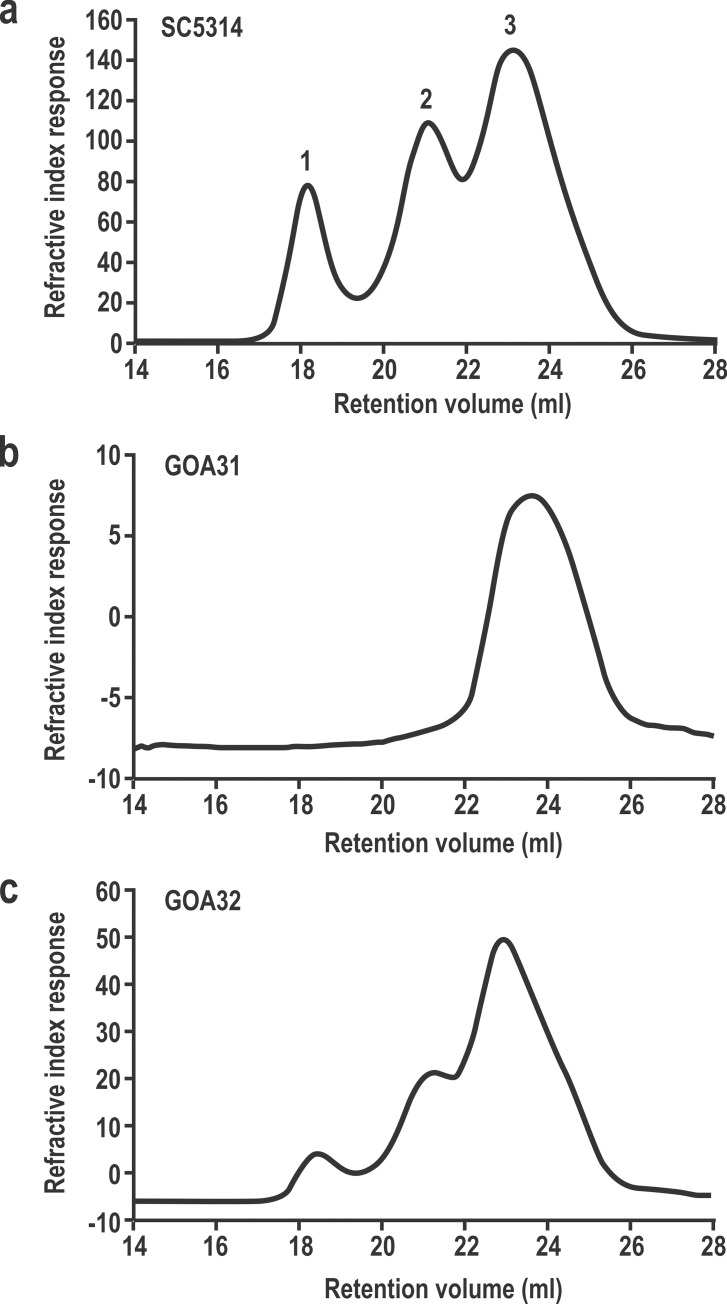
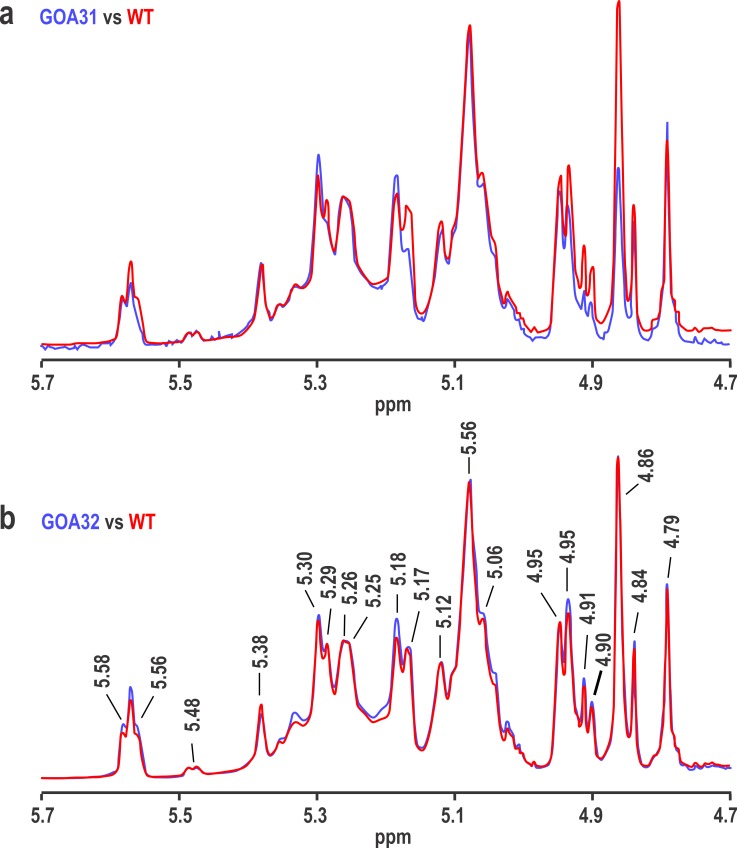
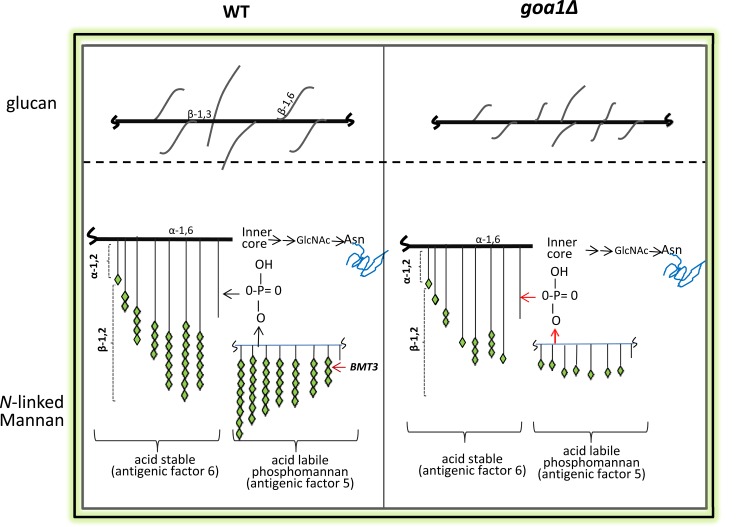
The Goa1p of Candida albicans regulates mitochondrial Complex I (CI) activities in its role as a putative CI accessory protein. Transcriptional profiling of goa1∆ revealed a down regulation of genes encoding β-oligomannosyl transferases. Herein, we present data on cell wall phenotypes of goa1∆ (strain GOA31). We used transmission electron microscopy (TEM), GPC/MALLS, and NMR to compare GOA31 to a gene-reconstituted strain (GOA32) and parental cells. We note by TEM a reduction in outer wall fibrils, increased inner wall transparency, and the loss of a defined wall layer close to the plasma membrane. GPC-MALLS revealed a reduction in high and intermediate Mw mannan by 85% in GOA31. A reduction of β-mannosyl but not α-mannosyl linkages was noted in GOA31 cells. β-(1,6)-linked glucan side chains were branched about twice as often but were shorter in length for GOA31. We conclude that mitochondrial CI energy production is highly integrated with cell wall formation. Our data also suggest that not all cell wall biosynthetic processes are dependent upon Goa1p even though it provides high levels of ATP to cells. The availability of both broadly conserved and fungal-specific mutants lacking CI subunit proteins should be useful in assessing functions of fungal-specific functions subunit proteins.
Overview
The claims and statistics of this paper haven’t been checked yet.
Free: it reads the open-access text and checks the first 5 claims that cite a source we can check. Create a free account to check every claim.
Integrity signals
Registry
Cites
Statistics
Figures
Verification
Claims the paper makes
The claims and statistics of this paper haven’t been checked yet.
Free: it reads the open-access text and checks the first 5 claims that cite a source we can check. Create a free account to check every claim.
Claims other papers make about this one
Each is checked against this paper’s own text: does it say what the citing paper says it does?
The cited source says what the claim attributes to it.
In the citing paper
“Loss of the complex I regulator Goa1 revealed a link between respiration and sensitivity to cell wall-damaging agents (16) and cell wall architecture (17).”
From Inhibition of Classical and Alternative Modes of Respiration in Candida albicans Leads to Cell Wall Remodeling and Increased Macrophage Recognition (2019) · cites this paper as [17]
The cited source says what the claim attributes to it.
In the citing paper
“The cell wall alterations in the goa1Δ mutant included a reduction in the levels of high- and intermediate-molecular weight mannans (17)”
From Inhibition of Classical and Alternative Modes of Respiration in Candida albicans Leads to Cell Wall Remodeling and Increased Macrophage Recognition (2019) · cites this paper as [17]
The cited source says what the claim attributes to it.
In the citing paper
“As shown in Fig. 9B, treatment with xy12 led to sparser fibrils compared to those in normal cells, as observed by transmission electron microscopy, which is consistent with the requirement of mitochondrial complex I for cell wall integrity (25).”
From Combined Transcriptome and Metabolome Analysis Reveals That the Potent Antifungal Pyrylium Salt Inhibits Mitochondrial Complex I in Candida albicans (2023) · cites this paper as [25]
Self-check
Percentages, sums and reported differences re-computed from the paper’s own numbers.
The self-check needs the paper’s full text.
Citations
Cites
Colorimetric Method for Determination of Sugars and Related Substances
DuBois, M., Gilles, K. A., Hamilton, J. K., Rebers, P. A., & Smith, F. (1956) · Analytical Chemistry · doi:10.1021/ac60111a017 · Cited by 52,269 · cited 3×
“Cell pellets were broken with glass beads and the crude cell wall of each strain was collected by centrifugation at 11,000 × g for 15 min and processed as described previously [29,30].”
MethodNetea, M. G. (2006) · Journal of Clinical Investigation · doi:10.1172/jci27114 · Cited by 753 · cited 1×
“albicans cell wall in host responses, growth, pathogenesis, and virulence are well known [40,41].”
BackgroundThe glyoxylate cycle is required for fungal virulence
Lorenz, M. C., & Fink, G. R. (2001) · Nature · doi:10.1038/35083594 · Cited by 745 · cited 1×
“Metabolic processes such as β-oxidation of stored lipid and gluconeogenesis are integrated as survival tactics [23].”
BackgroundSaijo, S., Ikeda, S., Yamabe, K., Kakuta, S., Ishigame, H., Akitsu, A., Fujikado, N., Kusaka, T., Kubo, S., Chung, S.-H., et al. (2010) · Immunity · doi:10.1016/j.immuni.2010.05.001 · Cited by 733
Architecture of the Yeast Cell Wall
Kollár, R., Reinhold, B. B., Petráková, E., Yeh, H. J. C., Ashwell, G., Drgonová, J., Kapteyn, J. C., Klis, F. M., & Cabib, E. (1997) · Journal of Biological Chemistry · doi:10.1074/jbc.272.28.17762 · Cited by 644
AMP-activated protein kinase: nature's energy sensor
Carling, D., Mayer, F. V., Sanders, M. J., & Gamblin, S. J. (2011) · Nature Chemical Biology · doi:10.1038/nchembio.610 · Cited by 387
Understanding metabolic regulation and its influence on cell physiology
Metallo, C. M., & Vander Heiden, M. G. (2013) · Molecular Cell · doi:10.1016/j.molcel.2013.01.018 · Cited by 367
Nutrient Sensing, Metabolism, and Cell Growth Control
Yuan, H.-X., Xiong, Y., & Guan, K.-L. (2013) · Molecular Cell · doi:10.1016/j.molcel.2013.01.019 · Cited by 361
Importance of the Candida albicans cell wall during commensalism and infection
Gow, N. A., & Hube, B. (2012) · Current Opinion in Microbiology · doi:10.1016/j.mib.2012.04.005 · Cited by 347 · cited 2×
“The dynamic status of the cell wall is reflected by its fluctuations in polysaccharide content during changes in growth forms (yeast and pseudohyphae/hyphae) as well as upon exposure to cell wall perturbing antifungal compounds [1].”
BackgroundMethod for Fingerprinting Yeast Cell Wall Mannans
Kocourek, J., & Ballou, C. E. (1969) · Journal of Bacteriology · doi:10.1128/jb.100.3.1175-1181.1969 · Cited by 339 · cited 1×
“An equal volume of freshly prepared Fehling’s solution was mixed with the supernatant fractions for 1 h [34,35].”
Method
Research works printed but not linked: 2
- Ene IV, Adya AK, Wehmeier S, Brand AC, MacCallum DM, Gow NAR, Brown AJP. Host carbon sources modulate cell wall architecture, drug resistance and virulence in a fungal pathogen. Cell Microbiol. 2012; 14: 1319– 1335. 10.1111/j.1462-5822.2012.01813.x 22587014 PMC3465787 · DOI · Paper page
- Johnson MA, Bundle DR. Designing a new antifungal glycoconjugate vaccine. Chem Soc Rev. 2013; 42: 4327– 4344. 10.1039/c2cs35382b 23232662 · DOI
Cited by
Mannan Molecular Substructures Control Nanoscale Glucan Exposure in Candida
Graus, M. S., Wester, M. J., Lowman, D. W., Williams, D. L., Kruppa, M. D., Martinez, C. M., Young, J. M., Pappas, H. C., Lidke, K. A., & Neumann, A. K. (2018) · Cell Reports · doi:10.1016/j.celrep.2018.07.088 · Cited by 79
“goa1Δ mutants have recently been shown to have reductions in both b-(1,2)-linked mannose units and acidlabile mannan (She et al., 2016), which bears some similarity to the TRL035 mannan phenotype.”
BackgroundSelf-citationExploiting mitochondria as targets for the development of new antifungals
Li, D., & Calderone, R. (2017) · Virulence · doi:10.1080/21505594.2016.1188235 · Cited by 67
Self-citationDuvenage, L., Walker, L. A., Bojarczuk, A., Johnston, S. A., MacCallum, D. M., Munro, C. A., & Gourlay, C. W. (2019) · mBio · doi:10.1128/mbio.02535-18 · Cited by 61
“The cell wall alterations in the goa1 Δ mutant included a reduction in the levels of high-and intermediate-molecular weight mannans (17), but no significant changes in the relative levels of glucan, chitin, or mannan were observed in SNP (cid:2) SHAM-treated cells.”
Unique, Diverged, and Conserved Mitochondrial Functions Influencing Candida albicans Respiration
Sun, N., Parrish, R. S., Calderone, R. A., & Fonzi, W. A. (2019) · mBio · doi:10.1128/mbio.00300-19 · Cited by 51
“multiple attendant deficits, including a reduced ability to form hyphae, cell wall alterations, and hypersensitivity to antifungals (8, 14, 19, 22, 34).”
BackgroundSelf-citationKe, C.-L., Liao, Y.-T., & Lin, C.-H. (2021) · Virulence · doi:10.1080/21505594.2020.1870082 · Cited by 41
“fluor white and other cell surface-perturbing agents [12,41,42,44].”
BackgroundInfluential
Metadata
- Authors
- She, X., Calderone, R., Kruppa, M., Lowman, D., Williams, D., Zhang, L., Gao, Y., Khamooshi, K., Liu, W., & Li, D.
- Affiliations
- Chinese Academy of Medical Sciences & Peking Union Medical College (CN)
- Georgetown University Medical Center (US)
- East Tennessee State University (US)
- Corresponding author
- Calderone, Richard
- ORCID
- Venue
- PLOS ONE
- Publisher
- Public Library of Science (PLoS)
- Published
- 2016-01-25
- Volume
- 11
- Issue
- 1
- Pages
- e0147175
- ISSN
- 1932-6203 (ISSN-L)
- PMC
- PMC4725855
- OpenAlex
- W2262967276
- Cited by
- 27
- References
- 48
- Citations by year
- 2026: 1 · 2025: 2 · 2024: 1 · 2023: 4 · 2022: 2 · 2021: 4 · 2020: 5 · 2019: 3 · 2018: 2 · 2017: 2 · 2016: 1
- FWCI
- 1.39
- Type
- journal article
- Language
- en
- Open access
- gold
- doi.org
- Licence
- Locations
- PLoS ONE (publishedVersion, cc-by)
- Europe PMC (PubMed Central) (publishedVersion, cc-by)
- PubMed Central (publishedVersion, cc-by)
- PubMed (publishedVersion)
- Digital Commons - East Tennessee State University (East Tennessee State University) (submittedVersion, cc-by)
- DOAJ (DOAJ: Directory of Open Access Journals) (submittedVersion, cc-by-sa)
- Funders
- Georgetown University
- National Natural Science Foundation of China (81401652)
- Government of Jiangsu Province
- Natural Science Foundation of Jiangsu Province (BK20130063)
- National Institutes of Health
- Centers for Disease Control and Prevention (CC06RR0306551)
- U.S. Public Health Service (NIHGM53522)
- National Institute of General Medical Sciences (R01GM083016)
- National Institute of Allergy and Infectious Diseases (AI090290, R21AI090290)
- Topics
- Life Sciences › Biochemistry, Genetics and Molecular Biology › Molecular Biology › Fungal and yeast genetics research
- Life Sciences › Biochemistry, Genetics and Molecular Biology › Molecular Biology › Glycosylation and Glycoproteins Research
- Health Sciences › Medicine › Infectious Diseases › Antifungal resistance and susceptibility
- Keywords
- Candida albicans, cell wall biosynthesis, mitochondrial complex I, mannan, β-1,6-glucan, ATP production, deletion mutants
- MeSH terms
- Candida albicans, Cell Wall, Fungal Proteins, Membrane Glycoproteins, Electron Transport Complex I
About these checks
Registry, retraction, Cites and statistics results are computed, not judged, with one exception: a printed reference that no index lists is read once by a model before it counts as a citation error. Claims are extracted by a model and kept only when their quote appears verbatim in the text; each cited source is then checked, with a model’s help, for whether it says what the claim relies on. Those verdicts can be wrong — read the claim’s quote and the cited source before relying on one.
Statistics and arithmetic are recomputed, not judged.
Confidence bands are shown only for fields calibrated on our annotated test set. None is calibrated yet, so no band is shown.
What counts as a claim ›How we measure confidence ›How we check this ›
Are you an author, or do you see a problem with this page? Request a review
How to cite
Cite CoChat for the checks on this page, and the paper for its own findings.
- This page
- CoChat. (2026). Citation check: Cell Wall N-Linked Mannoprotein Biosynthesis Requires Goa1p, a Putative Regulator of Mitochondrial Complex I in Candida albicans. https://app.cochat.ai/papers/10.1371/journal.pone.0147175
- The paper
- She, X., Calderone, R., Kruppa, M., Lowman, D., Williams, D., Zhang, L., Gao, Y., Khamooshi, K., Liu, W., & Li, D. (2016). Cell Wall N-Linked Mannoprotein Biosynthesis Requires Goa1p, a Putative Regulator of Mitochondrial Complex I in Candida albicans. PLOS ONE. https://doi.org/10.1371/journal.pone.0147175
Data sources
Bibliographic data: Semantic Scholar, OpenAlex, Crossref.
Contains information from the Semantic Scholar Academic Graph Datasets, made available under the ODC Attribution License (ODC-BY 1.0).
Semantic Scholar’s data is described in: Kinney, R., et al. (2023). The Semantic Scholar Open Data Platform. arXiv:2301.10140.
