

Diffusion Modelling Reveals the Decision Making Processes Underlying Negative Judgement Bias in Rats
Open accessThe DOI matches its Crossref record; 77 of the 78 references it cites were found in a registry or an index.
Abstract
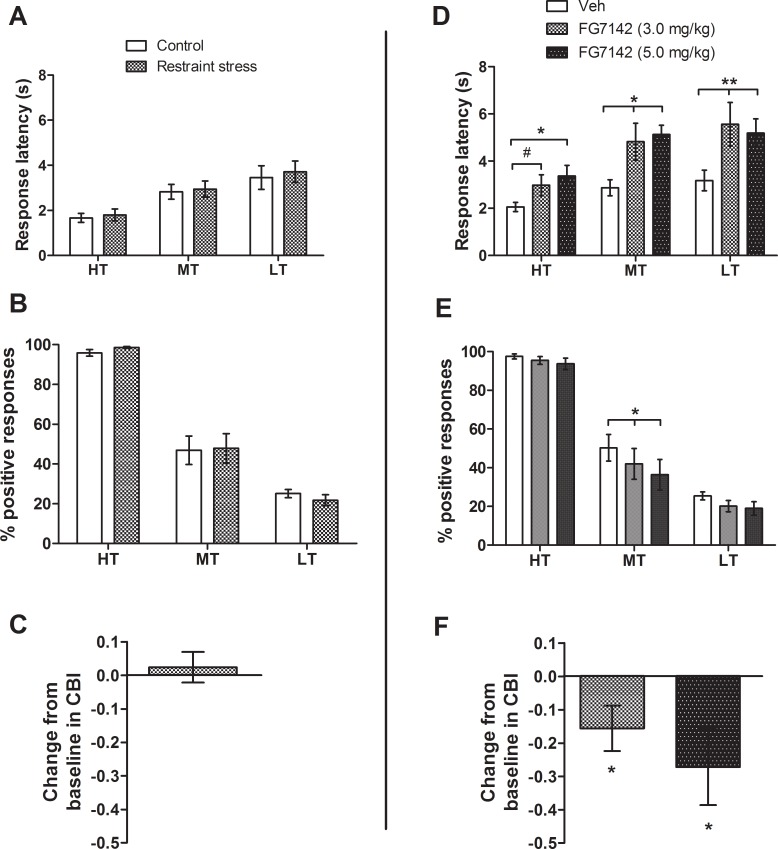
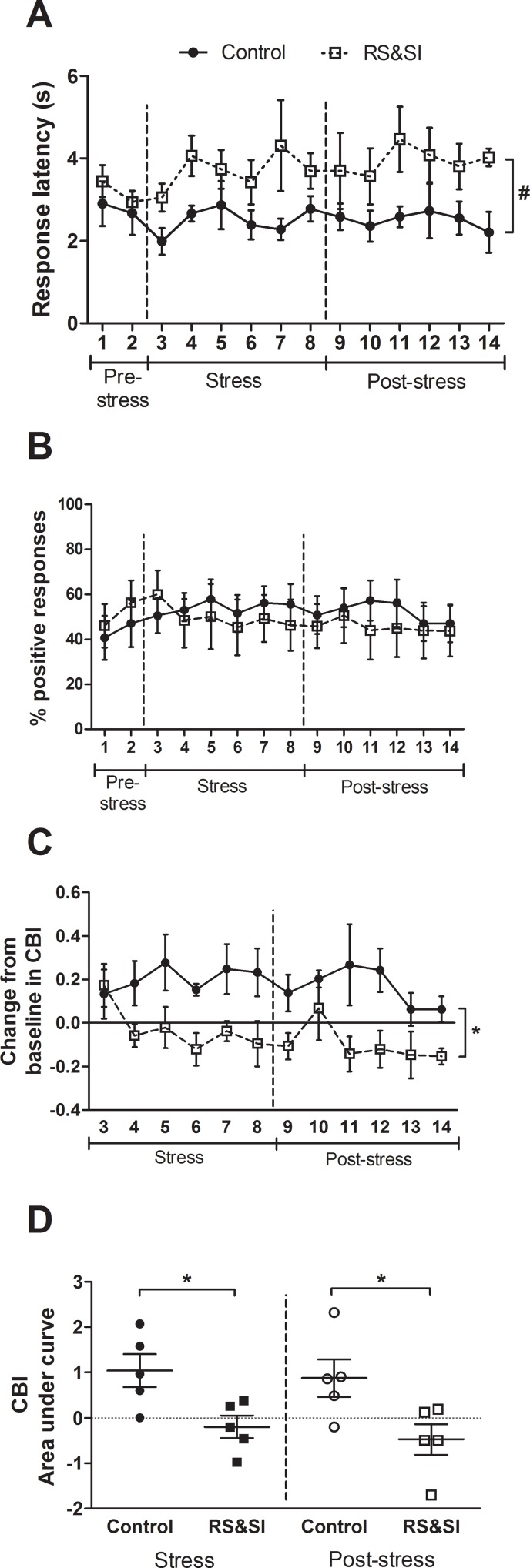
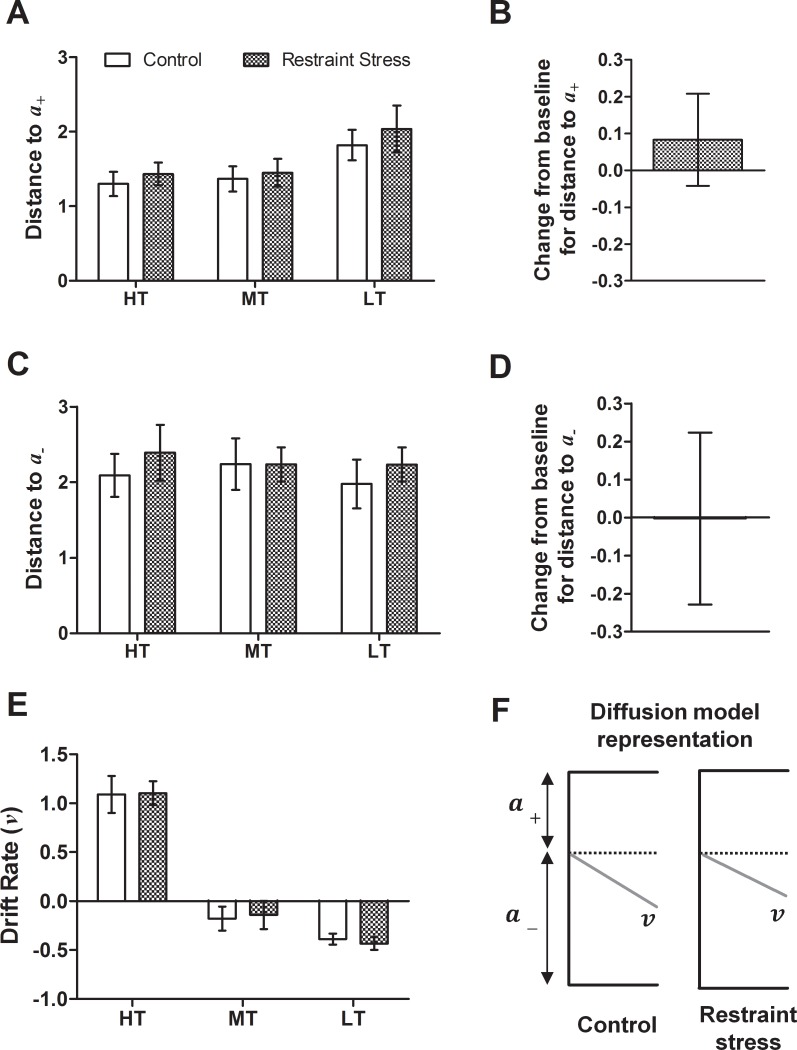
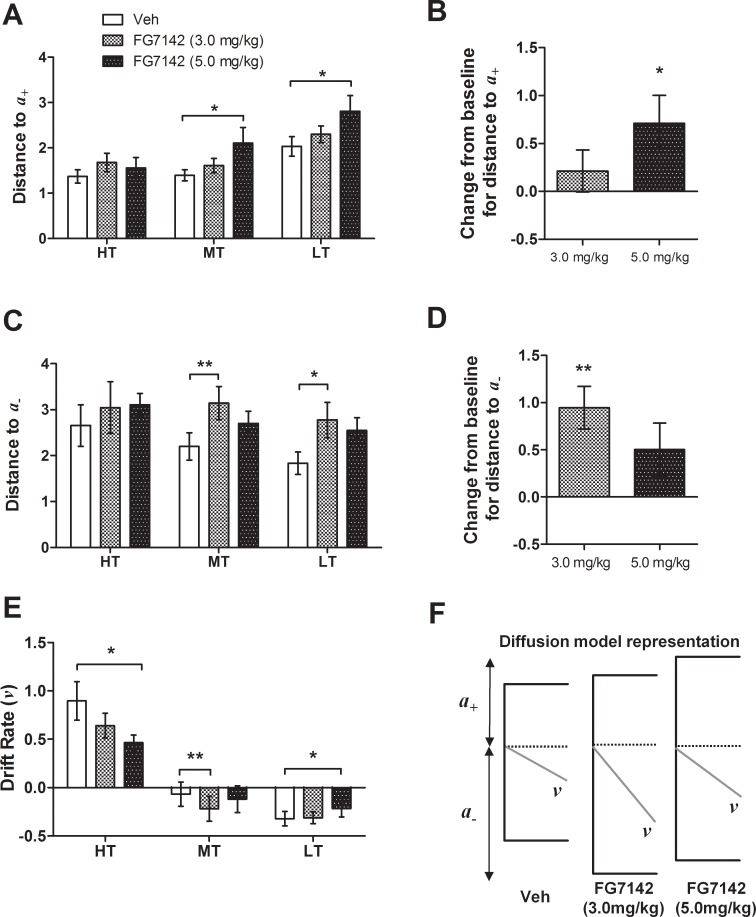
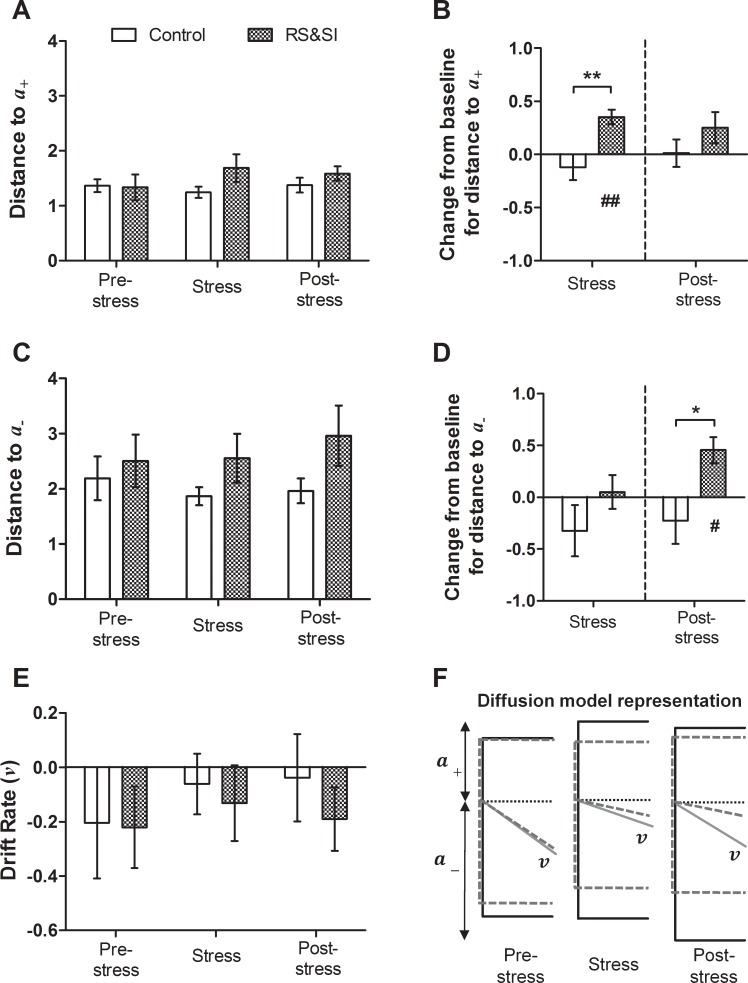
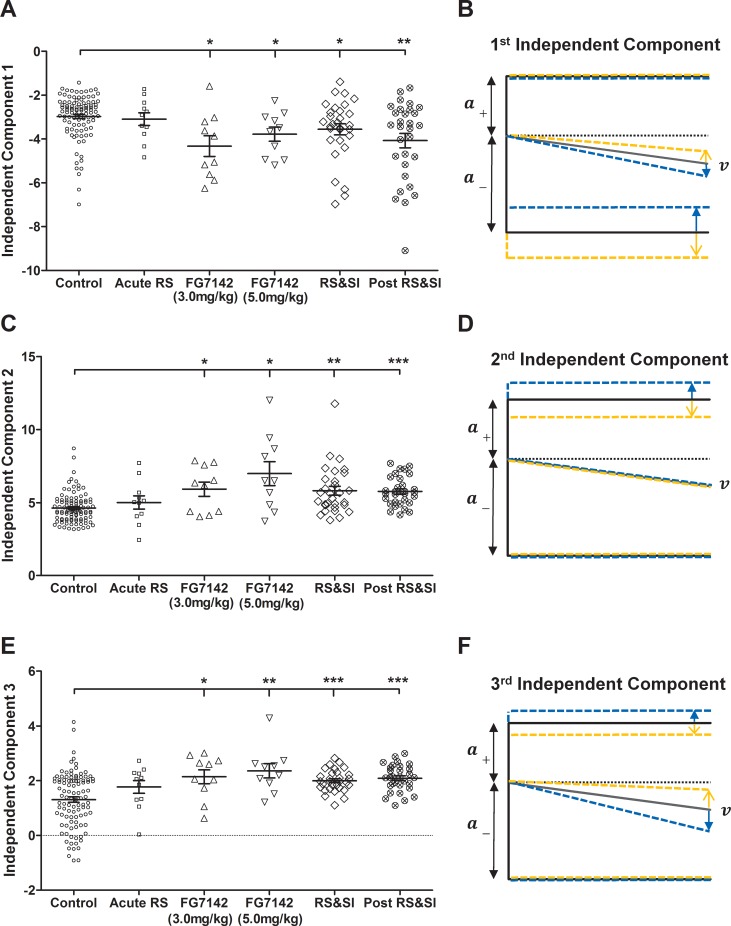
Human decision making is modified by emotional state. Rodents exhibit similar biases during interpretation of ambiguous cues that can be altered by affective state manipulations. In this study, the impact of negative affective state on judgement bias in rats was measured using an ambiguous-cue interpretation task. Acute treatment with an anxiogenic drug (FG7142), and chronic restraint stress and social isolation both induced a bias towards more negative interpretation of the ambiguous cue. The diffusion model was fit to behavioural data to allow further analysis of the underlying decision making processes. To uncover the way in which parameters vary together in relation to affective state manipulations, independent component analysis was conducted on rate of information accumulation and distances to decision threshold parameters for control data. Results from this analysis were applied to parameters from negative affective state manipulations. These projected components were compared to control components to reveal the changes in decision making processes that are due to affective state manipulations. Negative affective bias in rodents induced by either FG7142 or chronic stress is due to a combination of more negative interpretation of the ambiguous cue, reduced anticipation of the high reward and increased anticipation of the low reward.
Overview
The claims and statistics of this paper haven’t been checked yet.
Free: it reads the open-access text and checks the first 5 claims that cite a source we can check. Create a free account to check every claim.
Integrity signals
Registry
Cites
Statistics
Figures
Verification
Claims the paper makes
The claims and statistics of this paper haven’t been checked yet.
Free: it reads the open-access text and checks the first 5 claims that cite a source we can check. Create a free account to check every claim.
Claims other papers make about this one
Each is checked against this paper’s own text: does it say what the citing paper says it does?
The cited source doesn’t support the claim as written.
In the citing paper
“one study employing acute restraint stress to induce a negative bias revealed that the effectiveness of systemic ketamine to reduce such a bias in the ambiguous cue test was dependent upon the mPFC [45]”
From Prefrontal cortex and depression (2022) · cites this paper as [45]
Checked by a reasoning model — may be wrong.
Experimental — accuracy not yet measuredThe check wasn’t confident either way, so it gives no verdict — never disputed.
In the citing paper
“similar bias reductions followed ketamine infusions directly into the mPFC (although PLc or ILc were not distinguished).”
From Prefrontal cortex and depression (2022) · cites this paper as [45]
Experimental — accuracy not yet measured
Self-check
Percentages, sums and reported differences re-computed from the paper’s own numbers.
The self-check needs the paper’s full text.
Citations
Cites
A Simplex Method for Function Minimization
Nelder, J. A., & Mead, R. (1965) · The Computer Journal · doi:10.1093/comjnl/7.4.308 · Cited by 28,905 · cited 1×
“Parameters are optimised by using an implementation of the Nelder-Mead method [42].”
MethodIndependent component analysis: algorithms and applications
Hyvärinen, A., & Oja, E. (2000) · Neural Networks · doi:10.1016/s0893-6080(00)00026-5 · Cited by 8,705 · cited 1×
“a+, a- and normalised v were then input into the FastICA package [43, 44] in Matlab R2014a (8.”
MethodEffects of stress throughout the lifespan on the brain, behaviour and cognition
Lupien, S. J., McEwen, B. S., Gunnar, M. R., & Heim, C. (2009) · Nature Reviews Neuroscience · doi:10.1038/nrn2639 · Cited by 6,256
Fast and robust fixed-point algorithms for independent component analysis
Hyvarinen, A. (1999) · IEEE Transactions on Neural Networks · doi:10.1109/72.761722 · Cited by 6,246 · cited 1×
“a+, a- and normalised v were then input into the FastICA package [43, 44] in Matlab R2014a (8.”
MethodRatcliff, R. (1978) · Psychological Review · doi:10.1037/0033-295x.85.2.59 · Cited by 4,513 · cited 2×
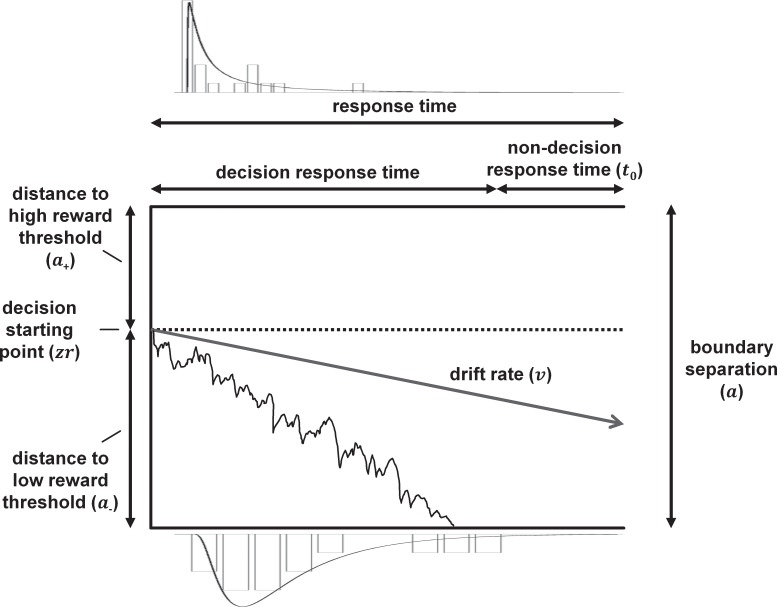
“The diffusion model [27, 28] (Fig 1) breaks down the decision making process into components which include the decision starting point, decision criteria (thresholds), quality of incoming information and the time taken for non-decision processes.”
BackgroundMethodCognition and Depression: Current Status and Future Directions
Gotlib, I. H., & Joormann, J. (2010) · Annual Review of Clinical Psychology · doi:10.1146/annurev.clinpsy.121208.131305 · Cited by 2,420 · cited 1×
“Patients with mood disorders show abnormal processing of rewarding [7, 71] and aversive [72] stimuli.”
BackgroundCognitive vulnerability to emotional disorders
Mathews, A., & MacLeod, C. (2005) · Annual Review of Clinical Psychology · doi:10.1146/annurev.clinpsy.1.102803.143916 · Cited by 2,100 · cited 1×
“This also links to the many studies showing that there are different patterns of alterations of processing of positive versus negative stimuli and information in patients with anxiety compared to those with depression, and that this may be due dysfunction in different neural circuits (see [4, 5, 70] for detailed revie…”
ResultMechanisms of attentional biases towards threat in anxiety disorders: An integrative review
Cisler, J. M., & Koster, E. H. W. (2010) · Clinical Psychology Review · doi:10.1016/j.cpr.2009.11.003 · Cited by 1,753
A cognitive-motivational analysis of anxiety.
Mogg, K., & Bradley, B. P. (1998) · Behaviour Research and Therapy · doi:10.1016/s0005-7967(98)00063-1 · Cited by 1,642
The Evolution of the Cognitive Model of Depression and Its Neurobiological Correlates
Beck, A. T. (2008) · American Journal of Psychiatry · doi:10.1176/appi.ajp.2008.08050721 · Cited by 1,537
Cited by
Prefrontal cortex and depression
Pizzagalli, D. A., & Roberts, A. C. (2022) · Neuropsychopharmacology · doi:10.1038/s41386-021-01101-7 · Cited by 667
“In ambiguous cue tests reward and punishment [43, 44] or different amounts of reward [45, 46] are associated with two different sensory cues lying along a continuum, e.”
BackgroundAnimal affect and decision-making
Mendl, M., & Paul, E. S. (2020) · Neuroscience & Biobehavioral Reviews · doi:10.1016/j.neubiorev.2020.01.025 · Cited by 187
Optimism, pessimism and judgement bias in animals: A systematic review and meta-analysis
Lagisz, M., Zidar, J., Nakagawa, S., Neville, V., Sorato, E., Paul, E. S., Bateson, M., Mendl, M., & Løvlie, H. (2020) · Neuroscience & Biobehavioral Reviews · doi:10.1016/j.neubiorev.2020.07.012 · Cited by 189
Identifying Transdiagnostic Mechanisms in Mental Health Using Computational Factor Modeling
Wise, T., Robinson, O. J., & Gillan, C. M. (2023) · Biological Psychiatry · doi:10.1016/j.biopsych.2022.09.034 · Cited by 108
“…in depression (53) was adapted from a task used in rodents, providing additional potential for neurobiological investigations; speci fi cally, administration of a GABA A inverse agonist induces a negative bias and lower drift rate (50), suggesting that GABA may play a role in this symptom dimension.”
Robinson, E. S. J. (2018) · Philosophical Transactions of the Royal Society B Biological Sciences · doi:10.1098/rstb.2017.0036 · Cited by 69
Self-citation
Metadata
- Authors
- Hales, C. A., Robinson, E. S. J., & Houghton, C. J.
- Affiliations
- University of Bristol (GB)
- Corresponding author
- Houghton, Conor J.
- Venue
- PLOS ONE
- Publisher
- Public Library of Science (PLoS)
- Published
- 2016-03-29
- Volume
- 11
- Issue
- 3
- Pages
- e0152592
- ISSN
- 1932-6203 (ISSN-L)
- PMC
- PMC4811525
- OpenAlex
- W2335145190
- Cited by
- 49
- References
- 78
- Citations by year
- 2026: 3 · 2025: 3 · 2024: 2 · 2023: 1 · 2022: 10 · 2021: 7 · 2020: 8 · 2019: 5 · 2018: 5 · 2017: 4
- FWCI
- 2.97
- Type
- journal article
- Language
- en
- Open access
- gold
- doi.org
- Licence
- Locations
- PLoS ONE (publishedVersion, cc-by)
- PubMed Central (publishedVersion, cc-by)
- PubMed (publishedVersion)
- RePEc: Research Papers in Economics (submittedVersion, cc-by)
- DOAJ (DOAJ: Directory of Open Access Journals) (submittedVersion, cc-by-sa)
- Figshare (submittedVersion, cc-by)
- Explore Bristol Research (submittedVersion, cc-by)
- Bristol Research (University of Bristol) (submittedVersion, cc-by)
- Funders
- James S. McDonnell Foundation (JSMF #220020239, 220020239)
- Eli Lilly and Company
- Pfizer
- Wellcome Trust (099699/Z/12/Z, 097822/Z/11/ZR, 097822, 099699)
- International Seafood Sustainability Foundation
- Cancer Research UK
- British Pharmacological Society
- Research Councils UK
- University of Bristol
- Medical Research Council
- Biotechnology and Biological Sciences Research Council
- Topics
- Life Sciences › Neuroscience › Cognitive Neuroscience › Neural and Behavioral Psychology Studies
- Social Sciences › Decision Sciences › General Decision Sciences › Decision-Making and Behavioral Economics
- Life Sciences › Neuroscience › Cognitive Neuroscience › Memory and Neural Mechanisms
- Keywords
- judgment bias, negative emotions, decision-making, diffusion models, FG 7142, anxiogenic drugs, chronic restraint stress, social isolation, decision threshold, reward anticipation, rats
- MeSH terms
- Animals, Behavior, Animal, Decision Making, Diffusion, Judgment, Male, Models, Theoretical, Task Performance and Analysis, Reproducibility of Results, Bias, Principal Component Analysis, Rats
About these checks
Registry, retraction, Cites and statistics results are computed, not judged, with one exception: a printed reference that no index lists is read once by a model before it counts as a citation error. Claims are extracted by a model and kept only when their quote appears verbatim in the text; each cited source is then checked, with a model’s help, for whether it says what the claim relies on. Those verdicts can be wrong — read the claim’s quote and the cited source before relying on one.
Statistics and arithmetic are recomputed, not judged.
Confidence bands are shown only for fields calibrated on our annotated test set. None is calibrated yet, so no band is shown.
What counts as a claim ›How we measure confidence ›How we check this ›
Are you an author, or do you see a problem with this page? Request a review
Data sources
Bibliographic data: Semantic Scholar, OpenAlex, Crossref.
Contains information from the Semantic Scholar Academic Graph Datasets, made available under the ODC Attribution License (ODC-BY 1.0).
Semantic Scholar’s data is described in: Kinney, R., et al. (2023). The Semantic Scholar Open Data Platform. arXiv:2301.10140.
