

Efficacy of Exercise Interventions in Patients with Acute Leukemia: A Meta-Analysis
Open accessThe DOI matches its Crossref record; 32 of the 33 references it cites were found in a registry or an index; 1 of the 5 sources its claims cite were checked for support.
Abstract
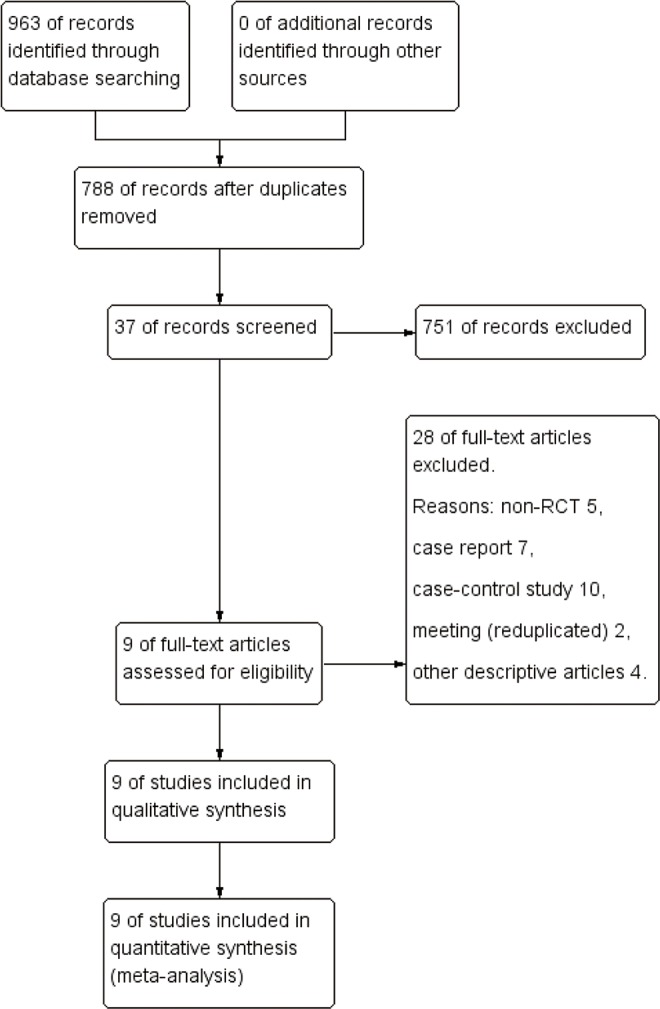
BACKGROUND: Decreased physical performance and impaired physiological and psychological fitness have been reported in patients with acute leukemia (AL). We performed a meta-analysis to assess the efficacy of exercise in patients with AL. METHODS: In this meta-analysis, the electronic databases MEDLINE, Embase, Cochrane, Web of Science, SPORTDiscus, CINAHL and PEDro were searched through November 2015. Three authors participated in the study selection, data extraction and quality assessment. The instrument used for quality assessment was derived from the Cochrane Handbook for Systematic Reviews of Interventions. Analyses were performed according to the recommendations of The Cochrane Collaboration using Review Manager 5.3. RESULTS: Nine trials (8 randomized controlled trials and 1 quasi-experimental design trial) with 314 AL participants were included in this meta-analysis. The pooled standardized mean differences between the exercise and control groups were 0.45 (95% confidence interval (CI): 0.09 to 0.80, P value = 0.01, P for heterogeneity = 0.23, I2 = 28%) for cardiorespiratory fitness and 0.67 (95% CI: 0.28 to 1.06, P value = 0.0007, P for heterogeneity = 0.14, I2 = 43%) for muscle strength. Based on the data for fatigue, anxiety, and depression, there were no significant differences in these parameters between the exercise and control groups. CONCLUSIONS: Exercise has beneficial effects on cardiorespiratory fitness, muscle strength and functional mobility; however, no significant improvements in fatigue, anxiety, depression or quality of life were observed. Further large-scale randomized trials are needed to assess the safety, feasibility and efficacy of exercise programs for AL patients.
Overview
CoChat Summary
## TL;DR
This meta-analysis of 9 trials with 314 acute leukemia participants found that exercise improved cardiorespiratory fitness and muscle strength, but not fatigue, anxiety, depression, or quality of life. The authors conclude that more large, high-quality randomized trials are needed to assess safety, feasibility, and efficacy.
## Key findings
- Nine trials were included: 8 randomized controlled trials and 1 quasi-experimental design trial, totaling 314 participants.
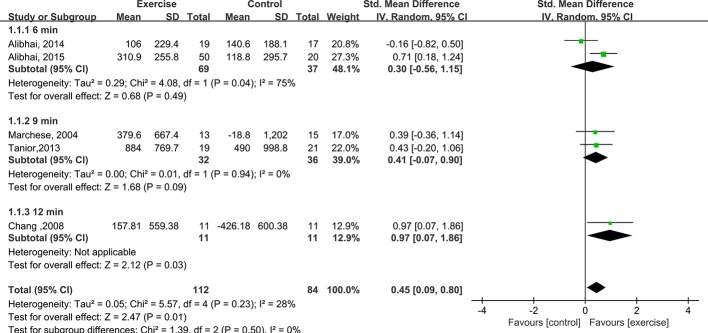
- Exercise significantly improved cardiorespiratory fitness: pooled SMD = 0.45 (95% CI 0.09 to 0.80; P = 0.01; I² = 28%).
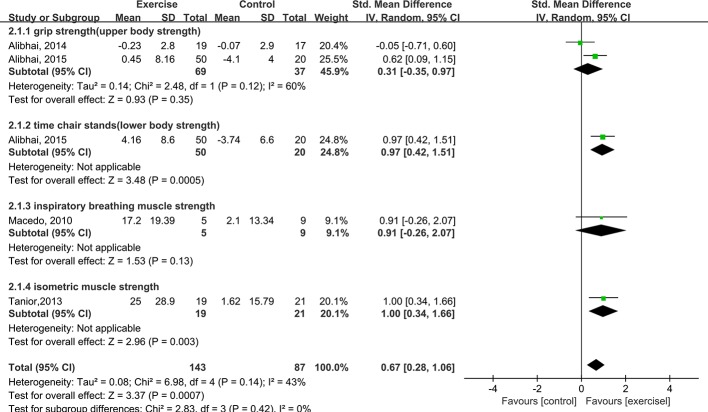
- Exercise significantly improved muscle strength: pooled SMD = 0.67 (95% CI 0.28 to 1.06; P = 0.0007; I² = 43%).
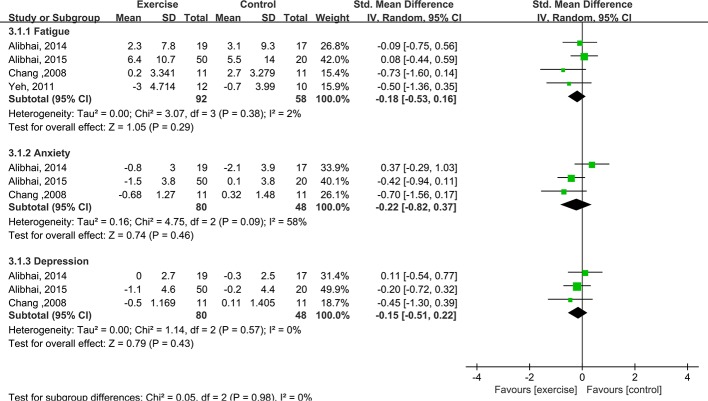
- No significant differences were found for fatigue (SMD = -0.18), anxiety (SMD = -0.22), depression (SMD = -0.15), hemoglobin level (SMD = -0.29), or BMI (SMD = 0.60). Functional mobility improved, including the timed up and down stairs test (MD = -1.52) and timed up and go test (SMD = -1.15).
## Methods
- Systematic review and meta-analysis of human participants with acute leukemia (AML or ALL) undergoing induction or post-remission therapy; exercise interventions were compared with standard care/no exercise.
- Searched MEDLINE, Embase, Cochrane, Web of Science, SPORTDiscus, CINAHL, and PEDro through November 2015, with no language restriction.
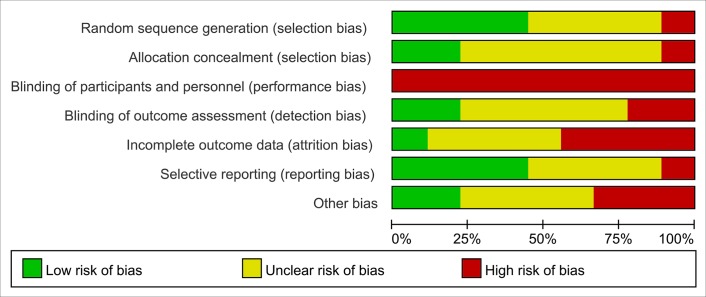
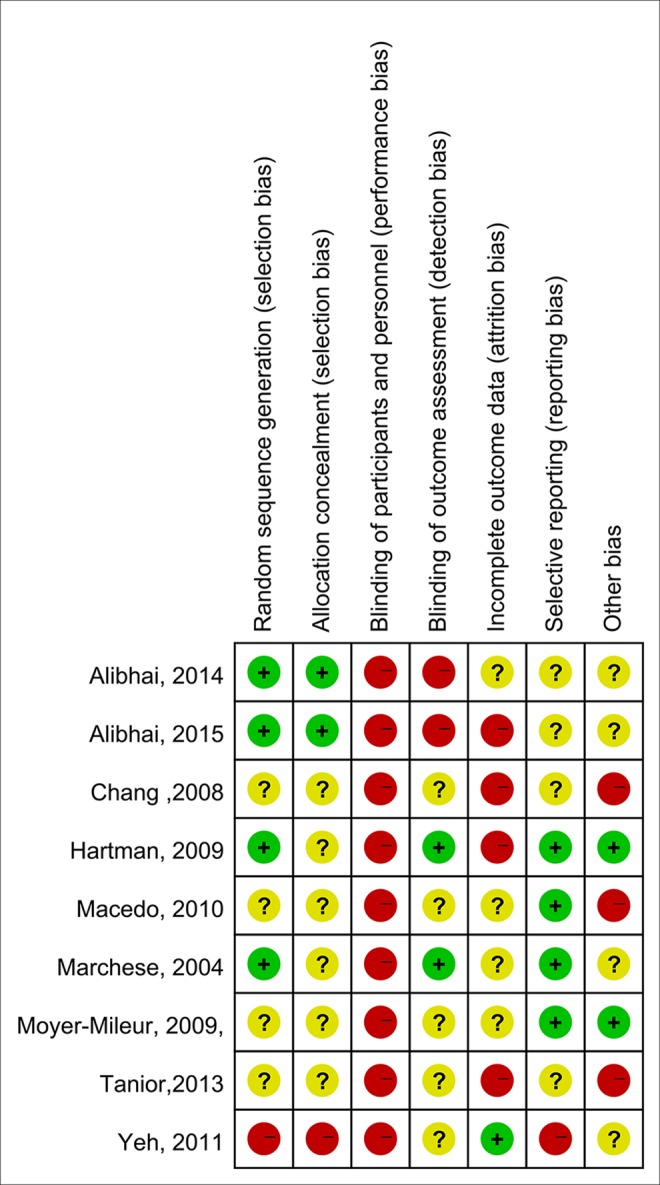
- Two/three authors independently screened studies, extracted data, and assessed quality/risk of bias using Cochrane Handbook criteria; pooled analyses were done in Review Manager 5.3 using MD or SMD with 95% CIs.
## Limitations
- The paper states that only a small number of studies were available, which limited subgroup analyses by exercise frequency, intensity, time, and type, and prevented generation of a funnel plot for publication bias.
- The authors note that missing data may have affected the results and introduced bias.
- Evident from the text: some outcomes were reported by only a few studies, and several measures (for example QOL) could not be pooled because different instruments were used.
Model-written summary. Check it against the paper before relying on it.
Integrity signals
Registry
Cites
Statistics
Figures
Verification
Claims the paper makes
1 Valid · 1 Not valid · 3 Not checked · 32 Own results and interpretations
A result the paper reports from its own data — it cites no other source for it, so there is none to check. The quote shows it is in the paper.
In the paper
“The aggregated results of the “timed up and down stairs test” showed a significant difference between the exercise and control groups, with an MD of -1.52 (95% CI: -2.38 to -0.65, P value = 0.0006, P for heterogeneity = 0.20, I2 = 39%).”
§ Efficacy of Exercise Interventions in Patients with Acute Leukemia: A Meta-Analysis > Results > Meta-analysis of outcome measures
plainstates a cause- Asserted: passes — The authors put it forward as true.
- Checkable: passes — It can be checked against evidence.
- Load-bearing: unclear — It is unclear whether the paper’s conclusions depend on it.
- Based: passes — The paper gives a reason why it holds.
None of the sources cited for this claim have been checked yet.
In the paper
“The aggregated results of Alibhai et al. [19,20] showed a non-significant difference in overall health-related QOL between the exercise and control groups (SMD = -7.61, 95% CI: -16.34 to 1.11, P value = 0.09, P for heterogeneity = 0.31, I2 = 3%).”
- Also stated in: § Conclusion · plain
“No significant exercise-induced improvements in fatigue, anxiety, depression or QOL were found.”
§ Efficacy of Exercise Interventions in Patients with Acute Leukemia: A Meta-Analysis > Results > Meta-analysis of outcome measures
plain- Asserted: passes — The authors put it forward as true.
- Checkable: passes — It can be checked against evidence.
- Load-bearing: passes — The paper’s conclusions depend on it.
- Based: passes — The paper gives a reason why it holds.
- Also stated in: § Conclusion · plain
A result the paper reports from its own data — it cites no other source for it, so there is none to check. The quote shows it is in the paper.
In the paper
“The pooled standardized mean differences between the exercise and control groups were 0.45 (95% confidence interval (CI): 0.09 to 0.80, P value = 0.01, P for heterogeneity = 0.23, I2 = 28%) for cardiorespiratory fitness”
- Also stated in: § Meta-analysis of outcome measures · plain
“The aggregated results of the five studies revealed a significant difference in cardiovascular fitness between the interventions (SMD = 0.45, 95% CI: 0.09 to 0.80, P value = 0.01, P for heterogeneity = 0.23, I2 = 28%).”
§ Efficacy of Exercise Interventions in Patients with Acute Leukemia: A Meta-Analysis > Abstract > Results
plainstates a causen = 196 ·- Asserted: passes — The authors put it forward as true.
- Checkable: passes — It can be checked against evidence.
- Load-bearing: passes — The paper’s conclusions depend on it.
- Based: passes — The paper gives a reason why it holds.
- Also stated in: § Meta-analysis of outcome measures · plain
A result the paper reports from its own data — it cites no other source for it, so there is none to check. The quote shows it is in the paper.
In the paper
“depression: SMD = -0.15, 95% CI: -0.51 to 0.22, P value = 0.28, P for heterogeneity = 0.57, I2 = 0%)”
- Also stated in: § Conclusion · plain
“No significant exercise-induced improvements in fatigue, anxiety, depression or QOL were found.”
§ Efficacy of Exercise Interventions in Patients with Acute Leukemia: A Meta-Analysis > Results > Meta-analysis of outcome measures
plain- Asserted: passes — The authors put it forward as true.
- Checkable: passes — It can be checked against evidence.
- Load-bearing: passes — The paper’s conclusions depend on it.
- Based: passes — The paper gives a reason why it holds.
- Also stated in: § Conclusion · plain
A result the paper reports from its own data — it cites no other source for it, so there is none to check. The quote shows it is in the paper.
In the paper
“The pooled standardized mean differences between the exercise and control groups were 0.45 (95% confidence interval (CI): 0.09 to 0.80, P value = 0.01, P for heterogeneity = 0.23, I2 = 28%) for cardiorespiratory fitness and 0.67 (95% CI: 0.28 to 1.06, P value = 0.0007, P for heterogeneity = 0.14, I2 = 43%) for muscle strength.”
- Also stated in: § Meta-analysis of outcome measures · plain
“The aggregated results of these studies showed a significant difference in muscle strength between the intervention and control groups, with an SMD of 0.67 (95% CI: 0.28 to 1.06, P value = 0.0007, P for heterogeneity = 0.14, I2 = 43%)”
§ Efficacy of Exercise Interventions in Patients with Acute Leukemia: A Meta-Analysis > Abstract > Results
plainstates a causen = 160 ·- Asserted: passes — The authors put it forward as true.
- Checkable: passes — It can be checked against evidence.
- Load-bearing: passes — The paper’s conclusions depend on it.
- Based: passes — The paper gives a reason why it holds.
- Also stated in: § Meta-analysis of outcome measures · plain
22 more claims
Create a free account to see all 37 claims and to verify the 4 references still open.
- Probably not a substantial claim. 7
- It may state two separate claims as one. 6
- The quote only partly states this claim. 1
Claims other papers make about this one
Each is checked against this paper’s own text: does it say what the citing paper says it does?
The cited source doesn’t support the claim as written.
In the citing paper
“A dose of moderate intensity aerobic training three times per week for 12 weeks or twice weekly combined aerobic plus resistance training for 6–12 weeks can significantly reduce anxiety in cancer survivors during and after treatment(13–17).”
From Exercise Guidelines for Cancer Survivors: Consensus Statement from International Multidisciplinary Roundtable (2019) · cites this paper as [14]
Checked by a reasoning model — may be wrong.
Experimental — accuracy not yet measured
Self-check
Percentages, sums and reported differences re-computed from the paper’s own numbers.
Each contradiction between two passages listed here was confirmed by an independent check.
Rated minor: it would not touch a result — a value no result rests on, a p-value that stays on the same side of the significance level, or a conflict that is clerical, resolved elsewhere in the paper, or outside its own findings.
In the paper
§ Efficacy of Exercise Interventions in Patients with Acute Leukemia: A Meta-Analysis > Results > Meta-analysis of outcome measures
“The results of the “timed up and go test” also revealed a significant difference between the exercise and control groups (SMD = -1.15, 95% CI: -1.83 to 0.48, P value = 0.0008).”
Rated minor: it would not touch a result — a value no result rests on, a p-value that stays on the same side of the significance level, or a conflict that is clerical, resolved elsewhere in the paper, or outside its own findings.
In the paper
§ Efficacy of Exercise Interventions in Patients with Acute Leukemia: A Meta-Analysis > Results > Meta-analysis of outcome measures
“The results of the “timed up and go test” also revealed a significant difference between the exercise and control groups (SMD = -1.15, 95% CI: -1.83 to 0.48, P value = 0.0008).”
§ Efficacy of Exercise Interventions in Patients with Acute Leukemia: A Meta-Analysis > Results > Meta-analysis of outcome measures
“The results of the “timed up and go test” also revealed a significant difference between the exercise and control groups”
Citations
Cites
The Cochrane Collaboration's tool for assessing risk of bias in randomised trials
Higgins, J. P. T., Altman, D. G., Gotzsche, P. C., Juni, P., Moher, D., Oxman, A. D., Savovic, J., Schulz, K. F., Weeks, L., Sterne, J. A. C., et al. (2011) · BMJ · doi:10.1136/bmj.d5928 · Cited by 33,817
Dermyshi, E., Wang, Y., Yan, C., Hong, W., Qiu, G., Gong, X., & Zhang, T. (2017) · Neonatology · doi:10.1159/000454668 · Cited by 24,451
Siegel, R. L., Miller, K. D., & Jemal, A. (2016) · CA: A Cancer Journal for Clinicians · doi:10.3322/caac.21332 · Cited by 16,003
Pate, R. R. (1995) · JAMA · doi:10.1001/jama.1995.03520290054029 · Cited by 4,606 · cited 1×
“Introduction Cancer patients gradually exercise less as the disease progresses and typically get less than the recommended level of exercise, as stated in previously published studies [1,2].”
ResultDoyle, C., Kushi, L. H., Byers, T., Courneya, K. S., Demark-Wahnefried, W., Grant, B., McTiernan, A., Rock, C. L., Thompson, C., Gansler, T., et al. (2006) · CA: A Cancer Journal for Clinicians · doi:10.3322/canjclin.56.6.323 · Cited by 950
Cancer-Related Fatigue, Version 2.2015
Berger, A. M., Mooney, K., Alvarez-Perez, A., Breitbart, W. S., Carpenter, K. M., Cella, D., Cleeland, C., Dotan, E., Eisenberger, M. A., Escalante, C. P., et al. (2015) · Journal of the National Comprehensive Cancer Network · doi:10.6004/jnccn.2015.0122 · Cited by 949
Effects of exercise on cancer-related fatigue
Dimeo, F. C. (2001) · Cancer · doi:10.1002/1097-0142(20010915)92:6+<1689::aid-cncr1498>3.0.co;2-h · Cited by 323
Effects of exercise dose and type during breast cancer chemotherapy: multicenter randomized trial
Courneya, K. S., McKenzie, D. C., Mackey, J. R., Gelmon, K., Friedenreich, C. M., Yasui, Y., Reid, R. D., Cook, D., Jespersen, D., Proulx, C., et al. (2013) · JNCI: Journal of the National Cancer Institute · doi:10.1093/jnci/djt297 · Cited by 297
Effects of physical therapy intervention for children with acute lymphoblastic leukemia
Marchese, V. G., Chiarello, L. A., & Lange, B. J. (2004) · Pediatric Blood & Cancer · doi:10.1002/pbc.10481 · Cited by 270 · cited 9×
“Further, Wolin et al. [4] investigated the effects of exercise on adult and pediatric survivors of hematologic cancer (including five RCTs and eight non-RCTs).”
BackgroundMethodInfluentialHartman, A., te Winkel, M. L., van Beek, R. D., de Muinck Keizer‐Schrama, S. M. P. F., Kemper, H. C. G., Hop, W. C. J., van den Heuvel‐Eibrink, M. M., & Pieters, R. (2009) · Pediatric Blood & Cancer · doi:10.1002/pbc.21942 · Cited by 203 · cited 6×
“Further, Wolin et al. [4] investigated the effects of exercise on adult and pediatric survivors of hematologic cancer (including five RCTs and eight non-RCTs).”
BackgroundInfluential
Research works printed but not linked: 2
- De Macedo TMF, Oliveira KMC, Melo JBDC, De Medeiros MG, De Medeiros FWC, Ferreira GMH, et al Inspiratory muscle training in patients with acute leukemia: Preliminary results. Revista Paulista de Pediatria. 2010; 28: 352– 358.
- Winningham M. How exercise mitigates fatigue: implications for people receiving cancer therapy. Biotherapy of Cancer. 1992: 16– 21.
Cited by
CAMPBELL, K. L., WINTERS-STONE, K. M., WISKEMANN, J., MAY, A. M., SCHWARTZ, A. L., COURNEYA, K. S., ZUCKER, D. S., MATTHEWS, C. E., LIGIBEL, J. A., GERBER, L. H., et al. (2019) · Medicine & Science in Sports & Exercise · doi:10.1249/mss.0000000000002116 · Cited by 2,988
Gilchrist, S. C., Barac, A., Ades, P. A., Alfano, C. M., Franklin, B. A., Jones, L. W., La Gerche, A., Ligibel, J. A., Lopez, G., Madan, K., et al. (2019) · Circulation · doi:10.1161/cir.0000000000000679 · Cited by 472
Fuller, J. T., Hartland, M. C., Maloney, L. T., & Davison, K. (2018) · British Journal of Sports Medicine · doi:10.1136/bjsports-2017-098285 · Cited by 199
A Focused Review of Safety Considerations in Cancer Rehabilitation
Maltser, S., Cristian, A., Silver, J. K., Morris, G. S., & Stout, N. L. (2017) · PM&R · doi:10.1016/j.pmrj.2017.08.403 · Cited by 143
Aerobic physical exercise for adult patients with haematological malignancies
Knips, L., Bergenthal, N., Streckmann, F., Monsef, I., Elter, T., & Skoetz, N. (2019) · Cochrane Database of Systematic Reviews · doi:10.1002/14651858.cd009075.pub3 · Cited by 109
Baťalík, L., Filáková, K., Radkovcova, I., Dosbaba, F., Winnige, P., Vlažná, D., Batalikova, K., Felšőci, M., Stefanakis, M., Líška, D., et al. (2022) · Frontiers in Cardiovascular Medicine · doi:10.3389/fcvm.2022.858334 · Cited by 48
Adams, S. C., Rivera-Theurel, F., Scott, J. M., Nadler, M. B., Foulkes, S., Leong, D. P., Nilsen, T. S., Porter, C., Haykowsky, M. J., Abdel-Qadir, H. M., et al. (2025) · European Heart Journal · doi:10.1093/eurheartj/ehaf100 · Cited by 48
Zhang, B., Jin, X., Kuang, X., Shen, B., Qiu, D., Peng, J., Chen, E., Dai, X., Chen, X., & Wong, C. L. (2023) · Cancer Nursing · doi:10.1097/ncc.0000000000001206 · Cited by 42
Depression in Somatic Disorders: Is There a Beneficial Effect of Exercise?
Roeh, A., Kirchner, S. K., Malchow, B., Maurus, I., Schmitt, A., Falkai, P., & Hasan, A. (2019) · Frontiers in Psychiatry · doi:10.3389/fpsyt.2019.00141 · Cited by 40
“of meta-analyses References Breast cancer 7 (17–23) Mixed cancer types 7 (24–30) Prostate cancer 3 (31–33) Cardiovascular disease 1 (34) Coronary Heart disease 1 (35) Heart failure 2 (36, 37) Intradialytic patients 2 (38, 39) Hemodialysis patients 1 (40) Fibromyalgia 2 (41, 42) Ankylosing spondylitis 1 (43) Lupus eryt…”
BackgroundMorishita, S., Nakano, J., Fu, J. B., & Tsuji, T. (2020) · Hematology · doi:10.1080/16078454.2020.1730556 · Cited by 35
Zhang, Y., Zhong, X., Han, N., Tang, H., Wang, S., & Lin, W. (2023) · Supportive Care in Cancer · doi:10.1007/s00520-023-07619-4 · Cited by 34
Fioritto, A. P., Oliveira, C. C., Albuquerque, V. S., de Almeida, L. B., Granger, C. L., Denehy, L., & Malaguti, C. (2019) · Disability and Rehabilitation · doi:10.1080/09638288.2019.1626493 · Cited by 30
Elnaggar, R. K., & Mohamed, R. R. (2021) · Seminars in Oncology Nursing · doi:10.1016/j.soncn.2021.151225 · Cited by 28
Fu, J. B., Tennison, J. M., Rutzen, I. M., Silver, J. K., Morishita, S., Dibaj, S. S., & Bruera, E. D. (2018) · Supportive Care in Cancer · doi:10.1007/s00520-018-4160-y · Cited by 27
Cardio-Oncology Rehabilitation—Present and Future Perspectives
ELAD, B., Habib, M., & Caspi, O. (2022) · Life · doi:10.3390/life12071006 · Cited by 25
Xu, W., Yang, L., Wang, Y., Wu, X., Wu, Y., & Hu, R. (2022) · Supportive Care in Cancer · doi:10.1007/s00520-022-07029-y · Cited by 20
Liu, Z., Wang, Y., Yan, J., Liu, J., Chen, B., Zhang, L., & Li, C. (2019) · Journal of Evaluation in Clinical Practice · doi:10.1111/jep.13152 · Cited by 19
Duregon, F., Gobbo, S., Bullo, V., Roma, E., Vendramin, B., Bergamo, M., Bocalini, D. S., Blasio, A. D., Cugusi, L., Neunhäeuserer, D., et al. (2019) · Hematological Oncology · doi:10.1002/hon.2576 · Cited by 19
Consensus of Chinese experts on exercise therapy for cancer patients
Cong, M., & HanPing, S. H. I. (2022) · Scientia Sinica Vitae · doi:10.1360/ssv-2022-0028 · Cited by 16
“AeRop exercise” can improve the sleep quality of Indonesian pediatric cancer patients
Khoirunnisa, K., Hayati, H., Afiyanti, Y., & Allenidekania (2019) · Enfermería Clínica · doi:10.1016/j.enfcli.2019.04.041 · Cited by 14
Yang, Y., Pan, S.-J., Qiu, S.-L., & Tung, T. (2022) · World Journal of Clinical Cases · doi:10.12998/wjcc.v10.i10.3143 · Cited by 14
Liu, H., Yin, J., Wang, K., Liu, S., Yang, Y., Song, Z., Dong, C., Zhang, T., & Luo, J. (2024) · Supportive Care in Cancer · doi:10.1007/s00520-024-08355-z · Cited by 13
Yennurajalingam, S., Konopleva, M. Y., Carmack, C. L., Dinardo, C. D., Gaffney, M., Michener, H., Lu, Z., Stanton, P. A., Ning, J., Qiao, W., et al. (2022) · Journal of Pain and Symptom Management · doi:10.1016/j.jpainsymman.2022.11.003 · Cited by 12
Fadhilah, A., & Allenidekania, A. (2019) · Comprehensive Child and Adolescent Nursing · doi:10.1080/24694193.2019.1577925 · Cited by 11
Feasibility of implementing an exercise intervention in older adults with hematologic malignancy
Rosko, A. E., Huang, Y., Jones, D., Presley, C. J., Jaggers, J. L., Owens, R., Naughton, M. J., & Krok‐Schoen, J. L. (2021) · Journal of Geriatric Oncology · doi:10.1016/j.jgo.2021.07.010 · Cited by 10
Bühl, L., Abel, T., Wolf, F., Oberste, M., Bloch, W., Hallek, M. J., Elter, T., & Zimmer, P. (2019) · Integrative Cancer Therapies · doi:10.1177/1534735419832358 · Cited by 8
The role of resistance training in mitigating cancer-induced cachexia: A systematic review
Horawski, J. L., Fleszar‐Pavlović, S. E., Lopez‐Pentecost, M., Crane, T. E., Wheeler, M. G., Kholodovsky, E., & Best, T. M. (2025) · Sports Medicine and Health Science · doi:10.1016/j.smhs.2025.01.002 · Cited by 7
Exercise Prescription in Cardio-Oncology
Campana, N., Fazzini, L., Donisi, C., Nava, A., Migliari, M., Deidda, M., Pretta, A., Scartozzi, M., & Dessalvi, C. C. (2025) · Journal of Clinical Medicine · doi:10.3390/jcm14113724 · Cited by 7
Fournier, B., Nicolas‐Virelizier, E., Russo, C., Pérol, O., Millet, G. Y., Maire, A., Delrieu, L., Michallet, A., Assaad, S., Belhabri, A., et al. (2021) · BMJ Open · doi:10.1136/bmjopen-2020-046409 · Cited by 7
Changes in physical fitness in acute leukemia patients during chemotherapy
Xu, W., Li, Z., Wang, C., Chen, J., Wu, Y., & Hu, R. (2025) · Scientific Reports · doi:10.1038/s41598-025-89703-9 · Cited by 5
Moriyama, S., Kondo, M., Awamura, R., Hieda, M., & Fukata, M. (2025) · Circulation Reports · doi:10.1253/circrep.cr-24-0161 · Cited by 5
Großek, A., Elter, T., Oberste, M., Wolf, F., Joisten, N., Hartig, P., Walzik, D., Rosenberger, F., Kiesl, D., Wahl, P., et al. (2021) · Supportive Care in Cancer · doi:10.1007/s00520-021-06035-w · Cited by 5
Ruiz-Campos, S., Sanchez‐Gomez, J., Ruiz‐González, D., León‐Rodríguez, A., Sánchez‐Sánchez, J. L., Rodríguez-Solana, A., Soriano-Maldonado, A., Martínez‐Téllez, B., Valenzuela, P. L., & Morales, J. S. (2026) · British Journal of Sports Medicine · doi:10.1136/bjsports-2025-110756 · Cited by 3
Smith, M. J., Mark, R. S., Nette, H., & Rhodes, R. E. (2023) · Supportive Care in Cancer · doi:10.1007/s00520-023-07725-3 · Cited by 3
Albrecht, T., Pastva, A. M., Yang, Q. Z., Lee, Y., LeBlanc, T. W., Richardson, D. R., & Bryant, A. L. (2024) · Cancer Nursing · doi:10.1097/ncc.0000000000001408 · Cited by 2
de la Cruz, A. B., Leon, C. A., Bolívar, S. M. Z., Gómez, J. C. D., González, M. D. F., Bernal, K. D. R., & Baena, J. V. T. (2024) · Revista de la Sociedad Española del Dolor · doi:10.20986/resed.2023.4098/2023 · Cited by 2
New Trends in Integrative Cancer Care: The Role of Exercise, Music, and Education
Casuso-Holgado, M. J., Heredia‐Rizo, A. M., Trigueros-Murillo, A., & Martínez-Miranda, P. (2024) · Interdisciplinary cancer research · doi:10.1007/16833_2024_338 · Cited by 1
Physical Activity and Exercise Adherence in People With Hematologic Malignancies
Hacker, E. D. (2019) · The Journal for Nurse Practitioners · doi:10.1016/j.nurpra.2019.04.016 · Cited by 1
Uwase, E., Caru, M., Curnier, D., Abasq, M., Andelfinger, G., Krajinovic, M., Laverdière, C., Sinnett, D., & Périé, D. (2023) · Journal of Pediatric Hematology/Oncology · doi:10.1097/mph.0000000000002682 · Cited by 1
Frailty and Mental Health in Older Patients with Gastrointestinal Cancer
Okumura, M., & Ono, R. (2022) · Springer eBooks · doi:10.1007/978-981-19-6710-8_19
Fournier, B., Russo, C., Maire, A., Buono, R., Lebras, L. L., Guillermin, Y., Santana, C., Rey, P., Belhabri, A., Michallet, A., et al. (2026) · Journal of Geriatric Oncology · doi:10.1016/j.jgo.2026.102901
Hambrick, A., Hunt, B., Minick, K. I., Snow, G. L., & Brennan, G. P. (2025) · Journal of Acute Care Physical Therapy · doi:10.1097/jat.0000000000000255
Uwase, E. (2024) · PolyPublie (École Polytechnique de Montréal)
Bas, O., Ivasyk, N., Тиравська, О. І., & Hertsyk, A. (2021) · Zaporozhye Medical Journal · doi:10.14739/2310-1210.2021.3.215664
Lange, U., Klemm, P., & Reuss-Borst, M. A. (2024) · Zeitschrift für Rheumatologie · doi:10.1007/s00393-024-01564-1
Alfiyanti, D., Rosyada, A. N., Mariyam, Pohan, V. Y., Samiasih, A., & Arief, Y. S. (2022) · doi:10.2991/978-94-6463-070-1_26
Zdrowie, fizjoterapia, kultura fizyczna i pedagogika.
Кіндзер, Б., Skalski, D., Заболотна, О., Sushchenko, A., & Grygus, I. M. (2022) · Zenodo (CERN European Organization for Nuclear Research) · doi:10.5281/zenodo.6591482
Macias Medrano, A., & de Medicina, U. A. D. B. F. (2023) · Dipòsit Digital de Documents de la UAB (Universitat Autònoma de Barcelona)
Pilquiman, S. V. (2025) · RIUFLO - Repositorio Institucional UFLO
Metadata
- Authors
- Zhou, Y., Zhu, J., Gu, Z., & Yin, X.
- Affiliations
- Jiangsu Province Hospital (CN)
- Nanjing University of Aeronautics and Astronautics (CN)
- Nanjing Medical University (CN)
- Corresponding author
- Gu, Zejuan
- Venue
- PLoS ONE
- Publisher
- Public Library of Science (PLoS)
- Published
- 2016-07-27
- Volume
- 11
- Issue
- 7
- Pages
- e0159966
- ISSN
- 1932-6203 (ISSN-L)
- PMC
- PMC4962985
- OpenAlex
- W2495224994
- Semantic Scholar
- a8c16ae05396cd6c607a5ef2825f837c7f5ad7e2
- Cited by
- 45
- References
- 33
- Citations by year
- 2026: 2 · 2025: 6 · 2024: 4 · 2023: 5 · 2022: 8 · 2021: 5 · 2020: 1 · 2019: 11 · 2018: 2 · 2017: 1
- FWCI
- 0.47
- Type
- journal article
- Language
- en
- Open access
- gold
- doi.org
- Licence
- Locations
- PLoS ONE (publishedVersion, cc-by)
- Europe PMC (PubMed Central) (publishedVersion, cc-by)
- PubMed Central (publishedVersion, cc-by)
- PubMed (publishedVersion)
- RePEc: Research Papers in Economics (submittedVersion)
- DOAJ (DOAJ: Directory of Open Access Journals) (submittedVersion, cc-by-sa)
- Funders
- Jiangsu Province, "333 Project" Scientific Research Project ([2014] No.28)
- Topics
- Health Sciences › Medicine › Oncology › Cancer survivorship and care
- Health Sciences › Medicine › Public Health, Environmental and Occupational Health › Physical Activity and Health
- Health Sciences › Medicine › Physiology (medical) › Cardiovascular and exercise physiology
- Keywords
- acute leukemia, exercise intervention, cardiorespiratory fitness, muscle strength, functional mobility, fatigue, anxiety, depression, quality of life, cancer rehabilitation
- MeSH terms
- Exercise Therapy, Humans, Leukemia, Myeloid, Acute, Randomized Controlled Trials as Topic
About these checks
Registry, retraction, Cites and statistics results are computed, not judged, with one exception: a printed reference that no index lists is read once by a model before it counts as a citation error. Claims are extracted by a model and kept only when their quote appears verbatim in the text; each cited source is then checked, with a model’s help, for whether it says what the claim relies on. Those verdicts can be wrong — read the claim’s quote and the cited source before relying on one.
The claim verdicts this report counts are experimental: their accuracy is not yet measured.
A language model drew the claims from the paper on 2026-10-11, under version 3 of the claim definition (model deepseek-v4.1-flash, prompt extract-v3).
A second model labelled each claim on 2026-10-11 (model jev-1.13-20260917, definition revision gold-guideline-v0.2).
Statistics and arithmetic are recomputed, not judged.
Confidence bands are shown only for fields calibrated on our annotated test set. None is calibrated yet, so no band is shown.
What counts as a claim ›How we measure confidence ›How we check this ›
Are you an author, or do you see a problem with this page? Request a review
Data sources
Bibliographic data: Semantic Scholar, OpenAlex, Crossref.
Contains information from the Semantic Scholar Academic Graph Datasets, made available under the ODC Attribution License (ODC-BY 1.0).
Semantic Scholar’s data is described in: Kinney, R., et al. (2023). The Semantic Scholar Open Data Platform. arXiv:2301.10140.
