

The DOI matches its Crossref record; 40 of the 42 references it cites were found in a registry or an index.
Methodology for Developing Deprescribing Guidelines: Using Evidence and GRADE to Guide Recommendations for Deprescribing
Open accessAbstract
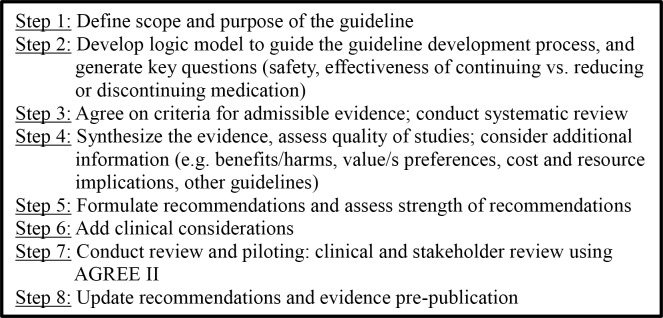
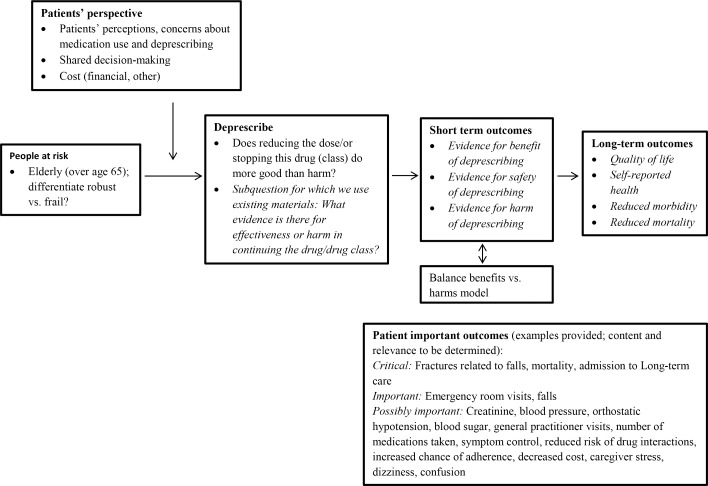
BACKGROUND: Class specific deprescribing guidelines could help clinicians taper and stop medications no longer needed or which may be causing more harm than benefit. We set out to develop methodology to create such guidelines using evidence-based methods for guideline development, evidence synthesis and recommendation rating. METHODS AND FINDINGS: Using a comprehensive checklist for a successful guideline enterprise, we conducted a national modified Delphi consensus process to identify priorities for deprescribing guidelines, then conducted scoping exercises to identify feasible topics, and sequentially developed three deprescribing guidelines. We selected guideline development team members for clinical expertise; a GRADE member worked with staff to ensure guideline development processes were followed. We conducted or used systematic searches and reviews of deprescribing trials of selected drug classes, reviews or systematic reviews of drug class effectiveness, reviews of reviews of drug class harm and narrative syntheses of contextual questions to inform recommendations and guideline development. Our 8 step process for guideline development included defining scope and purpose, developing a logic model to guide the process and generate key clinical questions, setting criteria for admissible evidence and conducting systematic reviews, synthesizing evidence considering additional contextual information and performing quality estimates, formulating recommendations and providing strength estimations, adding clinical considerations, conducting clinical and stakeholder review and finally updating content pre-publication. Innovative aspects of the guideline development process included synthesizing evidence for outcomes of tapering or stopping medication, and incorporating evidence for medication harm into the recommendation strength rating. Through the development of three deprescribing guidelines (for proton pump inhibitors, benzodiazepine receptor agonists and antipsychotics) and associated decision-support algorithms, we were able to gradually hone the methodology; each guideline will be published separately. CONCLUSION: Our methodology demonstrates the importance of searching for short and long-term outcomes, showing the benefits of deprescribing and studying patient preferences. This publication will support development of future deprescribing guidelines.
Overview
The claims and statistics of this paper haven’t been checked yet.
Free: it reads the open-access text and checks the first 5 claims that cite a source we can check. Create a free account to check every claim.
Integrity signals
Registry
Cites
Statistics
Figures


Verification
Claims the paper makes
The claims and statistics of this paper haven’t been checked yet.
Free: it reads the open-access text and checks the first 5 claims that cite a source we can check. Create a free account to check every claim.
Claims other papers make about this one
Each is checked against this paper’s own text: does it say what the citing paper says it does?
The check wasn’t confident either way, so it gives no verdict — never disputed.
In the citing paper
“Studies assessing the effect of abrupt versus gradual withdrawal [43,53,54,55,56] show that the withdrawal syndrome observed in the case of abrupt discontinuation makes it very difficult to stop the use of these molecules, especially in the case of short half-life BZDs. These studies recommend reducing BZD consumption over a period of at least 4 weeks.”
From Cognitive behavioral therapy and acceptance and commitment therapy for the discontinuation of long-term benzodiazepine use in insomnia and anxiety disorders (2021) · cites this paper as [54]
Experimental — accuracy not yet measured
Self-check
Percentages, sums and reported differences re-computed from the paper’s own numbers.
The self-check needs the paper’s full text.
Citations
Cites
Scoping studies: towards a methodological framework
Arksey, H., & O'Malley, L. (2005) · International Journal of Social Research Methodology · doi:10.1080/1364557032000119616 · Cited by 36,742 · cited 1×
“We conducted scoping exercises to identify three of the top five priority topics for which deprescribing guideline development would be feasible [21].”
MethodLiberati, A., Altman, D. G., Tetzlaff, J., Mulrow, C., Gøtzsche, P. C., Ioannidis, J. P. A., Clarke, M., Devereaux, P. J., Kleijnen, J., & Moher, D. (2009) · PLoS Medicine · doi:10.1371/journal.pmed.1000100 · Cited by 28,164
Cochrane Handbook for Systematic Reviews of Interventions: Cochrane Book Series
(2008) · doi:10.1002/9780470712184 · Cited by 25,048 · cited 1×
“They used the Cochrane methodological expectations for conduct of intervention reviews and the Cochrane handbook [27] and reported results of reviews using the PRISMA (Preferred Reporting in Systematic Reviews and Meta-Analyses) reporting guidelines with a PRISMA flow chart[28].”
MethodDermyshi, E., Wang, Y., Yan, C., Hong, W., Qiu, G., Gong, X., & Zhang, T. (2017) · Neonatology · doi:10.1159/000454668 · Cited by 24,451
Liberati, A., Altman, D. G., Tetzlaff, J., Mulrow, C., Gotzsche, P. C., Ioannidis, J. P. A., Clarke, M., Devereaux, P. J., Kleijnen, J., & Moher, D. (2009) · BMJ · doi:10.1136/bmj.b2700 · Cited by 17,648
GRADE guidelines: 1. Introduction—GRADE evidence profiles and summary of findings tables
Guyatt, G., Oxman, A. D., Akl, E. A., Kunz, R., Vist, G., Brozek, J., Norris, S., Falck-Ytter, Y., Glasziou, P., & deBeer, H. (2011) · Journal of Clinical Epidemiology · doi:10.1016/j.jclinepi.2010.04.026 · Cited by 10,681
GRADE guidelines: 3. Rating the quality of evidence
Balshem, H., Helfand, M., Schünemann, H. J., Oxman, A. D., Kunz, R., Brozek, J., Vist, G. E., Falck-Ytter, Y., Meerpohl, J., & Norris, S. (2011) · Journal of Clinical Epidemiology · doi:10.1016/j.jclinepi.2010.07.015 · Cited by 8,285 · cited 1×
“Each GDT used the GRADE approach to provide a formal rating of the synthesized evidence from the systematic review for the selected critical and important outcomes of deprescribing [29] (e.”
MethodAGREE II: advancing guideline development, reporting and evaluation in health care
Brouwers, M. C., Kho, M. E., Browman, G. P., Burgers, J. S., Cluzeau, F., Feder, G., Fervers, B., Graham, I. D., Grimshaw, J., Hanna, S. E., et al. (2010) · Canadian Medical Association Journal · doi:10.1503/cmaj.090449 · Cited by 3,790 · cited 3×
“A practicing family physician, nurse practitioner and pharmacist (who were not members of the Deprescribing project) provided a clinical review of each guideline using the AGREE II Global Rating Scale [33] to guide their evaluation in rating the scope and purpose of the guideline, stakeholder involvement, rigour of de…”
MethodInfluentialNorderyd, O. M., Koch, G., Papias, A., Köhler, A. A., Helkimo, A. N., Brahm, C., Lindmark, U., Lindfors, N., Mattsson, A., Rolander, B., et al. (2015) · PubMed · Cited by 3,584
By the American Geriatrics Society 2015 Beers Criteria Update Expert Panel (2015) · Journal of the American Geriatrics Society · doi:10.1111/jgs.13702 · Cited by 2,609
Cited by
Deprescribing proton pump inhibitors: Evidence-based clinical practice guideline.
Farrell, B. J., Pottie, K. C., Thompson, W., Boghossian, T. A., Pizzola, L., Rashid, F. J., Rojas‐Fernandez, C. H., Walsh, K., Welch, & Moayyedi, P. (2017) · Europe PMC (PubMed Central) · Cited by 430
Self-citationReeve, E., Thompson, W., & Farrell, B. (2017) · European Journal of Internal Medicine · doi:10.1016/j.ejim.2016.12.021 · Cited by 331
Self-citationDeprescribing benzodiazepine receptor agonists: Evidence-based clinical practice guideline.
(2018) · Europe PMC (PubMed Central) · Cited by 250
Self-citation(2018) · Europe PMC (PubMed Central) · Cited by 196
Self-citationDelirium in adult cancer patients: ESMO Clinical Practice Guidelines
Bush, S. H., Lawlor, P. G., Ryan, K., Centeno, C., Lucchesi, M., Kanji, S., Siddiqi, N., Morandi, A., Davis, D. H. J., Laurent, M., et al. (2018) · Annals of Oncology · doi:10.1093/annonc/mdy147 · Cited by 190
Deprescribing antihyperglycemic agents in older persons: Evidence-based clinical practice guideline.
Farrell, B. J., Black, C. D., Thompson, W., McCarthy, L. M., Rojas‐Fernandez, C. H., Lochnan, H. A., Shamji, S., Upshur, R. E. G., Bouchard, M., & Welch, V. A. (2017) · Europe PMC (PubMed Central) · Cited by 213
Self-citationReeve, E. (2020) · Journal of Pharmacy Practice and Research · doi:10.1002/jppr.1626 · Cited by 141
Sawan, M. J., Reeve, E., Turner, J. P., Todd, A., Steinman, M. A., Petrović, M., & Gnjidic, D. (2020) · Expert Review of Clinical Pharmacology · doi:10.1080/17512433.2020.1730812 · Cited by 131
“Another important area to assist implementation of deprescribing in clinical practice is development of evidence-based deprescribing guidelines [115].”
BackgroundWithdrawal of inhaled corticosteroids in COPD: a European Respiratory Society guideline
Chalmers, J. D., Laska, I. F., Franssen, F. M. E., Janssens, W., Pavord, I. D., Comas, D. R., McDonnell, M. J., Roche, N., Sin, D. D., Stolz, D., et al. (2020) · European Respiratory Journal · doi:10.1183/13993003.00351-2020 · Cited by 117
Deprescribing cholinesterase inhibitors and memantine in dementia: guideline summary
Reeve, E., Farrell, B. J., Thompson, W., Herrmann, N., SKETRIS, I. S., Magin, P. J., Chenoweth, L., Gorman, M., Quirke, L., Bethune, G., et al. (2019) · The Medical Journal of Australia · doi:10.5694/mja2.50015 · Cited by 125
Self-citationScott, I. A., Pillans, P. I., Barras, M., & Morris, C. (2018) · Therapeutic Advances in Drug Safety · doi:10.1177/2042098618784809 · Cited by 114
Advancing the Science of Deprescribing: A Novel Comprehensive Conceptual Framework
Linsky, A. M., Gellad, W. F., Linder, J. A., & Friedberg, M. W. (2019) · Journal of the American Geriatrics Society · doi:10.1111/jgs.16136 · Cited by 112
“Clinician knowledge of patients’ values and preferences are essential for shared decision making, as outlined in the deprescribing logic model by Farrell et al.33 Prescriber factors include both rational and behavioral (nonrational) components.”
BackgroundFarrell, B. J., Richardson, L., Raman‐Wilms, L., de Launay, D., Alsabbagh, M. W., & Conklin, J. (2017) · Research in Social and Administrative Pharmacy · doi:10.1016/j.sapharm.2017.01.003 · Cited by 106
Self-citationPhysician Perspectives on Deprescribing Cardiovascular Medications for Older Adults
Goyal, P., Anderson, T. S., Bernacki, G. M., Marcum, Z. A., Orkaby, A. R., Kim, D. H., Zullo, A. R., Krishnaswami, A., Weissman, A., Steinman, M. A., et al. (2019) · Journal of the American Geriatrics Society · doi:10.1111/jgs.16157 · Cited by 101
Reeve, E., Moriarty, F., Nahas, R., Turner, J. P., O’Donnell, L. K., & Hilmer, S. N. (2017) · Expert Opinion on Drug Safety · doi:10.1080/14740338.2018.1397625 · Cited by 97
“cemics) include practical recommendations on how to conduct tapering [40].”
BackgroundDeprescribing: Future directions for research
Thompson, W., Reeve, E., Moriarty, F., Maclure, M., Turner, J. P., Steinman, M. A., Conklin, J., Dolovich, L. R., McCarthy, L. M., & Farrell, B. J. (2018) · Research in Social and Administrative Pharmacy · doi:10.1016/j.sapharm.2018.08.013 · Cited by 84
Self-citationLopes, S., Pabst, L., Dory, A., Klotz, M., Gourieux, B., Michel, B., & Mascaux, C. (2023) · Frontiers in Immunology · doi:10.3389/fimmu.2023.1070076 · Cited by 75
“PPI deprescription should be conducted whenever possible, following deprescribing protocols (86, 87).”
BackgroundClinical practice guideline for deprescribing opioid analgesics: summary of recommendations
Langford, A. V., Lin, C. C., Bero, L. A., Blyth, F., Doctor, J. N., Holliday, S., Jeon, Y., Moullin, J. C., Murnion, B. P., Nielsen, S., et al. (2023) · The Medical Journal of Australia · doi:10.5694/mja2.52002 · Cited by 70
Chapoutot, M., Peter-Derex, L., Bastuji, H., Leslie, W., Schoendorff, B., Heinzer, R., Siclari, F., Nicolas, A., Lemoine, P., Higgins, S., et al. (2021) · International Journal of Environmental Research and Public Health · doi:10.3390/ijerph181910222 · Cited by 59
“In France [52,53] and in Canada [54,55], awareness campaigns have been carried out and withdrawal guides distributed.”
BackgroundPolypharmacy and Deprescribing in Older Adults
Thompson, W., & McDonald, E. G. (2023) · Annual Review of Medicine · doi:10.1146/annurev-med-070822-101947 · Cited by 88
Self-citationIsenor, J. E., Bai, I., Cormier, R., Helwig, M., Reeve, E., Whelan, A. M., Burgess, S. V., Martin‐Misener, R., & Kennie‐Kaulbach, N. (2020) · Research in Social and Administrative Pharmacy · doi:10.1016/j.sapharm.2020.09.005 · Cited by 60
A Proposed Curricular Framework for an Interprofessional Approach to Deprescribing
Farrell, B. J., Raman‐Wilms, L., Sadowski, C. A., Mallery, L. H., Turner, J. P., Gagnon, C. L., Cole, M., Grill, A. K., Isenor, J. E., Mangin, D. A., et al. (2023) · Medical Science Educator · doi:10.1007/s40670-022-01704-9 · Cited by 67
“Deprescribing is the patient-centered, planned, and supervised process of dose reduction or stopping of a medication that may be causing harm or may no longer be providing benefit [31].”
BackgroundSelf-citationDeprescribing Opioids in Chronic Non-cancer Pain: Systematic Review of Randomised Trials
Mathieson, S., Maher, C. G., Ferreira, G. E., Hamilton, M., Jansen, J., McLachlan, A. J., Underwood, M. R., & Lin, C. C. (2020) · Drugs · doi:10.1007/s40265-020-01368-y · Cited by 49
Schwertner, A., Zortéa, M., Torres, F. V., & Caumo, W. (2018) · Frontiers in Behavioral Neuroscience · doi:10.3389/fnbeh.2018.00070 · Cited by 48
“Risk of Bias Assessment In order to evaluate and describe the quality of the studies, two review authors independently assessed the risk of bias in included studies according to the Grading of Recommendations Assessment, Development and Evaluation (GRADE) methodology for clinical trials (Farrell et al., 2016), by cons…”
MethodA concept analysis of deprescribing medications in older people
Page, A. T., Clifford, R. M., Potter, K., & Etherton‐Beer, C. (2018) · Journal of Pharmacy Practice and Research · doi:10.1002/jppr.1361 · Cited by 47
Farrell, B. J., Conklin, J., Dolovich, L. R., Irving, H. R., Maclure, M., McCarthy, L. M., Moriarty, F., Pottie, K. C., Raman‐Wilms, L., Reeve, E., et al. (2018) · Research in Social and Administrative Pharmacy · doi:10.1016/j.sapharm.2018.08.010 · Cited by 49
Self-citationOkeowo, D. A., Patterson, A., Boyd, C. M., Reeve, E., Gnjidic, D., & Todd, A. (2018) · Therapeutic Advances in Drug Safety · doi:10.1177/2042098618795770 · Cited by 47
Romano, S., Figueira, D. C. M., Teixeira, I., & Perelman, J. (2021) · PharmacoEconomics · doi:10.1007/s40273-021-01120-8 · Cited by 40
What do clinical practice guidelines say about deprescribing? A scoping review
Langford, A. V., Warriach, I., McEvoy, A. M., Karaim, E., Chand, S., Turner, J. P., Thompson, W., Farrell, B. J., Pollock, D., Moriarty, F., et al. (2024) · BMJ Quality & Safety · doi:10.1136/bmjqs-2024-017101 · Cited by 47
“51 However, several challenges to including deprescribing recommendations in treatment guidelines have been suggested, including additional time, funds and expertise required for development, 47 59 as well as a lack of incentives or requirements for developers to do so.”
BackgroundSelf-citationImpact of deprescribing rounds on discharge prescriptions: an interventional trial
Edey, R., Edwards, N., Sychowski, J. V., Bains, A., Spence, J., & Martinusen, D. J. (2018) · International Journal of Clinical Pharmacy · doi:10.1007/s11096-018-0753-2 · Cited by 33
Hui, R. L., Chang, C. C.-C., Niu, F., Tang, Y. K., Harano, D., Deguzman, L., Kao, D. J., Awsare, S. V., & Draves, M. (2019) · Journal of Managed Care & Specialty Pharmacy · doi:10.18553/jmcp.2019.25.8.927 · Cited by 39
Deprescribing recommendations: An essential consideration for clinical guideline developers
Moriarty, F., Pottie, K. C., Dolovich, L. R., McCarthy, L. M., Rojas‐Fernandez, C. H., & Farrell, B. J. (2018) · Research in Social and Administrative Pharmacy · doi:10.1016/j.sapharm.2018.08.014 · Cited by 33
Self-citationDeprescribing of non-antiretroviral therapy in HIV-infected patients
on behalf of Gesida and, S. E. F. H., Blanco, J. R., Morillo, R., Abril, V., Escobar, I., Bernal, E., Olías, C. F., Brañas, F., Gimeno, M., Barrueta, O. I., et al. (2019) · European Journal of Clinical Pharmacology · doi:10.1007/s00228-019-02785-z · Cited by 35
Deprescribing: the emerging evidence for and the practice of the ‘geriatrician’s salute’
Hilmer, S. N., & Gnjidic, D. (2018) · Age and Ageing · doi:10.1093/ageing/afy014 · Cited by 32
Evidence for deprescription in primary care through an umbrella review
Lima, A. O. D. L., Marcos‐Marcos, J., Márquez, A. M., Vera, M. D. L. Á. G., Hoces, A. M., & Bermúdez‐Tamayo, C. (2020) · BMC Family Practice · doi:10.1186/s12875-020-01166-1 · Cited by 30
“These interventions have shown some benefits, such as reduced polypharmacy, PIM and costs associated with drug use [13].”
BackgroundHamilton, M., Kwok, W. S., Hsu, A. C.-Y., Mathieson, S., Gnjidic, D., Deyo, R. A., Ballantyne, J. C., Korff, M. V., Blyth, F., & Lin, C. C. (2022) · Pain · doi:10.1097/j.pain.0000000000002746 · Cited by 34
Kennie‐Kaulbach, N., Cormier, R., Kits, O., Reeve, E., Whelan, A. M., Martin‐Misener, R., Burge, F., Burgess, S. V., & Isenor, J. E. (2020) · Medicine Access Point of Care · doi:10.1177/2399202620922507 · Cited by 26
Bai, I., Isenor, J. E., Reeve, E., Whelan, A. M., Martin‐Misener, R., Burgess, S. V., & Kennie‐Kaulbach, N. (2021) · Research in Social and Administrative Pharmacy · doi:10.1016/j.sapharm.2021.12.001 · Cited by 26
Pétein, C., Spinewine, A., & Henrard, S. (2021) · Therapeutic Advances in Psychopharmacology · doi:10.1177/20451253211011874 · Cited by 26
Yao, X., Xia, J., Jin, Y., Shen, Q., Wang, Q., Zhu, Y., McNair, S., SUSSMAN, J. S., Wang, Z., Flórez, I. D., et al. (2022) · Journal of Clinical Epidemiology · doi:10.1016/j.jclinepi.2022.02.015 · Cited by 28
Rashid, R., Chang, C. C.-C., Niu, F., Deguzman, L., Draves, M., Awsare, S. V., & Hui, R. L. (2020) · Journal of Managed Care & Specialty Pharmacy · doi:10.18553/jmcp.2020.26.7.918 · Cited by 20
Martin, P., & Tannenbaum, C. (2018) · Canadian Pharmacists Journal / Revue des Pharmaciens du Canada · doi:10.1177/1715163518755813 · Cited by 19
Sallevelt, B. T. G. M., Huibers, C. J. A., Knol, W., van Puijenbroek, E., Egberts, T. C. G., & Wilting, I. (2020) · BMJ Open · doi:10.1136/bmjopen-2019-033721 · Cited by 18
Gupta, S., Tang, R., Petricca, K., Flórez, I. D., & Kastner, M. (2022) · Implementation Science · doi:10.1186/s13012-022-01219-2 · Cited by 19
Lee, C., Lo, A., Ubhi, K., & Milewski, M. (2017) · The Canadian Journal of Hospital Pharmacy · doi:10.4212/cjhp.v70i3.1661 · Cited by 17
Health professionals’ and researchers’ opinions on conducting clinical deprescribing trials
Clough, A. J., Hilmer, S. N., O’Donnell, L. K., Naismith, S. L., & Gnjidic, D. (2019) · Pharmacology Research & Perspectives · doi:10.1002/prp2.476 · Cited by 16
Ho, J. M.-W., Tung, J., Maitland, J., Mangin, D. A., Thabane, L., Pavlin, M., Alfonsi, J., Holbrook, A. M., Straus, S. E., & Benjamin, S. (2018) · Pilot and Feasibility Studies · doi:10.1186/s40814-018-0300-x · Cited by 17
“Decreasing polypharmacy may prevent ADEs among seniors.”
BackgroundInfluentialCategorization of deprescribing communication tools: A scoping review
Chan, B., Isenor, J. E., & Kennie‐Kaulbach, N. (2023) · Basic & Clinical Pharmacology & Toxicology · doi:10.1111/bcpt.13886 · Cited by 18
Life Course Patterns of Prescription Drug Use in the United States
Ho, J. Y. (2023) · Demography · doi:10.1215/00703370-10965990 · Cited by 22
McCarthy, L. M., Farrell, B. J., Howell, P., & Quast, T. (2022) · Exploratory Research in Clinical and Social Pharmacy · doi:10.1016/j.rcsop.2022.100168 · Cited by 16
“Deprescribing is the planned and supervised process of dose reduction or elimination ofmedication thatmay be causing harmor no longer be providing benefit.(6) Recent studies suggest that there are many people living in LTC who are potentially overtreated and few have medication regimens deintensified.”
BackgroundSelf-citationBužančić, I., & Hadžiabdić, M. O. (2023) · Basic & Clinical Pharmacology & Toxicology · doi:10.1111/bcpt.13899 · Cited by 16
“20,21 For each patient, the risk – benefit ratio of using a particular medication should be assessed based on their overall health, which may not always comply with or be supported by the available guidelines, potentially leaving the healthcare provider feeling unsupported or unsure how to reach a…”
BackgroundDuong, M. H., McLachlan, A. J., Bennett, A. A., Jokanovic, N., Couteur, D. G. L., Baysari, M. T., Gnjidic, D., Blyth, F., & Hilmer, S. N. (2020) · Drugs & Aging · doi:10.1007/s40266-020-00820-8 · Cited by 14
Deprescribing clonazepam in primary care older patients: a feasibility study
da Silva, L. G. R., Pinto, A. W. D. S., de Queiroz, W. E., Coelho, C. C., Blatt, C. R., Oliveira, M. G., Pimentel, A. C. D. L., Elseviers, M. M., & Baldoni, A. O. (2022) · International Journal of Clinical Pharmacy · doi:10.1007/s11096-021-01371-7 · Cited by 16
“The deprescription (outcome variable), defined as partial or total reduction of the medication [26], was carried out in a systematic way, according to the protocol proposed and validated by Baldoni et al.”
MethodOff-label use of antipsychotics and associated factors in community living older adults
Bakouni, H., Berbiche, D., & Vasiliadis, H. (2017) · Aging & Mental Health · doi:10.1080/13607863.2017.1401583 · Cited by 12
“Recently, there have been efforts in the development of guidelines and interventions for the de-prescribing of antipsychotics in older adults in long-term care (Farrell et al., 2016; Jessop et al., 2017).”
BackgroundPolypharmacy and deprescribing
Payne, R. (2020) · Medicine · doi:10.1016/j.mpmed.2020.04.003 · Cited by 12
Mann, N., Schmiedl, S., Mortsiefer, A., Bencheva, V., Löscher, S., Ritzke, M., Drewelow, E., Feldmeier, G., Santos, S., Wilm, S., et al. (2022) · Therapeutic Advances in Drug Safety · doi:10.1177/20420986221122684 · Cited by 12
Shrestha, S., Poudel, A., Forough, A. S., Steadman, K. J., & Nissen, L. M. (2022) · International Journal of Pharmacy Practice · doi:10.1093/ijpp/riac094 · Cited by 12
Vordenberg, S. E., Rana, R., Shang, J., Choi, J., Scherer, A. M., & Weir, K. R. (2023) · Basic & Clinical Pharmacology & Toxicology · doi:10.1111/bcpt.13857 · Cited by 11
Current Landscape and Future Directions of Deprescribing and Polypharmacy Practices in Jordan
Barakat, M. M., Nassar, R. I., Gharaibeh, L. F., Thiab, S. H., & Nashwan, A. J. (2024) · Medical Principles and Practice · doi:10.1159/000541009 · Cited by 11
Deprescription in elderly patients with type 2 diabetes mellitus
Silverii, G. A., Caldini, E., Dicembrini, I., Pieri, M., Monami, M., & Mannucci, E. (2020) · Diabetes Research and Clinical Practice · doi:10.1016/j.diabres.2020.108498 · Cited by 10
Slimano, F., Bozec, A. L., Cransac, A., Foucher, P., Lesauvage, F., Delclaux, B., Dory, A., Mennecier, B., Bertrand, B., Gubeno-Dumon, M.-C., et al. (2022) · Lung Cancer · doi:10.1016/j.lungcan.2022.02.007 · Cited by 10
Inappropriate polypharmacy management versus deprescribing: A review on their relationship
Zidan, A., & Awaisu, A. (2023) · Basic & Clinical Pharmacology & Toxicology · doi:10.1111/bcpt.13920 · Cited by 9
“37 Polypharmacy guides, on the other hand, do exist as mentioned, but there is paucity of evidence-based, comprehensive and applicable guides.”
BackgroundInfluentialSalas, R. D. L., Eslava-Schmalbach, J. H., González, C. P. V., Cumplido, D. R., & Figueras, A. (2020) · Pharmacy Practice · doi:10.18549/pharmpract.2020.4.2033 · Cited by 9
Exploring deprescribing opportunities for community pharmacists: Protocol for a qualitative study
Korenvain, C., MacKeigan, L. D., Dainty, K. N., Guilcher, S. J. T., & McCarthy, L. M. (2018) · Canadian Pharmacists Journal / Revue des Pharmaciens du Canada · doi:10.1177/1715163518778301 · Cited by 9
Deprescribing opportunities for elderly inpatients in an academic, safety-net health system
Bredhold, B. E., Deodhar, K. S., Davis, C. M., DiRenzo, B. M., Isaacs, A. N., & Campbell, N. L. (2020) · Research in Social and Administrative Pharmacy · doi:10.1016/j.sapharm.2020.04.029 · Cited by 8
Pétein, C., Spinewine, A., Laroche, M., Niquille, A., & Henrard, S. (2023) · Research in Social and Administrative Pharmacy · doi:10.1016/j.sapharm.2023.05.010 · Cited by 9
Farrell, B. J., Grant, R., Dilliott, D., Granikov, V., Sen, H. E., Grad, R. M., Vuong, V., Smith, S., & Pluye, P. (2022) · International Journal of Pharmacy Practice · doi:10.1093/ijpp/riac054 · Cited by 7
Self-citationMoesker, M. J., Schutijser, B. C. F. M., de Groot, J. F., Langelaan, M., Spreeuwenberg, P. M. M., Huisman, M. V., de Bruijne, M. C., & Wagner, C. (2019) · Journal of Clinical Medicine · doi:10.3390/jcm8060839 · Cited by 9
Langford, A. V., Bero, L. A., Lin, C. C., Blyth, F., Doctor, J. N., Holliday, S., Jeon, Y., Moullin, J. C., Murnion, B. P., Nielsen, S., et al. (2023) · Journal of Clinical Epidemiology · doi:10.1016/j.jclinepi.2023.10.020 · Cited by 8
Peat, G., Fylan, B., Breen, L., Raynor, D. K., Olaniyan, J., & Alldred, D. P. (2023) · International Journal of Pharmacy Practice · doi:10.1093/ijpp/riad016 · Cited by 10
Cheng, C. H. J., Langford, A. V., Gnjidic, D., Farrell, B. J., & Schneider, C. R. (2023) · Basic & Clinical Pharmacology & Toxicology · doi:10.1111/bcpt.13922 · Cited by 6
Self-citationGyógyszerrosta: a racionális gyógyszeres terápia meghatározó eleme
Engi, Z., Matúz, M., Soós, G., Hajnal, F., Szökő, É., Viola, R., Csupor, D., & Benkő, R. (2023) · Orvosi Hetilap · doi:10.1556/650.2023.32782 · Cited by 5
“[39] Farrell B, Pottie K, Rojas-Fernandez CH, et al.”
Kennie‐Kaulbach, N., Gormley, H., McSweeney-Flaherty, J. M., Cassidy, C. E., Kits, O., Trenaman, S. C., & Isenor, J. E. (2022) · Journal of Continuing Education in the Health Professions · doi:10.1097/ceh.0000000000000478 · Cited by 5
“Deprescribing is the planned and supervised tapering or discontinuation ofmedications thatmay be causing harmor are no longer benefiting a patient and focuses on improving a patient’s qualityof life.(1)Thepracticeofdeprescribing isacomplex,multistep, and patient-centric process involving various healthcare providers (…”
BackgroundMalik, P. R. V., Nakhla, N. R., Guo, Y., Tadrous, M., Duqoum, A., Hogan, D. B., & Maxwell, C. J. (2023) · Canadian Pharmacists Journal / Revue des Pharmaciens du Canada · doi:10.1177/17151635231164957 · Cited by 5
“, anticholinergics, psychotropics)(20,21) and drug-drug interactions could be identified, and the prescriber can be notified and issues managed.(22,23) Recent reviews and consensus reports have argued that health care professionals should screen older adults in community settings for frailty.”
BackgroundTen deprescribing articles you should know about: A guide for newcomers to the field
Thompson, W., Reeve, E., McDonald, E. G., Farrell, B. J., Scott, S., Steinman, M. A., Morin, L., & Lundby, C. (2023) · Basic & Clinical Pharmacology & Toxicology · doi:10.1111/bcpt.13877 · Cited by 5
Self-citationPolypharmacy and deprescribing
Payne, R. (2023) · Medicine · doi:10.1016/j.mpmed.2023.10.003 · Cited by 6
Grede, N., Kuss, K., Staudt, I., Donner‐Banzhoff, N., & Viniol, A. (2023) · Trials · doi:10.1186/s13063-023-07105-6 · Cited by 4
“Clinical practice guidelines focus much more on starting medications than on stopping them [2].”
BackgroundIdrisnur, S., Abdu, N., Yohannes, F., Tewelde, T., Russom, N., & Tesfamariam, E. H. (2024) · Clinical Interventions in Aging · doi:10.2147/cia.s466649 · Cited by 4
“27,28 Being a GP prescriber was approximately two times more likely to prescribe a PIM than a nurse practitioner.”
BackgroundDeprescription: a global need to rationalize drug prescribing
Vishal, S., Das, B., & Handu, S. S. (2020) · International Journal of Basic & Clinical Pharmacology · doi:10.18203/2319-2003.ijbcp20204982 · Cited by 4
“Barbara Farrell and coworkers reviewed methodology for developing deprescribing guidelines.(13)”
MethodMaking it happen: Development of an interprofessional deprescribing education programme
Kennie‐Kaulbach, N., Ramsay, E., Gormley, H., & Isenor, J. E. (2023) · Basic & Clinical Pharmacology & Toxicology · doi:10.1111/bcpt.13950 · Cited by 4
Kennie‐Kaulbach, N., Kehoe, S., Whelan, A. M., Reeve, E., Bai, I., Burgess, S. V., Kits, O., & Isenor, J. E. (2021) · Evidence & Policy · doi:10.1332/174426421x16141831484350 · Cited by 5
(2018) · Europe PMC (PubMed Central) · Cited by 4
Self-citationEliminating medication overload: A national action plan
Working Group on Medication Overload (2020) · doi:10.46241/li.ylbw4885 · Cited by 4
Farrell, B. J., Rousse-Grossman, J., Santamaria, C., & McCarthy, L. M. (2023) · Exploratory Research in Clinical and Social Pharmacy · doi:10.1016/j.rcsop.2023.100256 · Cited by 6
Self-citationSalas, R. D. L., González, C. P. V., Eslava-Schmalbach, J. H., Torres-Espinosa, C., & Figueras, A. (2023) · BMC Geriatrics · doi:10.1186/s12877-023-04271-9 · Cited by 3
“However, there is a lack of guidelines and criteria for discontinuing medications [17, 18] in comparison to the abundance of guidelines for prescribing.”
BackgroundParaskevopoulos, A., Wettermark, B., & Tsiligianni, I. (2025) · Drugs & Aging · doi:10.1007/s40266-025-01188-3 · Cited by 4
“Deprescrib-ing is the planned and supervised process of dose reduction or stopping of a medication that may be causing harm or may no longer be providing benefit [9].”
Kocklaeuner, M., Geschke, K., Fellgiebel, A., & Kraemer, I. (2025) · BMC Geriatrics · doi:10.1186/s12877-025-06565-6 · Cited by 3
“The complexity of polypharmacy in multimorbid geriatric patients and the approach of deprescribing specified medications is already addressed in several guidelines [3–5].”
Deprescribing in dermatology: a systematic review of current dermatological guidelines
Darr‐Foit, S., Elsner, P. U., & Tittelbach, J. (2019) · JDDG Journal der Deutschen Dermatologischen Gesellschaft · doi:10.1111/ddg.13759 · Cited by 3
Peer-Led Education Expedites Deprescribing Proton Pump Inhibitors for Appropriate Veterans
Bowman, M. H. (2020) · Gastroenterology Nursing · doi:10.1097/sga.0000000000000479 · Cited by 3
“The Farrell et al. (2017) Canadian based de-prescribing guideline aims to improve effective PPI de-prescribing with simple and specific tapering instructions and follow up care to mitigate patient safety risks and unnecessary costs associated with PPI de-prescribing failures.”
BackgroundMethodInfluentialOff-Label Use of Antipsychotics and Health Related Quality of Life in Community Living Older Adults
Bakouni, H., & Vasiliadis, H. (2019) · Applied Research in Quality of Life · doi:10.1007/s11482-019-09718-z · Cited by 3
Valette, S., Dory, A., Gourieux, B., & Weber, J. (2020) · La Revue de Médecine Interne · doi:10.1016/j.revmed.2020.11.014 · Cited by 5
Bjerre, L. M., Farrell, B. J., Hogel, M., Graham, L. B., Lemay, G., McCarthy, L. M., Raman‐Wilms, L., Rojas‐Fernandez, C. H., Sinha, S. K., Thompson, W., et al. (2018) · Europe PMC (PubMed Central) · Cited by 5
Self-citationJungo, K. T., Boyd, C. M., Farrell, B. J., & McCarthy, C. (2025) · Basic & Clinical Pharmacology & Toxicology · doi:10.1111/bcpt.70176 · Cited by 2
Self-citationZidan, A., Awad, K., Habib, S., Alsalemi, N., ElGeed, H. A., Hamad, A., Al-Malki, H. A., Alkadi, M. M., Elesnawi, M., Babiker, F., et al. (2026) · Journal of Pharmaceutical Policy and Practice · doi:10.1080/20523211.2026.2666250 · Cited by 1
“…practice guidelines (e.g. systematic reviews followed by structured evidence synthesis, quality appraisal, testing, and validation) to more pragmatic approaches based on narrative literature reviews, with or without testing in clinical settings (Farrell et al., 2016; Zidan, ElGeed, et al., 2025).”
Peltner, J., Degen, M., Ebert, N., Fischer, B., Guenther, K., Harries, M., Harth, V., Haug, U., Heier, M., Karch, A., et al. (2026) · Deutsches Ärzteblatt international · doi:10.3238/arztebl.m2026.0096 · Cited by 1
Medication Deprescribing at End of Life in the Long-Term Care Population (QI714)
Isaacs, T. (2021) · Journal of Pain and Symptom Management · doi:10.1016/j.jpainsymman.2021.01.049 · Cited by 1
Deprescribing in psychiatry: challenges and opportunities
Бибекова, Ж. Б., Заровный, К. В., & Tsyganova, V. O. (2020) · Medical Herald of the South of Russia · doi:10.21886/2219-8075-2020-11-3-6-14 · Cited by 1
Farrell, B. J., Black, C. D., Thompson, W., McCarthy, L. M., Rojas‐Fernandez, C. H., Lochnan, H. A., Shamji, S., Upshur, R. E. G., Bouchard, M., & Welch, V. A. (2017) · Europe PMC (PubMed Central) · Cited by 2
Self-citationPrescribing, monitoring, and deprescribing drugs in geriatric DM patients
Mannucci, E. (2021) · Journal of Gerontology and Geriatrics · doi:10.36150/2499-6564-n459 · Cited by 1
Raman‐Wilms, L., Farrell, B. J., & Thompson, W. (2023) · Springer eBooks · doi:10.1007/978-3-030-64477-2_34 · Cited by 1
Self-citation
Metadata
- Authors
- Farrell, B., Pottie, K., Rojas-Fernandez, C. H., Bjerre, L. M., Thompson, W., & Welch, V.
- Affiliations
- University of Waterloo (CA)
- University of Ottawa (CA)
- Corresponding author
- Farrell, Barbara
- Venue
- PLOS ONE
- Publisher
- Public Library of Science (PLoS)
- Published
- 2016-08-12
- Volume
- 11
- Issue
- 8
- Pages
- e0161248
- ISSN
- 1932-6203 (ISSN-L)
- PMC
- PMC4982638
- OpenAlex
- W2510306467
- Cited by
- 134
- References
- 42
- Citations by year
- 2026: 9 · 2025: 6 · 2024: 10 · 2023: 25 · 2022: 17 · 2021: 7 · 2020: 21 · 2019: 13 · 2018: 18 · 2017: 8
- FWCI
- 7.49
- Type
- journal article
- Language
- en
- Open access
- gold
- doi.org
- Licence
- Locations
- PLoS ONE (publishedVersion, cc-by)
- PubMed Central (publishedVersion, cc-by)
- PubMed (publishedVersion)
- uO Research (University of Ottawa) (submittedVersion, public-domain)
- RePEc: Research Papers in Economics (submittedVersion)
- DOAJ (DOAJ: Directory of Open Access Journals) (submittedVersion, cc-by-sa)
- Figshare (submittedVersion, cc-by)
- University of Ottawa - Library
- Funders
- Government of Ontario (#06674)
- Topics
- Health Sciences › Medicine › Geriatrics and Gerontology › Pharmaceutical Practices and Patient Outcomes
- Health Sciences › Medicine › Public Health, Environmental and Occupational Health › Clinical practice guidelines implementation
- Health Sciences › Health Professions › General Health Professions › Healthcare cost, quality, practices
- Keywords
- deprescribing, guideline development methodology, GRADE, strength of recommendation, medication tapering, drug-related harm, proton pump inhibitors, benzodiazepine receptor agonists, antipsychotic drugs, decision support algorithm, Delphi consensus, evidence synthesis, patient preferences
- MeSH terms
- Deprescriptions, Health Services Needs and Demand, Humans, Drug Prescriptions, Practice Guidelines as Topic, Evidence-Based Medicine, Drug-Related Side Effects and Adverse Reactions
About these checks
Registry, retraction, Cites and statistics results are computed, not judged, with one exception: a printed reference that no index lists is read once by a model before it counts as a citation error. Claims are extracted by a model and kept only when their quote appears verbatim in the text; each cited source is then checked, with a model’s help, for whether it says what the claim relies on. Those verdicts can be wrong — read the claim’s quote and the cited source before relying on one.
Statistics and arithmetic are recomputed, not judged.
Confidence bands are shown only for fields calibrated on our annotated test set. None is calibrated yet, so no band is shown.
What counts as a claim ›How we measure confidence ›How we check this ›
Are you an author, or do you see a problem with this page? Request a review
Data sources
Bibliographic data: Semantic Scholar, OpenAlex, Crossref.
Contains information from the Semantic Scholar Academic Graph Datasets, made available under the ODC Attribution License (ODC-BY 1.0).
Semantic Scholar’s data is described in: Kinney, R., et al. (2023). The Semantic Scholar Open Data Platform. arXiv:2301.10140.
