

The DOI matches its Crossref record; 51 of the 55 references it cites were found in a registry or an index; none of the 36 sources its claims cite is checked for support yet.
Patterns of Nutrition and Dietary Supplements Use in Young Egyptian Athletes: A Community-Based Cross-Sectional Survey
Open accessAbstract
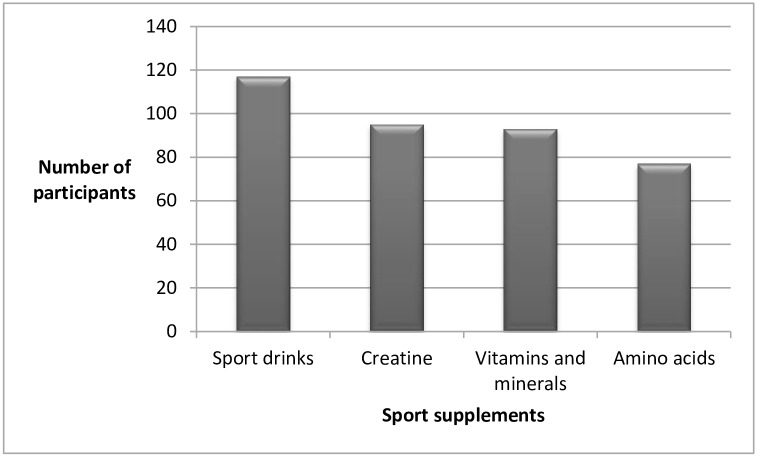
The aim of this study was to investigate the pattern of basic and sport nutrition as well as perspectives of young Egyptian athletes. Structured interview survey measuring knowledge, attitudes, beliefs and behaviors about basic and sport nutrition was administered to adolescent athletes recruited from 4 sport clubs and 2 fitness centers in Greater Cairo governorate. A total of 358 participants aged 13-18 years completed questionnaires. Basic nutrition knowledge was reasonable in almost all domains except fast food. Fixed breakfast (78.5%), home meals (lunch, 70.7%), and healthy snacks (55.8%) were the most positive features of the basic dietary pattern. More than 70% perceived themselves as knowledgeable about sport nutrition. The prevalence rate of sport supplement intake was (48.9%, n = 175), predominantly sport drinks (66.9%) and creatine (54.3%). Coaches were the primary source of sport nutrition information. Forty-four percent of participants (n = 77/175) reported supplement consumption during competition seasons only. Better physical appearance and enhancement of athletic performance were the major motivations for supplement intake. These findings indicate the necessity of a comprehensive nutrition education program targeting not only athletes and parents, but also coaching staff, health trainers and all sport team officials.
Overview
CoChat Summary
TL;DR
In a cross-sectional survey of 358 Egyptian adolescent athletes in Greater Cairo, basic dietary habits were mostly reasonable but sport-nutrition knowledge was below average, and 48.9% reported using sport supplements, most commonly sport drinks and creatine. Coaches were the main information source, and supplement use was often motivated by physical appearance and performance and frequently limited to competition seasons.
Key findings
- Among 358 athletes (mean age 14.3 ± 2.5 years; 56.4% male), 78.5% reported a fixed breakfast, 70.7% reported home-cooked lunch, and 55.8% reported healthy snacks; 87.4% ate fast food weekly, mostly once (57.8%).
- 48.9% (n = 175) currently took dietary supplements; among supplement users, sport drinks (66.9%) and creatine (54.3%) predominated, and 44% (77/175) used supplements during competition seasons only.
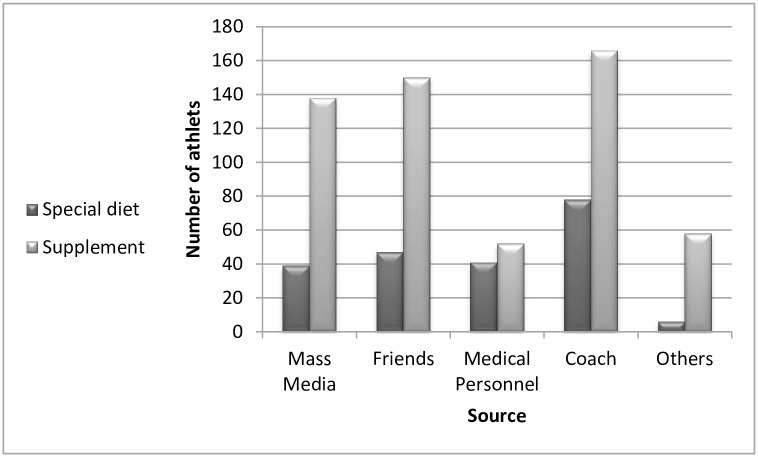
- Main reasons for supplement use were physical appearance (159/175, 90.9%) and better performance (146/175, 83.4%); common sources were sport centers (n = 144), retail stores (n = 137), and athletic trainers (n = 135).
- More than 70% perceived themselves knowledgeable about sport nutrition, but sport-nutrition knowledge/beliefs/attitudes had the lowest correct responses; coaches/athletic trainers were a major information source for supplements (n = 166) and special diet (n = 78).
Methods
- Cross-sectional descriptive survey in Greater Cairo, January–May 2015, using a convenience sample of 358 adolescents aged 13–18 years from 4 non-profit sport clubs and 2 fitness centers; inclusion required training ≥4 hours/week for the preceding 6 months, yielding 76 competitive and 282 recreational athletes across 11 sports.
- Data came from a structured interview questionnaire (30 questions, 4 parts) adapted from validated literature, translated into Arabic via forward-backward procedure, piloted on 55 athletes, and reviewed by 3 nutrition experts.
- Analysis used SPSS Version 16 with descriptive statistics, chi-square and Fisher’s exact tests; p < 0.05 was significant, and questionnaires with missing values were excluded.
Limitations
- Stated: relatively small sample size and recruitment from only Greater Cairo may limit generalisability, although the authors note about 25% of Egypt’s population resides in Cairo; responses may be biased if participants did not answer honestly or had nutrition-related preferences.
- Stated: the quantitative survey limited assessment of factors such as gender, age, education, sport type, and training hours; BMI was not used as an obesity indicator because it does not account for body fat; illegal sport supplementation could not be assessed.
- Evident: the convenience sample, self-reported weight and height, and exclusion of questionnaires with missing values may further limit representativeness and measurement accuracy.
Model-written summary. Check it against the paper before relying on it.
Integrity signals
Registry
Cites
Statistics
Figures
Verification
Claims the paper makes
0 Valid · 1 Not valid · 22 Not checked · 39 Own results and interpretations
A result the paper reports from its own data — it cites no other source for it, so there is none to check. The quote shows it is in the paper.
In the paper
“More than 70% of the studied individuals considered themselves knowledgeable about sport nutrition issues Table 3.”
§ Patterns of Nutrition and Dietary Supplements Use in Young Egyptian Athletes: A Community-Based Cross-Sectional Survey > Results
plain- Asserted: passes — The authors put it forward as true.
- Checkable: passes — It can be checked against evidence.
- Load-bearing: unclear — It is unclear whether the paper’s conclusions depend on it.
- Based: passes — The paper gives a reason why it holds.
A result the paper reports from its own data — it cites no other source for it, so there is none to check. The quote shows it is in the paper.
In the paper
“Approximately, two-thirds of participants agreed that drinking plenty of water prior to the beginning of the event is essential for enhancing athletic performance”
§ Patterns of Nutrition and Dietary Supplements Use in Young Egyptian Athletes: A Community-Based Cross-Sectional Survey > Results
plain- Asserted: passes — The authors put it forward as true.
- Checkable: passes — It can be checked against evidence.
- Load-bearing: unclear — It is unclear whether the paper’s conclusions depend on it.
- Based: passes — The paper gives a reason why it holds.
A result the paper reports from its own data — it cites no other source for it, so there is none to check. The quote shows it is in the paper.
In the paper
“The majority of athletes taking supplements reported sport centers (n = 144), retail stores (n = 137), and athletic trainers (n = 135) as the main sources of obtaining their supplement needs (p < 0.001).”
§ Patterns of Nutrition and Dietary Supplements Use in Young Egyptian Athletes: A Community-Based Cross-Sectional Survey > Results
plainn = 144 ·- Asserted: passes — The authors put it forward as true.
- Checkable: passes — It can be checked against evidence.
- Load-bearing: unclear — It is unclear whether the paper’s conclusions depend on it.
- Based: passes — The paper gives a reason why it holds.
A result the paper reports from its own data — it cites no other source for it, so there is none to check. The quote shows it is in the paper.
In the paper
“More than half (53%) of the athletes significantly believed that the carbohydrate loading one hour before the event would supply sufficient amount of energy (p < 0.001).”
§ Patterns of Nutrition and Dietary Supplements Use in Young Egyptian Athletes: A Community-Based Cross-Sectional Survey > Results
boosted- Asserted: passes — The authors put it forward as true.
- Checkable: passes — It can be checked against evidence.
- Load-bearing: unclear — It is unclear whether the paper’s conclusions depend on it.
- Based: passes — The paper gives a reason why it holds.
A result the paper reports from its own data — it cites no other source for it, so there is none to check. The quote shows it is in the paper.
In the paper
“As shown in Table 2, the percentage of adolescent athletes (n = 209) following a special diet increased significantly during their competition season versus out of season (p < 0.001).”
§ Patterns of Nutrition and Dietary Supplements Use in Young Egyptian Athletes: A Community-Based Cross-Sectional Survey > Results
plainstates a causen = 209 ·- Asserted: passes — The authors put it forward as true.
- Checkable: passes — It can be checked against evidence.
- Load-bearing: unclear — It is unclear whether the paper’s conclusions depend on it.
- Based: passes — The paper gives a reason why it holds.
21 more claims
Create a free account to see all 62 claims and to verify the 36 references still open.
- It may state two separate claims as one. 21
- Probably not a substantial claim. 21
- The quote only partly states this claim. 1
Claims other papers make about this one
Each is checked against this paper’s own text: does it say what the citing paper says it does?
In the citing paper
“Increased energy requirements are not regularly met in young athletes, especially during competition season; therefore, most of them are unable to make adequate nutritional choices for growth and development as well as for optimized athletic performance and rely on additional nutritional intake taken from sports supplements”
From Prevalence, knowledge and attitudes towards using sports supplements among young athletes (2019) · cites this paper as [4]
Self-check
Percentages, sums and reported differences re-computed from the paper’s own numbers.
Each contradiction between two passages listed here was confirmed by an independent check.
Rated minor: it would not touch a result — a value no result rests on, a p-value that stays on the same side of the significance level, or a conflict that is clerical, resolved elsewhere in the paper, or outside its own findings.
In the paper
“| 4. Anti-gravity | | 20 (5.6) | <0.001 |”
§ Patterns of Nutrition and Dietary Supplements Use in Young Egyptian Athletes: A Community-Based Cross-Sectional Survey > Results
Reported 358 · recomputed 384
Rated minor: it would not touch a result — a value no result rests on, a p-value that stays on the same side of the significance level, or a conflict that is clerical, resolved elsewhere in the paper, or outside its own findings.
In the paper
“Maintaining/or obtaining healthy and good physical appearance (n = 159; 44.4%) and achieving better athletic performance (n = 146; 40.8%) were the most common reasons significantly cited for taking sport supplements (p < 0.001).”
§ Patterns of Nutrition and Dietary Supplements Use in Young Egyptian Athletes: A Community-Based Cross-Sectional Survey > Results
Reported 44.4 · recomputed 90.857143
Rated minor: it would not touch a result — a value no result rests on, a p-value that stays on the same side of the significance level, or a conflict that is clerical, resolved elsewhere in the paper, or outside its own findings.
In the paper
§ Patterns of Nutrition and Dietary Supplements Use in Young Egyptian Athletes: A Community-Based Cross-Sectional Survey > Discussion
“We also found that consumption of supplements was influenced by competition in the majority of cases, while a small number of athletes (9.8%) reported taking supplements on a regular basis.”
§ Patterns of Nutrition and Dietary Supplements Use in Young Egyptian Athletes: A Community-Based Cross-Sectional Survey > Results
“| During competition | 77 | 44 | <0.001 |”
Citations
Cites
ACSM Position Stand: Exercise and Fluid Replacement
Convertino, V. A., Armstrong, L. E., Coyle, E. F., Mack, G. W., Sawka, M. N., Senay, L. C., & Sherman, W. M. (1996) · Medicine & Science in Sports & Exercise · doi:10.1097/00005768-199610000-00045 · Cited by 1,965
Exercise and Fluid Replacement
(2007) · Medicine & Science in Sports & Exercise · doi:10.1249/mss.0b013e31802ca597 · Cited by 1,497
Prevalence of Eating Disorders in Elite Athletes Is Higher Than in the General Population
Sundgot-Borgen, J., & Torstveit, M. K. (2004) · Clinical Journal of Sport Medicine · doi:10.1097/00042752-200401000-00005 · Cited by 1,077
Health effects of energy drinks on children, adolescents, and young adults
Seifert, S. M., Schaechter, J. L., Hershorin, E. R., & Lipshultz, S. E. (2011) · Pediatrics · doi:10.1542/peds.2009-3592 · Cited by 893
American College of Sports Medicine Position Stand: Exercise and Fluid Replacement
Shephard, R. J. (2007) · Yearbook of Sports Medicine · doi:10.1016/s0162-0908(08)70206-x · Cited by 667
Development of a general nutrition knowledge Questionnaire for adults
Parmenter, K., & Wardle, J. (1999) · European Journal of Clinical Nutrition · doi:10.1038/sj.ejcn.1600726 · Cited by 633
Translation of Health Status Instruments
Sartorius, N., & Kuyken, W. (1994) · Quality of Life Assessment: International Perspectives · doi:10.1007/978-3-642-79123-9_1 · Cited by 341
Torres-McGehee, T. M., Pritchett, K. L., Zippel, D., Minton, D. M., Cellamare, A., & Sibilia, M. (2012) · Journal of Athletic Training · doi:10.4085/1062-6050-47.2.205 · Cited by 290
Popular Ergogenic Drugs and Supplements in Young Athletes
Calfee, R., & Fadale, P. (2006) · Pediatrics · doi:10.1542/peds.2005-1429 · Cited by 280
Dietary Supplement Use among Elite Young German Athletes
Braun, H., Koehler, K., Geyer, H., Kleinert, J., Mester, J., & Schänzer, W. (2009) · International Journal of Sport Nutrition and Exercise Metabolism · doi:10.1123/ijsnem.19.1.97 · Cited by 235
Research works printed but not linked: 7
- WJ Dawson, 2002, American College of Sports Medicine, American Dietetic Association, and Dietitians of Canada: Nutrition and athletic performance (joint position statement), Medical Problems of Performing Artists, 17, 51
- I Giannopoulou, 2013, Back Issues, J Sports Sci Med, 12, 190
- I Stafford, 2005, Coaching for long-term athlete development: To improve participation and performance in sport, Coachwise 1st4sport
- CL Rash, 2008, Nutrition-related knowledge, attitude, and dietary intake of college track athletes, Sport J, 11, 48
- BH Jacobson, 2001, Nutrition practices and knowledge of college varsity athletes: a follow-up, J Strength Cond Res, 15, 63
- B Viell, 1996, New caffeinated beverages: a pilot survey of familiarity and consumption by adolescents in north-Rhine Westphalia and Berlin and considerations of consumer protection [in German], Z Ernahrungswiss, 35, 378
- J Sobal, 1994, Scholarly Reviews, Int J Sport Nutr, 4, 320
Cited by
Prevalence, knowledge and attitudes towards using sports supplements among young athletes
Jovanov, P., Đorđić, V., Obradović, B., Barak, O., Pezo, L., Marić, A., & Sakač, M. (2019) · Journal of the International Society of Sports Nutrition · doi:10.1186/s12970-019-0294-7 · Cited by 138
Sport Nutrition Knowledge, Behaviors and Beliefs of High School Soccer Players
Manore, M., Patton-Lopez, M., Meng, Y., & Wong, S. (2017) · Nutrients · doi:10.3390/nu9040350 · Cited by 89
Patton-Lopez, M. M., Manore, M. M., Branscum, A., Meng, Y., & Wong, S. S. (2018) · Nutrients · doi:10.3390/nu10111636 · Cited by 58
Determinants of eating patterns and nutrient intake among adolescent athletes: a systematic review
Noll, M., de Mendonça, C. R., de Souza Rosa, L. P., & Silveira, E. A. (2017) · Nutrition Journal · doi:10.1186/s12937-017-0267-0 · Cited by 60
Partida, S., Marshall, A., Henry, R., Townsend, J., & Toy, A. (2018) · Nutrients · doi:10.3390/nu10091260 · Cited by 39
Elgammal, S. M., Khorshed, M. A., & Ismail, E. H. (2019) · Journal of Food Composition and Analysis · doi:10.1016/j.jfca.2019.103300 · Cited by 49
Backhouse, S. H. (2023) · Sports Medicine · doi:10.1007/s40279-023-01933-x · Cited by 45
Nutritional supplement practices of professional Ugandan athletes: a cross-sectional study
Muwonge, H., Zavuga, R., Kabenge, P. A., & Makubuya, T. (2017) · Journal of the International Society of Sports Nutrition · doi:10.1186/s12970-017-0198-3 · Cited by 45
Tirla, A. G., Islam, F., Islam, M. R., Vicaş, S. I., & Cavalu, S. D. (2022) · Applied Sciences · doi:10.3390/app12178611 · Cited by 40
Vargas-Molina, S., García-Sillero, M., Kreider, R. B., Salinas, E., Petro, J. L., Benítez‐Porres, J., & Bonilla, D. A. (2022) · Journal of the International Society of Sports Nutrition · doi:10.1080/15502783.2022.2108683 · Cited by 36
Thapa, M., Neupane, A., Shrestha, S. K. D., Nepal, P., Upadhyaya, A., Niraula, P., Shrestha, R. K., & Sunuwar, D. R. (2023) · BMC Sports Science Medicine and Rehabilitation · doi:10.1186/s13102-023-00691-7 · Cited by 27
Dietary Supplements Use among Athletes in Lebanon: Knowledge, Attitudes, Practices, and Correlates
Sadek, Z., Mohsen, H., Yazbek, S., Nabulsi, Z. A. A., Sarraj, A. R., & Hoteit, M. (2022) · Foods · doi:10.3390/foods11101521 · Cited by 23
AlRuthia, Y. S., Balkhi, B. S., Alrasheed, M. A., Altuwaijri, A., Alarifi, M., Alzahrani, H., & Mansy, W. (2018) · PLoS ONE · doi:10.1371/journal.pone.0199289 · Cited by 23
Sunuwar, D. R., Singh, D. R., Bohora, M. P., Shrestha, V., Karki, K., & Pradhan, P. M. S. (2022) · Frontiers in Nutrition · doi:10.3389/fnut.2022.1004288 · Cited by 22
Pure Juice Supplementation: Its Effect on Muscle Recovery and Sports Performance
Daud, S. M. M., Sukri, N. M., Johari, M. H., Gnanou, J. V., & Manaf, F. A. (2023) · Malaysian Journal of Medical Sciences · doi:10.21315/mjms2023.30.1.4 · Cited by 22
Gao, Z., Wang, S., Peng, L., Sun, L., Qiu, P., Bai, B., Zhang, Q., Wu, J., Zha, Y., Zhu, F., et al. (2022) · International Journal of Environmental Research and Public Health · doi:10.3390/ijerph192113803 · Cited by 9
Jacob, R., Couture, S., Lamarche, B., Provencher, V., Morissette, É., Valois, P., Goulet, C., & Drapeau, V. (2019) · Journal of the International Society of Sports Nutrition · doi:10.1186/s12970-019-0311-x · Cited by 17
Tripodi, D., Cosi, A., Valloreo, R. D., Fulco, D., Tieri, M., Auber, L. A., & D’Ercole, S. (2024) · Journal of the International Society of Sports Nutrition · doi:10.1080/15502783.2024.2443018 · Cited by 16
Jairoun, A. A., Al‐Hemyari, S. S., Shahwan, M. J., El‐Dahiyat, F., Gacem, S. A., Jairoun, M., & AL‐Tamimi, S. K. (2020) · Clinical Epidemiology and Global Health · doi:10.1016/j.cegh.2020.02.027 · Cited by 15
Cherian, K. S., Gavaravarapu, S. M., Sainoji, A., & Yagnambhatt, V. R. (2020) · Heliyon · doi:10.1016/j.heliyon.2020.e03354 · Cited by 14
Supplement (mis)use in adolescents
Tiwari, K. (2020) · Current Opinion in Pediatrics · doi:10.1097/mop.0000000000000912 · Cited by 14
Quality Control of Protein Supplements: A Review
da Costa, B. R. B., Roiffé, R. R., & de la Cruz, M. N. D. S. (2021) · International Journal of Sport Nutrition and Exercise Metabolism · doi:10.1123/ijsnem.2020-0287 · Cited by 13
Prevalence of supplement use in recreationally active Kazakhstan university students
Vinnikov, D. V., Romanova, Z., Dushpanova, A., Absatarova, K., & Utepbergenova, Z. (2018) · Journal of the International Society of Sports Nutrition · doi:10.1186/s12970-018-0220-4 · Cited by 12
Sports supplements: use, knowledge, and risks for Algerian athletes
Chebaiki, I. J., Bekadi, A., & Bechikh, M. Y. (2020) · The North African Journal of Food and Nutrition Research · doi:10.51745/najfnr.4.7.231-239 · Cited by 11
Turfus, S. C., Smith, J. O. L., Mansingh, A., Alexander-Lindo, R. L., & Roopchand-Martin, S. (2019) · Performance Enhancement & Health · doi:10.1016/j.peh.2019.07.001 · Cited by 11
Attitude towards healthy nutrition and mental toughness: a study of taekwondo athletes
ÖZSARI, A., Kara, M., Dilek, A. N., Uysal, H., Tek, T., & Deli, Ş. C. (2024) · PeerJ · doi:10.7717/peerj.17174 · Cited by 10
de Oliveira, G. T., de Souza, H. L. R., Meireles, A. A. F. D. M., dos Santos, M. H. P., Leite, L. H. R., Ferreira, R. M. R., & Marocolo, M. (2023) · Frontiers in Sports and Active Living · doi:10.3389/fspor.2023.1257007 · Cited by 9
The health-related determinants of eating pattern of high school athletes in Goiás, Brazil
Noll, M. A., Rodrigues, A. P. S., & Silveira, É. A. (2020) · Archives of Public Health · doi:10.1186/s13690-020-0396-3 · Cited by 9
Aljohar, H. I., Almusharraf, H. F., & Alhabardi, S. A. (2025) · Journal of Clinical Medicine · doi:10.3390/jcm14207410 · Cited by 7
Szczepańska, E., Janota, B., Wlazło, M., & Czapla, M. (2021) · Roczniki Państwowego Zakładu Higieny · doi:10.32394/rpzh.2021.0151 · Cited by 7
Noll, M. A., Rodrigues, A. P., & Silveira, É. A. (2019) · Asian Journal of Sports Medicine · doi:10.5812/asjsm.96561 · Cited by 7
Hegazy, N., Sayed, H. A. E., Hasan, A. A., & Salem, M. R. (2020) · Open Access Macedonian Journal of Medical Sciences · doi:10.3889/oamjms.2020.5371 · Cited by 6
Navigating the Risks Beyond the Label: Unpacking Global Nutritional Supplement Safety
Wardenaar, F. C., Burns, S. F., de Campos, M. V. S., Chan, Y., Claassen-Smithers, A., Dunshea-Mooij, C. A. E., Haddou, S. E., Hoogervorst, D., Jagim, A. R., Garcia, P. R., et al. (2025) · International Journal of Sport Nutrition and Exercise Metabolism · doi:10.1123/ijsnem.2025-0177 · Cited by 5
Sapuppo, W., Monda, A., Giacconi, D., Grgič, R. G., Saccenti, D., Mineo, C. M., Monda, V., Allocca, S., Casillo, M., Monda, M., et al. (2024) · Sports · doi:10.3390/sports12100270 · Cited by 5
Lotti, S., Asensi, M. T., Creti, D., Mollo, E., Sarti, A., Sciattella, F., Dinu, M., Colombini, B., Rizzo, L., & Sofi, F. (2025) · Nutrients · doi:10.3390/nu17132213 · Cited by 4
Dietary supplements and body management of practicers of physical activity in gyms
Silva, A. C., & Lüdorf, S. M. A. (2021) · Ciência & Saúde Coletiva · doi:10.1590/1413-81232021269.06462020 · Cited by 4
Caffeine Consumption among Young Athletes and Their Perception in Relation to Performance
Mohamed, D., & Abdelaziz, H. (2022) · Journal of High Institute of Public Health · doi:10.21608/jhiph.2022.266685 · Cited by 4
Dietary Patterns and Nutritional Status of Polish Elite Athletes
Tyrała, F., & Frączek, B. (2025) · Nutrients · doi:10.3390/nu17162685 · Cited by 4
Sunuwar, D. R., Singh, D. R., Bohora, M. P., Shrestha, V., Karki, K., & Pradhan, P. M. S. (2020) · doi:10.21203/rs.3.rs-29955/v1 · Cited by 4
Üniversiteli Sporcu Öğrencilerin Beslenme Destek Ürünleri Kullanım Durumu
ÖZTÜRK, S. A., Kalkan, İ., DURMAZ, C., Pehlivan, M., Özüpek, G., & BAKMAZ, Z. D. (2020) · AYDIN TIP FAKÜLTESİ KLİNİKLERİ DERGİSİ · doi:10.17932/iau.tfk.2018.008/2020.301/tfk_v03i1002 · Cited by 3
Attitudes Towards Nutritional Sport Supplement of National and International Kickboxers
Ministry of Education, E. D. N. E. D., Ulupınar, S., Özbay, S., Ministry of Education, E. D. N. E. D., Gençoglu, C., Ministry of Education, E. D. N. E. D., Özkara, A. B., & Ministry of Education, E. D. N. E. D. (2020) · AMBIENT SCIENCE · doi:10.21276/ambi.2020.07.sp1.oa04 · Cited by 3
Sunuwar, D. R., Singh, D. R., Bohora, M. P., Shrestha, V., Karki, K., & Pradhan, P. M. S. (2021) · doi:10.21203/rs.3.rs-29955/v2 · Cited by 3
Nagy, S.-R., Mititelu, M., Popovici, V., Marin, R.-C., Pallag, A., & Jurca, T. (2025) · Journal of Functional Morphology and Kinesiology · doi:10.3390/jfmk10030248 · Cited by 2
KNOWLEDGE AND ATTITUDE OF YOUNG ATHLETES IN BAGHDAD CITY/IRAQ TOWARD THE USE OF SPORTS SUPPLEMENTS
Ghazi, H. F., Abdalqader, M. A., & Hasan, T. N. (2022) · Malaysian Journal of Public Health Medicine · doi:10.37268/mjphm/vol.22/no.3/art.1834 · Cited by 2
Amawi, A. T., Alduraidi, H., Almasri, A., Obaid, B., Trk, N., Boued, P., Trabelsi, K., Jahrami, H., & Ghazzawi, H. (2025) · International journal of human movement and sports sciences · doi:10.13189/saj.2025.130209 · Cited by 2
Kaddoura, N. H., AlAhmad, M. M., Hassan, N. A. G. M., & Alomar, M. J. (2022) · British Food Journal · doi:10.1108/bfj-01-2022-0022 · Cited by 2
Prevalence, Information & Attitude towards Using Supplements among University Athletes
Gill, S. A., Zahid, U., Abdullah, U., Shaheen, M., Naseer, A., Butt, Z. I., Zafar, R., Adil, R., Shahid, H., & Arslan, M. (2022) · Journal of Pharmaceutical Research International · doi:10.9734/jpri/2022/v34i49a36422 · Cited by 1
Creatine Supplementation Practices in Saudi Arabia: Prevalence, Patterns, and Health Implications
Othman, M., Aljehani, A., ALZAHRANI, S. H., Alzahrani, M., Monusar, F., & Alshammari, M. (2025) · Cureus · doi:10.7759/cureus.94947 · Cited by 1
Cherian, K. S., Gavaravarapu, S. M., Ramesh, B. S., & Yagnambhatt, V. R. (2024) · Sport Sciences for Health · doi:10.1007/s11332-024-01180-1 · Cited by 1
Consumo de suplementos e risco de distúrbios no comportamento alimentar em atletas adolescentes
Porta, L. L. L., Alves, F. D., & de Souza, C. G. (2021) · Portuguese National Funding Agency for Science, Research and Technology (RCAAP Project by FCT)
O'Brien, M. J. (2021) · Wiley eBooks · doi:10.1002/9781119413936.ch120
Post-Sport Male Athlete Nutrition and Mental Health
Alam, N. (2023) · Sport Social Work Journal · doi:10.33043/sswj.4.1.35-43
Is menstrual cycle misunderstanding a bias for ergogenic aids use? A cross sectional study
de Oliveira, G. T., Leite, L. H. R., de Souza, H. L. R., Meireles, A. A. F. D. M., dos Santos, M. P., Ferreira, R. M., & Marocolo, M. (2024) · Cuadernos de Educación y Desarrollo · doi:10.55905/cuadv16n2-064
Assessment of Dietary Supplements Intake and Iron Status of Adolescent Athletes in Ogun State
Yusuf Olayinka, L. (2024) · Journal of Food Technology & Nutrition Sciences · doi:10.47363/jftns/2024(6)187
Thongsawang, S., Lersanekwattana, T., & Chorcharoenying, S. (2025) · International journal of human movement and sports sciences · doi:10.13189/saj.2025.130601
Noll, M., Rodrigues, A. P. S., & Silveira, É. A. (2020) · Figshare · doi:10.6084/m9.figshare.11972805
Nahar, N., García-Durán, J., González-Jurado, J. A., & Sánchez-Oliver, A. J. (2025) · SPORT TK-Revista EuroAmericana de Ciencias del Deporte · doi:10.6018/sportk.633331
Development and validation of sport nutrition knowledge test for pre-service dieticians
Özer, Ö., Toktaş, N., Bilgiç, M., Uğurlu, A., Devrilmez, E., UYHAN, O., TABAK, E. Y., & Esen, Ö. (2026) · BMC Sports Science Medicine and Rehabilitation · doi:10.1186/s13102-026-01596-x
Magyarországi sportolók étrendkiegészítő fogyasztásának feltáró vizsgálata
Újvári, G., Veres, Z., & Zsótér, B. (2026) · Marketing & Menedzsment · doi:10.15170/mm.2026.60.01.05
Sannan, N., Younes, H., & Helou, N. E. (2026) · Journal of the International Society of Sports Nutrition · doi:10.1080/15502783.2026.2691213
Panahi, R., Sarvari, M. H., Golchin, A. M., & Amjadian, M. (2026) · Research Square · doi:10.21203/rs.3.rs-10520580/v1
Exploratory study of dietary supplement consumption among athletes
Újvári, G., Veres, Z., & Zsótér, B. (2026) · Journal of Human Sport and Exercise · doi:10.55860/1jebvr67
Metadata
- Authors
- Tawfik, S., El Koofy, N., & Moawad, E. M. I.
- Affiliations
- Ministry of Health and Population (EG)
- Cairo University (EG)
- Corresponding author
- Moawad, Eman Mohamed Ibraheim
- Venue
- PLOS ONE
- Publisher
- Public Library of Science (PLoS)
- Published
- 2016-08-16
- Volume
- 11
- Issue
- 8
- Pages
- e0161252
- ISSN
- 1932-6203 (ISSN-L)
- PMC
- PMC4987011
- OpenAlex
- W2514051432
- Semantic Scholar
- 67244f213aa904f02e9b63b6e234200334e48038
- Cited by
- 63
- References
- 55
- Citations by year
- 2026: 5 · 2025: 9 · 2024: 6 · 2023: 5 · 2022: 9 · 2021: 6 · 2020: 11 · 2019: 5 · 2018: 4 · 2017: 3
- FWCI
- 3.22
- Type
- journal article
- Language
- en
- Open access
- gold
- doi.org
- Licence
- Locations
- PLoS ONE (publishedVersion, cc-by)
- PubMed (publishedVersion)
- PubMed Central (publishedVersion, cc-by)
- DOAJ (DOAJ: Directory of Open Access Journals) (submittedVersion, cc-by-sa)
- Topics
- Health Sciences › Nursing › Nutrition and Dietetics › Nutrition, Health and Food Behavior
- Social Sciences › Sociology and Political Science › Doping in Sports
- Health Sciences › Medicine › Public Health, Environmental and Occupational Health › Nutrition and Health Studies
- Keywords
- sports nutrition, dietary supplements, youth athletes, nutrition knowledge, supplement use, sports drinks, creatine, nutrition education, dietary habits, fast food
- MeSH terms
- Adolescent, Cross-Sectional Studies, Egypt, Female, Humans, Male, Nutrition Surveys, Residence Characteristics, Dietary Supplements, Athletes
About these checks
Registry, retraction, Cites and statistics results are computed, not judged, with one exception: a printed reference that no index lists is read once by a model before it counts as a citation error. Claims are extracted by a model and kept only when their quote appears verbatim in the text; each cited source is then checked, with a model’s help, for whether it says what the claim relies on. Those verdicts can be wrong — read the claim’s quote and the cited source before relying on one.
A language model drew the claims from the paper on 2026-11-14, under version 3 of the claim definition (model deepseek-v4.1-flash, prompt extract-v3).
A second model labelled each claim on 2026-11-14 (model jev-1.13-20260917, definition revision gold-guideline-v0.2).
Statistics and arithmetic are recomputed, not judged.
Confidence bands are shown only for fields calibrated on our annotated test set. None is calibrated yet, so no band is shown.
What counts as a claim ›How we measure confidence ›How we check this ›
Are you an author, or do you see a problem with this page? Request a review
Data sources
Bibliographic data: Semantic Scholar, OpenAlex, Crossref.
Contains information from the Semantic Scholar Academic Graph Datasets, made available under the ODC Attribution License (ODC-BY 1.0).
Semantic Scholar’s data is described in: Kinney, R., et al. (2023). The Semantic Scholar Open Data Platform. arXiv:2301.10140.
