

Depression-related difficulties disengaging from negative faces are associated with sustained attention to negative feedback during social evaluation and predict stress recovery.
Open accessThe DOI matches its Crossref record; 55 of the 55 references it cites were found in a registry or an index.
Abstract
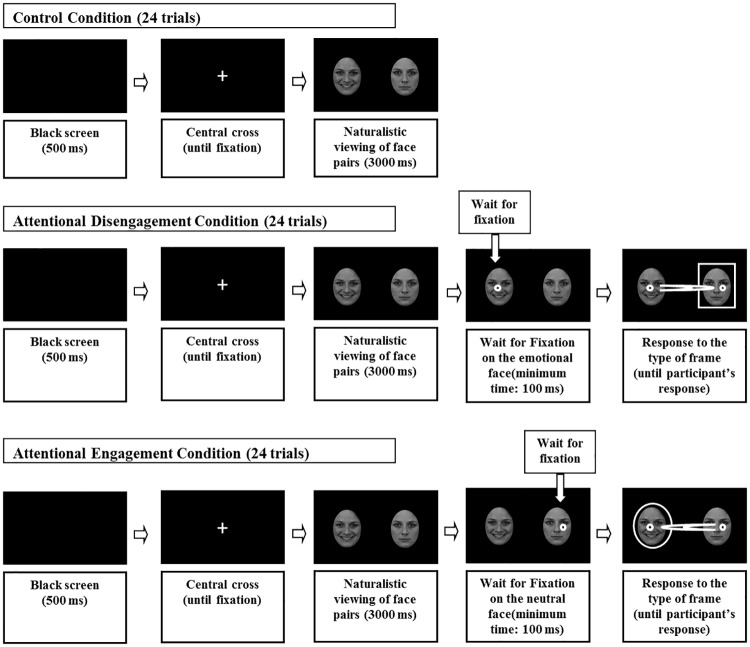
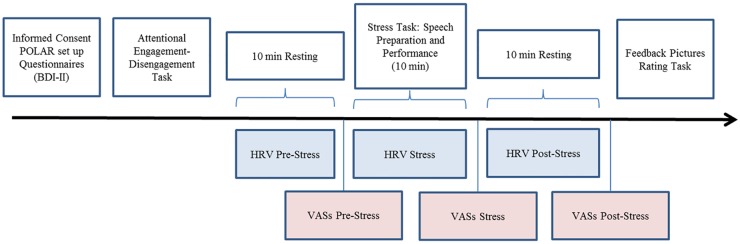
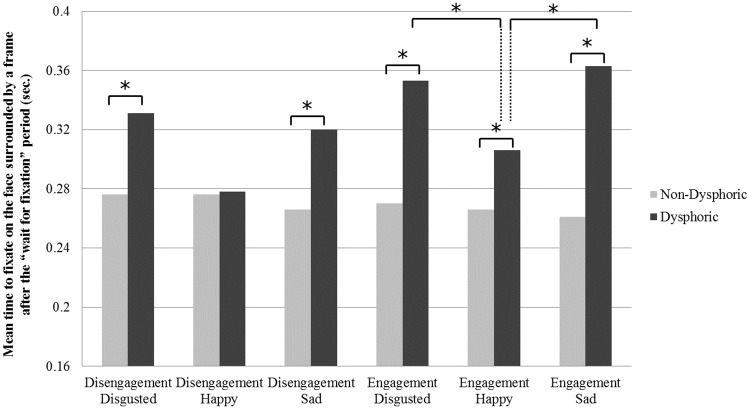
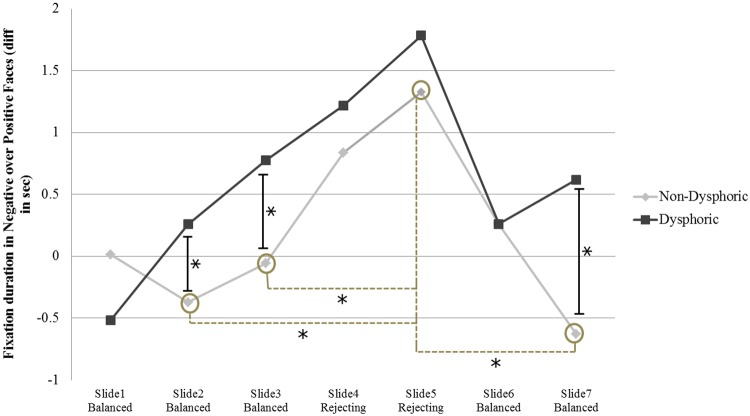
The present study aimed to clarify: 1) the presence of depression-related attention bias related to a social stressor, 2) its association with depression-related attention biases as measured under standard conditions, and 3) their association with impaired stress recovery in depression. A sample of 39 participants reporting a broad range of depression levels completed a standard eye-tracking paradigm in which they had to engage/disengage their gaze with/from emotional faces. Participants then underwent a stress induction (i.e., giving a speech), in which their eye movements to false emotional feedback were measured, and stress reactivity and recovery were assessed. Depression level was associated with longer times to engage/disengage attention with/from negative faces under standard conditions and with sustained attention to negative feedback during the speech. These depression-related biases were associated and mediated the association between depression level and self-reported stress recovery, predicting lower recovery from stress after giving the speech.
Overview
The claims and statistics of this paper haven’t been checked yet.
Free: it reads the open-access text and checks the first 5 claims that cite a source we can check. Create a free account to check every claim.
Integrity signals
Registry
Cites
Statistics
Figures
Verification
Claims the paper makes
The claims and statistics of this paper haven’t been checked yet.
Free: it reads the open-access text and checks the first 5 claims that cite a source we can check. Create a free account to check every claim.
Claims other papers make about this one
Each is checked against this paper’s own text: does it say what the citing paper says it does?
The source backs part of the claim, not all of it — or backs it for a different population, condition or comparison.
In the citing paper
“attention shift toward negative information was associated with mood lowering (Ellenbogen et al., 2002, 2006) cortisol responses (Ellenbogen et al., 2010; Roelofs et al., 2007) in healthy participants and slower stress recovery in a depressed cohort (Sanchez et al., 2017).”
From The interplay between stress, inflammation, and emotional attention: relevance for depression (2019) · cites this paper as Sanchez et al., 2017
Experimental — accuracy not yet measured
Self-check
Percentages, sums and reported differences re-computed from the paper’s own numbers.
The self-check needs the paper’s full text.
Citations
Cites
Preacher, K. J., & Hayes, A. F. (2008) · Behavior Research Methods · doi:10.3758/brm.40.3.879 · Cited by 34,117
(1970) · Cited by 24,983
Beyond Baron and Kenny: Statistical Mediation Analysis in the New Millennium
Hayes, A. F. (2009) · Communication Monographs · doi:10.1080/03637750903310360 · Cited by 9,757
Cognitive Therapy of Depression
HOLLON, S. D., & BECK, A. T. (1979) · Cognitive-Behavioral Interventions · doi:10.1016/b978-0-12-404480-7.50012-5 · Cited by 4,685
Tripartite model of anxiety and depression: psychometric evidence and taxonomic implications
Clark, L. A., & Watson, D. (1991) · Journal of Abnormal Psychology · doi:10.1037/0021-843x.100.3.316 · Cited by 4,601
Heart rate variability: origins, methods, and interpretive caveats
BERNTSON, G. G., THOMAS BIGGER, J., ECKBERG, D. L., GROSSMAN, P., KAUFMANN, P. G., MALIK, M., NAGARAJA, H. N., PORGES, S. W., SAUL, J. P., STONE, P. H., et al. (1997) · Psychophysiology · doi:10.1111/j.1469-8986.1997.tb02140.x · Cited by 3,962
Measurement of social-evaluative anxiety.
Watson, D., & Friend, R. (1969) · Journal of Consulting and Clinical Psychology · doi:10.1037/h0027806 · Cited by 3,467
Nolen-Hoeksema, S., & Morrow, J. (1991) · Journal of Personality and Social Psychology · doi:10.1037/0022-3514.61.1.115 · Cited by 3,276
Thayer, J. F., Åhs, F., Fredrikson, M., Sollers, J. J., & Wager, T. D. (2012) · Neuroscience & Biobehavioral Reviews · doi:10.1016/j.neubiorev.2011.11.009 · Cited by 3,224
Attentional bias in emotional disorders
MacLeod, C., Mathews, A., & Tata, P. (1986) · Journal of Abnormal Psychology · doi:10.1037/0021-843x.95.1.15 · Cited by 3,152
Research works printed but not linked: 2
- Van der Does AJW. Handleiding bij de Nederlandse versie van de Beck Depression Inventory—second edition (BDI-II-NL). [The Dutch version of the Beck Depresion Inventory-II]. Lisse, The Netherlands: Swets & Zeitlinger; 2002.
- Beck AT, Rush AJ, Shaw AM, Emery G. Cognitive therapy for depression. New York: Guilford Press; 1979.
Cited by
The interplay between stress, inflammation, and emotional attention: relevance for depression
Maydych, V. (2019) · Frontiers in Neuroscience · doi:10.3389/fnins.2019.00384 · Cited by 193
Kupferberg, A., & Hasler, G. (2023) · Journal of Affective Disorders Reports · doi:10.1016/j.jadr.2023.100631 · Cited by 170
Lazarov, A., Ben‐Zion, Z., Shamai‐Leshem, D., Pine, D. S., & Bar‐Haim, Y. (2018) · Journal of Affective Disorders · doi:10.1016/j.jad.2018.05.047 · Cited by 136
“While a previous attentional eye-tracking study using an attentional engagement-disengagement task has shown satisfactory internal consistency (Sanchez et al., 2017), the current study is the first to also examine test-retest reliability in a free-viewing task designed to measure attention biases in depression.”
Sánchez-López, Á., Vanderhasselt, M., Allaert, J., Baeken, C., & Raedt, R. D. (2018) · Cognitive Affective & Behavioral Neuroscience · doi:10.3758/s13415-018-0582-8 · Cited by 70
“Finally, the face pairs in the engagement-disengagement task (Sanchez et al., 2013, 2017) are typically presented horizontally, on both sides of the screen (left and right).”
BackgroundYaroslavsky, I., Allard, E. S., & Sánchez-López, Á. (2018) · Journal of Affective Disorders · doi:10.1016/j.jad.2018.11.036 · Cited by 74
Klawohn, J., Bruchnak, A., Burani, K., Meyer, A., Lazarov, A., Bar‐Haim, Y., & Hajcak, G. (2020) · Behaviour Research and Therapy · doi:10.1016/j.brat.2020.103762 · Cited by 74
Sanchez-Lopez, A., Everaert, J., Van Put, J., De Raedt, R., & Koster, E. H. W. (2019) · Biological Psychology · doi:10.1016/j.biopsycho.2019.01.017 · Cited by 50
Sánchez-López, Á., Koster, E. H. W., van Put, J., & Raedt, R. D. (2019) · Behaviour Research and Therapy · doi:10.1016/j.brat.2019.03.013 · Cited by 56
Social feedback promotes positive social sharing, trust, and closeness.
Brudner, E. G., Fareri, D. S., Shehata, S., & Delgado, M. R. (2023) · Emotion · doi:10.1037/emo0001182 · Cited by 58
Stressful Life Events, Cognitive Biases, and Symptoms of Depression in Young Adults
Łosiak, W., Blaut, A., Kłosowska, J., & Łosiak-Pilch, J. (2019) · Frontiers in Psychology · doi:10.3389/fpsyg.2019.02165 · Cited by 43
Allaert, J., Sánchez-López, Á., Raedt, R. D., Baeken, C., & Vanderhasselt, M. (2019) · PLoS ONE · doi:10.1371/journal.pone.0218327 · Cited by 36
Zhang, Y., Schunn, C. D., & Wu, Y. (2024) · International Journal of Educational Technology in Higher Education · doi:10.1186/s41239-024-00458-1 · Cited by 36
“Past meta-analyses and meta-regres-sions suggest minimal impact of discipline, class size, or system setup on the validity of peer review ratings or the derived learning benefits (Li et al., 2016; Sanchez et al., 2017; Yu & Schunn, 2023).”
BackgroundThe free-viewing matrix task: A reliable measure of attention allocation in psychopathology
Shamai‐Leshem, D., Abend, R., Arad, G., Azriel, O., Chong, L. J., de Jong, P. J., Dykan, C. D. G., Hajcak, G., Klawohn, J., Meyer, A., et al. (2023) · Journal of Anxiety Disorders · doi:10.1016/j.janxdis.2023.102789 · Cited by 26
Attentional biases in depression: Relation to disorder severity, rumination, and anhedonia
Krings, A., Heeren, A., Fontaine, P., & Blairy, S. (2020) · Comprehensive Psychiatry · doi:10.1016/j.comppsych.2020.152173 · Cited by 33
Grimm, E., Agrigoroaei, S., Rohleder, N., & Becker, L. (2021) · Neuroscience & Biobehavioral Reviews · doi:10.1016/j.neubiorev.2021.09.037 · Cited by 27
Sánchez-López, Á., Raedt, R. D., Puttevils, L., Koster, E. H. W., Baeken, C., & Vanderhasselt, M. (2020) · Progress in Neuro-Psychopharmacology and Biological Psychiatry · doi:10.1016/j.pnpbp.2020.110177 · Cited by 24
Newman, K. R., Quigley, L., Fernandez, A., Dobson, K. S., & Sears, C. R. (2019) · Cognitive Therapy and Research · doi:10.1007/s10608-019-10017-y · Cited by 20
Attentional Disengagement Deficits Predict Brooding, but Not Reflection, Over a One-Year Period
Allard, E. S., & Yaroslavsky, I. (2019) · Frontiers in Psychology · doi:10.3389/fpsyg.2019.02282 · Cited by 21
Positive psychological interventions and cognition
Stone, B. M., & Schmidt, K. (2020) · The Journal of Positive Psychology · doi:10.1080/17439760.2020.1789714 · Cited by 17
Hou, S., Liu, N., Zou, J., Yin, X., Liu, X., Zhang, S., Chen, J., & Wei, Z. (2022) · International Journal of Psychophysiology · doi:10.1016/j.ijpsycho.2022.08.008 · Cited by 21
Gozansky, E., Moscona, G., & Okon‐Singer, H. (2021) · Frontiers in Psychology · doi:10.3389/fpsyg.2021.680768 · Cited by 20
Ke, T., Wu, J., Willner, C. J., Brown, Z. C., Banz, B. C., van Noordt, S. J. R., Waters, A. C., & Crowley, M. J. (2019) · Social Neuroscience · doi:10.1080/17470919.2019.1697744 · Cited by 19
Sánchez-López, Á. (2021) · The Spanish Journal of Psychology · doi:10.1017/sjp.2021.28 · Cited by 17
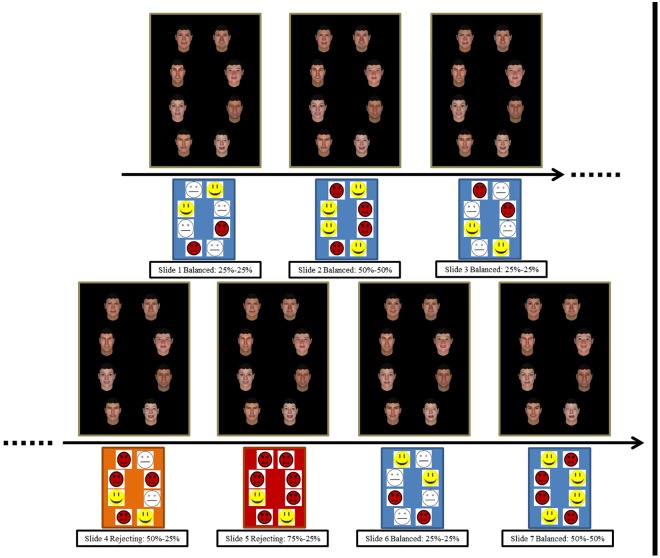
“For instance, Sanchez et al. (2017) adapted a typical stress induction task (i.e., giving a speech in front of confederates showing facial expressions of approval or rejection, e.g., Lin et al., 2015), in a way that allowed to test flexible adjustment of attention strategies (i.e., contextbased…”
BackgroundContextual Changes Influence Attention Flexibility Towards New Goals
Godara, M., Sánchez-López, Á., Liefooghe, B., & Raedt, R. D. (2019) · Cognitive Therapy and Research · doi:10.1007/s10608-019-10072-5 · Cited by 16
Godara, M., Sánchez-López, Á., Baeken, C., & Raedt, R. D. (2020) · Behaviour Research and Therapy · doi:10.1016/j.brat.2020.103787 · Cited by 16
“After performing the post-training measure of attention flexibility task, participants performed the speech task (Sanchez et al., 2017).”
BackgroundMethodBasel, D., Aviram, T., & Lazarov, A. (2021) · Behavior Therapy · doi:10.1016/j.beth.2021.07.001 · Cited by 14
Temporal trends in attention disengagement from social threat as a function of social anxiety
McGlade, A. L., Craske, M. G., & Niles, A. N. (2019) · Journal of Behavior Therapy and Experimental Psychiatry · doi:10.1016/j.jbtep.2019.101529 · Cited by 14
Godara, M., Sánchez-López, Á., & Raedt, R. D. (2019) · Behaviour Research and Therapy · doi:10.1016/j.brat.2019.103434 · Cited by 12
Cognitive predictors of stress-induced mood malleability in depression
Bø, R., Kraft, B., Joormann, J., Jonassen, R., Harmer, C. J., & Landrø, N. I. (2023) · Anxiety Stress & Coping · doi:10.1080/10615806.2023.2255531 · Cited by 13
“In another study by Sanchez et al. (2017), they found that the link between stress recovery and depression symptoms after a stress-inducing speech task was mediated by attentional processes.”
BackgroundSánchez-López, Á., Romero, N., Maurage, P., & Raedt, R. D. (2017) · Journal of Behavior Therapy and Experimental Psychiatry · doi:10.1016/j.jbtep.2017.05.002 · Cited by 11
Self-citationThe effect of emotional primes on attentional focus in high versus low depression
Miron, S., Naftalovich, H., & Kalanthroff, E. (2019) · Attention Perception & Psychophysics · doi:10.3758/s13414-019-01833-1 · Cited by 8
Monéger, J., Harika‐Germaneau, G., Jaafari, N., Doolub, D., Warck, L., Selimbegović, L., & Chatard, A. (2024) · Frontiers in Psychiatry · doi:10.3389/fpsyt.2024.1459831 · Cited by 7
Feurer, C., James, K. M., Foster, C. E., & Gibb, B. E. (2020) · Research on Child and Adolescent Psychopathology · doi:10.1007/s10802-020-00679-8 · Cited by 8
Attentional biases in facial emotion processing in individuals at clinical high risk for psychosis
Williams, T. F., Cohen, A. S., Sánchez-López, Á., Joormann, J., & Mittal, V. A. (2023) · European Archives of Psychiatry and Clinical Neuroscience · doi:10.1007/s00406-023-01582-1 · Cited by 7
“The present study benefited from the use of a well-validated eye-tracking paradigm [25, 38] in a sample of CHR individuals; however, there are a variety of limitations to consider.”
BackgroundMethodvon Koch, L., Kathmann, N., & Reuter, B. (2022) · Behaviour Research and Therapy · doi:10.1016/j.brat.2022.104231 · Cited by 9
Godara, M., Sánchez-López, Á., & Raedt, R. D. (2020) · Journal of Behavior Therapy and Experimental Psychiatry · doi:10.1016/j.jbtep.2020.101613 · Cited by 8
Ross, A. J., Handley, E. D., & Toth, S. L. (2022) · Child Abuse & Neglect · doi:10.1016/j.chiabu.2022.105956 · Cited by 5
Krings, A., Simon, J., Carré, A., & Blairy, S. (2022) · Frontiers in Psychology · doi:10.3389/fpsyg.2022.809387 · Cited by 5
Martín-García, Ó., Raedt, R. D., Godara, M., Ottaviani, C., & Sánchez-López, Á. (2022) · Learning and Motivation · doi:10.1016/j.lmot.2022.101869 · Cited by 3
Jurchiș, R., Costea, A. R., & Opre, A. N. (2023) · Motivation and Emotion · doi:10.1007/s11031-023-10022-5 · Cited by 3
“Participants with higher depressive symptomatology tend to develop a distorted perception of their social environment because (a) they preferentially look at negative facial expressions (Armstrong & Olatunji, 2012; Sanchez et al., 2017) and (b) they exhibit a reduced ability in identifying most facial expressions, exc…”
BackgroundDelayed ocular disengagement from arousing scenes
Cesarei, A. D., Sambuco, N., D’Ascenzo, S., Nicoletti, R., & Codispoti, M. (2023) · Frontiers in Psychology · doi:10.3389/fpsyg.2023.1297192 · Cited by 2
Qiu, Y., Dou, H., Wang, J., Zhang, H., Zhang, S., Shen, D., Li, H., & Lei, Y. (2024) · International Journal of Psychophysiology · doi:10.1016/j.ijpsycho.2024.112339 · Cited by 3
Prefrontal Cortex Response to Threat: Race by Age Variation in 9-10 Year Old Children
Assari, S., Akhlaghipour, G., Saqib, M., Boyce, S., & Bazargan, M. (2020) · JOURNAL OF MENTAL HEALTH AND CLINICAL PSYCHOLOGY · doi:10.29245/2578-2959/2020/4.1209 · Cited by 3
Attentional biases in depression: Relation to disorder severity, rumination, and anhedoniaPreprint
Krings, A., Heeren, A., Fontaine, P., & Blairy, S. (2020) · PsyArXiv (OSF Preprints) · doi:10.31234/osf.io/3hmyb · Cited by 2
“, difficulty disengaging attention from mood-congruent information and reduced maintenance of attention to positive information) have been observed in clinically and subclinically depressed individuals but not in nondepressed individuals [11,12].”
BackgroundResultNeural response to social feedback and internalizing dimensions
Barkley, S. B., & Nelson, B. D. (2025) · Cognitive Affective & Behavioral Neuroscience · doi:10.3758/s13415-025-01317-w · Cited by 1
“Supporting these theories, attentional biases toward negative social information have been associated with depression (Joormann & Gotlib, 2007; Sanchez et al., 2017), anxiety (Mogg & Bradley, 2002; Pishyar et al., 2004), and negative affectivity (Hommer et al., 2014).”
Lee, M., & Gonzalez, M. Z. (2025) · Cognitive Affective & Behavioral Neuroscience · doi:10.3758/s13415-025-01354-5 · Cited by 1
“Depressive symptoms are known to impair executive functions (Snyder, 2013) and exacerbate distress due to negative social interaction in nonclinical samples (Nepon et al., 2011; Sanchez et al., 2017).”
Patterns of attentional and cognitive biases in community trauma survivors: an eye tracking study
Glass, I. V., Neria, M., & Kimble, M. (2026) · European Journal of Psychotraumatology · doi:10.1080/20008066.2026.2642576 · Cited by 1
“As discussed, individuals with depression show more difficulty disenga-ging from negative stimuli (Kellough et al., 2008; Sanchez et al., 2013, 2017).”
InfluentialNoreen, S., & Dritschel, B. (2023) · PLoS ONE · doi:10.1371/journal.pone.0289676 · Cited by 2
Griesmer, A. (2017) · EngagedScholarship @ Cleveland State University (Cleveland State University)
Using Eye-Tracking to Explore Preference for High Value Visual Stimuli
Melon, J. C. (2018)
Krings, A., Wagener, A., Heeren, A., & Blairy, S. (2019) · Annales Médico-psychologiques revue psychiatrique · doi:10.1016/j.amp.2018.12.016
“Ce premier biais attentionnel est appelé « biais de désengagement » [27,34].”
Lagunes-Ramírez, D. A., González, G., Rivera-Rivera, L., González-Franco, N., Mújica‐Vargas, D., & Hernández, Y. (2024) · XIKUA Boletín Científico de la Escuela Superior de Tlahuelilpan · doi:10.29057/xikua.v12i23.11808 · Cited by 1
Disgust-induced attentional blink at Lag3: a diagnostic and therapeutic approach to depression
Wang, Y., Wang, Q., Chen, L., Dong, X., & Xu, T. (2025) · Frontiers in Psychiatry · doi:10.3389/fpsyt.2025.1569746 · Cited by 2
“In social interactions, a bias toward negative emotional faces can shape how individuals with depression interpret and respond to social situations, thus perpetuating negative emotions and contributing to social dif fi culties (7).”
InfluentialFernandez, A., Quigley, L., Dobson, K. S., & Sears, C. R. (2025) · Journal of Experimental Psychopathology · doi:10.1177/20438087251347673 · Cited by 1
Игоревич, Н. Д., Крюков, В. В., Antipova, O. S., Sapronov, F. A., & Краснов, В. Н. (2025) · Психиатрия психотерапия и клиническая психология · doi:10.34883/pi.2025.16.4.013
Biais attentionnels dans l’anxiété et la dépression : approches comportementale et neurovégétative
Ranfaing, S. (2021) · theses.fr (ABES) · doi:10.70675/1709d16cze58ez4c75zb480z92b849a3fcbf
Wang, Y., Wang, Q., Chen, L., Dong, X., & Xu, T. (2026) · BMC Psychology · doi:10.1186/s40359-026-04968-7
“Eye-tracking studies further indicate that individuals with major depressive disorder (MDD) may exhibit stronger attention maintenance or greater difficulty in attention disengagement when processing negative facial expressions, particularly under conditions involving sad or disgusted faces [14].”
Barch, D. M., Hennefield, L., Thompson, R. J., Hoyniak, C. P., Tillman, R., Luking, K. R., Redic, M. M., Gilbert, K., Donohue, M. R., Barch, D. M., et al. (2026) · Depression and Anxiety · doi:10.1155/da/5803578
Metadata
- Authors
- Sanchez, A., Romero, N., & De Raedt, R.
- Affiliations
- Ghent University (BE)
- Venue
- PLOS ONE
- Publisher
- Public Library of Science (PLoS)
- Published
- 2017-03-31
- Volume
- 12
- Issue
- 3
- Pages
- e0175040
- ISSN
- 1932-6203 (ISSN-L)
- PMC
- PMC5376320
- OpenAlex
- W2603059683
- Cited by
- 58
- References
- 55
- Citations by year
- 2026: 3 · 2025: 5 · 2024: 4 · 2023: 7 · 2022: 6 · 2021: 5 · 2020: 9 · 2019: 13 · 2018: 4 · 2017: 2
- FWCI
- 9.90
- Type
- journal article
- Language
- en
- Open access
- gold
- doi.org
- Licence
- Locations
- PLoS ONE (publishedVersion, cc-by)
- PubMed Central (publishedVersion, cc-by)
- PubMed (publishedVersion)
- Ghent University Academic Bibliography (Ghent University) (submittedVersion, other-oa)
- DOAJ (DOAJ: Directory of Open Access Journals) (submittedVersion, cc-by-sa)
- Funders
- Fonds Wetenschappelijk Onderzoek (FWO, reference 117438)
- Concerted Research Action of Ghent University (BOF16/GOA/017)
- Topics
- Social Sciences › Psychology › Experimental and Cognitive Psychology › Anxiety, Depression, Psychometrics, Treatment, Cognitive Processes
- Life Sciences › Neuroscience › Cognitive Neuroscience › Neural and Behavioral Psychology Studies
- Life Sciences › Neuroscience › Cognitive Neuroscience › Face Recognition and Perception
- Keywords
- depression, attentional bias, sustained attention, negative feedback, social stress, stress recovery, stress reactivity, eye movements, social evaluation
- MeSH terms
- Adolescent, Adult, Attention, Depression, Depressive Disorder, Emotions, Eye Movements, Facial Expression, Feedback, Female, Heart Rate, Humans, Male, Surveys and Questionnaires, Reaction Time, Stress, Psychological, Young Adult
About these checks
Registry, retraction, Cites and statistics results are computed, not judged, with one exception: a printed reference that no index lists is read once by a model before it counts as a citation error. Claims are extracted by a model and kept only when their quote appears verbatim in the text; each cited source is then checked, with a model’s help, for whether it says what the claim relies on. Those verdicts can be wrong — read the claim’s quote and the cited source before relying on one.
Statistics and arithmetic are recomputed, not judged.
Confidence bands are shown only for fields calibrated on our annotated test set. None is calibrated yet, so no band is shown.
What counts as a claim ›How we measure confidence ›How we check this ›
Are you an author, or do you see a problem with this page? Request a review
Data sources
Bibliographic data: Semantic Scholar, OpenAlex, Crossref.
Contains information from the Semantic Scholar Academic Graph Datasets, made available under the ODC Attribution License (ODC-BY 1.0).
Semantic Scholar’s data is described in: Kinney, R., et al. (2023). The Semantic Scholar Open Data Platform. arXiv:2301.10140.
