

Candida albicans orf19.3727 encodes phytase activity and is essential for human tissue damage
Open accessThe DOI matches its Crossref record; 25 of the 25 references it cites were found in a registry or an index.
Abstract
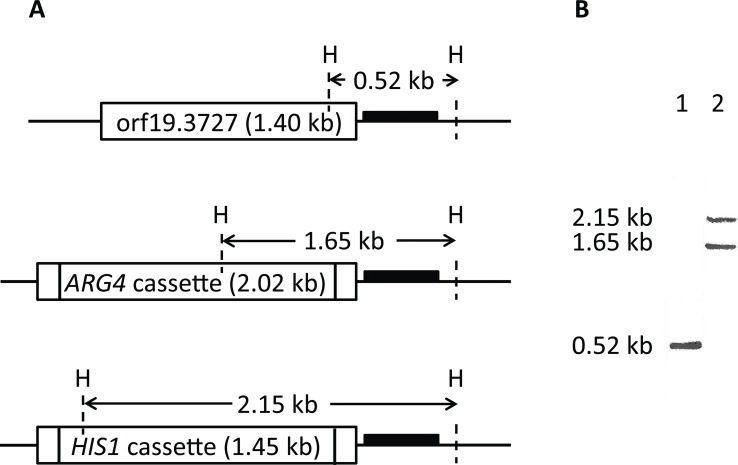
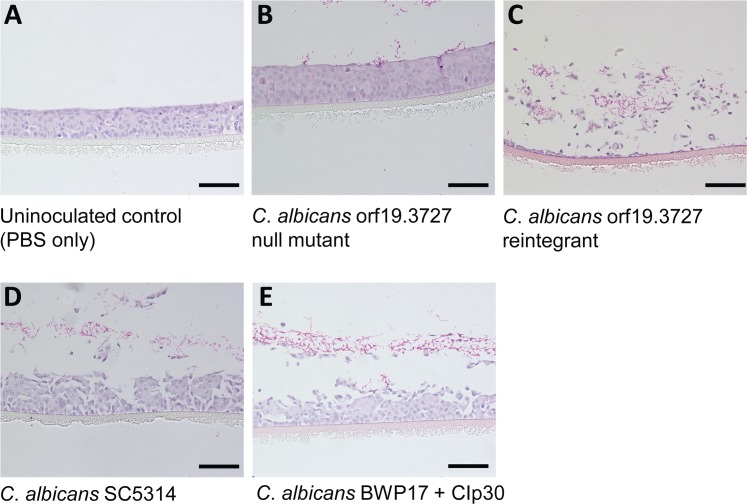
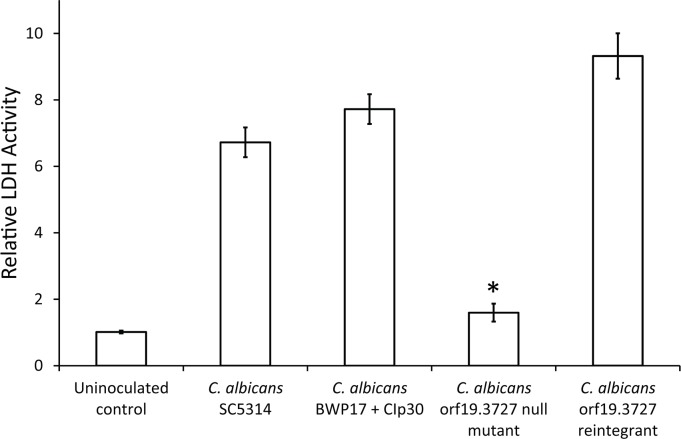
Candida albicans is a clinically important human fungal pathogen. We previously identified the presence of cell-associated phytase activity in C. albicans. Here, we reveal for the first time, that orf19.3727 contributes to phytase activity in C. albicans and ultimately to its virulence potency. Compared with its wild type counterpart, disruption of C. albicans orf19.3727 led to decreased phytase activity, reduced ability to form hyphae, attenuated in vitro adhesion, and reduced ability to penetrate human epithelium, which are the major virulence attributes of this yeast. Thus, orf19.3727 of C. albicans plays a key role in fungal pathogenesis. Further, our data uncover a putative novel strategy for anti-Candidal drug design through inhibition of phytase activity of this common pathogen.
Overview
The claims and statistics of this paper haven’t been checked yet.
Free: it reads the open-access text and checks the first 5 claims that cite a source we can check. Create a free account to check every claim.
Integrity signals
Registry
Cites
Statistics
Figures
Verification
Claims the paper makes
The claims and statistics of this paper haven’t been checked yet.
Free: it reads the open-access text and checks the first 5 claims that cite a source we can check. Create a free account to check every claim.
Claims other papers make about this one
Each is checked against this paper’s own text: does it say what the citing paper says it does?
The source backs part of the claim, not all of it — or backs it for a different population, condition or comparison.
In the citing paper
“Other upregulated genes associated with pathogenesis included SAP6 (66), GLK1 and PHO112 (67), and PLB1 (68) and the transcription factor GAT1 as well as its regulation targets DUR1,2 and MEP2 (69).”
From Inhibition of Classical and Alternative Modes of Respiration in Candida albicans Leads to Cell Wall Remodeling and Increased Macrophage Recognition (2019) · cites this paper as [67]
Experimental — accuracy not yet measured
Self-check
Percentages, sums and reported differences re-computed from the paper’s own numbers.
The self-check needs the paper’s full text.
Citations
Cites
Sardi, J. C. O., Scorzoni, L., Bernardi, T., Fusco-Almeida, A. M., & Mendes Giannini, M. J. S. (2013) · Journal of Medical Microbiology · doi:10.1099/jmm.0.045054-0 · Cited by 1,184
Growth of Candida albicans hyphae
Sudbery, P. E. (2011) · Nature Reviews Microbiology · doi:10.1038/nrmicro2636 · Cited by 1,110
Regulatory circuitry governing fungal development, drug resistance, and disease.
Shapiro, R. S., Robbins, N., & Cowen, L. E. (2011) · Microbiology and Molecular Biology Reviews · doi:10.1128/mmbr.00045-10 · Cited by 576
Candida albicans dimorphism as a therapeutic target
Jacobsen, I. D., Wilson, D., Wächtler, B., Brunke, S., Naglik, J. R., & Hube, B. (2012) · Expert Review of Anti-infective Therapy · doi:10.1586/eri.11.152 · Cited by 363
CIp10, an efficient and convenient integrating vector for Candida albicans
Murad, A. M. A., Lee, P. R., Broadbent, I. D., Barelle, C. J., & Brown, A. J. P. (2000) · Yeast · doi:10.1002/1097-0061(20000315)16:4<325::aid-yea538>3.0.co;2-# · Cited by 303
Candidemia and invasive candidiasis in adults: A narrative review
Antinori, S., Milazzo, L., Sollima, S., Galli, M., & Corbellino, M. (2016) · European Journal of Internal Medicine · doi:10.1016/j.ejim.2016.06.029 · Cited by 257
Pharmacodynamics and pharmacokinetics of inositol(s) in health and disease
Bizzarri, M., Fuso, A., Dinicola, S., Cucina, A., & Bevilacqua, A. (2016) · Expert Opinion on Drug Metabolism & Toxicology · doi:10.1080/17425255.2016.1206887 · Cited by 183
Candida and invasive candidiasis: back to basics
Lim, C. S. Y., Rosli, R., Seow, H. F., & Chong, P. P. (2011) · European Journal of Clinical Microbiology & Infectious Diseases · doi:10.1007/s10096-011-1273-3 · Cited by 176
Purpurin Suppresses Candida albicans Biofilm Formation and Hyphal Development
Tsang, P. W., Bandara, N., & Fong, W. (2012) · PLoS ONE · doi:10.1371/journal.pone.0050866 · Cited by 163
Self-citationProperty Differences among the Four Major Candida albicans Strain Clades
MacCallum, D. M., Castillo, L., Nather, K., Munro, C. A., Brown, A. J. P., Gow, N. A. R., & Odds, F. C. (2009) · Eukaryotic Cell · doi:10.1128/ec.00387-08 · Cited by 153
Cited by
Divergent Approaches to Virulence in C. albicans and C. glabrata: Two Sides of the Same Coin
Galocha, M., Pais, P., Cavalheiro, M., Pereira, D., Viana, R., & Teixeira, M. C. (2019) · International Journal of Molecular Sciences · doi:10.3390/ijms20092345 · Cited by 105
“Recently, it was reported that decreased phytase activity leads to a reduced ability to form hyphae, attenuated in vitro adhesion, and reduced ability to penetrate human epithelium [51].”
BackgroundDuvenage, L., Walker, L. A., Bojarczuk, A., Johnston, S. A., MacCallum, D. M., Munro, C. A., & Gourlay, C. W. (2019) · mBio · doi:10.1128/mbio.02535-18 · Cited by 61
“Other upregulated genes associated with pathogenesis included SAP6 (66), GLK1 and PHO112 (67), and PLB1 (68) and the transcription factor GAT1 as well as its regulation targets DUR1 , 2 and MEP2 (69).”
Suwunnakorn, S., Wakabayashi, H., Kordalewska, M., Perlin, D. S., & Rustchenko, E. (2018) · Antimicrobial Agents and Chemotherapy · doi:10.1128/aac.02299-17 · Cited by 53
“When the cell density reached 107 cells/ml, cells were harvested and suspended in heat-inactivated undiluted fetal bovine serum (Gibco, Gaithersburg, MD) to yield 105 cells/ml (41).”
MethodIs Candida albicans a contributor to cancer? A critical review based on the current evidence
Wang, X., Zhang, W., Wu, W., Wu, S., Young, A., & Yan, Z. (2023) · Microbiological Research · doi:10.1016/j.micres.2023.127370 · Cited by 44
Opportunistic yeast pathogen Candida spp.: Secreted and membrane-bound virulence factors
Lim, S. J., Ali, M. S. M., Sabri, S., Noor, N. D. M., Salleh, A. B., & Oslan, S. N. (2021) · Medical Mycology · doi:10.1093/mmy/myab053 · Cited by 50
Castillo‐Villamizar, G., Nacke, H., Boehning, M., Herz, K., & Daniel, R. (2019) · mBio · doi:10.1128/mbio.01966-18 · Cited by 38
“albicans and Xanthomonas, respectively (5, 15, 16).”
Li, L., Huang, X., & Chen, H. (2024) · Gut Microbes · doi:10.1080/19490976.2024.2328868 · Cited by 23
“77,78 Although much have been concerned about Candida biofilm and infection, the relationship between fungal biofilm and carcinogenesis has seldomly been reported, except that in oral cancer.”
BackgroundCastillo‐Villamizar, G., Funkner, K., Nacke, H., Foerster, K., & Daniel, R. (2019) · mSphere · doi:10.1128/msphere.00167-19 · Cited by 14
“In addition, phytases have been reported to be involved in signal transduction, cell division, and microbial pathogenesis (11, 12, 29).”
Lim, S. J., Noor, N. D. M., Sabri, S., Ali, M. S. M., Salleh, A. B., & Oslan, S. N. (2023) · Medical Mycology · doi:10.1093/mmy/myad126 · Cited by 6
Candida albicans Secreted Aspartic Protease 7 is Essential for Damage of Human Oral Epithelial Cells
Yang, H. P., Tsang, P. C. S., Pow, E., Lam, O., & Tsang, P. (2021) · Journal of Bacteriology and Mycology · doi:10.26420/jbacteriolmycol.2021.1182 · Cited by 1
“albicans sap7Δ/Δ mutant strain using CytoTox 96 nonradioactive cytotoxicity assay [15].”
BackgroundMethodSelf-citationDiscovery and Functional Characterization of Novel Soil-metagenome Derived Phosphatases
Castillo‐Villamizar, G. (2019) · eDiss (Georg-August-Universität Göttingen) · doi:10.53846/goediss-7565
Rodríguez, A. E. R., Parra, L. Y. C., Zapata-Serna, Y., & Pérez, J. E. (2025) · Biosalud · doi:10.17151/biosa.2020.19.2.1
Lim, S. J. (2024) · Universiti Putra Malaysia Institutional Repository (Universiti Putra Malaysia)
Fungal Phosphatase-Dependent Induction of Host Cell Pyroptosis by Candidalysin
Hong, Y.-M., Wang, X., Wang, L., Xiong, S.-C., Zhou, J., Zhang, T.-Y., Sun, Y.-Y., Wu, D., Mao, Y., Ma, Y.-J., et al. (2026) · ACS Infectious Diseases · doi:10.1021/acsinfecdis.6c00688
Metadata
- Authors
- Tsang, P. W.-K., Fong, W.-P., & Samaranayake, L. P.
- Affiliations
- Technological and Higher Education Institute of Hong Kong (HK)
- Chinese University of Hong Kong (HK)
- University of Sharjah (AE)
- Corresponding author
- Tsang, Paul Wai-Kei
- Venue
- PLOS ONE
- Publisher
- Public Library of Science (PLoS)
- Published
- 2017-12-07
- Volume
- 12
- Issue
- 12
- Pages
- e0189219
- ISSN
- 1932-6203 (ISSN-L)
- PMC
- PMC5720748
- OpenAlex
- W2772841280
- Cited by
- 13
- References
- 25
- Citations by year
- 2026: 1 · 2025: 1 · 2024: 1 · 2023: 2 · 2021: 2 · 2019: 5 · 2018: 1
- FWCI
- 1.26
- Type
- journal article
- Language
- en
- Open access
- gold
- doi.org
- Licence
- Locations
- PLoS ONE (publishedVersion, cc-by)
- Europe PMC (PubMed Central) (publishedVersion, cc-by)
- PubMed Central (publishedVersion, cc-by)
- PubMed (publishedVersion)
- DOAJ (DOAJ: Directory of Open Access Journals) (submittedVersion, cc-by-sa)
- Funders
- Health and Medical Research Fund (HK) (11100992)
- Faculty Development Scheme (UGC/FDS25/M04/15, UGC/FDS25/M02/16)
- Topics
- Health Sciences › Medicine › Infectious Diseases › Antifungal resistance and susceptibility
- Life Sciences › Agricultural and Biological Sciences › Plant Science › Phytase and its Applications
- Life Sciences › Biochemistry, Genetics and Molecular Biology › Molecular Biology › Fungal and yeast genetics research
- Keywords
- Candida albicans, phytase activity, fungal virulence, hyphal development, adhesion, gene disruption, antifungal drug design, human fungal pathogens
- MeSH terms
- Candida albicans, 6-Phytase, Virulence, Open Reading Frames
About these checks
Registry, retraction, Cites and statistics results are computed, not judged, with one exception: a printed reference that no index lists is read once by a model before it counts as a citation error. Claims are extracted by a model and kept only when their quote appears verbatim in the text; each cited source is then checked, with a model’s help, for whether it says what the claim relies on. Those verdicts can be wrong — read the claim’s quote and the cited source before relying on one.
Statistics and arithmetic are recomputed, not judged.
Confidence bands are shown only for fields calibrated on our annotated test set. None is calibrated yet, so no band is shown.
What counts as a claim ›How we measure confidence ›How we check this ›
Are you an author, or do you see a problem with this page? Request a review
Data sources
Bibliographic data: Semantic Scholar, OpenAlex, Crossref.
Contains information from the Semantic Scholar Academic Graph Datasets, made available under the ODC Attribution License (ODC-BY 1.0).
Semantic Scholar’s data is described in: Kinney, R., et al. (2023). The Semantic Scholar Open Data Platform. arXiv:2301.10140.
