

Mobile and traditional cognitive behavioral therapy programs for generalized anxiety disorder: a cost-effectiveness analysis.
Open accessThe DOI matches its Crossref record; 36 of the 36 references it cites were found in a registry or an index.
Abstract
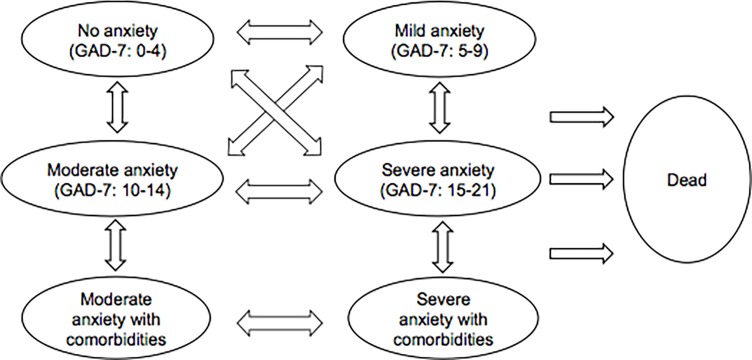
BACKGROUND: Generalized anxiety disorder (GAD) is a debilitating mental health illness that affects approximately 3.1% of U.S. adults and can be treated with cognitive behavioral therapy (CBT). With the emergence of digital health technologies, mobile CBT may be a cost-effective way to deliver care. We developed an analysis framework to quantify the cost-effectiveness of internet-based CBT for individuals with GAD. As a case study, we examined the potential value of a new mobile-delivered CBT program for GAD. METHODS: We developed a Markov model of GAD health states combined with a detailed economic analysis for a cohort of adults with GAD in the U.S. In our case study, we used pilot program efficacy data to evaluate a mobile CBT program as either prevention or treatment only and compared the strategies to traditional CBT and no CBT. Traditional CBT efficacy was estimated from clinical trial results. We calculated discounted incremental costs and quality-adjusted life-years (QALYs) over the cohort lifetime. CASE STUDY RESULTS: In the base case, for a cohort of 100,000 persons with GAD, we found that mobile CBT is cost-saving. It leads to a gain of 34,108 QALYs and 81,492 QALYs and a cost reduction of $2.23 billion and $4.54 billion when compared to traditional CBT and no CBT respectively. Results were insensitive to most model inputs and mobile CBT remained cost-saving in almost all scenarios. LIMITATIONS: The case study was conducted for illustrative purposes and used mobile CBT efficacy data from a small pilot program; the analysis should be re-conducted once robust efficacy data is available. The model was limited in its ability to measure the effectiveness of CBT in combination with pharmacotherapy. CONCLUSIONS: Mobile CBT may lead to improved health outcomes at lower costs than traditional CBT or no intervention and may be effective as either prevention or treatment.
Overview
The claims and statistics of this paper haven’t been checked yet.
Free: it reads the open-access text and checks the first 5 claims that cite a source we can check. Create a free account to check every claim.
Integrity signals
Registry
Cites
Statistics
Figures
Verification
Claims the paper makes
The claims and statistics of this paper haven’t been checked yet.
Free: it reads the open-access text and checks the first 5 claims that cite a source we can check. Create a free account to check every claim.
Claims other papers make about this one
Each is checked against this paper’s own text: does it say what the citing paper says it does?
The source backs part of the claim, not all of it — or backs it for a different population, condition or comparison.
In the citing paper
“The 3-month transition probabilities between states of well, mild symptoms, moderate symptoms, and severe symptoms following the completion of initial low-intensity CBT were obtained from the model inputs of a health economic analysis of CBT on generalized anxiety disorders [22], and were converted to monthly probabilities by the eigendecomposition approach [34].”
From Cost-effectiveness of internet-supported cognitive behavioral therapy for university students with anxiety symptoms: A Markov-model analysis (2022) · cites this paper as [22]
Experimental — accuracy not yet measuredThe cited source says what the claim attributes to it.
In the citing paper
“The results of the US analysis were similar to the present study that the mobile CBT was cost-saving and gained higher QALYs when compared with traditional CBT.”
From Cost-effectiveness of internet-supported cognitive behavioral therapy for university students with anxiety symptoms: A Markov-model analysis (2022) · cites this paper as [22]
Self-check
Percentages, sums and reported differences re-computed from the paper’s own numbers.
The self-check needs the paper’s full text.
Citations
Cites
A Brief Measure for Assessing Generalized Anxiety Disorder: The GAD-7
Spitzer, R. L., Kroenke, K., Williams, J. B. W., & Löwe, B. (2006) · Archives of Internal Medicine · doi:10.1001/archinte.166.10.1092 · Cited by 31,765
Kessler, R. C., Berglund, P., Demler, O., Jin, R., Merikangas, K. R., & Walters, E. E. (2005) · Archives of General Psychiatry · doi:10.1001/archpsyc.62.6.593 · Cited by 20,391
Kessler, R. C., Chiu, W. T., Demler, O., & Walters, E. E. (2005) · Archives of General Psychiatry · doi:10.1001/archpsyc.62.6.617 · Cited by 12,052
Grant, B. F., Stinson, F. S., Dawson, D. A., Chou, S. P., Dufour, M. C., Compton, W., Pickering, R. P., & Kaplan, K. (2004) · Archives of General Psychiatry · doi:10.1001/archpsyc.61.8.807 · Cited by 2,889
Treatment gap in mental health care.
Abramowitz, M. Z., Greenberg, D., & Levav, I. (2008) · PubMed · Cited by 1,484
The treatment gap in mental health care.
(2004) · Europe PMC (PubMed Central) · Cited by 1,419
Bruce, S. E., Yonkers, K. A., Otto, M. W., Eisen, J. L., Weisberg, R. B., Pagano, M., Shea, M. T., & Keller, M. B. (2005) · American Journal of Psychiatry · doi:10.1176/appi.ajp.162.6.1179 · Cited by 963
Generalized anxiety disorder: prevalence, burden, and cost to society
Wittchen, H.-U. (2002) · Depression and Anxiety · doi:10.1002/da.10065 · Cited by 733
Past-Year Use of Outpatient Services for Psychiatric Problems in the National Comorbidity Survey
Kessler, R. C., Zhao, S., Katz, S. J., Kouzis, A. C., Frank, R. G., Edlund, M., & Leaf, P. (1999) · American Journal of Psychiatry · doi:10.1176/ajp.156.1.115 · Cited by 610
Newman, M. G., Szkodny, L. E., Llera, S. J., & Przeworski, A. (2011) · Clinical Psychology Review · doi:10.1016/j.cpr.2010.09.008 · Cited by 480
Research works printed but not linked: 4
- 18. Neumann PJ, Sanders GD, Russell LB, Siegel JE, Ganiats TG. Cost-effectiveness in health and medi- cine. New York: Oxford Univ Pr; 2016.
- 19. Jones M, editor Enhancing engagement in digital mental health interventions: Exploring predictors and methods of engagement. International Society for Research on Internet Interventions Conference; 2016; Seattle, WA.
- 20. Kanuri N, Newman M, Forsberg S, Cohen J, Kuhn E, Ruzek J, et al. Beyond the barriers to mental health care: the development and implementation of a guided self-help coach training protocol for indian non-professional clinicians. Association for Behavioral and Cognitive Therapies; Nov 12-15,; Chicago, IL2015.
- 32. Anxiety and Depression Association of America. Clinical practive review of GAD 2015 [11.20.2016]. Available from: https://www.adaa.org/resources-professionals/practice-guidelines-gad.
Cited by
The cost-effectiveness of digital health interventions: A systematic review of the literature
Gentili, A., Failla, G., Melnyk, A., Puleo, V., Tanna, G. L. D., Ricciardi, W., & Cascini, F. (2022) · Frontiers in Public Health · doi:10.3389/fpubh.2022.787135 · Cited by 444
Le, L. K.-D., Esturas, A. C., Mihalopoulos, C., Chiotelis, O., Bucholc, J., Chatterton, M. L., & Engel, L. (2021) · PLOS Medicine · doi:10.1371/journal.pmed.1003606 · Cited by 256
DeMartini, J., Patel, G., & Fancher, T. L. (2019) · Annals of Internal Medicine · doi:10.7326/aitc201904020 · Cited by 226
Smartphone Apps for the Treatment of Mental Disorders: Systematic Review
Miralles, I., Granell, C., Díaz-Sanahuja, L., Van Woensel, W., Bretón-López, J., Mira, A., Castilla, D., & Casteleyn, S. (2020) · JMIR mHealth and uHealth · doi:10.2196/14897 · Cited by 188
“For the benefit of the research community, Table 2 lists the concrete studies (by app name, when available; if the app name was not found, we put N/A) per mental disorder.”
(2019) · Europe PMC (PubMed Central)
Darden, M., Espie, C. A., Carl, J. R., Henry, A. L., Kanady, J. C., Krystal, A. D., & Miller, C. B. (2021) · Sleep · doi:10.1093/sleep/zsaa223 · Cited by 66
The PRIORI Emotion Dataset: Linking Mood to Emotion Detected In-the-Wild
Khorram, S., Jaiswal, M., Gideon, J., McInnis, M. G., & Provost, E. M. (2018) · Interspeech (USB) · doi:10.21437/interspeech.2018-2355 · Cited by 61
Hall, A. E., Nguyen, N. H., Cascavita, C. T., Shariati, K., Patel, A. K., Chen, W., Kang, Y., Ren, X., Tseng, C.-H., Hidalgo, M. A., et al. (2025) · Annals of Surgery · doi:10.1097/sla.0000000000006677 · Cited by 52
Digital interventions in mental health: Evidence syntheses and economic modelling
Gega, L., Jankovic, D., Saramago, P., Marshall, D., Dawson, S., Brabyn, S., Nikolaidis, G. F., Melton, H., Churchill, R., & Bojke, L. (2022) · Health Technology Assessment · doi:10.3310/rcti6942 · Cited by 48
Chatbots and Conversational Agents in Mental Health: A Literature Review
Narynov, S., Zhumanov, Z., Gumar, A., Khassanova, M., & Omarov, B. S. (2021) · International Conference on Control, Automation and Systems (ICCAS) · doi:10.23919/iccas52745.2021.9649855 · Cited by 51
Jankovic, D., Bojke, L., Marshall, D., Saramago Goncalves, P., Churchill, R., Melton, H., Brabyn, S., & Gega, L. (2021) · Applied Health Economics and Health Policy · doi:10.1007/s40258-020-00607-3 · Cited by 36
Sapanel, Y., Tadeo, X., Brenna, C. T. A., Remus, A., Koerber, F., Cloutier, L. M., Tremblay, G., Blasiak, A., Hardesty, C. L., Yoong, J., et al. (2023) · Journal of Medical Internet Research · doi:10.2196/47094 · Cited by 33
“Specifically, 4 studies [33-36] did not report the clinical outcomes of the intervention, only 10 reported an ICER [37,38,40-47], and only 7 reported cost and QALYs as the outcome measures [37,38,42-45 , 47 In addition to this challenge, the context-specific nature of DTx interventions is evident…”
InfluentialReview and Implementation of Self-Help and Automated Tools in Mental Health Care
Chan, S. R., Li, L., Torous, J. B., Gratzer, D., & Yellowlees, P. (2019) · Psychiatric Clinics of North America · doi:10.1016/j.psc.2019.07.001 · Cited by 34
The Effects of Coronavirus Disease 2019 Outbreak on Medical Students
Bilgi, K., Aytaş, G., Karatoprak, U., Kazancıoğlu, R., & Özçelik, S. (2021) · Frontiers in Psychiatry · doi:10.3389/fpsyt.2021.637946 · Cited by 28
You, J. H. S., Luk, S. W. C., Chow, D. Y. W., Jiang, X., Mak, A. D. P., & Mak, W. W. S. (2022) · PLoS ONE · doi:10.1371/journal.pone.0268061 · Cited by 18
“The 3-month transition probabilities between states of well, mild symptoms, moderate symptoms, and severe symptoms following the completion of initial low-intensity CBT were obtained from the model inputs of a health economic analysis of CBT on generalized anxiety disorders [22], and were converted to monthly probabil…”
MethodRubel, J. A., Väth, T., Hanraths, S., Pruessner, L., Timm, C., Hartmann, S. F., Barnow, S., & Lalk, C. (2024) · Internet Interventions · doi:10.1016/j.invent.2024.100716 · Cited by 19
Accelerating Research With Technology: Rapid Recruitment for a Large-Scale Web-Based Sleep Study
Deering, S., Grade, M. M., Uppal, J., Foschini, L., Juusola, J. L., Amdur, A., & Stepnowsky, C. J. (2019) · JMIR Research Protocols · doi:10.2196/10974 · Cited by 18
“They have significantly increased the speed and ease of recruiting participants for certain kinds of research studies [13-18], made studies accessible to a larger audience [19], and evidence from prior studies suggests that these app-based interventions promote positive health outcomes in patients with a variety of ch…”
BackgroundSelf-citationModelling in economic evaluation of mental health prevention: current status and quality of studies
Thu, H. N. T., Nguyen, H. T., Anh, V. N., & Anh, N. Q. (2022) · BMC Health Services Research · doi:10.1186/s12913-022-08206-9 · Cited by 17
“Only ten models used a 50-year time horizon [50, 59] or lifetime horizon [27, 28, 30, 32, 56, 66, 70, 72].”
BackgroundMethodInfluentialGu, J., Miller, C. B., Henry, A. L., Espie, C. A., Davis, M., Stott, R. B., Emsley, R., Smits, J. A. J., Craske, M. G., Saunders, K., et al. (2020) · Trials · doi:10.1186/s13063-020-4230-6 · Cited by 14
“Digital CBT is cost effective [22, 23] scalable across people and geographies, and may reduce additional difficulties with attending appointments in person such as time constraints and stigma [18, 19].”
BackgroundBalci, S., Küchler, A., Ebert, D. D., & Baumeister, H. (2024) · BMC Digital Health · doi:10.1186/s44247-024-00074-z · Cited by 12
“IMI are potentially cost-effective [28, 29] and could be also offered to university students however its cost-effectiveness depends on acceptance and adherence [27].”
BackgroundProvost, E. M., Sperry, S. H., Tavernor, J., Anderau, S., Yocum, A. K., & McInnis, M. G. (2024) · IEEE Transactions on Affective Computing · doi:10.1109/taffc.2024.3407683 · Cited by 16
“methodology (ecological momentary assessment, EMA), can identify features indicative of illness-or sickness-related states and behaviors across a spectrum of mental illnesses [1], including anxiety [2], bipolar disorder (BD) [3], depression [4], anorexia [5], and schizophrenia [1].”
Aligning large language models for cognitive behavioral therapy: a proof-of-concept study
Kim, Y., Choi, C.-H., Cho, S., Sohn, J.-Y., & Kim, B.-H. (2025) · Frontiers in Psychiatry · doi:10.3389/fpsyt.2025.1583739 · Cited by 22
“Another recent trend has been the development of mobile applications that offer CBT-based interventions, providing support and guidance to users with smartphones (15, 16).”
Compassion apps for better mental health: qualitative review
de Krijger, E., Bohlmeijer, E. T., Geuze, E., & Kelders, S. M. (2023) · BJPsych Open · doi:10.1192/bjo.2023.537 · Cited by 10
Cost Effectiveness of Digital Interventions for Generalised Anxiety Disorder: A Model-Based Analysis
Janković, D., Saramago, P., Gega, L., Marshall, D. C., Wright, K. E., Hafidh, M., Churchill, R. C., & Bojke, L. (2021) · PharmacoEconomics - Open · doi:10.1007/s41669-021-00318-y · Cited by 11
“[5] that DIs are cost effective compared with individual CBT.”
BackgroundMethodInfluentialCzub, M., Kowal, M., Esteve, R., Serrano‐Ibáñez, E. R., Ruiz-Párraga, G. T., Ramírez‐Maestre, C., López-Martínez, A. E., Paccione, C. E., & Piskorz, J. (2024) · Stress and Health · doi:10.1002/smi.3496 · Cited by 7
Parsons, E. M., Hiserodt, M., & Otto, M. W. (2022) · Contemporary Clinical Trials · doi:10.1016/j.cct.2022.107018 · Cited by 7
van Kessel, R., Schmidt, J., van Kolfschooten, H., Feudo, S., Young, K., Valtere, L., Minssen, T., & Mossialos, E. A. (2025) · npj Health Systems · doi:10.1038/s44401-025-00050-3 · Cited by 10
Digital Cognitive Behavioral Treatment for Generalized Anxiety Disorder: A Randomized Clinical Trial
Parsons, E. M., Ball, T. M., Carl, J. R., Henry, A. L., Emsley, R., Miller, C. B., Wong, E. Y., Coombs, E., Collins, D., Long, L. J., et al. (2025) · JAMA Network Open · doi:10.1001/jamanetworkopen.2025.48884 · Cited by 5
Darden, M., Carl, J. R., Smits, J. A. J., Otto, M. W., & Miller, C. B. (2024) · PLOS mental health. · doi:10.1371/journal.pmen.0000116 · Cited by 6
Neumayr, C., Voderholzer, U., & Schlegl, S. (2020) · Verhaltenstherapie · doi:10.1159/000510954 · Cited by 6
Clark, A., Appleton, R., Kalocsányiová, E., Gkaintatzi, E., & McCrone, P. (2022) · medRxiv · doi:10.1101/2022.12.01.22282817 · Cited by 5
“In eight studies the costs for the intervention were lower than the comparator and outcomes were better, indicating a situation of dominance (12-19).”
BackgroundKarpov, B., Lipsanen, J. O., Ritola, V., Rosenström, T. H., Saarni, S. E., Pihlaja, S., Stenberg, J., Laizane, P., & Joffe, G. (2023) · Journal of Medical Internet Research · doi:10.2196/45362 · Cited by 5
Rubel, J., Quest, J., Pruessner, L., Timm, C., Hartmann, S., Barnow, S., Rittmeyer, L., Rosenbaum, D., & Lalk, C. (2023) · JMIR Research Protocols · doi:10.2196/41440 · Cited by 2
e-Health for Traumatized Refugees: A Scoping Review
Kim, S. H., Kim, K., Baek, J., Choi, J., & Chu, S. H. (2022) · Telemedicine Journal and e-Health · doi:10.1089/tmj.2022.0228 · Cited by 4
“24,25 Despite an increase in use and proven benefits, less is known about e-health treatments targeting traumatized refugees.”
Gouveia, C., Kalakou, S., & Cardoso-Grilo, T. (2023) · Socio-Economic Planning Sciences · doi:10.1016/j.seps.2023.101552 · Cited by 2
El-Gayar, O., Al-Ramahi, M. A., Wahbeh, A., Elnoshokaty, A., & Nasralah, T. (2025) · Telemedicine Journal and e-Health · doi:10.1089/tmj.2024.0053 · Cited by 2
Zhu, J., Li, W., Gao, S.-R., Ye, M., Yang, L., Li, X., Guo, J.-Y., Huang, L., Li, J.-N., & Li, Y. (2025) · Supportive Care in Cancer · doi:10.1007/s00520-025-09852-5 · Cited by 1
Rakitzi, S. (2023) · Springer eBooks · doi:10.1007/978-3-031-27837-2_9 · Cited by 1
Martínez‐Borba, V., Quilez-Orden, A. B., Ferreres-Galán, V., López‐Cruz, C., Osma, J., & Pejó, L. A. (2024) · Journal of Clinical Psychology in Medical Settings · doi:10.1007/s10880-024-10039-z · Cited by 1
“…et al., 2022; Mitchell et al., 2021). eHealth and mHealth apps can also complement to face-to-face therapy, increasing its cost-effectiveness (Kumar et al., 2018). mHealth has been used with promising results in the management of emotional disorders and comorbid health conditions (Barbosa et…”
Analysis and Development of a Platform for Generating Context-Aware Apps for Mental Health
Miralles, I. (2019) · Tesis Doctorals en Xarxa (Consorci de Serveis Universitaris de Catalunya) · doi:10.6035/14101.2019.142529
Digital Reimbursement Systems in a Student-Run Clinic
Nilchian, P., Purkayastha, S., Thomas, G., Curtis, K. L., Roszkowska, N., Benitez, E. K., Merlinsky, T. R., Farid, M., Nicol, C. E. W., Batavia, A. S., et al. (2024) · Journal of Community Health · doi:10.1007/s10900-024-01391-0
Hariz, A. J., Chevreul, K., Daval, L., Husson, M., Alberti, C., & Michel, M. (2025) · Value in Health · doi:10.1016/j.jval.2025.01.023
Ovalles, A., Parsons, E. M., Steinberg, M., Ball, T. M., Edwards, R. R., Checko, E. R., Carl, J. R., Smits, J. A. J., & Otto, M. W. (2025) · Cognitive Behaviour Therapy · doi:10.1080/16506073.2025.2564817
“…for anxiety disorders can offer a cost-effective and scalable alternative to CBT delivered in-person or by telehealth (Carl et al., 2020; Darden et al., 2024; Hedman et al., 2011, 2014; Kumar et al., 2018), particularly when digital care is fully autonomous (i.e. involves no therapist contact).”
Exploring the experiences and perspectives of using mental health apps
Nasiri, F. (2023) · Lancaster EPrints (Lancaster University) · doi:10.17635/lancaster/thesis/2114
Ha, N. T., Huong, N. T., Anh, V. N., & Anh, P. N. Q. (2022) · Figshare · doi:10.6084/m9.figshare.20308102
Gu, J., Miller, C. B., Henry, A. L., Espie, C. A., Davis, M. L., Stott, R., Emsley, R., Smits, J. A. J., Craske, M., Saunders, K. E. A., et al. (2020) · Figshare · doi:10.6084/m9.figshare.12186165
Chapdelaine, A. (2022) · Knowledge UdeS (Institutional Deposit of the University of Sherbrooke)
Arifin, M., & Christianto, P. A. (2026) · BIS Health and Environmental Science · doi:10.31603/bishes.599
Оценка экономической эффективности внедрения цифровых технологий в систему здравоохранения
Валентиновна, М. А., Кадыров, Ф. Н., Субхангулова, К. А., & Чилилов, А. М. (2026) · Бюллетень Национального научно-исследовательского института общественного здоровья имени Н. А. Семашко · doi:10.69541/nriph.2026.03.018
Metadata
- Authors
- Kumar, S., Jones Bell, M., & Juusola, J. L.
- Affiliations
- Evidation Health (United States) (US)
- Corresponding author
- Kumar, Shefali
- Venue
- PLOS ONE
- Publisher
- Public Library of Science (PLoS)
- Published
- 2018-01-04
- Volume
- 13
- Issue
- 1
- Pages
- e0190554
- ISSN
- 1932-6203 (ISSN-L)
- PMC
- PMC5754075
- OpenAlex
- W2781485880
- Cited by
- 47
- References
- 35
- Citations by year
- 2026: 1 · 2025: 7 · 2024: 7 · 2023: 7 · 2022: 8 · 2021: 4 · 2020: 6 · 2019: 6 · 2018: 1
- FWCI
- 5.36
- Type
- journal article
- Language
- en
- Open access
- gold
- doi.org
- Licence
- Locations
- PLoS ONE (publishedVersion, cc-by)
- Europe PMC (PubMed Central) (publishedVersion, cc-by)
- PubMed Central (publishedVersion, cc-by)
- PubMed (publishedVersion)
- RePEc: Research Papers in Economics (submittedVersion)
- DOAJ (DOAJ: Directory of Open Access Journals) (submittedVersion, cc-by-sa)
- Figshare (submittedVersion, cc-by)
- Topics
- Social Sciences › Psychology › Applied Psychology › Digital Mental Health Interventions
- Social Sciences › Economics, Econometrics and Finance › Economics and Econometrics › Health Systems, Economic Evaluations, Quality of Life
- Social Sciences › Psychology › Experimental and Cognitive Psychology › Anxiety, Depression, Psychometrics, Treatment, Cognitive Processes
- Keywords
- generalized anxiety disorder, internet-based CBT, cost-effectiveness, digital mental health interventions, quality-adjusted life years, Markov model, prevention versus treatment
- MeSH terms
- Anxiety Disorders, Cost-Benefit Analysis, Humans, Markov Chains, Cohort Studies, Cognitive Behavioral Therapy
About these checks
Registry, retraction, Cites and statistics results are computed, not judged, with one exception: a printed reference that no index lists is read once by a model before it counts as a citation error. Claims are extracted by a model and kept only when their quote appears verbatim in the text; each cited source is then checked, with a model’s help, for whether it says what the claim relies on. Those verdicts can be wrong — read the claim’s quote and the cited source before relying on one.
Statistics and arithmetic are recomputed, not judged.
Confidence bands are shown only for fields calibrated on our annotated test set. None is calibrated yet, so no band is shown.
What counts as a claim ›How we measure confidence ›How we check this ›
Are you an author, or do you see a problem with this page? Request a review
Data sources
Bibliographic data: Semantic Scholar, OpenAlex, Crossref.
Contains information from the Semantic Scholar Academic Graph Datasets, made available under the ODC Attribution License (ODC-BY 1.0).
Semantic Scholar’s data is described in: Kinney, R., et al. (2023). The Semantic Scholar Open Data Platform. arXiv:2301.10140.
