

The DOI matches its Crossref record; 2 of the 2 references it cites were found in a registry or an index.
Racial residential segregation, socioeconomic disparities, and the White-Black survival gap
Overview
The claims and statistics of this paper haven’t been checked yet.
Run the check — free, no account needed. It reads the open-access text and checks the sources it cites.
Integrity signals
Registry
Cites
Statistics
Figures
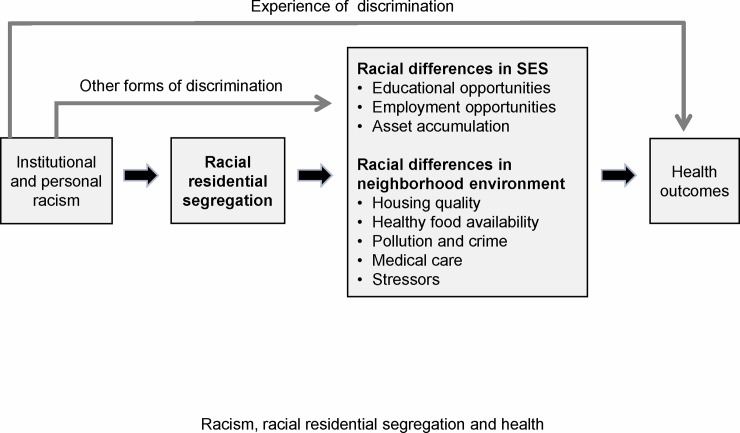
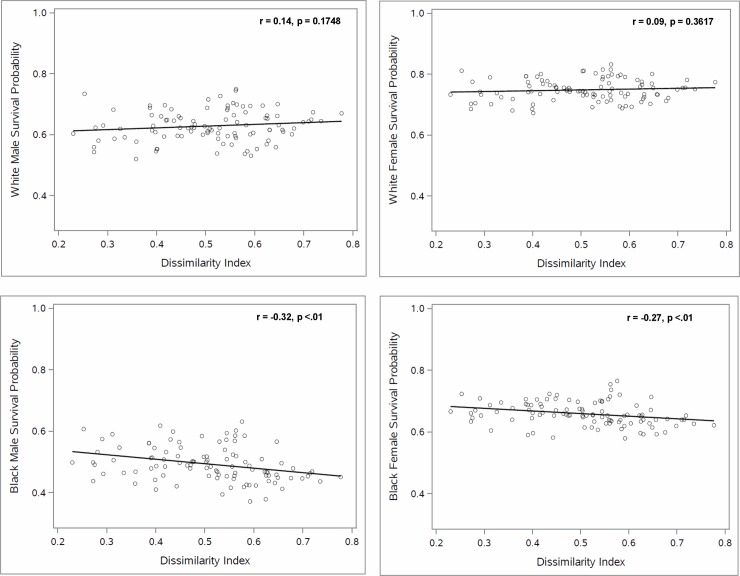
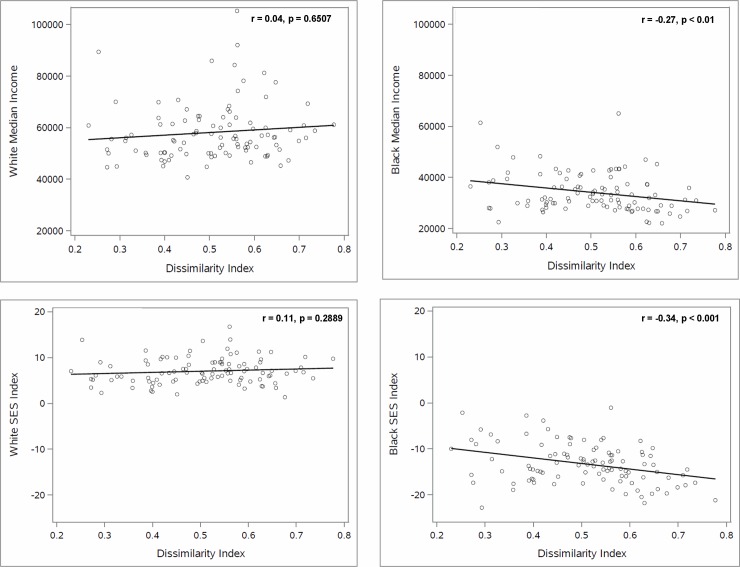
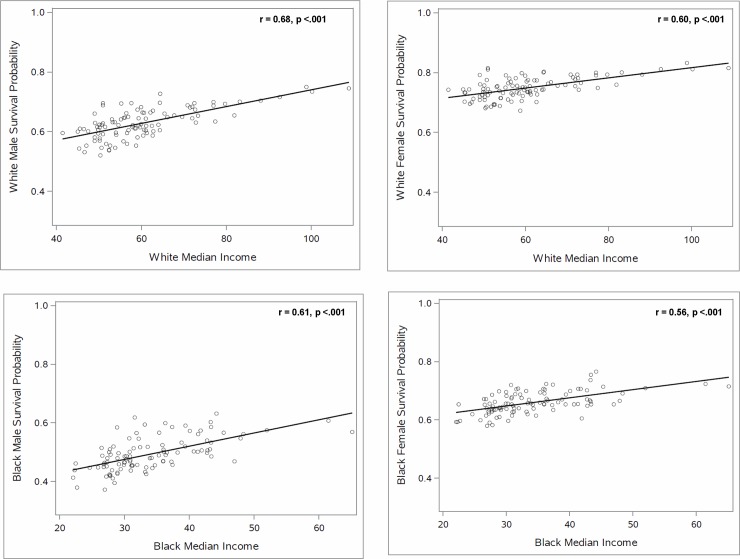
Verification
Claims the paper makes
The claims and statistics of this paper haven’t been checked yet.
Run the check — free, no account needed. It reads the open-access text and checks the sources it cites.
Claims other papers make about this one
Each is checked against this paper’s own text: does it say what the citing paper says it does?
In the citing paper
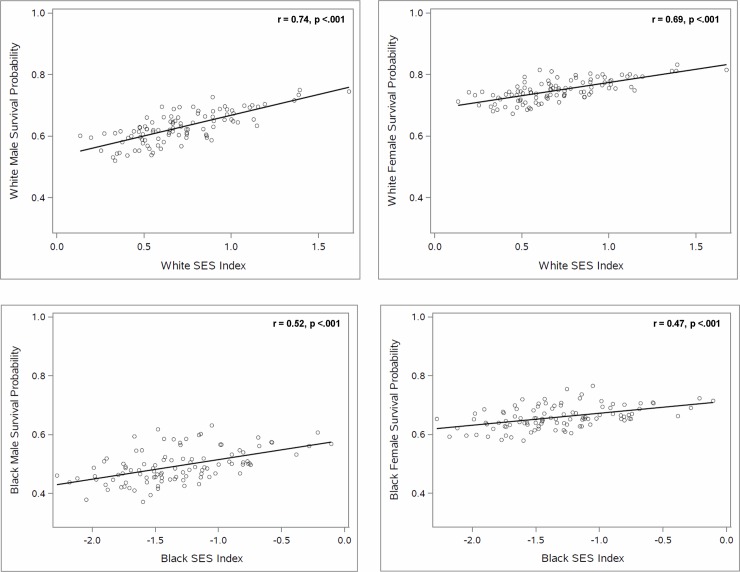
“In the United States, for example residential segregation is strongly associated with a 9%–14% lower probability of survival from age 35–75 among Blacks than Whites, a particularly grim statistic given the hyper‐segregated nature of at least 20 US cities (Intrator et al., 2016; Popescu et al., 2018).”
From On race, human variation, and who gets and dies of sepsis (2022) · cites this paper as Popescu et al., 2018
Self-check
Percentages, sums and reported differences re-computed from the paper’s own numbers.
The self-check needs the paper’s full text.
Citations
Cites
Social conditions as fundamental causes of disease.
Link, B. G., & Phelan, J. (1995) · Journal of Health and Social Behavior · doi:10.2307/2626958 · Cited by 5,722
Is Racism a Fundamental Cause of Inequalities in Health?
Phelan, J. C., & Link, B. G. (2015) · Annual Review of Sociology · doi:10.1146/annurev-soc-073014-112305 · Cited by 1,363
Research works printed but not linked: 38
- D Satcher, 2005, What if we were equal? A comparison of the black-white mortality gap in 1960 and 2000, Health Aff (Millwood), 24, 459, 10.1377/hlthaff.24.2.459 · DOI · Paper page
- FA Sloan, 2010, The longevity gap between Black and White men in the United States at the beginning and end of the 20th century, Am J Public Health, 100, 357, 10.2105/AJPH.2008.158188 · DOI
- KG Keppel, 2010, Is there progress toward eliminating racial/ethnic disparities in the leading causes of death?, Public health reports (Washington, DC: 1974), 125, 689, 10.1177/003335491012500511 · DOI
- S Harper, 2014, Trends in the black-white life expectancy gap among U S states, 1990–2009, Health Aff (Millwood), 33, 1375, 10.1377/hlthaff.2013.1273 · DOI
- DR Williams, 2001, Racial residential segregation: a fundamental cause of racial disparities in health, Public Health Rep, 116, 404, 10.1016/S0033-3549(04)50068-7 · DOI · Paper page
- DR Williams, 2010, Understanding racial-ethnic disparities in health: sociological contributions, Journal of health and social behavior, 51, S15, 10.1177/0022146510383838 · DOI · Paper page
- GA Puckrein, 2015, Social and Medical Determinants of Cardiometabolic Health: The Big Picture, Ethn Dis, 25, 521, 10.18865/ed.25.4.521 · DOI
- OL Meyer, 2014, Determinants of mental health and self-rated health: a model of socioeconomic status, neighborhood safety, and physical activity, Am J Public Health, 104, 1734, 10.2105/AJPH.2014.302003 · DOI
- S Suresh, 2011, Socioeconomic status, self-rated health, and mortality in a multiethnic sample of US adults, J Epidemiol, 21, 337, 10.2188/jea.JE20100142 · DOI
- DS Massey, 1990, American Apartheid—Segregation and the Making of the Underclass, Am J Sociol, 96, 329, 10.1086/229532 · DOI
- JA Kushner, 1979, Apartheid in America: An Historical and Legal Analysis of Contemporary Racial Segregation in the United States, Howard Law Journal, 22, 559
- C Lamb, 2005, Housing Segregation in Suburban America Since 1960: Presidential and Judicial Politics, 10.1017/CBO9780511614354 · DOI · Paper page
- D Acevedo-Garcia, 2008, Invited commentary: residential segregation and health—the complexity of modeling separate social contexts, Am J Epidemiol, 168, 1255, 10.1093/aje/kwn290 · DOI
- H Landrine, 2009, Separate and unequal: residential segregation and black health disparities, Ethn Dis, 19, 179
- DR Williams, 2003, Racial/ethnic discrimination and health: findings from community studies, Am J Public Health, 93, 200, 10.2105/AJPH.93.2.200 · DOI · Paper page
- J Dimick, 2013, Black patients more likely than whites to undergo surgery at low-quality hospitals in segregated regions, Health Aff (Millwood), 32, 1046, 10.1377/hlthaff.2011.1365 · DOI
- MS Sarrazin, 2009, Racial segregation and disparities in health care delivery: conceptual model and empirical assessment, Health Serv Res, 44, 1424, 10.1111/j.1475-6773.2009.00977.x · DOI
- C Tiwari, 2014, The impact of data suppression on local mortality rates: the case of CDC WONDER, Am J Public Health, 104, 1386, 10.2105/AJPH.2014.301900 · DOI
- K White, 2011, Racial/ethnic residential segregation: Framing the context of health risk and health disparities, Health & Place, 17, 438, 10.1016/j.healthplace.2010.12.002 · DOI
- T Dubowitz, 2008, Neighborhood socioeconomic status and fruit and vegetable intake among whites, blacks, and Mexican Americans in the United States, Am J Clin Nutr, 87, 1883, 10.1093/ajcn/87.6.1883 · DOI · Paper page
- ST Bird, 1995, Separate black and white infant mortality models: differences in the importance of structural variables, Soc Sci Med, 41, 1507, 10.1016/0277-9536(95)00029-7 · DOI
- SS Merkin, 2009, Neighborhoods and Cumulative Biological Risk Profiles by Race/Ethnicity in a National Sample of US Adults: NHANES III, Ann Epidemiol, 19, 194, 10.1016/j.annepidem.2008.12.006 · DOI
- J Gibbons, 2014, Self-rated health and residential segregation: how does race/ethnicity matter?, J Urban Health, 91, 648, 10.1007/s11524-013-9863-2 · DOI
- RJ Sampson, 1987, Urban Black Violence—the Effect of Male Joblessness and Family Disruption, Am J Sociol, 93, 348, 10.1086/228748 · DOI · Paper page
- MT Kaylen, 2011, A Reassessment of the Association Between Social Disorganization and Youth Violence in Rural Areas, Soc Sci Quart, 92, 978, 10.1111/j.1540-6237.2011.00808.x · DOI
- AP Polednak, 1996, Trends in US urban black infant mortality, by degree of residential segregation, Am J Public Health, 86, 723, 10.2105/AJPH.86.5.723 · DOI
- AP Polednak, 1991, Black-white differences in infant mortality in 38 standard metropolitan statistical areas, Am J Public Health, 81, 1480, 10.2105/AJPH.81.11.1480 · DOI
- AP Polednak, 1993, Poverty, residential segregation, and black/white mortality ratios in urban areas, J Health Care Poor Underserved, 4, 363, 10.1353/hpu.2010.0094 · DOI
- RS Cooper, 2001, Relationship between premature mortality and socioeconomic factors in black and white populations of US metropolitan areas, Public Health Rep, 116, 464, 10.1016/S0033-3549(04)50074-2 · DOI
- S Greer, 2011, Racial residential segregation and stroke mortality in Atlanta, Ethn Dis, 21, 437
- S Greer, 2014, Metropolitan racial residential segregation and cardiovascular mortality: exploring pathways, J Urban Health, 91, 499, 10.1007/s11524-013-9834-7 · DOI
- SY Gebreab, 2012, Exploring racial disparities in CHD mortality between blacks and whites across the United States: a geographically weighted regression approach, Health Place, 18, 1006, 10.1016/j.healthplace.2012.06.006 · DOI
- S Inagami, 2006, Residential segregation and Latino, black and white mortality in New York City, Journal of Urban Health-Bulletin of the New York Academy of Medicine, 83, 406, 10.1007/s11524-006-9035-8 · DOI
- J Fang, 1998, Residential segregation and mortality in New York City, Soc Sci Med, 47, 469, 10.1016/S0277-9536(98)00128-2 · DOI
- WA Darity Jr., 2003, Employment discrimination, segregation, and health, Am J Public Health, 93, 226, 10.2105/AJPH.93.2.226 · DOI
- JL Gaiter, 2006, Disproportionate rates of incarceration contribute to health disparities, Am J Public Health, 96, 1148, 10.2105/AJPH.2006.086561 · DOI
- LM Anderson, 2003, Task Force on Community Preventive S. The Community Guide's model for linking the social environment to health, Am J Prev Med, 24, 12, 10.1016/S0749-3797(02)00652-9 · DOI
- RT Palmer, 2014, Black Male Collegians: Increasing Access, Retention, and Persistence in Higher Education, ASHE Higher Education Report, 40, 1, 10.1002/aehe.20015 · DOI
Cited by
Sorted by citations
Stress and parenting during the global COVID-19 pandemic
Brown, S. M., Doom, J. R., Lechuga-Peña, S., Watamura, S. E., & Koppels, T. (2020) · Child Abuse & Neglect · doi:10.1016/j.chiabu.2020.104699 · Cited by 1,344
Poverty, racism, and the public health crisis in America
Beech, B. M., Ford, C., Thorpe, R. J., Bruce, M. A., & Norris, K. C. (2021) · Frontiers in Public Health · doi:10.3389/fpubh.2021.699049 · Cited by 220
On race, human variation, and who gets and dies of sepsis
Brinkworth, J. F., & Shaw, J. G. (2022) · American Journal of Biological Anthropology · doi:10.1002/ajpa.24527 · Cited by 9
Metadata
- Authors
- Popescu, I., Duffy, E., Mendelsohn, J., & Escarce, J. J.
- ORCID
- Popescu, Ioana
- Venue
- PLOS ONE
- Publisher
- Public Library of Science (PLoS)
- Published
- 2018-02-23
- Volume
- 13
- Issue
- 2
- Pages
- e0193222
- ISSN
- 1932-6203
- PMC
- PMC5825109
- Cited by
- 71
- References
- 2
- Language
- en
- Funders
- National Heart, Lung, and Blood Institute (HL118410)
About these checks
Registry, retraction, Cites and statistics results are computed, not judged, with one exception: a printed reference that no index lists is read once by a model before it counts as a citation error. Claims are extracted by a model and kept only when their quote appears verbatim in the text; each cited source is then checked, with a model’s help, for whether it says what the claim relies on. Those verdicts can be wrong — read the claim’s quote and the cited source before relying on one.
Statistics and arithmetic are recomputed, not judged.
Confidence bands are shown only for fields calibrated on our annotated test set. None is calibrated yet, so no band is shown.
What counts as a claim ›How we measure confidence ›How we check this ›
Are you an author, or do you see a problem with this page? Request a review
