

The DOI matches its Crossref record; 41 of the 41 references it cites were found in a registry or an index.
A general prediction model for the detection of ADHD and Autism using structural and functional MRI
Open accessAbstract
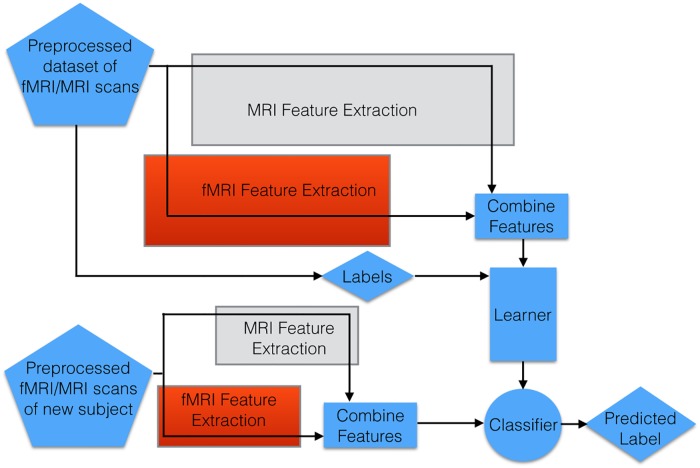
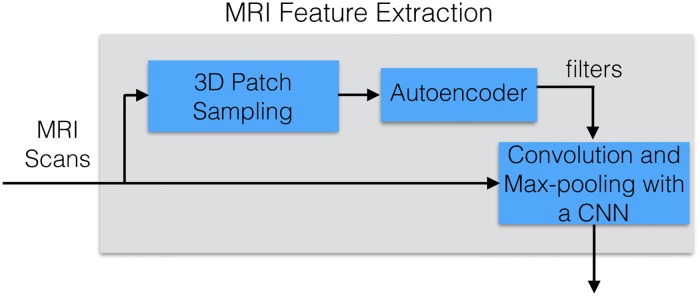
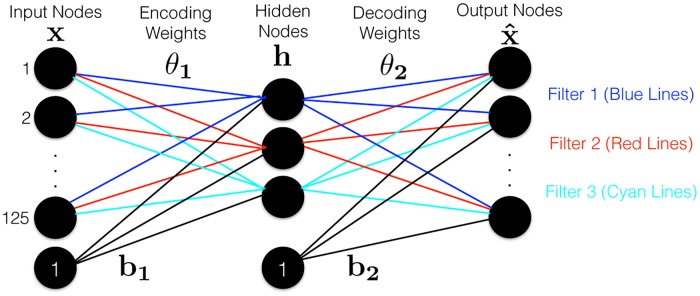
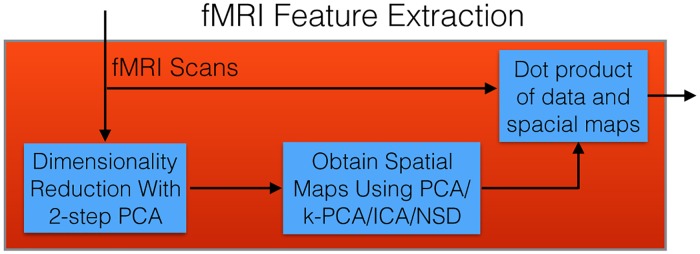
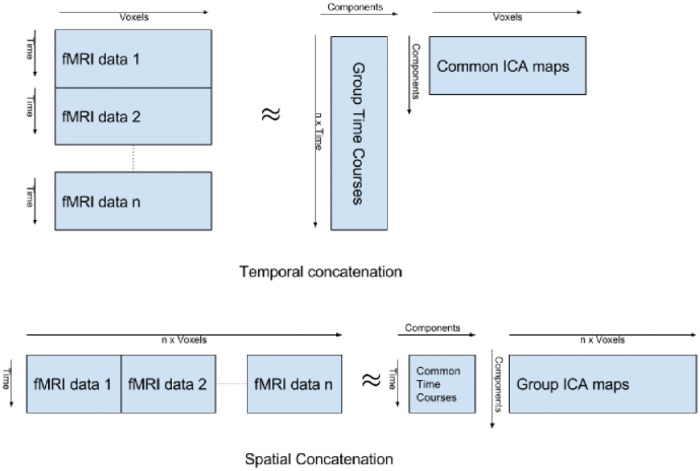
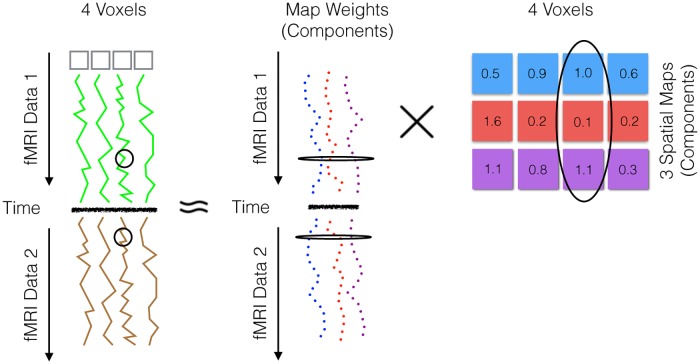
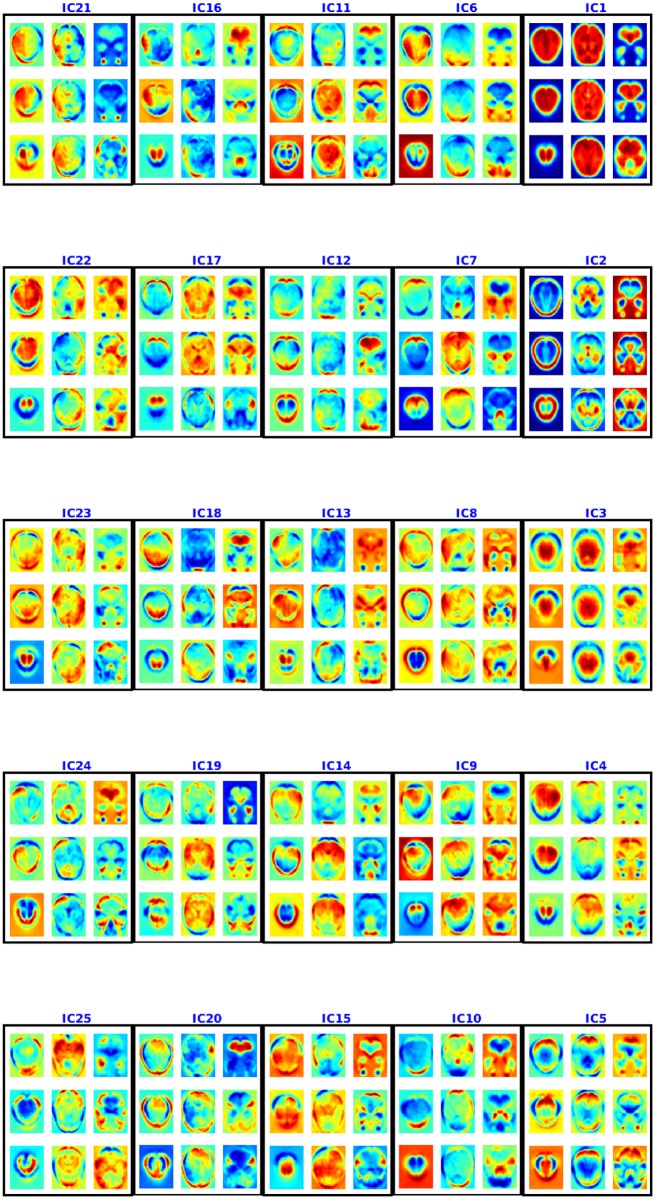
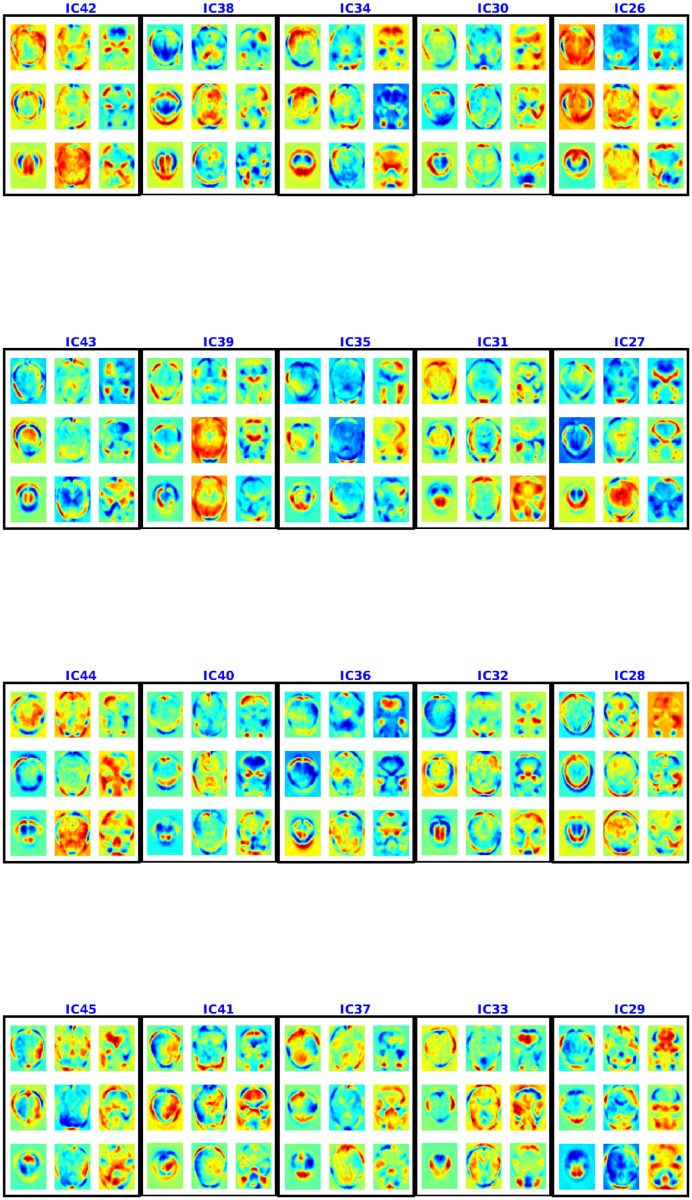
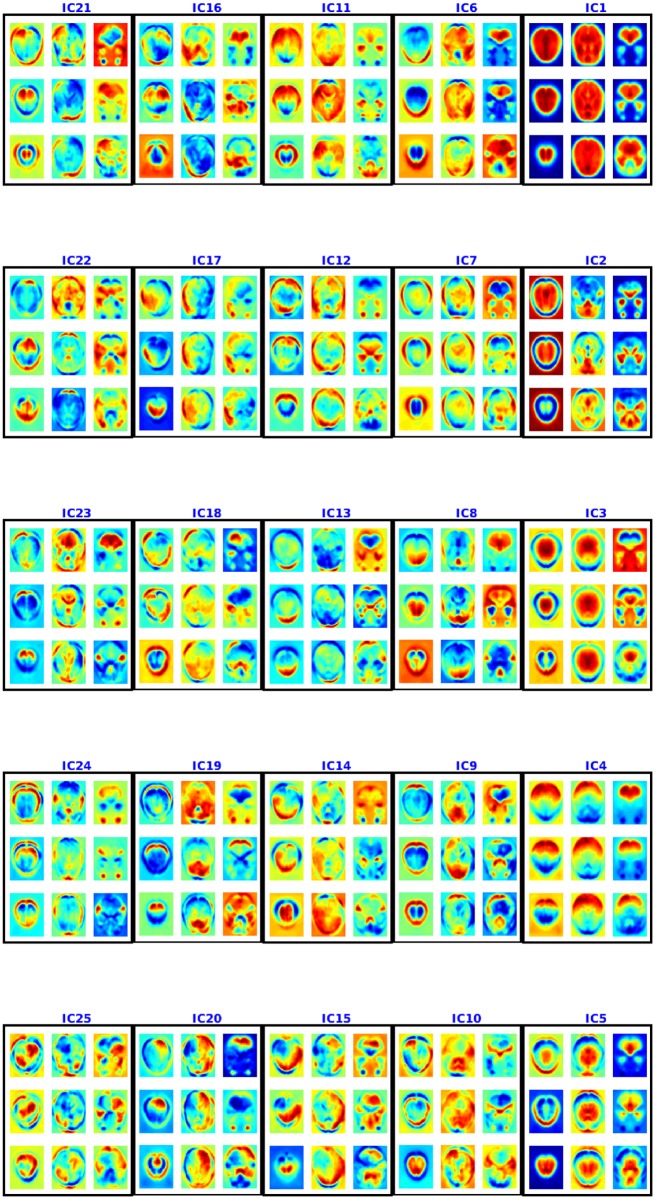
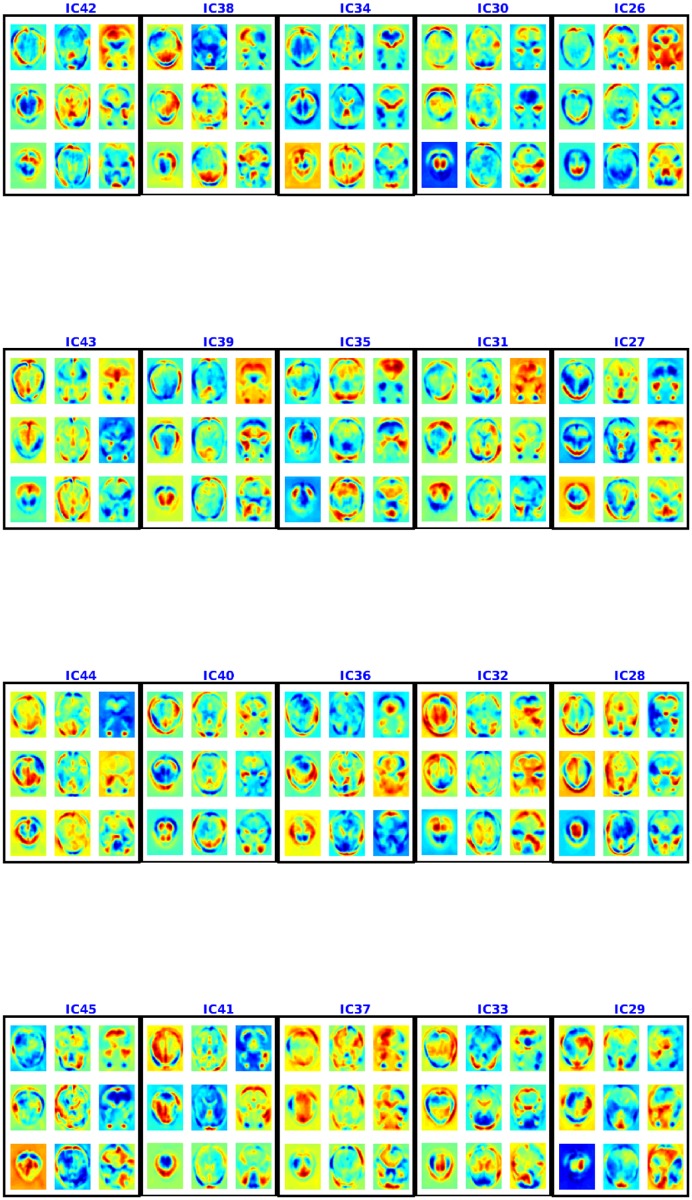
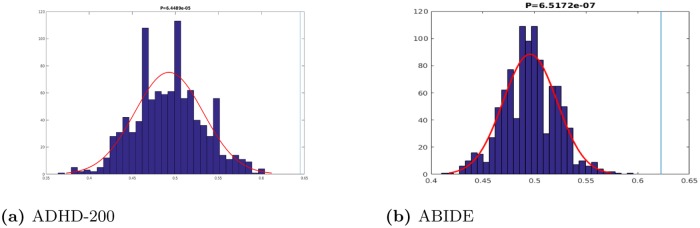
This work presents a novel method for learning a model that can diagnose Attention Deficit Hyperactivity Disorder (ADHD), as well as Autism, using structural texture and functional connectivity features obtained from 3-dimensional structural magnetic resonance imaging (MRI) and 4-dimensional resting-state functional magnetic resonance imaging (fMRI) scans of subjects. We explore a series of three learners: (1) The LeFMS learner first extracts features from the structural MRI images using the texture-based filters produced by a sparse autoencoder. These filters are then convolved with the original MRI image using an unsupervised convolutional network. The resulting features are used as input to a linear support vector machine (SVM) classifier. (2) The LeFMF learner produces a diagnostic model by first computing spatial non-stationary independent components of the fMRI scans, which it uses to decompose each subject's fMRI scan into the time courses of these common spatial components. These features can then be used with a learner by themselves or in combination with other features to produce the model. Regardless of which approach is used, the final set of features are input to a linear support vector machine (SVM) classifier. (3) Finally, the overall LeFMSF learner uses the combined features obtained from the two feature extraction processes in (1) and (2) above as input to an SVM classifier, achieving an accuracy of 0.673 on the ADHD-200 holdout data and 0.643 on the ABIDE holdout data. Both of these results, obtained with the same LeFMSF framework, are the best known, over all hold-out accuracies on these datasets when only using imaging data-exceeding previously-published results by 0.012 for ADHD and 0.042 for Autism. Our results show that combining multi-modal features can yield good classification accuracy for diagnosis of ADHD and Autism, which is an important step towards computer-aided diagnosis of these psychiatric diseases and perhaps others as well.
Overview
The claims and statistics of this paper haven’t been checked yet.
Run the check — free, no account needed. It reads the open-access text and checks the sources it cites.
Integrity signals
Registry
Cites
Statistics
Figures

Verification
Claims the paper makes
The claims and statistics of this paper haven’t been checked yet.
Run the check — free, no account needed. It reads the open-access text and checks the sources it cites.
Claims other papers make about this one
Each is checked against this paper’s own text: does it say what the citing paper says it does?
In the citing paper
“A recent study that took advantage of both structural and functional neuroimaging data reported modest, but not clinically useful, accuracy of a complex machine learning algorithm attempting to classify individuals with ASD or ADHD versus TD individuals (Sen et al., 2018).”
From Investigating functional brain network integrity using a traditional and novel categorical scheme for neurodevelopmental disorders (2019) · cites this paper as Sen et al., 2018
In the citing paper
“Biological links such as single nucleotide polymorphisms (4,5), brain structure (6,7), or functional connectivity (8,9) to specific disorders are limited.”
From Methods and challenges for assessing heterogeneity (2020) · cites this paper as [9]
Self-check
Percentages, sums and reported differences re-computed from the paper’s own numbers.
The self-check needs the paper’s full text.
Citations
Cites
Advances in neural information processing systems 7
Cios, K. J., & Shields, M. E. (1997) · Neurocomputing · doi:10.1016/s0925-2312(97)90018-7 · Cited by 22,093
Complex network measures of brain connectivity: Uses and interpretations
Rubinov, M., & Sporns, O. (2010) · NeuroImage · doi:10.1016/j.neuroimage.2009.10.003 · Cited by 11,522
Functional connectivity in the motor cortex of resting human brain using echo‐planar mri
Biswal, B., Zerrin Yetkin, F., Haughton, V. M., & Hyde, J. S. (1995) · Magnetic Resonance in Medicine · doi:10.1002/mrm.1910340409 · Cited by 9,812
Convolutional networks for images, speech, and time series
LeCun, Y., & Bengio, Y. (1998) · HAL · doi:10.5555/303568.303704 · Cited by 4,646
Consistent resting-state networks across healthy subjects
Damoiseaux, J. S., Rombouts, S. A. R. B., Barkhof, F., Scheltens, P., Stam, C. J., Smith, S. M., & Beckmann, C. F. (2006) · Proceedings of the National Academy of Sciences · doi:10.1073/pnas.0601417103 · Cited by 4,326
Methods to detect, characterize, and remove motion artifact in resting state fMRI
Power, J. D., Mitra, A., Laumann, T. O., Snyder, A. Z., Schlaggar, B. L., & Petersen, S. E. (2014) · NeuroImage · doi:10.1016/j.neuroimage.2013.08.048 · Cited by 3,748
A survey of cross-validation procedures for model selectionPreprint
Arlot, S., & Célisse, A. (2009) · Cited by 3,627
A survey of cross-validation procedures for model selection
Arlot, S., & Celisse, A. (2010) · Statistics Surveys · doi:10.1214/09-ss054 · Cited by 3,522
A method for making group inferences from functional MRI data using independent component analysis
Calhoun, V. D., Adali, T., Pearlson, G. D., & Pekar, J. J. (2001) · Human Brain Mapping · doi:10.1002/hbm.1048 · Cited by 2,994
Advances in Neural Information Processing Systems 20
Bonilla, E. V., Chai, K. M. A., & Williams, C. K. I. (2008) · neural information processing systems · Cited by 2,701
Research works printed but not linked: 2
- Ghiassian S, Greiner R, Jin P, Brown M. Learning to classify psychiatric disorders based on fMR images: Autism vs healthy and ADHD vs healthy. In: Proceedings of 3rd NIPS Workshop on Machine Learning and Interpretation in NeuroImaging; 2013.
- Souloumiac A. Blind source detection and separation using second order non-stationarity. In: Acoustics, Speech, and Signal Processing, 1995. ICASSP-95., 1995 International Conference on. vol. 3. IEEE; 1995. p. 1912–1915. · DOI
Cited by
Sorted by citations
The Heterogeneity Problem: Approaches to Identify Psychiatric Subtypes
Feczko, E., Miranda-Dominguez, O., Marr, M., Graham, A. M., Nigg, J. T., & Fair, D. A. (2019) · Trends in Cognitive Sciences · doi:10.1016/j.tics.2019.03.009 · Cited by 443
ASD-DiagNet: A Hybrid Learning Approach for Detection of Autism Spectrum Disorder Using fMRI Data
Eslami, T., Mirjalili, V., Fong, A. C. M., Laird, A. R., & Saeed, F. (2019) · Frontiers in Neuroinformatics · doi:10.3389/fninf.2019.00070 · Cited by 403
“Sen et al. [18] proposed a new algorithm which combines structural and functional features from MRI and fMRI data and got 64 .”
Deep learning in mental health outcome research: a scoping review
Su, C., Xu, Z., Pathak, J., & Wang, F. (2020) · Translational Psychiatry · doi:10.1038/s41398-020-0780-3 · Cited by 368
“One application of DL in fMRI and sMRI data is the identi fi cation of ADHD 25 – 31 .”
BackgroundMethodResultDetection of Autism Spectrum Disorder in Children Using Machine Learning Techniques
Vakadkar, K., Purkayastha, D., & Krishnan, D. (2021) · SN Computer Science · doi:10.1007/s42979-021-00776-5 · Cited by 230
Pagnozzi, A. M., Conti, E., Calderoni, S., Fripp, J., & Rose, S. (2018) · International Journal of Developmental Neuroscience · doi:10.1016/j.ijdevneu.2018.08.010 · Cited by 166
“Indeed, several studies utilise 5-fold (Demirhan, 2018; Sen et al., 2018) and 10-fold cross validation (Akhavan Aghdam et al., 2018; Moradi et al., 2017; Wang et al., 2016).”
BackgroundDeepFMRI: End-to-end deep learning for functional connectivity and classification of ADHD using fMRI
Riaz, A., Asad, M., Alonso, E., & Slabaugh, G. (2020) · Journal of Neuroscience Methods · doi:10.1016/j.jneumeth.2019.108506 · Cited by 160
“[33], the authors have also used multiple imaging modalities (MRI and fMRI) for the classification of ADHD and Autism.”
MethodResultWolfers, T., Floris, D. L., Dinga, R., van Rooij, D., Isakoglou, C., Kia, S. M., Zabihi, M., Llera, A., Chowdanayaka, R., Kumar, V., et al. (2019) · Neuroscience & Biobehavioral Reviews · doi:10.1016/j.neubiorev.2019.07.010 · Cited by 131
Machine learning studies on major brain diseases: 5-year trends of 2014–2018
Sakai, K., & Yamada, K. (2018) · Japanese Journal of Radiology · doi:10.1007/s11604-018-0794-4 · Cited by 127
Eslami, T., Almuqhim, F., Raiker, J. S., & Saeed, F. (2021) · Frontiers in Neuroinformatics · doi:10.3389/fninf.2020.575999 · Cited by 135
“…denoising are widely used for extracting lower-dimensional features from fMRI (Guo et al., 2017; Dekhil et al., 2018b; Heinsfeld et al., 2018; Li H. et al., 2018; Eslami and Saeed, 2019; Eslami et al., 2019; Wang et al., 2019a) and sMRI (Sen et al., 2018; Xiao et al., 2018; Kong et al., 2019) data.”
BackgroundMethodrs-fMRI and machine learning for ASD diagnosis: a systematic review and meta-analysis
Santana, C. P., Carvalho, E., Rodrigues, I. D., Bastos, G. S., de Souza, A. D., & de Brito, L. L. (2022) · Scientific Reports · doi:10.1038/s41598-022-09821-6 · Cited by 137
Almandil, N. B., Alkuroud, D. N., AbdulAzeez, S., Alsulaiman, A. A., Elaı̈ssari, A., & Borgio, J. F. (2019) · International Journal of Environmental Research and Public Health · doi:10.3390/ijerph16040658 · Cited by 124
“Neuroimaging, particularly magnetic resonance imaging (MRI) studies, whether structural or functional, may also be useful in either unraveling typical changes of a specific comorbidity or confirming volume loss in the deep gray matter, particularly in the caudate and striatum, which is frequently seen in ASD patients…”
BackgroundChen, Y., Yan, J., Jiang, M., Zhang, T., Zhao, Z., Zhao, W., Zheng, J., Yao, D., Zhang, R., Kendrick, K. M., et al. (2022) · IEEE Transactions on Neural Networks and Learning Systems · doi:10.1109/tnnls.2022.3154755 · Cited by 113
Niu, K., Guo, J., Pan, Y., Gao, X., Peng, X., Li, N., & Li, H. (2020) · Complexity · doi:10.1155/2020/1357853 · Cited by 109
Quaak, M., van de Mortel, L. A., Thomas, R. M., & van Wingen, G. A. (2021) · NeuroImage Clinical · doi:10.1016/j.nicl.2021.102584 · Cited by 114
Methods and challenges for assessing heterogeneity
Feczko, E., & Fair, D. A. (2020) · Biological Psychiatry · doi:10.1016/j.biopsych.2020.02.015 · Cited by 96
Exploring the Structural and Strategic Bases of Autism Spectrum Disorders With Deep Learning
Ke, F., Choi, S., Kang, Y. H., Cheon, K.-A. A., & Lee, S. W. (2020) · IEEE Access · doi:10.1109/access.2020.3016734 · Cited by 102
“The models reportedly performed better on relatively large-scale MRI datasets [43].”
BackgroundNeuroprediction and A.I. in Forensic Psychiatry and Criminal Justice: A Neurolaw Perspective
Tortora, L., Meynen, G., Bijlsma, J., Tronci, E., & Ferracuti, S. (2020) · Frontiers in Psychology · doi:10.3389/fpsyg.2020.00220 · Cited by 104
“…and healthy controls (Kim et al., 2016), or to detect brain function disorders, such as Autism and attention deficit hyperactivity disorder (ADHD) (Heinsfeld et al., 2018; Sen et al., 2018) and to discriminate between levels of personality traits, for example psychopathy (Steele et al., 2015).”
BackgroundA Machine-Based Prediction Model of ADHD Using CPT Data
Slobodin, O., Yahav, I., & Berger, I. (2020) · Frontiers in Human Neuroscience · doi:10.3389/fnhum.2020.560021 · Cited by 83
“…Tenev et al., 2014), brain structural magnetic resonance imaging (MRI; Peng et al., 2013), MRI and functional magnetic resonance imaging (fMRI; Sen et al., 2018), Near-infrared spectroscopy (NIRS; Yasumura et al., 2017), and a combination of subjective and objective measures of ADHD (Emser et…”
BackgroundToward Precision Medicine in ADHD
Buitelaar, J. K., Bölte, S., Brandeis, D., Caye, A., Christmann, N., Cortese, S., Coghill, D., Faraone, S. V., Franke, B., Gleitz, M., et al. (2022) · Frontiers in Behavioral Neuroscience · doi:10.3389/fnbeh.2022.900981 · Cited by 83
“…ADHD diagnosis (ORs 1.70 to 2.07) Gehricke et al. (2017) Diagnostic Morphometric MRI Case-control study 32 19–31 (25.3 ± 5.4) 26:6 40 20–28 33:7 AUC: 0.92 Sen et al. (2018) Diagnostic MRI structural features and functional connectivity from resting state fMRI scans (used to create a machine…”
MethodInfluentialRonickom, J. F. A., Thomas, J., Thangavel, P., Koneru, V., Langs, G., & Dauwels, J. (2020) · Journal of Neuroscience Methods · doi:10.1016/j.jneumeth.2020.108884 · Cited by 72
Mishra, M., & Pati, U. C. (2023) · Biomedical Signal Processing and Control · doi:10.1016/j.bspc.2023.104686 · Cited by 73
Luo, Y., Alvarez, T. L., Halperin, J. M., & Li, X. (2020) · NeuroImage Clinical · doi:10.1016/j.nicl.2020.102238 · Cited by 74
Zhang, T., Li, C., Li, P., Peng, Y., Kang, X., Jiang, C., Li, F., Zhu, X., Yao, D., Biswal, B. B., et al. (2020) · Entropy · doi:10.3390/e22080893 · Cited by 71
“[13] used an overall LEFMSF algorithm to fuse structural texture features and FC and achieved an accuracy of 67% on the ADHD-200 data with the support vector machines (SVM) classifier.”
MethodAn Autoencoder-Based Deep Learning Classifier for Efficient Diagnosis of Autism
Sewani, H., & Kashef, R. F. (2020) · Children · doi:10.3390/children7100182 · Cited by 71
“Another model that diagnosed ADHD and autism from 3-D structural MRI and 4-D (fMRI) is presented in [9].”
BackgroundBrain imaging-based machine learning in autism spectrum disorder: methods and applications
Xu, M., Calhoun, V. D., Jiang, R., Yan, W., & Jing Sui (Beijing Normal University), my correct affiliation is beijing normal university, N. Q. U. O. S. A. T. (2021) · Journal of Neuroscience Methods · doi:10.1016/j.jneumeth.2021.109271 · Cited by 77
“Sen et al. (2018) constructed two feature learners for sMRI and fMRI respectively, then combined the extracted features to train an SVM to classify 573 healthy controls and 538 ASDs selected from ABIDE, and obtained 64.3% accuracy.”
MethodInfluentialAlam, S., Raja, P., & Gulzar, Y. (2022) · Wireless Communications and Mobile Computing · doi:10.1155/2022/5766386 · Cited by 65
Li, H., Cui, L., Cao, L., Zhang, Y., Liu, Y., Deng, W., & Zhou, W. (2020) · BMC Psychiatry · doi:10.1186/s12888-020-02886-5 · Cited by 64
“Using multimodality MRI, several studies have constructed SVM classifiers for the identification of ASD, Alzheimer ’ s Disease, and schizophrenia [46, 52, 53].”
MethodBahathiq, R. A., Banjar, H. R., Bamaga, A. K., & Jarraya, S. K. (2022) · Frontiers in Neuroinformatics · doi:10.3389/fninf.2022.949926 · Cited by 69
“Stacked AEs can learn faster than a single autoencoder (Zhang L. et al., 2020).”
MethodInfluentialSpecifics of medical data mining for diagnosis aid: A survey
Itani, S., Lecron, F., & Fortemps, P. (2018) · Expert Systems with Applications · doi:10.1016/j.eswa.2018.09.056 · Cited by 62
Zhang, Z., Li, G., Xu, Y. J., & Tang, X. (2021) · Diagnostics · doi:10.3390/diagnostics11081402 · Cited by 70
“Sen et al. [140] input structural texture and FC features to an SVM classifier and explored a series of three learners.”
Güven, A., Altınkaynak, M., Dolu, N., İzzetoğlu, M., Pektaş, F., Özmen, S., Demi̇rci̇, E., & Batbat, T. (2019) · Neural Computing and Applications · doi:10.1007/s00521-019-04294-7 · Cited by 57
Reproducible neuroimaging features for diagnosis of autism spectrum disorder with machine learning
Mellema, C., Nguyen, K. P., Treacher, A., & Montillo, A. (2022) · Scientific Reports · doi:10.1038/s41598-022-06459-2 · Cited by 76
“For example, models using training data sampled across all ABIDE sites report test accuracies ranging from 6468% [26,27], while those holding out whole sites [8,25,28] report test accuracies from 72-80%.”
MethodPopulation heterogeneity in clinical cohorts affects the predictive accuracy of brain imaging
Benkarim, O. M., Paquola, C., Park, B., Kebets, V., Hong, S., de Wael, R. V., Zhang, S., Yeo, B. T. T., Eickenberg, M., Ge, T., et al. (2022) · PLoS Biology · doi:10.1371/journal.pbio.3001627 · Cited by 61
Liu, J. J., Borsari, B., Li, Y., Liu, S. X., Gao, Y., Xin, X., Lou, S., Jensen, M., Garrido-Martín, D., Verplaetse, T. L., et al. (2024) · Cell · doi:10.1016/j.cell.2024.11.012 · Cited by 61
Reiter, M. A., Jahedi, A., Ronickom, J. F. A., Fishman, I., Bailey, B., & Müller, R. (2020) · Neural Computing and Applications · doi:10.1007/s00521-020-05193-y · Cited by 53
Classification of Adolescent Major Depressive Disorder Via Static and Dynamic Connectivity
Sen, B., Cullen, K. R., & Parhi, K. K. (2020) · IEEE Journal of Biomedical and Health Informatics · doi:10.1109/jbhi.2020.3043427 · Cited by 52
Self-citationDeep Forest in ADHD Data Classification
Shao, L., Zhang, D., Du, H., & Fu, D. (2019) · IEEE Access · doi:10.1109/access.2019.2941515 · Cited by 50
“(2018) [11] studied structural MRI image features and fMRI features, utilizing them to train a linear support vector machine (SVM) classifier for ADHD classification.”
MethodDilated 3D Convolutional Neural Networks for Brain MRI Data Classification
Wang, Z., Sun, Y., Shen, Q., & Cao, L. (2019) · IEEE Access · doi:10.1109/access.2019.2941912 · Cited by 51
Chen, M., Li, H., Wang, J., Dillman, J. R., Parikh, N. A., & He, L. (2019) · Radiology Artificial Intelligence · doi:10.1148/ryai.2019190012 · Cited by 54
“Studies have also used whole-brain connectivity features to detect ADHD (7,9,15).”
BackgroundZhou, X., Lin, Q., Gui, Y., Wang, Z., Liu, M., & Lu, H. J. (2021) · Frontiers in Neuroscience · doi:10.3389/fnins.2021.710133 · Cited by 46
Evaluation of haplotype callers for next-generation sequencing of viruses
Eliseev, A., Gibson, K. M., Avdeyev, P., Novik, D. K., Bendall, M. L., Pérez‐Losada, M., Alexeev, N., & Crandall, K. A. (2020) · Infection Genetics and Evolution · doi:10.1016/j.meegid.2020.104277 · Cited by 47
Chen, Z., Liu, X., Yang, Q., Wang, Y.-J., Miao, K., Gong, Z., Yu, Y., Leonov, A., Liu, C., Feng, Z., et al. (2023) · JAMA Network Open · doi:10.1001/jamanetworkopen.2023.1671 · Cited by 43
Wang, Z., Zhou, X., Gui, Y., Liu, M., & Lu, H. J. (2023) · Translational Psychiatry · doi:10.1038/s41398-023-02309-5 · Cited by 45
Fleming, J. T., Noyce, A. L., & Shinn‐Cunningham, B. G. (2020) · Neuropsychologia · doi:10.1016/j.neuropsychologia.2020.107530 · Cited by 43
Machine Learning and MRI-based Diagnostic Models for ADHD: Are We There Yet?
Zhang‐James, Y., Razavi, A. S., Hoogman, M., Franke, B., & Faraone, S. V. (2023) · Journal of Attention Disorders · doi:10.1177/10870547221146256 · Cited by 41
Can Autism Be Diagnosed with Artificial Intelligence? A Narrative Review
Chaddad, A., Li, J., Lu, Q., Li, Y., Okuwobi, I. P., Tanougast, C., Desrosiers, C., & Niazi, T. M. (2021) · Diagnostics · doi:10.3390/diagnostics11112032 · Cited by 43
“Two types are the most considered when identifying ASD patients: (1) functional magnetic resonance imaging (fMRI) and (2) structural magnetic resonance imaging (sMRI or MRI) [24].”
BackgroundInfluentialDerbali, M., Jarrah, M., & Randhawa, P. (2023) · International Journal of Advanced Computer Science and Applications · doi:10.14569/ijacsa.2023.0140112 · Cited by 37
Dense attentive GAN-based one-class model for detection of autism and ADHD
Devika, K. N., Mahapatra, D., Subramanian, R., & Oruganti, V. R. M. (2022) · Journal of King Saud University - Computer and Information Sciences · doi:10.1016/j.jksuci.2022.11.001 · Cited by 36
Chen, Z., Hu, B., Liu, X., Becker, B., Eickhoff, S. B., Miao, K., Gu, X., Tang, Y., Dai, X., Li, C., et al. (2023) · BMC Medicine · doi:10.1186/s12916-023-02941-4 · Cited by 35
Dajani, D. R., Burrows, C. A., Odriozola, P., Baez, A., Nebel, M. B., Mostofsky, S. H., & Uddin, L. Q. (2019) · NeuroImage: Clinical · doi:10.1016/j.nicl.2019.101678 · Cited by 33
Andrikopoulos, D., Vassiliou, G., Fatouros, P., Tsirmpas, C., Pehlivanidis, A., & Papageorgiou, C. (2024) · BMC Psychiatry · doi:10.1186/s12888-024-05987-7 · Cited by 44
Quantitative susceptibility mapping shows lower brain iron content in children with autism
Tang, S., Xu, Y., Liu, X., Chen, Z., Zhou, Y., Nie, L., & He, L. (2020) · European Radiology · doi:10.1007/s00330-020-07267-w · Cited by 35
Mengi, M., & Malhotra, D. (2021) · Archives of Computational Methods in Engineering · doi:10.1007/s11831-021-09682-8 · Cited by 43
Elnakieb, Y. A., Ali, M. T., Elnakib, A. A., Shalaby, A. M., Mahmoud, A. H., Soliman, A., Barnes, G. N., & El-Baz, A. S. (2023) · Bioengineering · doi:10.3390/bioengineering10010056 · Cited by 33
Vargason, T., Grivas, G., Hollowood-Jones, K., & Hahn, J. (2020) · Seminars in Pediatric Neurology · doi:10.1016/j.spen.2020.100803 · Cited by 34
A review of ADHD detection studies with machine learning methods using rsfMRI data
TAŞPINAR, G., & Özkurt, N. (2024) · NMR in Biomedicine · doi:10.1002/nbm.5138 · Cited by 33
Mueller, S., Soriano, D., Boscor, A., Saville, N. M., Arjyal, A., Baral, S., Fordham, M., Hearn, G. J., Masson, V. L., Kayastha, R., et al. (2020) · BMC Public Health · doi:10.1186/s12889-020-09246-8 · Cited by 31
AI-driven early diagnosis of specific mental disorders: a comprehensive study
Baran, F. D. E., & Çetin, M. (2025) · Cognitive Neurodynamics · doi:10.1007/s11571-025-10253-x · Cited by 30
“In one of the studies in the literature, a model that can diagnose attention deficit hyperactivity disorder (ADHD) and autism was developed (Sen et al. 2018).”
Chen, M., Li, H., Wang, J., Yuan, W., Altaye, M., Parikh, N. A., & He, L. (2020) · Frontiers in Neuroscience · doi:10.3389/fnins.2020.00858 · Cited by 29
“Indeed, numerous studies have applied deep learning approaches to brain connectome for various neurological disorders (Wee et al., 2012; Barkhof et al., 2014; He et al., 2018; Heinsfeld et al., 2018; Li et al., 2018; Sen et al., 2018; Chen et al., 2019).”
BackgroundElnakieb, Y. A., Ali, M. T., Elnakib, A. A., Shalaby, A. M., Soliman, A., Mahmoud, A. H., Ghazal, M. A., Barnes, G. N., & El-Baz, A. S. (2021) · Sensors · doi:10.3390/s21248171 · Cited by 30
“The standard way to handle those data is by exploiting some sort of feature reduction algorithms such as linear discriminant analysis (LDA) [29], principal component analysis (PCA) [30], or auto-encoders [20].”
MethodChen, M., Li, H., Fan, H., Dillman, J. R., Wang, H., Altaye, M., Zhang, B., Parikh, N. A., & He, L. (2022) · Medical Physics · doi:10.1002/mp.15545 · Cited by 33
Eslami, T., Raiker, J. S., & Saeed, F. (2021) · Elsevier eBooks · doi:10.1016/b978-0-12-822822-7.00004-1 · Cited by 28
Big data, machine learning, and population health: predicting cognitive outcomes in childhood
Bowe, A. K., Lightbody, G., Staines, A. S., & Murray, D. M. (2022) · Pediatric Research · doi:10.1038/s41390-022-02137-1 · Cited by 33
“851 on an independent test set of 171 participants, is unlikely to be clinically useful in its current form but suggests there may be signals within such data that could assist in the diagnosis of ADHD.(76) For ASD, another NDD that benefits from early intervention but for which diagnosis is often delayed, ML has been…”
BackgroundInfluentialThe diagnosis of ASD with MRI: a systematic review and meta-analysis
Schielen, S. J. C., Pilmeyer, J., Aldenkamp, A. P., & Zinger, S. (2024) · Translational Psychiatry · doi:10.1038/s41398-024-03024-5 · Cited by 55
Individualized prediction models in ADHD: a systematic review and meta-regression
de Pablo, G. S., Iniesta, R., Bellato, A., Caye, A., Dobrosavljevic, M., Parlatini, V., Garcia‐Argibay, M., Li, L., Cabras, A., Ali, M. H., et al. (2024) · Molecular Psychiatry · doi:10.1038/s41380-024-02606-5 · Cited by 31
Ter-Minassian, L., Viani, N., Wickersham, A., Cross, L., Stewart, R. J., Velupillai, S. U., & Downs, J. M. (2022) · BMJ Open · doi:10.1136/bmjopen-2021-058058 · Cited by 29
Tian, L., Zheng, H., Zhang, K., Qiu, J., Song, X., Li, S., Zeng, Z., Ran, B., Deng, X., & Cai, J. (2024) · Journal of Affective Disorders · doi:10.1016/j.jad.2024.03.111 · Cited by 27
Choi, E. J., Vandewouw, M. M., Taylor, M. J., Arnold, P. D., Brian, J. A., Crosbie, J., Kelley, E. A., Lai, M., Liu, X., Schachar, R. J., et al. (2020) · NeuroImage Clinical · doi:10.1016/j.nicl.2020.102476 · Cited by 25
Detection of autism spectrum disorder using multi‐scale enhanced graph convolutional network
Singh, U., Shukla, S., & Gore, M. M. (2024) · Cognitive Computation and Systems · doi:10.1049/ccs2.12108 · Cited by 23
A Novel Knowledge Distillation-Based Feature Selection for the Classification of ADHD
Khan, N. A., Waheeb, S. A., Riaz, A., & Shang, X. (2021) · Biomolecules · doi:10.3390/biom11081093 · Cited by 25
“Structural as well as functional features were used in [48,49] to classify the ADHD subjects resulting in 76% accuracy in the multi-class setting and 92.”
MethodTong, X., Xie, H., Carlisle, N. B., Fonzo, G. A., Oathes, D. J., Jiang, J., & Zhang, Y. (2022) · Translational Psychiatry · doi:10.1038/s41398-022-02134-2 · Cited by 22
Enhancing early autism prediction based on electronic records using clinical narratives
Chen, J., Engelhard, M., Henao, R., Berchuck, S. I., Eichner, B., Perrin, E. M., Sapiro, G., & Dawson, G. (2023) · Journal of Biomedical Informatics · doi:10.1016/j.jbi.2023.104390 · Cited by 24
Wang, Z., Zhu, Y., Shi, H., Zhang, Y., & Yan, C. (2021) · Mathematical Biosciences & Engineering · doi:10.3934/mbe.2021347 · Cited by 22
“Among them, only sMRI data from ADHD-200 dataset was used in the study of Zou [38] and Wang [21], while sMRI and fMRI data were used in the study of Sen [22] and Sina [39].”
MethodFinding Essential Parts of the Brain in rs-fMRI Can Improve ADHD Diagnosis Using Deep Learning
Kim, B., Park, J., Kim, T., & Kwon, Y. (2023) · IEEE Access · doi:10.1109/access.2023.3324670 · Cited by 24
Provenzano, D., Washington, S. D., & Baraniuk, J. N. (2020) · Frontiers in Computational Neuroscience · doi:10.3389/fncom.2020.00002 · Cited by 21
“We followed a standard approach of predictive model building for fMRI data involving feature extraction, model build, validation, and evaluation of performance (Sen et al., 2018).”
MethodAutomated neuroscience decision support framework
Rubasinghe, I. D., & Meedeniya, D. (2020) · Elsevier eBooks · doi:10.1016/b978-0-12-819061-6.00013-6 · Cited by 18
Application of Quantitative Magnetic Resonance Imaging in the Diagnosis of Autism in Children
Tang, S., Nie, L., Liu, X., Chen, Z., Zhou, Y., Pan, Z., & He, L. (2022) · Frontiers in Medicine · doi:10.3389/fmed.2022.818404 · Cited by 17
“" The earlier the rehabilitation intervention, the better the recovery of children, which requires clinicians to accurately diagnose children with autism at an early stage (6, 7).”
BackgroundMendes, S. L., Pinaya, W. H. L., Pan, P. M., & Sato, J. R. (2021) · Computational Intelligence and Neuroscience · doi:10.1155/2021/5550914 · Cited by 16
Lin, H., Haider, S. P., Kaltenhauser, S., Mozayan, A., Malhotra, A., Constable, R. T., Scheinost, D., Ment, L. R., Konrad, K., & Payabvash, S. (2023) · Frontiers in Neuroscience · doi:10.3389/fnins.2023.1138670 · Cited by 17
BenoRanjana, J., & Muthukkumar, R. (2025) · Biomedical Signal Processing and Control · doi:10.1016/j.bspc.2024.107433 · Cited by 20
Learning Laplacian Matrix from Graph Signals with Sparse Spectral Representation
Humbert, P., Bars, B. L., Oudre, L., Kalogeratos, A., & Vayatis, N. (2021) · HAL · Cited by 16
A Review of Supportive Computational Approaches for Neurological Disorder Identification
Meedeniya, D., & Rubasinghe, I. D. (2020) · Advances in medical diagnosis, treatment, and care (AMDTC) book series · doi:10.4018/978-1-7998-3069-6.ch016 · Cited by 16
Interdisciplinary Tensions When Developing Digital Interventions Supporting Individuals With ADHD
Cibrian, F. L., Monteiro, E. M., Schuck, S. E. B., Nelson, M. A., Hayes, G. R., & Lakes, K. D. (2022) · Frontiers in Digital Health · doi:10.3389/fdgth.2022.876039 · Cited by 18
The Use of fMRI Regional Analysis to Automatically Detect ADHD Through a 3D CNN-Based Approach
Gülhan, P. G., & Özmen, G. (2024) · Journal of Imaging Informatics in Medicine · doi:10.1007/s10278-024-01189-5 · Cited by 15
“In addition to employing structural MRI (s-MRI), it is possible to diagnose ADHD by analyzing fMRI data collected during periods of rest [16].”
Efficacy of novel Summation-based Synergetic Artificial Neural Network in ADHD diagnosis
Peng, J., Debnath, M., & Biswas, A. K. (2021) · Machine Learning with Applications · doi:10.1016/j.mlwa.2021.100120 · Cited by 15
ASD-GraphNet: A novel graph learning approach for Autism Spectrum Disorder diagnosis using fMRI data
Zeraati, M., & Davoodi, A. (2025) · Computers in Biology and Medicine · doi:10.1016/j.compbiomed.2025.110723 · Cited by 14
Research Advances in ADHD and Technology
Cibrian, F. L., Hayes, G. R., & Lakes, K. D. (2021) · Synthesis lectures on technology and health · doi:10.1007/978-3-031-01606-6 · Cited by 13
Provenzano, D., Washington, S. D., Rao, Y. J., Loew, M. H., & Baraniuk, J. N. (2020) · Brain Sciences · doi:10.3390/brainsci10070456 · Cited by 13
“We also found that CFS was differentiable from GWI after exercise using fMRI data collected in a similar fashion [26].”
MethodTang, S., Liu, X., Ran, Q., Nie, L., Wu, L., Pan, Z., & He, L. (2022) · Frontiers in Neurology · doi:10.3389/fneur.2022.851430 · Cited by 13
“For example, studies have found that some brain regions of children with autism have abnormal anatomical structures or abnormal brain function activities (6, 7), but whether cerebral blood perfusion in abnormal brain regions is also abnormal is unknown.”
BackgroundEl-Masry, S., & Moawad, M. (2021) · The Journal of Basic and Applied Zoology · doi:10.1186/s41936-021-00224-z · Cited by 12
Kianičková, K., Pažitná, L., Kundalia, P. H., Pakanová, Z., Nemčovič, M., Baráth, P., Katrlíková, E., Šuba, J., Trebatická, J., & Katrlı́k, J. (2023) · International Journal of Molecular Sciences · doi:10.3390/ijms24108745 · Cited by 12
The Cost of Untracked Diversity in Brain-Imaging PredictionPreprint
Benkarim, O. M., Paquola, C., Park, B., Kebets, V., Hong, S., de Wael, R. V., Zhang, S., Yeo, B. T. T., Eickenberg, M., Ge, T., et al. (2021) · bioRxiv (Cold Spring Harbor Laboratory) · doi:10.1101/2021.06.16.448764 · Cited by 12
Automatic characterization of cerebral MRI images for the detection of autism spectrum disorders
Mezrioui, N. E. H., Aloui, K., Naït-Ali, A., & Naceur, M. S. (2024) · Intelligence-Based Medicine · doi:10.1016/j.ibmed.2023.100127 · Cited by 12
Kumar, A., & Jaiswal, U. C. (2025) · SN Computer Science · doi:10.1007/s42979-025-03783-y · Cited by 11
“All classifiers and feature transformation methods [53, 54] achieved a perfect accuracy of 100%.”
A Brief Survey on Various Prediction Models for Detection of ADHD from Brain-MRI Images
Biswas, S. D., Chakraborty, R., & Pramanik, A. (2020) · International Conference on Distributed Computing and Networking (ICDCN) · doi:10.1145/3369740.3372775 · Cited by 11
Digital assessments for children and adolescents with ADHD: a scoping review
Cibrian, F. L., Monteiro, E. M., & Lakes, K. D. (2024) · Frontiers in Digital Health · doi:10.3389/fdgth.2024.1440701 · Cited by 13
Rajaprakash, S., Basha, C. B., Ram, C. S., Ameethbasha, I., Subaprıya, V., & Sofia, R. (2025) · Intelligence-Based Medicine · doi:10.1016/j.ibmed.2025.100213 · Cited by 10
Periyasamy, R., Vibashan, V. S., Varghese, G. T., & Aleem, M. A. (2021) · Neurology India · doi:10.4103/0028-3886.333520 · Cited by 12
Classification of attention deficit hyperactivity disorder using machine learning on an EEG dataset
Ahire, N. K., Awale, R. N., & Wagh, A. E. (2024) · Applied Neuropsychology Child · doi:10.1080/21622965.2023.2300078 · Cited by 9
“Several studies (Alchalabi et al., 2018; De Silva et al., 2019; Sen et al., 2018; Tor et al., 2021) suggested that children with altered wave activity—in particular, increased TBR, h , or a slowing—respond well to stimulant medication.”
Feature Selection Based on Genetic Algorithm in the Diagnosis of Autism Disorder by fMRI
Sadeghian, F., Hasani, H., & Jafari, M. (2021) · Caspian Journal of Neurological Sciences · doi:10.32598/cjns.7.25.5 · Cited by 9
Metadata
- Authors
- Sen, B., Borle, N. C., Greiner, R., & Brown, M. R. G.
- Affiliations
- University of Alberta (CA)
- Corresponding author
- Brown, Matthew R. G.
- Venue
- PLOS ONE
- Publisher
- Public Library of Science (PLoS)
- Published
- 2018-04-17
- Volume
- 13
- Issue
- 4
- Pages
- e0194856
- ISSN
- 1932-6203 (ISSN-L)
- PMC
- PMC5903601
- OpenAlex
- W2801745895
- Cited by
- 198
- References
- 41
- Citations by year
- 2026: 9 · 2025: 20 · 2024: 28 · 2023: 25 · 2022: 31 · 2021: 31 · 2020: 36 · 2019: 13 · 2018: 5
- FWCI
- 12.79
- Type
- journal article
- Language
- en
- Open access
- gold
- doi.org
- Licence
- Locations
- PLoS ONE (publishedVersion, cc-by)
- Europe PMC (PubMed Central) (publishedVersion, cc-by)
- PubMed Central (publishedVersion, cc-by)
- PubMed (publishedVersion)
- RePEc: Research Papers in Economics (submittedVersion)
- DOAJ (DOAJ: Directory of Open Access Journals) (submittedVersion)
- Funders
- Canadian Institutes of Health Research (CSE125741)
- Natural Sciences and Engineering Research Council of Canada (NSERC) (203245)
- Alberta Machine Intelligence Institute (AMII)
- Topics
- Life Sciences › Neuroscience › Cognitive Neuroscience › Functional Brain Connectivity Studies
- Health Sciences › Medicine › Psychiatry and Mental health › Attention Deficit Hyperactivity Disorder
- Life Sciences › Neuroscience › Cognitive Neuroscience › Autism Spectrum Disorder Research
- Keywords
- ADHD diagnosis, autism diagnosis, structural MRI, resting-state fMRI, functional connectivity, texture features, sparse autoencoders, independent component analysis, support vector machine, computer-aided diagnosis, multimodal fusion, mental illness
- MeSH terms
- Adolescent, Adult, Attention Deficit Disorder with Hyperactivity, Autistic Disorder, Brain, Child, Decision Support Techniques, Diagnosis, Computer-Assisted, Female, Humans, Image Processing, Computer-Assisted, Magnetic Resonance Imaging, Male, Prognosis, Young Adult, Datasets as Topic
About these checks
Registry, retraction, Cites and statistics results are computed, not judged, with one exception: a printed reference that no index lists is read once by a model before it counts as a citation error. Claims are extracted by a model and kept only when their quote appears verbatim in the text; each cited source is then checked, with a model’s help, for whether it says what the claim relies on. Those verdicts can be wrong — read the claim’s quote and the cited source before relying on one.
Statistics and arithmetic are recomputed, not judged.
Confidence bands are shown only for fields calibrated on our annotated test set. None is calibrated yet, so no band is shown.
What counts as a claim ›How we measure confidence ›How we check this ›
Are you an author, or do you see a problem with this page? Request a review
