

The DOI matches its Crossref record; 41 of the 41 references it cites were found in a registry or an index.
Sarcopenia and myosteatosis are accompanied by distinct biological profiles in patients with pancreatic and periampullary adenocarcinomas
Open accessAbstract
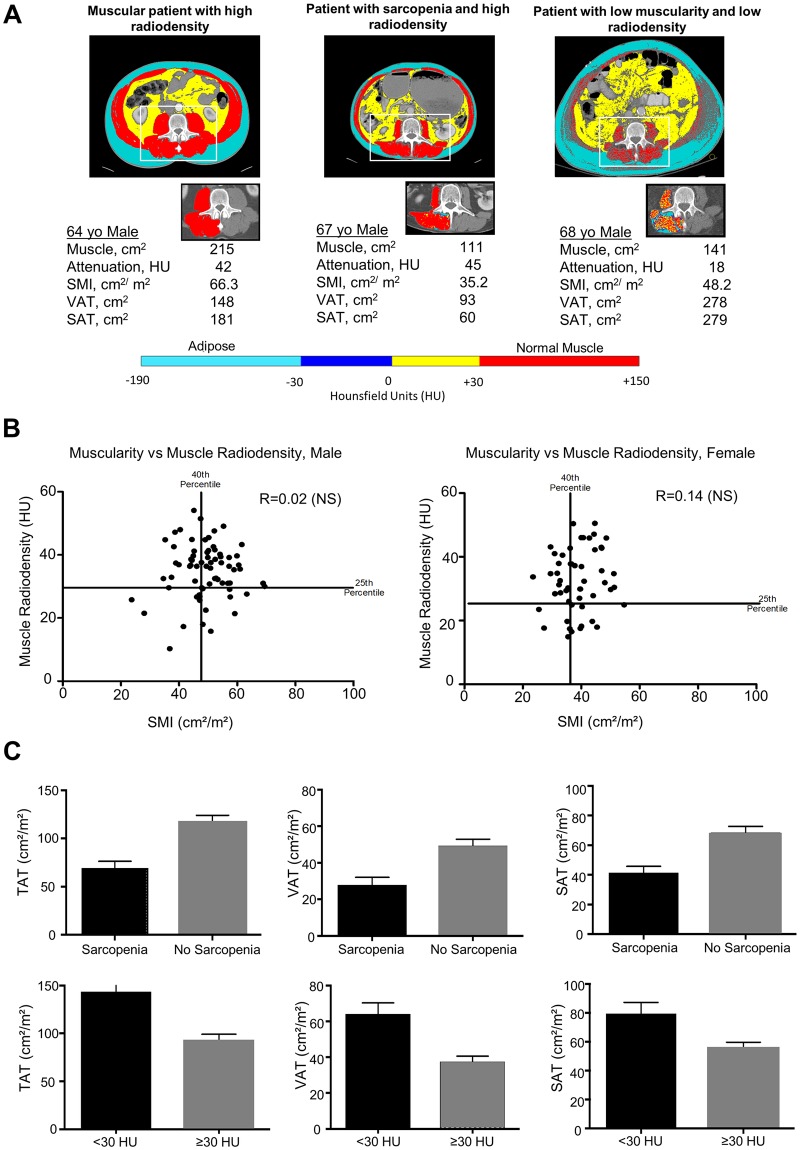
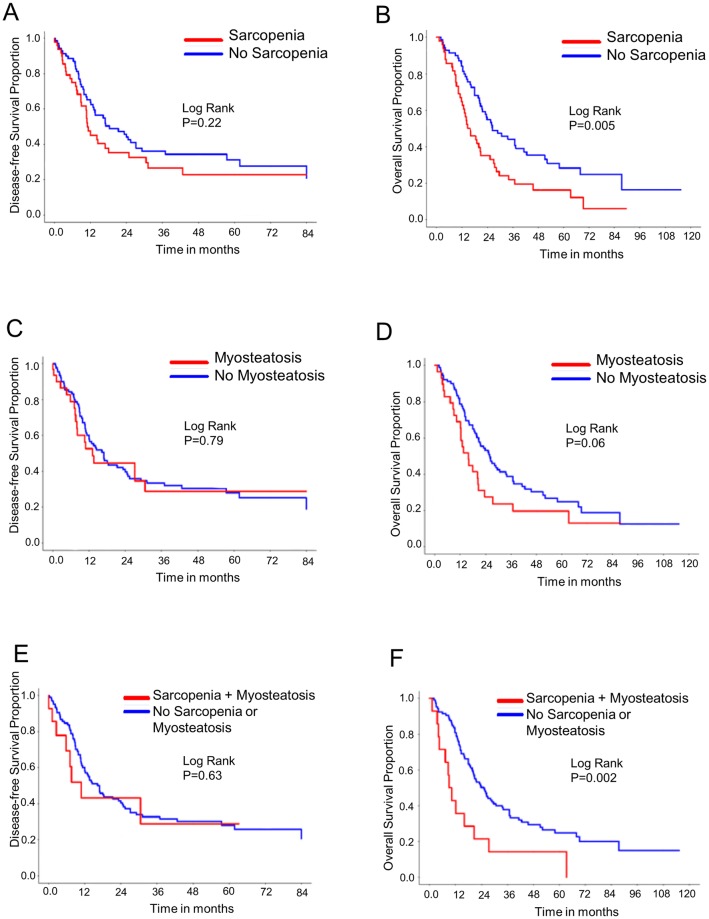
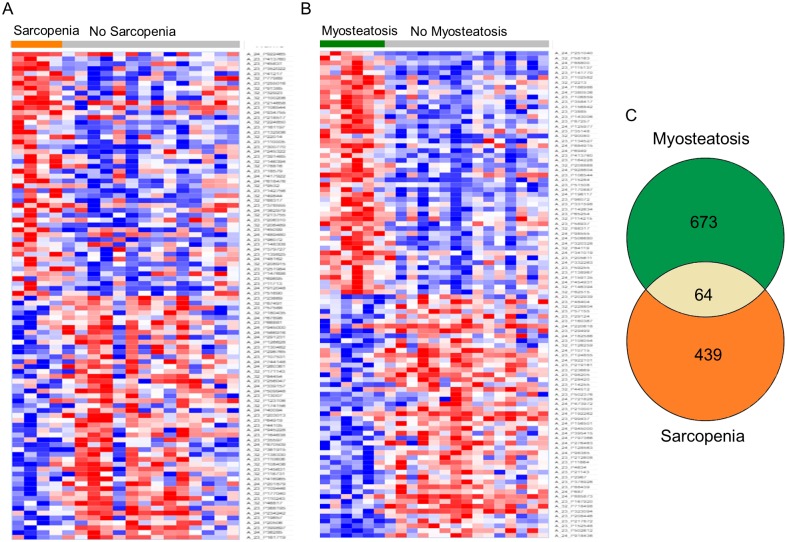
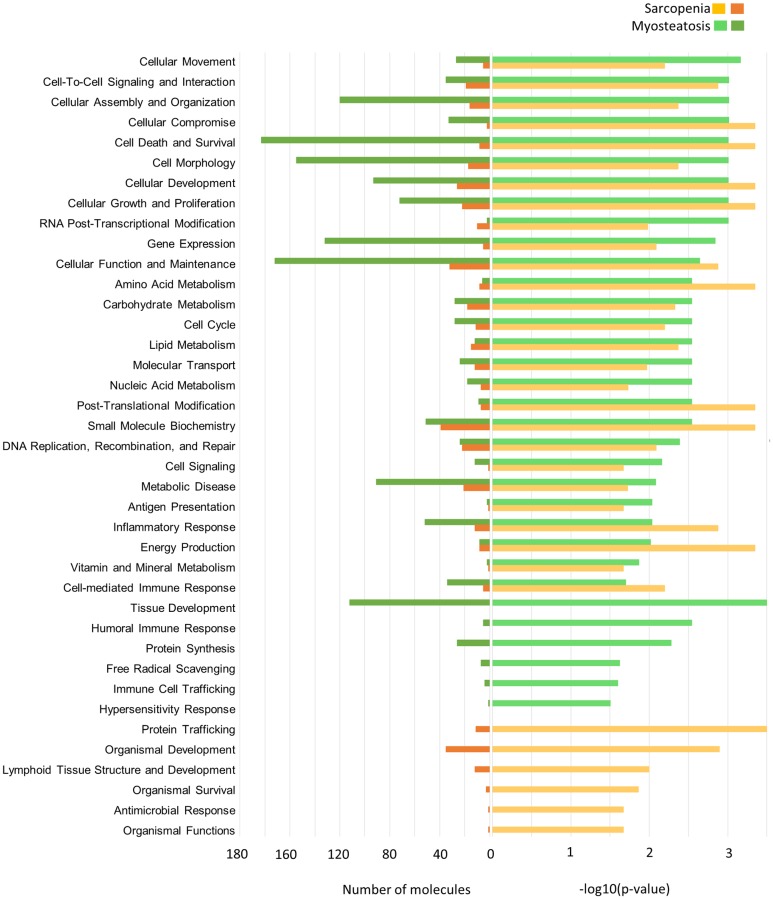
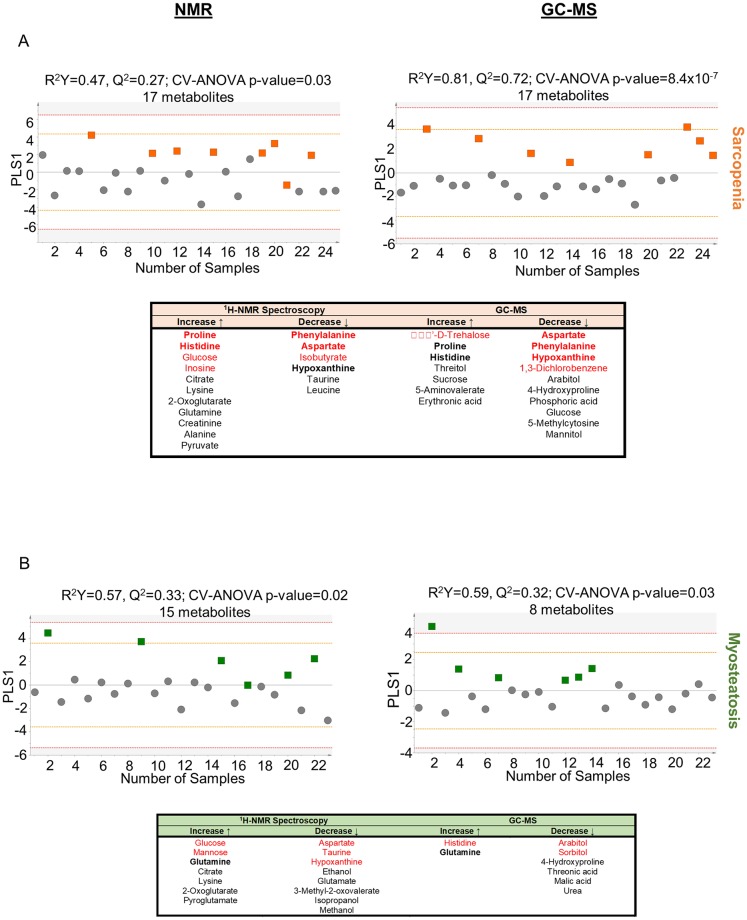
INTRODUCTION: Pancreatic and periampullary adenocarcinomas are associated with abnormal body composition visible on CT scans, including low muscle mass (sarcopenia) and low muscle radiodensity due to fat infiltration in muscle (myosteatosis). The biological and clinical correlates to these features are poorly understood. METHODS: Clinical characteristics and outcomes were studied in 123 patients who underwent pancreaticoduodenectomy for pancreatic or non-pancreatic periampullary adenocarcinoma and who had available preoperative CT scans. In a subgroup of patients with pancreatic cancer (n = 29), rectus abdominus muscle mRNA expression was determined by cDNA microarray and in another subgroup (n = 29) 1H-NMR spectroscopy and gas chromatography-mass spectrometry were used to characterize the serum metabolome. RESULTS: Muscle mass and radiodensity were not significantly correlated. Distinct groups were identified: sarcopenia (40.7%), myosteatosis (25.2%), both (11.4%). Fat distribution differed in these groups; sarcopenia associated with lower subcutaneous adipose tissue (P<0.0001) and myosteatosis associated with greater visceral adipose tissue (P<0.0001). Sarcopenia, myosteatosis and their combined presence associated with shorter survival, Log Rank P = 0.005, P = 0.06, and P = 0.002, respectively. In muscle, transcriptomic analysis suggested increased inflammation and decreased growth in sarcopenia and disrupted oxidative phosphorylation and lipid accumulation in myosteatosis. In the circulating metabolome, metabolites consistent with muscle catabolism associated with sarcopenia. Metabolites consistent with disordered carbohydrate metabolism were identified in both sarcopenia and myosteatosis. DISCUSSION: Muscle phenotypes differ clinically and biologically. Because these muscle phenotypes are linked to poor survival, it will be imperative to delineate their pathophysiologic mechanisms, including whether they are driven by variable tumor biology or host response.
Overview
The claims and statistics of this paper haven’t been checked yet.
Run the check — free, no account needed. It reads the open-access text and checks the sources it cites.
Integrity signals
Registry
Cites
Statistics
Figures
Verification
Claims the paper makes
The claims and statistics of this paper haven’t been checked yet.
Run the check — free, no account needed. It reads the open-access text and checks the sources it cites.
Claims other papers make about this one
Each is checked against this paper’s own text: does it say what the citing paper says it does?
The source backs part of the claim, not all of it — or backs it for a different population, condition or comparison.
In the citing paper
“The trajectories for survival between these groups differed as those with high levels of myosteatosis had overall lower survival rate.”
From Myosteatosis in the Context of Skeletal Muscle Function Deficit: An Interdisciplinary Workshop at the National Institute on Aging (2020) · cites this paper as Stretch et al., 2018
Experimental — accuracy not yet measuredIn the citing paper
“In a group of 100 participants with pancreatic and periampullary adenocarcinomas, 40% were sarcopenic, 25% had myosteatosis, and 11% had both (Stretch et al., 2018).”
From Myosteatosis in the Context of Skeletal Muscle Function Deficit: An Interdisciplinary Workshop at the National Institute on Aging (2020) · cites this paper as Stretch et al., 2018
Self-check
Percentages, sums and reported differences re-computed from the paper’s own numbers.
The self-check needs the paper’s full text.
Citations
Cites
Definition and classification of cancer cachexia: an international consensus
Fearon, K., Strasser, F., Anker, S. D., Bosaeus, I. G., Bruera, E. D., Fainsinger, R. L., Jatoi, A., Loprinzi, C. L., Macdonald, N., Mantovani, G., et al. (2011) · The Lancet Oncology · doi:10.1016/s1470-2045(10)70218-7 · Cited by 6,020
Self-citationPrado, C. M., Lieffers, J. R., McCargar, L. J., Reiman, T., Sawyer, M. B., Martin, L., & Baracos, V. E. (2008) · The Lancet Oncology · doi:10.1016/s1470-2045(08)70153-0 · Cited by 3,238
Self-citationMourtzakis, M., Prado, C. M. M., Lieffers, J. R., Reiman, T., McCargar, L. J., & Baracos, V. E. (2008) · Applied Physiology, Nutrition, and Metabolism · doi:10.1139/h08-075 · Cited by 2,224
Self-citationUsing MetaboAnalyst 3.0 for Comprehensive Metabolomics Data Analysis
Xia, J., & Wishart, D. S. (2016) · Current Protocols in Bioinformatics · doi:10.1002/cpbi.11 · Cited by 1,560
Prado, C. M. M., Baracos, V. E., McCargar, L. J., Reiman, T., Mourtzakis, M., Tonkin, K. S., Mackey, J. R., Koski, S. L., Pituskin, E., & Sawyer, M. B. (2009) · Clinical Cancer Research · doi:10.1158/1078-0432.ccr-08-2242 · Cited by 1,125
Self-citationMeasurement of skeletal muscle radiation attenuation and basis of its biological variation
Aubrey, J., Esfandiari, N., Baracos, V. E., Buteau, F. A., Frenette, J., Putman, C. T., & Mazurak, V. C. (2014) · Acta Physiologica · doi:10.1111/apha.12224 · Cited by 720
Self-citationSarcopenia in an Overweight or Obese Patient Is an Adverse Prognostic Factor in Pancreatic Cancer
Tan, B. H. L., Birdsell, L., Martin, L., Baracos, V. E., & Fearon, K. C. H. (2009) · Clinical Cancer Research · doi:10.1158/1078-0432.ccr-09-1525 · Cited by 656
Self-citationImpact of Sarcopenia on Outcomes Following Resection of Pancreatic Adenocarcinoma
Peng, P., Hyder, O., Firoozmand, A., Kneuertz, P., Schulick, R. D., Huang, D., Makary, M., Hirose, K., Edil, B., Choti, M. A., et al. (2012) · Journal of Gastrointestinal Surgery · doi:10.1007/s11605-012-1923-5 · Cited by 546
Incio, J., Liu, H., Suboj, P., Chin, S. M., Chen, I. X., Pinter, M., Ng, M. R., Nia, H. T., Grahovac, J., Kao, S., et al. (2016) · Cancer Discovery · doi:10.1158/2159-8290.cd-15-1177 · Cited by 455
The impact of frailty on outcomes after cardiac surgery: A systematic review
Sepehri, A., Beggs, T., Hassan, A., Rigatto, C., Shaw, C., Tangri, N., & Arora, R. C. (2014) · Journal of Thoracic and Cardiovascular Surgery · doi:10.1016/j.jtcvs.2014.07.087 · Cited by 452
Karnovsky, A., Weymouth, T. E., Hull, T., Tarcea, V. G., Scardoni, G., Laudanna, C., Sartor, M. A., Stringer, K. A., Jagadish, H. V., Burant, C., et al. (2011) · Bioinformatics · doi:10.1093/bioinformatics/btr661 · Cited by 421
Insulin therapy and colorectal cancer risk among type 2 diabetes mellitus patients
Yang, Y., Hennessy, S., & Lewis, J. D. (2004) · Gastroenterology · doi:10.1053/j.gastro.2004.07.011 · Cited by 350
Sarcopenia is an independent predictor of complications following pancreatectomy for adenocarcinoma
Joglekar, S., Asghar, A. M., Mott, S. L., Johnson, B. E., Button, A. M., Clark, E. J., & Mezhir, J. J. (2014) · Journal of Surgical Oncology · doi:10.1002/jso.23862 · Cited by 279
Sarcopenia as a Prognostic Factor among Patients with Stage III Melanoma
Sabel, M. S., Lee, J. S.-J., Cai, S., Englesbe, M. J., Holcombe, S., & Wang, S. C. (2011) · Annals of Surgical Oncology · doi:10.1245/s10434-011-1976-9 · Cited by 270
Okumura, S., Kaido, T., Hamaguchi, Y., Fujimoto, Y., Masui, T., Mizumoto, M., Hammad, A., Mori, A., Takaori, K., & Üemoto, S. (2015) · Surgery · doi:10.1016/j.surg.2015.02.002 · Cited by 268
van Dijk, D. P. J., Bakens, M. J. A. M., Coolsen, M. M. E., Rensen, S. S., van Dam, R. M., Bours, M. J. L., Weijenberg, M. P., Dejong, C. H. C., & Damink, S. W. M. O. (2016) · Journal of Cachexia Sarcopenia and Muscle · doi:10.1002/jcsm.12155 · Cited by 252
Pecorelli, N., Carrara, G., COBELLI, F. D., Cristel, G., Damascelli, A., Balzano, G., Beretta, L., & Braga, M. (2016) · British journal of surgery · doi:10.1002/bjs.10063 · Cited by 250
Amini, N., Spolverato, G., Gupta, R., Margonis, G. A., Kim, Y., Wagner, D., Rezaee, N., Weiss, M. J., Wolfgang, C. L., Makary, M. M., et al. (2015) · Journal of Gastrointestinal Surgery · doi:10.1007/s11605-015-2835-y · Cited by 246
Miljkovic, I., & Zmuda, J. M. (2010) · Current Opinion in Clinical Nutrition & Metabolic Care · doi:10.1097/mco.0b013e328337d826 · Cited by 235
Antoun, S., Lanoy, É., Iacovelli, R., Albiges, L. K., Loriot, Y., Merad-Taoufik, M., Fizazi, K. S., Palma, M. D., Baracos, V. E., & Escudier, B. J. (2013) · Cancer · doi:10.1002/cncr.28218 · Cited by 224
Self-citationRollins, K. E., Tewari, N., Ackner, A., Awwad, A., Madhusudan, S., Macdonald, I. A., Fearon, K. C. H., & Lobo, D. N. (2015) · Clinical Nutrition · doi:10.1016/j.clnu.2015.08.005 · Cited by 212
The role of insulin resistance in the development of muscle wasting during cancer cachexia
Honors, M. A., & Kinzig, K. P. (2011) · Journal of Cachexia Sarcopenia and Muscle · doi:10.1007/s13539-011-0051-5 · Cited by 171
Intramyocellular lipid droplets increase with progression of cachexia in cancer patients
Stephens, N. A., Skipworth, R. J. E., MacDonald, A. J., Greig, C. A., Ross, J. A., & Fearon, K. C. H. (2011) · Journal of Cachexia Sarcopenia and Muscle · doi:10.1007/s13539-011-0030-x · Cited by 159
Okumura, S., Kaido, T., Hamaguchi, Y., Fujimoto, Y., Kobayashi, A., Iida, T., Yagi, S., Taura, K., Hatano, E., & Üemoto, S. (2015) · Surgery · doi:10.1016/j.surg.2015.08.047 · Cited by 136
Buettner, S., Wagner, D., Kim, Y., Margonis, G. A., Makary, M. A., Wilson, A., Sasaki, K., Amini, N., Gani, F., & Pawlik, T. M. (2015) · Journal of the American College of Surgeons · doi:10.1016/j.jamcollsurg.2015.12.020 · Cited by 135
Frailty index predicts severe complications in gynecologic oncology patients
Uppal, S., Igwe, E., Rice, L. W., Spencer, R. J., & Rose, S. L. (2015) · Gynecologic Oncology · doi:10.1016/j.ygyno.2015.01.532 · Cited by 134
Sandini, M., Bernasconi, D. P., Fior, D., Molinelli, M., Ippolito, D., Nespoli, L. C., Caccialanza, R., & Gianotti, L. V. (2016) · Nutrition · doi:10.1016/j.nut.2016.04.002 · Cited by 130
Nishida, Y., Kato, Y., Kudo, M., Aizawa, H., Okubo, S., Takahashi, D., Nakayama, Y., Kitaguchi, K., Gotohda, N., Takahashi, S., et al. (2016) · Journal of Gastrointestinal Surgery · doi:10.1007/s11605-016-3146-7 · Cited by 130
Kumar, A., Moynagh, M. R., Multinu, F., Cliby, W. A., McGree, M. E., Weaver, A. L., Young, P. M., Bakkum-Gamez, J. N., Langstraat, C., Dowdy, S. C., et al. (2016) · Gynecologic Oncology · doi:10.1016/j.ygyno.2016.05.027 · Cited by 125
Miljkovic, I., Cauley, J. A., Wang, P. Y., Holton, K. F., Lee, C. G., Sheu, Y., Barrett-Connor, E. L., Hoffman, A. R., Lewis, C. E., ORWOLL, E. S., et al. (2013) · Obesity · doi:10.1002/oby.20346 · Cited by 107
Ninomiya, G., Fujii, T., Yamada, S., Yabusaki, N., Suzuki, K., Iwata, N., Kanda, M., Hayashi, M., Tanaka, C., Nakayama, G., et al. (2017) · International Journal of Surgery · doi:10.1016/j.ijsu.2017.01.075 · Cited by 101
The Impact of Functional Dependency on Outcomes After Complex General and Vascular Surgery
Scarborough, J. E., Bennett, K. M., Englum, B. R., Pappas, T. N., & Lagoo‐Deenadayalan, S. A. (2014) · Annals of Surgery · doi:10.1097/sla.0000000000000767 · Cited by 91
Noy, A., & Bilezikian, J. P. (1994) · The Journal of Clinical Endocrinology & Metabolism · doi:10.1210/jcem.79.5.7962312 · Cited by 87
Komura, T., Mizukoshi, E., Kita, Y., Sakurai, M., Takata, Y., Arai, K., Yamashita, T., Ohta, T., Shimizu, K., Nakamoto, Y., et al. (2007) · The American Journal of Gastroenterology · doi:10.1111/j.1572-0241.2007.01354.x · Cited by 85
Preoperative sarcopenia determinants in pancreatic cancer patients
Carrara, G., Pecorelli, N., COBELLI, F. D., Cristel, G., Damascelli, A., Beretta, L., & Braga, M. (2016) · Clinical Nutrition · doi:10.1016/j.clnu.2016.10.014 · Cited by 65
Kaibori, M., Ishizaki, M., Iida, H., Matsui, K., Sakaguchi, T., Inoue, K., Mizuta, T., Ide, Y., Iwasaka, J., Kimura, Y., et al. (2015) · Journal of Gastrointestinal Surgery · doi:10.1007/s11605-015-2838-8 · Cited by 64
Stretch, C., Khan, S., Asgarian, N., Eisner, R., Vaisipour, S., Damaraju, S., Graham, K., Bathe, O. F., Steed, H. L., Greiner, R., et al. (2013) · PLoS ONE · doi:10.1371/journal.pone.0065380 · Cited by 62
Self-citationvan Vugt, J. L. A., Buettner, S., Levolger, S., van den Braak, R. R. J. C., Suker, M., Gaspersz, M. P., de Bruin, R. W. F., Verhoef, C. K., van Eijck, C. H. J., Bossche, N., et al. (2017) · PLoS ONE · doi:10.1371/journal.pone.0186547 · Cited by 47
Kawamura, Y., Ikeda, K., Arase, Y., Yatsuji, H., Sezaki, H., Hosaka, T., Akuta, N., Kobayashi, M., Saitoh, S., Suzuki, F., et al. (2008) · Journal of Gastroenterology and Hepatology · doi:10.1111/j.1440-1746.2008.05436.x · Cited by 46
Wesseltoft-Rao, N., Hjermstad, M. J., Ikdahl, T., Dajani, O. F., Ulven, S. M., Iversen, P. O., & Bye, A. (2015) · Nutrition and Cancer · doi:10.1080/01635581.2015.1004728 · Cited by 37
McConnell, Y. J., Farshidfar, F., Weljie, A. M., Kopciuk, K. A., Dixon, E., Ball, C. G., Sutherland, F. R., Vogel, H. J., & Bathe, O. F. (2017) · Metabolites · doi:10.3390/metabo7010003 · Cited by 17
Self-citation
Cited by
Sorted by citations
Correa-de-Araujo, R., Addison, O., Miljkovic, I., Goodpaster, B. H., Bergman, B. C., Clark, R. V., Elena, J. W., Esser, K. A., Ferrucci, L., Harris-Love, M. O., et al. (2020) · Frontiers in Physiology · doi:10.3389/fphys.2020.00963 · Cited by 468
Changes in lean body mass with glucagon‐like peptide ‐1‐based therapies and mitigation strategies
Neeland, I. J., Linge, J., & Birkenfeld, A. L. (2024) · Diabetes, Obesity and Metabolism · doi:10.1111/dom.15728 · Cited by 391
Myosteatosis and prognosis in cancer: Systematic review and meta-analysis
Aleixo, G. F. P., Shachar, S. S., Nyrop, K. A., Muss, H. B., Malpica, L., & Williams, G. R. (2019) · Critical Reviews in Oncology/Hematology · doi:10.1016/j.critrevonc.2019.102839 · Cited by 347
Sarcopenia in cirrhosis: from pathogenesis to interventions
Ebadi, M., Bhanji, R. A., Mazurak, V. C., & Montaño‐Loza, A. J. (2019) · Journal of Gastroenterology · doi:10.1007/s00535-019-01605-6 · Cited by 298
Rupert, J. E., Narasimhan, A., Jengelley, D. H. A., Jiang, Y., Liu, J., Au, E. D., Silverman, L. M., Sandusky, G. E., Bonetto, A., Cao, S., et al. (2021) · The Journal of Experimental Medicine · doi:10.1084/jem.20190450 · Cited by 225
Metadata
- Authors
- Stretch, C., Aubin, J.-M., Mickiewicz, B., Leugner, D., Al-manasra, T., Tobola, E., Salazar, S., Sutherland, F. R., Ball, C. G., Dixon, E., Vogel, H. J., Damaraju, S., Baracos, V. E., & Bathe, O. F.
- Affiliations
- University of Calgary (CA)
- University of Alberta (CA)
- Corresponding author
- Bathe, Oliver F.
- ORCID
- Venue
- PLOS ONE
- Publisher
- Public Library of Science (PLoS)
- Published
- 2018-05-03
- Volume
- 13
- Issue
- 5
- Pages
- e0196235
- ISSN
- 1932-6203 (ISSN-L)
- PMC
- PMC5933771
- OpenAlex
- W2799934298
- Cited by
- 144
- References
- 41
- Citations by year
- 2026: 13 · 2025: 12 · 2024: 19 · 2023: 20 · 2022: 14 · 2021: 24 · 2020: 23 · 2019: 16 · 2018: 3
- FWCI
- 11.31
- Type
- journal article
- Language
- en
- Open access
- gold
- doi.org
- Licence
- Locations
- PLoS ONE (publishedVersion, cc-by)
- Europe PMC (PubMed Central) (publishedVersion, cc-by)
- PubMed Central (publishedVersion, cc-by)
- PubMed (publishedVersion)
- DOAJ (DOAJ: Directory of Open Access Journals) (submittedVersion, cc-by-sa)
- Figshare (submittedVersion, cc-by)
- Funders
- Alberta Innovates
- Canadian Institutes of Health Research
- Alberta Cancer Foundation
- Topics
- Health Sciences › Medicine › Physiology (medical) › Nutrition and Health in Aging
- Health Sciences › Medicine › Oncology › Pancreatic and Hepatic Oncology Research
- Life Sciences › Biochemistry, Genetics and Molecular Biology › Molecular Biology › Muscle Physiology and Disorders
- Keywords
- sarcopenia, myosteatosis, pancreatic ductal adenocarcinoma, periampullary adenocarcinoma, body composition, rectus abdominis, serum metabolome, subcutaneous adipose tissue, visceral adipose tissue, body fat distribution, survival, oxidative phosphorylation, lipid accumulation, inflammation, carbohydrate metabolism, pancreaticoduodenectomy
- MeSH terms
- Adenocarcinoma, Adipose Tissue, Aged, Body Composition, Duodenal Neoplasms, Female, Humans, Male, Middle Aged, Muscles, Pancreatic Neoplasms, Ampulla of Vater, Gene Expression Profiling, Metabolomics, Sarcopenia
About these checks
Registry, retraction, Cites and statistics results are computed, not judged, with one exception: a printed reference that no index lists is read once by a model before it counts as a citation error. Claims are extracted by a model and kept only when their quote appears verbatim in the text; each cited source is then checked, with a model’s help, for whether it says what the claim relies on. Those verdicts can be wrong — read the claim’s quote and the cited source before relying on one.
Statistics and arithmetic are recomputed, not judged.
Confidence bands are shown only for fields calibrated on our annotated test set. None is calibrated yet, so no band is shown.
What counts as a claim ›How we measure confidence ›How we check this ›
Are you an author, or do you see a problem with this page? Request a review
