

The DOI matches its Crossref record; 5 of the 5 references it cites were found in a registry or an index.
Risk factors of neonatal sepsis in India: A systematic review and meta-analysis
Overview
The claims and statistics of this paper haven’t been checked yet.
Run the check — free, no account needed. It reads the open-access text and checks the sources it cites.
Integrity signals
Registry
Cites
Statistics
Figures





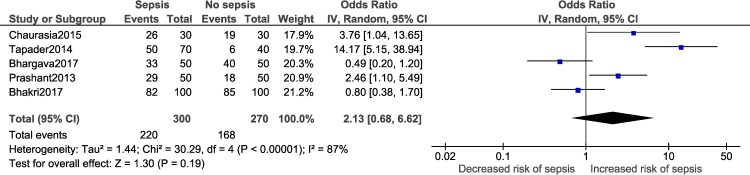

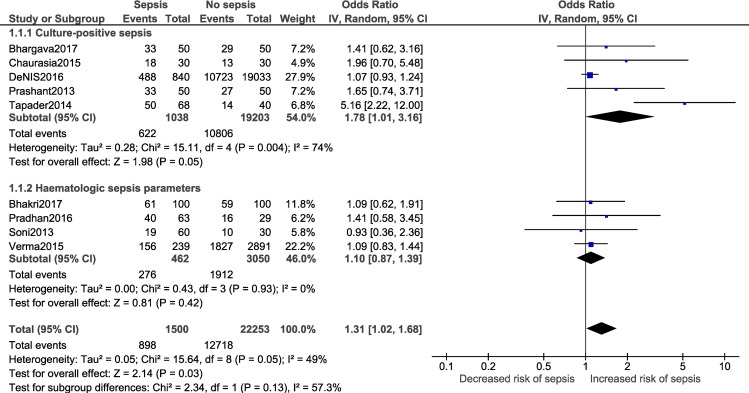
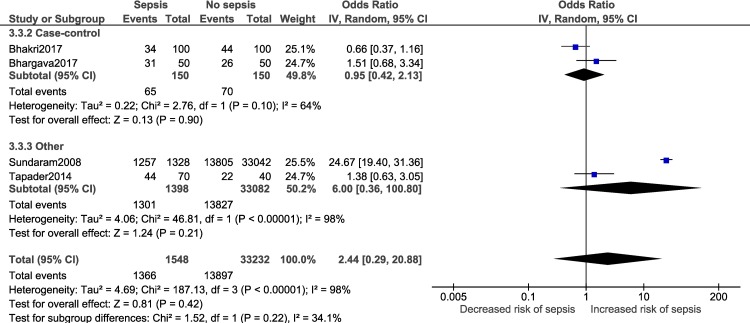
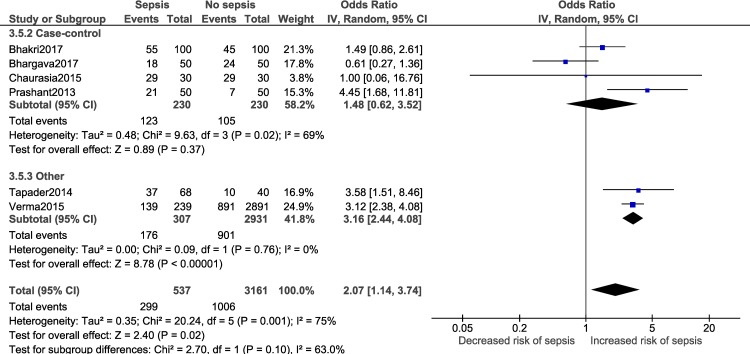
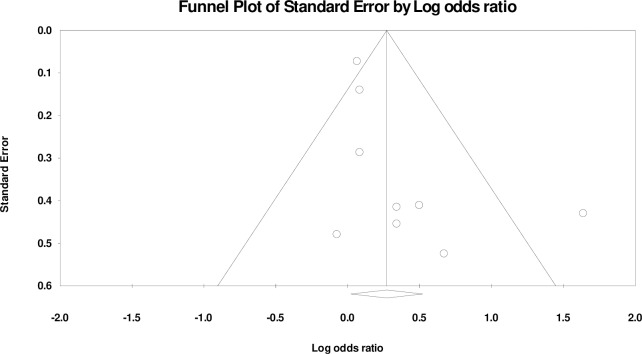
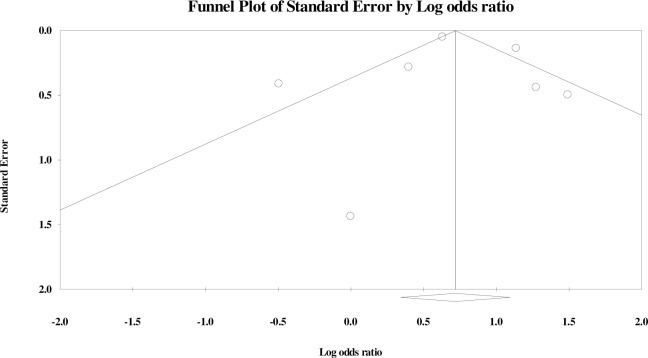
Verification
Claims the paper makes
The claims and statistics of this paper haven’t been checked yet.
Run the check — free, no account needed. It reads the open-access text and checks the sources it cites.
Claims other papers make about this one
Each is checked against this paper’s own text: does it say what the citing paper says it does?
The source backs part of the claim, not all of it — or backs it for a different population, condition or comparison.
In the citing paper
“However, the most important risk factor for neonatal sepsis in India is being “outborn” or born outside of hospital, a common practice in impoverished rural regions of the nation (Murthy et al., 2019).”
From On race, human variation, and who gets and dies of sepsis (2022) · cites this paper as Murthy et al., 2019
Experimental — accuracy not yet measured
Self-check
Percentages, sums and reported differences re-computed from the paper’s own numbers.
The self-check needs the paper’s full text.
Citations
Cites
von Elm, E., Altman, D. G., Egger, M., Pocock, S. J., Gøtzsche, P. C., Vandenbroucke, J. P., & Initiative, F. T. S. (2007) · PLoS Medicine · doi:10.1371/journal.pmed.0040296 · Cited by 23,020
Wan, X., Wang, W., Liu, J., & Tong, T. (2014) · BMC Medical Research Methodology · doi:10.1186/1471-2288-14-135 · Cited by 11,735
IntHout, J., Ioannidis, J. P., & Borm, G. F. (2014) · BMC Medical Research Methodology · doi:10.1186/1471-2288-14-25 · Cited by 2,419
Closing the Gap between Methodologists and End-Users: R as a Computational Back-End
Wallace, B. C., Dahabreh, I. J., Trikalinos, T. A., Lau, J., Trow, P., & Schmid, C. H. (2012) · Journal of Statistical Software · doi:10.18637/jss.v049.i05 · Cited by 1,125
Chan, G. J., Lee, A. C., Baqui, A. H., Tan, J., & Black, R. E. (2013) · PLoS Medicine · doi:10.1371/journal.pmed.1001502 · Cited by 253
Research works printed but not linked: 55
- I Abubakar, 2015, Global, regional, and national age-sex specific all-cause and cause-specific mortality for 240 causes of death, 1990–2013: a systematic analysis for the Global Burden of Disease Study 2013, Lancet, 385, 117, 10.1016/S0140-6736(14)61682-2 · DOI · Paper page
- C Fleischmann-Struzek, 2018, The global burden of paediatric and neonatal sepsis: a systematic review, Lancet Respir Med, 6, 223, 10.1016/S2213-2600(18)30063-8 · DOI · Paper page
- V Bangi, 2014, Neonatal sepsis: A risk approach, J Dr NTR University Health Sci, 3, 254, 10.4103/2277-8632.146632 · DOI
- R. Kartik, 2006, Evaluation of screening of neonatal sepsis, Int J Contemp Pediatrics, 5, 580
- SM Gordon, 2017, Neonatal meningitis: overcoming challenges in diagnosis, prognosis, and treatment with omics, Front Pediatr, 5, 139, 10.3389/fped.2017.00139 · DOI
- 2017, The global maternal and neonatal sepsis initiative: a call for collaboration and action by 2030., Lancet Glob Health, 5, e390, 10.1016/S2214-109X(17)30020-7 · DOI
- R Aggarwal, 2001, Sepsis in the newborn, Indian J Pediatr, 68, 1143, 10.1007/BF02722932 · DOI
- LJ Schlapbach, 2018, Defining pediatric sepsis, JAMA Pediatr, 172, 312, 10.1001/jamapediatrics.2017.5208 · DOI
- JL Wynn, 2016, Defining neonatal sepsis, Curr Opin Pediatr, 28, 135, 10.1097/MOP.0000000000000315 · DOI
- A Zea-Vera, 2015, Challenges in the diagnosis and management of neonatal sepsis, J Trop Pediatr, 61, 1, 10.1093/tropej/fmu079 · DOI
- WE Benitz, 2015, Reappraisal of guidelines for management of neonates with suspected early-onset sepsis, J Pediatr, 166, 1070, 10.1016/j.jpeds.2014.12.023 · DOI
- VV Tewari, 2014, Monotherapy with amikacin or piperacillin-tazobactum empirically in neonates at risk for early-onset sepsis: a randomized controlled trial., J Trop Pediatr, 60, 297, 10.1093/tropej/fmu017 · DOI
- AL Shane, 2017, Neonatal sepsis, Lancet, 390, P1770, 10.1016/S0140-6736(17)31002-4 · DOI · Paper page
- R Hughes, 2017, Stenson B on behalf of the Royal College of Obstetricians and Gynaecologists. Prevention of early-onset neonatal Group B Streptococcal disease, Green-top Guideline No. 36. BJOG, 124, e280
- AR Bedford Russell, 2015, Early onset neonatal sepsis: diagnostic dilemmas and practical management, Arch Dis Child-Fetal Neonatal Ed., 100, F350, 10.1136/archdischild-2014-306193 · DOI
- TB Newman, 2010, Interpreting complete blood counts soon after birth in newborns at risk for sepsis, Pediatrics, 126, 903, 10.1542/peds.2010-0935 · DOI
- L Srinivasan, 2017, Systematic review and meta-analysis: gene association studies in neonatal sepsis, Am J Perinatol, 34, 684
- B Tan, 2014, Risk factors for ventilator-associated pneumonia in the neonatal intensive care unit: a meta-analysis of observational studies, Eur J Pediatr, 173, 427, 10.1007/s00431-014-2278-6 · DOI
- JS Furyk, 2011, Systematic review: neonatal meningitis in the developing world, Trop Med Int Health, 16, 672, 10.1111/j.1365-3156.2011.02750.x · DOI
- WE Benitz, 1999, Risk factors for early-onset Group B Streptococcal sepsis: estimation of odds ratios by critical literature review, Pediatrics, 103, e77, 10.1542/peds.103.6.e77 · DOI
- NJ Russell, 2017, Risk of early-onset neonatal Group B Streptococcal disease with maternal colonization worldwide: systematic review and meta-analyses, Clin Infect Dis, 65, S152, 10.1093/cid/cix655 · DOI
- VV Tewari, 2016, Current evidence on prevention and management of early onset neonatal sepsis, J Infect Dis Ther, 4, 277
- MJ Sankar, 2008, Sepsis in the newborn, Ind J Pediatr, 75, 261, 10.1007/s12098-008-0056-z · DOI
- D Moher, 2009, Preferred reporting items for systematic reviews and meta-analyses: the PRISMA statement, BMJ, 339
- National Collaborating Centre for Women's and Children's Health (UK). Antibiotics for early-onset neonatal infection: antibiotics for the prevention and treatment of early-onset neonatal infection. London: RCOG Press; 2012. (NICE Clinical Guidelines, No. 149.) Available from: https://www.ncbi.nlm.nih.gov/books/NBK116610/.
- T. Duke, 2005, Neonatal pneumonia in developing countries, Arch Dis Child Fetal Neonatal Ed, 90, F211, 10.1136/adc.2003.048108 · DOI
- S. Chinn, 2000, A simple method for converting an odds ratio to effect size for use in meta‐analysis, Stat Med, 19, 3127, 10.1002/1097-0258(20001130)19:22<3127::AID-SIM784>3.0.CO;2-M · DOI · Paper page
- JPT Higgins, 2003, Measuring inconsistency in meta-analyses, BMJ, 327, 557, 10.1136/bmj.327.7414.557 · DOI · Paper page
- R DerSimonian, 1986, Meta-analysis in clinical trials, Control Clin Trials, 7, 177, 10.1016/0197-2456(86)90046-2 · DOI · Paper page
- M Sonego, 2015, Risk factors for mortality from acute lower respiratory infections (ALRI) in children under five years of age in low and middle-income countries: a systematic review and meta-analysis of observational studies, PloS ONE, 10, e0116380, 10.1371/journal.pone.0116380 · DOI
- D Chaurasia, 2015, Changing pattern of neonatal fungal sepsis: a matched case–control study, Natl J Med Allied Sci, 4, 3
- 2016, Characterisation and antimicrobial resistance of sepsis pathogens in neonates born in tertiary care centres in Delhi, India: a cohort study, Lancet Glob Health, 4, PE752, 10.1016/S2214-109X(16)30148-6 · DOI
- S Santhanam, 2017, Perinatal risk factors for neonatal early-onset Group B Streptococcal sepsis after initiation of risk-based maternal intrapartum antibiotic prophylaxis-a case control study, J Trop Pediatr, 64, 312, 10.1093/tropej/fmx068 · DOI
- S Tripathi, 2010, Study of ventilator associated pneumonia in neonatal intensive care unit: characteristics, risk factors and outcome, Internet J Med Update, 5, 12
- R Tapader, 2014, The high prevalence of serine protease autotransporters of Enterobacteriaceae (SPATEs) in Escherichia coli causing neonatal septicemia, Eur J Clin Microbiol Infect Dis, 33, 2015, 10.1007/s10096-014-2161-4 · DOI
- N Vijayakanthi, 2015, Ventilator associated pneumonia (VAP) in neonatal intensive care unit—an emerging problem, Indian J Pediatr, 82, 96, 10.1007/s12098-014-1561-x · DOI
- S Dutta, 2010, Intrapartum antibiotics and risk factors for early onset sepsis, Arch Dis Child Fetal Neonatal Ed, 95, F99, 10.1136/adc.2009.163220 · DOI
- A Bhakri, 2017, A study of platelet indices in neonatal sepsis from a rural tertiary care hospital of north India, J Med Sci Clin Res, 5, 30616, 10.18535/jmscr/v5i11.138 · DOI
- B Das, 2016, Genotyping of vitamin D receptor gene polymorphisms using mismatched amplification mutation assay in neonatal sepsis patients of Odisha, eastern India, Infect Genet Evol, 45, 40, 10.1016/j.meegid.2016.08.013 · DOI
- R Pradhan, 2016, Ratio of neutrophilic CD64 and monocytic HLA-DR: A novel parameter in diagnosis and prognostication of neonatal sepsis, Cytometry B Clin Cytom, 90, 295, 10.1002/cyto.b.21244 · DOI
- S Soni, 2013, Evaluation of CD64 expression on neutrophils as an early indicator of neonatal sepsis, Pediatr Infect Dis J, 32, e33, 10.1097/INF.0b013e31826faede · DOI
- P Verma, 2015, Neonatal sepsis: epidemiology, clinical spectrum, recent antimicrobial agents and their antibiotic susceptibility pattern., I Int J Contemp Pediatr, 176, 10.18203/2349-3291.ijcp20150523 · DOI
- A Bhargava, 2017, Risk factors and outcome analysis of gram-positive and gram-negative neonatal sepsis: a case-control study, Can J Inf Control, 32, 98
- A Prashant, 2013, Comparative assessment of cytokines and other inflammatory markers for the early diagnosis of neonatal sepsis-a case control study, PLoS ONE, 8, e68426, 10.1371/journal.pone.0068426 · DOI
- V Sundaram, 2009, Blood culture confirmed bacterial sepsis in neonates in a North Indian tertiary care center: changes over the last decade, Jpn J Infect Dis, 62, 46, 10.7883/yoken.JJID.2009.46 · DOI
- JL Wynn, 2014, Time for a neonatal–specific consensus definition for sepsis, Pediatr Crit Care Med, 15, 523, 10.1097/PCC.0000000000000157 · DOI
- R Basmaci, 2018, Management of children with multidrug-resistant sepsis in low-income and middle-income countries, Lancet Child Adolesc Health, 2, 8, 10.1016/S2352-4642(17)30153-0 · DOI
- EJA Fitchett, 2016, Strengthening the Reporting of Observational Studies in Epidemiology for Newborn Infection (STROBE-NI): an extension of the STROBE statement for neonatal infection research, Lancet Infect Dis, 16, e202, 10.1016/S1473-3099(16)30082-2 · DOI
- F Cortese, 2016, Early and late infections in newborns: where do we stand? A review, Pediatr Neonat, 57, 265, 10.1016/j.pedneo.2015.09.007 · DOI
- S Kirchengast, 2009, The male disadvantage hypothesis reconsidered: is there really a weaker sex? An analysis of gender differences in newborn somatometrics and vital parameters, J Life Sci, 1, 63, 10.1080/09751270.2009.11885136 · DOI
- P Roy, 2014, Gender differences in outcomes of low birth weight and preterm neonates: the male disadvantage, J Trop Pediatr, 60, 480, 10.1093/tropej/fmu042 · DOI
- M Satar, 2012, Neonatal sepsis: a continuing disease burden, Turk J Pediatr, 54, 449
- E Elsmén, 2004, Preterm male infants need more initial respiratory and circulatory support than female infants, Acta Paediatr, 93, 529, 10.1080/08035250410024998 · DOI
- D Waters, 2011, Aetiology of community-acquired neonatal sepsis in low and middle income countries, J Glob Health, 1, 154
- P Panigrahi, 2017, Neonatal sepsis in rural India: timing, microbiology and antibiotic resistance in a population-based prospective study in the community setting, J Perinatol, 37, 911, 10.1038/jp.2017.67 · DOI
Cited by
Sorted by citations
On race, human variation, and who gets and dies of sepsis
Brinkworth, J. F., & Shaw, J. G. (2022) · American Journal of Biological Anthropology · doi:10.1002/ajpa.24527 · Cited by 9
Metadata
- Authors
- Murthy, S., Godinho, M. A., Guddattu, V., Lewis, L. E. S., & Nair, N. S.
- Venue
- PLOS ONE
- Publisher
- Public Library of Science (PLoS)
- Published
- 2019-04-25
- Volume
- 14
- Issue
- 4
- Pages
- e0215683
- ISSN
- 1932-6203
- PMC
- PMC6483350
- Cited by
- 140
- References
- 5
- Language
- en
- Funders
- International Society for Infectious Diseases (2017 ISID Research Grant)
About these checks
Registry, retraction, Cites and statistics results are computed, not judged, with one exception: a printed reference that no index lists is read once by a model before it counts as a citation error. Claims are extracted by a model and kept only when their quote appears verbatim in the text; each cited source is then checked, with a model’s help, for whether it says what the claim relies on. Those verdicts can be wrong — read the claim’s quote and the cited source before relying on one.
Statistics and arithmetic are recomputed, not judged.
Confidence bands are shown only for fields calibrated on our annotated test set. None is calibrated yet, so no band is shown.
What counts as a claim ›How we measure confidence ›How we check this ›
Are you an author, or do you see a problem with this page? Request a review
How to cite
Cite CoChat for the checks on this page, and the paper for its own findings.
- This page
- CoChat. (2026). Citation check: Risk factors of neonatal sepsis in India: A systematic review and meta-analysis. https://app.cochat.ai/papers/10.1371/journal.pone.0215683
- The paper
- Murthy, S., Godinho, M. A., Guddattu, V., Lewis, L. E. S., & Nair, N. S. (2019). Risk factors of neonatal sepsis in India: A systematic review and meta-analysis. PLOS ONE. https://doi.org/10.1371/journal.pone.0215683
