

The DOI matches its Crossref record; 69 of the 71 references it cites were found in a registry or an index.
Can emotional intelligence be improved? A randomized experimental study of a business-oriented EI training program for senior managers
Open accessAbstract
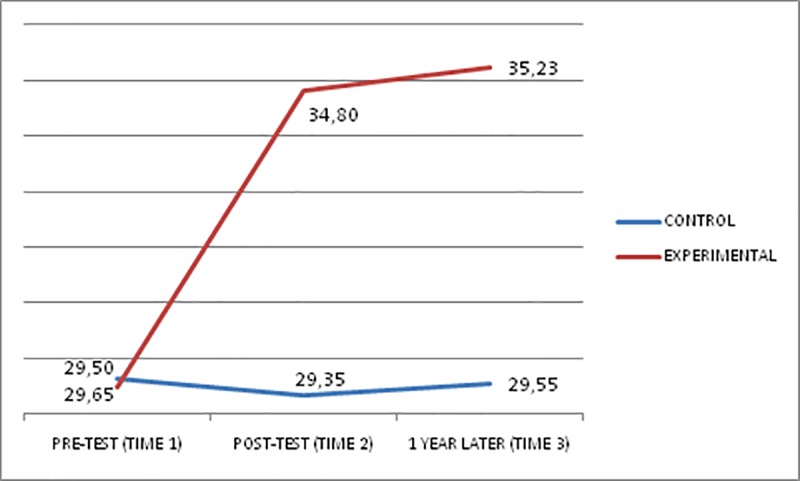
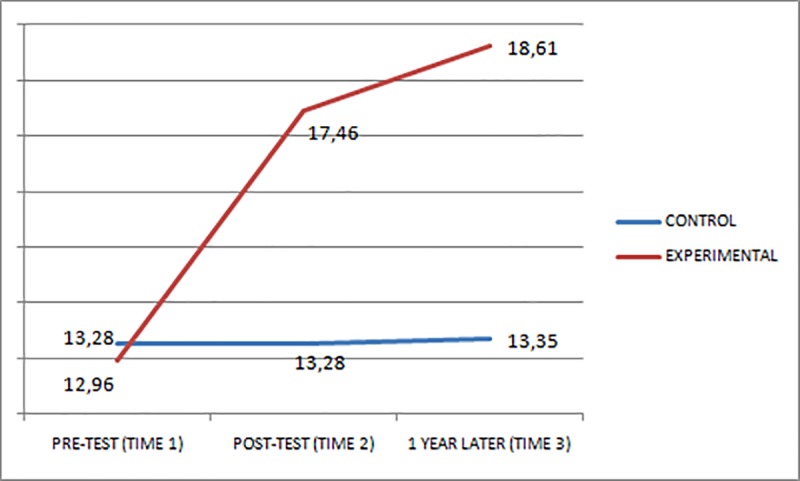
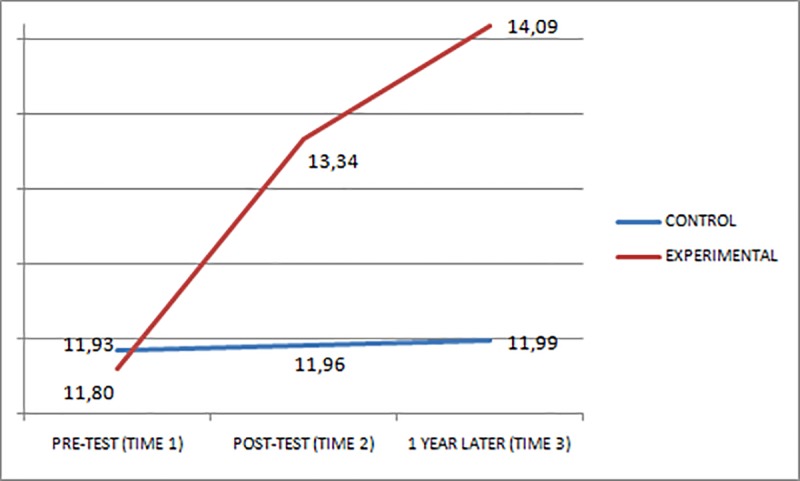
Purpose: This article presents the results of a training program in emotional intelligence.Design/methodology/approach: Emotional Intelligence (EI) involves two important competencies: (1) the ability to recognize feelings and emotions in oneself and others, and (2) the ability to use that information to resolve conflicts and problems to improve interactions with others.We provided a 30-hour Training Course on Emotional Intelligence (TCEI) for 54 senior managers of a private company.A pretest-posttest design with a control group was adopted.Findings: EI assessed using mixed and ability-based measures can be improved after training.Originality/value: The study's results revealed that EI can be improved within business environments.Results and implications of including EI training in professional development plans for private organizations are discussed. Defining EIVarious models of emotional intelligence (EI) have been proposed.The existing scientific literature offers three main models of EI: mixed, ability, and trait models.First, mixed models conceptualize EI as a combination of emotional skills and personality dimensions such as
Overview
The claims and statistics of this paper haven’t been checked yet.
Run the check — free, no account needed. It reads the open-access text and checks the sources it cites.
Integrity signals
Registry
Cites
Statistics
Figures
Verification
Claims the paper makes
The claims and statistics of this paper haven’t been checked yet.
Run the check — free, no account needed. It reads the open-access text and checks the sources it cites.
Claims other papers make about this one
Each is checked against this paper’s own text: does it say what the citing paper says it does?
The cited source says what the claim attributes to it.
In the citing paper
“According to a number of studies, emotional intelligence can be learned and improved through the implementation of intervention programs (Gilar-Corbi et al., 2019; Nelis et al., 2011).”
From Adolescent Social Media Use and Emotional Intelligence: A Systematic Review (2025) · cites this paper as Gilar-Corbi et al., 2019
Self-check
Percentages, sums and reported differences re-computed from the paper’s own numbers.
The self-check needs the paper’s full text.
Citations
Cites
(1995) · Medical Entomology and Zoology · Cited by 7,217
Evaluating Training Programs : The Four Levels
Kirkpatrick, D. L. (2009) · Cited by 4,720
The effects of leader and follower emotional intelligence on performance and attitude
Wong, C., & Law, K. S. (2002) · The Leadership Quarterly · doi:10.1016/s1048-9843(02)00099-1 · Cited by 3,631
TARGET ARTICLES: "Emotional Intelligence: Theory, Findings, and Implications"
Mayer, J. D., Salovey, P., & Caruso, D. R. (2004) · Psychological Inquiry · doi:10.1207/s15327965pli1503_02 · Cited by 2,802
Emotions and leadership: The role of emotional intelligence
George, J. M. (2000) · Human Relations · doi:10.1177/0018726700538001 · Cited by 2,027
Emotional intelligence: New ability or eclectic traits?
Mayer, J. D., Salovey, P., & Caruso, D. R. (2008) · American Psychologist · doi:10.1037/0003-066x.63.6.503 · Cited by 2,012
Petrides, K. V., & Furnham, A. (2001) · European Journal of Personality · doi:10.1002/per.416 · Cited by 1,997
The intelligence of emotional intelligence
Mayer, J. D., & Salovey, P. (1993) · Intelligence · doi:10.1016/0160-2896(93)90010-3 · Cited by 1,970
Primal leadership: realizing the power of emotional intelligence
(2002) · Choice Reviews Online · doi:10.5860/choice.40-0392 · Cited by 1,944
The Bar-On model of emotional-social intelligence (ESI).
Bar‐On, R. (2006) · PubMed · Cited by 1,813
Research works printed but not linked: 9
- R. Bar-On, 2002, EQ-i: Bar On emotional quotient inventory: A measure of emotional intelligence: Technical manual
- B. Moreno-Jimenez, 2014, Social skills for the new organizations, Behavioral Psychology-Psicologia Conductual, 22, 585
- B. F. Batool, 2013, Emotional intelligence and effective leadership, Journal of Business Studies Quarterly, 4, 84
- R. Gilar-Corbi, 2019, Improving emotional intelligence in higher education students: testing program effectiveness in tree countries, Educacion Xx1, 22, 161
- L. D. Pool, 2012, Improving emotional intelligence and emotional self-efficacy through a teaching intervention for university students, Learning and Individual Differences, 22, 306, 10.1016/j.lindif.2012.01.010 · DOI
- T. Staudel, 2008, Key competences for apprentices, International Journal of Psychology, 43, 336
- R. Bar-On, 2004, Measuring emotional intelligence: common ground and controversy, 111
- C. MacCann, 2008, The brief assessment of emotional intelligence: Short forms of the Situational Test of Emotional Understanding (STEU) and Situational Test of Emotion Management (STEM)
- J. F. Hair, 1999, Análisis Multivariante
Cited by
Sorted by citations
Pozo-Rico, T., Corbí, R. G., Izquierdo, A., & Costa, J. L. C. (2020) · International Journal of Environmental Research and Public Health · doi:10.3390/ijerph17228633 · Cited by 136
Self-citationAlmadani, N. A. (2024) · Advances in logistics, operations, and management science book series · doi:10.4018/979-8-3693-7372-9.ch004 · Cited by 112
Training emotional competencies at the workplace: a systematic review and metaanalysis
Mehler, M., Balint, E. M., Gralla, M., Pößnecker, T., Gast, M., Holzer, M. S., Koesters, M., & Gündel, H. (2024) · BMC Psychology · doi:10.1186/s40359-024-02198-3 · Cited by 97
Stoller, J. K. (2020) · CHEST Journal · doi:10.1016/j.chest.2020.09.093 · Cited by 67
Adolescent Social Media Use and Emotional Intelligence: A Systematic Review
Piccerillo, L., & Digennaro, S. (2025) · Adolescent Research Review · doi:10.1007/s40894-024-00245-z · Cited by 55
“According to a number of studies, emotional intelligence can be learned and improved through the implementation of intervention programs (Gilar-Corbi et al., 2019; Nelis et al., 2011).”
Metadata
- Authors
- Gilar-Corbi, R., Pozo-Rico, T., Sánchez, B., & Castejón, J.-L.
- Affiliations
- University of Alicante (ES)
- Corresponding author
- Pozo-Rico, Teresa
- Venue
- PLOS ONE
- Publisher
- Public Library of Science (PLoS)
- Published
- 2019-10-23
- Volume
- 14
- Issue
- 10
- Pages
- e0224254
- ISSN
- 1932-6203 (ISSN-L)
- PMC
- PMC6808549
- OpenAlex
- W2982171655
- Cited by
- 102
- References
- 70
- Citations by year
- 2026: 16 · 2025: 16 · 2024: 24 · 2023: 14 · 2022: 14 · 2021: 11 · 2020: 7
- FWCI
- 10.05
- Type
- journal article
- Language
- en
- Open access
- gold
- doi.org
- Licence
- Locations
- PLoS ONE (publishedVersion, cc-by)
- Europe PMC (PubMed Central) (publishedVersion, cc-by)
- PubMed Central (publishedVersion, cc-by)
- PubMed (publishedVersion)
- RePEc: Research Papers in Economics (submittedVersion)
- LA Referencia (Red Federada de Repositorios Institucionales de Publicaciones Científicas) (submittedVersion, cc-by)
- DOAJ (DOAJ: Directory of Open Access Journals) (submittedVersion, cc-by-sa)
- Figshare (submittedVersion, cc-by)
- Repositorio Institucional de la Universidad de Alicante (Universidad de Alicante) (submittedVersion, other-oa)
- Funders
- Ministerio de Economía y Competitividad (EDU2015-64562-R)
- Topics
- Social Sciences › Psychology › Social Psychology › Emotional Intelligence and Performance
- Social Sciences › Education › Social Skills and Education
- Social Sciences › Psychology › Applied Psychology › Human Resource Development and Performance Evaluation
- Keywords
- emotional intelligence, emotional intelligence training, business executives, professional development, conflict resolution, workplace emotions, private enterprises
- MeSH terms
- Adult, Female, Humans, Leadership, Male, Negotiating, Emotional Intelligence
About these checks
Registry, retraction, Cites and statistics results are computed, not judged, with one exception: a printed reference that no index lists is read once by a model before it counts as a citation error. Claims are extracted by a model and kept only when their quote appears verbatim in the text; each cited source is then checked, with a model’s help, for whether it says what the claim relies on. Those verdicts can be wrong — read the claim’s quote and the cited source before relying on one.
Statistics and arithmetic are recomputed, not judged.
Confidence bands are shown only for fields calibrated on our annotated test set. None is calibrated yet, so no band is shown.
What counts as a claim ›How we measure confidence ›How we check this ›
Are you an author, or do you see a problem with this page? Request a review
