

Effects of virtual reality rehabilitation training on gait and balance in patients with Parkinson's disease: A systematic review
Open accessThe DOI matches its Crossref record; 47 of the 47 references it cites were found in a registry or an index.
Abstract
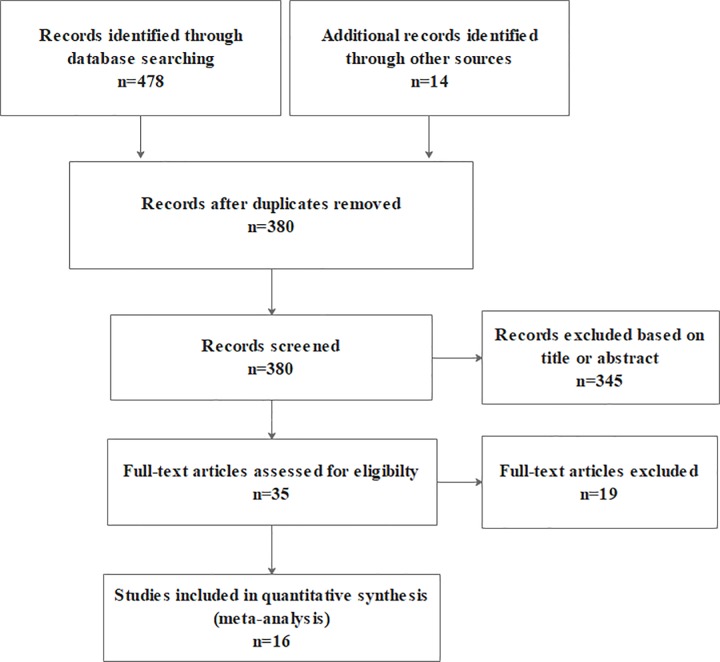
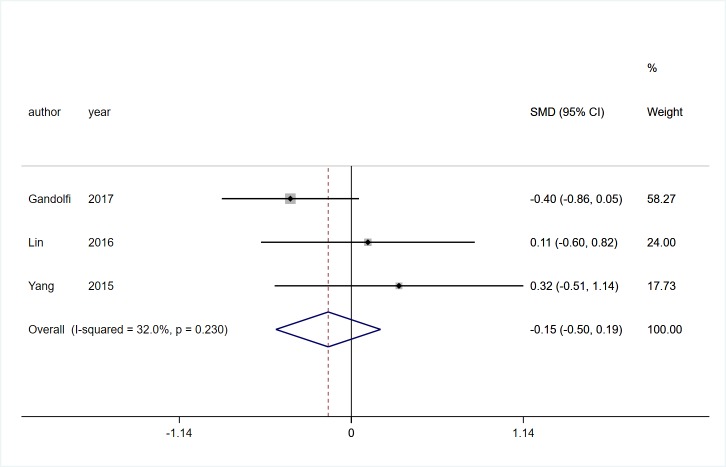
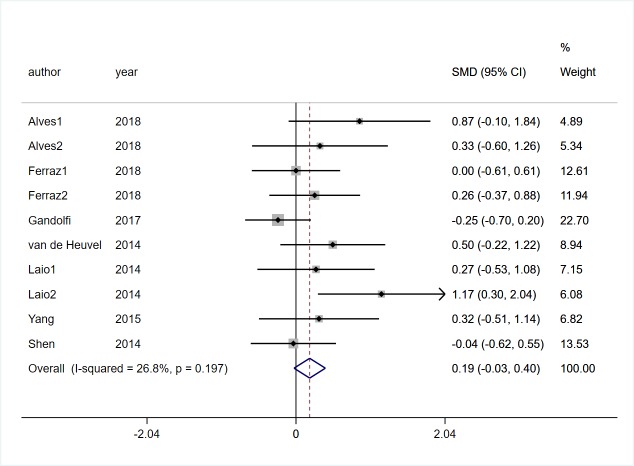
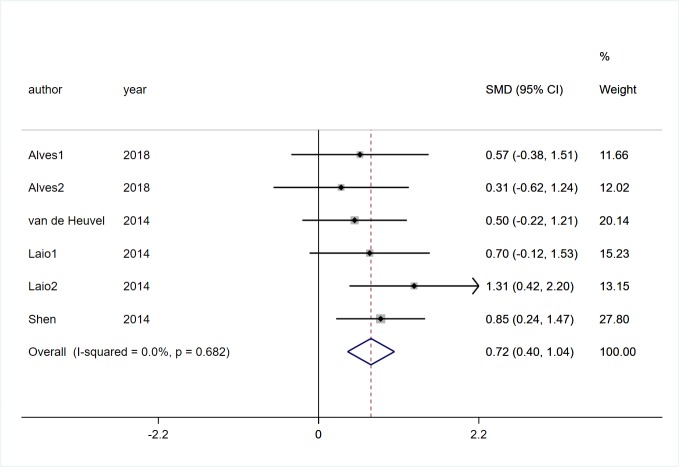
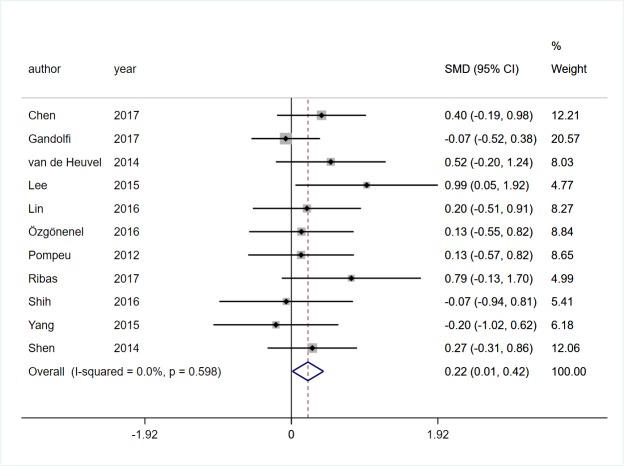
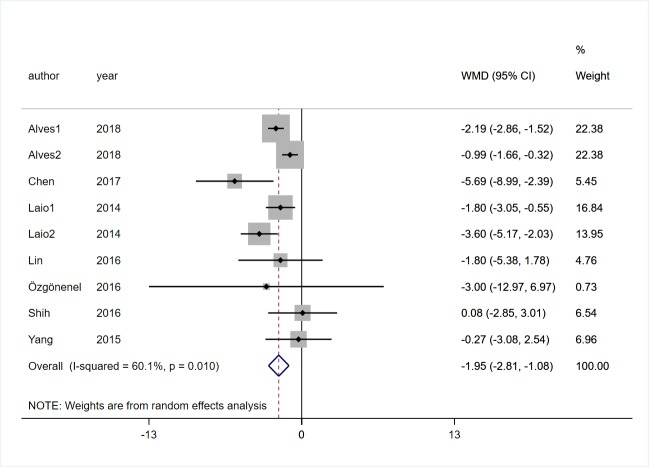
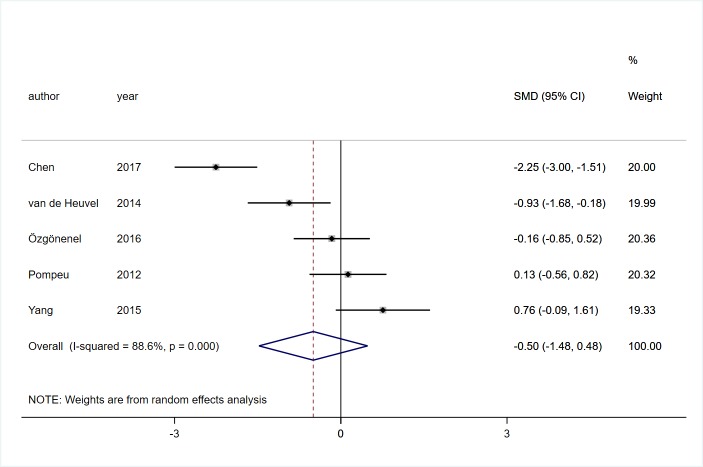
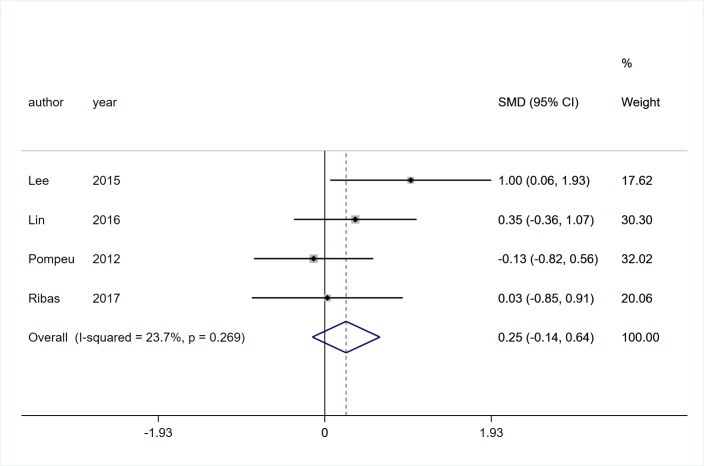
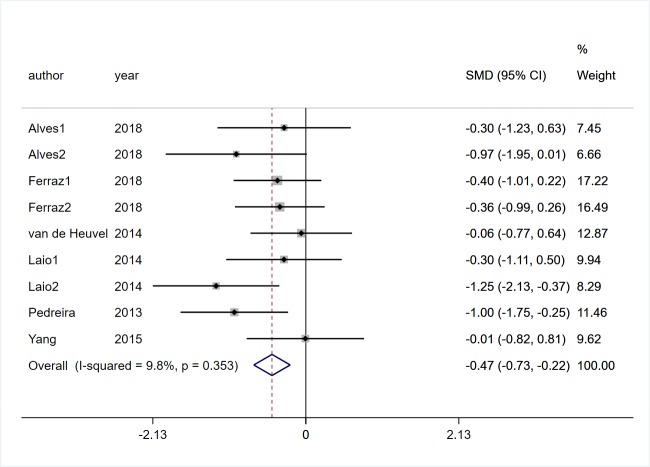
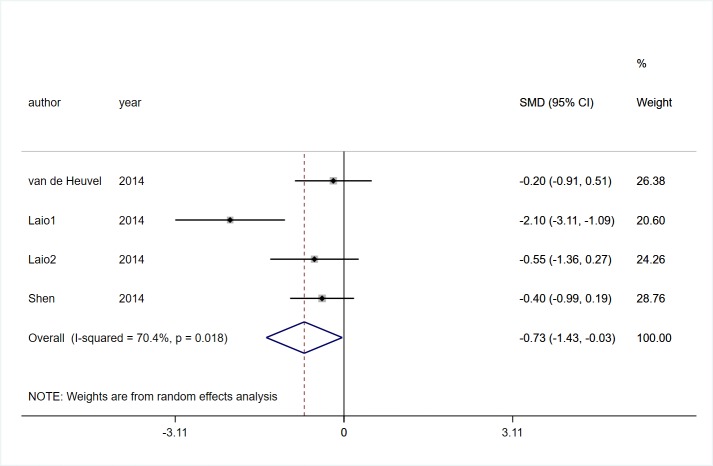
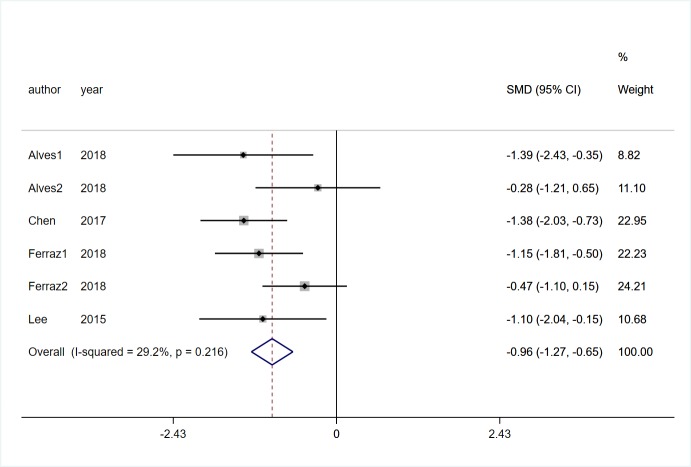
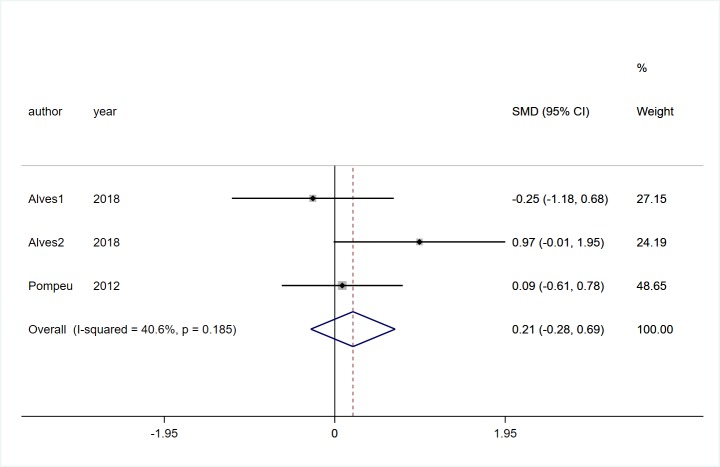
OBJECTIVE: In recent years, virtual reality (VR) has been tested as a therapeutic tool in neurorehabilitation research. However, the impact effectiveness of VR technology on for Parkinson's Disease (PD) patients is still remains controversial unclear. In order to provide a more scientific basis for rehabilitation of PD patients' modality, we conducted a systematic review of VR rehabilitation training for PD patients and focused on the improvement of gait and balance. METHODS: An comprehensive search was conducted using the following databases: PubMed, Web of Science, Cochrane Library, CINHAL, Embase and CNKI (China National Knowledge Infrastructure).Articles published before 30 December 2018 and of a randomized controlled trial design to study the effects of VR for patients with PD were included. The study data were pooled and a meta-analysis was completed. This systematic review was conducted in accordance with the PRISMA guideline statement and was registered in the PROSPERO database (CRD42018110264). RESULTS: A total of sixteen articles involving 555 participants with PD were included in our analysis. VR rehabilitation training performed better than conventional or traditional rehabilitation training in three aspects: step and stride length (SMD = 0.72, 95%CI = 0.40,1.04, Z = 4.38, P<0.01), balance function (SMD = 0.22, 95%CI = 0.01,0.42, Z = 2.09, P = 0.037), and mobility(MD = -1.95, 95%CI = -2.81,-1.08, Z = 4.41, P<0.01). There was no effect on the dynamic gait index (SMD = -0.15, 95%CI = -0.50,0.19, Z = 0.86, P = 0.387), and gait speed (SMD = 0.19, 95%CI = -0.03,0.40, Z = 1.71, P = 0.088).As for the secondary outcomes, compared with the control group, VR rehabilitation training demonstrated more significant effects on the improvement of quality of life (SMD = -0.47, 95%CI = -0.73,-0.22, Z = 3.64, P<0.01), level of confidence (SMD = -0.73, 95%CI = -1.43,-0.03, Z = 2.05, P = 0.040), and neuropsychiatric symptoms (SMD = -0.96, 95%CI = -1.27,-0.65, Z = 6.07, P<0.01), while it may have similar effects on global motor function (SMD = -0.50, 95%CI = -1.48,0.48, Z = 0.99, P = 0.32), activities of daily living (SMD = 0.25, 95%CI = -0.14,0.64, Z = 1.24, P = 0.216), and cognitive function (SMD = 0.21, 95%CI = -0.28,0.69, Z = 0.84, P = 0.399).During the included interventions, four patients developed mild dizziness and one patient developed severe dizziness and vomiting. CONCLUSIONS: According to the results of this study, we found that VR rehabilitation training can not only achieve the same effect as conventional rehabilitation training. Moreover, it has better performance on gait and balance in patients with PD. Taken together, when the effect of traditional rehabilitation training on gait and balance of PD patients is not good enough, we believe that VR rehabilitation training can at least be used as an alternative therapy. More rigorous design of large-sample, multicenter randomized controlled trials are needed to provide a stronger evidence-based basis for verifying its potential advantages.
Overview
The claims and statistics of this paper haven’t been checked yet.
Free: it reads the open-access text and checks the first 5 claims that cite a source we can check. Create a free account to check every claim.
Integrity signals
Registry
Cites
Statistics
Figures
Verification
Claims the paper makes
The claims and statistics of this paper haven’t been checked yet.
Free: it reads the open-access text and checks the first 5 claims that cite a source we can check. Create a free account to check every claim.
Self-check
Percentages, sums and reported differences re-computed from the paper’s own numbers.
The self-check needs the paper’s full text.
Citations
Cites
Parkinson's disease: clinical features and diagnosis
Jankovic, J. (2008) · Journal of Neurology, Neurosurgery & Psychiatry · doi:10.1136/jnnp.2007.131045 · Cited by 5,720 · cited 1×
“The pathological changes of the disease are degeneration of the substantia nigra and striatum pathway [2].”
Seppi, K., Weintraub, D., Coelho, M., Perez‐Lloret, S., Fox, S. H., Katzenschlager, R., Hametner, E., Poewe, W., Rascol, O., Goetz, C. G., et al. (2011) · Movement Disorders · doi:10.1002/mds.23884 · Cited by 1,141
Pan, X., & Hamilton, A. F. D. C. (2018) · British Journal of Psychology · doi:10.1111/bjop.12290 · Cited by 729 · cited 1×
“VR is a new technology emerging in recent years, which is rapidly gaining popularity as a PD treatment tool due to its novelty in training methods and its ability to provide personalized rehabilitation training [33].”
BackgroundFox, S. H., Katzenschlager, R., Lim, S., Ravina, B., Seppi, K., Coelho, M., Poewe, W., Rascol, O., Goetz, C. G., & Sampaio, C. (2011) · Movement Disorders · doi:10.1002/mds.23829 · Cited by 523 · cited 1×
“Currently, drug therapy is the preferred treatment for PD, but it is effective only for the first years after onset and some symptoms do not respond at all to drug treatment [5, 6].”
BackgroundPhysiotherapy versus placebo or no intervention in Parkinson's disease
Tomlinson, C. L., Patel, S., Meek, C., Herd, C. P., Clarke, C. E., Stowe, R., Shah, L., Sackley, C. M., Deane, K. H., Wheatley, K., et al. (2013) · Cochrane Database of Systematic Reviews · doi:10.1002/14651858.cd002817.pub4 · Cited by 441
Feng, Z., González, V. A., Amor, R., Lovreglio, R., & Cabrera-Guerrero, G. (2018) · Computers & Education · doi:10.1016/j.compedu.2018.09.002 · Cited by 423
Freeman, D., Haselton, P., Freeman, J., Spanlang, B., Kishore, S., Albery, E., Denne, M., Brown, P., Slater, M., & Nickless, A. (2018) · The Lancet Psychiatry · doi:10.1016/s2215-0366(18)30226-8 · Cited by 377
Immersion of virtual reality for rehabilitation - Review
Rose, T., Nam, C. S., & Chen, K. B. (2018) · Applied Ergonomics · doi:10.1016/j.apergo.2018.01.009 · Cited by 376 · cited 1×
“Thirdly, active completion of assigned training tasks can enhance motor nerve plasticity and improve muscle control [43].”
BackgroundVirtual reality for rehabilitation in Parkinson's disease
Dockx, K., Bekkers, E. M., Van den Bergh, V., Ginis, P., Rochester, L., Hausdorff, J. M., Mirelman, A., & Nieuwboer, A. (2016) · Cochrane Database of Systematic Reviews · doi:10.1002/14651858.cd010760.pub2 · Cited by 373 · cited 1×
“Library showed that VR rehabilitation training had a positive impact only on stride speed and stride length of patients with PD compared to traditional physical training [16].”
BackgroundPompeu, J. E., Mendes, F. A. D. S., Silva, K. G. D., Lobo, A. M., Oliveira, T. D. P., Zomignani, A. P., & Piemonte, M. E. P. (2012) · Physiotherapy · doi:10.1016/j.physio.2012.06.004 · Cited by 354
Research works printed but not linked: 4
- Beibei L, Qinneng D, Wusheng Z. Research progress on the role of virtual reality technology in rehabilitation of nervous system diseases. Chin J Contemp Neurol Neurosurg. 2018; 03: 222– 225.
- Benito PAM, Ana RG, Ángel G, Alberto BS, Beatriz PA, Ana Isabel PAG. Application of virtual reality in the motor aspects of neurorehabilitation. Rev Neurologia. 2010; 8: 481– 488. 20925030
- Xiaoxiao W, HongWei D, Hang L, AiHong W. Effects of Virtual Reality on Balance and Activities of Daily Living in Patients with Parkinson's Disease: A Meta-Analysis. Chin J Rehabil Theory Pract. 2017; 12: 1443– 1449.
- Zhicheng L, Azheng C, Yijing J, Dengzhong C, Xiaoqian Y, Yongmei Y. Effects of Virtual Reality Balance Game on Balance Function for Parkinson's Disease. Chin J Rehabil Theory Pract. 2016; 09: 1059– 1063.
Cited by
Immersive Virtual Reality in Post-Stroke Rehabilitation: A Systematic Review
Demeco, A., Zola, L., Frizziero, A., Martini, C., Palumbo, A., Foresti, R., Buccino, G., & Costantino, C. (2023) · Sensors · doi:10.3390/s23031712 · Cited by 220
Stamer, T., Steinhäuser, J., & Flägel, K. (2023) · Journal of Medical Internet Research · doi:10.2196/43311 · Cited by 160
“It was also found to be associated with an improvement of gait and balance in the rehabilitation training of patients with Parkinson disease [23].”
Zhu, S., Sui, Y., Shen, Y., Zhu, Y., Ali, N., Guo, C., & Wang, T. (2021) · Frontiers in Aging Neuroscience · doi:10.3389/fnagi.2021.586999 · Cited by 173
“VR can not only achieve the same effect as conventional rehabilitation training, but also improve gait and balance performance in patients with Parkinson’s disease (Lei et al., 2019; Santos et al., 2019).”
BackgroundTruijen, S., Abdullahi, A., Bijsterbosch, D., van Zoest, E., Conijn, M., Wang, Y., Struyf, N., & Saeys, W. (2022) · Neurological Sciences · doi:10.1007/s10072-021-05855-2 · Cited by 213
Self-citationKourtesis, P., Papadopoulou, A., & Ρούσσος, Π. (2024) · Virtual Worlds · doi:10.3390/virtualworlds3010004 · Cited by 119
“Rehabilitation, be it physical or neurological, is experiencing a renaissance with VR-infused therapies [11,12].”
Background
Metadata
- Authors
- Lei, C., Sunzi, K., Dai, F., Liu, X., Wang, Y., Zhang, B., He, L., & Ju, M.
- Affiliations
- Southwest Medical University (CN)
- Corresponding author
- Ju, Mei
- Venue
- PLOS ONE
- Publisher
- Public Library of Science (PLoS)
- Published
- 2019-11-07
- Volume
- 14
- Issue
- 11
- Pages
- e0224819
- ISSN
- 1932-6203 (ISSN-L)
- PMC
- PMC6837756
- OpenAlex
- W2984987441
- Cited by
- 270
- References
- 47
- Citations by year
- 2026: 21 · 2025: 37 · 2024: 59 · 2023: 66 · 2022: 42 · 2021: 35 · 2020: 10
- FWCI
- 4.16
- Type
- journal article
- Language
- en
- Open access
- gold
- doi.org
- Licence
- Locations
- PLoS ONE (publishedVersion, cc-by)
- PubMed Central (publishedVersion, cc-by)
- PubMed (publishedVersion)
- RePEc: Research Papers in Economics (submittedVersion)
- DOAJ (DOAJ: Directory of Open Access Journals) (submittedVersion, cc-by-sa)
- Figshare (submittedVersion, cc-by)
- Greater South Information System
- Funders
- Science and Technology Project of Sichuan Health Commission (18PJ331)
- Topics
- Health Sciences › Health Professions › Physical Therapy, Sports Therapy and Rehabilitation › Balance, Gait, and Falls Prevention
- Health Sciences › Medicine › Rehabilitation › Stroke Rehabilitation and Recovery
- Physical Sciences › Computer Science › Human-Computer Interaction › Virtual Reality Applications and Impacts
- Keywords
- virtual reality rehabilitation, Parkinson's disease, gait, balance, step length, stride length, mobility (physical function), walking speed, Dynamic Gait Index, quality of life, neurorehabilitation, virtual reality training, conventional rehabilitation comparison, gait training, postural control, gait variability, gait variability index
- MeSH terms
- Telerehabilitation, Virtual Reality, Activities of Daily Living, Cognition, Postural Balance, Gait, Humans, Motor Activity, Parkinson Disease, Quality of Life, Treatment Outcome, Publication Bias
About these checks
Registry, retraction, Cites and statistics results are computed, not judged, with one exception: a printed reference that no index lists is read once by a model before it counts as a citation error. Claims are extracted by a model and kept only when their quote appears verbatim in the text; each cited source is then checked, with a model’s help, for whether it says what the claim relies on. Those verdicts can be wrong — read the claim’s quote and the cited source before relying on one.
Statistics and arithmetic are recomputed, not judged.
Confidence bands are shown only for fields calibrated on our annotated test set. None is calibrated yet, so no band is shown.
What counts as a claim ›How we measure confidence ›How we check this ›
Are you an author, or do you see a problem with this page? Request a review
Data sources
Bibliographic data: Semantic Scholar, OpenAlex, Crossref.
Contains information from the Semantic Scholar Academic Graph Datasets, made available under the ODC Attribution License (ODC-BY 1.0).
Semantic Scholar’s data is described in: Kinney, R., et al. (2023). The Semantic Scholar Open Data Platform. arXiv:2301.10140.
