

Experiences of lifestyle change among women with gestational diabetes mellitus (GDM): A behavioural diagnosis using the COM-B model in a low-income setting
Open accessThe DOI matches its Crossref record; 54 of the 54 references it cites were found in a registry or an index.
Abstract
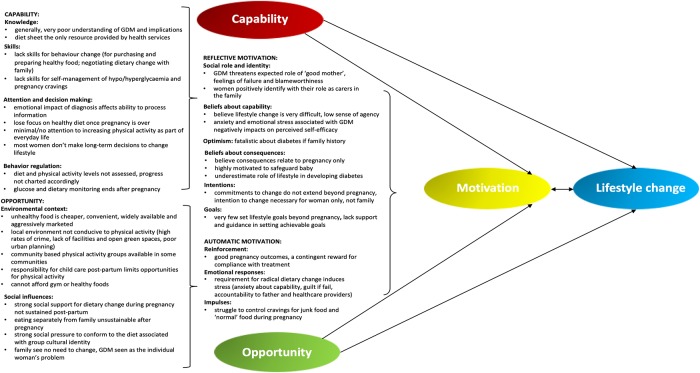
BACKGROUND: Lifestyle change can reduce the risk of developing type 2 diabetes among women with prior gestational diabetes mellitus (GDM). While understanding women's lived experiences and views around GDM is critical to the development of behaviour change interventions to reduce this risk, few studies have addressed this issue in low- and middle- income countries. The aim of the study was to explore women's lived experiences of GDM and the feasibility of sustained lifestyle modification after GDM in a low-income setting. METHODS: This was a descriptive qualitative study on the lived experiences of women with prior GDM, who received antenatal care at a public sector tertiary hospital in Cape Town, South Africa. Nine focus groups and five in-depth interviews were conducted with a total of thirty-five women. Data were analysed using content analysis and the COM-B (Capabilities, Opportunities, Motivations and Behaviour) model to identify factors influencing lifestyle change during and beyond the GDM pregnancy. RESULTS: The results suggest that the COM-B model's concepts of capability (knowledge and skills for behaviour change), opportunity (resources for dietary change and physical activity) and motivation (perception of future diabetes risk) are relevant to lifestyle change among GDM women in South Africa. The results will contribute to the design of a postpartum health system intervention for women with recent GDM. CONCLUSION: Our findings highlight the need for health services to improve counselling and education for women with GDM in South Africa. Support from family and health professionals is essential for women to achieve lifestyle change. The experience of GDM imposed a significant psychological burden on women, which affected motivation for lifestyle change. To achieve long-term lifestyle change, behaviour interventions for women with prior GDM need to address their capability, opportunity and motivation for lifestyle change during and beyond pregnancy.
Overview
The claims and statistics of this paper haven’t been checked yet.
Free: it reads the open-access text and checks the first 5 claims that cite a source we can check. Create a free account to check every claim.
Integrity signals
Registry
Cites
Statistics
Figures
Verification
Claims the paper makes
The claims and statistics of this paper haven’t been checked yet.
Free: it reads the open-access text and checks the first 5 claims that cite a source we can check. Create a free account to check every claim.
Claims other papers make about this one
Each is checked against this paper’s own text: does it say what the citing paper says it does?
The source backs part of the claim, not all of it — or backs it for a different population, condition or comparison.
In the citing paper
“Types of health knowledge included: knowledge of personal health and health conditions [15, 21, 25, 30, 32], suitable PA intervention strategies [15, 22, 26, 28, 30–32], PA guidelines [31, 32], and benefits of PA for their well-being [15, 21, 22, 30, 32].”
From Identifying the factors affecting ‘patient engagement’ in exercise rehabilitation (2022) · cites this paper as [25]
Experimental — accuracy not yet measuredThe source backs part of the claim, not all of it — or backs it for a different population, condition or comparison.
In the citing paper
“A common reason stated ‘for lack of time’ was commitments to other priorities such as work and family [18, 20, 21, 25, 26, 28, 31].”
From Identifying the factors affecting ‘patient engagement’ in exercise rehabilitation (2022) · cites this paper as [25]
Experimental — accuracy not yet measuredThe source backs part of the claim, not all of it — or backs it for a different population, condition or comparison.
In the citing paper
“Since, unlike participants involved in clinical research trials who may receive enabling access to optimal resources and services, members of the general population commonly face multiple environmental barriers to their engagement in rehabilitation, such as: a lack of access to resources and services as an opportunity barrier [20, 21, 28, 30], high costs of resources and service [21, 26, 28, 30, 3”
From Identifying the factors affecting ‘patient engagement’ in exercise rehabilitation (2022) · cites this paper as [25]
Experimental — accuracy not yet measuredThe cited source says what the claim attributes to it.
In the citing paper
“A prominent physical opportunity determinant noted in multiple articles was the availability of time for engaging in PA [15, 20, 21, 25, 26, 28, 30, 31, 33].”
From Identifying the factors affecting ‘patient engagement’ in exercise rehabilitation (2022) · cites this paper as [25]
The cited source says what the claim attributes to it.
In the citing paper
“family and friends were social facilitators in seven studies [18, 20, 25–28, 30]”
From Identifying the factors affecting ‘patient engagement’ in exercise rehabilitation (2022) · cites this paper as [25]
1 more claim about this paper
Create a free account to see every claim other papers make about this one.
Self-check
Percentages, sums and reported differences re-computed from the paper’s own numbers.
The self-check needs the paper’s full text.
Citations
Cites
The qualitative content analysis process
Elo, S., & Kyngäs, H. (2008) · Journal of Advanced Nursing · doi:10.1111/j.1365-2648.2007.04569.x · Cited by 22,617 · cited 2×
“Data analysis followed the methods of qualitative content analysis as described by Elo & Kyngäs [36].”
MethodMichie, S., van Stralen, M. M., & West, R. (2011) · Implementation Science · doi:10.1186/1748-5908-6-42 · Cited by 13,697 · cited 13×
“Both physical and psychological capability can be improved through intervention or training [32].”
BackgroundMethodInfluentialDeveloping and evaluating complex interventions: the new Medical Research Council guidance
Craig, P., Dieppe, P., Macintyre, S., Michie, S., Nazareth, I., & Petticrew, M. (2008) · BMJ · doi:10.1136/bmj.a1655 · Cited by 10,995
Tuomilehto, J., Lindström, J., Eriksson, J. G., Valle, T. T., Hämäläinen, H., Ilanne-Parikka, P., Keinänen-Kiukaanniemi, S., Laakso, M., Louheranta, A., Rastas, M., et al. (2001) · New England Journal of Medicine · doi:10.1056/nejm200105033441801 · Cited by 10,873 · cited 1×
“There is consistent evidence demonstrating that in at-risk populations lifestyle change mainly diet and physical activity, can reduce the risk of developing type 2 diabetes [10–13] and among GDM women, continuation of lifestyle changes after a GDM pregnancy can prevent progression to type 2 diabetes [7, 14].”
BackgroundType 2 diabetes mellitus after gestational diabetes: a systematic review and meta-analysis
Bellamy, L., Casas, J.-P., Hingorani, A. D., & Williams, D. (2009) · The Lancet · doi:10.1016/s0140-6736(09)60731-5 · Cited by 3,253 · cited 1×
“For the majority of women, GDM resolves after the affected pregnancy [7] but there is a 7-fold increased risk of developing type 2 diabetes in the 10 years thereafter [8].”
Background(2014) · Cited by 2,276
Prevalence of Gestational Diabetes and Risk of Progression to Type 2 Diabetes: a Global Perspective
Zhu, Y., & Zhang, C. (2016) · Current Diabetes Reports · doi:10.1007/s11892-015-0699-x · Cited by 1,260
Dunkley, A. J., Bodicoat, D. H., Greaves, C. J., Russell, C., Yates, T., Davies, M. J., & Khunti, K. (2014) · Diabetes Care · doi:10.2337/dc13-2195 · Cited by 542
Spinal Fusion in the Next Generation: Gene and Cell Therapy Approaches
Barba, M., Cicione, C., Bernardini, C., Campana, V., Pagano, E., Michetti, F., Logroscino, G., & Lattanzi, W. (2014) · The Scientific World Journal · doi:10.1155/2014/406159 · Cited by 514
Bhurosy, T., & Jeewon, R. (2014) · The Scientific World Journal · doi:10.1155/2014/964236 · Cited by 505 · cited 1×
“Lifestyle change among lowincome populations should be viewed in the broader socioeconomic context of high rates of poverty and unemployment, where food choices are limited by affordability [24] and physical inactivity is increasingly prevalent [3].”
Background
Research works printed but not linked: 1
- Statistics South Africa. Mortality and causes of death in South Africa, 2016: Findings from death notifi- cation. Pretoria: Statistics South Africa 2017.
Cited by
Identifying the factors affecting ‘patient engagement’ in exercise rehabilitation
Teo, J. L., Zheng, Z., & Bird, S. R. (2022) · BMC Sports Science, Medicine and Rehabilitation · doi:10.1186/s13102-022-00407-3 · Cited by 96
Correlation Analysis between GDM and Gut Microbial Composition in Late Pregnancy
Li, G., Yin, P., Chu, S., Gao, W., Cui, S., Guo, S., Xu, Y., Yuan, E., Zhu, T., You, J., et al. (2021) · Journal of Diabetes Research · doi:10.1155/2021/8892849 · Cited by 60
Delanerolle, G., Phiri, P., Zeng, Y., Marston, K., Tempest, N., Busuulwa, P., Shetty, A., Goodison, W., Muniraman, H., Duffy, G., et al. (2021) · EClinicalMedicine · doi:10.1016/j.eclinm.2021.101016 · Cited by 61
Thøgersen‐Ntoumani, C., Kritz, M., Grunseit, A. C., Chau, J. Y., Ahmadi, M., Holtermann, A., Koster, A., Tudor-Locke, C. E., Johnson, N. A., Sherrington, C., et al. (2023) · International Journal of Behavioral Nutrition and Physical Activity · doi:10.1186/s12966-023-01480-8 · Cited by 63
“The COM-B framework has previously been used to examine barriers and enablers of physical activity in a number of life contexts, such as in pregnant women with overweight and obesity [18], women with gestational diabetes [19], and adolescents with intellectual disabilities [20].”
MethodMuhwava, L. S., Murphy, K., Zarowsky, C., & Levitt, N. (2020) · BMC Women's Health · doi:10.1186/s12905-020-01093-4 · Cited by 46
Self-citationMurphy, K., Berk, J., Muhwava, L. S., Booley, S., Harbron, J., Ware, L. J., Norris, S. A., Zarowsky, C., Lambert, E. V., & Levitt, N. S. (2023) · BMC Public Health · doi:10.1186/s12889-023-15586-y · Cited by 55
“The only information resource they received was a one-page diet sheet with a brief explanation of GDM [36, 37].”
BackgroundMethodInfluentialSelf-citationNeven, A. C. H., Lake, A. J., Williams, A., O'Reilly, S. L., Hendrieckx, C., Morrison, M., Dunbar, J., Speight, J., Teede, H. J., Boyle, J. A., et al. (2022) · Diabetic Medicine · doi:10.1111/dme.14945 · Cited by 46
Attitudes of women with gestational diabetes toward diet and exercise: a qualitative study
Smyth, S., Mulligan, K., Rutter, E., Harrington, L., Hatunic, M., & Higgins, M. (2023) · The Journal of Maternal-Fetal & Neonatal Medicine · doi:10.1080/14767058.2022.2155045 · Cited by 35
“While many women initially struggle with the diagnosis, and the difficulty in living their “normal” life [13,19] at the end it is seen as an opportunity to enact dietary and activity changes [33].”
BackgroundDavis, D., Kurz, E., Hooper, M.-E., Atchan, M., Spiller, S., Blackburn, J., Bushell, M., Lewis, V., Leung, M., Samarawickrema, I., et al. (2024) · Women and Birth · doi:10.1016/j.wombi.2023.08.005 · Cited by 28
Hinneh, T. K., Jahn, A., & Agbozo, F. (2021) · International Health · doi:10.1093/inthealth/ihab054 · Cited by 32
“(Muhwava et al., 2019)33 South Africa Experiences of lifestyle changes among GDM”
BackgroundGuo, S., Liu, D., Bi, X., Feng, Y., Zhang, K., Jiang, J., & Wang, Y. (2024) · Midwifery · doi:10.1016/j.midw.2024.104141 · Cited by 28
New Zealand women’s experiences of managing gestational diabetes through diet: a qualitative study
Lawrence, R. L., Ward, K. L., Wall, C. R., & Bloomfield, F. H. (2021) · BMC Pregnancy and Childbirth · doi:10.1186/s12884-021-04297-0 · Cited by 27
“Other studies report that although following a healthy diet and lifestyle was a concern for the whole family during pregnancy, other priorities took over once the baby was born [59, 61].”
BackgroundResultHanks, A. J., Hume, C., Lim, S. S., & Grieger, J. A. (2022) · Journal of Diabetes Research · doi:10.1155/2022/3542375 · Cited by 19
“Concerns of fear, anxiety, and restrictive eating are also reported by women themselves following a diagnosis of GDM [14, 30, 33], but they also have identified coping strategies including sticking to a simple diet [34], social support from families, and expert advice and psychological support from healthcare provider…”
BackgroundDepression and diet‐related distress among Japanese women with gestational diabetes mellitus
Yamada, K., Endo, M., & Ohashi, K. (2023) · Nursing and Health Sciences · doi:10.1111/nhs.13054 · Cited by 19
“…(Craig et al., 2020; Draffin et al., 2016), adherence to dietary instructions (Craig et al., 2020; Morrison et al., 2014), and insulin treatment (Figueroa Gray et al., 2017; Muhwava et al., 2019), and a factor related to depression in general pregnant women was social support (Bedaso et al., 2021).”
Mutabazi, J. C., Bonong, P. R. E., Trottier, H., Ware, L. J., Norris, S. A., Murphy, K., Levitt, N. S., & Zarowsky, C. (2021) · PLoS ONE · doi:10.1371/journal.pone.0245229 · Cited by 15
“Interpretation of data was further supported through IINDIAGO team discussions and in relation to other research findings of the project, some of which have already been published [17, 38].”
ResultSelf-citationLake, A. J., Neven, A. C. H., Williams, A., O'Reilly, S. L., Hendrieckx, C., Morrison, M., Dunbar, J., Teede, H. J., Boyle, J. A., Speight, J., et al. (2022) · Diabetic Medicine · doi:10.1111/dme.14772 · Cited by 18
Walker, R., Quong, S., Olivier, P. L., Wu, L., Xie, J., & Boyle, J. A. (2022) · BMC Public Health · doi:10.1186/s12889-022-14028-5 · Cited by 16
Haron, Z., Sutan, R., Zakaria, R., & Mahdy, Z. A. (2023) · Belitung Nursing Journal · doi:10.33546/bnj.2396 · Cited by 25
“…adequate treatment and education (Mirfeizi M, 2017; Mohanty et al., 2020) as health education is an essential component in addressing major health concerns such as maternal and infant mortality, and healthy life promotion programs (Bhowmik et al., 2018; Draffin et al., 2017; Muhwava et al., 2019).”
BackgroundFuster, M., Santos, M. P., Dimond, E., Huang, T. T. ‐., & Handley, M. A. (2023) · BMC Nutrition · doi:10.1186/s40795-023-00712-1 · Cited by 16
Wang, Q., Zhang, K., Zhang, X., Fu, J., Liu, F., Gao, Y., & Lin, R. (2024) · Diabetes Research and Clinical Practice · doi:10.1016/j.diabres.2024.111943 · Cited by 17
Lim, S. S., Chen, M., Makama, M., & O'Reilly, S. L. (2020) · Seminars in Reproductive Medicine · doi:10.1055/s-0040-1722315 · Cited by 16
Mishra, P., Greenfield, S., Harris, T. J., Hamer, M., Lewis, S., Singh, K., Nair, R., Mukherjee, S., Manjunath, N. K., Harper, D. R., et al. (2021) · Frontiers in Public Health · doi:10.3389/fpubh.2021.682203 · Cited by 17
Lake, A. J., Williams, A., Neven, A. C. H., Boyle, J. A., Dunbar, J., Hendrieckx, C., Morrison, M., O'Reilly, S. L., Teede, H. J., & Speight, J. (2023) · Frontiers in Clinical Diabetes and Healthcare · doi:10.3389/fcdhc.2023.1086186 · Cited by 14
Duan, B., Liu, Z., Liu, W., & Gou, B. (2022) · JMIR Formative Research · doi:10.2196/36392 · Cited by 13
Sharma, A., Birkeland, K. I., Nermoen, I., Qvigstad, E., Tran, A. T., Gulseth, H. L., Sollid, S. T., Wium, C., & Varsi, C. (2021) · Diabetic Medicine · doi:10.1111/dme.14651 · Cited by 16
Improving Care Beyond Birth: A Qualitative Study of Postpartum Care After High-Risk Pregnancy
Phillips, S. E., Celi, A. C., Margo, J. N., Wehbe, A., Karlage, A., & Zera, C. (2024) · Journal of Women s Health · doi:10.1089/jwh.2024.0108 · Cited by 16
Hope therapy: Can it treat hopelessness and internal locus of control on diabetes mellitus patients?
Winarsunu, T., Utami, L. A., Fasikhah, S. S., & Anwar, Z. (2023) · PLoS ONE · doi:10.1371/journal.pone.0286418 · Cited by 19
Horn, J., Kolberg, M., Rangul, V., Magnussen, E. B., Åsvold, B. O., Henriksen, H. B., Blomhoff, R., Seely, E. W., & Rich-Edwards, J. W. (2023) · Women s Health Reports · doi:10.1089/whr.2023.0039 · Cited by 13
Kalantari, M., Hollywood, A., Lim, R. H. M., & Hashemi, M. (2024) · Frontiers in Medicine · doi:10.3389/fmed.2024.1216209 · Cited by 9
Liu, H., & Liu, J. (2021) · Pakistan Journal of Medical Sciences · doi:10.12669/pjms.37.6-wit.4855 · Cited by 9
“1 , 1 ) , ( 2 1 ) ( x x α α α α (4) And the corresponding classification function also becomes”
BackgroundJia, C.-L., Wang, L., Li, L.-H., Yu, L., & Yang, Y. (2025) · Journal of Multidisciplinary Healthcare · doi:10.2147/jmdh.s529029 · Cited by 7
“21 It is well known that feeling supported by family, especially by their husbands, is a strong incentive.”
Sucu, S. T., & Soysal, Ç. (2024) · BMC Pregnancy and Childbirth · doi:10.1186/s12884-024-06971-5 · Cited by 11
Dubois, N., & Giroux, I. (2025) · Healthcare · doi:10.3390/healthcare13182261 · Cited by 15
“…adapted behavioral strategies and take into account key social and environmental factors, such as access to safe places to exercise, family responsibilities, employment conditions, income level, and social support networks, that influence physical activity behaviors [113,299,300,306,307].”
Ioannou, E., Humphreys, H., Homer, C. V., & Purvis, A. J. (2023) · British Journal of Diabetes · doi:10.15277/bjd.2023.413 · Cited by 8
Mobin, A., Obeid, A., El‐Kebbi, I. M., Everett, D., Ibrahim, S. M., Farhat, J., & Al‐Omari, B. (2024) · Chronic Diseases and Translational Medicine · doi:10.1002/cdt3.153 · Cited by 8
“115 However, some women reported feeling anxious and depressed during the early diagnostic stage of GDM. 20,21,116 In a UK ‐ based study, women with GDM rejected their diagnosis and the educational approaches provided by health workers.”
Understanding the Experiences of Women with Gestational Diabetes in Singapore: A Qualitative Study
Lazarus, M., Lee, V. V., Ong, D. L. S., Yew, T. W., Shorey, S., Young, D. Y. L., & Eriksson, J. G. (2025) · International Journal of Women s Health · doi:10.2147/ijwh.s517739 · Cited by 6
Zheng, Z., Bird, S. R., Layton, J., Hyde, A. J., Moreland, A., Wan, D. W. L., & Stupans, I. (2022) · Disability and Rehabilitation · doi:10.1080/09638288.2022.2153935 · Cited by 7
“Opportunity also includes the social opportunity facilitated through professional support, family support, autonomy, and cultural influences [50,52].”
BackgroundSuwanbamrung, C., Srinam, B., Promkool, P., Suwannakarn, W., Siripanich, S., Rahman, M. S., & Stanikzai, M. H. (2024) · PLoS ONE · doi:10.1371/journal.pone.0300509 · Cited by 5
Self-management interventions for gestational diabetes in Africa: a scoping review
Druye, A. A., Owusu, G., Yeboa, N. K., Boso, C. M., Berchie, G. O., Nabe, B., Abraham, S. A., Nsatimba, F., Agyare, D. F., Agyeiwaa, J., et al. (2024) · BMC Pregnancy and Childbirth · doi:10.1186/s12884-024-06764-w · Cited by 9
“Foot care [28, 37, 42] Physical activity (aerobic exercise, walking) [22, 24, 25, 31, 32, 34, 41–44] lifestyle modification (avoidance of smoking, drinking alcohol) [32, 35] Basic knowledge about gestational diabetes [36, 37, 39, 41] Mode of Education Mobile messaging and illustrative videos…”
BackgroundMethodInfluentialFeng, Y. Y., Deng, Z., Sivak, A., Yeung, R. O., & Nagpal, T. S. (2024) · Acta Obstetricia Et Gynecologica Scandinavica · doi:10.1111/aogs.14973 · Cited by 9
Wong, A. K. C., Nan, Y., Yang, B. X., & Liu, Y. (2025) · JMIR Diabetes · doi:10.2196/69176 · Cited by 7
“This aligns with the broader challenge faced by many patients with DM who often lack access to professional, disease-specific knowledge, as existing web-based resources tend to be fragmented and unreliable [23].”
Ardabili, N. S., Rafi, A., Hasannezhad, M., Aghapour, E., Neshati, A., & Abdi, F. (2026) · Journal of Diabetes & Metabolic Disorders · doi:10.1007/s40200-025-01848-6 · Cited by 3
“As well, inconsistencies in diagnostic thresholds was noted, with one participant stating, “At my hospital, I’ve got GD, but if I was at your hospital, I wouldn’t have GD, because my numbers are within those limits” [32].”
Poznyak, A. V., Khotina, V. A., Zhigmitova, E. B., Sukhorukov, V. N., Postnov, A. Y., & Orekhov, A. N. (2023) · Biomedicines · doi:10.3390/biomedicines11092430 · Cited by 4
“Monitoring after gestational diabetes can be complemented with comparable quality and responsibility measures including discussions of possible risks between women and doctors as well as referral to primary healthcare [48].”
BackgroundOsei‐Safo, E. K., Lim, S. S., Makama, M., Chen, M., Skouteris, H., Taylor, F., Harrison, C. L., Hutchesson, M., Bennett, C., Teede, H. J., et al. (2024) · Women s Health · doi:10.1177/17455057241247748 · Cited by 5
Bukari, M., Abubakari, A., Malechi, H., Hinneh, T. K., Garti, H., & Agbozo, F. (2025) · BMC Health Services Research · doi:10.1186/s12913-025-12262-2 · Cited by 4
Li, Q., Pan, Y., Li, Y., Gu, R., Wang, J., Zhang, Y., Zhang, X., Zhu, Y., & Wei, L. S. (2025) · Journal of obstetrics and gynaecology research · doi:10.1111/jog.16294 · Cited by 3
Kolić, P. V., Hearn, J. H., Holmes, P. S., & Morse, C. I. (2025) · Qualitative Research in Sport Exercise and Health · doi:10.1080/2159676x.2025.2589871 · Cited by 3
“…COM-B model have been used successfully in the development of interventions that generated positive behaviour changes in other contexts of women’s health, including sexual health (Cassidy et al. 2018), gestational diabetes (Muhwava et al. 2019), and pregnancy in the work-place (Madden et al. 2021).”
Neven, A. C. H., Lake, A. J., Williams, A., Licqurish, S., Lim, S. S., O'Reilly, S. L., Hendrieckx, C., Morrison, M., Dunbar, J., Speight, J., et al. (2025) · Midwifery · doi:10.1016/j.midw.2025.104370 · Cited by 3
Klu, D., Alhassan, R. K., Dalaba, M. A., & Doegah, P. T. (2022) · African journal of diabetes medicine/The African journal of diabetes medicine · doi:10.54931/2053-4787.30-1-4 · Cited by 4
Hewer, G., Akpa-Inyang, F. F., Mbona, S. V., Pillay, J. D., & Haffejee, F. (2025) · International Journal of Environmental Research and Public Health · doi:10.3390/ijerph22121798 · Cited by 1
“For instance, the COM-B model (Capability, Opportunity, Motivation—Behaviour) indicates that effective behaviour change interventions must be grounded in a clear understanding of actual behaviour, which objective tools facilitate [20].”
O'Donoghue, F. M., O’Donnell, A. T., Meskell, P., Newman, C., Grangel, A. B., Griffin, T. P., & Creaven, A. (2026) · Health Psychology Review · doi:10.1080/17437199.2026.2623886 · Cited by 1
“…2024; Carolan, 2013; Carolan et al., 2012; Guo et al., 2024; Kim et al., 2021; Lau et al., 2024; Martis et al., 2018; McParlin et al., 2019; Muhwava et al., 2019; Persson et al., 2010; Whitty-Rogers, 2013) with some being described as the primary motivators for maintaining dietary…”
InfluentialUna sfida per due: implicazioni psicologiche del diabete gestazionale
Antinori, V., & Trani, M. D. (2022) · PSICOLOGIA DELLA SALUTE · doi:10.3280/pds2022-003008
Analysis of women’s experiences regarding the therapeutic management of diabetes during pregnancy
Monteiro, R. P., Boeckmann, L. M. M., Bernardes, C. D. P., Melo, M. C., da Costa, A. R. C., de Moura, L. M., de Morais, R. D. C. M., & de Campos, M. C. T. (2023) · Concilium · doi:10.53660/clm-2423-23s30
Andradóttir, E. F., Gunnarsdóttir, Þ. J., Konráðsdóttir, E., Benediktsson, R., & Jónsdóttir, H. (2023) · Tímarit hjúkrunarfræðinga · doi:10.33112/th.99.3.1
Orueta, S. Q., Olivares, J. L., Villarreal, M., Olivares, M. G., Correa, J. L., Grilli, L., & Illanes, C. (2024) · Revista de la Sociedad Argentina de Diabetes · doi:10.47196/diab.v58i1.747
Masuluke Irene, M., Kolkenbeck‐Ruh, A., Mutabazi, J. C., Zarowsky, C., Norris, S. A., Levitt, N. S., & Ware, L. J. (2025) · Reproductive Female and Child Health · doi:10.1002/rfc2.70038
“Women with GDM may be concerned about their infant's increased risk of adverse health outcomes, which could motivate the adoption of lifestyle interventions and preventive behaviours during pregnancy [20].”
Self-citationMuhwava, L. S., Murphy, K., Zarowsky, C., & Levitt, N. (2020) · Figshare · doi:10.6084/m9.figshare.13083365
Self-citationThøgersen‐Ntoumani, C., Kritz, M., Grunseit, A., Chau, J., Ahmadi, M., Holtermann, A., Koster, A., Tudor‐Locke, C., Johnson, N., Sherrington, C., et al. (2024) · Figshare · doi:10.6084/m9.figshare.26602000
Thøgersen‐Ntoumani, C., Kritz, M., Grunseit, A., Chau, J., Ahmadi, M., Holtermann, A., Koster, A., Tudor‐Locke, C., Johnson, N., Sherrington, C., et al. (2024) · Figshare · doi:10.6084/m9.figshare.26602003
Murphy, K., Berk, J., Muhwava, L. S., Booley, S., Harbron, J., Ware, L., Norris, S. A., Zarowsky, C., Lambert, E. V., & Levitt, N. S. (2023) · Figshare · doi:10.6084/m9.figshare.22826962
Self-citationMurphy, K., Berk, J., Muhwava, L. S., Booley, S., Harbron, J., Ware, L., Norris, S. A., Zarowsky, C., Lambert, E. V., & Levitt, N. S. (2023) · Figshare · doi:10.6084/m9.figshare.22826974
Self-citationWalker, R., Quong, S., Olivier, P. L., Wu, L., Xie, J., & Boyle, J. (2022) · Figshare · doi:10.6084/m9.figshare.20745234
Lawrence, R. L., Ward, K., Wall, C. R., & Bloomfield, F. H. (2021) · Figshare · doi:10.6084/m9.figshare.17157015
Teo, J. L., Zheng, Z., & Bird, S. R. (2022) · Figshare · doi:10.6084/m9.figshare.19135984
Murphy, K., Berk, J., Muhwava, L. S., Booley, S., Harbron, J., Ware, L., Norris, S. A., Zarowsky, C., Lambert, E. V., & Levitt, N. S. (2023) · Figshare · doi:10.6084/m9.figshare.22826971
Self-citationMurphy, K., Berk, J., Muhwava, L. S., Booley, S., Harbron, J., Ware, L., Norris, S. A., Zarowsky, C., Lambert, E. V., & Levitt, N. S. (2023) · Figshare · doi:10.6084/m9.figshare.22826965
Self-citationThøgersen‐Ntoumani, C., Kritz, M., Grunseit, A., Chau, J., Ahmadi, M., Holtermann, A., Koster, A., Tudor‐Locke, C., Johnson, N., Sherrington, C., et al. (2024) · Figshare · doi:10.6084/m9.figshare.26602006
Jia, C.-L., Wang, L., Li, L.-H., Lu, Y.-J., & Yang, Y. (2026) · Frontiers in Public Health · doi:10.3389/fpubh.2025.1736624 · Cited by 1
Onukogu, C. (2026) · International Journal of Innovative Science and Research Technology (IJISRT) · doi:10.38124/ijisrt/26jan1107
Palatnik, A., Balza, J. S., Akinola, I. M., Yee, L. M., Peterson, Z., & Flynn, K. E. (2026) · American Journal of Perinatology · doi:10.1055/a-2852-4893
Javanshiri, A. B., Modig, S., Nymberg, P., & Calling, S. (2026) · International Journal of Qualitative Studies on Health and Well-Being · doi:10.1080/17482631.2026.2717466
“2026.2717466. for lifestyle change are essential for encouraging women to continue attempting to change their behaviour (Muhwava et al., 2019).”
Influential
Metadata
- Authors
- Muhwava, L. S., Murphy, K., Zarowsky, C., & Levitt, N.
- Affiliations
- University of Cape Town (ZA)
- Université de Montréal (CA)
- Corresponding author
- Muhwava, Lorrein Shamiso
- Venue
- PLOS ONE
- Publisher
- Public Library of Science (PLoS)
- Published
- 2019-11-25
- Volume
- 14
- Issue
- 11
- Pages
- e0225431
- ISSN
- 1932-6203 (ISSN-L)
- PMC
- PMC6876752
- OpenAlex
- W2991299974
- Cited by
- 71
- References
- 54
- Citations by year
- 2026: 5 · 2025: 10 · 2024: 14 · 2023: 18 · 2022: 10 · 2021: 11 · 2020: 3
- FWCI
- 6.53
- Type
- journal article
- Language
- en
- Open access
- gold
- doi.org
- Licence
- Locations
- PLoS ONE (publishedVersion, cc-by)
- Europe PMC (PubMed Central) (publishedVersion, cc-by)
- PubMed Central (publishedVersion, cc-by)
- PubMed (publishedVersion)
- DOAJ (DOAJ: Directory of Open Access Journals) (submittedVersion, cc-by-sa)
- UWC Research Repository (University of the Western Cape) (submittedVersion)
- Funders
- International Development Research Centre (108002-001)
- African Population and Health Research Centre
- Topics
- Health Sciences › Medicine › Obstetrics and Gynecology › Gestational Diabetes Research and Management
- Health Sciences › Medicine › Endocrinology, Diabetes and Metabolism › Diabetes Management and Education
- Social Sciences › Psychology › Applied Psychology › Behavioral Health and Interventions
- Keywords
- gestational diabetes mellitus, lifestyle modification, lived experience, COM-B model, behaviour change interventions, type 2 diabetes prevention, postpartum care, family support, psychological burden, dietary change, physical activity, prenatal care, low-income settings, South Africa
- MeSH terms
- Adult, Diabetes Mellitus, Type 2, Female, Humans, Interviews as Topic, Life Style, Models, Theoretical, Motivation, Poverty, Pregnancy, Prenatal Care, South Africa, Health Behavior, Diabetes, Gestational, Focus Groups, Postpartum Period
About these checks
Registry, retraction, Cites and statistics results are computed, not judged, with one exception: a printed reference that no index lists is read once by a model before it counts as a citation error. Claims are extracted by a model and kept only when their quote appears verbatim in the text; each cited source is then checked, with a model’s help, for whether it says what the claim relies on. Those verdicts can be wrong — read the claim’s quote and the cited source before relying on one.
Statistics and arithmetic are recomputed, not judged.
Confidence bands are shown only for fields calibrated on our annotated test set. None is calibrated yet, so no band is shown.
What counts as a claim ›How we measure confidence ›How we check this ›
Are you an author, or do you see a problem with this page? Request a review
Data sources
Bibliographic data: Semantic Scholar, OpenAlex, Crossref.
Contains information from the Semantic Scholar Academic Graph Datasets, made available under the ODC Attribution License (ODC-BY 1.0).
Semantic Scholar’s data is described in: Kinney, R., et al. (2023). The Semantic Scholar Open Data Platform. arXiv:2301.10140.
