

A comparison of hepato-cellular in vitro platforms to study CYP3A4 induction
Open accessThe DOI matches its Crossref record; 59 of the 59 references it cites were found in a registry or an index.
Abstract
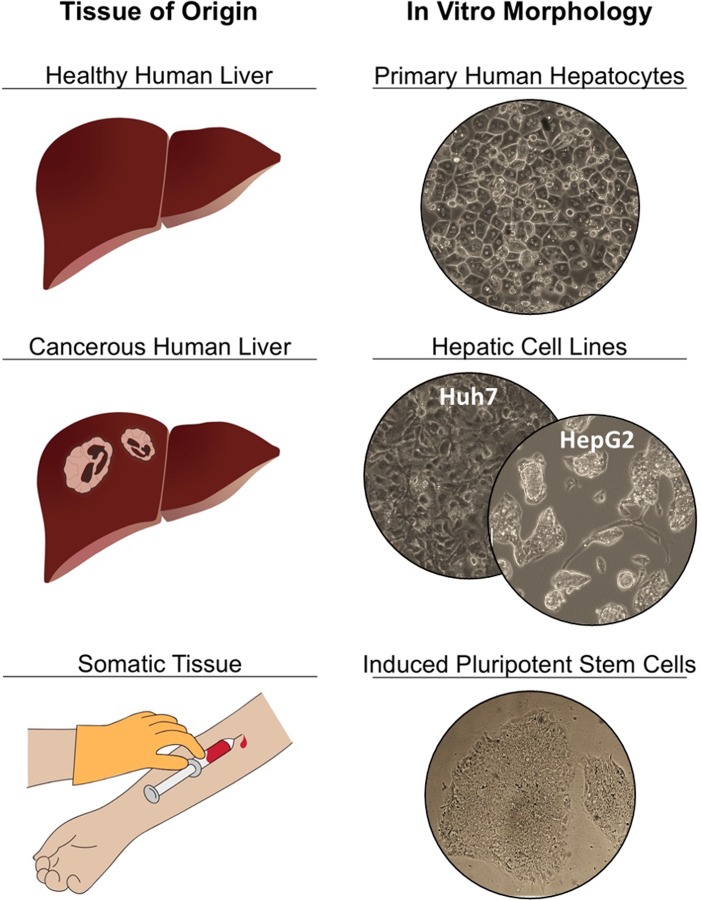
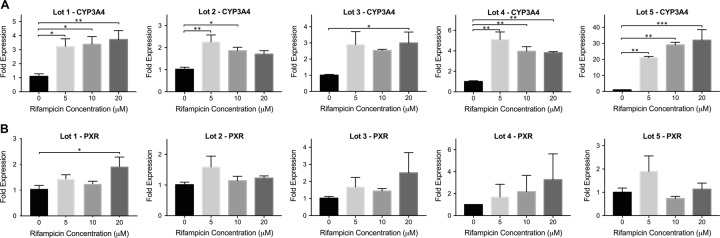
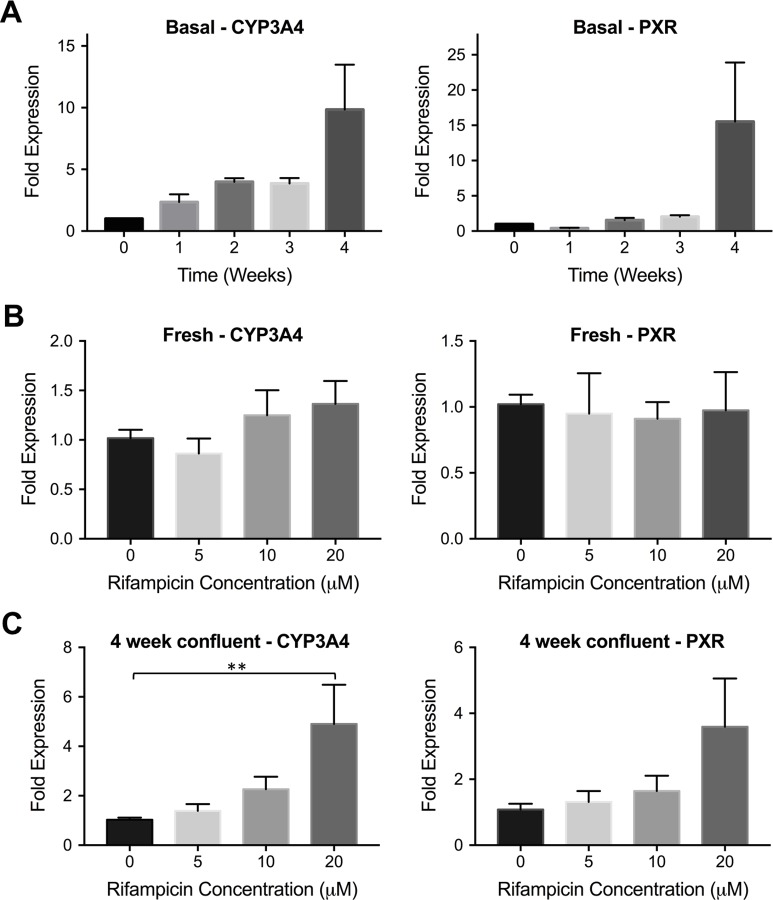
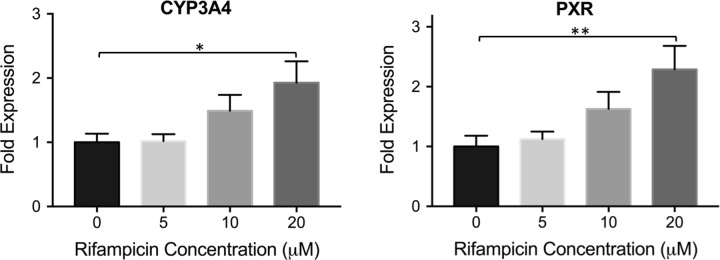
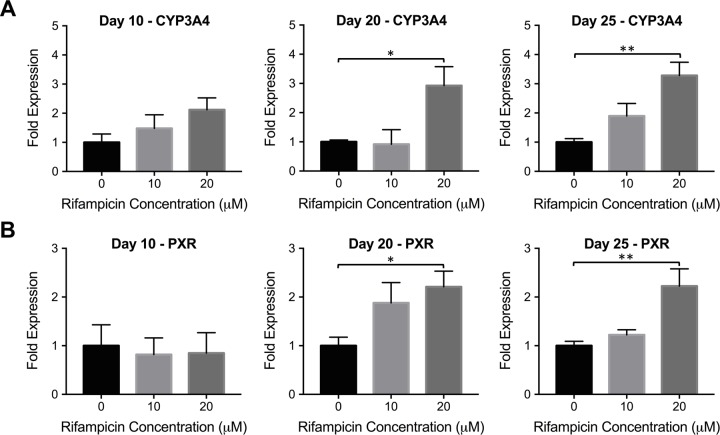
In vitro studies of drug toxicity and drug-drug interactions are crucial for drug development efforts. Currently, the utilization of primary human hepatocytes (PHHs) is the de facto standard for this purpose, due to their functional xenobiotic response and drug metabolizing CYP450 enzyme metabolism. However, PHHs are scarce, expensive, require laborious maintenance, and exhibit lot-to-lot heterogeneity. Alternative human in vitro platforms include hepatic cell lines, which are easy to access and maintain, and induced pluripotent stem cell (iPSC) derived hepatocytes. In this study, we provide a direct comparison of drug induced CYP3A4 and PXR expression levels of PHHs, hepatic cell lines Huh7 and HepG2, and iPSC derived hepatocyte like cells. Confluently cultured Huh7s exhibited an improved CYP3A4 expression and were inducible by up to 4.9-fold, and hepatocytes differentiated from human iPSCs displayed a 3.3-fold CYP3A4 induction. In addition, an increase in PXR expression levels was observed in both hepatic cell lines and iPSC derived hepatocytes upon rifampicin treatment, whereas a reproducible increase in PXR expression was not achieved in PHHs. Our results indicate that both hepatoma originated cell lines and iPSCs may provide alternative sources to primary hepatocytes, providing reliable and reproducible results for CYP3A4/PXR metabolism, upon in vitro maturation. This study may serve as a guide for the selection of suitable and feasible in vitro platforms for drug-drug interaction and toxicology studies.
Overview
The claims and statistics of this paper haven’t been checked yet.
Free: it reads the open-access text and checks the first 5 claims that cite a source we can check. Create a free account to check every claim.
Integrity signals
Registry
Cites
Statistics
Figures
Verification
Claims the paper makes
The claims and statistics of this paper haven’t been checked yet.
Free: it reads the open-access text and checks the first 5 claims that cite a source we can check. Create a free account to check every claim.
Claims other papers make about this one
Each is checked against this paper’s own text: does it say what the citing paper says it does?
The source backs part of the claim, not all of it — or backs it for a different population, condition or comparison.
In the citing paper
“Liguori et al. (2008) and Bulutoglu et al. (2020) reported that HepG2 and Huh7 cell lines exhibit diminished cytochrome P450 activity, altered basal gene expression, and reduced capacity to generate physiologically relevant metabolites.”
From Primary cell cultures versus immortalized cell lines: critical comparative insights into biological fidelity and translational applications (2026) · cites this paper as Bulutoglu et al. (2020)
Experimental — accuracy not yet measuredThe source backs part of the claim, not all of it — or backs it for a different population, condition or comparison.
In the citing paper
“In contrast, studies of immortalized hepatocyte lines consistently demonstrated reduced metabolic diversity and physiological responsiveness.”
From Primary cell cultures versus immortalized cell lines: critical comparative insights into biological fidelity and translational applications (2026) · cites this paper as Bulutoglu et al. (2020)
Experimental — accuracy not yet measured
Self-check
Percentages, sums and reported differences re-computed from the paper’s own numbers.
The self-check needs the paper’s full text.
Citations
Cites
Modulation of Hepatitis C Virus RNA Abundance by a Liver-Specific MicroRNA
Jopling, C. L., Yi, M., Lancaster, A. M., Lemon, S. M., & Sarnow, P. (2005) · Science · doi:10.1126/science.1113329 · Cited by 2,521 · cited 1×
“Huh7 cells maintain key hepatic functions and have been used in drug toxicity studies [25, 26], hepatic gene regulation [27], and hepatic disease models [28, 29].”
BackgroundLehmann, J. M., McKee, D. D., Watson, M. A., Willson, T. M., Moore, J. T., & Kliewer, S. A. (1998) · Journal of Clinical Investigation · doi:10.1172/jci3703 · Cited by 1,576 · cited 1×
“When a xenobiotic contacts the ligand-binding pocket of PXR, this complex is translocated into the nucleus where it binds to a response element on the CYP3A4 promoter as a heterodimer with the 9-cis retinoic acid receptor (RXR) [5].”
BackgroundGodoy, P., Hewitt, N. J., Albrecht, U., Andersen, M. E., Ansari, N., Bhattacharya, S., Bode, J. G., Bolleyn, J., Borner, C., Böttger, J., et al. (2013) · Archives of Toxicology · doi:10.1007/s00204-013-1078-5 · Cited by 1,280 · cited 1×
“This allows for the study of long-term drug exposure and complex disease models in vitro [12].”
BackgroundIngelman-Sundberg, M., Sim, S. C., Gomez, A., & Rodriguez-Antona, C. (2007) · Pharmacology & Therapeutics · doi:10.1016/j.pharmthera.2007.09.004 · Cited by 1,166 · cited 1×
“Of the 18 protein families of CYP450, CYP1, 2 and 3 are involved in the breakdown of more than 80% of all prescribed drugs [1].”
BackgroundGerets, H. H. J., Tilmant, K., Gerin, B., Chanteux, H., Depelchin, B. O., Dhalluin, S., & Atienzar, F. A. (2012) · Cell Biology and Toxicology · doi:10.1007/s10565-011-9208-4 · Cited by 698 · cited 3×
“Previously, various groups compared the CYP inducibility of HepG2s, PHHs, HepaRGs and Huh7s [21, 40–42] as well as different culture methods such as 2D plating versus 3D spheroid cultures [43].”
ResultInfluentialLong‐Term in Vitro Function of Adult Hepatocytes in a Collagen Sandwich Configuration
Dunn, J. C. Y., Tompkins, R. G., & Yarmush, M. L. (1991) · Biotechnology Progress · doi:10.1021/bp00009a007 · Cited by 694
Self-citationGonzález-Rodríguez, Á., Mayoral, R., Agra, N., Valdecantos, M. P., Pardo, V, Miquilena-Colina, M. E., Vargas-Castrillón, J., Lo Iacono, O., Corazzari, M., Fimia, G. M., et al. (2014) · Cell Death & Disease · doi:10.1038/cddis.2014.162 · Cited by 615 · cited 1×
“Huh7 cells maintain key hepatic functions and have been used in drug toxicity studies [25, 26], hepatic gene regulation [27], and hepatic disease models [28, 29].”
BackgroundFunctional pharmacogenetics/genomics of human cytochromes P450 involved in drug biotransformation
Zanger, U. M., Turpeinen, M., Klein, K., & Schwab, M. (2008) · Analytical and Bioanalytical Chemistry · doi:10.1007/s00216-008-2291-6 · Cited by 593 · cited 1×
“Particularly, CYP3A4 is involved in the breakdown of more than 50% of clinically approved medications [2, 3].”
BackgroundWesterink, W. M. A., & Schoonen, W. G. E. J. (2007) · Toxicology in Vitro · doi:10.1016/j.tiv.2007.05.014 · Cited by 544
Willson, T. M., & Kliewer, S. A. (2002) · Nature Reviews Drug Discovery · doi:10.1038/nrd753 · Cited by 503 · cited 1×
“Particularly, CYP3A4 is involved in the breakdown of more than 50% of clinically approved medications [2, 3].”
BackgroundLeCluyse, E. L. (2001) · European Journal of Pharmaceutical Sciences · doi:10.1016/s0928-0987(01)00135-x · Cited by 477 · cited 1×
“PHHs remain the gold standard for assessing CYP3A4 activity and regulation, as they retain a significant portion of their in vivo CYP450 metabolism after the isolation procedure [10].”
BackgroundThe orphan nuclear receptor HNF4α determines PXR- and CAR-mediated xenobiotic induction of CYP3A4
Tirona, R. G., Lee, W., Leake, B. F., Lan, L.-B., Cline, C. B., Lamba, V., Parviz, F., Duncan, S. A., Inoue, Y., Gonzalez, F. J., et al. (2003) · Nature Medicine · doi:10.1038/nm815 · Cited by 440
Rodríguez-Antona, C., Donato, M. T., Boobis, A., Edwards, R. J., Watts, P. S., Castell, J. V., & Gómez-Lechón, M.-J. (2002) · Xenobiotica · doi:10.1080/00498250210128675 · Cited by 420 · cited 3×
“Previously, various groups compared the CYP inducibility of HepG2s, PHHs, HepaRGs and Huh7s [21, 40–42] as well as different culture methods such as 2D plating versus 3D spheroid cultures [43].”
ResultInfluentialYe, Z., Zhan, H., Mali, P., Dowey, S., Williams, D. M., Jang, Y.-Y., Dang, C. V., Spivak, J. L., Moliterno, A. R., & Cheng, L. (2009) · Blood · doi:10.1182/blood-2009-04-217406 · Cited by 399
Self-citationHep G2 cells as a resource for metabolic studies: lipoprotein, cholesterol, and bile acids
Javitt, N. B. (1990) · The FASEB Journal · doi:10.1096/fasebj.4.2.2153592 · Cited by 356
Culture and Functional Characterization of Human Hepatoma HepG2 Cells
Donato, M. T., Tolosa, L., & Gómez-Lechón, M. J. (2015) · Methods in Molecular Biology · doi:10.1007/978-1-4939-2074-7_5 · Cited by 331
Bell, C. C., Dankers, A. C. A., Lauschke, V. M., Sison-Young, R., Jenkins, R., Rowe, C., Goldring, C. E., Park, K., Regan, S. L., Walker, T., et al. (2018) · Toxicological Sciences · doi:10.1093/toxsci/kfx289 · Cited by 327 · cited 1×
“Previously, various groups compared the CYP inducibility of HepG2s, PHHs, HepaRGs and Huh7s [21, 40–42] as well as different culture methods such as 2D plating versus 3D spheroid cultures [43].”
BackgroundLi, A. P., Lu, C., Brent, J. A., Pham, C., Fackett, A., Ruegg, C. E., & Silber, P. M. (1999) · Chemico-Biological Interactions · doi:10.1016/s0009-2797(99)00088-5 · Cited by 302 · cited 1×
“showed increased CYP3A4 activity in PHHs following cryo-preservation [54].”
BackgroundCell Lines: A Tool for In Vitro Drug Metabolism Studies
Gomez-Lechon, M., Donato, M., Lahoz, A., & Castell, J. (2008) · Current Drug Metabolism · doi:10.2174/138920008783331086 · Cited by 300
Generation of Endoderm-Derived Human Induced Pluripotent Stem Cells From Primary Hepatocytes
Liu, H., Ye, Z., Kim, Y., Sharkis, S., & Jang, Y.-Y. (2010) · Hepatology · doi:10.1002/hep.23626 · Cited by 250 · cited 2×
“The human iPSCs were cultured in feeder-free condition on Matrigel (BD), using mTeSR medium (Stem Cell Technologies, Vancouver, Canada) as previously described [34, 36, 44, 45].”
BackgroundMethodSelf-citationDrug–Drug Interaction Studies: Regulatory Guidance and An Industry Perspective
Prueksaritanont, T., Chu, X., Gibson, C., Cui, D., Yee, K. L., Ballard, J., Cabalu, T., & Hochman, J. (2013) · The AAPS Journal · doi:10.1208/s12248-013-9470-x · Cited by 248 · cited 1×
“Accordingly, determining if a drug is a PXR activator is critical in drug discovery, as DDIs are one of the main causes for drug withdrawals [7].”
BackgroundChoi, S. M., Kim, Y., Shim, J. S., Park, J. T., Wang, R.-H., Leach, S. D., Liu, J. O., Deng, C., Ye, Z., & Jang, Y.-Y. (2013) · Hepatology · doi:10.1002/hep.26237 · Cited by 248 · cited 4×
“The human iPSCs were cultured in feeder-free condition on Matrigel (BD), using mTeSR medium (Stem Cell Technologies, Vancouver, Canada) as previously described [34, 36, 44, 45].”
BackgroundMethodSelf-citationIn Vivo Liver Regeneration Potential of Human Induced Pluripotent Stem Cells from Diverse Origins
Liu, H., Kim, Y., Sharkis, S., Marchionni, L., & Jang, Y.-Y. (2011) · Science Translational Medicine · doi:10.1126/scitranslmed.3002376 · Cited by 246 · cited 1×
“The human iPSCs were cultured in feeder-free condition on Matrigel (BD), using mTeSR medium (Stem Cell Technologies, Vancouver, Canada) as previously described [34, 36, 44, 45].”
MethodSelf-citationLong‐term maintenance of a microfluidic 3D human liver sinusoid
Prodanov, L., Jindal, R., Bale, S. S., Hegde, M., McCarty, W. J., Golberg, I., Bhushan, A., Yarmush, M. L., & Usta, O. B. (2016) · Biotechnology and Bioengineering · doi:10.1002/bit.25700 · Cited by 214
Self-citationHuman hepatocytes: Isolation, cryopreservation and applications in drug development
Li, A. P. (2007) · Chemico-Biological Interactions · doi:10.1016/j.cbi.2007.01.001 · Cited by 203 · cited 3×
“However, cryopreserved PHHs can lose their plateability after the cryopreservation process and lose ~50% of their CYP450 activity each day after thawing, stabilizing at 10–20% [11, 16].”
BackgroundEfficient and Allele-Specific Genome Editing of Disease Loci in Human iPSCs
Smith, C., Abalde-Atristain, L., He, C., Brodsky, B. R., Braunstein, E. M., Chaudhari, P., Jang, Y.-Y., Cheng, L., & Ye, Z. (2015) · Molecular Therapy · doi:10.1038/mt.2014.226 · Cited by 175 · cited 1×
“Unlike primary hepatocytes, iPSCs are renewable and amenable to gene editing [36, 60, 61].”
BackgroundSelf-citationDuan, Y., Ma, X., Zou, W., Wang, C., Bahbahan, I. S., Ahuja, T. P., Tolstikov, V., & Zern, M. A. (2010) · Stem Cells · doi:10.1002/stem.315 · Cited by 169
Dongiovanni, P., Valenti, L., Ludovica Fracanzani, A., Gatti, S., Cairo, G., & Fargion, S. (2008) · The American Journal of Pathology · doi:10.2353/ajpath.2008.070097 · Cited by 169
Cyp3A regulation: from pharmacology to nuclear receptors.
Quattrochi, L. C., & Guzelian, P. S. (2001) · PubMed · Cited by 162
Li, A. P., Gorycki, P. D., Hengstler, J. G., Kedderis, G. L., Koebe, H. G., Rahmani, R., de Sousas, G., Silva, J. M., & Skett, P. (1999) · Chemico-Biological Interactions · doi:10.1016/s0009-2797(99)00081-2 · Cited by 158 · cited 1×
“Our findings agreed with the previous literature showing that cryopreservation can have a negative impact on CYP450 inducibility [56].”
ResultInduction of Drug Metabolising Enzymes: Pharmacokinetic and Toxicological Consequences in Humans
Fuhr, U. (2000) · Clinical Pharmacokinetics · doi:10.2165/00003088-200038060-00003 · Cited by 154
HepG2 cells as an in vitro model for evaluation of cytochrome P450 induction by xenobiotics
Choi, J. M., Oh, S. J., Lee, S. Y., Im, J. H., Oh, J. M., Ryu, C. S., Kwak, H. C., Lee, J.-Y., Kang, K. W., & Kim, S. K. (2014) · Archives of Pharmacal Research · doi:10.1007/s12272-014-0502-6 · Cited by 145 · cited 7×
“Even though Huh7 cells at 4 weeks demonstrated a higher inducibility compared to HepG2s, they had the lowest basal CYP3A4 and PXR expressions compared to freshly plated HepG2s and PHH lots (S3 Fig).”
BackgroundInfluentialComparative analysis of 3D culture methods on human HepG2 cells
Luckert, C., Schulz, C., Lehmann, N., Thomas, M., Hofmann, U., Hammad, S., Hengstler, J. G., Braeuning, A., Lampen, A., & Hessel‐Pras, S. (2016) · Archives of Toxicology · doi:10.1007/s00204-016-1677-z · Cited by 132 · cited 1×
“In addition, the basal expression levels of both genes were downregulated in 4-week cultures, compared to freshly plated cells (S2B Fig), in contradiction to one study, where the authors looked at differential gene expression of CYP3A4 and PXR on culture days 3 and 21; and showed that CYP3A4 basal expression was highe…”
ResultWang, B., Jakus, A. E., Baptista, P. M., Soker, S., Soto-Gutierrez, A., Abecassis, M. M., Shah, R. N., & Wertheim, J. A. (2016) · Stem Cells Translational Medicine · doi:10.5966/sctm.2015-0235 · Cited by 113 · cited 1×
“Although detectable, their CYP450 expression does not match up to their PHH counterpart, and their CYP3A4 induction upon drug exposure and its correlation to PXR expression have not been fully characterized [38, 39].”
BackgroundChoi, S., Sainz, B., Corcoran, P., Uprichard, S., & Jeong, H. (2009) · Xenobiotica · doi:10.1080/00498250802613620 · Cited by 98 · cited 1×
“These methods stall cell division, upregulating CYP450 expression, and result in significant inducibility upon drug exposure [27, 30, 31].”
BackgroundEffect of Cryopreservation on Cytochrome P-450 Enzyme Induction in Cultured Rat Hepatocytes
Madan, A., DeHaan, R., Mudra, D., Carroll, K., LeCluyse, E., & Parkinson, A. (1999) · Drug Metabolism and Disposition · doi:10.1016/s0090-9556(24)14907-0 · Cited by 85 · cited 1×
“Another study conducted with primary rat hepatocytes also showed similar CYP P450 induction in freshly isolated and cryo-preserved cells [55].”
ResultSjogren, A.-K. M., Liljevald, M., Glinghammar, B., Sagemark, J., Li, X., Jonebring, A., Cotgreave, I. A., Brolén, G., & Andersson, T. B. (2014) · Archives of Toxicology · doi:10.1007/s00204-014-1265-z · Cited by 85 · cited 1×
“Huh7 cells maintain key hepatic functions and have been used in drug toxicity studies [25, 26], hepatic gene regulation [27], and hepatic disease models [28, 29].”
BackgroundInduction of cytochrome-P450 in cryopreserved rat and human hepatocytes
Silva, J. M., Day, S. H., & Nicoll‐Griffith, D. A. (1999) · Chemico-Biological Interactions · doi:10.1016/s0009-2797(99)00090-3 · Cited by 85
Reprogramming of EBV-immortalized B-lymphocyte cell lines into induced pluripotent stem cells
Choi, S. M., Liu, H., Chaudhari, P., Kim, Y., Cheng, L., Feng, J., Sharkis, S., Ye, Z., & Jang, Y.-Y. (2011) · Blood · doi:10.1182/blood-2011-03-340620 · Cited by 79
Self-citationRoymans, D., Looveren, C. V., Leone, A. M., Parker, J. B., McMillian, M., Johnson, M. D., Koganti, A., Gilissen, R., Silber, P. M., Mannens, G., et al. (2003) · Biochemical Pharmacology · doi:10.1016/j.bcp.2003.09.022 · Cited by 78 · cited 2×
“However, cryopreserved PHHs can lose their plateability after the cryopreservation process and lose ~50% of their CYP450 activity each day after thawing, stabilizing at 10–20% [11, 16].”
BackgroundCYP3A4 Catalytic Activity Is Induced in Confluent Huh7 Hepatoma Cells
Sivertsson, L., Ek, M., Darnell, M., Edebert, I., Ingelman‐Sundberg, M., & Neve, E. P. A. (2010) · Drug Metabolism and Disposition · doi:10.1124/dmd.110.032367 · Cited by 76 · cited 3×
“Previously, it has been shown that confluent culturing of this cell line resulted in increased basal expression levels of CYP3A4 via restorement of PXR activation [27, 31].”
BackgroundEvaluation of pregnane X receptor (PXR)-mediated CYP3A4 drug-drug interactions in drug development
Sinz, M. (2013) · Drug Metabolism Reviews · doi:10.3109/03602532.2012.743560 · Cited by 74 · cited 1×
“When a drug is predicted to cause severe DDIs, multiple assays are performed to identify and minimize this characteristic without diminishing the efficacy of the drug [8, 9].”
Liu, C., Lim, Y.-P., & Hu, M. (2012) · Marine Drugs · doi:10.3390/md10010242 · Cited by 67
Stem cell-derived liver cells for drug testing and disease modeling.
Davidson, M. D., Ware, B. R., & Khetani, S. R. (2015) · PubMed · Cited by 67
Gene correction in patient-specific iPSCs for therapy development and disease modeling
Jang, Y.-Y., & Ye, Z. (2016) · Human Genetics · doi:10.1007/s00439-016-1691-5 · Cited by 55
Self-citationManaging the Risk of CYP3A Induction in Drug Development: A Strategic Approach
Jones, B., Rollison, H. E., Johansson, S. A., Kanebratt, K. P., Lambert, C., Vishwanathan, K., & Andersson, T. B. (2016) · Drug Metabolism and Disposition · doi:10.1124/dmd.116.072025 · Cited by 53 · cited 1×
“When a drug is predicted to cause severe DDIs, multiple assays are performed to identify and minimize this characteristic without diminishing the efficacy of the drug [8, 9].”
Ye, Z., Liu, C. F., Lanikova, L., Dowey, S. N., He, C., Huang, X., Brodsky, R. A., Spivak, J. L., Prchal, J. T., & Cheng, L. (2014) · Stem Cells · doi:10.1002/stem.1545 · Cited by 50
Sivertsson, L., Edebert, I., Porsmyr‐Palmertz, M., Ingelman‐Sundberg, M., & Neve, E. P. A. (2012) · Molecular Pharmacology · doi:10.1124/mol.112.082305 · Cited by 40 · cited 4×
“Previously, it has been shown that confluent culturing of this cell line resulted in increased basal expression levels of CYP3A4 via restorement of PXR activation [27, 31].”
BackgroundInfluentialTian, L., Ye, Z., Kafka, K., Stewart, D., Anders, R. A., Schwarz, K. B., & Jang, Y. (2018) · Journal of Pediatric Gastroenterology and Nutrition · doi:10.1097/mpg.0000000000002187 · Cited by 34
Self-citationMcCarty, W. J., Usta, O. B., Luitje, M. E., Bale, S. S., Bhushan, A., Hegde, M., Golberg, I., Jindal, R., & Yarmush, M. L. (2014) · TECHNOLOGY · doi:10.1142/s2339547814500083 · Cited by 27
Self-citationUeno, Y., Iwasaki, T., Shimosegawa, T., & Kogure, T. (2004) · Cancer Chemotherapy and Pharmacology · doi:10.1007/s00280-003-0725-6 · Cited by 26 · cited 1×
“Huh7 cells maintain key hepatic functions and have been used in drug toxicity studies [25, 26], hepatic gene regulation [27], and hepatic disease models [28, 29].”
BackgroundSasaki, T., Takahashi, S., Numata, Y., Narita, M., Tanaka, Y., Kumagai, T., Kondo, Y., Matsunaga, T., Ohmori, S., & Nagata, K. (2012) · Drug Metabolism and Pharmacokinetics · doi:10.2133/dmpk.dmpk-12-rg-132 · Cited by 25 · cited 1×
“Although detectable, their CYP450 expression does not match up to their PHH counterpart, and their CYP3A4 induction upon drug exposure and its correlation to PXR expression have not been fully characterized [38, 39].”
BackgroundIn Vitro Modeling of Alcohol-Induced Liver Injury Using Human-Induced Pluripotent Stem Cells
Tian, L., Prasad, N., & Jang, Y.-Y. (2014) · Methods in molecular biology · doi:10.1007/7651_2014_168 · Cited by 20
Self-citationTian, L., Deshmukh, A. P., Prasad, N., & Jang, Y.-Y. (2016) · International Journal of Biological Sciences · doi:10.7150/ijbs.15811 · Cited by 19 · cited 3×
“Once the human iPSCs reached approximately 50–70% confluency, endodermal commitment and hepatic differentiation was induced as previously described [36, 37, 48, 51].”
BackgroundMethodSelf-citationChaudhari, P., Tian, L., Kim, A., Zhu, Q., Anders, R. A., Schwarz, K. B., Sharkis, S. J., Ye, Z., & Jang, Y.-Y. (2018) · Stem Cells · doi:10.1002/stem.2950 · Cited by 19 · cited 3×
“Once the human iPSCs reached approximately 50–70% confluency, endodermal commitment and hepatic differentiation was induced as previously described [36, 37, 48, 51].”
BackgroundMethodSelf-citationHematopoietic cells as sources for patient-specific iPSCs and disease modeling
Ye, Z., Liu, C. F., & Jang, Y.-Y. (2011) · Cell Cycle · doi:10.4161/cc.10.17.17180 · Cited by 9
Self-citationChaudhari, P., Prasad, N., Tian, L., & Jang, Y.-Y. (2014) · Methods in molecular biology · doi:10.1007/7651_2014_145 · Cited by 9
Self-citationChaudhari, P., Tian, L., Ye, Z., & Jang, Y.-Y. (2019) · Experimental Biology and Medicine · doi:10.1177/1535370219834895 · Cited by 3 · cited 2×
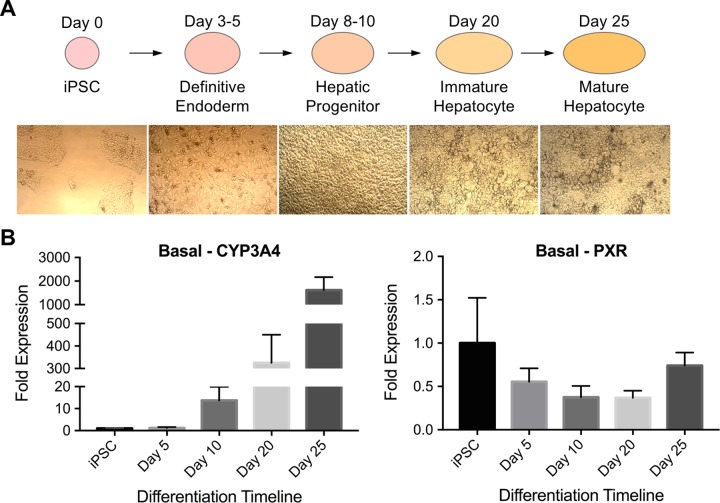
“For this study, we employed a 25-day long protocol, where pluripotent stem cells differentiate into definitive endoderm- (day 3–5), hepatic progenitor- (day 8–10), immature hepatocyte- (day 20) and finally into mature hepatocyte- like cells (day 25) (Fig 5A) [37, 48, 51, 52].”
BackgroundMethodSelf-citation(1982) · PubMed
Research works printed but not linked: 2
- Liu H, Kim Y, Sharkis S, Marchionni L, Jang YY. In vivo liver regeneration potential of human induced pluripotent stem cells from diverse origins. Science translational medicine. 2011; 3(82):82ra39. 10.1126/scitranslmed.3002376 21562231 PMC3305909 · DOI · Paper page
- Choi SM, Liu H, Chaudhari P, Kim Y, Cheng L, Feng J, et al Reprogramming of EBV-immortalized B-lymphocyte cell lines into induced pluripotent stem cells. Blood. 2011; 118(7): 1801– 5. doi: blood-2011-03-340620 [pii] 10.1182/blood-2011-03-340620 21628406 PMC3158714 · DOI · Paper page
Cited by
Izadifar, Z., Charrez, B., Almeida, M., Robben, S., Pilobello, K. T., van der Graaf-Mas, J., Benz, M., Marquez, S. L., Ferrante, T. C., Shcherbina, K., et al. (2024) · Biosensors and Bioelectronics · doi:10.1016/j.bios.2024.116683 · Cited by 85
“…line was originally isolated from a liver carcinoma and it is known to have low enzyme and metabolic activity compared to primary human hepatocytes (Bulutoglu et al., 2020), but it can become more metabolically active as it can continue growing past confluence over long periods of culture (up to 4…”
Implementing organ-on-chip in a next-generation risk assessment of chemicals: a review
Nitsche, K. S., Müller, I. I., Malcomber, S., Carmichael, P. L., & Bouwmeester, H. (2022) · Archives of Toxicology · doi:10.1007/s00204-022-03234-0 · Cited by 83
“Nevertheless, stem cells are in demand for NGRA studies, leading to a rapid development of culture protocols to overcome the largely fetal-like phenotype (Bulutoglu et al. 2020).”
BackgroundSakolish, C., Reese, C. E., Luo, Y., Valdiviezo, A., Schurdak, M. E., Gough, A., Taylor, D. L., Chiu, W. A., Vernetti, L. A., & Rusyn, I. (2020) · Toxicology · doi:10.1016/j.tox.2020.152651 · Cited by 45
“Despite the challenges of their largely fetal-like phenotype, they can be a reliable and reproducible model for drug metabolism upon in vitro maturation (Bulutoglu et al. 2020).”
BackgroundHall, A., Chanteux, H., Ménochet, K., Ledecq, M., & Schulze, M. E. D. (2021) · Journal of Medicinal Chemistry · doi:10.1021/acs.jmedchem.0c02245 · Cited by 40
Rey-Bedón, C., Banik, P. D., Gökaltun, A., Hofheinz, O., Yarmush, M. L., Uygun, M. K., & Usta, O. B. (2022) · Biomedicine & Pharmacotherapy · doi:10.1016/j.biopha.2021.112377 · Cited by 33
Self-citation
Metadata
- Authors
- Bulutoglu, B., Rey-Bedón, C., Mert, S., Tian, L., Jang, Y.-Y., Yarmush, M. L., & Usta, O. B.
- Affiliations
- Harvard University (US)
- Johns Hopkins University (US)
- Rutgers, The State University of New Jersey (US)
- Corresponding author
- Yarmush, Martin L.
- Usta, O. Berk
- ORCID
- Venue
- PLOS ONE
- Publisher
- Public Library of Science (PLoS)
- Published
- 2020-02-27
- Volume
- 15
- Issue
- 2
- Pages
- e0229106
- ISSN
- 1932-6203 (ISSN-L)
- PMC
- PMC7046200
- OpenAlex
- W3006766928
- Cited by
- 41
- References
- 59
- Citations by year
- 2026: 4 · 2025: 10 · 2024: 7 · 2023: 2 · 2022: 10 · 2021: 5 · 2020: 2
- FWCI
- 4.20
- Type
- journal article
- Language
- en
- Open access
- gold
- doi.org
- Licence
- Locations
- PLoS ONE (publishedVersion, cc-by)
- PubMed Central (publishedVersion, cc-by)
- PubMed (publishedVersion)
- DOAJ (DOAJ: Directory of Open Access Journals) (submittedVersion, cc-by-sa)
- Figshare (submittedVersion, cc-by)
- Funders
- National Institutes of Health (5R01EB023812, 5P41EB002503, 1F32EB026916)
- Massachusetts General Hospital (Executive Committee on Research Interim Support)
- Shriners Hospitals for Children (84311, 84001)
- Topics
- Life Sciences › Pharmacology, Toxicology and Pharmaceutics › Pharmacology › Pharmacogenetics and Drug Metabolism
- Life Sciences › Pharmacology, Toxicology and Pharmaceutics › Pharmacology › Drug-Induced Hepatotoxicity and Protection
- Health Sciences › Medicine › Oncology › Drug Transport and Resistance Mechanisms
- Keywords
- CYP3A4 induction, pregnane X receptor, primary human hepatocytes, iPSC-derived hepatocytes, Huh7 cells, HepG2 cells, drug-drug interactions, drug toxicity, rifampicin, iPSC differentiation, in vitro hepatocyte model, cytochrome P450 metabolism
- MeSH terms
- Pregnane X Receptor, Cell Differentiation, Cell Line, Drug Interactions, Drug Evaluation, Preclinical, Humans, Reproducibility of Results, Up-Regulation, Toxicity Tests, Hepatocytes, Cytochrome P-450 CYP3A, Induced Pluripotent Stem Cells, Cytochrome P-450 CYP3A Inducers
About these checks
Registry, retraction, Cites and statistics results are computed, not judged, with one exception: a printed reference that no index lists is read once by a model before it counts as a citation error. Claims are extracted by a model and kept only when their quote appears verbatim in the text; each cited source is then checked, with a model’s help, for whether it says what the claim relies on. Those verdicts can be wrong — read the claim’s quote and the cited source before relying on one.
Statistics and arithmetic are recomputed, not judged.
Confidence bands are shown only for fields calibrated on our annotated test set. None is calibrated yet, so no band is shown.
What counts as a claim ›How we measure confidence ›How we check this ›
Are you an author, or do you see a problem with this page? Request a review
Data sources
Bibliographic data: Semantic Scholar, OpenAlex, Crossref.
Contains information from the Semantic Scholar Academic Graph Datasets, made available under the ODC Attribution License (ODC-BY 1.0).
Semantic Scholar’s data is described in: Kinney, R., et al. (2023). The Semantic Scholar Open Data Platform. arXiv:2301.10140.
