

Misophonia: Phenomenology, comorbidity and demographics in a large sample
Open accessThe DOI matches its Crossref record; 54 of the 56 references it cites were found in a registry or an index.
Abstract
OBJECTIVE: Analyze a large sample with detailed clinical data of misophonia subjects in order to determine the psychiatric, somatic and psychological nature of the condition. METHODS: This observational study of 779 subjects with suspected misophonia was conducted from January 2013 to May 2017 at the outpatient-clinic of the Amsterdam University Medical Centers, location AMC, the Netherlands. We examined DSM-IV diagnoses, results of somatic examination (general screening and hearing tests), and 17 psychological questionnaires (e.g., SCL-90-R, WHOQoL). RESULTS: The diagnosis of misophonia was confirmed in 575 of 779 referred subjects (74%). In the sample of misophonia subjects (mean age, 34.17 [SD = 12.22] years; 399 women [69%]), 148 (26%) subjects had comorbid traits of obsessive-compulsive personality disorder, 58 (10%) mood disorders, 31 (5%) attention-deficit (hyperactivity) disorder, and 14 (3%) autism spectrum conditions. Two percent reported tinnitus and 1% hyperacusis. In a random subgroup of 109 subjects we performed audiometry, and found unilateral hearing loss in 3 of them (3%). Clinical neurological examination and additional blood test showed no abnormalities. Psychological tests revealed perfectionism (97% CPQ>25) and neuroticism (stanine 7 NEO-PI-R). Quality of life was heavily impaired and associated with misophonia severity (rs (184) = -.34 p = < .001, p = < .001). LIMITATIONS: This was a single site study, leading to possible selection-and confirmation bias, since AMC-criteria were used. CONCLUSIONS: This study with 575 subjects is the largest misophonia sample ever described. Based on these results we propose a set of revised criteria useful to diagnose misophonia as a psychiatric disorder.
Overview
The claims and statistics of this paper haven’t been checked yet.
Free: it reads the open-access text and checks the first 5 claims that cite a source we can check. Create a free account to check every claim.
Integrity signals
Registry
Cites
Statistics
Figures
Verification
Claims the paper makes
The claims and statistics of this paper haven’t been checked yet.
Free: it reads the open-access text and checks the first 5 claims that cite a source we can check. Create a free account to check every claim.
Claims other papers make about this one
Each is checked against this paper’s own text: does it say what the citing paper says it does?
The cited source says what the claim attributes to it.
In the citing paper
“It should be noted that different authors found that misophonia also co-occurred with other pathologies such as attention deficit disorder with and without hyperactivity (ADD/ADHD) [40,105].”
From Misophonia: A Systematic Review of Current and Future Trends in This Emerging Clinical Field (2022) · cites this paper as [105]
Experimental — accuracy not yet measured
Self-check
Percentages, sums and reported differences re-computed from the paper’s own numbers.
The self-check needs the paper’s full text.
Citations
Cites
Diagnostic and Statistical Manual of Mental Disorders
American Psychiatric Association (2013) · doi:10.1176/appi.books.9780890425596 · Cited by 116,369
Diagnostic and Statistical Manual of Mental Disorders
Williams, J. B. W., & First, M. (2013) · Encyclopedia of Social Work · doi:10.1093/acrefore/9780199975839.013.104 · Cited by 109,519
Hamilton, M. (1960) · Journal of Neurology, Neurosurgery & Psychiatry · doi:10.1136/jnnp.23.1.56 · Cited by 32,817
Diagnostic and Statistical Manual of Mental Disorders.
Widiger, T. A. (2000) · Encyclopedia of Psychology, Vol. 3. · doi:10.1037/10518-009 · Cited by 19,744
(1998) · The Journal of Clinical Psychiatry · Cited by 19,139
Depression and quality of life in older persons: A review
Sivertsen, H., Bjørkløf, G. H., Engedal, K., Selbæk, G., & Helvik, A.-S. (2015) · Dementia and Geriatric Cognitive Disorders · doi:10.1159/000437299 · Cited by 14,152
The assessment of anxiety states by rating
HAMILTON, M. (1959) · British Journal of Medical Psychology · doi:10.1111/j.2044-8341.1959.tb00467.x · Cited by 11,455
Diagnostic and Statistical Manual of Mental Disorders(DSM)
(2008) · Encyclopedia of Counseling · doi:10.4135/9781412963978.n182 · Cited by 10,830
(1998) · PubMed · Cited by 10,216
Development of the World Health Organization WHOQOL-BREF Quality of Life Assessment
THE WHOQOL GROUP (1998) · Psychological Medicine · doi:10.1017/s0033291798006667 · Cited by 7,933
Research works printed but not linked: 7
- Jastreboff MM, Jastreboff PJ. Components of decreased sound tolerance: hyperacusis, misophonia and phonophobia. ITHS Newsletter. 2001; 2: 5– 7.
- de Jonghe F. Leidraad voor het scoren van de Hamilton Depression Rating Scale. Benecke: Amsterdam; 1994.
- Sheehan DV. Sheehan disability scale. Handbook of psychiatric measures 2; 1983: 100– 2.
- Costa PT, McCrae RR. Neo Pi-R. Odessa, FL: Psychological Assessment Resources; 1992.
- van Dam-Baggen R, Kraaimaat FW. Handleiding Inventarisatielijst Omgaan met Anderen, rev. ed (Revised Manual of the Inventory of Social Situations). Amsterdam/Lisse: Swets en Zeitlinger; 2000.
- Cavanagh K, Davey GCL. The development of a measure of individual differences in disgust. Winchester: British Psychology Society; 2000.
- van Poll R, Breugelmans O, Houthuijs D, van Kamp I. Perceiving the physical living environment in the Netherlands: Annoyance inventory 2016 National Institute for Public Health and the Environment (RIVM);2018–0084 https://www.rivm.nl/bibliotheek/rapporten/2018-0084.pdf
Cited by
Consensus Definition of Misophonia: A Delphi Study
Swedo, S. E., Baguley, D. M., Denys, D., Dixon, L. J., Erfanian, M., Fioretti, A., Jastreboff, P. J., Kumar, S., Rosenthal, M. Z., Rouw, R., et al. (2022) · Frontiers in Neuroscience · doi:10.3389/fnins.2022.841816 · Cited by 249
“Prevalence, Onset, and Course Multiple studies have estimated the prevalence of misophonia in different populations (Wu et al., 2014; Zhou et al., 2017; Quek et al., 2018; Rouw and Erfanian, 2018; Jager et al., 2020; Naylor et al., 2020; Siepsiak et al., 2020b) by using different diagnostic questionnaires and measurem…”
BackgroundMethodSelf-citationWilliams, Z. J., He, J. L., Cascio, C. J., & Woynaroski, T. G. (2021) · Neuroscience & Biobehavioral Reviews · doi:10.1016/j.neubiorev.2020.11.030 · Cited by 175
“Although misophonia research remains in its infancy, there is sufficient evidence to indicate that misophonia is a distinct behavioral syndrome that can result in substantial distress and functional impairment (Brout et al., 2018; Jager et al., 2020; Potgieter et al., 2019; Schröder et al., 2013).”
BackgroundInfluentialDevelopment and Initial Validation of the Duke Misophonia Questionnaire
Rosenthal, M. Z., Anand, D., Cassiello-Robbins, C., Williams, Z. J., Guetta, R. E., Trumbull, J., & Kelley, L. D. (2021) · Frontiers in Psychology · doi:10.3389/fpsyg.2021.709928 · Cited by 117
“Nonetheless, the original A-MISO-S and a revised version have been widely used in misophonia research across multiple countries, suggesting it merits additional psychometric evaluation and is promising as a useful and brief measure (Kluckow et al., 2014; Schröder et al., 2014; Erfanian et al., 2018, 2019; Quek et al.,…”
BackgroundMethodInfluentialMisophonia and comorbid psychiatric symptoms: a preliminary study of clinical findings
Erfanian, M., Kartsonaki, C., & Keshavarz, A. (2019) · Nordic Journal of Psychiatry · doi:10.1080/08039488.2019.1609086 · Cited by 105
Cognitive behavioral therapy for misophonia: A randomized clinical trial
Jager, I. J., Vulink, N. C. C., Bergfeld, I. O., Loon, A. J. J. M., & Denys, D. A. J. P. (2021) · Depression and Anxiety · doi:10.1002/da.23127 · Cited by 97
“Misophonia is often found among family members, suggesting a hereditary component (Jager et al., 2020; Sanchez & Silva, 2018).”
BackgroundMethodInfluentialSelf-citationThe prevalence and characteristics of misophonia in Ankara, Turkey: population-based study
Kılıç, C., Öz, G., Avanoğlu, K. B., & Aksoy, S. (2021) · BJPsych Open · doi:10.1192/bjo.2021.978 · Cited by 86
The Motor Basis for Misophonia
Kumar, S., Dheerendra, P., Erfanian, M., Benzaquén, E., Sedley, W., Gander, P. E., Lad, M., Bamiou, D. E., & Griffiths, T. D. (2021) · The Journal of Neuroscience · doi:10.1523/jneurosci.0261-21.2021 · Cited by 85
“This is consistent with the phenomenological reports of emotional responses to trigger sounds in misophonia (Jager et al., 2020).”
BackgroundResultInfluentialPrevalence and clinical correlates of misophonia symptoms in the general population of Germany
Jakubovski, E., Müller, A., Kley, H., de Zwaan, M., & Müller‐Vahl, K. (2022) · Frontiers in Psychiatry · doi:10.3389/fpsyt.2022.1012424 · Cited by 87
“(10), we calculated a cut-off value by using one SD (6.”
BackgroundMethodInfluentialHenry, J. A., Theodoroff, S. M., Edmonds, C. M., Martinez, I., Myers, P. J., Zaugg, T. L., & Goodworth, M.-C. R. (2022) · American Journal of Audiology · doi:10.1044/2022_aja-22-00035 · Cited by 95
Misophonia in the UK: Prevalence and norms from the S-Five in a UK representative sample
Vitoratou, S., Hayes, C., Uglik‐Marucha, N., Pearson, O. P., Graham, T., & Gregory, J. E. (2023) · PLoS ONE · doi:10.1371/journal.pone.0282777 · Cited by 103
“Common manifestations of misophonia include feelings of anger, disgust, and anxiety [4–8]; muscle tension [3,9]; avoidance of triggering stimuli [3,10–12], withdrawal from social situations [10–15] and, in some cases, verbal and physical aggression [6,10,13,16].”
BackgroundMethodRinaldi, L. J., Simner, J., Koursarou, S., & Ward, J. (2022) · Journal of Autism and Developmental Disorders · doi:10.1007/s10803-022-05623-x · Cited by 86
“Several studies have shown differences in people with misophonia beyond sound-sensitivities themselves, including traits of perfectionism, depression, anxiety sensitivity, and obsessive compulsive disorder (Cusack et al., 2018; Eijsker et al., 2019; Jager et al., 2020).”
BackgroundVitoratou, S., Uglik-Marucha, N., Hayes, C., & Gregory, J. (2021) · Psych · doi:10.3390/psych3040041 · Cited by 70
“The third section of the AMISOS-R covers a range of possible aspects of distress or impairment associated with reactions to sounds.”
BackgroundMethodInfluentialCassiello-Robbins, C., Anand, D., McMahon, K., Guetta, R., Trumbull, J., Kelley, L., & Rosenthal, M. Z. (2020) · Frontiers in Psychiatry · doi:10.3389/fpsyt.2020.00847 · Cited by 68
Misophonia: A Systematic Review of Current and Future Trends in This Emerging Clinical Field
Ferrer-Torres, A., & Giménez-Llort, L. (2022) · International Journal of Environmental Research and Public Health · doi:10.3390/ijerph19116790 · Cited by 64
Guetta, R. E., Cassiello-Robbins, C., Trumbull, J., Anand, D., & Rosenthal, M. Z. (2022) · PLOS ONE · doi:10.1371/journal.pone.0263230 · Cited by 64
“Further, despite empirical evidence that mood and anxiety disorders cooccur with misophonia [6, 14, 15], investigation of misophonia thus far has not controlled for depression and anxiety symptoms.”
BackgroundSiepsiak, M., Rosenthal, M. Z., Raj-Koziak, D., & Dragan, W. (2022) · Journal of Psychosomatic Research · doi:10.1016/j.jpsychores.2022.110777 · Cited by 60
Williams, Z. J., Cascio, C. J., & Woynaroski, T. G. (2022) · Frontiers in Psychology · doi:10.3389/fpsyg.2022.897901 · Cited by 71
“, 2022), potentially due to prior iterations of misophonia diagnostic criteria attempting to differentiate misophonia from other forms of decreased sound tolerance often observed in autism (Schröder et al., 2013; Jager et al., 2020).”
BackgroundMethodInfluentialLewin, A. B., Dickinson, S., Kudryk, K., Karlovich, A. R., Harmon, S. L., Phillips, D. A., Tonarely, N. A., Gruen, R., Small, B., & Ehrenreich-May, J. (2021) · Journal of Affective Disorders · doi:10.1016/j.jad.2021.04.027 · Cited by 60
“In the largest clinical sample to date, Jager et al. (2020) found that 22% of the sample met criteria for at least one psychiatric disorder (major depression 6.8%; obsessive-compulsive disorder [OCD] 2.8%).”
InfluentialClinical characteristics, impairment, and psychiatric morbidity in 102 youth with misophonia
Guzick, A. G., Cervin, M., Smith, E. E. A., Clinger, J. W., Draper, I. A., Goodman, W. K., Lijffijt, M., Murphy, N., Lewin, A. B., Schneider, S. C., et al. (2022) · Journal of Affective Disorders · doi:10.1016/j.jad.2022.12.083 · Cited by 64
“Almost all affected individuals report severe irritation or anger with triggers and hyper-focus on sounds, with less common emotional responses including disgust and panic (Jager et al., 2020).”
InfluentialRinaldi, L. J., Smees, R., Ward, J., & Simner, J. (2022) · Frontiers in Psychology · doi:10.3389/fpsyg.2022.808379 · Cited by 56
The neurophysiological approach to misophonia: Theory and treatment
Jastreboff, P. J., & Jastreboff, M. M. (2023) · Frontiers in Neuroscience · doi:10.3389/fnins.2023.895574 · Cited by 71
“(2020) study evaluating the effectiveness of CBT in a randomized clinical trial, the authors used several scales and reported that 37% of their 54 patients showed statistical improvement (Jager et al., 2020).”
BackgroundA psychoacoustic test for misophonia assessment
Enzler, F., Loriot, C., Fournier, P., & Noreña, A. J. (2021) · Scientific Reports · doi:10.1038/s41598-021-90355-8 · Cited by 54
The neurobiology of misophonia and implications for novel, neuroscience-driven interventions
Neacsiu, A. D., Szymkiewicz, V., Galla, J. T., Li, B., Kulkarni, Y., & Spector, C. W. (2022) · Frontiers in Neuroscience · doi:10.3389/fnins.2022.893903 · Cited by 68
“Others have also suggested that perfectionism may be at play within misophonic patients (Jager et al., 2020; Natalini et al., 2020), using self-reports, personality assessments, and clinical examples, although the research data is mixed (Szykowny, 2020).”
BackgroundResultInfluentialAazh, H., Erfanian, M., Danesh, A. A., & Moore, B. C. J. (2022) · Frontiers in Neuroscience · doi:10.3389/fnins.2022.900065 · Cited by 53
Cassiello-Robbins, C., Anand, D., McMahon, K., Brout, J., Kelley, L., & Rosenthal, M. Z. (2021) · Frontiers in Psychology · doi:10.3389/fpsyg.2020.519681 · Cited by 41
Specificity of Affective Responses in Misophonia Depends on Trigger Identification
Savard, M.-A., Sares, A. G., Coffey, E. B. J., & Deroche, M. L. D. (2022) · Frontiers in Neuroscience · doi:10.3389/fnins.2022.879583 · Cited by 39
“These avoidance behaviors can be detrimental to wellbeing, education, and social relationships (Neal and Cavanna, 2013; Jager et al., 2020), which highlights the need to better characterize misophonia, and explore the underlying mechanisms by which sounds cause such strong reactions in certain people.”
BackgroundInfluentialA Consensus Definition of Misophonia: Using a Delphi Process to Reach Expert Agreement
Swedo, S., Baguley, D. M., Denys, D., Dixon, L. J., Erfanian, M., Fioretti, A., Jastreboff, P. J., Kumar, S., Rosenthal, M. Z., Rouw, R., et al. (2021) · medRxiv · doi:10.1101/2021.04.05.21254951 · Cited by 41
“…estimated the prevalence of misophonia in different populations (Wu et al., 670 2014; Zhou et al., 2017; Quek et al., 2018; Rouw and Erfanian, 2018; Jager et al., 2020; Naylor et al., 671 2020; Siepsiak et al., 2020b) by using different diagnostic questionnaires and measurement tools 672…”
BackgroundMethodInfluentialSelf-citationFamily Experiences of Decreased Sound Tolerance in ASD
Scheerer, N. E., Boucher, T. Q., Bahmei, B., Iarocci, G., Arzanpour, S., & Birmingham, E. (2021) · Journal of Autism and Developmental Disorders · doi:10.1007/s10803-021-05282-4 · Cited by 45
Smejka, T., & Wiggs, L. D. (2021) · Journal of Affective Disorders · doi:10.1016/j.jad.2021.12.015 · Cited by 52
“A number of common ASMR triggers such as lip smacking and nail tapping were also listed as some of the most common sounds to elicit misophonia in a recent study (Jager et al., 2020).”
BackgroundItem Response Theory Investigation of Misophonia Auditory Triggers
Vitoratou, S., Uglik-Marucha, N., Hayes, C., Erfanian, M., Pearson, O., & Gregory, J. (2021) · Audiology Research · doi:10.3390/audiolres11040051 · Cited by 36
“One large study found that all participants reported an emotional reaction to at least one sound of oral or nasal origin, and the researchers proposed that a reaction to one of these types of sounds should be required in order to diagnose the condition [7].”
BackgroundResultInfluentialSchwemmle, C., & Arens, C. (2021) · HNO · doi:10.1007/s00106-021-01072-7 · Cited by 34
Simner, J., Koursarou, S., Rinaldi, L. J., & Ward, J. (2021) · Journal of Clinical and Experimental Neuropsychology · doi:10.1080/13803395.2022.2056581 · Cited by 34
“Importantly, these same traits have also been linked to misophonia (Cusack et al., 2018; Eijsker et al., 2019; Jager et al., 2020).”
BackgroundMethodInfluentialMöllmann, A., Heinrichs, N., Illies, L., Potthast, N., & Kley, H. (2023) · Frontiers in Psychiatry · doi:10.3389/fpsyt.2023.1112472 · Cited by 41
“Some studies included a diagnostic interview on mental disorders and/or misophonia as a disorder (14, 18, 19), which includes functional impairment.”
BackgroundResultInfluentialDoes context matter in misophonia? A multi-method experimental investigation
Siepsiak, M., Vrana, S. R., Rynkiewicz, A., Rosenthal, M. Z., & Dragan, W. Ł. (2023) · Frontiers in Neuroscience · doi:10.3389/fnins.2022.880853 · Cited by 53
“Misophonia is a newly defined disorder in which selective repetitive sounds or other associated stimuli elicit unpleasant affective, physiological, and behavioral responses that are accompanied by psychological distress and, over time, adversely impact one’s quality of life (Brout et al., 2018; Jager et al., 2020; Swe…”
BackgroundGrossini, E., Stecco, A., Gramaglia, C. M., Zanet, D. D., Cantello, R. M., Gori, B., Negroni, D., Azzolina, D., Ferrante, D., Feggi, A., et al. (2022) · Frontiers in Neuroscience · doi:10.3389/fnins.2022.827998 · Cited by 40
A symptom network model of misophonia: From heightened sensory sensitivity to clinical comorbidity
Andermane, N., Bauer, M., Simner, J., & Ward, J. (2023) · Journal of Clinical Psychology · doi:10.1002/jclp.23552 · Cited by 43
“…of the simpler domains relevant to misophonia, there are several candidates which we explain in turn below: interoception (and/or physiological reactivity), sensory sensitivity (Wu et al., 2014), and social ‐ emotional cognition (e.g., Cusack et al., 2018 Eijsker et al., 2019; Jager et al., 2020).”
A systematic review of treatments for misophonia
Mattson, S. A., D’Souza, J. M., Wojcik, K. D., Guzick, A. G., Goodman, W. K., & Storch, E. A. (2023) · Personalized Medicine in Psychiatry · doi:10.1016/j.pmip.2023.100104 · Cited by 47
“In addition, one randomized controlled trial supported the efficacy of group CBT relative to a waitlist control with treatment components including task concentration, positive affect labeling, stimulus manipulation, and arousal reduction [21–22].”
An Automated Online Measure for Misophonia: The Sussex Misophonia Scale for Adults
Simner, J., Rinaldi, L. J., & Ward, J. (2024) · Assessment · doi:10.1177/10731911241234104 · Cited by 35
“…traits, anxiety (Cusack et al., 2018), autistic traits (Haq et al., 2020; Webber et al., 2014; Williams et al., 2021), attention-to-detail (Eijsker et al., 2021; Schro¨der et al., 2014), emotion dysregulation (Cassiello-Robbins et al., 2020), and poorer quality of life (Jaeger et al., 2020).”
Misophonia: A psychological model and proposed treatment
Cowan, E. N., Marks, D. R., & Pinto, A. (2021) · Journal of Obsessive-Compulsive and Related Disorders · doi:10.1016/j.jocrd.2021.100691 · Cited by 33
A longitudinal investigation of quality of life and negative emotions in misophonia
Dibb, B., & Golding, S. E. (2022) · Frontiers in Neuroscience · doi:10.3389/fnins.2022.900474 · Cited by 31
“…and quantitative studies of misophonia (Edelstein et al., 2013; Schröder et al., 2013; Wu et al., 2014; McKay et al., 2018; Rouw and Erfanian, 2018; Jager et al., 2020) and has been shown to be experienced to a larger degree in those who score higher in comparison to those who score lower on the…”
BackgroundMethodResultInfluentialMisophonia and Hearing Comorbidities in a Collegiate Population
Brennan, C., Lindberg, R. R., Kim, G., Castro, A. A., Khan, R. A., Berenbaum, H., & Husain, F. T. (2023) · Ear and Hearing · doi:10.1097/aud.0000000000001435 · Cited by 34
“Jager et al. (2020) evaluated hearing thresholds in 109 of 575 participants referred for misophonia.”
BackgroundToward a Multidimensional Understanding of Misophonia Using Cluster-Based Phenotyping
Norris, J. E., Kimball, S. H., Nemri, D. C., & Ethridge, L. E. (2022) · Frontiers in Neuroscience · doi:10.3389/fnins.2022.832516 · Cited by 25
A nomological network for misophonia in two German samples using the S-Five model for misophonia
Remmert, N., Jebens, A., Gruzman, R., Gregory, J. E., & Vitoratou, S. (2022) · Frontiers in Psychology · doi:10.3389/fpsyg.2022.902807 · Cited by 33
“In line with previous studies, misophonia severity was associated with symptoms of depression (Wu et al., 2014; Erfanian et al., 2019; Jager et al., 2020), particularly with regards to threat and impact (Vitoratou et al.”
BackgroundResultInfluentialRosenthal, M. Z., Shan, Y., & Trumbull, J. (2023) · Advances in Psychiatry and Behavioral Health · doi:10.1016/j.ypsc.2023.03.009 · Cited by 26
“The findings from Jager and colleagues [14] suggest that most adults seeking outpatient treatment of miso-phonia in Amsterdam may not have a current psychiatric disorder.”
BackgroundMethodInfluentialMeasuring misophonia in youth: A psychometric evaluation of child and parent measures
Cervin, M., Guzick, A. G., Clinger, J. W., Smith, E. E. A., Draper, I. A., Goodman, W. K., Lijffijt, M., Murphy, N., Rast, C. E., Schneider, S. C., et al. (2023) · Journal of Affective Disorders · doi:10.1016/j.jad.2023.05.093 · Cited by 26
“In contrast, misophonia is not primarily a loudness tolerance problem, includes a broader range of triggers than just sounds (e.g., associated visual triggers), and elicits a wider range of emotional responses (often revolving around anger) (Jager et al., 2020).”
InfluentialSiepsiak, M., Turek, A., Michałowska, M., Gambin, M., & Dragan, W. Ł. (2023) · Child Psychiatry & Human Development · doi:10.1007/s10578-023-01593-y · Cited by 31
“The misophonia assessment in this study was conducted by a psychologist familar with misophonia through face-to-face interviews, which were mainly based on the criteria established by [3].”
InfluentialEvaluating anxiety sensitivity as a moderator of misophonia and dimensions of aggression
Schadegg, M. J., Clark, H., & Dixon, L. J. (2021) · Journal of Obsessive-Compulsive and Related Disorders · doi:10.1016/j.jocrd.2021.100657 · Cited by 23
White matter abnormalities in misophonia
Eijsker, N., Schröder, A., Liebrand, L. C., Smit, D. J. A., van Wingen, G. A., & Denys, D. A. J. P. (2021) · NeuroImage Clinical · doi:10.1016/j.nicl.2021.102787 · Cited by 35
“The consistent and distinct pattern of symptoms suggests it might be a discrete mental disorder (Jager et al. 2020; Potgieter et al. 2019; Schröder et al. 2013; Taylor 2017), yet neurobiological evidence remains scarce.”
BackgroundSelf-citationEmotion Processes Predicting Outbursts and Functional Impact in Misophonia
Wang, Q., Vitoratou, S., Uglik‐Marucha, N., & Gregory, J. E. (2022) · Frontiers in Psychology · doi:10.3389/fpsyg.2022.903142 · Cited by 25
Identification of Everyday Sounds Affects Their Pleasantness
Heller, L. M., & Smith, J. M. (2022) · Frontiers in Psychology · doi:10.3389/fpsyg.2022.894034 · Cited by 37
The prevalence of misophonia in a representative population-based survey in Germany
Pfeiffer, E., Allroggen, M., & Sachser, C. (2024) · Social Psychiatry and Psychiatric Epidemiology · doi:10.1007/s00127-024-02707-0 · Cited by 24
Development and Evaluation of a Sound-Swapped Video Database for Misophonia
Samermit, P., Young, M., Allen, A. K., Trillo, H., Shankar, S., Klein, A., Kay, C., Mahzouni, G., Reddy, V., Hamilton, V., et al. (2022) · Frontiers in Psychology · doi:10.3389/fpsyg.2022.890829 · Cited by 36
Neural evidence for non-orofacial triggers in mild misophonia
Hansen, H. A., Stefancin, P. L., Leber, A. B., & Saygin, Z. M. (2022) · Frontiers in Neuroscience · doi:10.3389/fnins.2022.880759 · Cited by 26
“(2021a,b) used in-house diagnostic criteria to assess their participants, which requires that human-produced oral/nasal sounds be a trigger to be diagnosed (Schröder et al., 2013; Jager et al., 2020).”
MethodSmit, D. J. A., Bakker, M., Abdellaoui, A., Hoetink, A. E., Vulink, N. C. C., & Denys, D. A. J. P. (2023) · Frontiers in Neuroscience · doi:10.3389/fnins.2022.971752 · Cited by 29
“However, misophonia did not correlate with any of the hearing performance or hearing loss traits (Jastreboff and Jastreboff, 2014, 2015; Jager et al., 2020), in stark contrast to tinnitus that showed significant correlations with Loud Music Exposure and Hearing Aid.”
BackgroundResultInfluentialSelf-citationCecilione, J. L., Hitti, S. A., & Vrana, S. R. (2021) · Clinical Case Studies · doi:10.1177/15346501211045707 · Cited by 21
“A more recent randomized control trial by the same research group (Jager et al., 2020b) using a similar treatment approach, though without a counterconditioning element, found treatment benefits lasting to 1 year.”
BackgroundMisophonia Successfully Treated of with Fluoxetine: A Case Report
Sarigedik, E., & Yurteri, N. (2021) · Clinical Neuropharmacology · doi:10.1097/wnf.0000000000000465 · Cited by 19
Bodo, C. R., Sălcudean, A., Nirestean, A. P., Lukács, E., Lica, M. M., Muntean, D.-L., Anculia, R. C., Popovici, R. A., Neda-Stepan, O., ENĂTESCU, V. R., et al. (2024) · Children · doi:10.3390/children11060699 · Cited by 25
“During physical examination, no neurological disorders were determined, but mild comorbid somatic disorders were regularly found [5].”
BackgroundInfluentialFerrer-Torres, A., & Giménez-Llort, L. (2021) · Frontiers in Psychiatry · doi:10.3389/fpsyt.2021.627044 · Cited by 14
“The most disturbing sounds are mouth-related sounds followed by noserelated ones (20), but other humans, animals, objects, and environmental sounds are part of an extensive list of triggers.”
BackgroundEMDR therapy for misophonia: A pilot study of case series
Jager, I., Vulink, N., de Roos, C., & Denys, D. (2021) · European Journal of Psychotraumatology · doi:10.1080/20008198.2021.1968613 · Cited by 18
“The first treatment studies with CBT showed promising results, respectively, 48% (Schröder, Vulink, Van Loon, & Denys, 2017) and 37% of the patients (Jager et al., 2020b) showed significant clinical improvement with CBT post treatment.”
BackgroundResultInfluentialSelf-citationDisgust and Emotion Dysregulation in Misophonia: a Case for Mental Contamination?
Barahmand, U., Stalias-Mantzikos, M. E., Rotlevi, E. R., & Xiang, Y. (2021) · International Journal of Mental Health and Addiction · doi:10.1007/s11469-021-00677-x · Cited by 21
Increased orbitofrontal connectivity in misophoniaPreprint
Cerliani, L., & Rouw, R. (2020) · bioRxiv (Cold Spring Harbor Laboratory) · doi:10.1101/2020.10.29.346650 · Cited by 22
“While there is evidence of comorbidity with obsessive-compulsive and mood disorders, it has been suggested that misophonia can be distinct from a secondary manifestation of a major neuropsychiatric disorder (Jager et al., 2020).”
BackgroundInfluentialWilliams, Z. J., Suzman, E., & Woynaroski, T. G. (2021) · American Journal of Audiology · doi:10.1044/2021_aja-20-00209 · Cited by 16
Ferrer-Torres, A., & Giménez-Llort, L. (2021) · Frontiers in Psychiatry · doi:10.3389/fpsyt.2021.638949 · Cited by 16
Emotion dysregulation in misophonia: Findings from a nationally representative sample
Dixon, L. J., Sevier, C. J., & Freshley, A. M. (2024) · Journal of Psychiatric Research · doi:10.1016/j.jpsychires.2024.10.022 · Cited by 23
“Within misophonia, individuals experience a myriad of reactions to trigger sounds, ranging from irritation to rage, along with disgust and anxiety (Jager et al., 2020; Rouw and Erfanian, 2018), which are accompanied by corresponding behavioral expressions (e.g., verbal aggression, crying, moving…”
InfluentialJager, I., Vulink, N. C. C., van Loon, A. J., van der Pol, M. M., Schröder, A., Slaghekke, S., & Denys, D. A. J. P. (2022) · Frontiers in Psychiatry · doi:10.3389/fpsyt.2022.794343 · Cited by 19
Self-citationDid Kant suffer from misophonia?
Noreña, A. J. (2024) · Frontiers in Psychology · doi:10.3389/fpsyg.2024.1242516 · Cited by 17
Tonarely, N. A., Phillips, D. A., Saez-Flores, E., Karlovich, A. R., Kudryk, K., Lewin, A. B., & Ehrenreich, J. T. (2022) · Evidence-Based Practice in Child and Adolescent Mental Health · doi:10.1080/23794925.2022.2025631 · Cited by 20
“…obsessive compulsive spectrum, Tourette, mood, attention-deficit/hyperactivity, autism spectrum, and excoriation disorders (Ferreira et al., 2013; Hazen et al., 2008; Jager et al., 2020; Johnson et al., 2013; McGuire et al., 2015; Schröder et al., 2013; Taylor et al., 2014; Webber et al., 2014).”
InfluentialExamining the correlation between misophonia symptoms and autistic traits in general population
Ertürk, E., Işık, Ü., Aktepe, E., & Kılıç, F. (2023) · International Journal of Developmental Disabilities · doi:10.1080/20473869.2023.2165231 · Cited by 17
“It is the revised version of the Amsterdam Misophonia Scale, which was inspired by the Yale-Brown Obsessive-Compulsive Disorder (OCD) Scale (Schr € oder et al. 2013, Jager et al. 2020, Naylor et al. 2021).”
McMahon, K., Cassiello-Robbins, C. F., Greenleaf, A. S., Guetta, R. E., Frazer-Abel, E., Kelley, L., & Rosenthal, M. Z. (2024) · Frontiers in Psychology · doi:10.3389/fpsyg.2023.1294571 · Cited by 18
“Beyond emotional reactions, misophonia is associated with co-occurring psychiatric disorders that are also characterized by the experience of strong emotions such as anxiety and mood disorders (Jager et al., 2020; Rosenthal et al., 2022; Siepsiak et al., 2022).”
BackgroundScheerer, N. E., Boucher, T. Q., Arzanpour, S., Iarocci, G., & Birmingham, E. (2024) · Autism in Adulthood · doi:10.1089/aut.2023.0117 · Cited by 23
“6 Misophonia is an acquired neuropsychiatric condition where speci fi c trigger sounds, such as chewing, snif fi ng, and tapping, elicit excessive negative reactions 14 – 16 and increased autonomic arousal.”
Woolley, M. G., Capel, L. K., Bowers, E. M., Petersen, J. M., Muñoz, K. F., & Twohig, M. P. (2024) · Journal of Obsessive-Compulsive and Related Disorders · doi:10.1016/j.jocrd.2024.100915 · Cited by 19
Toward cognitive models of misophonia
Savard, M., & Coffey, E. B. J. (2025) · Hearing Research · doi:10.1016/j.heares.2025.109184 · Cited by 16
“Because misophonia can be confused with other sound-sensitivity disorders (Henry et al., 2022), and is frequently comorbid with other conditions (Jager et al., 2020), a thorough investigation of how structural neuroanatomy in primary misophonia differs from both healthy controls and comorbid…”
InfluentialMisophonia in autism: A systematic review of prevalence, clinical features, and comorbidities
Aldakhil, A. F., & Shaik, R. A. (2025) · Research in Developmental Disabilities · doi:10.1016/j.ridd.2025.105005 · Cited by 18
Remmert, N., Schmidt, K. M. B., Mussel, P., Hagel, M. L., & Eid, M. (2022) · PLoS ONE · doi:10.1371/journal.pone.0269428 · Cited by 32
“[1] further describe a general loss of self-control with potential aggressive outbursts in their criteria.”
BackgroundInfluentialPrevalence of Misophonia in College Going Students of India: A Preliminary Survey
Patel, N. M., Fameen, R., Shafeek, N., & Prabhu, P. (2022) · Indian Journal of Otolaryngology and Head & Neck Surgery · doi:10.1007/s12070-022-03266-z · Cited by 19
“Results proved that 74% of the subjects were confirmed misophonics [7].”
BackgroundMisophonia: An Evidence-Based Case Report
Vanaja, C. S., & Abigail, M. S. (2020) · American Journal of Audiology · doi:10.1044/2020_aja-19-00111 · Cited by 14
Low-Dose Risperidone for an Autistic Child with Comorbid ARFID and Misophonia
Naguy, A., Al-Humoud, A.-M., Pridmore, S., Abuzeid, M. Y., Singh, A., & Elsori, D. (2025) · Psychopharmacology Bulletin · doi:10.64719/pb.4430 · Cited by 14
Aazh, H., Moore, B. C. J., Scaglione, T., & Remmert, N. (2023) · Journal of the American Academy of Audiology · doi:10.1055/a-2192-5668 · Cited by 15
Mimicry in misophonia: A large‐scale survey of prevalence and relationship with trigger sounds
Ash, P. A., Benzaquén, E., Gander, P. E., Berger, J. I., & Kumar, S. (2023) · Journal of Clinical Psychology · doi:10.1002/jclp.23605 · Cited by 15
“The eating/nasal/throat sounds are orofacial (face/mouth) sounds involving movement of orofacial muscles and these sounds happen to be the dominant trigger sounds in misophonia (Jager et al., 2020; Kumar et al., 2014; Schröder et al., 2013).”
Gregory, J. E., Graham, T., & Hayes, B. (2023) · Behavioural and Cognitive Psychotherapy · doi:10.1017/s1352465823000462 · Cited by 15
“…individuals with misophonia include feeling like they might panic or explode (Singer, 2018; Vitoratou et al ., 2021), lose control (Hocaoglu, 2018; Jager et al ., 2020a; Vitoratou et al ., 2021) and not be able to cope (Schneider and Arch, 2017) if they are unable to get away from certain sounds.”
BackgroundMethodAuditory brainstem functioning in individuals with misophonia
Aryal, S., & Prabhu, P. (2023) · Journal of Otology · doi:10.1016/j.joto.2023.05.006 · Cited by 16
Hyperacusis Assessment Questionnaire—A New Tool Assessing Hyperacusis in Subjects with Tinnitus
Raj-Koziak, D., Gos, E., Kutyba, J. J., Skarzynski, P. H., & Skarżyńśki, H. (2023) · Journal of Clinical Medicine · doi:10.3390/jcm12206622 · Cited by 20
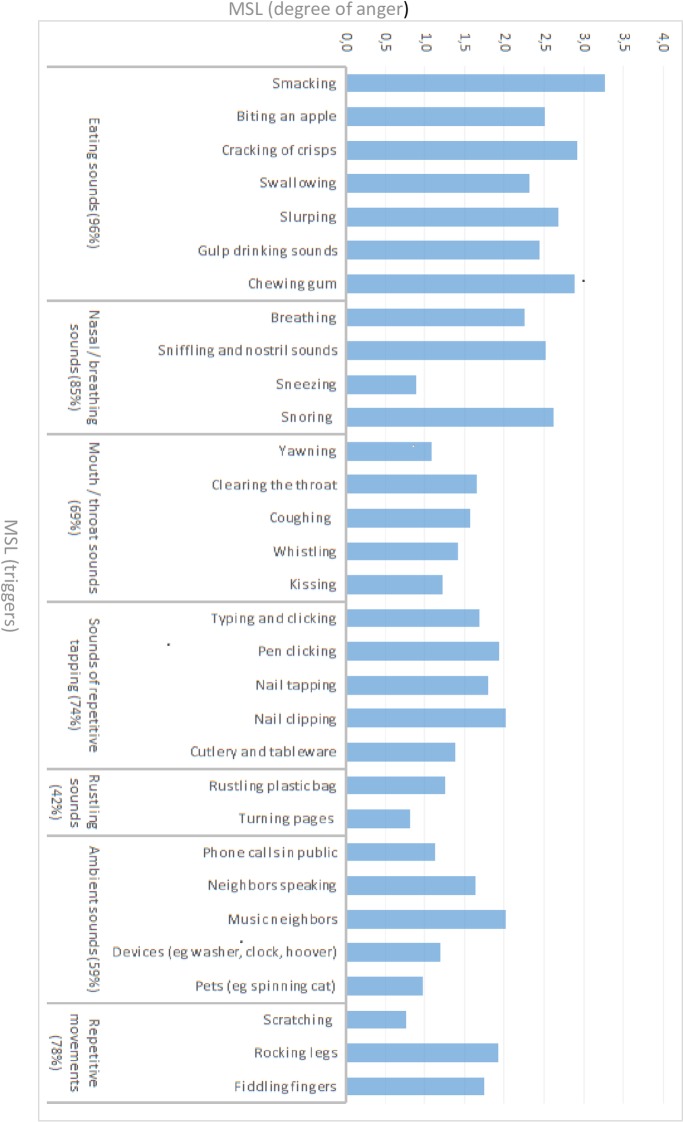
“Jager et al. [54] showed in a large clinical sample of subjects with a confirmed diagnosis of misophonia that for almost all subjects (96%), triggers were eating sounds followed by nasal and breathing sounds (85%); however, visual triggers were also often reported, e.g., repetitive movements (68%).”
BackgroundMurphy, N., Lijffijt, M., Guzick, A. G., Cervin, M., Clinger, J. W., Smith, E. E. A., Draper, I. A., Rast, C. E., Goodman, W. K., Schneider, S. C., et al. (2023) · Journal of Affective Disorders · doi:10.1016/j.jad.2023.11.088 · Cited by 17
Clinical characteristics of treatment‐seeking youth with misophonia
Lewin, A. B., Milgram, L., Cepeda, S. L., Dickinson, S., Bolen, M., Kudryk, K., Bolton, C., Karlovich, A. R., Grassie, H. L., Kangavary, A., et al. (2024) · Journal of Clinical Psychology · doi:10.1002/jclp.23672 · Cited by 14
“Moreover, most existing research on the measurement and clinical presentations of misophonia symptoms has been conducted within adult samples (e.g., Jager et al., 2020; Rosenthal et al., 2022).”
The effect of misophonia on cognitive and social judgments
Hansen, H. A., Leber, A. B., & Saygin, Z. M. (2024) · PLoS ONE · doi:10.1371/journal.pone.0299698 · Cited by 16
“While prior work is split on whether misophonia is more prevalent in the female sex [25] or not differentially affected by sex [41,45], multiple studies have found higher rates of miso-phonia in female-identifying participants (e.g., [8,25,46]).”
BackgroundAssessment and Intervention for Individuals With Misophonia
Wiese, A. D., Wojcik, K. D., & Storch, E. A. (2021) · Journal of Health Service Psychology · doi:10.1007/s42843-021-00025-6 · Cited by 16
“In the largest study to date, 575 individuals with misophonia were recruited, and nearly a quarter of the sample endorsed personality traits consistent with OCPD—with 2.4% of the sample meeting diagnostic criteria for OCPD (Jager et al., 2020).”
BackgroundMethodInfluentialDisrupted Computations of Social Control in OCD and Misophonia
Banker, S. M., Na, S., Beltran, J., Koenigsberg, H. W., Foss‐Feig, J. H., Gu, X., & Schiller, D. (2022) · iScience · doi:10.1016/j.isci.2022.104617 · Cited by 15
“There is currently no validated assessment for the diagnosis of misophonia; However, the A-MISO-S has been widely used in research (Eijsker et al., 2021; Jager et al., 2020; Naylor et al., 2020; Quek et al., 2018; Rouw and Erfanian, 2018).”
BackgroundMethodMindfulness and cognitive emotion regulation in pediatric misophonia
Spencer, S. D., Guzick, A. G., Cervin, M., & Storch, E. A. (2023) · Journal of Contextual Behavioral Science · doi:10.1016/j.jcbs.2023.07.005 · Cited by 12
“…numerous life domains, including associations with elevated inter-nalizing and externalizing disorders (Guzick et al., 2023; Remmert et al., 2022), reduced life satisfaction (Rinaldi et al., 2022), and diminished quality of life (Jager et al., 2020; M ¨ ollmann et al., 2023; Williams et al., 2022).”
Session-by-session change in misophonia: a descriptive case study using intensive CBT
Gregory, J. E., & Foster, C. (2023) · The Cognitive Behaviour Therapist · doi:10.1017/s1754470x23000107 · Cited by 15
“Isabelmet the criteria for misophonia, based on the revised diagnostic criteria proposed by Jager et al .”
Guzick, A. G., Rast, C. E., Maddox, B. B., Barajas, S. R., Clinger, J. W., Mcguire, J. F., & Storch, E. A. (2024) · Psychopathology · doi:10.1159/000535044 · Cited by 20
Aazh, H. (2025) · Brain Sciences · doi:10.3390/brainsci15050526 · Cited by 15
“…worse my hyperacusis symptoms become”, “I must control the environment around me to reduce my hyperacusis symptoms” [83,91] “I will lose control” [92], “This is unbearable” [93], “They are selfish” [59] Follow-on emotion Fear [82] Feeling depressed [83] Feeling guilty [92] Follow-on bodily…”
InfluentialExamining the role of emotion regulation, anger, and anxiety in misophonia: A network model
Hanna, M. R., Collins, A. C., Shan, Y., Chen, B. B., Wang, S., & Rosenthal, M. Z. (2025) · PLoS ONE · doi:10.1371/journal.pone.0329920 · Cited by 14
Mizofoni Ölçeği’nin Türkçe Formunun Geçerlik ve Güvenirlik Sınama Çalışması
SAKARYA, M. D., & Çakmak, E. (2022) · Psikoloji Çalışmaları / Studies in Psychology · doi:10.26650/sp2020-845239 · Cited by 18
A neuropsychological study of misophonia
Abramovitch, A., Herrera, T. A., & Etherton, J. L. (2023) · Journal of Behavior Therapy and Experimental Psychiatry · doi:10.1016/j.jbtep.2023.101897 · Cited by 20
“These results correspond to other studies that found that misophonia is associated with functional impairments across multiple domains (Guzick et al., 2023; Jager et al., 2020; Remmert, Jebens, Gruzman, Gregory, & Vitoratou, 2022; Rosenthal et al., 2022).”
BackgroundResultAuditory cortical functioning in individuals with misophonia: an electrophysiological investigation
Aryal, S., & Prabhu, P. (2023) · European Archives of Oto-Rhino-Laryngology · doi:10.1007/s00405-023-08318-w · Cited by 18
“To achieve this, the Revised Amsterdam Misophonia Questionnaire [9], a recently updated version of the questionnaire originally devised by Schröder et.al [8], was employed.”
InfluentialRinaldi, L. J., & Simner, J. (2023) · Child Psychiatry & Human Development · doi:10.1007/s10578-023-01569-y · Cited by 17
Estimation of Prevalence of Misophonia Among High School Students in India
Sujeeth, P. R., Hanji, R., Nayyar, K., & Prabhu, P. (2023) · Indian Journal of Otolaryngology and Head & Neck Surgery · doi:10.1007/s12070-023-04382-0 · Cited by 14
Understanding the misophonic experience: a mixed method study
Ozuer, Y., Cima, R. F. F., Kestens, E., & Diest, I. V. (2025) · Frontiers in Psychology · doi:10.3389/fpsyg.2025.1493676 · Cited by 11
“Although misophonia is currently not recognized as a diagnostic separate entity in the DSM-5, it associated with a low quality of life, and poses also a burden on those who live with misophonia sufferers (Dibb and Golding, 2022; Guzick et al., 2023; Jager et al., 2020a).”
InfluentialDwyer, P. S. R., Williams, Z. J., Lawson, W. B., & Rivera, S. M. (2025) · Journal of Attention Disorders · doi:10.1177/10870547251361226 · Cited by 14
“However, sensory discomfort and distress, including miso-phonia (Jager et al., 2020) appear to contribute toward anxiety (Carpenter et al., 2019; Green et al., 2012).”
Çakıroğlu, S., Coşğun, S., & Görmez, V. (2022) · Bulletin of the Menninger Clinic · doi:10.1521/bumc.2022.86.2.159 · Cited by 12
Metadata
- Authors
- Jager, I., de Koning, P., Bost, T., Denys, D., & Vulink, N.
- Affiliations
- Amsterdam UMC Location University of Amsterdam (NL)
- Corresponding author
- Jager, Inge
- Venue
- PLOS ONE
- Publisher
- Public Library of Science (PLoS)
- Published
- 2020-04-15
- Volume
- 15
- Issue
- 4
- Pages
- e0231390
- ISSN
- 1932-6203 (ISSN-L)
- PMC
- PMC7159231
- OpenAlex
- W3015229976
- Cited by
- 271
- References
- 56
- Citations by year
- 2026: 52 · 2025: 43 · 2024: 39 · 2023: 50 · 2022: 52 · 2021: 28 · 2020: 5
- FWCI
- 11.89
- Type
- journal article
- Language
- en
- Open access
- gold
- doi.org
- Licence
- Locations
- PLoS ONE (publishedVersion, cc-by)
- PubMed Central (publishedVersion, cc-by)
- PubMed (publishedVersion)
- Pure Amsterdam UMC (submittedVersion, cc-by)
- Data Archiving and Networked Services (DANS) (submittedVersion, other-oa)
- DOAJ (DOAJ: Directory of Open Access Journals) (submittedVersion, cc-by-sa)
- Figshare (submittedVersion, cc-by)
- Funders
- Amsterdam University Medical Centers
- Topics
- Life Sciences › Neuroscience › Sensory Systems › Hearing, Cochlea, Tinnitus, Genetics
- Physical Sciences › Physics and Astronomy › Acoustics and Ultrasonics › Noise Effects and Management
- Health Sciences › Health Professions › Speech and Hearing › Hearing Loss and Rehabilitation
- Keywords
- misophonia, comorbidities, obsessive-compulsive personality disorder, mood disorders, attention deficit hyperactivity disorder, autism spectrum disorder, tinnitus, hyperacusis, perfectionism, neuroticism, quality of life, mental illness
- MeSH terms
- Adult, Attention Deficit Disorder with Hyperactivity, Autistic Disorder, Mental Disorders, Female, Humans, Impulsive Behavior, Male, Middle Aged, Netherlands, Obsessive-Compulsive Disorder, Severity of Illness Index, Mood Disorders, Diagnostic and Statistical Manual of Mental Disorders, Young Adult
About these checks
Registry, retraction, Cites and statistics results are computed, not judged, with one exception: a printed reference that no index lists is read once by a model before it counts as a citation error. Claims are extracted by a model and kept only when their quote appears verbatim in the text; each cited source is then checked, with a model’s help, for whether it says what the claim relies on. Those verdicts can be wrong — read the claim’s quote and the cited source before relying on one.
Statistics and arithmetic are recomputed, not judged.
Confidence bands are shown only for fields calibrated on our annotated test set. None is calibrated yet, so no band is shown.
What counts as a claim ›How we measure confidence ›How we check this ›
Are you an author, or do you see a problem with this page? Request a review
Data sources
Bibliographic data: Semantic Scholar, OpenAlex, Crossref.
Contains information from the Semantic Scholar Academic Graph Datasets, made available under the ODC Attribution License (ODC-BY 1.0).
Semantic Scholar’s data is described in: Kinney, R., et al. (2023). The Semantic Scholar Open Data Platform. arXiv:2301.10140.
