

Misophonia: Phenomenology, comorbidity and demographics in a large sample
Open accessThe DOI matches its Crossref record; 54 of the 56 references it cites were found in a registry or an index.
Abstract
OBJECTIVE: Analyze a large sample with detailed clinical data of misophonia subjects in order to determine the psychiatric, somatic and psychological nature of the condition. METHODS: This observational study of 779 subjects with suspected misophonia was conducted from January 2013 to May 2017 at the outpatient-clinic of the Amsterdam University Medical Centers, location AMC, the Netherlands. We examined DSM-IV diagnoses, results of somatic examination (general screening and hearing tests), and 17 psychological questionnaires (e.g., SCL-90-R, WHOQoL). RESULTS: The diagnosis of misophonia was confirmed in 575 of 779 referred subjects (74%). In the sample of misophonia subjects (mean age, 34.17 [SD = 12.22] years; 399 women [69%]), 148 (26%) subjects had comorbid traits of obsessive-compulsive personality disorder, 58 (10%) mood disorders, 31 (5%) attention-deficit (hyperactivity) disorder, and 14 (3%) autism spectrum conditions. Two percent reported tinnitus and 1% hyperacusis. In a random subgroup of 109 subjects we performed audiometry, and found unilateral hearing loss in 3 of them (3%). Clinical neurological examination and additional blood test showed no abnormalities. Psychological tests revealed perfectionism (97% CPQ>25) and neuroticism (stanine 7 NEO-PI-R). Quality of life was heavily impaired and associated with misophonia severity (rs (184) = -.34 p = < .001, p = < .001). LIMITATIONS: This was a single site study, leading to possible selection-and confirmation bias, since AMC-criteria were used. CONCLUSIONS: This study with 575 subjects is the largest misophonia sample ever described. Based on these results we propose a set of revised criteria useful to diagnose misophonia as a psychiatric disorder.
Overview
The claims and statistics of this paper haven’t been checked yet.
Free: it reads the open-access text and checks the first 5 claims that cite a source we can check. Create a free account to check every claim.
Integrity signals
Registry
Cites
Statistics
Figures
Verification
Claims the paper makes
The claims and statistics of this paper haven’t been checked yet.
Free: it reads the open-access text and checks the first 5 claims that cite a source we can check. Create a free account to check every claim.
Claims other papers make about this one
Each is checked against this paper’s own text: does it say what the citing paper says it does?
The cited source says what the claim attributes to it.
In the citing paper
“It should be noted that different authors found that misophonia also co-occurred with other pathologies such as attention deficit disorder with and without hyperactivity (ADD/ADHD) [40,105].”
From Misophonia: A Systematic Review of Current and Future Trends in This Emerging Clinical Field (2022) · cites this paper as [105]
Experimental — accuracy not yet measured
Self-check
Percentages, sums and reported differences re-computed from the paper’s own numbers.
The self-check needs the paper’s full text.
Citations
Cites
Diagnostic and Statistical Manual of Mental Disorders
American Psychiatric Association (2013) · doi:10.1176/appi.books.9780890425596 · Cited by 116,369
Diagnostic and Statistical Manual of Mental Disorders
Williams, J. B. W., & First, M. (2013) · Encyclopedia of Social Work · doi:10.1093/acrefore/9780199975839.013.104 · Cited by 109,519
Hamilton, M. (1960) · Journal of Neurology, Neurosurgery & Psychiatry · doi:10.1136/jnnp.23.1.56 · Cited by 32,817
Diagnostic and Statistical Manual of Mental Disorders.
Widiger, T. A. (2000) · Encyclopedia of Psychology, Vol. 3. · doi:10.1037/10518-009 · Cited by 19,744
(1998) · The Journal of Clinical Psychiatry · Cited by 19,139
Depression and quality of life in older persons: A review
Sivertsen, H., Bjørkløf, G. H., Engedal, K., Selbæk, G., & Helvik, A.-S. (2015) · Dementia and Geriatric Cognitive Disorders · doi:10.1159/000437299 · Cited by 14,152
The assessment of anxiety states by rating
HAMILTON, M. (1959) · British Journal of Medical Psychology · doi:10.1111/j.2044-8341.1959.tb00467.x · Cited by 11,455
Diagnostic and Statistical Manual of Mental Disorders(DSM)
(2008) · Encyclopedia of Counseling · doi:10.4135/9781412963978.n182 · Cited by 10,830
(1998) · PubMed · Cited by 10,216
Development of the World Health Organization WHOQOL-BREF Quality of Life Assessment
THE WHOQOL GROUP (1998) · Psychological Medicine · doi:10.1017/s0033291798006667 · Cited by 7,933
Research works printed but not linked: 7
- Jastreboff MM, Jastreboff PJ. Components of decreased sound tolerance: hyperacusis, misophonia and phonophobia. ITHS Newsletter. 2001; 2: 5– 7.
- de Jonghe F. Leidraad voor het scoren van de Hamilton Depression Rating Scale. Benecke: Amsterdam; 1994.
- Sheehan DV. Sheehan disability scale. Handbook of psychiatric measures 2; 1983: 100– 2.
- Costa PT, McCrae RR. Neo Pi-R. Odessa, FL: Psychological Assessment Resources; 1992.
- van Dam-Baggen R, Kraaimaat FW. Handleiding Inventarisatielijst Omgaan met Anderen, rev. ed (Revised Manual of the Inventory of Social Situations). Amsterdam/Lisse: Swets en Zeitlinger; 2000.
- Cavanagh K, Davey GCL. The development of a measure of individual differences in disgust. Winchester: British Psychology Society; 2000.
- van Poll R, Breugelmans O, Houthuijs D, van Kamp I. Perceiving the physical living environment in the Netherlands: Annoyance inventory 2016 National Institute for Public Health and the Environment (RIVM);2018–0084 https://www.rivm.nl/bibliotheek/rapporten/2018-0084.pdf
Cited by
Items 101–200 of 268
Rappoldt, L. R., van der Pol, M. M., de Wit, C., Slaghekke, S., Houben, C., Sondaar, T., Kan, K., van Steensel, F. J. A., Denys, D. A. J. P., Vulink, N. C. C., et al. (2023) · Contemporary Clinical Trials Communications · doi:10.1016/j.conctc.2023.101105 · Cited by 12
Self-citationMisophonia, self‐harm and suicidal ideation
Simner, J., & Rinaldi, L. J. (2023) · Psychiatry and Clinical Neurosciences Reports · doi:10.1002/pcn5.142 · Cited by 12
“We know that quality of life declines with increasing misophonia symptoms, and misophonics have poorer life satisfaction as adults 4 and children.”
Vitoratou, S., Wang, J., Hayes, C., Wang, Q., Stefanatou, P., & Gregory, J. E. (2022) · Frontiers in Psychology · doi:10.3389/fpsyg.2022.879881 · Cited by 21
Public awareness of Misophonia in U.S. adults: a Population-based study
Dixon, L. J., Schadegg, M. J., Clark, H., & Perry, M. M. (2023) · Current Psychology · doi:10.1007/s12144-022-04180-x · Cited by 13
Armstrong, G. M., Greenberg, R. L., Smárason, O., Frederick, R. M., Guzick, A. G., Schneider, S. C., Spencer, S. D., Cervin, M., & Storch, E. A. (2023) · Journal of Obsessive-Compulsive and Related Disorders · doi:10.1016/j.jocrd.2023.100831 · Cited by 12
“Indeed, this approach could fit within the framework of cognitive behavioral therapy, which appears to be the most commonly used framework for developing and testing psychotherapeutic interventions for misophonia (Jager, de Koning, et al., 2020; Lewin et al., 2021).”
Bowers, E. M., Woolley, M. G., Muñoz, K. F., Petersen, J. M., & Twohig, M. P. (2024) · Contemporary Clinical Trials · doi:10.1016/j.cct.2024.107671 · Cited by 12
“These are gaining interest as potential treatments for misophonia, particularly because they address underlying emotional difficulties and overlapping symptoms that occur with psychological comorbidities, a common reality for those with misophonia [17].”
Woolley, M. G., Johnson, H. E., Bowers, E. M., Velasquez, D., Petersen, J. M., Muñoz, K. F., & Twohig, M. P. (2025) · Journal of Otology · doi:10.26599/joto.2025.9540013 · Cited by 13
“Conversely, data from a broader survey indicated that less than two percent of 575 miso-phonic individuals had a concurrent diagnosis of tinnitus, and even fewer had hyperacusis (Jager et al., 2020), highlighting discrepancies that suggest varying degrees of overlap.”
InfluentialHozaki, D., Ezaki, T., Poerio, G. L., & Kondo, H. M. (2025) · Neuroscience of Consciousness · doi:10.1093/nc/niaf012 · Cited by 14
“Certain sounds—such as eating sounds—act as common triggers for both phenomena (Fredborg et al. 2017, Jager et al. 2020).”
Misophonia Is a Newly Defined Disorder, but Is It an Anxiety Disorder?
Rosenthal, M. Z., Shan, Y., & Hanna, M. R. (2026) · Annual Review of Clinical Psychology · doi:10.1146/annurev-clinpsy-061324-071140 · Cited by 12
Preliminary validation of the Norwegian version of misophonia questionnaire (MQ-NOR)
Larsen, E.-A., Hovland, T., Nielsen, G. E., & Larsen, L. (2022) · International Journal of Audiology · doi:10.1080/14992027.2022.2111372 · Cited by 9
Acceptance and Commitment Therapy for an Emerging Adult Female With Misophonia: A Case Study
Spencer, S. D., Mangen, K. H., Omar, Y., & Storch, E. A. (2024) · Journal of Psychiatric Practice · doi:10.1097/pra.0000000000000800 · Cited by 8
Audiological Characteristics of a Sample of Adults With Misophonia
Muñoz, K. F., Woolley, M. G., Velasquez, D., Ortiz, D., Miguel, G. G. S., Petersen, J. M., & Twohig, M. P. (2024) · American Journal of Audiology · doi:10.1044/2024_aja-24-00111 · Cited by 12
“…other misophonia treatment research, one case report measured hearing thresholds and found hearing levels within normal limits (Vanaja & Abigail, 2020), and one randomized controlled trial (RCT) used self-report and did not identify anyone with hearing acuity problems (Jager, Vulink, et al., 2020).”
Ay, E., Huviyetli, M., & Çakmak, E. (2024) · Frontiers in Psychology · doi:10.3389/fpsyg.2024.1361645 · Cited by 21
“However, some studies report that exposure to these triggers elicits anticipatory anxiety associated with thinking about future misophonic situations rather than eliciting an immediate anxiety response (Jager et al., 2020).”
InfluentialSpencer, S. D., Petersen, J. M., Schneider, R. L., Guzick, A. G., & Mcguire, J. F. (2024) · Research on Child and Adolescent Psychopathology · doi:10.1007/s10802-024-01247-0 · Cited by 9
Almadani, A. H., Alabdulkarim, I. M., Akresh, M. I., Alassaf, M. I., Alkathiri, M. A., Alkublan, K. M., Aldoghmani, R. A., Alghtani, Y., & Alwaily, S. A. (2024) · Medicine · doi:10.1097/md.0000000000040217 · Cited by 16
“[3,5,6] Symptoms of misophonia often onset during childhood or adolescence.”
BackgroundResultInfluentialQuality of Life among Youth with Misophonia: The Role of Internalizing Symptoms and Pessimism
Kook, M., Rast, C. E., Cervin, M., Clinger, J. W., Smith, E. M., Draper, I. A., Murphy, N., Lijffijt, M., Schneider, S. C., Parnes, M., et al. (2024) · Journal of Psychopathology and Behavioral Assessment · doi:10.1007/s10862-024-10163-y · Cited by 7
“…the documented severity and associated impairment in misophonia, high rates of its co-occurrence with internalizing conditions (Guzick et al., 2023; Jager et al., 2020; Siepsiak et al., 2020a), which can develop as early as during childhood (Rinaldi & Sim-ner, 2023), and the known effects of…”
InfluentialAhmmed, A. U., & Vijayakumar, S. (2024) · International Journal of Pediatric Otorhinolaryngology · doi:10.1016/j.ijporl.2024.112119 · Cited by 10
Woolley, M. G., Ramos, A. M., Bowers, E. M., Muñoz, K. F., Petersen, J. M., & Twohig, M. P. (2025) · Journal of Psychiatric Research · doi:10.1016/j.jpsychires.2025.02.054 · Cited by 10
“This suggests that our sample may not be entirely atypical in this regard and reflects the variability commonly observed in psychological distress and comorbidity rates among individuals with misophonia (Rosenthal et al., 2022; Jager et al., 2020).”
InfluentialPodoly, T. Y., Ezra, H. E., & Doron, G. (2025) · Journal of Affective Disorders · doi:10.1016/j.jad.2025.03.060 · Cited by 8
Lewin, A. B., Milgram, L., Cepeda, S. L., Karlovich, A. R., Dickinson, S., Bolen, M., Harmon, S. L., Small, B. J., & Ehrenreich, J. T. (2025) · Behavior Therapy · doi:10.1016/j.beth.2025.04.006 · Cited by 10
Ward, R. T., Gilbert, F. E., Pouliot, J. J., Chiasson, P., McIlvanie, S., Traiser, C. M., Riels, K. M., Mears, R. P., & Keil, A. (2022) · Frontiers in Neuroscience · doi:10.3389/fnins.2022.899476 · Cited by 11
“Taken together with the lack of altered physiology in Misophonic individuals, many have called for Misophonia to be treated as a mental health disorder separate from auditory perceptual disorders (Schröder et al., 2013; Taylor, 2017; Rouw and Erfanian, 2018; Jager et al., 2020; Swedo et al., 2022), with a primary emph…”
BackgroundInfluentialDozier, T. H., & Mitchell, N. (2023) · F1000Research · doi:10.12688/f1000research.133506.3 · Cited by 7
Positive Attributable Visual Sources Attenuate the Impact of Trigger Sounds in Misophonia
Mahzouni, G., Welch, M. M., Young, M., Reddy, V., Samermit, P., & Davidenko, N. (2024) · Multisensory Research · doi:10.1163/22134808-bja10137 · Cited by 11
Mednicoff, S. D., Barashy, S., Vollweiler, D. J., Benning, S. D., Snyder, J. S., & Hannon, E. E. (2024) · Philosophical Transactions of the Royal Society B Biological Sciences · doi:10.1098/rstb.2023.0253 · Cited by 8
“ASMR and misophonia videos were chosen based on common triggers in the literature [32,66,83,86].”
Misophonia symptom severity is linked to impaired flexibility and heightened rumination
Black, V. K., Allen, J. D., Aazh, H., Johnson, S. L., & Erfanian, M. (2025) · British Journal of Psychology · doi:10.1111/bjop.70025 · Cited by 10
“…to misophonia, is likely a key explanation for the tendency to over-attend or hyperfocus in response to misophonic triggers (Edelstein et al., 2013; Jager, de Koning, et al., 2020; Simner et al., 2021), it may also represent an underlying pathological mechanism that contributes to broader…”
InfluentialMDMA for the treatment of misophonia, a proposal
Webb, J., & Keane, S. (2022) · Frontiers in Psychiatry · doi:10.3389/fpsyt.2022.983285 · Cited by 7
“Newer rating scales such as the S-Five: Selective Sound Sensitivity Syndrome Study (84), Misophonia Response Scale (85), the A-MISOS (4), or the now revised version AMISOS-R (7), the Duke Misophonia Questionnaire (86), and MisoQuest (87) have made progress toward having a fully validated, internally consistent misopho…”
BackgroundInfluentialAwareness and perspectives of audiologists on assessment and management of misophonia in India
Aryal, S., & Prabhu, P. (2023) · Journal of Otology · doi:10.1016/j.joto.2023.02.003 · Cited by 7
Early maladaptive schemas in misophonia
Stalias-Mantzikos, M. E., Barahmand, U., Aguero, K., Peters, L., & Shamsina, N. (2023) · Clinical Psychologist · doi:10.1080/13284207.2023.2171786 · Cited by 7
Network analysis of misophonia symptoms using the Duke Misophonia Questionnaire
Shan, Y., Siepsiak, M., McMahon, K., Guetta, R. E., Kelley, L., Chen, T., & Rosenthal, M. Z. (2024) · Journal of Affective Disorders · doi:10.1016/j.jad.2024.10.105 · Cited by 6
“Given the high comorbidity rates between misophonia and other mental disorders that frequently intersect with self-esteem problems (Jager et al., 2020; Norris et al., 2022; Rosenthal et al., 2022; Siepsiak et al., 2022), targeting self-esteem in misophonia interventions could potentially lead to…”
Humolli, M., Poerio, G. L., & Simner, J. (2025) · Hearing Research · doi:10.1016/j.heares.2025.109512 · Cited by 7
Psychiatric Comorbidities in Hyperacusis and Misophonia: A Systematic Review
Rodrigues, A. L. M., & Aazh, H. (2025) · Audiology Research · doi:10.3390/audiolres15040101 · Cited by 7
“%) and one study [22] assessing schizophrenia (0.2%).”
InfluentialDozier, T. H. (2022) · Psychological Thought · doi:10.37708/psyct.v15i1.622 · Cited by 3
Opening a window into the riddle of misophonia, sensory over-responsiveness, and pain
Kaufman, A. E., Weissman‐Fogel, I., Rosenthal, M. Z., Kaplan‐Neeman, R., & Bar‐Shalita, T. (2022) · Frontiers in Neuroscience · doi:10.3389/fnins.2022.907585 · Cited by 8
“Neuroticism is a trait associated with misophonia (CassielloRobbins et al., 2020; Jager et al., 2020; Guetta et al., 2022) [i.”
BackgroundAuditory affective processing, musicality, and the development of misophonic reactions
Mednicoff, S. D., Barashy, S., Gonzales, D., Benning, S. D., Snyder, J. S., & Hannon, E. E. (2022) · Frontiers in Neuroscience · doi:10.3389/fnins.2022.924806 · Cited by 8
Brain circuits in autonomous sensory meridian response and related phenomena
Lin, I.-F., & Kondo, H. M. (2024) · Philosophical Transactions of the Royal Society B Biological Sciences · doi:10.1098/rstb.2023.0252 · Cited by 8
Investigating Neurophysiological, Perceptual, and Cognitive Mechanisms in Misophonia
Patro, C., Wasko, E., Prabhu, P., & Srinivasan, N. K. (2025) · Biology · doi:10.3390/biology14030238 · Cited by 6
“Beyond emotional discomfort, these reactions are often accompanied by increased autonomic arousal, leading to significant distress [4].”
Treatment of Misophonia with Risperidone in a Patient with Autism Spectrum Disorder
Pan, E. J., Weleff, J., Anand, A., & Barnett, B. S. (2022) · Case Reports in Psychiatry · doi:10.1155/2022/3169834 · Cited by 7
Curation of FOAMS: a Free Open-Access Misophonia Stimuli Database
Orloff, D., Benesch, D., & Hansen, H. A. (2023) · Journal of Open Psychology Data · doi:10.5334/jopd.94 · Cited by 7
“Although often thought of as an aversion to oral/nasal sounds in particular (Jager et al., 2020; Kumar et al., 2021; Schröder et al., 2013), large-scale surveys and experimental investigations of misophonia have revealed a wide variety of reported triggers: chewing, sniffling, keyboard typing,…”
Evaluation and Management of Misophonia Using a Hybrid Telecare Approach: A Case Report
Zitelli, L. (2021) · Seminars in Hearing · doi:10.1055/s-0041-1731693 · Cited by 4
“A recent publication proposed an updated version of this questionnaire called the Amsterdam Misophonia Scale-R (A-MISO-R), which is undergoing the validation process.(5) Early results appear to show good reliability and validity of this revised scale.”
MethodHansen, H. A., Norris, J. E., Bain, C. M., Ethridge, L. E., & Tardif, C. L. (2026) · Human Brain Mapping · doi:10.1002/hbm.70468 · Cited by 6
“…Claiborn et al. 2020; Vitoratou, Uglik-Marucha, Hayes, Erfanian, et al. 2021; Vitoratou, Uglik-Marucha, Hayes, and Gregory 2021; Erfanian et al. 2019; Jager et al. 2020), and 3%–21% report autism spectrum disorder (Claiborn et al. 2020; Jager et al. 2020; Williams et al. 2022; Rinaldi et al. 2023).”
Shan, Y., Chen, B., Moskovich, A. A., Siepsiak, M., Wang, S., & Rosenthal, M. Z. (2026) · Journal of Affective Disorders · doi:10.1016/j.jad.2026.121429 · Cited by 7
The Effect of Misophonia on the Severity of Depression and Anxiety in Multiple Sclerosis
Kenar, S. G., Yüksel, H., Şendur, N. K., & Mungan, S. (2022) · Turkish Journal Of Neurology · doi:10.4274/tnd.2022.93892 · Cited by 4
Factors Associated With Misophonia: A Systematic Review
Koroglu, S., & Durat, G. (2024) · Revista Colombiana de Psiquiatría (English ed ) · doi:10.1016/j.rcp.2024.04.010 · Cited by 7
Xie, L., Martín, R. D.-S., Fink, S., Singer, W., Wolpert, S., Rüttiger, L., & Knipper, M. (2025) · Hearing Research · doi:10.1016/j.heares.2025.109305 · Cited by 6
Manning, S., Esch, N. V., & Scheerer, N. E. (2025) · PLoS ONE · doi:10.1371/journal.pone.0334689 · Cited by 4
Herdi, O., & Yıldırım, F. (2023) · Nöro Psikiyatri Arşivi · doi:10.29399/npa.28630 · Cited by 8
“Jager et al. found no significant association between autism and misophonia (31), whereas Claiborn et al. observed a marginally increased prevalence of autism among individuals with misophonia (36).”
InfluentialLoud and unwanted: Individual differences in the tolerance for exposure to music
Carraturo, G., Kliuchko, M., & Brattico, E. (2024) · The Journal of the Acoustical Society of America · doi:10.1121/10.0025924 · Cited by 7
Investigating tinnitus subgroups based on hearing‐related difficulties
Beukes, E. W., Baguley, D., Manchaiah, V. K. C., Andersson, G., Allen, P. M., Kaldo, V., Jacquemin, L., Lourenco, M. P. C. G., Onozuka, J., Stockdale, D., et al. (2021) · International Journal of Clinical Practice · doi:10.1111/ijcp.14684 · Cited by 7
Letter to the Editor: Misophonia: A Need for Audiological Diagnostic Guidelines
Campbell, J. (2023) · Journal of the American Academy of Audiology · doi:10.1055/a-2125-7645 · Cited by 5
“5,6,9 These conditions may require medication and/or speci fi c behavioral therapy that is outside of the audiologist ’ s scope of practice.”
Civilization of manners and misophoniaPreprint
Noreña, A. J. (2023) · PsyArXiv (OSF Preprints) · doi:10.31234/osf.io/b3pxn · Cited by 4
Prevalence of Misophonia and Its Characteristics among Amity University Students in India
Yadav, N., Aryal, S., Gupta, D. K., Kaushik, C., & Prabhu, P. (2024) · Indian Journal of Otology · doi:10.4103/indianjotol.indianjotol_117_23 · Cited by 5
Aryal, S., Moskovich, A. A., Prabhu, P., & Rosenthal, M. Z. (2025) · Hearing Research · doi:10.1016/j.heares.2025.109457 · Cited by 5
Transdiagnostic mechanisms of decreased sound tolerance
Scheerer, N. E., Rosenthal, M. Z., Birmingham, E., Carson, T. B., Esch, N. V., Williams, Z., Iarocci, G., & Jahn, K. N. (2026) · Nature Reviews Psychology · doi:10.1038/s44159-026-00565-y · Cited by 4
“Self-produced sounds are rarely bothersome 21 , and triggering cues are often specific to, or modulated by, certain people or situations 19,28,29 .”
InfluentialCognitive-Behavioural Therapy applied to Misophonia, a scoping review
Detroy, N., & Noreña, A. J. (2026) · Hearing Research · doi:10.1016/j.heares.2026.109661 · Cited by 4
MERGE: Misophonia and emotion regulation in a guided experience sampling study
Pavlacic, J. M., Dixon, L. J., Freshley, A., Buchanan, E. M., Cortese, B. M., Rheingold, A. A., Young, J. N., & Uhde, T. W. (2026) · Hearing Research · doi:10.1016/j.heares.2026.109709 · Cited by 3
Misophonia and its Relationship with Other Psychiatric Disorders
MUTLU, K., Tamam, L., Namlı, Z., Demirkol, M. E., & Karaytuğ, M. O. (2023) · Medical Records · doi:10.37990/medr.1208093 · Cited by 7
“In the group without misophonia, 41.1% (n=65) had an anxiety disorder, 15.2% (n=24) had major depressive disorder, 10.8% (n=17) had OCD, 2.5% (n=4) had ADHD, 1.3% (n=2) had PTSD, 1.3% (n=2) were diagnosed with eating disorders, 1.3% (n=2) with sleep disorders, 0.6% (n=1) with somatic symptom disorder and 25.9% (n=41)…”
InfluentialBeğenen, A. G. (2023) · Dusunen Adam The Journal of Psychiatry and Neurological Sciences · doi:10.14744/dajpns.2023.00211 · Cited by 6
Uglik‐Marucha, N., Siepsiak, M., Zielińska, J., Dragan, W. Ł., Gregory, J. E., & Vitoratou, S. (2024) · Frontiers in Psychology · doi:10.3389/fpsyg.2024.1372870 · Cited by 13
“…much higher than actual physical aggression or violence, which is consistent with studies conducted in the UK (Vitoratou et al., 2021b), Germany (Remmert et al., 2022), China (Vitoratou et al., 2022), the Netherlands (Jager et al., 2020), and previous studies in Poland (Siepsiak et al., 2020b).”
BackgroundMethodResultInfluentialDwyer, P. S. R., Sillas, A., Enzler, F., Noreña, A. J., Saron, C. D., & Rivera, S. M. (2025) · Journal of Autism and Developmental Disorders · doi:10.1007/s10803-025-06924-7 · Cited by 5
Remmert, N., Schmidt, K. M. B., Mussel, P., & Eid, M. (2021) · PsyArXiv (OSF Preprints) · doi:10.31234/osf.io/mujya · Cited by 5
Misophonia in the UK: Prevalence and norms from the S-Five in a UK representative samplePreprint
Vitoratou, S., Hayes, C., Uglik‐Marucha, N., Pearson, O., Graham, T., & Gregory, J. E. (2022) · doi:10.31234/osf.io/jwpeq · Cited by 3
A Qualitative Study of Treatment Experiences Among Youth With Misophonia and Their Parents
Rodriguez-Barajas, S., Sadek, S. J., Rast, C. E., Storch, E. A., & Guzick, A. G. (2026) · Journal of Psychiatric Practice · doi:10.1097/pra.0000000000000905 · Cited by 2
A Psychometric Analysis of the Duke Misophonia Questionnaire
Bain, C. M., Norris, J. E., Conley, A., Manapat, P. D., & Ethridge, L. E. (2025) · Journal of Clinical Psychology · doi:10.1002/jclp.70028 · Cited by 3
A Pilot Clinical Trial Examining Exposure and Stress Management Therapy for Adults With Misophonia
Spencer, S. D., McKay, D., Mangen, K. H., & Rabasco, A. (2025) · Journal of Psychiatric Practice · doi:10.1097/pra.0000000000000874 · Cited by 2
Twohig, M. P., Muñoz, K. F., Petersen, J. M., Woolley, M. G., Bowers, E. M., Donahue, M. L., Velasquez, D., Ortiz, D., Capel, L. K., & Miguel, G. G. S. (2025) · Journal of Affective Disorders · doi:10.1016/j.jad.2025.120366 · Cited by 6
Anxiety and depression among Canadian undergraduates with decreased sound tolerance
Smith, C. M., Esch, N. V., & Scheerer, N. E. (2025) · Hearing Research · doi:10.1016/j.heares.2025.109522 · Cited by 3
Freshley, A. M., Clark, H., Schadegg, M. J., & Dixon, L. J. (2026) · Psychiatry Research · doi:10.1016/j.psychres.2026.116941 · Cited by 4
Cepeda, S. L., Milgram, L., Bigler, M. E., Tonarely, N. A., Lewin, A. B., & Ehrenreich, J. T. (2026) · Journal of Clinical Psychology · doi:10.1002/jclp.70095 · Cited by 2
Woolley, M. G., Johnson, H. E., Levin, M. E., Cottle, D., Petersen, J. M., Muñoz, K. F., & Twohig, M. P. (2026) · Clinical Psychologist · doi:10.1080/13284207.2026.2627945 · Cited by 3
Objective measures of sensory gating capacity do not predict the severity of misophonia symptoms
Du, Y. K., Raymond, K. E., Lodol, F. F., Mitchell, D. G. V., & Butler, B. E. (2026) · Hearing Research · doi:10.1016/j.heares.2026.109595 · Cited by 3
Gumus, M. C., Aydın, E. P., Demirci, H., & Özer, Ö. A. (2026) · BMC Psychology · doi:10.1186/s40359-026-04390-z · Cited by 3
“Previous studies have shown that misophonia may co-occur with OCD and obsessive–compulsive personality traits, with such comorbidities reported at meaningful rates [4, 14, 28, 45].”
InfluentialHanna, M. R., & Rosenthal, M. Z. (2026) · Clinical Psychology & Psychotherapy · doi:10.1002/cpp.70291 · Cited by 4
Iskander, S., Barahmand, U., Soni, M., Kaur, R., & Arnero, D. (2023) · Psychiatric Annals · doi:10.3928/23258160-20231106-02 · Cited by 2
Krog, E., Falck, A., & Nielsen, G. E. (2024) · Scandinavian Journal of Psychology · doi:10.1111/sjop.13030 · Cited by 3
Sound-evoked pupil dilation quantifies misophonic symptoms
de Gee, J. W., Marmelstein, L. A., Schwarz-Roman, K., & Rouw, R. (2026) · PLoS ONE · doi:10.1371/journal.pone.0348278 · Cited by 6
“Misophonia is a newly defined disorder, quickly gaining scientific attention across scientific disciplines (e.g., audiology, cognitive science, clinical psychology, occupational therapy, psychiatry, and neuroscience) [3–5,7 –”
InfluentialExacerbation of paranoia-like thoughts following exposure to common misophonia trigger sounds
Bagrowska, P., Siepsiak, M., Nalberczak‐Skóra, M., & Gawęda, Ł. (2024) · Schizophrenia Research · doi:10.1016/j.schres.2024.10.005 · Cited by 2
Rappoldt, L. R., Kan, K., Dalmeijer, L., Rutten, S. A., van Horen, R., van der Pol, M. M., de Wit, C., Denys, D. A. J. P., Vulink, N. C. C., & Utens, E. M. W. J. (2024) · Child Psychiatry & Human Development · doi:10.1007/s10578-024-01781-4 · Cited by 2
“As a first step in addressing this problem, several research groups have proposed diagnostic criteria for misophonia [1, 14–16].”
InfluentialSelf-citationLoudness tolerance level among individuals with misophonia: A psychoacoustic assessment
Aryal, S., & Prabhu, P. (2024) · Hearing Balance and Communication · doi:10.4103/hbc.hbc_19_24 · Cited by 4
Assessment of auditory conditions in misophonia treatment research: a scoping review
Muñoz, K. F., Velasquez, D., Humes, M., Ortiz, D., & Twohig, M. P. (2025) · International Journal of Audiology · doi:10.1080/14992027.2025.2467768 · Cited by 2
“In another study with a paediatric patient, the mother participated in the last ten minutes of each session to support homework engagement between sessions (Petersen and Twohig 2023), and one group treatment study included family and friends in one psychoeducation session (Jager et al. 2020b).”
InfluentialCapel, L. K., Bowers, E. M., Woolley, M. G., Petersen, J. M., Muñoz, K. F., & Twohig, M. P. (2025) · Journal of Contextual Behavioral Science · doi:10.1016/j.jcbs.2025.100896 · Cited by 3
Misophonia in Urological Patients: Our Experience of Management
Banyra, O., Jourkiv, O., Nikitin, O., Ventskivska, I., Kechur, Z., & Didkovskiy, V. L. (2022) · Archives of Psychiatry Research · doi:10.20471/may.2022.58.01.13 · Cited by 3
“Authorities in the new field of misophonia had reported about their experience on significant samples with sound issues in their databases [11,12,45,46,48,49].”
BackgroundTreatment challenges for Misophonia with comorbid mood and anxiety disorders, a case report
Karalis, P., Carter, C., Coplan, B. M., & Olabisi, J. L. (2022) · Psychiatry Research Case Reports · doi:10.1016/j.psycr.2022.100012 · Cited by 5
Misophonia: A Review of the Literature and Its Implications for the Social Work Profession
Holohan, D., Marfilius, K. J., & Smith, C. J. (2023) · Social Work · doi:10.1093/sw/swad029 · Cited by 3
Psychometric Evaluation and Misophonic Experience in a Portuguese-Speaking Sample
Hayes, C., Gregory, J. E., Aziz, R., Cerejeira, J., Cruz, M., Simões, J. A., & Vitoratou, S. (2024) · Behavioral Sciences · doi:10.3390/bs14020107 · Cited by 12
“Emotional reactions include anger, disgust [8,13,14,17], or anxiety and panic [12,18,19].”
BackgroundVitoratou, S., Wang, J., Hayes, C., Wang, Q., Stefanatou, P., & Gregory, J. E. (2022) · doi:10.31234/osf.io/ytpk4 · Cited by 2
The prevalence of misophonia in a representative population-based survey in GermanyPreprint
Pfeiffer, E., Allroggen, M., & Sachser, C. (2023) · Research Square · doi:10.21203/rs.3.rs-2690692/v1 · Cited by 2
Zumbrunn, N. M., McGovern, D. P., & Boran, L. (2023) · PsyArXiv (OSF Preprints) · doi:10.31234/osf.io/swpbd · Cited by 2
Misophonia Symptoms Severity is Attributed to Impaired Flexibility and Heightened RuminationPreprint
Black, V., Allen, J. D., Aazh, H., Johnson, S. L., & Erfanian, M. (2025) · bioRxiv (Cold Spring Harbor Laboratory) · doi:10.1101/2025.01.13.632542 · Cited by 2
SAKARYA, M. D., Gamze, N. A. S., Çakmak, E., ÖZDEN, D., & TÜRKMEN, B. (2023) · Turkiye Klinikleri Journal of Health Sciences · doi:10.5336/healthsci.2023-98758 · Cited by 1
Misophonia: A self-report-based scale development study
Koroglu, S., & Durat, G. (2024) · Revista Científica de la Sociedad de Enfermería Neurológica (English ed ) · doi:10.1016/j.sedene.2023.12.002 · Cited by 3
Beyond the Sound: The Role of the Source of Human-Made Trigger Sounds in Misophonia
Herdi, O., Müfreze, P., & Avcil, C. (2024) · Nöro Psikiyatri Arşivi · doi:10.29399/npa.28744 · Cited by 3
Vijayakumar, S., & Ahmmed, A. U. (2025) · International Journal of Pediatric Otorhinolaryngology · doi:10.1016/j.ijporl.2025.112334 · Cited by 1
İletmiş, G., & Yaman, G. B. (2025) · Nordic Journal of Psychiatry · doi:10.1080/08039488.2025.2511068 · Cited by 1
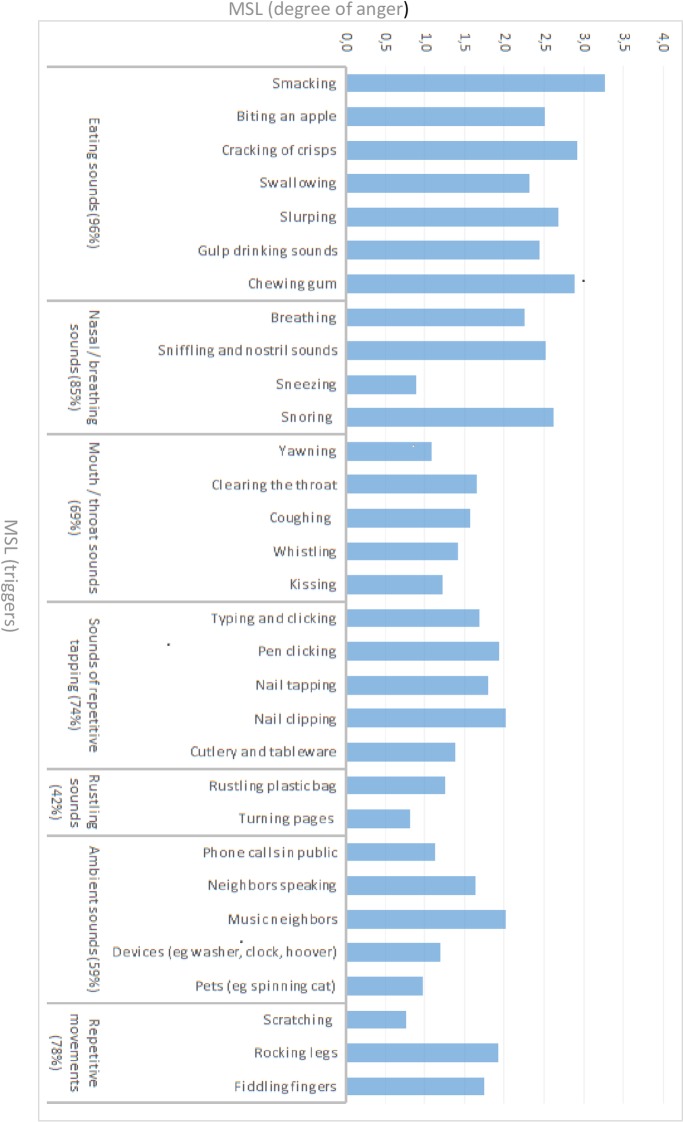
“Common misophonic triggers include sounds associated with eating (such as chewing), nasal sounds (such as sniffing), oral sounds (such as coughing), repetitive actions (such as pen clicking), rustling materials (such as plastic bags), and ambient noises (such as a clock ticking) [2].”
InfluentialPsychoacoustic assessment of misophonia
Kirby, B. J., Cunningham, A., & Zant, O. M. (2025) · JASA Express Letters · doi:10.1121/10.0039238 · Cited by 2
Multichannel auditory cortical responses in misophonia: A neurophysiological investigation
Karupaiah, K., Trinesh, R., Uppunda, A. K., & Prabhu, P. (2025) · Hearing Research · doi:10.1016/j.heares.2025.109458 · Cited by 2
Validating and refining a psychoacoustic test to diagnose hyperacusis
Fournier, P., Bourez, P. H., Cote, A., Detroy, N., Côté, C., & Noreña, A. J. (2025) · Hearing Research · doi:10.1016/j.heares.2025.109482 · Cited by 1
Woolley, M. G., Johnson, H. E., Knight, S. J. E., Bowers, E. M., Petersen, J. M., Muñoz, K. F., & Twohig, M. P. (2025) · Journal of Psychiatric Research · doi:10.1016/j.jpsychires.2025.11.026 · Cited by 2
Çetinkaya, M. M., Gök, M., Uludağ, B., & Çetinkaya, Ü. C. (2025) · Speech Language and Hearing · doi:10.1080/2050571x.2025.2581435 · Cited by 1
“The questionnaires found in the literature were created taking into account different misophonia diagnostic criterias (Jager et al., 2020; Schrö et al., 2013).”
InfluentialKaraytuğ, M. O., Tamam, L., Demirkol, M. E., Namlı, Z., Yeşiloğlu, C., Demirtaş, S. Ç., Kurt, A., Çakar, H. N., Altın, E. D., & Gürbüz, M. (2026) · Medicina · doi:10.3390/medicina62010216 · Cited by 2
“Empirical findings support this view, with Jager et al. reporting that 2.8% of individuals diagnosed with misophonia also met diagnostic criteria for OCD [7].”
InfluentialKoroglu, S., & Durat, G. (2026) · Journal of Psychiatric Research · doi:10.1016/j.jpsychires.2026.01.028 · Cited by 1
Metadata
- Authors
- Jager, I., de Koning, P., Bost, T., Denys, D., & Vulink, N.
- Affiliations
- Amsterdam UMC Location University of Amsterdam (NL)
- Corresponding author
- Jager, Inge
- Venue
- PLOS ONE
- Publisher
- Public Library of Science (PLoS)
- Published
- 2020-04-15
- Volume
- 15
- Issue
- 4
- Pages
- e0231390
- ISSN
- 1932-6203 (ISSN-L)
- PMC
- PMC7159231
- OpenAlex
- W3015229976
- Cited by
- 271
- References
- 56
- Citations by year
- 2026: 52 · 2025: 43 · 2024: 39 · 2023: 50 · 2022: 52 · 2021: 28 · 2020: 5
- FWCI
- 11.89
- Type
- journal article
- Language
- en
- Open access
- gold
- doi.org
- Licence
- Locations
- PLoS ONE (publishedVersion, cc-by)
- PubMed Central (publishedVersion, cc-by)
- PubMed (publishedVersion)
- Pure Amsterdam UMC (submittedVersion, cc-by)
- Data Archiving and Networked Services (DANS) (submittedVersion, other-oa)
- DOAJ (DOAJ: Directory of Open Access Journals) (submittedVersion, cc-by-sa)
- Figshare (submittedVersion, cc-by)
- Funders
- Amsterdam University Medical Centers
- Topics
- Life Sciences › Neuroscience › Sensory Systems › Hearing, Cochlea, Tinnitus, Genetics
- Physical Sciences › Physics and Astronomy › Acoustics and Ultrasonics › Noise Effects and Management
- Health Sciences › Health Professions › Speech and Hearing › Hearing Loss and Rehabilitation
- Keywords
- misophonia, comorbidities, obsessive-compulsive personality disorder, mood disorders, attention deficit hyperactivity disorder, autism spectrum disorder, tinnitus, hyperacusis, perfectionism, neuroticism, quality of life, mental illness
- MeSH terms
- Adult, Attention Deficit Disorder with Hyperactivity, Autistic Disorder, Mental Disorders, Female, Humans, Impulsive Behavior, Male, Middle Aged, Netherlands, Obsessive-Compulsive Disorder, Severity of Illness Index, Mood Disorders, Diagnostic and Statistical Manual of Mental Disorders, Young Adult
About these checks
Registry, retraction, Cites and statistics results are computed, not judged, with one exception: a printed reference that no index lists is read once by a model before it counts as a citation error. Claims are extracted by a model and kept only when their quote appears verbatim in the text; each cited source is then checked, with a model’s help, for whether it says what the claim relies on. Those verdicts can be wrong — read the claim’s quote and the cited source before relying on one.
Statistics and arithmetic are recomputed, not judged.
Confidence bands are shown only for fields calibrated on our annotated test set. None is calibrated yet, so no band is shown.
What counts as a claim ›How we measure confidence ›How we check this ›
Are you an author, or do you see a problem with this page? Request a review
Data sources
Bibliographic data: Semantic Scholar, OpenAlex, Crossref.
Contains information from the Semantic Scholar Academic Graph Datasets, made available under the ODC Attribution License (ODC-BY 1.0).
Semantic Scholar’s data is described in: Kinney, R., et al. (2023). The Semantic Scholar Open Data Platform. arXiv:2301.10140.
