

The impact of knowledge transfer performance on the artificial intelligence industry innovation network: An empirical study of Chinese firms
Open accessThe DOI matches its Crossref record; 29 of the 29 references it cites were found in a registry or an index.
Abstract
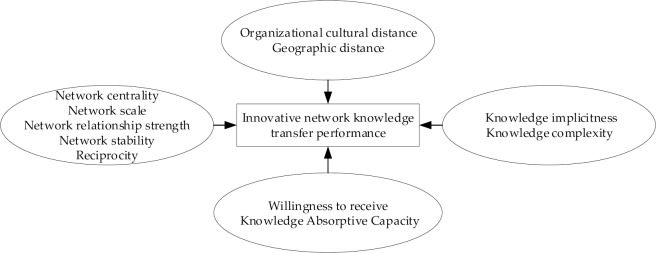
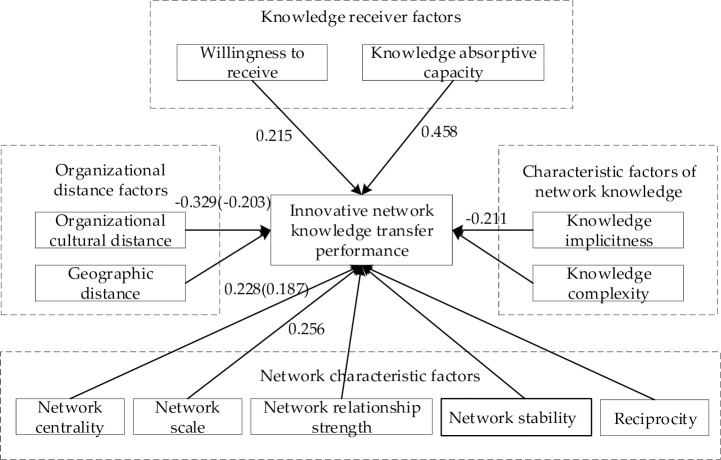
As a core driving force of the most recent round of industrial transformation, artificial intelligence has triggered significant changes in the world economic structure, profoundly changed our life and way of thinking, and achieved an overall leap in social productivity. This paper aims to examine the effect of knowledge transfer performance on the artificial intelligence industry innovation network and the path artificial intelligence enterprises can take to promote sustainable development through knowledge transfer in the above context. First, we construct a theoretical hypothesis and conceptual model of the innovation network knowledge transfer mechanism within the artificial intelligence industry. Then, we collect data from questionnaires distributed to Chinese artificial intelligence enterprises that participate in the innovation network. Moreover, we empirically analyze the impact of innovation network characteristics, organizational distance, knowledge transfer characteristics, and knowledge receiver characteristics on knowledge transfer performance and verify the hypotheses proposed in the conceptual model. The results indicate that innovation network centrality and organizational culture distance have a significant effect on knowledge transfer performance, with influencing factors including network scale, implicit knowledge transfer, receiver's willingness to receive, and receiver's capacity to absorb knowledge. For sustainable knowledge transfer performance on promoting Chinese artificial intelligence enterprises innovation, this paper finally delivers valuable insights and suggestions.
Overview
The claims and statistics of this paper haven’t been checked yet.
Free: it reads the open-access text and checks the first 5 claims that cite a source we can check. Create a free account to check every claim.
Integrity signals
Registry
Cites
Statistics
Figures
Verification
Claims the paper makes
The claims and statistics of this paper haven’t been checked yet.
Free: it reads the open-access text and checks the first 5 claims that cite a source we can check. Create a free account to check every claim.
Claims other papers make about this one
Each is checked against this paper’s own text: does it say what the citing paper says it does?
The source backs part of the claim, not all of it — or backs it for a different population, condition or comparison.
In the citing paper
“AIC, as firm capabilities requiring numerous resources need to demonstrate their business value through innovative measures and quality decisions (Shi et al., 2020).”
From The Impact of Artificial Intelligence on Firm Performance: An Application of the Resource-Based View to e-Commerce Firms (2022) · cites this paper as Shi et al., 2020
Experimental — accuracy not yet measured
Self-check
Percentages, sums and reported differences re-computed from the paper’s own numbers.
The self-check needs the paper’s full text.
Citations
Cites
Tsai, W. (2001) · Academy of Management Journal · doi:10.2307/3069443 · Cited by 4,257
The Strength of Weak Ties You Can Trust: The Mediating Role of Trust in Effective Knowledge Transfer
Levin, D. Z., & Cross, R. (2004) · Management Science · doi:10.1287/mnsc.1030.0136 · Cited by 2,734
Collaboration and Creativity: The Small World Problem
Uzzi, B., & Spiro, J. (2005) · American Journal of Sociology · doi:10.1086/432782 · Cited by 1,885
The Process of Knowledge Transfer: A Diachronic Analysis of Stickiness
Szulanski, G. (2000) · Organizational Behavior and Human Decision Processes · doi:10.1006/obhd.2000.2884 · Cited by 1,794 · cited 1×
“Szulanski studied a process model that identified the stages of transfer and the factors expected to correlate with difficulties occurring at each [7].”
A model of knowledge management and the N-form corporation
Hedlund, G. (2007) · Strategic Management Journal · doi:10.1002/smj.4250151006 · Cited by 1,586 · cited 1×
“For instance, Hedlund proposed three knowledge transfer steps: coding and internalization, extension and possession, and digestion and diffusion [4].”
BackgroundVan Wijk, R., Jansen, J. J. P., & Lyles, M. A. (2008) · Journal of Management Studies · doi:10.1111/j.1467-6486.2008.00771.x · Cited by 1,335 · cited 1×
“These factors not only include friendly interactions that promote organizational knowledge transfer but exclusion factors that hinder knowledge transfer due to organizational cultural distance and geographical distance as well [12].”
BackgroundTheory of Organizational Knowledge Creation
Nonaka, I., & Takeuchi, H. (1995) · The Knowledge-Creating Company · doi:10.1093/oso/9780195092691.003.0003 · Cited by 753
Simonin, B. L. (1999) · Journal of International Business Studies · doi:10.1057/palgrave.jibs.8490079 · Cited by 624 · cited 1×
“distance is measured by three aspects [25].”
Quigley, N. R., Tesluk, P. E., Locke, E. A., & Bartol, K. M. (2007) · Organization Science · doi:10.1287/orsc.1060.0223 · Cited by 576
Artificial intelligence: Implications for the future of work
Howard, J. (2019) · American Journal of Industrial Medicine · doi:10.1002/ajim.23037 · Cited by 522 · cited 1×
“The growing demand for a more intelligent life has inspired new technologies, products, and industries, which have led to major changes in our economic structure, production lifestyles, ways of thinking, and overall social productivity [1].”
Background
Research works printed but not linked: 9
- Li K. Research on Knowledge Transfer Based on Enterprise Learning Network. East China Normal University; 2017.
- Wang X, Xi Y, Xie J. Research on Knowledge Transfer Model Based on Regional Innovation System. Library and Information Service. 2017; 61: 13– 20.
- Chen H. Research on the relationship between enterprise innovation network characteristics and technological innovation performance. Zhejiang University; 2010.
- Zhang H. The Mechanism of Knowledge Transfer on the Innovation Performance of Alliance Enterprises-Based on Strategic Flexibility. Research Management. 2015; 36: 1– 9.
- Zhu J, Ding Y. Influence of Knowledge-enterprise Human Capital on Innovation Performance under Knowledge Management Capability. Science and Technology Management Research. 2017; 37: 141– 147.
- Simonin BL. Transfer of Marketing Know-How in International Strategic Alliances: An Empirical Investigation of the Role and Antecedents of Knowledge Ambiguity. Journal of International Business Studies. 1999: 30: 463– 490. · DOI · Paper page
- Shu L. Research on the Process Mechanism and Influencing Factors of Knowledge Transfer within Teams-aking Enterprise R&D Team as an Example. Zhejiang University; 2006.
- Ma Y. Understanding of Educational Views in Piaget's Principle of Epistemology. Journal of Liaoning Administration Institute. 2007; 9: 152– 152.
- Wang W, Guo D, Xiao M. Empirical Study on Influencing Factors of School-enterprise Cooperative Innovation Network Learning Mechanism. Journal of Technology Economics and Management. 2014; 7: 28– 35.
Cited by
Cerchione, R., Centobelli, P., Riccio, E., Abbate, S., & Oropallo, E. (2023) · Technovation · doi:10.1016/j.technovation.2022.102480 · Cited by 236
Chen, D., Esperança, J. P., & Wang, S. (2022) · Frontiers in Psychology · doi:10.3389/fpsyg.2022.884830 · Cited by 198
“AIC, as firm capabilities requiring numerous resources need to demonstrate their business value through innovative measures and quality decisions (Shi et al., 2020).”
BackgroundKnowledge Sharing Opportunities for Industry 4.0 Firms
Lepore, D., Dubbini, S., Micozzi, A., & Spigarelli, F. (2021) · Journal of the Knowledge Economy · doi:10.1007/s13132-021-00750-9 · Cited by 77
“The relationship between knowledge and innovation has been considered in terms of productivity (Capello & Lenzi, 2015), innovation efficiency (Shi et al., 2020) and resource allocation (Lee et al., 2017).”
BackgroundChoudhury, A. (2022) · JMIR Human Factors · doi:10.2196/35421 · Cited by 56
“Shi et al [56] discovered that AI use creates challenges in terms of limitations, such as limited knowledge transfer.”
BackgroundBley, K., Fredriksen, S. F. B., Skjærvik, M. E., & Pappas, I. O. (2022) · Lecture notes in computer science · doi:10.1007/978-3-031-15342-6_2 · Cited by 65
Brahmi, M., Hussain, Z., & Khan, A. (2024) · Springer proceedings in business and economics · doi:10.1007/978-3-031-67511-9_6 · Cited by 30
Data-Driven Innovation: Digital Tools, Artificial Intelligence, and Big Data
Sundu, M., Yasar, O., & Fındıklı, M. A. (2022) · Springer eBooks · doi:10.1007/978-3-030-98183-9_6 · Cited by 29
The relation between employee characteristics and knowledge sharing
Matošková, J., Bartók, O., & Tomancová, L. (2020) · VINE Journal of Information and Knowledge Management Systems · doi:10.1108/vjikms-05-2020-0092 · Cited by 21
Dong, Z., Aziz, M. F. A., & Wang, Y. (2025) · Finance research letters · doi:10.1016/j.frl.2025.107827 · Cited by 31
Fostering employee engagement and knowledge sharing through artificial intelligence
Estherita, S. A., & Vasantha, S. (2024) · Salud Ciencia y Tecnología - Serie de Conferencias · doi:10.56294/sctconf2024897 · Cited by 17
Li, B., Zhang, Z., & Zhang, Z. (2024) · Frontiers in Environmental Science · doi:10.3389/fenvs.2023.1323888 · Cited by 13
Rivera, O. I. V., Sandulli, F. D., & Gallego, J. (2025) · Technology in Society · doi:10.1016/j.techsoc.2025.103092 · Cited by 20
Transfer of knowledge from universities to organizations in the Ecuadorian context
Chica, M. L. V., & la Vega, I. D. (2022) · Measuring Business Excellence · doi:10.1108/mbe-07-2021-0097 · Cited by 11
Eren, F., Dülek, L. N., Uraz, Ö. A., Kuşcu, B., & Sakallı, M. (2024) · Bilgi ve İletişim Teknolojileri Dergisi · doi:10.53694/bited.1601239 · Cited by 6
Eletter, S. F. K., Kaba, A., Ramaiah, C. K., & Refae, G. A. E. (2023) · Journal of Information & Knowledge Management · doi:10.1142/s0219649223500156 · Cited by 6
Stability Analysis of Collaborative Product Innovation Network Exposed to Knowledge Resource Loss
Su, J., Zhang, F., Zhang, X., Zhang, N., Miao, C., Gan, Q., & Xiao, Y. (2023) · Journal of the Knowledge Economy · doi:10.1007/s13132-023-01187-y · Cited by 5
“For instance, Shi et al. (2020) stated that relationship stability affects the accuracy of knowledge transfer in the open innovation network.”
Huang, Z., & Wu, Q. (2025) · Technology Analysis and Strategic Management · doi:10.1080/09537325.2024.2420618 · Cited by 5
“For example, since 2015, China has successively promulgated national strategic plans such as ‘ Made in China 2025 ’ and ‘ New Generation AI Development Plan ’ , aiming to promote the healthy development of China ’ s AI technology and AI industry (Shi et al. 2020).”
Şeker, C., ÖRÜCÜ, E., & ÖNBIÇAK, A. E. (2024) · Journal of Business Research - Turk · doi:10.20491/isarder.2024.1793 · Cited by 15
Dong, J., Lai, X., & Zhao, D. (2022) · Managerial and Decision Economics · doi:10.1002/mde.3522 · Cited by 5
Jiao, H., Cheng, L., & Li, G. (2026) · Sustainability · doi:10.3390/su18021003 · Cited by 2
Li, J., Li, H., Gong, Y.-W., & Zhu, M. (2023) · IEEE Access · doi:10.1109/access.2023.3324715 · Cited by 2
“Regarding the literature on industrial knowledge transfer, researchers generally apply empirical research and case study to analyze its mechanism, performance, and influencing factors or the role in promoting economic growth and technological innovation [5], [8], [21].”
BackgroundLi, J., Gong, Y., & Li, H. (2024) · Kybernetes · doi:10.1108/k-08-2023-1419 · Cited by 1
Li, Z., Li, Y., Li, Q., & Sheng, X. (2025) · Tehnicki vjesnik - Technical Gazette · doi:10.17559/tv-20241228002218 · Cited by 2
“Furthermore, the highly skilled AI human capital can help in attracting global investment through multinational corporations interested in taking advantage of the talented local human capital for AI-based projects [25].”
Adıgüzel, Z., Çakır, F. S., & Morgül, Ü. A. (2026) · EuroMed Journal of Business · doi:10.1108/emjb-10-2025-0395 · Cited by 1
The Influence of New Ventures' Work Environment and Innovation Behaviors on Corporate Performance
Xiang, Y., & Wang, W. (2022) · Frontiers in Psychology · doi:10.3389/fpsyg.2022.829037
“The characteristic of the structural equation model is that the establishment of the model is always supported by theories, and the number of samples selected by the model is positively correlated with the feasibility of the results (Shi et al., 2020).”
ResultCortes, B. S., & Ooi, Z. Y. (2023) · Businesses · doi:10.3390/businesses3030028
“Although past studies have found that knowledge transfer improves firm performance [9,18], the complexity and nature of knowledge transfer and its relationship with firm performance may explain the mixed results [19].”
ResultExploring the Effect of AI Trust on Firm Creativity to Generate Performance at AI-Ready Firms
Rozyanti, A. P., Cahyani, D. P., Kinanti, L., & Maharani, A. (2024) · Jurnal Manajemen dan Organisasi · doi:10.29244/jmo.v15i4.60027
“Indirectly, AI is able to influence company performance through the creativity that the company has (Shi et al ., 2020).”
Jin, S., Zhang, Y., & Wang, C. (2025) · Nankai Business Review International · doi:10.1108/nbri-07-2024-0070
Zhao, R., & Phua, L. K. (2025) · Information Management and Business Review · doi:10.22610/imbr.v17i4(i).4639
“Social Network Relational Characteristics (SNRC) and Social Network Structural Characteristics (SNSC) were measured using adapted scales from established instruments in prior studies (Chen et al., 2024; Shi et al., 2019).”
Tao, Y., Dai, Y., & Liang, D. (2026) · SAGE Open · doi:10.1177/21582440261487256
Zhao, M., & Yan, Z. (2026) · International Review of Economics & Finance · doi:10.1016/j.iref.2026.105867
Metadata
- Authors
- Shi, G., Ma, Z., Feng, J., Zhu, F., Bai, X., & Gui, B.
- Affiliations
- Beijing Forestry University (CN)
- Beijing Institute of Technology (CN)
- Ningxia University (CN)
- University of Technology Sydney (AU)
- Tsinghua University (CN)
- Corresponding author
- Ma, Zhiyun
- Feng, Jiao
- Venue
- PLOS ONE
- Publisher
- Public Library of Science (PLoS)
- Published
- 2020-05-18
- Volume
- 15
- Issue
- 5
- Pages
- e0232658
- ISSN
- 1932-6203 (ISSN-L)
- PMC
- PMC7233593
- OpenAlex
- W3026667977
- Cited by
- 32
- References
- 29
- Citations by year
- 2026: 5 · 2025: 6 · 2024: 7 · 2023: 4 · 2022: 8 · 2021: 1 · 2020: 1
- FWCI
- 3.74
- Type
- journal article
- Language
- en
- Open access
- gold
- doi.org
- Licence
- Locations
- PLoS ONE (publishedVersion, cc-by)
- PubMed Central (publishedVersion, cc-by)
- PubMed (publishedVersion)
- RePEc: Research Papers in Economics (submittedVersion)
- DOAJ (DOAJ: Directory of Open Access Journals) (submittedVersion, cc-by-sa)
- UTS ePRESS (University of Technology Sydney) (submittedVersion)
- Funders
- National Natural Science Foundation of China (71862028)
- Topics
- Social Sciences › Business, Management and Accounting › Strategy and Management › Innovation and Knowledge Management
- Social Sciences › Decision Sciences › Information Systems and Management › Knowledge Management and Sharing
- Social Sciences › Business, Management and Accounting › Strategy and Management › Business Strategy and Innovation
- Keywords
- artificial intelligence industry, innovation networks, organizational distance, network centrality, absorptive capacity, sustainable innovation
About these checks
Registry, retraction, Cites and statistics results are computed, not judged, with one exception: a printed reference that no index lists is read once by a model before it counts as a citation error. Claims are extracted by a model and kept only when their quote appears verbatim in the text; each cited source is then checked, with a model’s help, for whether it says what the claim relies on. Those verdicts can be wrong — read the claim’s quote and the cited source before relying on one.
Statistics and arithmetic are recomputed, not judged.
Confidence bands are shown only for fields calibrated on our annotated test set. None is calibrated yet, so no band is shown.
What counts as a claim ›How we measure confidence ›How we check this ›
Are you an author, or do you see a problem with this page? Request a review
Data sources
Bibliographic data: Semantic Scholar, OpenAlex, Crossref.
Contains information from the Semantic Scholar Academic Graph Datasets, made available under the ODC Attribution License (ODC-BY 1.0).
Semantic Scholar’s data is described in: Kinney, R., et al. (2023). The Semantic Scholar Open Data Platform. arXiv:2301.10140.
