

Metacognitive beliefs and their relationship with anxiety and depression in physical illnesses: A systematic review
Open accessThe DOI matches its Crossref record; 81 of the 83 references it cites were found in a registry or an index, and 1 are not checked yet; 43 of the 185 sources its claims cite were checked for support.
Abstract
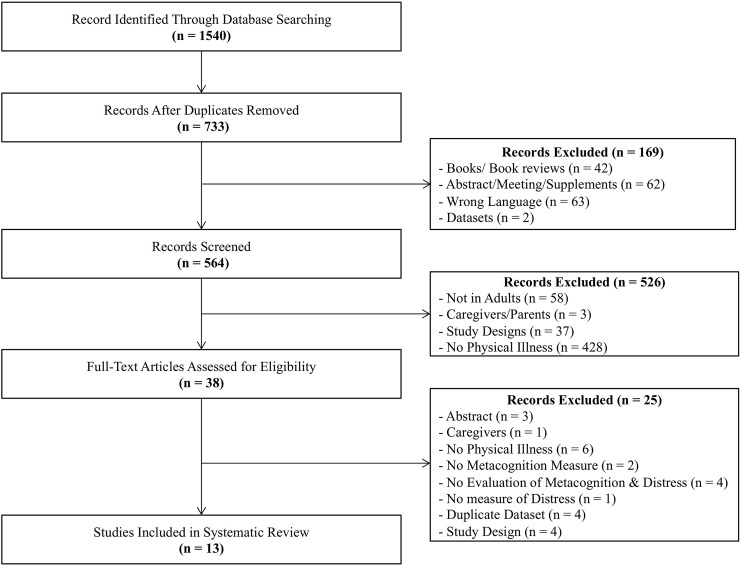
Anxiety and depression are common among patients with chronic physical illnesses and have a significant impact on morbidity, quality of life, and health service utilisation. Psychological treatment of anxiety and depression has small to moderate efficacy in this group and is not commonly based on a model of causal mechanisms. A novel approach to understanding and improving mental health outcomes in physical illnesses is needed. One approach may be to explore the role of metacognitive beliefs which are reliably associated with anxiety and depression in individuals with mental health difficulties. The current systematic review aimed to evaluate the contribution of metacognitive beliefs to anxiety and depression across physical illnesses. Systematic searches were conducted on Web of Science, PsychINFO, MEDLINE, Embase, and CINAHL of studies published between 1997 and January 2019. 13 eligible studies were identified that in sum comprised 2851 participants. Metacognitive beliefs were found to have reliable, moderate, positive and significant associations with anxiety and depression symptoms across a range of physical illnesses. There appeared to be commonality and some specificity in the relationships. Negative metacognitive beliefs concerned with uncontrollability and danger of worry were associated with both anxiety and depression across all physical illnesses assessed, whilst more specific associations emerged for individual medical conditions where positive beliefs about worry, cognitive confidence and cognitive self-consciousness were unique correlates. Negative metacognitive beliefs of uncontrollability and danger significantly and positively predicted symptoms of anxiety and depression after controlling for factors including age, gender, disease factors and cognition (illness perceptions and intolerance of uncertainty). The results suggest that the metacognitive model of psychological disorder is applicable to psychological symptoms of anxiety and depression across a range of chronic medical conditions, implying that metacognitive therapy might be helpful in improving outcomes in multiple morbidities that involve poor mental and medical health. © 2020 Capobianco et al. This is an open access article distributed under the terms of the Creative Commons Attribution License, which permits unrestricted use, distribution, and reproduction in any medium, provided the original author and source are credited.
Verified 2026-11-22 · 1 reference not checked yet
Overview
CoChat Summary
## TL;DR
This systematic review found that metacognitive beliefs were positively and significantly associated with anxiety and depression across 13 studies of adults with physical illnesses (2851 participants). The strongest and most consistent links were for negative beliefs about the uncontrollability and danger of worry, suggesting metacognitive therapy may be relevant in these settings.
## Key findings
- The review included 13 studies with 2851 patients; the mean age was 54.38 years (SD 11.23) and 68% of participants were female.
- Negative metacognitive beliefs about uncontrollability and danger were positively associated with anxiety across all physical illnesses included, with an average correlation of r = 0.68 (range 0.55–0.77), and with depression with an average correlation of r = 0.51 (range 0.25–0.68).
- Other metacognitive dimensions were also positively associated with distress: cognitive confidence averaged r = 0.37 for anxiety and r = 0.40 for depression; need for control averaged r = 0.46 for anxiety and r = 0.45 for depression; cognitive self-consciousness averaged r = 0.36 for anxiety and r = 0.40 for depression.
- In regression analyses, metacognitive beliefs accounted for an additional 40% of the variance in anxiety and 27% in depression on average, and negative beliefs about uncontrollability and danger were the most consistent independent predictors.
## Methods
- Systematic review conducted according to PRISMA and registered in PROSPERO (CRD42019123581).
- Searched Web of Science, PsychINFO, MEDLINE, Embase, and CINAHL for studies published from 1997 to January 2019.
- Included peer-reviewed quantitative studies of adults with a physical illness that assessed validated metacognitive beliefs (MCQ-65 or MCQ-30) and validated anxiety/depression measures; studies were screened, quality-assessed with the NIH observational cohort/cross-sectional tool, and synthesised narratively with reported correlations and regression coefficients.
## Limitations
- The paper states that all included studies were cross-sectional, so it could not assess prospective relationships or longer-term effects.
- The paper states that the review was limited to adults, so it could not examine implications across the life-span.
- Evident from the text: most included studies were only fair quality (9 fair, 4 poor), several studies lacked full descriptive reporting, and control variables in regressions were limited and inconsistent across studies.
Model-written summary. Check it against the paper before relying on it.
Integrity signals
Registry
Cites
Statistics
Figures
Verification
Claims the paper makes
28 Valid · 8 Not valid · 23 Not checked · 71 Own results and interpretations
The cited sources support only part of this claim — read each source’s verdict below.
In the paper
“Negative metacognitive beliefs concerned with uncontrollability and danger of worry were associated with both anxiety and depression across all physical illnesses assessed”
- Also stated in: § Are metacognitive beliefs associated with anxiety and depression in physical illnesses? · plain
“Negative metacognitive beliefs in the uncontrollability and danger domain were positively associated with anxiety and depression across all physical illnesses included in the review [45–47, 50–54, 56, 58] as noted in Table 3.”
§ Metacognitive beliefs and their relationship with anxiety and depression in physical illnesses: A systematic review > Abstract Anxiety and depression are common among patients with chronic physical illnesses and have a significant impact on morbidity, quality of life, and health service utilisation. Psychological treatment of anxiety and depression has small to moderate efficacy in this group and is not commonly based on a model of causal mechanisms. A novel approach to understanding and improving mental health outcomes in physical illnesses is needed. One approach may be to explore the role of metacognitive beliefs which are reliably associated with anxiety and depression in individuals with mental health difficulties. The current systematic review aimed to evaluate the contribution of metacognitive beliefs to anxiety and depression across physical illnesses. Systematic searches were conducted on Web of Science, PsychINFO, MEDLINE, Embase, and CINAHL of studies published between 1997 and January 2019. 13 eligible studies were identified that in sum comprised 2851 participants. Metacognitive beliefs were found to have reliable, moderate, positive and significant associations with anxiety and depression symptoms across a range of physical illnesses. There appeared to be commonality and some specificity in the relationships. Negative metacognitive beliefs concerned with uncontrollability and danger of worry were associated with both anxiety and depression across all physical illnesses assessed, whilst more specific associations emerged for individual medical conditions where positive beliefs about worry, cognitive confidence and cognitive self-consciousness were unique correlates. Negative metacognitive beliefs of uncontrollability and danger significantly and positively predicted symptoms of anxiety and depression after controlling for factors including age, gender, disease factors and cognition (illness perceptions and intolerance of uncertainty). The results suggest that the metacognitive model of psychological disorder is applicable to psychological symptoms of anxiety and depression across a range of chronic medical conditions, implying that metacognitive therapy might be helpful in improving outcomes in multiple morbidities that involve poor mental and medical health.
What the sources say
- Not checked — no full text of the sourcecites [45] Donnellan C, Al Banna M, Redha N, Al Sharoqi I, Al-Jishi A, Bakhiet M, et al Association Between metacognition and Mood Symptoms Poststroke. Journal of Geriatric Psychiatry and Neurology. 2016; 29(4): 212– 220. 10.1177/0891988716640374 27056067 source
- Not matchedcites [46] Quattropani MC, Lenzo V, Mucciardi M, Toffle ME. Metacognition as predictor of emotional distress in cancer patients. Life Span and Disability. 2016; 2: 221– 239.
We searched by its title and found no matching paper.
- Not checked — no full text of the sourcecites [47] Quattropani M.C., Lenzo V., Filastro A. Predictive factors of anxiety and depression symptoms in patients with breast cancer undergoing chemotherapy. An explorative study based on metacognitions. Journal of Psychopathology. 2017; 23: 67– 73.
- Not checked — no full text of the sourcecites [50] Brown RG, Fernie BA. Metacognitions, anxiety, and distress related to motor fluctuations in Parkinson’s disease. Journal of Psychosomatic Research. 2015; 78(2): 143– 148. 10.1016/j.jpsychores.2014.09.021 25311871 source
- Not checked — no full text of the sourcecites [51] Fisher PL, McNicol K, Cherry MG, Young B, Smith E, Abbey G, et al The association of metacognitive beliefs with emotional distress and trauma symptoms in adolescent and young adult survivors of cancer. Journal of Psychosocial Oncology. 2018; 36(5): 545– 556. 10.1080/07347332.2018.1440276 29611779 source
- Not checked — no full text of the sourcecites [52] Fisher PL, Reilly J, Noble A. Metacognitive beliefs and illness perceptions are associated with emotional distress in people with epilepsy. Epilepsy & Behaviour. 2018; 86: 9– 14. 10.1016/j.yebeh.2018.07.008 30036766 source
- Not checked — no full text of the sourcecites [53] Heffer-Rahn P, Fisher P.L. The clinical utility of metacognitive beliefs and processes in emotional distress in people with multiple sclerosis. Journal of Psychosomatic Research. 2018; 104: 88– 94. 10.1016/j.jpsychores.2017.11.014 29275790 source
- Partly supportedcites [54] Kollmann J, Gollwitzer M, Spada MM, Fernie BA. The association between metacognition and the impact of Fibromyalgia in a German sample. Journal of Psychosomatic Research. 2016; 83: 1– 9. 10.1016/j.jpsychores.2016.02.002 27020069 sourceExperimental — accuracy not yet measured
Section 3.6 (page not available in our copy) reports that anxiety was a significant positive predictor of negative beliefs about the uncontrollability and danger of worry. That finding comes from this paper’s fibromyalgia sample; it does not establish the association across all physical illnesses assessed. (LLM, conf=0.87)
- Partly supportedcites [56] Compare A, Brugnera A, Spada MM, Zarbo C, Tasca GA, Sassaroli S, et al The Role of Emotional Competence in Takotsubo Cardiomyopathy. Psychosomatic Medicine. 2018; 80: 377– 384. 10.1097/PSY.0000000000000564 29406323 sourceExperimental — accuracy not yet measured
The Results (page not provided) report a positive association between negative beliefs about thoughts and depressive symptoms in this paper’s patients. They do not report an association with anxiety across all physical illnesses assessed; the Introduction discusses other physical conditions but does not establish that broader claim. (LLM, conf=0.85)
- Not checked — no full text of the sourcecites [58] Purewal R, Fisher PL. The contribution of illness perceptions and metacognitive beliefs to anxiety and depression in adults with diabetes. Diabetes Research and Clinical Practice. 2017; 136: 16– 22. 10.1016/j.diabres.2017.11.029 29203257 source
plainstates an associationn = 2,851- Asserted: passes — The authors put it forward as true.
- Checkable: passes — It can be checked against evidence.
- Load-bearing: passes — The paper’s conclusions depend on it.
- Based: passes — The paper gives a reason why it holds.
- Also stated in: § Are metacognitive beliefs associated with anxiety and depression in physical illnesses? · plain
The cited sources support only part of this claim — read each source’s verdict below.
In the paper
“Negative metacognitive beliefs concerned with uncontrollability and danger of worry were associated with both anxiety and depression across all physical illnesses assessed”
- Also stated in: § Are metacognitive beliefs associated with anxiety and depression in physical illnesses? · plain
“Similarly, these negative metacognitive beliefs were positively and significantly associated with depression when measured by the HAM-D, HADS, and PHQ-9 in cardiac, cancer, stroke, epilepsy, diabetes, and fibromyalgia patients [45–47, 52, 54, 56, 58], with an average correlation coefficient of 0.51 and a range of r = 0.25–0.68.”
§ Metacognitive beliefs and their relationship with anxiety and depression in physical illnesses: A systematic review > Abstract Anxiety and depression are common among patients with chronic physical illnesses and have a significant impact on morbidity, quality of life, and health service utilisation. Psychological treatment of anxiety and depression has small to moderate efficacy in this group and is not commonly based on a model of causal mechanisms. A novel approach to understanding and improving mental health outcomes in physical illnesses is needed. One approach may be to explore the role of metacognitive beliefs which are reliably associated with anxiety and depression in individuals with mental health difficulties. The current systematic review aimed to evaluate the contribution of metacognitive beliefs to anxiety and depression across physical illnesses. Systematic searches were conducted on Web of Science, PsychINFO, MEDLINE, Embase, and CINAHL of studies published between 1997 and January 2019. 13 eligible studies were identified that in sum comprised 2851 participants. Metacognitive beliefs were found to have reliable, moderate, positive and significant associations with anxiety and depression symptoms across a range of physical illnesses. There appeared to be commonality and some specificity in the relationships. Negative metacognitive beliefs concerned with uncontrollability and danger of worry were associated with both anxiety and depression across all physical illnesses assessed, whilst more specific associations emerged for individual medical conditions where positive beliefs about worry, cognitive confidence and cognitive self-consciousness were unique correlates. Negative metacognitive beliefs of uncontrollability and danger significantly and positively predicted symptoms of anxiety and depression after controlling for factors including age, gender, disease factors and cognition (illness perceptions and intolerance of uncertainty). The results suggest that the metacognitive model of psychological disorder is applicable to psychological symptoms of anxiety and depression across a range of chronic medical conditions, implying that metacognitive therapy might be helpful in improving outcomes in multiple morbidities that involve poor mental and medical health.
What the sources say
- Not checked — no full text of the sourcecites [45] Donnellan C, Al Banna M, Redha N, Al Sharoqi I, Al-Jishi A, Bakhiet M, et al Association Between metacognition and Mood Symptoms Poststroke. Journal of Geriatric Psychiatry and Neurology. 2016; 29(4): 212– 220. 10.1177/0891988716640374 27056067 source
- Not matchedcites [46] Quattropani MC, Lenzo V, Mucciardi M, Toffle ME. Metacognition as predictor of emotional distress in cancer patients. Life Span and Disability. 2016; 2: 221– 239.
We searched by its title and found no matching paper.
- Not checked — no full text of the sourcecites [47] Quattropani M.C., Lenzo V., Filastro A. Predictive factors of anxiety and depression symptoms in patients with breast cancer undergoing chemotherapy. An explorative study based on metacognitions. Journal of Psychopathology. 2017; 23: 67– 73.
- Not checked — no full text of the sourcecites [52] Fisher PL, Reilly J, Noble A. Metacognitive beliefs and illness perceptions are associated with emotional distress in people with epilepsy. Epilepsy & Behaviour. 2018; 86: 9– 14. 10.1016/j.yebeh.2018.07.008 30036766 source
- Partly supportedcites [54] Kollmann J, Gollwitzer M, Spada MM, Fernie BA. The association between metacognition and the impact of Fibromyalgia in a German sample. Journal of Psychosomatic Research. 2016; 83: 1– 9. 10.1016/j.jpsychores.2016.02.002 27020069 sourceExperimental — accuracy not yet measured
The Results (section 3.4; page unavailable) report that negative metacognitions about symptom control correlated with depression and anxiety measures in the fibromyalgia sample. However, the paper does not establish that beliefs about the uncontrollability and danger of worry were associated with depression across all physical illnesses assessed; it studies fibromyalgia, while its introduction discusses other conditions only as background. (LLM, conf=0.84)
- Partly supportedcites [56] Compare A, Brugnera A, Spada MM, Zarbo C, Tasca GA, Sassaroli S, et al The Role of Emotional Competence in Takotsubo Cardiomyopathy. Psychosomatic Medicine. 2018; 80: 377– 384. 10.1097/PSY.0000000000000564 29406323 sourceExperimental — accuracy not yet measured
The Results report a significant positive correlation between depressive symptoms and MCQ-30 Negative Beliefs about Thoughts in the study sample. They do not establish that this association holds across all physical illnesses assessed; the Introduction discusses other physical conditions only in terms of worsening symptoms, not depression. (LLM, conf=0.86)
- Not checked — no full text of the sourcecites [58] Purewal R, Fisher PL. The contribution of illness perceptions and metacognitive beliefs to anxiety and depression in adults with diabetes. Diabetes Research and Clinical Practice. 2017; 136: 16– 22. 10.1016/j.diabres.2017.11.029 29203257 source
plainstates an associationn = 2,851- Asserted: passes — The authors put it forward as true.
- Checkable: passes — It can be checked against evidence.
- Load-bearing: passes — The paper’s conclusions depend on it.
- Based: passes — The paper gives a reason why it holds.
- Also stated in: § Are metacognitive beliefs associated with anxiety and depression in physical illnesses? · plain
The sources with a verdict support this claim; the rest weren’t checked yet, have no full text we could read, or their verdicts aren’t rated yet.
In the paper
“Despite associations between illness perceptions and psychological outcomes [25] including reduced quality of life [25–27], the mechanisms leading to a persistence of unhelpful illness perceptions and their link with anxiety and depression remains unclear.”
§ Metacognitive beliefs and their relationship with anxiety and depression in physical illnesses: A systematic review > Introduction
What the sources say
- Not checked — no full text of the sourcecites [25] Dempster M, Howell D, McCorry NK. Illness perceptions and coping in physical health conditions: A meta-analysis. Journal of Psychosomatic Research. 2015; 79(6): 506– 513. 10.1016/j.jpsychores.2015.10.006 26541550 source
- Not checked — no full text of the sourcecites [26] Foxwell R, Morley C, Frizelle. Illness perceptions, mood and quality of life: A systematic review of coronary heart disease patients. Journal of Psychosomatic Research. 2013; 75(3): 211– 222. 10.1016/j.jpsychores.2013.05.003 23972409 source
- Supportedcites [27] Spain LA, Tubridy N, Kilpatrick TJ, Adams SJ, Holmes ACN. Illness perception and health-related quality of life in multiple sclerosis. Acta Neurol Scand. 2007; 116: 293– 299. 10.1111/j.1600-0404.2007.00895.x 17850407 source
The citations in the printed sentence attach to the associations between illness perceptions, psychological outcomes, and reduced quality of life—not to the final statement about unclear mechanisms. The Introduction reports associations with depression and anxiety, and the Discussion reports an independent contribution of illness perception to health-related quality of life in people with MS. No page numbers were provided for these passages. (LLM, conf=0.88)
plainstates an association- Asserted: passes — The authors put it forward as true.
- Checkable: passes — It can be checked against evidence.
- Load-bearing: passes — The paper’s conclusions depend on it.
- Based: passes — The paper gives a reason why it holds.
The cited sources support only part of this claim — read each source’s verdict below.
In the paper
“Negative metacognitive beliefs in the uncontrollability and danger domain were positively associated with anxiety and depression across all physical illnesses included in the review [45–47, 50–54, 56, 58] as noted in Table 3.”
§ Metacognitive beliefs and their relationship with anxiety and depression in physical illnesses: A systematic review > Results > Are metacognitive beliefs associated with anxiety and depression in physical illnesses?
What the sources say
- Not checked — no full text of the sourcecites [45] Donnellan C, Al Banna M, Redha N, Al Sharoqi I, Al-Jishi A, Bakhiet M, et al Association Between metacognition and Mood Symptoms Poststroke. Journal of Geriatric Psychiatry and Neurology. 2016; 29(4): 212– 220. 10.1177/0891988716640374 27056067 source
- Not matchedcites [46] Quattropani MC, Lenzo V, Mucciardi M, Toffle ME. Metacognition as predictor of emotional distress in cancer patients. Life Span and Disability. 2016; 2: 221– 239.
We searched by its title and found no matching paper.
- Not checked — no full text of the sourcecites [47] Quattropani M.C., Lenzo V., Filastro A. Predictive factors of anxiety and depression symptoms in patients with breast cancer undergoing chemotherapy. An explorative study based on metacognitions. Journal of Psychopathology. 2017; 23: 67– 73.
- Not checked — no full text of the sourcecites [50] Brown RG, Fernie BA. Metacognitions, anxiety, and distress related to motor fluctuations in Parkinson’s disease. Journal of Psychosomatic Research. 2015; 78(2): 143– 148. 10.1016/j.jpsychores.2014.09.021 25311871 source
- Not checked — no full text of the sourcecites [51] Fisher PL, McNicol K, Cherry MG, Young B, Smith E, Abbey G, et al The association of metacognitive beliefs with emotional distress and trauma symptoms in adolescent and young adult survivors of cancer. Journal of Psychosocial Oncology. 2018; 36(5): 545– 556. 10.1080/07347332.2018.1440276 29611779 source
- Not checked — no full text of the sourcecites [52] Fisher PL, Reilly J, Noble A. Metacognitive beliefs and illness perceptions are associated with emotional distress in people with epilepsy. Epilepsy & Behaviour. 2018; 86: 9– 14. 10.1016/j.yebeh.2018.07.008 30036766 source
- Not checked — no full text of the sourcecites [53] Heffer-Rahn P, Fisher P.L. The clinical utility of metacognitive beliefs and processes in emotional distress in people with multiple sclerosis. Journal of Psychosomatic Research. 2018; 104: 88– 94. 10.1016/j.jpsychores.2017.11.014 29275790 source
- Partly supportedcites [54] Kollmann J, Gollwitzer M, Spada MM, Fernie BA. The association between metacognition and the impact of Fibromyalgia in a German sample. Journal of Psychosomatic Research. 2016; 83: 1– 9. 10.1016/j.jpsychores.2016.02.002 27020069 sourceExperimental — accuracy not yet measured
In §3.6 (Regression Analyses), anxiety (DASS-A) was a positive, significant predictor of negative beliefs about the uncontrollability and danger of worry (MKF-2). This supports the association in the paper’s German fibromyalgia sample, but the paper does not establish it across all physical illnesses included in the citing review. No page number is available in our copy. (LLM, conf=0.88)
- Could not verifycites [56] Compare A, Brugnera A, Spada MM, Zarbo C, Tasca GA, Sassaroli S, et al The Role of Emotional Competence in Takotsubo Cardiomyopathy. Psychosomatic Medicine. 2018; 80: 377– 384. 10.1097/PSY.0000000000000564 29406323 sourceExperimental — accuracy not yet measured
The Results (page unavailable) report a positive correlation between negative beliefs about thoughts and depressive symptoms, not anxiety. The Discussion (page unavailable) concerns patients with Takotsubo cardiomyopathy and acute myocardial infarction; our copy does not establish an anxiety association across all physical illnesses in the citing review. (LLM, conf=0.75)
- Not checked — no full text of the sourcecites [58] Purewal R, Fisher PL. The contribution of illness perceptions and metacognitive beliefs to anxiety and depression in adults with diabetes. Diabetes Research and Clinical Practice. 2017; 136: 16– 22. 10.1016/j.diabres.2017.11.029 29203257 source
plainstates an association- Asserted: passes — The authors put it forward as true.
- Checkable: passes — It can be checked against evidence.
- Load-bearing: passes — The paper’s conclusions depend on it.
- Based: passes — The paper gives a reason why it holds.
The cited sources support only part of this claim — read each source’s verdict below.
In the paper
“Similarly, these negative metacognitive beliefs were positively and significantly associated with depression when measured by the HAM-D, HADS, and PHQ-9 in cardiac, cancer, stroke, epilepsy, diabetes, and fibromyalgia patients [45–47, 52, 54, 56, 58], with an average correlation coefficient of 0.51 and a range of r = 0.25–0.68.”
§ Metacognitive beliefs and their relationship with anxiety and depression in physical illnesses: A systematic review > Results > Are metacognitive beliefs associated with anxiety and depression in physical illnesses?
What the sources say
- Not checked — no full text of the sourcecites [45] Donnellan C, Al Banna M, Redha N, Al Sharoqi I, Al-Jishi A, Bakhiet M, et al Association Between metacognition and Mood Symptoms Poststroke. Journal of Geriatric Psychiatry and Neurology. 2016; 29(4): 212– 220. 10.1177/0891988716640374 27056067 source
- Not matchedcites [46] Quattropani MC, Lenzo V, Mucciardi M, Toffle ME. Metacognition as predictor of emotional distress in cancer patients. Life Span and Disability. 2016; 2: 221– 239.
We searched by its title and found no matching paper.
- Not checked — no full text of the sourcecites [47] Quattropani M.C., Lenzo V., Filastro A. Predictive factors of anxiety and depression symptoms in patients with breast cancer undergoing chemotherapy. An explorative study based on metacognitions. Journal of Psychopathology. 2017; 23: 67– 73.
- Not checked — no full text of the sourcecites [52] Fisher PL, Reilly J, Noble A. Metacognitive beliefs and illness perceptions are associated with emotional distress in people with epilepsy. Epilepsy & Behaviour. 2018; 86: 9– 14. 10.1016/j.yebeh.2018.07.008 30036766 source
- Partly supportedcites [54] Kollmann J, Gollwitzer M, Spada MM, Fernie BA. The association between metacognition and the impact of Fibromyalgia in a German sample. Journal of Psychosomatic Research. 2016; 83: 1– 9. 10.1016/j.jpsychores.2016.02.002 27020069 sourceExperimental — accuracy not yet measured
Section 3.4 reports significant positive correlations between negative metacognitions about symptom control and all DASS subscales, including depression, in the fibromyalgia sample. The paper also measures beliefs about the uncontrollability and danger of worry, but the passages retrieved do not establish the claimed depression correlation specifically for that domain. This source does not study the other listed patient groups and uses the DASS rather than HAM-D, HADS, or PHQ-9. (LLM, conf=0.82)
- Partly supportedcites [56] Compare A, Brugnera A, Spada MM, Zarbo C, Tasca GA, Sassaroli S, et al The Role of Emotional Competence in Takotsubo Cardiomyopathy. Psychosomatic Medicine. 2018; 80: 377– 384. 10.1097/PSY.0000000000000564 29406323 sourceExperimental — accuracy not yet measured
The Results (page unavailable) report a significant positive correlation between HAM-D depression scores and MCQ-30 Negative Beliefs about Thoughts in this cardiac patient sample. The paper does not establish that association across the other listed patient groups or with HADS and PHQ-9, and it does not report the cited average correlation of 0.51. (LLM, conf=0.88)
- Not checked — no full text of the sourcecites [58] Purewal R, Fisher PL. The contribution of illness perceptions and metacognitive beliefs to anxiety and depression in adults with diabetes. Diabetes Research and Clinical Practice. 2017; 136: 16– 22. 10.1016/j.diabres.2017.11.029 29203257 source
plainstates an association- Asserted: passes — The authors put it forward as true.
- Checkable: passes — It can be checked against evidence.
- Load-bearing: passes — The paper’s conclusions depend on it.
- Based: passes — The paper gives a reason why it holds.
64 more claims · 15 with their cited sources checked
Create a free account to see all 130 claims and every source verdict.
- It may state two separate claims as one. 48
- Probably not a substantial claim. 23
Citations
Cites
Preferred Reporting Items for Systematic Reviews and Meta-Analyses: the PRISMA statement
Moher, D., Liberati, A., Tetzlaff, J., Altman, D. G., & for the PRISMA Group (2009) · BMJ · doi:10.1136/bmj.b2535 · Cited by 83,823
Preferred Reporting Items for Systematic Reviews and Meta-Analyses: The PRISMA Statement
Moher, D., Liberati, A., Tetzlaff, J., Altman, D. G., & The PRISMA Group (2009) · PLoS Medicine · doi:10.1371/journal.pmed.1000097 · Cited by 64,042
The Hospital Anxiety and Depression Scale
Zigmond, A. S., & Snaith, R. P. (1983) · Acta Psychiatrica Scandinavica · doi:10.1111/j.1600-0447.1983.tb09716.x · Cited by 47,139 · cited 1×
“The most common measure of psychological distress was the Hospital Anxiety and Depression Scale (HADS; [48]), which was used in nine studies [41, 45–47, 49–53].”
MethodThe PHQ-9: Validity of a brief depression severity measure
Kroenke, K., Spitzer, R. L., & Williams, J. B. W. (2001) · Journal of General Internal Medicine · doi:10.1046/j.1525-1497.2001.016009606.x · Cited by 44,910 · cited 1×
“One study [54] included the Depression, Anxiety, and Stress Scale (DASS; [55]), one study [56] used the Hamilton Depression Scale (HAM-D; [57]), one study [58] used the Generalized Anxiety Disorder-7 (GAD-7; [59]), and Patients Health Questionnaire-9 (PHQ-9; [60]), and one study [61] used the Beck Depression Inventory…”
MethodA Brief Measure for Assessing Generalized Anxiety Disorder: The GAD-7
Spitzer, R. L., Kroenke, K., Williams, J. B. W., & Löwe, B. (2006) · Archives of Internal Medicine · doi:10.1001/archinte.166.10.1092 · Cited by 31,765
Wang, G., Ma, R., Qiao, G., Wada, K., Aizawa, Y., & Satoh, T. (2015) · Integrative Medicine International · doi:10.1159/000368408 · Cited by 18,657
Lovibond, P. F., & Lovibond, S. H. (1995) · Behaviour Research and Therapy · doi:10.1016/0005-7967(94)00075-u · Cited by 14,523 · cited 1×
“One study [54] included the Depression, Anxiety, and Stress Scale (DASS; [55]), one study [56] used the Hamilton Depression Scale (HAM-D; [57]), one study [58] used the Generalized Anxiety Disorder-7 (GAD-7; [59]), and Patients Health Questionnaire-9 (PHQ-9; [60]), and one study [61] used the Beck Depression Inventory…”
MethodAn inventory for measuring clinical anxiety: Psychometric properties.
Beck, A. T., Epstein, N., Brown, G., & Steer, R. A. (1988) · Journal of Consulting and Clinical Psychology · doi:10.1037/0022-006x.56.6.893 · Cited by 14,407
Depression and quality of life in older persons: A review
Sivertsen, H., Bjørkløf, G. H., Engedal, K., Selbæk, G., & Helvik, A.-S. (2015) · Dementia and Geriatric Cognitive Disorders · doi:10.1159/000437299 · Cited by 14,152
Beck, A. T., Steer, R. A., & Brown, G. (2011) · PsycTESTS Dataset · doi:10.1037/t00742-000 · Cited by 7,535
Research works printed but not linked: 5
- Department of Health. Improving the Health and Well-being of People with Longterm Conditions World class services for people with long-term conditions: Information tool for commissioners. London: Department of Health 2010.
- Wells A. Emotional disorders and metacognition: Innovative cognitive therapy. Chichester, UK: Wiley 2000.
- Leventhal H, Meyer D, Nerentz DR. The common sense representation of illness danger Rachman S. (Ed.) Contributions to MedicalPsychology. Oxford: Pergamon; 1980 pp. 7– 30.
- Quattropani MC, Lenzo V, Mucciardi M, Toffle ME. Metacognition as predictor of emotional distress in cancer patients. Life Span and Disability. 2016; 2: 221– 239.
- Fisher PL, Byrne A, Salmon P. Metacognitive Therapy for Emotional Distress in Adult Cancer Survivors: A Case Series. Cognitive Therapy and Research. 2017; 41: 891– 901. 10.1007/s10608-017-9862-9 29104332 PMC5656708 · DOI · Paper page
Cited by
Johnson, M. S., Skjerdingstad, N., Ebrahimi, O. V., Hoffart, A., & Johnson, S. U. (2021) · Stress and Health · doi:10.1002/smi.3120 · Cited by 133
A Brief History of Metacognitive Therapy: From Cognitive Science to Clinical Practice
Capobianco, L., & Nordahl, H. (2021) · Cognitive and Behavioral Practice · doi:10.1016/j.cbpra.2021.11.002 · Cited by 61
“…these measures have been instrumental in establishing the role of metacognitive beliefs across a range of disorders, symptoms and age groups (e.g., Capobianco et al., 2020; Cotter et al., 2017; Gkika et al., 2018; Hamonniere & Varescon, 2018; Myers et al., 2019; Palmieri et al., 2021; Sellers et…”
BackgroundSelf-citationLin, S., Tan, L., Chen, X., Liao, Z., Li, Y., Tang, Y., Shi, Y., Hao, J., Wang, X., Huang, Q., et al. (2023) · Journal of Affective Disorders · doi:10.1016/j.jad.2023.08.077 · Cited by 58
Brown, R. L., Wood, A., Carter, J. D., & Kannis‐Dymand, L. (2022) · Clinical Psychology & Psychotherapy · doi:10.1002/cpp.2633 · Cited by 30
A systematic review evaluating metacognitive beliefs in health anxiety and somatic distress
Keen, E., Kangas, M., & Gilchrist, P. T. (2022) · British Journal of Health Psychology · doi:10.1111/bjhp.12609 · Cited by 34
“Evidence also indicates a relationship between elevated metacognitive beliefs and emotional distress in individuals with physical illnesses (Capobianco et al., 2020; Lenzo et al., 2020).”
BackgroundResultTauber, N. M., Zachariae, R., Jensen, A. B., Thewes, B., Skyt, I., Elkjær, E., Butow, P. N., & O’Toole, M. S. (2022) · Psycho-Oncology · doi:10.1002/pon.5772 · Cited by 22
“physical illnesses finds that metacognitions are related to anxiety and worry, which, in turn, tend to decrease when metacognitive beliefs are modified.(23,24) Modifying metacognitions may therefore be a particularly relevant target in the treatment of FCR.”
BackgroundBeing learners with mental resilience as outcomes of metacognitive strategies in an academic context
Anthonysamy, L. (2023) · Cogent Education · doi:10.1080/2331186x.2023.2219497 · Cited by 34
“Several past works of literature have revealed that metacognitive skills can help individuals with the resilience skills needed for to improve learning capacity for lifelong learning (Capobianco et al., 2020; Philipp et al., 2020).”
BackgroundMartin, S., & Strodl, E. S. (2023) · Appetite · doi:10.1016/j.appet.2023.106975 · Cited by 27
Salguero, J. M., & Ramos‐Cejudo, J. (2023) · Journal of Affective Disorders · doi:10.1016/j.jad.2023.08.090 · Cited by 23
Maladaptive metacognitive beliefs mediated the effect of intolerance of uncertainty on depression
Chen, J., Tan, Y., Cheng, X., Peng, Z., Qin, C., Zhou, X., Lu, X., Huang, A., Liao, X., Tian, M., et al. (2021) · Clinical Psychology & Psychotherapy · doi:10.1002/cpp.2589 · Cited by 20
Hauschildt, M., Arlt, S., Moritz, S., Yassari, A. H., & Jelinek, L. (2022) · Clinical Psychology & Psychotherapy · doi:10.1002/cpp.2733 · Cited by 19
Anxiety Disorders: The Relationship between Insight and Metacognition
Halaj, A., Konstantakopoulos, G., Ghaemi, S. N., & David, A. S. (2024) · Psychopathology · doi:10.1159/000538096 · Cited by 22
D’Amico, A., & Geraci, A. (2021) · Frontiers in Psychology · doi:10.3389/fpsyg.2021.749700 · Cited by 24
Ambient smart environments: affordances, allostasis, and wellbeing
White, B., & Miller, M. (2024) · Synthese · doi:10.1007/s11229-024-04679-9 · Cited by 11
“In much the same way as with dysfunction in precision dynamics within the AIF, dysfunction in meta-cognition has been conjectured to underpin a range of psychiatric conditions (Kraft et al., 2017 ; Capobianco et al., 2020).”
Donati, M. A., Padovani, M., Iozzi, A., & Primi, C. (2025) · Addictive Behaviors · doi:10.1016/j.addbeh.2025.108332 · Cited by 20
Tinnitus and Metacognitive Beliefs—Results of a Cross-Sectional Observational Study
Natalini, E., Fioretti, A. B., Riedl, D., Moschèn, R., & Eibenstein, A. (2020) · Brain Sciences · doi:10.3390/brainsci11010003 · Cited by 12
“The results thus confirmed that the importance of dysfunctional metacognitive beliefs and the tendency to worry are relevant factors associated within the process of adapting to a chronic condition illness, which has also been highlighted in recent studies on psychological distress in patients with chronic diseases [1…”
BackgroundResultEmploying illness perceptions and mindsets in health contexts: towards an integrative framework
Yielder, R., Crum, A. J., Weinman, J. A., & Petrie, K. J. (2025) · Health Psychology Review · doi:10.1080/17437199.2025.2552244 · Cited by 18
“…et al., 2020; Townsend et al., 2022) and new acute threats like COVID-19 emerge (World Health Organization, 2023) healthcare systems are increasingly recognising the profound influence of beliefs and are seeking ways to harness them to improve care (Capobianco et al., 2020; Leventhal et al., 2016).”
Barrio‐Martínez, S., Vindel, A. C., Priede, A., Medrano, L. A., Muñoz‐Navarro, R., Moriana, J. A., Carpallo-González, M., Prieto-Vila, M., Ruiz‐Rodríguez, P., & González‐Blanch, C. (2023) · Journal of Affective Disorders · doi:10.1016/j.jad.2023.06.032 · Cited by 9
The Relationship Between Mental health, Metacognition, and Emotion Regulation in Older People
França, A. B., Samra, R., Vitorino, L. M., & Schelini, P. W. (2023) · Clinical Gerontologist · doi:10.1080/07317115.2023.2231456 · Cited by 13
“Capobianco et al. (2020) provide evidence that links metacognitive beliefs to anxiety and depression, even among non-clinical populations.”
BackgroundYu, X., Deng, H., Xiong, Z., Gong, P., Ye, M., Liu, T., Long, X., & Tian, L. (2023) · International Journal of Clinical and Health Psychology · doi:10.1016/j.ijchp.2023.100410 · Cited by 9
“Worry is characterized by negative thoughts about the future, poor control of attention, close concern about negative information and vague negative explanations (Arnáez et al., 2019; Capobianco et al., 2020; Feng et al., 2022).”
BackgroundWang, S., Zhang, Q., Goh, P. H., Hu, J., Liu, X., Du, J., & Xu, W. (2022) · Journal of Clinical Psychology in Medical Settings · doi:10.1007/s10880-022-09927-z · Cited by 9
Cherry, M. G., Brown, S. L., Purewal, R., & Fisher, P. (2023) · British Journal of Health Psychology · doi:10.1111/bjhp.12655 · Cited by 8
Mise à jour des croyances et congruence à l'humeur dans le trouble dépressif
Bottemanne, H., Frileux, S., Guesdon, A., & Fossati, P. (2021) · L Encéphale · doi:10.1016/j.encep.2021.06.015 · Cited by 7
Seow, T. X. F., Jelinek, L., Moritz, S., & Hauser, T. U. (2025) · Nature Reviews Psychology · doi:10.1038/s44159-025-00503-4 · Cited by 12
Dodd, R., Fisher, P., Makin, S. M., Moore, P., & Cherry, M. G. (2021) · Frontiers in Psychology · doi:10.3389/fpsyg.2021.609068 · Cited by 7
Kara, Ö., Kaymaz, N., & Uzun, M. E. (2022) · Archives of Women s Mental Health · doi:10.1007/s00737-022-01264-2 · Cited by 6
“While physical and mental disorders may affect metacognition, a low level of metacognition may also lead to some diseases (Capobianco et al. 2020).”
BackgroundHoff, H. U., Hjemdal, O., Steinsbekk, S., & Nordahl, H. (2025) · Child Psychiatry & Human Development · doi:10.1007/s10578-025-01843-1 · Cited by 7
Do metacognitions contribute to pathological health anxiety? A systematic review and meta-analysis
Ivan, L., Foerster, P., Bermpohl, F. M. G., Gerlach, A. L., & Pohl, A. (2025) · PLoS ONE · doi:10.1371/journal.pone.0325563 · Cited by 7
Siegel, S., Unger, N., der Werf, C. S.-V., Karges, W., Schilbach, K., Schröder, B., Szybowicz, J., Sauerwald, J., Zopf, K., Grzywotz, A., et al. (2021) · Frontiers in Endocrinology · doi:10.3389/fendo.2021.680964 · Cited by 9
Sadati, C., Namvar, H., & Nasrolahi, B. (2021) · Journal of Health Reports and Technology · doi:10.5812/jhrt.119942 · Cited by 5
“As a result, they claim to have control over their emotions (24).”
BackgroundMaking Older Adults' Cognitive Health Visible After Covid-19 Outbreak
Gatta, F. D., Terribili, C., Fabrizi, E., & Moret‐Tatay, C. (2021) · Frontiers in Psychology · doi:10.3389/fpsyg.2021.648208 · Cited by 5
“In this way, several recent findings suggest that targeting metacognition skills might play an important role not only on technology adoption, but also in anxiety (Tsumura and Robertson, 2017; Capobianco et al., 2020).”
BackgroundMetacognitive Processes in Cancer: A Review
Rashmi, R., & Vanlalhruaii, C. (2023) · Indian Journal of Medical and Paediatric Oncology · doi:10.1055/s-0043-1768050 · Cited by 6
Illness cognition and depression among patients with coronary heart disease
Nuraeni, A., Anna, A., Praptiwi, A., & Nurhamsyah, D. (2021) · Belitung Nursing Journal · doi:10.33546/bnj.1540 · Cited by 6
“Capobianco et al. (2020) added that helplessness is a form of pessimism, and the way to increase it is by cultivating optimism instead of helplessness through metacognitive therapy.”
BackgroundResultInfluentialÖzbek, M. M., & Çıray, R. O. (2024) · Psychiatry and Clinical Psychopharmacology · doi:10.5152/pcp.2024.23762 · Cited by 8
“11 When reviewing the literature, it can be seen that the relationship between depression and impulsivity and the relationship between cognition and metacognition are analyzed separately.”
BackgroundRobinson, P. G., Williamson, T., Murray, I. R., Maempel, J. F., MacDonald, D. J., Hamilton, D. F., & Gaston, P. (2021) · Journal of Experimental Orthopaedics · doi:10.1186/s40634-021-00431-1 · Cited by 5
“Additionally, general chronic disease states seen in wider clinical practice have well-established links with anxiety and depression [8, 39], and the functional limitations often resulting from such conditions can result in negative affective responses from the patient [38].”
BackgroundThe role of family functioning: How the Big Five affect metacognitions about smartphone use
Xie, Y., Qian, L., Xie, R., & Yang, Y. (2022) · Frontiers in Psychology · doi:10.3389/fpsyg.2022.991315 · Cited by 4
“Thus, negative metacognitive beliefs are considered a primary factor contributing to the development and maintenance of psychological disorders (Huntley and Fisher, 2016) and appear to be more robustly correlated with these disorders than cognitions (Capobianco et al., 2020).”
BackgroundDursun, S. İ., & Üzar‐Özçetin, Y. S. (2023) · Seminars in Oncology Nursing · doi:10.1016/j.soncn.2023.151552 · Cited by 7
Metacognitive beliefs, mood symptoms, and fatigue four years after stroke: An explorative study
Pedersen, S. G., Anke, A., Friborg, O., Ørbo, M. C., Løkholm, M. T., Kirkevold, M., Heiberg, G. A., & Halvorsen, M. B. (2024) · PLoS ONE · doi:10.1371/journal.pone.0305896 · Cited by 4
López, N., Coronado, J.-C., Ripoll-Córdoba, D., Caldichoury, N., Quispe-Ayala, C., Morales-Asencio, B., Apumayta, R. Q., Castellanos, C. E., Martínez, J. J., Valverde, J. C. C., et al. (2025) · Frontiers in Psychiatry · doi:10.3389/fpsyt.2025.1529424 · Cited by 7
Caldarone, F., Gebhardt, P., Hoeper, M. M., Olsson, K. M., Fuge, J., Park, D., Meltendorf, T., Kamp, J. C., Stapel, B., Richter, M. J., et al. (2022) · Frontiers in Psychiatry · doi:10.3389/fpsyt.2022.812812 · Cited by 5
Abadi, M. G. S., Farajkhoda, T., & Mahmoodabadi, H. Z. (2022) · Journal of Education and Health Promotion · doi:10.4103/jehp.jehp_1292_21 · Cited by 6
Faustino, B., Vasco, A. B., Farinha‐Fernandes, A., Delgado, J., Guerreiro, J. C., & Matos, M. (2022) · Clinical Psychology & Psychotherapy · doi:10.1002/cpp.2736 · Cited by 3
“…supports previous assumptions according to which poor Self-Reflectivity, Critical Distance, Understanding Other Minds, and Mastery abilities facilitate a wide array of symptomatology (Bo et al., 2015; Capobianco et al., 2020; Dimaggio & Lysaker, 2010; Dimaggio et al., 2007; Semerari et al., 2003).”
BackgroundObsessive beliefs and uncertainty in obsessive compulsive and related patients
Olivares-Olivares, P. J., Rosa‐Alcázar, Á., Martínez-Esparza, I. C., & Alcázar, A. I. R. (2022) · International Journal of Clinical and Health Psychology · doi:10.1016/j.ijchp.2022.100316 · Cited by 5
The effect of mindfulness and metacognition on anxiety symptoms: a case-control study
Aydın, O., Obuća, F., Çakıroğlu, E., Ünal‐Aydın, P., & Esen-Danacı, A. (2022) · Middle East Current Psychiatry · doi:10.1186/s43045-022-00260-7 · Cited by 4
“This result is in line with previous studies that have suggested a positive association between negative metacognitive beliefs and anxiety [1, 4, 6, 14, 23, 29, 82, 90].”
ResultWhite, B. P., & Miller, M. M. (2023) · PsyArXiv (OSF Preprints) · doi:10.31234/osf.io/k34ac · Cited by 2
Taylor-Bennett, J., Capobianco, L., Wisely, J. A., & Wells, A. (2024) · Frontiers in Psychiatry · doi:10.3389/fpsyt.2024.1461387 · Cited by 7
Self-citationGöller, L., & Akçay, F. G. (2022) · Humanistic Perspective · doi:10.47793/hp.1028294 · Cited by 2
Linking Social Anxiety and Depression: The Role of Metacognitive Beliefs and Anhedonia
Hermann, E. J., Rai, A., Tewari, A., Kopyto, S., Castellanos, K., & Barahmand, U. (2022) · Current Psychiatry Research and Reviews · doi:10.2174/2666082219666221028102903 · Cited by 4
Metacognition vulnerabilities in time of crisis: Who to protect from suicidal risk?
Martin, S. S., Oltra, A., & Monte, J. D. (2022) · Brain and Behavior · doi:10.1002/brb3.2794 · Cited by 1
Siegel, S., Giese, S., Honegger, J. B., Friedel, A. L., Grzywotz, A., Wrede, K. H., Sure, U., Unger, N., & Kreitschmann‐Andermahr, I. (2024) · Pituitary · doi:10.1007/s11102-024-01400-4 · Cited by 2
“Depression itself, which is known to be related to negative illness beliefs, helplessness and lack of perceived illness control [24] is a known barrier to adherence [25].”
Cheng, C., Zheng, M., Fan, Y., Wu, Y., Li, T., Cao, Z., Yue, J., Chen, P., Zheng, Z., Fan, T., et al. (2024) · Scientific Reports · doi:10.1038/s41598-024-69027-w · Cited by 2
“MC contributes to the development and perpetuation of PD by predicting its manifestation 56 .”
BackgroundWells, A., Reeves, D., Fisher, P., Davies, L. M., Shields, G., Doherty, P., Heagerty, A. M., Heal, C., Brown, L., & Capobianco, L. (2024) · Programme Grants for Applied Research · doi:10.3310/tmja2644 · Cited by 4
Self-citationDemirdöğen, E. Ş., Algedik, P., Warikoo, N., Bahadır, E., Akbıyık, M., Büyüktarakçı, S., Kadak, M. T., & Yavuz, M. (2021) · Psychology Health & Medicine · doi:10.1080/13548506.2021.1985147 · Cited by 4
“The metacognitive dysfunctional beliefs (MDB) increase problematic appraisals and coping behaviors, and hinder the use of more adaptive stress coping strategies thus making an individual more likely to experience mental health problems in the face of a traumatic situation (Capobianco et al., 2020; Hagen et al., 2020;…”
BackgroundWarren, R., & Yu, E. A. (2022) · Clinical Psychology & Psychotherapy · doi:10.1002/cpp.2705 · Cited by 3
Abadi, S. A. N., Azimkhani, A., & Aminzadeh, R. (2023) · International Journal of Motor Control and Learning · doi:10.61186/ijmcl.5.2.35 · Cited by 2
Kajka, N., & Kulik, A. (2024) · Psychiatria Polska · doi:10.12740/pp/onlinefirst/168298 · Cited by 2
الخصائص السيكومترية لمقياس المعتقدات ما وراء المعرفية السلبية لدى عينة من طلاب جامعة أسوان
حسين, خ. أ., الصادق, ع. م., & محمد, أ. ع. ا. (2022) · Mağallaẗ Kulliyyaẗ Al-Tarbiyyaẗ - Aswān/Mağallaẗ Kulliyyaẗ Al-Tarbiyyaẗ - Aswān · doi:10.21608/mkts.2022.343526 · Cited by 1
Gölbaşı, C., Çökmüş, F. P., Başer, L. M., Hakan, G., Ünal‐Aydın, P., & Orkun, A. (2024) · Psihologija · doi:10.2298/psi230222013g · Cited by 2
Rauwenhoff, J. C. C., Hagen, R., Karaliute, M., Hjemdal, O., Kennair, L. E. O., Solem, S., Asarnow, R. F., Einarsen, C. E., Halvorsen, J. Ø., Paoli, S., et al. (2024) · Neurotrauma Reports · doi:10.1089/neur.2024.0076 · Cited by 3
Self-citationFilenko, I. A., & Bogomaz, S. А. (2024) · SibScript · doi:10.21603/sibscript-2024-26-5-685-700 · Cited by 1
Shi, W. (2024) · Journal of Cross-Cultural Psychology · doi:10.1177/00220221241294222 · Cited by 2
Aldalaykeh, M., Raddaha, A. H. A., Alhalaiqa, F., Sami, W., & Khraim, F. (2025) · International Journal of Environmental Research and Public Health · doi:10.3390/ijerph22050726 · Cited by 1
“The findings showed no significant relationship between depressive symptoms and chronic physical illnesses, which is inconsistent with previous studies [21–25].”
Hu, R., Yu, M., Li, L., He, H., Wei, S., Ma, J., Gu, Y., & Dai, Z. (2025) · Depression and Anxiety · doi:10.1155/da/5581270 · Cited by 1
“…disorders, the robust and reliable associations found for metacognition (particularly the CSC and NEG), may imply that while treating the emotional distress issues of non-clinical, regulating negative metacognition beliefs about their self-relevant thoughts and awareness might be the key point [6].”
InfluentialRosenvinge, J. H., Bergvik, S., Abeler, K., Tvedt, K., Berge, T., Lang, N., Wilhelmsen, M., Danielsson, L., Pettersen, G., & Friborg, O. (2025) · Trials · doi:10.1186/s13063-025-09041-z · Cited by 2
“Since this may be a central cognitive feature that maintains insomnia [55], as well as a trans-diagnos-tic factor, the present study may be tenable in treating or preventing relapse in related comorbidities, such as depression and anxiety [56, 57].”
Nordahl, H., Anyan, F., Strand, E. R., Sævik, P., Jacobsson, H., & Wells, A. (2025) · Cognitive Behaviour Therapy · doi:10.1080/16506073.2025.2590537 · Cited by 1
Self-citationZhao, T., Cheng, J., Liu, Y., Deng, J., Sun, Y., Ming, Y., Gong, K., Liu, K., Lei, W., & Chen, J. (2025) · Clinical Psychology & Psychotherapy · doi:10.1002/cpp.70177 · Cited by 1
Sahu, S., Singh, S., Tripathi, R. K., Tripathi, S. M., & Nischal, A. (2026) · Indian Journal of Psychological Medicine · doi:10.1177/02537176261432471 · Cited by 2
Dammen, T., Papageorgiou, C., Lindstrøm, J. C., & Einvik, G. (2023) · Frontiers in Psychology · doi:10.3389/fpsyg.2023.1265102 · Cited by 1
Embon, I., Gerbaudo, M. A., Usaj, A. R., Iorio, A. A., Barttfeld, P., & Solovey, G. (2024) · Current Psychology · doi:10.1007/s12144-024-06669-z · Cited by 1
Taniguchi, K., Maki, N., Sakamoto, H., INUTA, T., Kim, B., Oh, S., & Mayers, T. (2024) · Brain Sciences · doi:10.3390/brainsci14101041 · Cited by 3
“Moreover, metacognition has been reported to have an influence on depression through pathways related to anxiety [26–28].”
BackgroundSamadifard, H. R., Narimani, M., Aghajani, S., & Basharpoor, S. (2021) · Shenakht Journal of Psychology and Psychiatry · doi:10.32598/shenakht.8.2.61 · Cited by 1
Inappropriate Metacognitive Status Increases State Anxiety in Genetic Counseling Clients
Shibata, Y., Matsushima, M., Takeuchi, M., Kato, M., & Yabe, I. (2022) · Frontiers in Psychology · doi:10.3389/fpsyg.2022.871416 · Cited by 1
“Metacognition is also correlated with social and health anxiety (Cartwright-Hatton and Wells, 1997), and studies have reported associations between metacognition and anxiety not only in psychiatric disorders but also in chronic diseases (Anderson et al., 2019; Capobianco et al., 2020; Lenzo et al., 2020), pain (Spada…”
BackgroundThe Impact of COVID-19 to Mental Health
Angelique, M., Thesalonika, D., Henry, J., & Sharvinmenon (2022) · Advances in Social Science, Education and Humanities Research/Advances in social science, education and humanities research · doi:10.2991/assehr.k.220404.314 · Cited by 1
Kumar, N. (2023) · Chettinad Health City Medical Journal · doi:10.24321/2278.2044.202379
Sadati, C., Namvar, H., & Nasrolahi, B. (2022) · Caspian Journal of Health Research · doi:10.32598/cjhr.7.3.425.1
“It can hence be concluded that there is a relationship between metacognition and organizing, because knowledge and awareness of cognitive processes should lead to their application through a self-regulation strategy [27].”
BackgroundMethodResultInfluentialKapfhammer, H. (2022) · Springer eBooks · doi:10.1007/978-3-662-65873-4_12
Prieto, F., Lorca-Vyhmeister, A. A., CALCAGNI, S. C., Silva, J. R., Goupil, L., & Reyes, G. (2023) · PsyArXiv (OSF Preprints) · doi:10.31234/osf.io/r3zm4
jafari, T., Zarei, M., Shahraki, M. N., & Amani, O. (2023) · Psychology of Woman Journal · doi:10.52547/psychowoman.4.1.121
Abouzaid, A. M. G., & Abdelhamid, H. G. (2023) · Sohag University International Journal of Educational Research (SUIJER) /Sohag University International Journal of Educational Research (SUIJER) · doi:10.21608/suijer.2023.305894 · Cited by 2
“(Toren et al; Sirota et al., 2018; Tariq et al. 2021; Platt et al., 2017; Müller et al., 2019; Yüksel et al., 2019; Capobianco et al., 2020; Watson & Naragon -Gainy, 2010; Onur et al., 2013; Palm et al., 2011; Paniccia et al., 2018; Cisler & Olatunji, 2012; Sirota et al., 2018).”
(2023) · Al-Maǧallaẗ Al-Dawliyyaẗ Lil Buḥūṯ wa Al-Dirāsāt fi Al-Tarbiyyaẗ Al-H̲āṣaẗ · doi:10.21608/adba.2023.324391
(2023) · Al-Maǧallaẗ Al-Dawliyyaẗ Lil Buḥūṯ wa Al-Dirāsāt fi Al-Tarbiyyaẗ Al-H̲āṣaẗ · doi:10.21608/adba.2023.324400
Embon, I., Gerbaudo, M. A., Usaj, A. R., et al. (2023) · doi:10.31234/osf.io/cbtk2
Metamemory: An update of critical findings
Schwartz, B. L., & Metcalfe, J. (2023) · Elsevier eBooks · doi:10.1016/b978-0-443-15754-7.00004-3 · Cited by 1
Barrio‐Martínez, S., Rodríguez‐Pérez, N., Priede, A., Medrano, L. A., Muñoz‐Navarro, R., Moriana, J. A., Carpallo-González, M., Prieto-Vila, M., Ruiz‐Rodríguez, P., Vindel, A. C., et al. (2024) · PLoS ONE · doi:10.1371/journal.pone.0301746 · Cited by 1
Rauwenhoff, J. C. C., Hagen, R., Karaliute, M., et al. (2024) · doi:10.31219/osf.io/3fwcj
Self-citationAcar, D., & Berk, Ö. S. (2024) · Psikiyatride Guncel Yaklasimlar - Current Approaches in Psychiatry · doi:10.18863/pgy.1460122
Bailey, R., Oba, E. C., & Allen, R. E. (2025) · Journal of Health Psychology · doi:10.1177/13591053251314989
“According to the metacognitive model of GAD (Nordahl et al., 2023; Wells, 2005), individuals hold positive metacognitive beliefs about the usefulness of worry that is, ‘Worry helps me cope’ (Capobianco et al., 2020; Wells, 2011).”
Metacognition and pain in patients with fibromyalgia: the role of psychological distress
Romeo, A., Tella, M. D., Benfante, A., Colonna, F., & Castelli, L. (2025) · Journal of Affective Disorders · doi:10.1016/j.jad.2025.04.062 · Cited by 5
Living with multiple sclerosis: A qualitative exploration of death, dying and suicide, in UK adults
Dowling, D., Poole, L., & Smith, K. J. (2025) · Journal of Health Psychology · doi:10.1177/13591053251354884
“Aspects of ‘Control’ centred on participants’ perceptions of control over their lives and MS. Research on illness perceptions indicates that beliefs of uncontrollability have been associated with higher levels of depression and anxiety in a range of illnesses (Capobianco et al., 2020).”
Lunov, V., Matiash, M. M., Yevdokymova, N., Tkach, B., Rozhkova, I., Ilin, M., Pavlov, A., & Prints, V. (2025) · medRxiv · doi:10.1101/2025.09.12.25335642 · Cited by 1
Liu, Z., Wang, P., Wang, Y., He, W., Qin, Y., Wang, L., Zhang, Q., Yang, R., & Changqing, S. (2025) · Psychology Research and Behavior Management · doi:10.2147/prbm.s553537 · Cited by 1
Zhou, L., Lin, L., Ye, X., Feng, J., Wang, Y., Wu, Y., & Tang, Y. (2025) · Medicine · doi:10.1097/md.0000000000045070
Pietrabissa, G., Rapelli, G., Bruno, D., Volpi, C., Crotti, L., & Castelnuovo, G. (2025) · European Journal of Investigation in Health Psychology and Education · doi:10.3390/ejihpe15110236 · Cited by 1
LIBET Dimensions Across Clinical Populations
Offredi, A., Dalrì, E., Barberis, L., Celebre, M., Palmieri, S., Mansueto, G., Ruggiero, G. M., Caselli, G., & Sassaroli, S. (2025) · Journal of Rational-Emotive & Cognitive-Behavior Therapy · doi:10.1007/s10942-025-00634-w
“Huge research confirmed the role of metacognition on specific disorders, so a metacognitive perspective is aus - picious to investigate differences across disorders (Capobianco et al., 2020 ).”
Liu, Y., Teng, W., Teng, F., & Zou, G. (2025) · Frontiers in Public Health · doi:10.3389/fpubh.2025.1652448 · Cited by 1
Akboğa, Y. E., & Türkel, N. N. (2026) · Acta Neurologica Belgica · doi:10.1007/s13760-025-02986-7
Correlation Between Health Beliefs and Mask-Wearing During the COVID-19 Pandemic
Wierenga, K. L., Ferguson, H., Barker, C., Davidson, A. M., Nordhoff, E. K., Wilkerson, K. J., Wurth, M. L., & Moore, S. E. (2026) · Western Journal of Nursing Research · doi:10.1177/01939459251397770
“40 The difference may be that unique health beliefs regarding mask-wearing rel-egated depression, anxiety, and health literacy as less influential during the pandemic.”
Kaşıkçı, G. B., & Feyzioğlu, A. (2026) · Research Square · doi:10.21203/rs.3.rs-8564618/v1
Luo, D., & Du, H.-L. (2026) · World Journal of Psychiatry · doi:10.5498/wjp.v16.i2.111574 · Cited by 1
“Mild anxiety may represent an adaptive psychological response that aids surgical preparedness and can positively influence postoperative recovery[11].”
Metadata
- Authors
- Capobianco, L., Faija, C., Husain, Z., & Wells, A.
- Affiliations
- Greater Manchester Mental Health NHS Foundation Trust (GB)
- Manchester Academic Health Science Centre (GB)
- Corresponding author
- Capobianco, Lora
- Venue
- PLoS ONE
- Publisher
- Public Library of Science (PLoS)
- Published
- 2020-09-10
- Volume
- 15
- Issue
- 9
- Pages
- e0238457
- ISSN
- 1932-6203 (ISSN-L)
- PMC
- PMC7500039
- OpenAlex
- W3084692426
- Cited by
- 109
- References
- 83
- Citations by year
- 2026: 15 · 2025: 20 · 2024: 18 · 2023: 20 · 2022: 19 · 2021: 16 · 2020: 1
- FWCI
- 2.04
- Type
- journal article
- Language
- en
- Open access
- gold
- doi.org
- Licence
- Locations
- PLoS ONE (publishedVersion, cc-by)
- PubMed Central (publishedVersion, cc-by)
- PubMed (publishedVersion)
- Research Explorer (The University of Manchester) (publishedVersion, other-oa)
- DOAJ (DOAJ: Directory of Open Access Journals) (submittedVersion, cc-by-sa)
- Funders
- Programme Grants for Applied Research (RP-PG-1211-20011)
- Topics
- Social Sciences › Psychology › Experimental and Cognitive Psychology › Anxiety, Depression, Psychometrics, Treatment, Cognitive Processes
- Social Sciences › Psychology › Clinical Psychology › Psychological Treatments and Assessments
- Health Sciences › Medicine › Psychiatry and Mental health › Psychosomatic Disorders and Their Treatments
- Keywords
- metacognitive beliefs, anxiety, depression, chronic physical illness, metacognitive therapy, intolerance of uncertainty, worry, uncontrollability, cognitive confidence, cognitive self-consciousness, illness perception, comorbidities
- MeSH terms
- Metacognition, Adult, Anxiety, Cognition, Depression, Emotions, Female, Humans, Male, Mental Health, Middle Aged, Models, Psychological, Physical Fitness, Quality of Life, Surveys and Questionnaires
About these checks
Registry, retraction, Cites and statistics results are computed, not judged, with one exception: a printed reference that no index lists is read once by a model before it counts as a citation error. Claims are extracted by a model and kept only when their quote appears verbatim in the text; each cited source is then checked, with a model’s help, for whether it says what the claim relies on. Those verdicts can be wrong — read the claim’s quote and the cited source before relying on one.
The claim verdicts this report counts are experimental: their accuracy is not yet measured.
A language model drew the claims from the paper on 2026-10-11, under version 3 of the claim definition (model deepseek-v4.1-flash, prompt extract-v3).
A second model labelled each claim on 2026-10-11 (model jev-1.13-20260917, definition revision gold-guideline-v0.2).
Cited sources are checked with a language model’s help (gpt-6-sol).
Statistics and arithmetic are recomputed, not judged.
Confidence bands are shown only for fields calibrated on our annotated test set. None is calibrated yet, so no band is shown.
What counts as a claim ›How we measure confidence ›How we check this ›
Are you an author, or do you see a problem with this page? Request a review
Data sources
Bibliographic data: Semantic Scholar, OpenAlex, Crossref.
Contains information from the Semantic Scholar Academic Graph Datasets, made available under the ODC Attribution License (ODC-BY 1.0).
Semantic Scholar’s data is described in: Kinney, R., et al. (2023). The Semantic Scholar Open Data Platform. arXiv:2301.10140.
