

The DOI matches its Crossref record; 56 of the 56 references it cites were found in a registry or an index.
Twitter reveals human mobility dynamics during the COVID-19 pandemic
Open accessAbstract
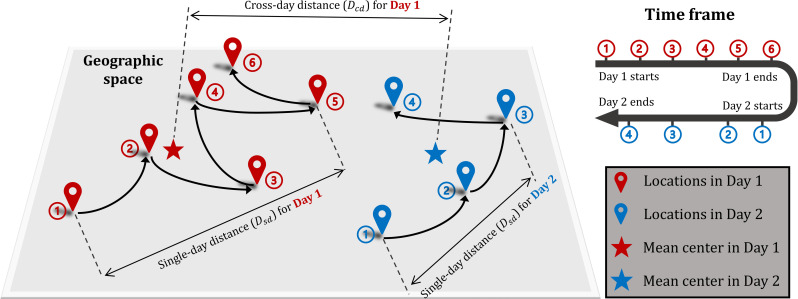
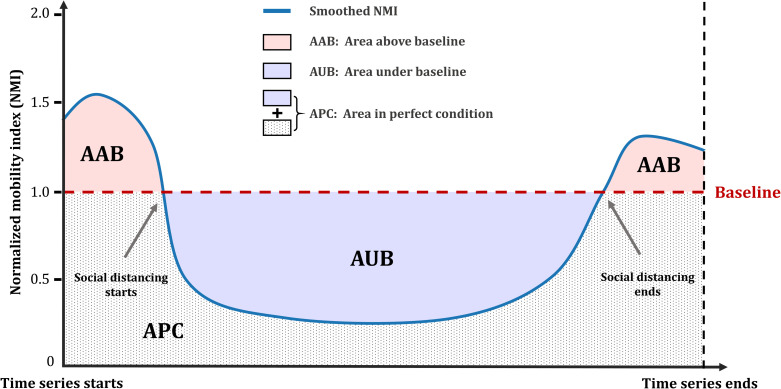
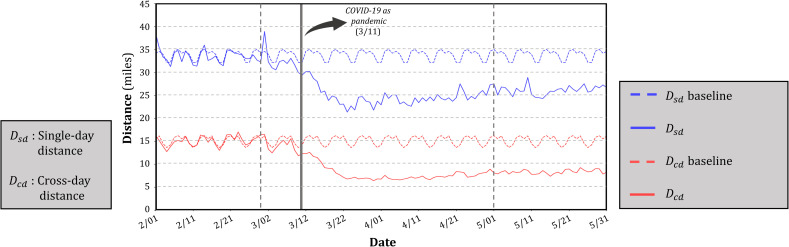
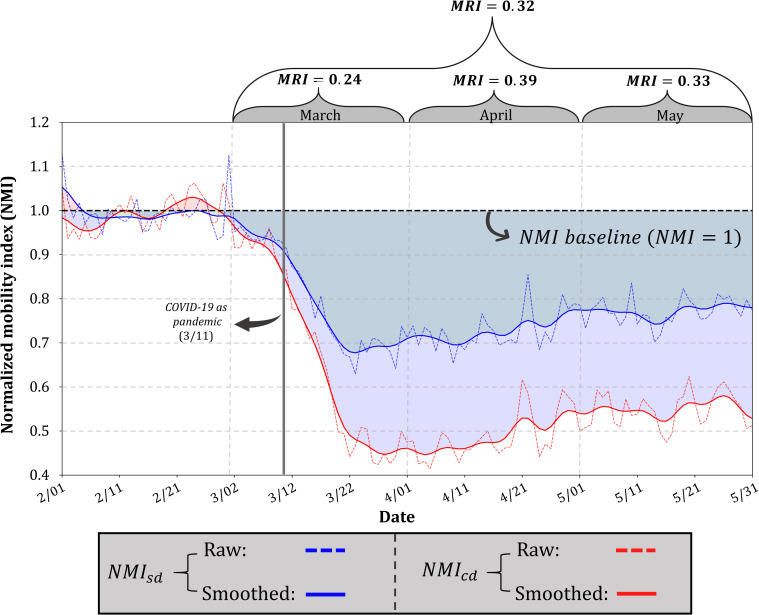
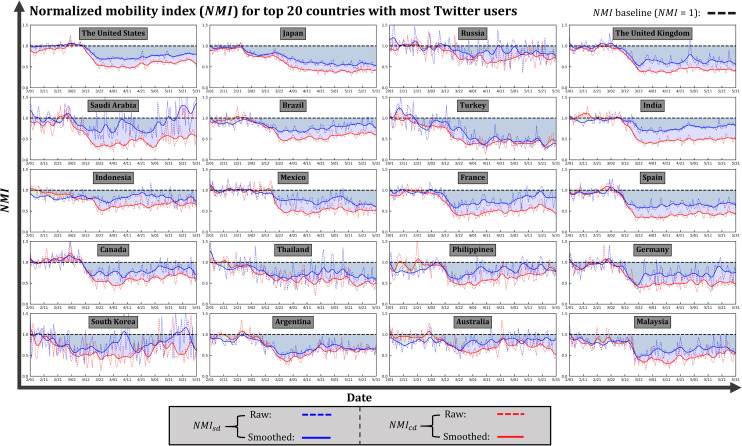
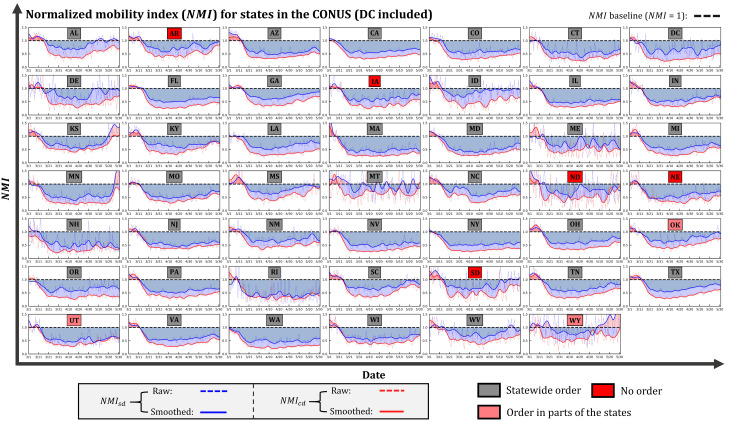
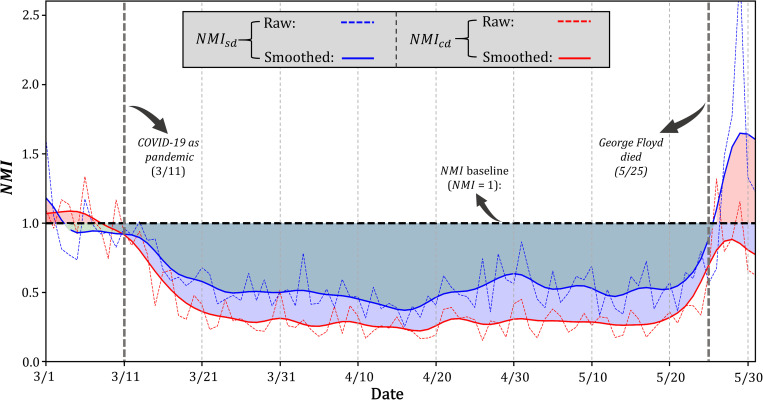
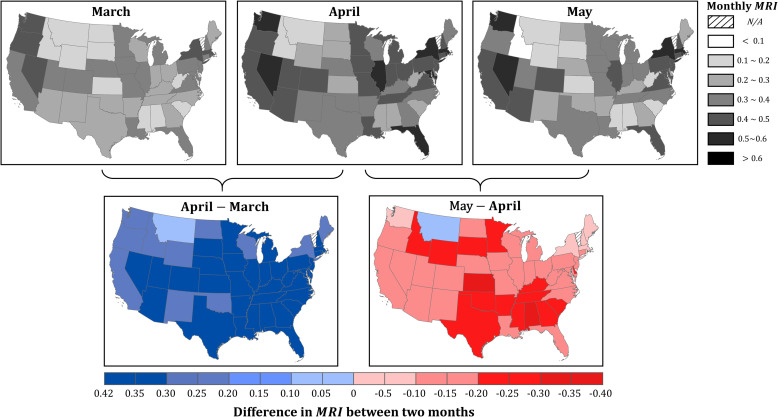
The current COVID-19 pandemic raises concerns worldwide, leading to serious health, economic, and social challenges. The rapid spread of the virus at a global scale highlights the need for a more harmonized, less privacy-concerning, easily accessible approach to monitoring the human mobility that has proven to be associated with viral transmission. In this study, we analyzed over 580 million tweets worldwide to see how global collaborative efforts in reducing human mobility are reflected from the user-generated information at the global, country, and U.S. state scale. Considering the multifaceted nature of mobility, we propose two types of distance: the single-day distance and the cross-day distance. To quantify the responsiveness in certain geographic regions, we further propose a mobility-based responsive index (MRI) that captures the overall degree of mobility changes within a time window. The results suggest that mobility patterns obtained from Twitter data are amenable to quantitatively reflect the mobility dynamics. Globally, the proposed two distances had greatly deviated from their baselines after March 11, 2020, when WHO declared COVID-19 as a pandemic. The considerably less periodicity after the declaration suggests that the protection measures have obviously affected people’s travel routines. The country scale comparisons reveal the discrepancies in responsiveness, evidenced by the contrasting mobility patterns in different epidemic phases. We find that the triggers of mobility changes correspond well with the national announcements of mitigation measures, proving that Twitter-based mobility implies the effectiveness of those measures. In the U.S., the influence of the COVID-19 pandemic on mobility is distinct. However, the impacts vary substantially among states.
Overview
The claims and statistics of this paper haven’t been checked yet.
Run the check — free, no account needed. It reads the open-access text and checks the sources it cites.
Integrity signals
Registry
Cites
Statistics
Figures
Verification
Claims the paper makes
The claims and statistics of this paper haven’t been checked yet.
Run the check — free, no account needed. It reads the open-access text and checks the sources it cites.
Self-check
Percentages, sums and reported differences re-computed from the paper’s own numbers.
The self-check needs the paper’s full text.
Citations
Cites
Understanding individual human mobility patterns
González, M. C., Hidalgo, C. A., & Barabási, A.-Ĺ. (2008) · Nature · doi:10.1038/nature06958 · Cited by 6,186 · cited 1×
“Studies have shown that mobility may vary regularly on a monthly basis [62, 63], and the variations differ geographically due to the different cultural and societal settings.”
Background4 What Is Web 2.0? Design Patterns and Business Models for the Next Generation of Software
O’Reilly, T. (2012) · New York University Press eBooks · doi:10.18574/nyu/9780814764077.003.0008 · Cited by 5,623
Citizens as sensors: the world of volunteered geography
Goodchild, M. F. (2007) · GeoJournal · doi:10.1007/s10708-007-9111-y · Cited by 4,611 · cited 2×
“Since the initial outbreak of COVID-19, numerous efforts have been made, by incorporating the emerging concept of “Web 2.0” [14], “Big Data” [15], and “Citizen as Sensors” [16], to obtain timely information regarding whether people are actively reducing their exposure to COVID-19 by reducing distances traveled, and by…”
BackgroundInfluentialQiu, J., Shen, B., Zhao, M., Wang, Z., Xie, B., & Xu, Y. (2020) · General Psychiatry · doi:10.1136/gpsych-2020-100213 · Cited by 4,307
The effect of travel restrictions on the spread of the 2019 novel coronavirus (COVID-19) outbreak
Chinazzi, M., Davis, J. T., Ajelli, M., Gioannini, C., Litvinova, M., Merler, S., Pastore y Piontti, A., Mu, K., Rossi, L., Sun, K., et al. (2020) · Science · doi:10.1126/science.aba9757 · Cited by 3,694
Big Data : The Management Revolution
マカフィー, ア., ブリニョルフソン, エ., & 有賀, 裕. (2013) · Harvard business review · Cited by 3,545
The effect of human mobility and control measures on the COVID-19 epidemic in China
Kraemer, M. U. G., Yang, C.-H., Gutiérrez, B., Wu, C., Klein, B., Pigott, D. M., open COVID-19 data working group, du Plessis, L., Faria, N. R., Li, R., et al. (2020) · Science · doi:10.1126/science.abb4218 · Cited by 2,987 · cited 2×
“An initial outbreak of COVID-19 was first declared in Wuhan, China in January 2020 [2], before cases were reported in European countries, most notably Italy, France, and the UK.”
Method(2012) · PubMed · Cited by 2,326
Gender Differences in Negative Campaigning: The Impact of Party Environments
Ennser‐Jedenastik, L., Dolezal, M., & Müller, W. C. (2016) · Politics & Gender · doi:10.1017/s1743923x16000532 · Cited by 1,661
Spread and dynamics of the COVID-19 epidemic in Italy: Effects of emergency containment measures
Gatto, M., Bertuzzo, E., Mari, L., Miccoli, S., Carraro, L., Casagrandi, R., & Rinaldo, A. (2020) · Proceedings of the National Academy of Sciences · doi:10.1073/pnas.2004978117 · Cited by 1,046 · cited 1×
“This mobility pattern coincides with strong early travel restrictions implemented in Europe and Asia at the beginning of March [6, 46].”
Background
Cited by
Sorted by citations
Social Media Use for Health Purposes: Systematic Review
Chen, J., & Wang, Y. (2021) · Journal of Medical Internet Research · doi:10.2196/17917 · Cited by 1,073
“In addition to outbreak prediction, demographic and geographic data obtained from social media can inform medical research and practice of the characteristics of people who are at risk of being infected [20].”
BackgroundBlockchain and AI-Based Solutions to Combat Coronavirus (COVID-19)-Like Epidemics: A Survey
Nguyen, D. C., Ding, M., Pathirana, P. N., & Seneviratne, A. (2021) · IEEE Access · doi:10.1109/access.2021.3093633 · Cited by 286
“Human mobility patterns can be also estimated by using AI analytics based on geo-located Twitter social media data records [102].”
BackgroundBarbieri, D. M., Lou, B., Passavanti, M., Hui, C., Hoff, I., Lessa, D. A., Sikka, G., Chang, K., Gupta, A., Fang, K., et al. (2021) · PLOS ONE · doi:10.1371/journal.pone.0245886 · Cited by 246
“Overall, in line with aggregate findings evaluated by Information Technology companies [78, 79] and application software [80], the COVID-19 restrictive measures were highly effective to limit and radically alter mobility via every mode and for any purpose.”
ResultHuman mobility data in the COVID-19 pandemic: characteristics, applications, and challenges
Hu, T., Wang, S., She, B., Zhang, M., Huang, X., Cui, Y., Khuri, J., Hu, Y., Fu, X., Wang, X., et al. (2021) · International Journal of Digital Earth · doi:10.1080/17538947.2021.1952324 · Cited by 216
“The POI access in SafeGraph data is categorized by industry and business (e.g. grocery stores, restaurants, bars, hotels); brand (e.g. Costco, Starbucks, Walmart); regions (e.g. metropolitan areas); and restaurant type (e.g. Chinese, Italian, Korean food) (SafeGraph 2020).”
BackgroundMethodInfluentialSelf-citationKim, J., & Kwan, M. (2021) · Journal of Transport Geography · doi:10.1016/j.jtrangeo.2021.103039 · Cited by 179
Metadata
- Authors
- Huang, X., Li, Z., Jiang, Y., Li, X., & Porter, D.
- Affiliations
- University of South Carolina (US)
- Corresponding author
- Li, Zhenlong
- Venue
- PLOS ONE
- Publisher
- Public Library of Science (PLoS)
- Published
- 2020-11-10
- Volume
- 15
- Issue
- 11
- Pages
- e0241957
- ISSN
- 1932-6203 (ISSN-L)
- PMC
- PMC7654838
- OpenAlex
- W3105667161
- Cited by
- 242
- References
- 56
- Citations by year
- 2026: 12 · 2025: 21 · 2024: 22 · 2023: 49 · 2022: 72 · 2021: 61 · 2020: 5
- FWCI
- 41.68
- Type
- journal article
- Language
- en
- Open access
- gold
- doi.org
- Licence
- Locations
- PLoS ONE (publishedVersion, cc-by)
- PubMed Central (publishedVersion, cc-by)
- PubMed (publishedVersion)
- DOAJ (DOAJ: Directory of Open Access Journals) (submittedVersion, cc-by-sa)
- Funders
- National Science Foundatio (2028791)
- University of South Carolina Office of the Vice President for Research (135400-20-54176)
- Topics
- Social Sciences › Transportation › Human Mobility and Location-Based Analysis
- Physical Sciences › Mathematics › Modeling and Simulation › COVID-19 epidemiological studies
- Health Sciences › Medicine › Epidemiology › Data-Driven Disease Surveillance
- Keywords
- COVID-19 pandemic, human mobility, Twitter, social media data, travel behavior, mitigation measures, epidemic phases
- MeSH terms
- Betacoronavirus, COVID-19, SARS-CoV-2, Humans, Movement, Pneumonia, Viral, Coronavirus Infections, Pandemics, Social Media
About these checks
Registry, retraction, Cites and statistics results are computed, not judged, with one exception: a printed reference that no index lists is read once by a model before it counts as a citation error. Claims are extracted by a model and kept only when their quote appears verbatim in the text; each cited source is then checked, with a model’s help, for whether it says what the claim relies on. Those verdicts can be wrong — read the claim’s quote and the cited source before relying on one.
Statistics and arithmetic are recomputed, not judged.
Confidence bands are shown only for fields calibrated on our annotated test set. None is calibrated yet, so no band is shown.
What counts as a claim ›How we measure confidence ›How we check this ›
Are you an author, or do you see a problem with this page? Request a review
