

The DOI matches its Crossref record; 121 of the 124 references it cites were found in a registry or an index; 3 of the 34 sources its claims cite were checked for support.
Does time management work? A meta-analysis
Open accessAbstract
Does time management work? We conducted a meta-analysis to assess the impact of time management on performance and well-being. Results show that time management is moderately related to job performance, academic achievement, and wellbeing. Time management also shows a moderate, negative relationship with distress. Interestingly, individual differences and contextual factors have a much weaker association with time management, with the notable exception of conscientiousness. The extremely weak correlation with gender was unexpected: women seem to manage time better than men, but the difference is very slight. Further, we found that the link between time management and job performance seems to increase over the years: time management is more likely to get people a positive performance review at work today than in the early 1990s. The link between time management and gender, too, seems to intensify: women’s time management scores have been on the rise for the past few decades. We also note that time management seems to enhance wellbeing—in particular, life satisfaction—to a greater extent than it does performance. This challenges the common perception that time management first and foremost enhances work performance, and that wellbeing is simply a byproduct.
Overview
CoChat Summary
TL;DR
This meta-analysis of 158 studies finds that time management has moderate positive associations with job performance, academic achievement, and wellbeing, and a moderate negative association with distress. It challenges the common view that time management mainly boosts performance, finding stronger links with wellbeing, especially life satisfaction.
Key findings
- Across 158 studies and 490 effect sizes (53,957 participants), time management correlated with job performance *r* = .259, academic achievement *r* = .262, wellbeing *r* = .313, and distress *r* = -.222 (all *p* < .001).
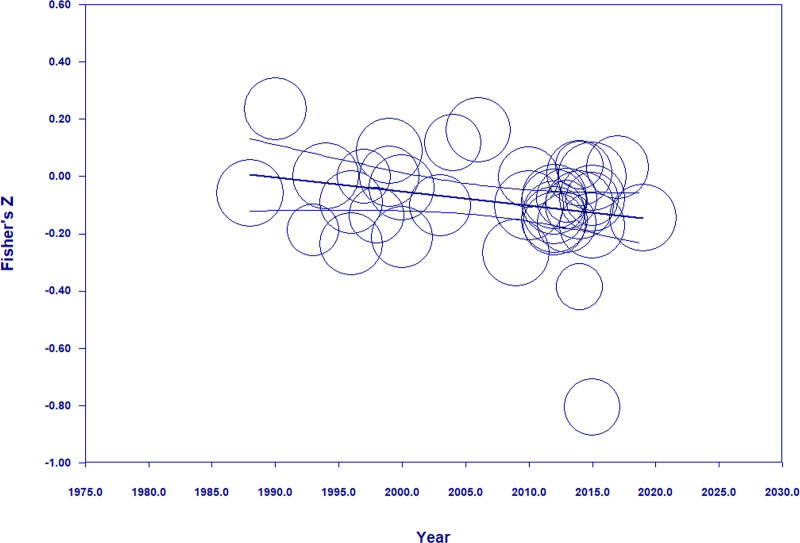
- Conscientiousness was the strongest individual-difference correlate (*r* = .451), while gender was very weak (*r* = -.087, women higher) and age, education, number of children, marital status, and job autonomy were mostly nonsignificant.
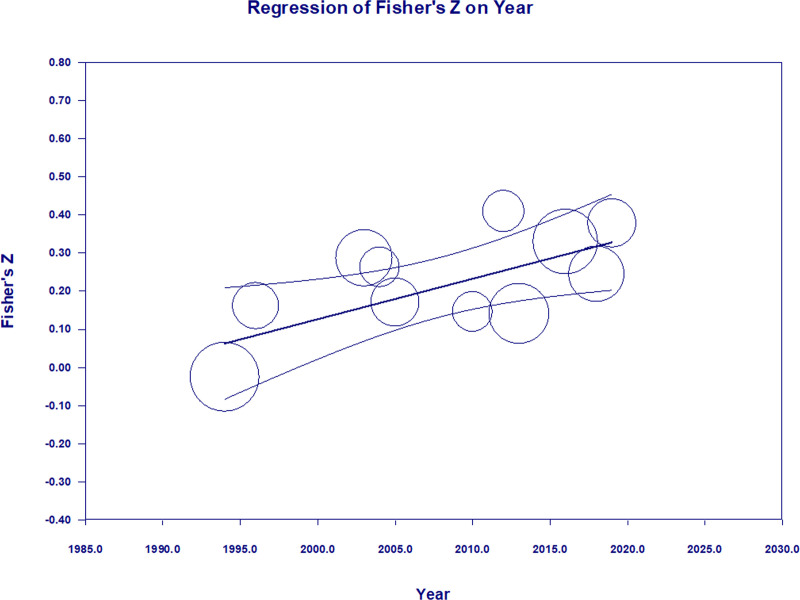
- Time management was more strongly related to wellbeing than performance: life satisfaction *r* = .426 versus job satisfaction *r* = .248, described as 72% stronger. The link with job performance increased over the years (*B* = .0106, *p* < .01).
- In academic settings, behavior-based performance *r* = .430 exceeded results-based performance *r* = .196; standardized tests were nonsignificant (*r* = .011).
Methods
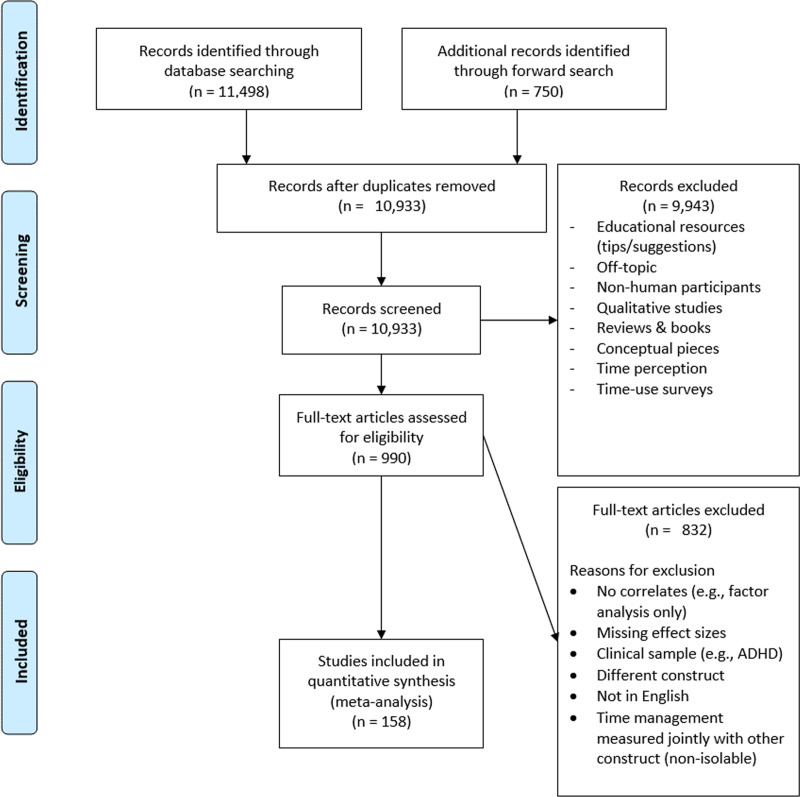
- Meta-analysis of quantitative empirical studies; searched EBSCO databases and forward-searched the three main time management measures, with no country/year restrictions and peer-reviewed articles up to 2019. The initial search yielded 10,933 hits, narrowing to 158 eligible studies and 490 effect sizes.
- Correlates were coded into professional/academic performance, positive wellbeing, distress, individual differences, and contextual factors. Analyses used random-effects models in Comprehensive Meta-Analysis v.3, transformed correlations to Fisher’s *z*, and averaged subscales or multiple outcomes when needed.
Limitations
- Stated in the paper: most time management studies are cross-sectional, so causal direction is often unclear; time management training interventions are often opaque, making comparisons difficult; high heterogeneity suggests moderators need more attention; publication bias was moderate for job performance and distress; time management ability may depend on income, education, and privilege.
- Evident from the text: the meta-analysis is correlational and cannot establish causation across all included studies; some categories had very few studies (e.g., contextual factors had 3–7 studies, and some variables had only 1–2 effect sizes), limiting precision; heterogeneity was often very high (e.g., *I²* = 96.18 for conscientiousness), complicating interpretation.
Model-written summary. Check it against the paper before relying on it.
Integrity signals
Registry
Cites
Statistics
Figures
Verification
Claims the paper makes
2 Valid · 0 Not valid · 21 Not checked · 65 Own results and interpretations
A result the paper reports from its own data — it cites no other source for it, so there is none to check. The quote shows it is in the paper.
In the paper
“Results show that time management is moderately related to job performance, academic achievement, and wellbeing.”
- Also stated in: § Time management and performance in academic settings · hedged
“Overall, the effect of time management on performance seems to be slightly higher in academic settings compared to work settings, although the magnitude of the effect remains moderate (see Table 5).”
§ Does time management work? A meta-analysis > Abstract
plainstates an association- Asserted: passes — The authors put it forward as true.
- Checkable: passes — It can be checked against evidence.
- Load-bearing: passes — The paper’s conclusions depend on it.
- Based: passes — The paper gives a reason why it holds.
- Also stated in: § Time management and performance in academic settings · hedged
A result the paper reports from its own data — it cites no other source for it, so there is none to check. The quote shows it is in the paper.
In the paper
“Corroborating this, note how, in Table 6 below, the link between time management and job satisfaction (I2 = 58.70) is much less heterogeneous than the one between time management and life satisfaction (I2 = 95.45).”
§ Does time management work? A meta-analysis > Results > Time management and performance in professional settings
plainstates an association- Asserted: passes — The authors put it forward as true.
- Checkable: passes — It can be checked against evidence.
- Load-bearing: unclear — It is unclear whether the paper’s conclusions depend on it.
- Based: passes — The paper gives a reason why it holds.
A result the paper reports from its own data — it cites no other source for it, so there is none to check. The quote shows it is in the paper.
In the paper
“Studies that measured contextual factors were fewer still—between 3 and 7 (depending on the contextual factor).”
§ Does time management work? A meta-analysis > Results > Overall description of the literature
plain- Asserted: passes — The authors put it forward as true.
- Checkable: passes — It can be checked against evidence.
- Load-bearing: unclear — It is unclear whether the paper’s conclusions depend on it.
- Based: passes — The paper gives a reason why it holds.
A result the paper reports from its own data — it cites no other source for it, so there is none to check. The quote shows it is in the paper.
In the paper
“The alleviating effect on psychological distress is particularly strong (r = -0.358; see Table 7).”
§ Does time management work? A meta-analysis > Results > Time management and distress
boostedstates a cause- Asserted: passes — The authors put it forward as true.
- Checkable: passes — It can be checked against evidence.
- Load-bearing: passes — The paper’s conclusions depend on it.
- Based: passes — The paper gives a reason why it holds.
A result the paper reports from its own data — it cites no other source for it, so there is none to check. The quote shows it is in the paper.
In the paper
“As further evidence, notice how in Table 6 the effect of time management on life satisfaction is 72% stronger than that on job satisfaction.”
§ Does time management work? A meta-analysis > Results > Time management and wellbeing
plainstates a cause- Asserted: passes — The authors put it forward as true.
- Checkable: passes — It can be checked against evidence.
- Load-bearing: unclear — It is unclear whether the paper’s conclusions depend on it.
- Based: passes — The paper gives a reason why it holds.
47 more claims
Create a free account to see all 88 claims and every source verdict.
- It may state two separate claims as one. 23
- Probably not a substantial claim. 12
- The quote only partly states this claim. 4
Citations
Cites
Preferred Reporting Items for Systematic Reviews and Meta-Analyses: the PRISMA statement
Moher, D., Liberati, A., Tetzlaff, J., Altman, D. G., & for the PRISMA Group (2009) · BMJ · doi:10.1136/bmj.b2535 · Cited by 83,823
Preferred reporting items for systematic reviews and meta-analyses: The PRISMA statement
Moher, D., Liberati, A., Tetzlaff, J., Altman, D. G., & the PRISMA Group* (2009) · Annals of Internal Medicine · doi:10.7326/0003-4819-151-4-200908180-00135 · Cited by 37,554
Borenstein, M., Hedges, L. V., Higgins, J. P. T., & Rothstein, H. R. (2009) · doi:10.1002/9780470743386 · Cited by 14,225
Borenstein, M., Hedges, L. V., Higgins, J. P. T., & Rothstein, H. R. (2021) · doi:10.1002/9781119558378 · Cited by 9,799
The Principles of Scientific Management.
Woolf, L. S., Taylor, F. W., Scott, W. D., & Goldmark, J. (1912) · The Economic Journal · doi:10.2307/2221959 · Cited by 5,256
Principles of Scientific Management, The
(2015) · The SAGE Encyclopedia of Economics and Society · doi:10.4135/9781452206905.n541 · Cited by 5,038
TIME, WORK-DISCIPLINE, AND INDUSTRIAL CAPITALISM
Thompson, E. P. (1967) · Past and Present · doi:10.1093/past/38.1.56 · Cited by 3,810 · cited 1×
“It is only with relatively recent events, such as the Industrial Revolution and waves of corporate downsizing, that time management has become synonymous with productivity [43, 65].”
BackgroundYeager, D. S., & Dweck, C. S. (2012) · Educational Psychologist · doi:10.1080/00461520.2012.722805 · Cited by 2,334
Cognitive control in media multitaskers
Ophir, E., Nass, C., & Wagner, A. D. (2009) · Proceedings of the National Academy of Sciences · doi:10.1073/pnas.0903620106 · Cited by 1,810 · cited 1×
“It has almost become commonsense that multitasking does not lead to performance [97].”
BackgroundCollege students' time management: Correlations with academic performance and stress.
Macan, T. H., Shahani, C., Dipboye, R. L., & Phillips, A. P. (1990) · Journal of Educational Psychology · doi:10.1037/0022-0663.82.4.760 · Cited by 933 · cited 3×
“These books inspired early modern time management research [21, 58, 88].”
BackgroundMethod
Research works printed but not linked: 8
- M. Garber, 2015, The Rise of ‘Speed-Listening.’, The Atlantic
- C. Mele, 2016, Too many shows? Just speed them up, The New York Times, B7
- B. Clinton, 2004, My life
- T Lorenz, 2019, The Slackification of the American Home, The Atlantic
- Google Ngram Viewer, 2016, The rise of time management
- O. Burkeman, 2016, Why time management is ruining our lives., The Guardian
- M Aurelius, 1909, Harvard Classics, 193
- M Borenstein, 2013, Comprehensive Meta-Analysis Version 3
Cited by
Xu, J. (2022) · Contemporary Educational Psychology · doi:10.1016/j.cedpsych.2022.102087 · Cited by 55
Trentepohl, S., Waldeyer, J., Fleischer, J., Roelle, J., Leutner, D., & Wirth, J. (2022) · Sustainability · doi:10.3390/su14095097 · Cited by 94
“Time management is considered an integral component of self-regulated learning [4,14] and is correlated with higher academic performance [15,16].”
BackgroundThe aging mind: A complex challenge for research and practice
Zihl, J., & Reppermund, S. (2022) · Aging Brain · doi:10.1016/j.nbas.2022.100060 · Cited by 44
“However, the adaptation of the individual time schedule allows a personalized prospective time-pressure management [147] and can also enhance wellbeing [2].”
BackgroundHow Personality Matters for Education Research
Jach, H. K., Bardach, L., & Murayama, K. (2023) · Educational Psychology Review · doi:10.1007/s10648-023-09807-4 · Cited by 50
“…and low effort (Conard, 2006; Cuadrado et al., 2021; Rijavec & Miljkovic, 2015), and tend to display better time management/less procrastination (Aeon et al., 2021; Steel, 2007; Theobald et al., 2018), complete their homework on time, and have higher engagement and more positive attitudes…”
BackgroundPetcu, M. A., Sobolevschi-David, M. I., Creţu, R. F., Curea, Ș. C., Hristea, A. M., Negescu, M. D. O., & Țuțui, D. (2023) · International Journal of Environmental Research and Public Health · doi:10.3390/ijerph20031811 · Cited by 42
“This raises the perception of many researchers [34] that time management primarily improves performance in the workplace and that wellbeing at work is simply a by-product.”
Background
Metadata
- Authors
- Aeon, B., Faber, A., & Panaccio, A.
- Affiliations
- Concordia University (CA)
- Université Laval (CA)
- Corresponding author
- Aeon, Brad
- Venue
- PLOS ONE
- Publisher
- Public Library of Science (PLoS)
- Published
- 2021-01-11
- Volume
- 16
- Issue
- 1
- Pages
- e0245066
- ISSN
- 1932-6203 (ISSN-L)
- PMC
- PMC7799745
- OpenAlex
- W3119885646
- Cited by
- 172
- References
- 124
- Citations by year
- 2026: 43 · 2025: 50 · 2024: 33 · 2023: 23 · 2022: 22 · 2021: 1
- FWCI
- 2.63
- Type
- journal article
- Language
- en
- Open access
- gold
- doi.org
- Licence
- Locations
- PLoS ONE (publishedVersion, cc-by)
- Europe PMC (PubMed Central) (publishedVersion, cc-by)
- PubMed Central (publishedVersion, cc-by)
- PubMed (publishedVersion)
- RePEc: Research Papers in Economics (submittedVersion)
- DOAJ (DOAJ: Directory of Open Access Journals) (submittedVersion, cc-by-sa)
- Topics
- Social Sciences › Psychology › Clinical Psychology › Perfectionism, Procrastination, Anxiety Studies
- Social Sciences › Psychology › Social Psychology › Psychological Well-being and Life Satisfaction
- Social Sciences › Education › Educational Outcomes and Influences
- Keywords
- time management, employee performance, academic performance, well-being, life satisfaction, distress, conscientiousness, gender differences, individual differences, temporal trends
- MeSH terms
- Adult, Female, Humans, Job Satisfaction, Male, Stress, Psychological, Time Management
About these checks
Registry, retraction, Cites and statistics results are computed, not judged, with one exception: a printed reference that no index lists is read once by a model before it counts as a citation error. Claims are extracted by a model and kept only when their quote appears verbatim in the text; each cited source is then checked, with a model’s help, for whether it says what the claim relies on. Those verdicts can be wrong — read the claim’s quote and the cited source before relying on one.
The claim verdicts this report counts are experimental: their accuracy is not yet measured.
A language model drew the claims from the paper on 2026-10-01, under version 3 of the claim definition (model deepseek-v4.1-flash, prompt extract-v3).
A second model labelled each claim on 2026-10-01 (model jev-1.13-20260917, definition revision gold-guideline-v0.2).
Statistics and arithmetic are recomputed, not judged.
Confidence bands are shown only for fields calibrated on our annotated test set. None is calibrated yet, so no band is shown.
What counts as a claim ›How we measure confidence ›How we check this ›
Are you an author, or do you see a problem with this page? Request a review
How to cite
Cite CoChat for the checks on this page, and the paper for its own findings.
- This page
- CoChat. (2026). Citation check: Does time management work? A meta-analysis. https://app.cochat.ai/papers/10.1371/journal.pone.0245066
- The paper
- Aeon, B., Faber, A., & Panaccio, A. (2021). Does time management work? A meta-analysis. PLOS ONE. https://doi.org/10.1371/journal.pone.0245066
Data sources
Bibliographic data: Semantic Scholar, OpenAlex, Crossref.
Contains information from the Semantic Scholar Academic Graph Datasets, made available under the ODC Attribution License (ODC-BY 1.0).
Semantic Scholar’s data is described in: Kinney, R., et al. (2023). The Semantic Scholar Open Data Platform. arXiv:2301.10140.
