

Compliance with Iron and Folic Acid Supplementation (IFAS) and associated factors among pregnant women in Sub-Saharan Africa: A systematic review and meta-analysis
Open accessThe DOI matches its Crossref record; 39 of the 39 references it cites were found in a registry or an index.
Abstract
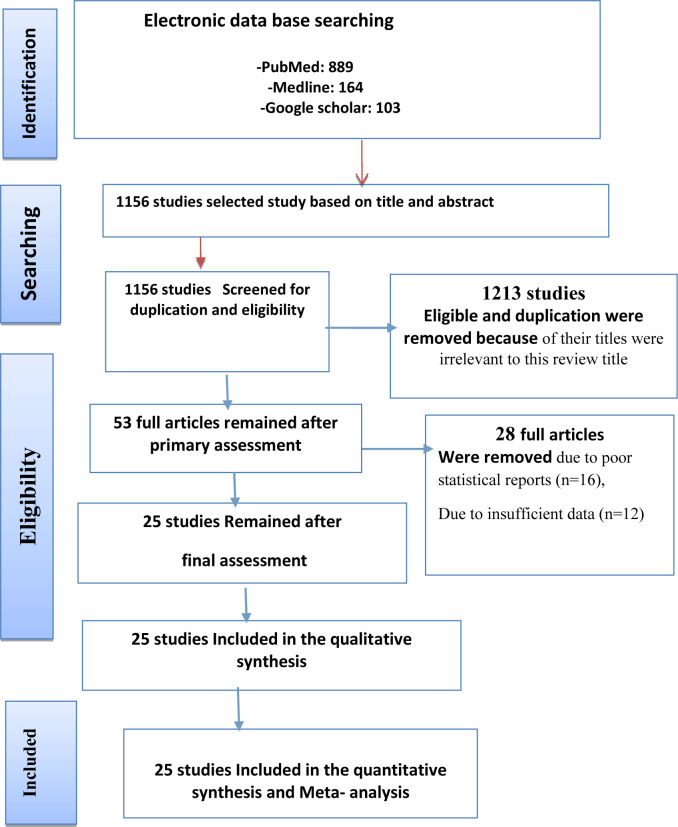
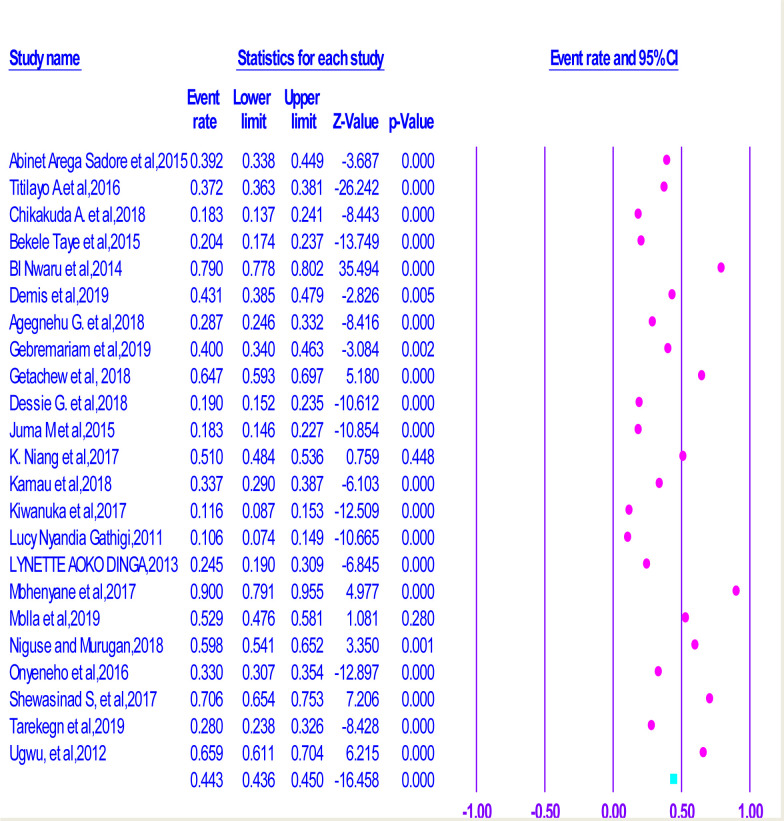
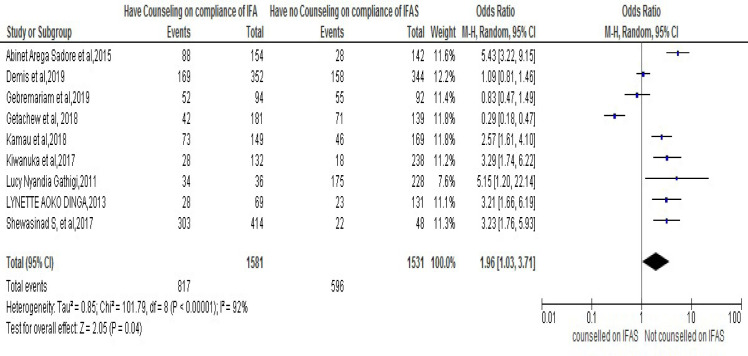
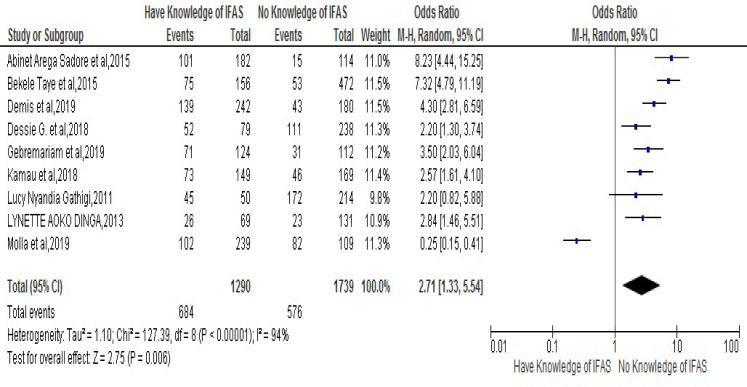
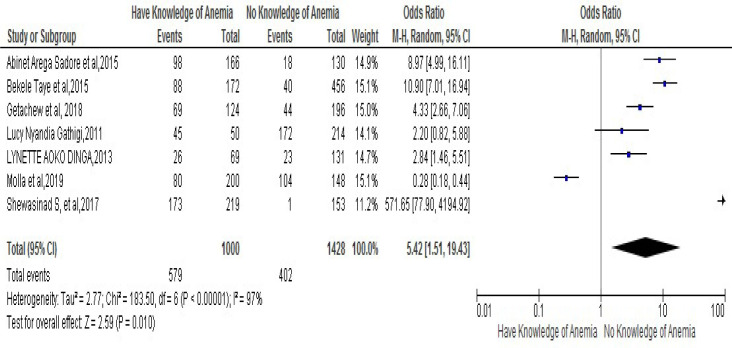
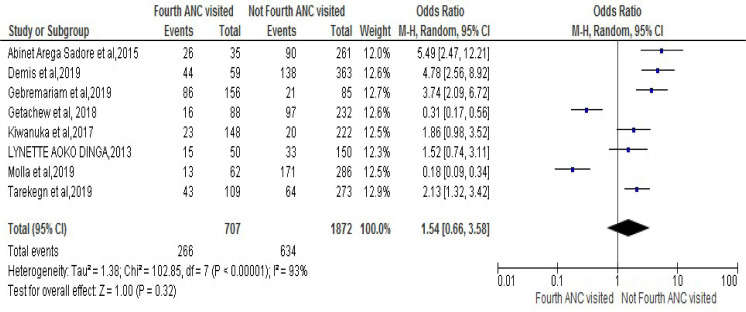
Background: Anemia is one of the world’s leading cause of disability and the most serious global public health issues. This systematic review and meta-analysis was conducted very carefully in order to give up the pooled compliance of Iron and Folic-Acid Supplementation in Sub-Saharan Africa. Methods: To conduct this brief systematic review and meta-analysis, a related literature search was done from different sources, PubMed Medline and Google Scholar Journals. Then IFA Supplementation related searching engine was used to make the work more meaningful and intensive. Moreover, we used modified Newcastle-Ottawa quality assessment scale for cross sectional studies to assess the quality of the study in terms of their inclusion. Then, the Preferred Reporting Items for Systematic Reviews and Meta-Analyses (PRISMA) guideline was followed to carry out the work in a carful manner. Finally, the pooled effect size was computed using the review manager and Compressive Meta-analysis software. Results: Twenty-three studies, which encompassed 24272 pregnant women, were chosen for the analysis. From those an overall prevalence of compliance with Iron and Folic Acid Supplementation (IFAS) in pregnancy in SSA was 39.2%. However, the result from meta-analysis showed that women who were counseled on IFAS in their courses of pregnancy were 1.96 times more likely to adhere to IFAS compared to those who were not counseled [OR:1.96, 95% CI (1.76-,5.93)]. Moreover, it showed that women who had knowledge of IFAS were 2.71 times more likely to have compliance with IFAS as compared to those who had no knowledge of IFAS [OR:2.71, 95% CI (1.33,5.54)]. Also it revealed that those women who had knowledge of anemia were 5.42 times more likely to have compliance with IFAS as compared with those who had no knowledge of anemia [OR5.42, 95% CI (1.52, 19.43)]. Furthermore, women who had received fourth visit for ANC were 1.54 times more likely to have compliance with IFAS as compared to those who had not received for ANC [OR 1.54, 95% CI (0.66, 3.58.43)]. Conclusions: Our finding from this systematic review and meta-analysis shows the low case in prevalence of compliance to IFAS among pregnant women in SSA. Predictors for this includes: knowledge about anemia, knowledge about IFAS, counseling on IFAS and receiving fourth antenatal care visit were statistically correlated positively with compliance to IFAS. This demands careful appraisal of effect of prevention work for functioning policy, programs and plan nutrition intrusions for refining maternal dietary intake in gestation. Also dietary education intrusion requires to be planned to satisfy the needs of pregnant women. So we hope that the result of this study might be essential as a bridging stone for policy makers of Africa; exclusively for maternal and child health care. Finally, we recommended further studies to be conducted in the area of the study for more intensive and detailed suggestions.
Overview
The claims and statistics of this paper haven’t been checked yet.
Free: it reads the open-access text and checks the first 5 claims that cite a source we can check. Create a free account to check every claim.
Integrity signals
Registry
Cites
Statistics
Figures
Verification
Claims the paper makes
The claims and statistics of this paper haven’t been checked yet.
Free: it reads the open-access text and checks the first 5 claims that cite a source we can check. Create a free account to check every claim.
Claims other papers make about this one
Each is checked against this paper’s own text: does it say what the citing paper says it does?
The cited source says what the claim attributes to it.
In the citing paper
“This finding aligns with systematic review and meta-analysis conducted in sub-Saharan Africa [28].”
Self-check
Percentages, sums and reported differences re-computed from the paper’s own numbers.
The self-check needs the paper’s full text.
Citations
Cites
Long-term developmental outcome of infants with iron deficiency
Lozoff, B., Jimenez, E., & Wolf, A. W. (1991) · New England Journal of Medicine · doi:10.1056/nejm199109053251004 · Cited by 1,009 · cited 1×
“Moreover, the influence of iron deficiency anemia (IDA) in first stages of teenager and early youthful are not possibly to be accustomed by substantial iron management [14].”
BackgroundHaider, B. A., Olofin, I., Wang, M., Spiegelman, D., Ezzati, M., Fawzi, W. W., & on behalf of Nutrition Impact Model Study Group (anaemia) (2013) · BMJ · doi:10.1136/bmj.f3443 · Cited by 871
Effect of mild iron deficiency on infant mentaldevelopment scores
Walter, T., Kovalskys, J., & Stekel, A. (1983) · The Journal of Pediatrics · doi:10.1016/s0022-3476(83)80177-2 · Cited by 228
Iron status in pregnant women and women of reproductive age in Europe
Milman, N., Taylor, C. L., Merkel, J., & Brannon, P. M. (2017) · The American Journal of Clinical Nutrition · doi:10.3945/ajcn.117.156000 · Cited by 225
Dietary Change during Pregnancy and Women’s Reasons for Change
Forbes, L. E., Graham, J. E., Berglund, C., & Bell, R. C. (2018) · Nutrients · doi:10.3390/nu10081032 · Cited by 203 · cited 1×
“Likewise, women in Sub-Saharan Africa (SSA) intake low dietary iron, Calcium and Folic-Acid having less than RDA (Recommended Dietary Allowances) requirements for a woman during pregnancy for the reason that they were economically not recognized [15, 16].”
BackgroundTaye, B., Abeje, G., & Mekonen, A. (2015) · Pan African Medical Journal · doi:10.11604/pamj.2015.20.43.4894 · Cited by 155 · cited 3×
“Knowledge of Iron Folic Acid Supplementation (IFAS) The association of lack of knowledge on Iron Folic-Acid Supplementation and risk of developing noncompliance to IFAS during pregnancy was stated in nine chosen studies [25, 26, 28, 30, 32, 35, 37, 38, 40].”
BackgroundKamau, M. W., Mirie, W., & Kimani, S. (2018) · BMC Public Health · doi:10.1186/s12889-018-5437-2 · Cited by 125
Ugwu, E., Olibe, A., Obi, S., & Ugwu, A. (2014) · Nigerian Journal of Clinical Practice · doi:10.4103/1119-3077.141427 · Cited by 114
Arega Sadore, A., Abebe Gebretsadik, L., & Aman Hussen, M. (2015) · Journal of Environmental and Public Health · doi:10.1155/2015/781973 · Cited by 114 · cited 4×
“Knowledge of Iron Folic Acid Supplementation (IFAS) The association of lack of knowledge on Iron Folic-Acid Supplementation and risk of developing noncompliance to IFAS during pregnancy was stated in nine chosen studies [25, 26, 28, 30, 32, 35, 37, 38, 40].”
BackgroundInfluentialAdam, I., Ibrahim, Y., & Elhardello, O. (2018) · BMC Hematology · doi:10.1186/s12878-018-0124-1 · Cited by 104
Research works printed but not linked: 10
- WHO; de Benoist B, McLean E, Egli I, Cogswell M, editors. Worldwide prevalence of anaemia 1993- 2005. WHO global database on anaemia. Geneva: World Health Organization (WHO); 2008
- Fakher D. M., et al. "Maternal serum ferritin in relation to birth weight (2015)." AAMJ, 2015, 13: 174- 179
- Shen P., et al. Four trace elements in pregnant women and their relationships with adverse pregnancy outcomes. Eur Rev Med Pharmacol Sci, 2015, 19(24): 4690-4697 PMID: 26744858
- Lucy Nyandia Gathigi. Factors Influencing Utilization of Iron and Folic Acid Supplementation Services among Women Attending Antenatal Clinic at Nyeri Provincial Hospital Kenya (2011).
- Niang K. et al. Determinants of Iron Consumption among Pregnant Women in Southern Senegal. Open Journal of Obstetrics and Gynecology, 2017, 7, 41-50 http://www.scirp.org/journal/ojog ISSN Online: 2160-8806 · DOI · Paper page
- Lucy Nyandia Gathigi. Factors Influencing Utilization of Iron and Folic Acid Supplementation Services among Women Attending Antenatal Clinic at Nyeri Provincial Hospital Kenya (2011)
- Niguse and Murugan: Determinants of Adherence to folic acid supplementation among pregnant women. International Journal of Therapeutic Applications, Volume 35, 2018, ISSN 2320-138X © 2018
- Shewasinad S, et al. adherence and associated Factors of perinatal iron and Supplementation among pregnant women in who attend antenatal care in health facility at Mizan-Aman town, bench Maji zone, Ethiopia. J pregnancy and child 2017, 4:3, https://doi.org/10.4172/2376-127X.1000335o 1, Jan.-Jun. 2013, pp. 74-85 · doi:10.4172/2376-127x.1000335o
- G Wells, full-text. NewcastleOttawa scale Assess Qual nonrandomised Stud meta-analysis
- El-Zeftawy A. et al. Knowledge of Pregnant Women Regarding the Factors Affecting their Compliance with Iron and Folate Supplementation. IOSR Journal of Nursing and Health Science (IOSR-JNHS) e- ISSN: 2320-1959.p-ISSN: 2320-1940 Volume 7, Issue 6 Ver. IV. (Nov.-Dec.2018), PP 66-80. https:// doi.org/10.9790/1959-0706046680 · doi:10.9790/1959-0706046680
Cited by
Waqas, S., Harun, N. Y., Sambudi, N. S., Abioye, K. J., Zeeshan, M. H., Ali, A., Abdulrahman, A., Alkhattabi, L., & Alsaadi, A. S. (2023) · Membranes · doi:10.3390/membranes13080704 · Cited by 81
“Recently, many researchers have investigated the performance using different parameters [17,35].”
BackgroundAfolabi, B. B., Babah, O. A., Adeyemo, T. A., Balogun, M. R., Banke-Thomas, A. O., Abioye, A. I., Akinajo, O. R., Galadanci, H. S., Quao, R. A., Adelabu, H., et al. (2024) · The Lancet Global Health · doi:10.1016/s2214-109x(24)00239-0 · Cited by 52
Billah, S. M., Raynes‐Greenow, C. H., Ali, N. B., Karim, F., Lotus, S. U., Azad, R., Sari, M., Mustaphi, P., Maniruzzaman, M., Rahman, S. M. M., et al. (2022) · Nutrients · doi:10.3390/nu14153114 · Cited by 45
“Although widely available and relatively cheap, coverage and adherence to IFA supplementation in pregnancy have been poor [23,24].”
BackgroundResultAfolabi, B. B., Babah, O. A., Akinajo, O. R., Adaramoye, V. O., Adeyemo, T. A., Balogun, M. R., Banke-Thomas, A. O., Quao, R. A., Olorunfemi, G., Abioye, A. I., et al. (2022) · Trials · doi:10.1186/s13063-022-06690-2 · Cited by 39
“Rates of completion for prescribed oral iron regimens for AIP in Nigeria and other African countries have been reported between 34 and 58% [20].”
BackgroundMalaria in pregnancy control and pregnancy outcomes: a decade’s overview using Ghana’s DHIMS II data
Ampofo, G. D., Osarfo, J., Aberese-Ako, M., Asem, L., Komey, M., Mohammed, W., Ofosu, A. A., & Tagbor, H. K. (2022) · Malaria Journal · doi:10.1186/s12936-022-04331-2 · Cited by 29
Jhaveri, N. R., Poveda, N. E., Kachwaha, S., Comeau, D. L., Nguyen, P. H., & Young, M. F. (2023) · Frontiers in Nutrition · doi:10.3389/fnut.2023.1185696 · Cited by 34
“Similarly, women had shared accurate knowledge when discussing IFA supplement intake and did not have difficulty reporting the importance of taking the supplement, the time of day to take it, and ways to reduce side effects; these are key aspects that underlie the consistent IFA intake that are necessary for its effec…”
BackgroundAheto, J. M. K., Alhassan, Y., Puplampu, A. E., Boglo, J. K., & Sedzro, K. M. (2023) · Health Science Reports · doi:10.1002/hsr2.1643 · Cited by 24
Beressa, G., Lencha, B., Bosha, T., & Egata, G. (2022) · Scientific Reports · doi:10.1038/s41598-022-20614-9 · Cited by 22
Smith, E., Gomes, F., Adu‐Afarwuah, S., Aguayo, V. M., Arifeen, S. E., Bhutta, Z. A., Caniglia, E. C., Christian, P. S., Devakumar, D., Dewey, K. G., et al. (2025) · Advances in Nutrition · doi:10.1016/j.advnut.2025.100455 · Cited by 38
Flax, V. L., Bose, S., Escobar-DeMarco, J. L., & Frongillo, E. A. (2023) · Maternal and Child Nutrition · doi:10.1111/mcn.13559 · Cited by 22
“Prevalence of iron and folic acid (IFA) supplementation compliance during pregnancy is not available globally; but in sub ‐ Saharan Africa, for example, compliance has been estimated at 39% (Fite et al., 2021).”
Tamirat, K. S., Kebede, F. B., Zayede, T., Tessema, G. A., & Tessema, Z. T. (2022) · BMC Pregnancy and Childbirth · doi:10.1186/s12884-022-04461-0 · Cited by 19
“Many studies have been undertaken among pregnant women to discover the main factors linked to poor iron and folic acid adherence during pregnancy [12, 13, 15, 16].”
BackgroundAgulu, G. G., Ahissou, N. C. A., Kamiya, Y., Baiden, F., & Matsui, M. (2025) · Tropical Medicine and Health · doi:10.1186/s41182-025-00792-8 · Cited by 12
“Ghana’s anaemia burden among pregnant women remains substantially lower than in countries such as Guinea and Mali, but higher than the global average [4, 40–42].”
Aweke, M. N., Fentie, E. A., Agimas, M. C., Baffa, L. D., Shewarega, E. S., Belew, A. K., Muhammad, E. A., & Mengistu, B. (2025) · PLoS ONE · doi:10.1371/journal.pone.0318422 · Cited by 14
Temesgen, H., Woyraw, W., Feleke, F. W., Mezgebu, G. S., Taye, K., & Awoke, T. (2024) · Frontiers in Nutrition · doi:10.3389/fnut.2024.1348275 · Cited by 19
Mohamed, A. I., Mohamed, J., Abdillahi, M. M., Abdeeq, B. A., & Lema, T. B. (2024) · Clinical Epidemiology and Global Health · doi:10.1016/j.cegh.2024.101565 · Cited by 11
Mare, K. U., Aychiluhm, S. B., Mulaw, G. F., Sabo, K. G., Ebrahim, O. A., Tebeje, T. M., & Seifu, B. L. (2024) · BMC Pregnancy and Childbirth · doi:10.1186/s12884-024-07105-7 · Cited by 15
Ampofo, G. D., Osarfo, J., Okyere, D. D., Kouevidjin, E., Aberese-Ako, M., & Tagbor, H. K. (2025) · BMC Pregnancy and Childbirth · doi:10.1186/s12884-025-07735-5 · Cited by 13
“It is not surprising then that increasing gestational age at ANC booking increased the odds of maternal anaemia, similarly reported in a review [82].”
Ampofo, G. D., Ahiakpa, A. K., & Osarfo, J. (2023) · SAGE Open Medicine · doi:10.1177/20503121231199653 · Cited by 11
Tancred, T., Mubangizi, V., Dei, E. N., Natukunda, S., Abankwah, D. N. Y., Ellis, P., Bates, I., Natukunda, B., & Asamoah‐Akuoko, L. (2024) · PLOS Global Public Health · doi:10.1371/journal.pgph.0003610 · Cited by 16
Risk factors of anaemia among postpartum women in Bolgatanga Municipality, Ghana
Wemakor, A., Ziyaaba, A., & Yiripuo, F. (2022) · BMC Nutrition · doi:10.1186/s40795-022-00550-7 · Cited by 9
Yang, J., Chen, J., Xie, Y., Liu, Y., Wu, J., Li, Y., & Nie, J. (2025) · Frontiers in Public Health · doi:10.3389/fpubh.2024.1514522 · Cited by 9
Alemu, G. G., Adugna, D. G., Workie, A. M., Agimas, M. C., Baffa, L. D., Abuhay, H. W., Aweke, M. N., Alemu, T. G., & Baykemagn, N. D. (2025) · PLoS ONE · doi:10.1371/journal.pone.0329458 · Cited by 10
“A systematic review and meta-analysis in SSA revealed that the estimated pooled prevalence of IFAS among pregnant women was 39.2% [13].”
InfluentialMengistu, G. T., Mengistu, B. K., Gudeta, T. G., Terefe, A. B., Mamo, F., Demissie, M., Sori, S. A., & Jiru, H. D. (2022) · BMC Nutrition · doi:10.1186/s40795-022-00562-3 · Cited by 9
Bekele, Y. A., Gallagher, C., Batra, M., Vicendese, D., Buultjens, M., & Erbas, B. (2024) · Nutrients · doi:10.3390/nu16162801 · Cited by 11
“For example, a systematic review conducted in Sub-Saharan Africa in 2021 showed that compliance with iron folate supplementation was 39.2%, varying from 10.6% in Kenya to 79% in Mozambique [29].”
BackgroundInfluentialSmith, T. J., Sitthideth, D., Tan, X., Arnold, C. D., Kounnavong, S., & Hess, S. Y. (2022) · Journal of Nutritional Science · doi:10.1017/jns.2022.94 · Cited by 4
“Health providers should, therefore, be sufficiently trained to confidently deliver health promotion messages((45,54)) and counsel women on the benefits of antenatal supplements to ensure better compliance throughout pregnancy and postpartum((55,56)).”
BackgroundAbeje, S., Yosef, Y., & Fikadu, Y. (2023) · SAGE Open Nursing · doi:10.1177/23779608231189964 · Cited by 6
“A systematic review and meta-analysis conducted in Sub-Saharan Africa showed that the overall prevalence of IFA supplementation in pregnancy was 39.2% (Fite et al., 2021).”
BackgroundInfluentialAleboko, S. O., Abdulai, K., Ayensu, J., Agyapong, N. A. F., Mohammed, A. S., Nsiah-Asamoah, C. N. A., Klevor, M. K., Darko, G. B., & Nkrumah, P. (2023) · Integrated Health Research Journal · doi:10.47963/ihrj.v1i2.1372 · Cited by 9
Aballo, J., Adokiya, M. N., & Boah, M. (2025) · Discover Public Health · doi:10.1186/s12982-025-00561-2 · Cited by 5
Bekele, Y. A., Gallagher, C., Vicendese, D., Buultjens, M., Batra, M., & Erbas, B. (2024) · International Journal of Environmental Research and Public Health · doi:10.3390/ijerph21070856 · Cited by 6
“Similarly, a systematic review conducted in Sub-Saharan Africa showed that compliance with iron and folate supplementation ranges from 10.6% in Kenya to 79% in Mozambique [39].”
BackgroundInfluentialBusch‐Hallen, J., Ayoub, J. J., Harding, K., Raza, S., Okonkwo, O. S., Adebisi, B., Chamoun, L., Ahmed, K. M., Majeed, F., Latif, A., et al. (2026) · Nutrients · doi:10.3390/nu18071101 · Cited by 3
“[43].”
Felipe‐Dimog, E. B., Yu, C., & Liang, F. (2023) · Asia Pacific Journal of Public Health · doi:10.1177/10105395231205746 · Cited by 2
Shumi, L., Geda, A., & Bidira, K. (2024) · Health Science Reports · doi:10.1002/hsr2.1998 · Cited by 4
Saeed, M., Adam, G. K., Hussein, S., AlHabardi, N., & Adam, I. (2024) · Patient Preference and Adherence · doi:10.2147/ppa.s476738 · Cited by 10
Yassin, M. A., Kumma, W. P., Haile, D. T., & Elilo, L. T. (2024) · Scientific Reports · doi:10.1038/s41598-024-79066-y · Cited by 15
Ummair, M., Durrani, A., Jamshaid, M., Amjad, M., Gul, M., Khan, J., & Khan, A. Q. (2025) · Cureus · doi:10.7759/cureus.79495 · Cited by 8
“In contrast, developing countries are experiencing a concerning upward trend, with Ethiopia at 50.1%, Sudan at 53%, Guinea at 71%, and Pakistan at a staggering 76.7% prevalence rate [5].”
InfluentialMicronutrient supplementation: Programmatic issues
Young, M. F., Neufeld, L. M., Hendrix, S. J., & Ramakrishnan, U. (2022) · Elsevier eBooks · doi:10.1016/b978-0-12-821848-8.00126-8 · Cited by 2
Kuliya‐Gwarzo, A., Tancred, T., Gordon, D., Bates, I., & Raven, J. (2023) · F1000Research · doi:10.12688/f1000research.130980.3 · Cited by 2
Nutrition and sustainable development goal 12: Responsible consumption
(2024) · Frontiers research topics · doi:10.3389/978-2-8325-4706-9 · Cited by 1
Karki, R., Khanal, S. P., Joshi, D. R., & Kaphle, M. (2025) · Advances in Public Health · doi:10.1155/adph/9964809 · Cited by 3
“Good knowledge was associated with a 2.4 times higher likelihood of compliance, consistent with previous research [3, 7, 20, 30, 33].”
InfluentialUptake of iron and folic acid supplements among pregnant women in Dar es Salaam, Tanzania
Koka, C. E., Bakari, S., Njiro, B. J., & Sunguya, B. F. (2025) · PLOS Global Public Health · doi:10.1371/journal.pgph.0005278 · Cited by 1
Kuliya‐Gwarzo, A., Tancred, T., Gordon, D., Bates, I., & Raven, J. (2023) · F1000Research · doi:10.12688/f1000research.130980.1 · Cited by 2
“43,44 This study explored maternal anaemia services use and provision at MMSH, by drawing from diverse perspectives across a variety of health systems stakeholders.”
BackgroundUse of reminder box for the amount of iron tablet consumption in pregnant women
Nurbaiti, N. (2023) · AcTion Aceh Nutrition Journal · doi:10.30867/action.v8i2.637 · Cited by 4
“Anemia is a global public health problem in women of childbearing age and pregnant women (Fite et al., 2021).”
BackgroundSengupta, A., Prakash, M., & Dutta, T. (2026) · BMC Pregnancy and Childbirth · doi:10.1186/s12884-026-09639-4 · Cited by 2
“A systematic review conducted among pregnant women in Sub-Saharan Africa shows an extremely low prevalence of compliance to IFA supplementation [9].”
Ali, S. H., & Abdo, Z. A. (2022) · American Journal of Health Research · doi:10.11648/j.ajhr.20221002.11 · Cited by 3
Merse, F., Hanfore, L. K., & Fanta, A. (2022) · Clinical Journal of Obstetrics and Gynecology · doi:10.29328/journal.cjog.1001108
“To avoid anemia, all pregnant women in malnutritionprone areas should get iron and folic acid (IFA) supplements regularly, along with adequate dietary guidance [3].”
BackgroundInfluentialBekele, A., Alemayehu, B., & Gemechu, E. (2022) · Research Square · doi:10.21203/rs.3.rs-1702840/v1
Afolabi, B. B., Babah, O. A., Akinajo, O. R., Adaramoye, V. O., Adeyemo, T. A., Balogun, M. R., Banke-Thomas, A. O., Quao, R. A., Olorunfemi, G., Abioye, A. I., et al. (2022) · Research Square · doi:10.21203/rs.3.rs-1808937/v1
Aheto, J. M. K., Alhassan, Y., Puplampu, A. E., Boglo, J. K., & Sedzro, K. M. (2023) · Research Square · doi:10.21203/rs.3.rs-2638077/v1
Faktor-Faktor yang Berhubungan dengan Perilaku Konsumsi Tablet Tambah Darah Pada Ibu Hamil
Palupi, E. P. E., Ayu, I. M., Heryana, A., & Mustikawati, I. S. (2023) · JURNAL ILMU DAN TEKNOLOGI KESEHATAN TERPADU · doi:10.53579/jitkt.v3i1.89
Adhikari, J., Ranjitkar, S., Manandhar, M., Timalsina, P., & Gachhadar, R. (2023) · Journal of Chitwan Medical College · doi:10.54530/jcmc.1334
Sugianti, E. (2021) · JURNAL RISET GIZI · doi:10.31983/jrg.v9i2.7689
Benjamin, G., Mrema, E. J., Nhumba, N., Wakoli, A. B., & Mwanga, H. H. (2025) · Bulletin of the National Research Centre/Bulletin of the National Research Center · doi:10.1186/s42269-025-01301-x · Cited by 2
Seid, M. A., Gebru, A. S., Yimer, A., Ali, K., Yesuf, A., Sirage, N., Seid, A., Tesfa, N. A., & Yesuf, H. A. (2025) · BMC Pregnancy and Childbirth · doi:10.1186/s12884-025-08119-5 · Cited by 6
“Adherence for iron and folic acid supplementation is influenced by several factors, including age [37, 52], maternal education [37], gravidity [35, 36], knowledge about IFAS [40–43, 47, 53], number of ANC contacts (≥ 4) [42, 47, 52, 54], early ANC registration [40, 43, 45, 54], counseling on IFAS…”
InfluentialLanyo, T. N., Williams, J. E., Ghosh, B., Apetorgbor, V. E. A., Kukula, V. A., Zielinski, R., Awini, E., Moyer, C. A., & Lori, J. R. (2025) · PLoS ONE · doi:10.1371/journal.pone.0333074
“Awareness and knowledge are vital for enabling behavior change [42–44].”
AFOLABI, B. B., Babah, O. A., Akinajo, O. R., Adaramoye, V. O., Adeyemo, T. A., Balogun, M. R., Banke-Thomas, A. O., Quao, R. A., Olorunfemi, G., Abioye, A. I., et al. (2022) · Figshare · doi:10.6084/m9.figshare.21069675
AFOLABI, B. B., Babah, O. A., Akinajo, O. R., Adaramoye, V. O., Adeyemo, T. A., Balogun, M. R., Banke-Thomas, A. O., Quao, R. A., Olorunfemi, G., Abioye, A. I., et al. (2022) · Figshare · doi:10.6084/m9.figshare.21069678
Arshad, R., Arooj, M., & Khalid, N. (2025) · Nutrition & Food Science · doi:10.1108/nfs-01-2025-0001
Profile of neural tube defects in pediatric patients in Nigeria: A systematic review
Kendall, N. A. S., Woo, J., Browning, B. K., Owagbemi, O. F., Ayantayo, T. O., Holden-Kapshuck, S. C., Kieny, H. G., Petitt, Z., Still, M. E., Blackwood, E. R., et al. (2026) · Journal of Clinical Neuroscience · doi:10.1016/j.jocn.2026.111853
Adam, G. A., AlHabardi, N., & Adam, I. (2026) · International Journal of Women s Health · doi:10.2147/ijwh.s567668
Yousuf, H. J., Omar, A. A., Ahmed, S. A., Omar, A. A., & Farah, A. A. (2026) · Research Square · doi:10.21203/rs.3.rs-9082298/v1
Sariyati, S., Subijanto, A. A., Anantanyu, S., & Respati, S. H. (2026) · Journal of Education and Health Promotion · doi:10.4103/jehp.jehp_573_24
“[32,33] The importance of knowledge about taking iron tablets, experiencing complications in previous pregnancies, and experiencing side effects from taking iron tablets.”
Alfisanatin, Tingginehe, R. M., Togodly, A., Irab, S. P., Nurdin, M. A., & Paiting, Y. S. (2026) · JURNAL KEPERAWATAN TROPIS PAPUA · doi:10.47539/jktp.v9i1.501
Ali, M. S., Elfiki, M., Elfeky, A., Ibrahim, A., Zayed, M., Sobhy, A., Ashour, M., Hendawy, A. A., Elshazly, A., El‐Nemr, A. F., et al. (2026) · European Journal of Clinical Pharmacology · doi:10.1007/s00228-026-04111-w
Prevalence of anemia and years lived with disability in eastern Sub-Saharan Africa, 1990 to 2023
Tadesse, S., Aliyo, A., Ftwi, F. G., Gezae, K. E., Ashenafi, G., Beyene, B. N., & Fikrie, A. (2026) · The Journal of Medicine Access · doi:10.1177/27550834261483633
Mohamud, A. M. (2026) · Research Square · doi:10.21203/rs.3.rs-10783577/v1
Bempah¹, A. K. (2026) · Research Square · doi:10.21203/rs.3.rs-10118900/v1
Tadesse, S., Welesemayat, E. T., Korma, W. E., Cheme, M. C., Geremew, A., Tefera, M., Mezmur, H., Gebreyesus, A., Berhe, A. K., Tesfau, Y. B., et al. (2026) · Sage Open Pediatrics · doi:10.1177/30502225261494059
Tadesse, S., Cheme, M. C., Gelchu, M., Geremew, A., Tefera, M., Mezmur, H., Gebreyesus, A., Berhe, A. K., Gebremeskel, T. G., Safayi, B. L., et al. (2026) · Sage Open Pediatrics · doi:10.1177/30502225261493369
Metadata
- Authors
- Fite, M. B., Roba, K. T., Oljira, L., Tura, A. K., & Yadeta, T. A.
- Affiliations
- Wollega University (ET)
- Haramaya University (ET)
- Corresponding author
- Fite, Meseret Belete
- Venue
- PLOS ONE
- Publisher
- Public Library of Science (PLoS)
- Published
- 2021-04-14
- Volume
- 16
- Issue
- 4
- Pages
- e0249789
- ISSN
- 1932-6203 (ISSN-L)
- PMC
- PMC8046188
- OpenAlex
- W3154529326
- Cited by
- 69
- References
- 39
- Citations by year
- 2026: 13 · 2025: 14 · 2024: 11 · 2023: 15 · 2022: 15 · 2021: 1
- FWCI
- 2.55
- Type
- journal article
- Language
- en
- Open access
- gold
- doi.org
- Licence
- Locations
- PLoS ONE (publishedVersion, cc-by)
- PubMed Central (publishedVersion, cc-by)
- PubMed (publishedVersion)
- RePEc: Research Papers in Economics (submittedVersion)
- DOAJ (DOAJ: Directory of Open Access Journals) (submittedVersion, cc-by-sa)
- Topics
- Health Sciences › Medicine › Pediatrics, Perinatology and Child Health › Global Maternal and Child Health
- Health Sciences › Medicine › Pediatrics, Perinatology and Child Health › Public Health and Nutrition
- Health Sciences › Medicine › Pediatrics, Perinatology and Child Health › Maternal and Neonatal Healthcare
- Keywords
- iron and folic acid supplementation, medication adherence, pregnant women, anemia in pregnancy, prenatal care, patient counseling, anemia knowledge, sub-Saharan Africa, maternal health, antenatal care visits
- MeSH terms
- Anemia, Female, Folic Acid, Humans, Iron, Health Knowledge, Attitudes, Practice, Nutritional Status, Pregnancy, Prenatal Care, Africa South of the Sahara, Dietary Supplements, Pregnant Women, Pregnant People, Medication Adherence
About these checks
Registry, retraction, Cites and statistics results are computed, not judged, with one exception: a printed reference that no index lists is read once by a model before it counts as a citation error. Claims are extracted by a model and kept only when their quote appears verbatim in the text; each cited source is then checked, with a model’s help, for whether it says what the claim relies on. Those verdicts can be wrong — read the claim’s quote and the cited source before relying on one.
Statistics and arithmetic are recomputed, not judged.
Confidence bands are shown only for fields calibrated on our annotated test set. None is calibrated yet, so no band is shown.
What counts as a claim ›How we measure confidence ›How we check this ›
Are you an author, or do you see a problem with this page? Request a review
Data sources
Bibliographic data: Semantic Scholar, OpenAlex, Crossref.
Contains information from the Semantic Scholar Academic Graph Datasets, made available under the ODC Attribution License (ODC-BY 1.0).
Semantic Scholar’s data is described in: Kinney, R., et al. (2023). The Semantic Scholar Open Data Platform. arXiv:2301.10140.
