

Plain language summaries: A systematic review of theory, guidelines and empirical research
Open accessThe DOI matches its Crossref record; 72 of the 72 references it cites were found in a registry or an index.
Abstract
Plain language summaries (PLSs) have been introduced to communicate research in an understandable way to a nonexpert audience. Guidelines for writing PLSs have been developed and empirical research on PLSs has been conducted, but terminology and research approaches in this comparatively young field vary considerably. This prompted us to review the current state of the art of the theoretical and empirical literature on PLSs. The two main objectives of this review were to develop a conceptual framework for PLS theory, and to synthesize empirical evidence on PLS criteria. We began by searching Web of Science, PubMed, PsycInfo and PSYNDEX (last search 07/2021). In our review, we included empirical investigations of PLSs, reports on PLS development, PLS guidelines, and theoretical articles referring to PLSs. A conceptual framework was developed through content analysis. Empirical studies investigating effects of PLS criteria on defined outcomes were narratively synthesized. We identified 7,714 records, of which 90 articles met the inclusion criteria. All articles were used to develop a conceptual framework for PLSs which comprises 12 categories: six of PLS aims and six of PLS characteristics. Thirty-three articles empirically investigated effects of PLSs on several outcomes, but study designs were too heterogeneous to identify definite criteria for high-quality PLSs. Few studies identified effects of various criteria on accessibility, understanding, knowledge, communication of research, and empowerment. We did not find empirical evidence to support most of the criteria we identified in the PLS writing guidelines. We conclude that although considerable work on establishing and investigating PLSs is available, empirical evidence on criteria for high-quality PLSs remains scarce. The conceptual framework developed in this review may provide a valuable starting point for future guideline developers and PLS researchers.
Overview
The claims and statistics of this paper haven’t been checked yet.
Free: it reads the open-access text and checks the first 5 claims that cite a source we can check. Create a free account to check every claim.
Integrity signals
Registry
Cites
Statistics
Figures
Verification
Claims the paper makes
The claims and statistics of this paper haven’t been checked yet.
Free: it reads the open-access text and checks the first 5 claims that cite a source we can check. Create a free account to check every claim.
Claims other papers make about this one
Each is checked against this paper’s own text: does it say what the citing paper says it does?
The cited source says what the claim attributes to it.
In the citing paper
“Plain language summary (PLS) serve as an essential communication tool, bridging this gap by simplifying complex scientific information into clear, concise, and accessible language [5].”
From Evaluating the Capability of Large Language Model Chatbots for Generating Plain Language Summaries in Radiology (2025) · cites this paper as [5]
Self-check
Percentages, sums and reported differences re-computed from the paper’s own numbers.
The self-check needs the paper’s full text.
Citations
Cites
Qualitative content analysis: theoretical foundation, basic procedures and software solution
Mayring, P. (2014) · Social Science Open Access Repository (GESIS – Leibniz Institute for the Social Sciences) · Cited by 5,434
Nutbeam, D. (2000) · Health Promotion International · doi:10.1093/heapro/15.3.259 · Cited by 5,286
Wicked Problems in Design Thinking
Buchanan, R. (1992) · Design Issues · doi:10.2307/1511637 · Cited by 3,539
Do Pressures to Publish Increase Scientists' Bias? An Empirical Support from US States Data
Fanelli, D. (2010) · PLoS ONE · doi:10.1371/journal.pone.0010271 · Cited by 805
Assessing and presenting summaries of evidence in Cochrane Reviews
Langendam, M. W., Akl, E. A., Dahm, P., Glasziou, P., Guyatt, G., & Schünemann, H. J. (2013) · Systematic Reviews · doi:10.1186/2046-4053-2-81 · Cited by 282
Buljan, I., Malički, M., Wager, E., Puljak, L., Hren, D., Kellie, F. J., West, H., Alfirević, Ž., & Marušić, A. (2017) · Journal of Clinical Epidemiology · doi:10.1016/j.jclinepi.2017.12.003 · Cited by 149
Presenting the Results of Cochrane Systematic Reviews to a Consumer Audience: A Qualitative Study
Glenton, C., Santesso, N., Rosenbaum, S., Nilsen, E. S., Rader, T., Ciapponi, A., & Dilkes, H. (2010) · Medical Decision Making · doi:10.1177/0272989x10375853 · Cited by 123
Post-normal science communication: exploring the blurring boundaries of science and journalism
Brüggemann, M., Lörcher, I., & Walter, S. (2020) · Journal of Science Communication · doi:10.22323/2.19030202 · Cited by 118
Rakedzon, T., Segev, E., Chapnik, N., Yosef, R., & Baram-Tsabari, A. (2017) · PLOS ONE · doi:10.1371/journal.pone.0181742 · Cited by 115
Lay summaries needed to enhance science communication
Kuehne, L. M., & Olden, J. D. (2015) · Proceedings of the National Academy of Sciences · doi:10.1073/pnas.1500882112 · Cited by 104
Research works printed but not linked: 24
- ALLEA. The European code of conduct for research integrity revised edition [Internet]. ALLEA—All European Academies; 2017 [cited 2021 Feb 18]. Available from: http://www.allea.org/wp-content/uploads/2017/03/ALLEA-European-Code-of-Conduct-for-Research-Integrity-2017-1.pdf
- World Medical Association. WMA Declaration of Helsinki—ethical principles for medical research involving human subjects [Internet]. 2013 [cited 2021 Feb 18]. Available from: https://www.wma.net/policies-post/wma-declaration-of-helsinki-ethical-principles-for-medical-research-involving-human-subjects/
- Rees T, Richter CA, Dennis N, James J, Gokool N. Development of a framework for publishing patient lay summaries in medical journals. [Internet]. Poster presented at: ISMPP EU 2021 [cited 2021 Feb 18]; Available from: https://www.parexel.com/application/files_previous/5214/8518/4096/Patient_Lay_Summaries_Framework_ISMPP_Poster_2017.pdf
- American Psychological Association. Guidance for translational abstracts and public significance statements: Demonstrating the public significance of research [Internet]. American Psychological Association. 2018 [cited 2020 Dec 3]. Available from: https://www.apa.org/pubs/journals/resources/translational-messages
- Translate Cochrane evidence [Internet]. Cochrane. 2021 [cited 2021 Apr 20]. Available from: https://www.cochrane.org/join-cochrane/translate
- eLife. Plain-language Summaries: Results of the 2016 eLife digest reader survey [Internet]. Inside eLife. 2017 [cited 2020 Dec 21]. Available from: https://elifesciences.org/inside-elife/19c97b89/plain-language-summaries-results-of-the-2016-elife-digest-reader-survey
- Ferrar T, Conran E. How readable are plain language summaries? [Internet]. Poster presented at: ISMPP EU 2021 [cited 2021 Feb 18]; Available from: https://www.porterhousemedical.com/wp-content/uploads/2021/02/ISMPP-EU-2021-poster_v1.0.pdf
- Rosenbaum S. Improving the user experience of evidence. A design approach to evidence-informed health care [Internet] [PhD Thesis]. The Oslo School of Architecture and Design; 2010 [cited 2021 Feb 18]. Available from: https://aho.brage.unit.no/aho-xmlui/bitstream/handle/11250/93062/Rosenbaum_thesis.pdf?sequence=1
- Glenton C. Assessing the feasibility and acceptability of approaches for improving the quality of Plain Language Summaries in Cochrane Reviews: a pilot study. Final Report. [Internet]. Cochrane Norway, editor. 2017 [cited 2020 Dec 3]. Available from: http://community.cochrane.org/sites/default/files/uploads/inline-files/Final%20report%20PLS%20pilot%2028th%20February%202017_0.pdf
- Maras K. Autism Manuscript Submission Guidelines [Internet]. SAGE Journals. 2021 [cited 2020 Dec 18]. Available from: https://journals.sagepub.com/author-instructions/AUT#Lay%20Abstracts
- TransCelerate Biopharma Inc. Recommendations for drafting non-promotional lay summaries of clinical trial results [Internet]. 2015 [cited 2020 Dec 3]. Available from: http://www.transceleratebiopharmainc.com/wp-content/uploads/2015/04/TransCelerate-Non-Promotional-Language-Guidelines-v10-1.pdf
- eLife. Plain-language summaries: How to write an eLife digest [Internet]. Inside eLife. 2017 [cited 2020 Dec 21]. Available from: https://elifesciences.org/inside-elife/85518309/plain-language-summaries-how-to-write-an-elife-digest
- Cochrane. Plain Language Summary (PLS) Project 2020–1 April 2020 [Internet]. 2020 [cited 2020 Dec 3]. Available from: https://community.cochrane.org/sites/default/files/uploads/Plain%20Language%20Summary%20Project%20FINAL.pdf
- Cochrane Norway. How to write a plain language summary of a Cochrane intervention review: Checklist [Internet]. 2016 [cited 2020 Dec 3]. Available from: https://www.cochrane.no/sites/cochrane.no/files/public/uploads/checking_a_cochrane_pls_15th_june_2018.pdf
- Cochrane Methods. Methodological Expectations of Cochrane Intervention Reviews (MECIR): Standards for the reporting of plain language summaries in new Cochrane Intervention Reviews 2013 [Internet]. 1st ed. 2013 [cited 2020 Dec 3]. Available from: https://methods.cochrane.org/sites/default/files/public/uploads/pleacs_2019.pdf
- People and Nature. Plain Language Summary Guidelines [Internet]. British Ecological Society Journals. [cited 2020 Dec 21]. Available from: https://besjournals.onlinelibrary.wiley.com/pb-assets/hub-assets/besjournals/2575-8314_PaN/People%20and%20Nature%20Plain%20Language%20Summary%20Guidelines-1540981909900.pdf
- AGU. Creating a Plain Language Summary [Internet]. AGU Advancing Earth and Space Science. [cited 2020 Dec 21]. Available from: https://www.agu.org/-/media/Files/Share-and-Advocate-for-Science/Toolkit—PLS.pdf
- Taylor & Francis Group. Plain language summaries author guidelines for development, submission & publication [Internet]. Taylor and Francis Author Services. 2021 [cited 2021 Feb 18]. Available from: https://authorservices.taylorandfrancis.com/wp-content/uploads/2021/03/TF-PLS-Guidelines-for-Authors-08-Mar-21.pdf
- Halprin A. Plain Language Summaries Explained in Plain Language [Internet]. Eos. [cited 2021 Jul 22]. Available from: https://eos.org/editors-vox/plain-language-summaries-explained-in-plain-language
- Walker J, Dormer L. Publishing plain language summaries of publications as stand-alone journal articles: a publisher’s case study [Internet]. Poster presented at: 2021 Virtual European Meeting of the International Society for Medical Publication Professionals (ISMPP); 2021 [cited 2021 Feb 18]. Available from: https://plainlanguagesummaries.com/wp-content/uploads/2021/01/PLS-poster-A3-3.pdf
- Norway Cochrane. How to write a plain language summary of a Cochrane intervention review [Internet]. 2019 [cited 2020 Dec 3]. Available from: https://www.cochrane.no/sites/cochrane.no/files/public/uploads/how_to_write_a_cochrane_pls_12th_february_2019.pdf
- Cerejo C, Pai S, Isomura H, Ioi Y, Stesukinai K-I, Ishizuka N. Current state and challenges for plain-language summary development in Japan: Poster supplementary information [Internet]. Cactus Life Sciences Thought Leadership blog. 2021 [cited 2021 Jul 22]. Available from: https://lifesciences.cactusglobal.com/thought-leadership/current-state-and-challenges-for-plain-language-summary-development-in-japan-poster-supplementary-information/
- Jakus D, Behmen D, Buljan I, Marušić A, Puljak L. Efficacy of reminders for increasing volunteer engagement in translating Cochrane plain language summaries: a pilot randomised controlled trial. BMJ Evid-Based Med. 2021 Apr; 26(2): 49– 50. doi: 10.1136/bmjebm-2020-111378 32636205 · DOI
- Morville P. User Experience Design [Internet]. Semantic Studios. 2004 [cited 2021 Apr 20]. Available from: http://semanticstudios.com/user_experience_design/
Cited by
Generative AI as a Tool for Environmental Health Research Translation
Anderson, L. B., Kanneganti, D., Houk, M. B., Holm, R. H., & Smith, T. (2023) · GeoHealth · doi:10.1029/2023gh000875 · Cited by 38
“Plain language summaries (PLSs) for a nonexpert audience should improve on accessibility, understanding, knowledge, communication of research, and empowerment (Stoll et al., 2022).”
BackgroundKönig, L. M., Altenmüller, M. S., Fick, J., Crusius, J., Genschow, O., & Sauerland, M. (2024) · Zeitschrift für Psychologie · doi:10.1027/2151-2604/a000572 · Cited by 45
APPLS: Evaluating Evaluation Metrics for Plain Language Summarization
Guo, Y., August, T., Leroy, G., Cohen, T., & Wang, L. L. (2024) · Conference on Empirical Methods in Natural Language Processing (EMNLP) · doi:10.18653/v1/2024.emnlp-main.519 · Cited by 41
August, T., Lo, K., Smith, N. A., & Reinecke, K. (2024) · CHI Conference on Human Factors in Computing Systems · doi:10.1145/3613904.3642289 · Cited by 40
Holford, D. L., Fasce, A., Tapper, K., Demko, M., Lewandowsky, S., Hahn, U., Abels, C. M., Al‐Rawi, A., Alladin, S. N. B., Boender, T. S., et al. (2023) · Science Communication · doi:10.1177/10755470231162634 · Cited by 26
“Increasing accessibility could involve writing plain language summaries of papers (Stoll et al., 2022).”
BackgroundLang, I., King, A., Boddy, K., Stein, K., Asare, L., Day, J., & Liabo, K. (2025) · Journal of Medical Internet Research · doi:10.2196/50862 · Cited by 23
“Existing guidelines on how to write a PLS vary and are sometimes contradictory [16] but often highlight issues around readability and avoidance of jargon [17].”
Pal, A., Arnet, I., Elger, B. S., & Wangmo, T. (2024) · Patient · doi:10.1007/s40271-024-00700-y · Cited by 22
“Since 2017, there has been a steady increase in the development and dissemination of PLRs by clinical trial sponsors [9, 23, 24].”
BackgroundInfluentialKerwer, M., Stoll, M., Jonas, M., Benz, G., & Chasiotis, A. (2021) · Frontiers in Psychology · doi:10.3389/fpsyg.2021.771399 · Cited by 22
“We will refer to our review on PLS (Stoll et al., 2021; see also above) to illustrate this point.”
BackgroundMethodSelf-citationLiu, Y., & Li, T. (2024) · Journal of English for Academic Purposes · doi:10.1016/j.jeap.2024.101350 · Cited by 23
Key Information Influencing Patient Decision-Making About AI in Health Care: Survey Experiment Study
Zhu, X., Stroud, A. M., Minteer, S. A., Yoo, D. W., Ridgeway, J. L., Mooghali, M., Miller, J. E., & Barry, B. A. (2026) · Journal of Medical Internet Research · doi:10.2196/75615 · Cited by 20
“…of the AI device should be contextualized in terms of impact on the patient’s care and communicated in accessible and relatable ways, for example, through plain language summaries, visuals, and metaphors, ideally developed through an iterative process of co-design and testing with patients [85-88].”
Zarshenas, S., Mosel, J., Chui, A., Seaton, S. E., Singh, H., Moroz, S., Khan, T., Logan, S., & Colquhoun, H. L. (2023) · Research Involvement and Engagement · doi:10.1186/s40900-023-00531-5 · Cited by 19
“Previous reviews on LSs did not report PPP involvement [15, 17] making comparisons to other literature difficult, however, our team PPPs indicated this was a common omission.”
BackgroundResultInfluentialArtificial Intelligence in Medical Affairs: A New Paradigm with Novel Opportunities
Fröling, E., Rajaeean, N., Hinrichsmeyer, K. S., Domrös-Zoungrana, D., Urban, J. N., & Lenz, C. (2024) · Pharmaceutical Medicine · doi:10.1007/s40290-024-00536-9 · Cited by 18
“Recently, plain language summaries have been implemented in the scientific community to make the content accessible to a broader non-scientific audience [52].”
BackgroundZeraatkar, D., Ling, M., Kirsh, S., Jassal, T., Pitre, T., Chakraborty, S. P., Turner, T., Turkstra, L. S., McIntyre, R. S., Izcovich, A., et al. (2025) · BMJ Open · doi:10.1136/bmjopen-2024-086407 · Cited by 18
Easily readable? Examining the readability of lay summaries published in Autism Research
Wen, J., He, S., & Yi, L. (2023) · Autism Research · doi:10.1002/aur.2917 · Cited by 16
“Lay summaries, also termed as plain language abstracts or plain language summaries, refer to the brief, non-technical summaries of peer-reviewed articles that are aimed at a general audience (Kuehne & Olden, 2015; Stoll et al., 2022).”
BackgroundBelief updating when confronted with scientific evidence: Examining the role of trust in science
Rosman, T., & Grösser, S. (2023) · Public Understanding of Science · doi:10.1177/09636625231203538 · Cited by 16
“Furthermore, when engaging in public communication of their findings, scientists should orient themselves on established guidelines (e.g. for writing plain language summaries; see Stoll et al., 2022, for an overview).”
BackgroundMcMinn, D., Grant, T., DeFord-Watts, L., Porkess, V., Lens, M., Rapier, C., Joe, W., Becker, T. A., & Bender, W. R. (2025) · JAMIA Open · doi:10.1093/jamiaopen/ooaf023 · Cited by 16
Assessing the Capability of Large Language Model Chatbots in Generating Plain Language Summaries
Mondal, H., Gupta, G., Sarangi, P. K., Sharma, S., Choudhary, P. K., Juhi, A., Kumari, A., & Mondal, S. (2025) · Cureus · doi:10.7759/cureus.80976 · Cited by 14
Gu, Q., Hickey, D., & Ryokai, K. (2025) · CHI Conference Extended Abstracts on Human Factors in Computing Systems (CHI EA) · doi:10.1145/3706599.3719971 · Cited by 13
Salzmann, S., Walther, C. M., & Kaspar, K. (2025) · Frontiers in Psychology · doi:10.3389/fpsyg.2025.1584695 · Cited by 13
“In fact, as noted by Stoll et al. (2022), studies on science communication using PLS often involve small, highly educated samples.”
InfluentialKang, M., Jin, T., Lu, X., & Zhang, H. S. (2024) · Journal of English for Academic Purposes · doi:10.1016/j.jeap.2024.101444 · Cited by 13
Wen, J., & Yi, L. (2024) · Public Understanding of Science · doi:10.1177/09636625241252565 · Cited by 12
“Accordingly, the dissemination of research findings to a wider readership is crucial for knowledge translation and public engagement (Hughes et al., 2022; Milkman and Berger, 2014; Stoll et al., 2022).”
Comparing lay summaries to scientific abstracts for readability and jargon use: a case report
Wen, J., & Yi, L. (2023) · Scientometrics · doi:10.1007/s11192-023-04807-1 · Cited by 11
Publishing clinical trial results in plain language: a clash of ethical principles?
Pal, A., Klingmann, I., Wangmo, T., & Elger, B. S. (2024) · Current Medical Research and Opinion · doi:10.1080/03007995.2024.2308729 · Cited by 10
Bralić, N., Mijatović, A., Marušić, A., & Buljan, I. (2024) · Scientific Reports · doi:10.1038/s41598-024-56727-6 · Cited by 10
“The potential of PLSs to deliver decisive information not only allows a larger audience to connect with scientific material but also impacts decision-making processes at numerous levels 27 .”
Riganti, P., & McKinnon, A. (2023) · BMJ Evidence-Based Medicine · doi:10.1136/bmjebm-2022-112200 · Cited by 9
Ruzich, E., Ritchie, J., Sowell, F. G., Mansur, A., Griffiths, P., Birkett, H., Harman, D., Spink, J., James, D., & Reaney, M. D. (2023) · Journal of the American Medical Informatics Association · doi:10.1093/jamia/ocad099 · Cited by 8
“21 In an effort to further advance guidance, people with prostate cancer (PC) supported development of a resource sheet summarizing clinical trial PRO data for patients use, providing input on its interpretability, relevance, clarity, and usability.”
BackgroundGainey, K. M., Smith, J., McCaffery, K. J., Clifford, S., & Muscat, D. M. (2024) · BMJ Open · doi:10.1136/bmjopen-2024-086464 · Cited by 7
“The scope of this study was limited to assessing compliance only, so we cannot comment on the appropriateness or usefulness of any elements within the PLS author instructions themselves.”
Nakijoba, R., Twimukye, A., Bayigga, J., Kawuma, A. N., Asiimwe, S. P., Byenume, F., Kyeyune, J., Nabukenya, S., Ojara, F. W., & Waitt, C. J. (2025) · Frontiers in Communication · doi:10.3389/fcomm.2024.1450569 · Cited by 7
“Many aspects of the research process require linguistic understanding: ‘plain language’ and ‘lay’ summaries of research (Stoll et al., 2022), and media communications of research findings must be clearly understood by the public.”
Russi, A. F. A., Salazar-Lara, C., & Manrique, R. (2025) · Workshop on Patient-Oriented Language Processing (CL4Health) · doi:10.18653/v1/2025.cl4health-1.23 · Cited by 7
Considerations for Effective Communication of Medical Information
Power, E. G. M. (2023) · Pharmaceutical Medicine · doi:10.1007/s40290-023-00461-3 · Cited by 7
“For patients and caregivers, the widespread adoption of plain language summaries (PLS) affords an opportunity to communicate more effectively with this group of stakeholders [6].”
BackgroundSarangi, P. K., Hui, P., Mondal, H., Kumar Nayak, D. S., Swarup, M. S., Ishan, & Panda, S. (2025) · iRADIOLOGY · doi:10.1002/ird3.70030 · Cited by 6
“Plain language summary (PLS) serve as an essential communication tool, bridging this gap by simplifying complex scientific informationintoclear,concise,andaccessiblelanguage[5].”
Kerwer, M., Jonas, M., Stoll, M., Benz, G., & Chasiotis, A. (2025) · Zeitschrift für Psychologie · doi:10.1027/2151-2604/a000570 · Cited by 5
Self-citationImproving the Cultural Responsiveness of Measures for Latino Families of Children with Autism
Burke, M. M., Terol, A. K., Best, M., Cheung, W. C., & Hardy, A. (2024) · Journal of Developmental and Physical Disabilities · doi:10.1007/s10882-024-09954-8 · Cited by 5
“A plain language summary is a lay-friendly synopsis of research (Stoll et al., 2022).”
You, Z., & Guo, Y. (2026) · Journal of Biomedical Informatics · doi:10.1016/j.jbi.2026.105019 · Cited by 5
“Communicating biomedical scientific knowledge in plain language is essential for improving health information accessibility and health literacy [1, 2].”
Shen, L. (2023) · Journal of Language and Social Psychology · doi:10.1177/0261927x231190861 · Cited by 5
“Another explanation may be that the promotion of plain English (Stoll et al., 2022) has yet to reach lower-income countries.”
BackgroundLiteracy and Language Barriers to Overcome in Laboratory Medicine
Lazaro, G., Taillepierre, J. D., & Richwine, C. (2024) · Clinics in Laboratory Medicine · doi:10.1016/j.cll.2024.07.002 · Cited by 5
Plain language in Mauritius: an empirical study of legal communication in Mauritius
Beebeejaun, A. (2023) · International Journal of Law and Management · doi:10.1108/ijlma-08-2022-0194 · Cited by 5
How to create accessible research summaries for the developmental language disorder community
Gasparini, L., Ziegenfusz, S., Turner, N., Leitão, S., Clair, M. S., & Jackson, E. (2024) · International Journal of Language & Communication Disorders · doi:10.1111/1460-6984.13142 · Cited by 5
Salazar-Lara, C., Russi, A. F. A., & Manrique, R. (2024) · medRxiv · doi:10.1101/2024.07.02.24309847 · Cited by 5
A rhetorical move-step analysis of graphical abstracts in experimental research articles
Qiu, J., & Gao, Y. (2024) · Journal of English for Academic Purposes · doi:10.1016/j.jeap.2024.101396 · Cited by 4
Shen, L., & Kotze, H. (2025) · Lingua · doi:10.1016/j.lingua.2025.103933 · Cited by 3
Processes for Developing Plain Language Versions of Guidelines Recommendations: A Scoping Review
Langaufová, A., Friessová, T., Dolanová, D., Vrbová, T., Búřilová, P., Beharková, N., & Pokorná, A. (2025) · Journal of Evaluation in Clinical Practice · doi:10.1111/jep.70256 · Cited by 3
Moore, J., & Millar, B. C. (2025) · Research Portal (Queen's University Belfast) · Cited by 3
User Feedback on Plain Language Summaries: A Qualitative Study in a German General Population Sample
Stoll, M., Bähr, M., Becker, E., Kerwer, M., Benz, G., Jonas, M., & Chasiotis, A. (2024) · Fachsprache · doi:10.24989/fs.v46i1-2.2244 · Cited by 3
Self-citationJonas, M., Kerwer, M., Stoll, M., Benz, G., & Chasiotis, A. (2024) · PLoS ONE · doi:10.1371/journal.pone.0300675 · Cited by 3
Self-citationChasiotis, A., Benz, G., Jonas, M., Kerwer, M., Nuwaltzew, P., Stoll, M., Barth, J., Breuer, C., Burgard, T., Crusius, J., et al. (2024) · Psychologische Rundschau · doi:10.1026/0033-3042/a000681 · Cited by 3
Self-citationPlain Language in the Age of Neural Machine Translation: An Opportunity for Translators
Bowker, L. (2024) · New frontiers in translation studies · doi:10.1007/978-981-97-2958-6_9 · Cited by 3
USE PLAIN LANGUAGE AND UNLOCK EFFICIENCY IN AUTOMATIC TRANSLATION TO LIBRAS BY AVATARS
Silva, A. L. D. C., Ferreira, S. B. L., de Sá, T. M., & Cappelli, C. (2024) · Brazilian Symposium on Human Factors in Computing Systems (IHC) · doi:10.1145/3702038.3702111 · Cited by 2
Perspectives of people with chronic illness about plain language summaries: a qualitative analysis
Gainey, K. M., McCaffery, K. J., & Muscat, D. M. (2025) · Health Promotion International · doi:10.1093/heapro/daaf044 · Cited by 2
“…of PLSs including, e.g. literature examining the content of health and medical journals’ author guidelines for PLSs (Haughton and Machin 2017, Stoll et al. 2022, Gainey et al. 2023) as well as the readability of published PLSs (Carvalho et al. 2019, Anderson et al. 2021, Silvagnoli et al.…”
InfluentialJackson, E., Wijaya, J., Bhatoolaul, S., Tan, Q., & Leitão, S. (2025) · International Journal of Language & Communication Disorders · doi:10.1111/1460-6984.70096 · Cited by 2
KnowledgeGain: Evaluating and Optimizing Science News Generation for Reader Learning
Soós, D., Jiang, M., & Wu, J. (2026) · Conference on Empirical Methods in Natural Language Processing (EMNLP) · doi:10.18653/2026.emnlp-main.1672 · Cited by 2
Santoso, K. H., Arifani, Y., & Maruf, N. (2024) · English Review Journal of English Education · doi:10.25134/erjee.v12i3.10696 · Cited by 2
Dreher, K. (2023) · Studies in corpus linguistics · doi:10.1075/scl.109.10dre · Cited by 2
Marx, J. M., & Miller, A. (2023) · Journal of Technology in Behavioral Science · doi:10.1007/s41347-023-00341-2 · Cited by 2
“Researchers have found that guidelines for and tools evaluating online health information each have their own strengths and limitations, and an industry standard has yet to be identified (Beaunoyer et al., 2017; Grene et al., 2017; Stoll et al., 2022).”
Kitts, A. B., Marquiss, K., Reuss, T., Samples, M., Waldrip, C., & Vincoff, N. S. (2023) · Journal of the American College of Radiology · doi:10.1016/j.jacr.2023.10.001 · Cited by 2
Translating Research into Practice: Plain Language and Writing for Machine Translation Guidelines
Bowker, L. (2023) · Proceedings of the Association for Information Science and Technology · doi:10.1002/pra2.889 · Cited by 2
“In addition, plain language is used in science communication to make research accessible to non-experts (Stoll et al., 2022).”
Weber, M., Stoll, M., Chasiotis, A., Breuer, C., Meerpohl, J. J., & Kunzler, A. M. (2025) · Zeitschrift für Evidenz Fortbildung und Qualität im Gesundheitswesen · doi:10.1016/j.zefq.2025.04.003 · Cited by 1
Self-citationParahiba, S. M., Dorneles, G. P., Stein, A. T., de Oliveira, H. A., Ferreira, J. C., Correia, L. C. L., Torres, P., Riera, R., Silva, S. N., Matos, T., et al. (2025) · Journal of Clinical Epidemiology · doi:10.1016/j.jclinepi.2025.111923 · Cited by 1
Hesp, B. R., Chen, B. Y.-H., Ganesan, S., Lee, J. H. Y., Lee, S. W. L., Onuma, A., Wang, S., Wei, A., Yuan, J., & Stentiford, T. (2025) · BMC Research Notes · doi:10.1186/s13104-025-07433-7 · Cited by 1
“Even the term ‘PLS’ has become mired in technicality with competing definitions [4, 5].”
InfluentialHuemer, B., & Skourmalla, A.-M. (2025) · Language Learning in Higher Education · doi:10.1515/cercles-2024-0096 · Cited by 1
Millar, B. C., Peters, C., & Moore, J. E. (2025) · British Journal of Biomedical Science · doi:10.3389/bjbs.2025.15435 · Cited by 1
“To date there is a lack of consensus in the terminology used to describe such written text, e.g. plain language summaries, lay abstracts, lay summaries, clinical trial results for lay persons etc., however all are written for a target lay audience [36, 37].”
InfluentialHelping Parents Explain War to Children: Simplification and Modulated Disclosure
Ben-Atar, E. (2026) · Child Psychiatry & Human Development · doi:10.1007/s10578-026-02039-x · Cited by 2
Luzón, M. J. (2026) · Journal of English for Academic Purposes · doi:10.1016/j.jeap.2026.101738 · Cited by 1
Prakash, V., Gore, K., Shukla, G., Tapiawala, P., & Thakkar, S. (2023) · BMJ Evidence-Based Medicine · doi:10.1136/bmjebm-2023-112433 · Cited by 1
Using easy read formats in geography
Jones, D. (2024) · Fennia · doi:10.11143/fennia.148662 · Cited by 1
Rasuli, B. (2023) · arXiv (Cornell University) · doi:10.48550/arxiv.2307.16192 · Cited by 1
“Studies have indicated that providing PLSs can help bridge the gap between academic research and the general public, ensuring that important findings are not confined to specialized communities (Stoll et al. 2022).”
BackgroundReflections from the 2023 CREATE Workshop
Bösch, V., & Edgren, R. (2024) · European Health Psychologist · doi:10.62696/ehp.v23i3.3461 · Cited by 1
Wilson, T. (2023) · DalSpace (Dalhousie University) · Cited by 1
Granuscore: A Reference-Free Measure of Granularity for Text Analysis and Question Answering
Ellinger, L., Fichtl, A., Anschütz, M., & Groh, G. (2026) · arXiv · doi:10.48550/arxiv.2605.26620
A call for lay abstracts in journals, theses, and dissertationsPreprint
Zink, B., & Zink, R. M. (2022) · doi:10.22541/au.167094006.62904250/v1
Shobri, A., Mahmud, S., Judijanto, L., Maulinda, R., & Hoesny, R. (2024) · IJGIE (International Journal of Graduate of Islamic Education) · doi:10.37567/ijgie.v4i2.2628
Miranda, C. S., da Costa, L. C. D. C., & de Carvalho, R. N. M. (2024) · Editora Blucher eBooks · doi:10.5151/9786555503500
Current Ethical Stances in Plain Language Research Across Fields
Dreher, K., & Willerton, R. (2024) · IEEE International Professional Communication Conference (ProComm) · doi:10.1109/procomm61427.2024.00047
Bowker, L. (2024) · Proceedings of the Annual Conference of CAIS / Actes du congrès annuel de l ACSI · doi:10.29173/cais1849
Alkhatib, A. J. (2025) · Pakistan Journal of Life and Social Sciences (PJLSS) · doi:10.57239/pjlss-2025-23.1.00189
Investigating the Use of Plain Language Summaries in Canadian Science Journals
Bowker, L. (2025) · Canadian Journal of Information and Library Science · doi:10.5206/cjils-rcsib.v48i1.19419
Sinha, T. S. (2025) · SSRN Electronic Journal · doi:10.2139/ssrn.5431250
Good Quality Health Information on the Internet: An Alternative to Combat Misinformation
Neto, A. P. (2025) · SpringerBriefs in public health · doi:10.1007/978-3-032-02156-4_2
Developing a Process-Based Learning Module to Enhance Writing Competence in Journalism Education
Mustaqim, A., Nurbaya, S., Mulyani, M., Mazid, S., & Islahudin, I. (2025) · Jurnal Pendidikan Progresif · doi:10.23960/jpp.v15i4.pp2275-2293
“A journalist is required to convey field facts straightforwardly, systematically, and in a manner easily understood by the public (Stoll et al., 2022).”
Wade, K., Anderson, L. B., Medley, E. M., & Smith, T. (2026) · Journal of Medical Internet Research · doi:10.2196/87118
“We conducted a thematic analysis drawing on knowledge translation frameworks [9] and empirical research on plain language summarization [1], using an iterative, multistage approach.”
Influential(Un-)scientifically Spun: Narratives, Belief Updating, and Pro-Environmental Behavior
Banerjee, A., & Momsen, K. (2025) · Environmental and Resource Economics · doi:10.1007/s10640-025-01045-2
“This result complements recent research evaluating the readability and effectiveness of plain language summaries of scientific journal articles and the lack of current consensus regarding the guidelines for writing such summaries (Stoll et al. 2022).”
Chasiotis, A., Benz, G., Jonas, M., Kerwer, M., & Stoll, M. (2022) · Shaker Verlag eBooks · doi:10.23668/psycharchives.12286
Self-citationZarshenas, S., Mosel, J., Chui, A., Seaton, S. E., Singh, H., Moroz, S., Khan, T., Logan, S., & Colquhoun, H. (2024) · Figshare · doi:10.6084/m9.figshare.26656864
Zarshenas, S., Mosel, J., Chui, A., Seaton, S. E., Singh, H., Moroz, S., Khan, T., Logan, S., & Colquhoun, H. (2024) · Figshare · doi:10.6084/m9.figshare.26656867
Zarshenas, S., Mosel, J., Chui, A., Seaton, S. E., Singh, H., Moroz, S., Khan, T., Logan, S., & Colquhoun, H. (2024) · Figshare · doi:10.6084/m9.figshare.26656873
Zarshenas, S., Mosel, J., Chui, A., Seaton, S. E., Singh, H., Moroz, S., Khan, T., Logan, S., & Colquhoun, H. (2024) · Figshare · doi:10.6084/m9.figshare.26656870
Panga üldtingimuste selgus panga teenuste kasutajate jaoks
Elvet, G. (2025) · DSpace repository (University of Tartu)
ANALYZING STANCE AND ENGAGEMENT MARKERS IN RESEARCHER PAPERS AND THEIR ONE-PAGE SUMMARIES IN OASIS
Heyratangiz Charandabi, S. (2024) · HARVEST (University of Saskatchewan)
Ibáñez Sánchez, P., & Estébanez-de-Miguel, E. (2023) · Zaguan (University of Zaragoza Repository)
Beltran, P. R. (2024) · Repositori digital de la UPF (Universitat Pompeu Fabra)
Supporting citizen advocates with research evidence
Belal, A. A. (2024) · MacSphere (McMaster University) · doi:10.71548/14863
Abraão, P. L., & Pinheiro, L. V. D. S. (2025) · Editora Blucher eBooks · doi:10.5151/9786555503029-06
McCarthy, K. S., & Crossley, S. A. (2026) · International Journal of Applied Linguistics · doi:10.1111/ijal.70129
Jain, A., & Gupta, V. (2026) · Current Medicine Research and Practice · doi:10.4103/cmrp.cmrp_163_25
Rummler, K., Stingelin, C. S., & Hüsser, A. (2026) · kommunikation gesellschaft · doi:10.15460/kommges.2025.26.1.1636
Breuer, C., Stoll, M., Benz, G., Jonas, M., Kerwer, M., & Chasiotis, A. (2026) · PLoS ONE · doi:10.1371/journal.pone.0343625
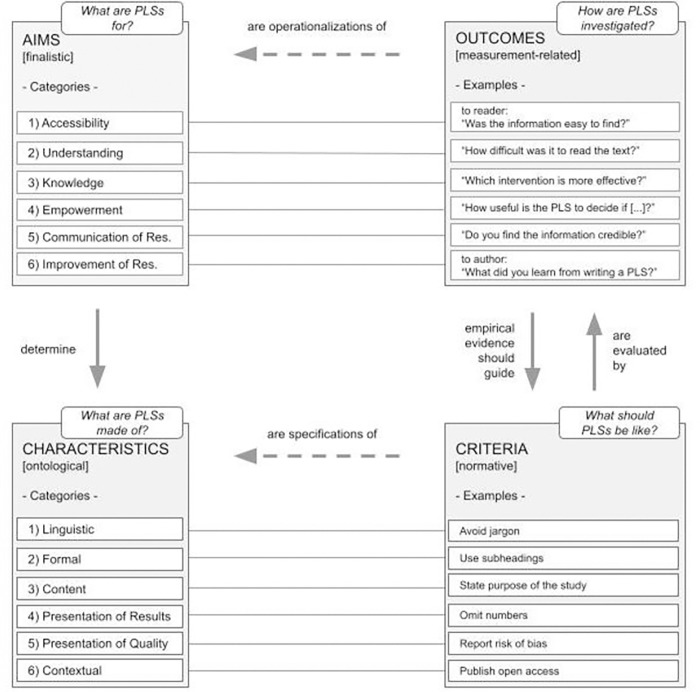
“With the help of this conceptual framework model, a first answer can be given to the question of what constitutes a good PLS: its characteristics should be shaped in such a way that the PLS fulfills its prespecified aims [8].”
InfluentialSelf-citationGainey, K. M., McCaffery, K. J., & Muscat, D. M. (2026) · PLoS ONE · doi:10.1371/journal.pone.0343058
Pal, A., Elger, B. S., Allemann, S. S., & Wangmo, T. (2026) · Patient · doi:10.1007/s40271-026-00812-7
“Plain language resources [1–3], such as summaries of clinical trial results, summaries of journal articles, and information from institutional or patient organization web-sites, can be sourced from the Internet, or sometimes they are sourced from social media platforms [2, 4–6].”
User-oriented infrastructure reports: from data to story
Suoninen, A. R. (2026) · Theseus (Ammattikorkeakoulujen)
Metadata
- Authors
- Stoll, M., Kerwer, M., Lieb, K., & Chasiotis, A.
- Affiliations
- Leibniz Institute for Psychology (ZPID) (DE)
- Leibniz Institute for Resilience Research (DE)
- Corresponding author
- Stoll, Marlene
- Venue
- PLOS ONE
- Publisher
- Public Library of Science (PLoS)
- Published
- 2022-06-06
- Volume
- 17
- Issue
- 6
- Pages
- e0268789
- ISSN
- 1932-6203 (ISSN-L)
- PMC
- PMC9170105
- OpenAlex
- W4281978380
- Cited by
- 89
- References
- 71
- Citations by year
- 2026: 22 · 2025: 20 · 2024: 28 · 2023: 17 · 2022: 1
- FWCI
- 3.19
- Type
- journal article
- Language
- en
- Open access
- gold
- doi.org
- Licence
- Locations
- PLoS ONE (publishedVersion, cc-by)
- PubMed Central (publishedVersion, cc-by)
- PubMed (publishedVersion)
- Informationszentrum Lebenswissenschaften (ZB MED) (submittedVersion, cc-by)
- RePEc: Research Papers in Economics (submittedVersion)
- DOAJ (DOAJ: Directory of Open Access Journals) (submittedVersion, cc-by-sa)
- Topics
- Health Sciences › Health Professions › General Health Professions › Health Literacy and Information Accessibility
- Social Sciences › Linguistics and Language › Text Readability and Simplification
- Health Sciences › Health Professions › General Health Professions › Health Policy Implementation Science
- Keywords
- plain language summaries, science communication, writing guidelines, conceptual framework, accessibility, understanding, knowledge improvement, empowerment, scholarly communication
- MeSH terms
- Language, Empirical Research, Research Report
About these checks
Registry, retraction, Cites and statistics results are computed, not judged, with one exception: a printed reference that no index lists is read once by a model before it counts as a citation error. Claims are extracted by a model and kept only when their quote appears verbatim in the text; each cited source is then checked, with a model’s help, for whether it says what the claim relies on. Those verdicts can be wrong — read the claim’s quote and the cited source before relying on one.
Statistics and arithmetic are recomputed, not judged.
Confidence bands are shown only for fields calibrated on our annotated test set. None is calibrated yet, so no band is shown.
What counts as a claim ›How we measure confidence ›How we check this ›
Are you an author, or do you see a problem with this page? Request a review
Data sources
Bibliographic data: Semantic Scholar, OpenAlex, Crossref.
Contains information from the Semantic Scholar Academic Graph Datasets, made available under the ODC Attribution License (ODC-BY 1.0).
Semantic Scholar’s data is described in: Kinney, R., et al. (2023). The Semantic Scholar Open Data Platform. arXiv:2301.10140.
