

Plain language summaries: A systematic review of theory, guidelines and empirical research
Open accessThe DOI matches its Crossref record; 72 of the 72 references it cites were found in a registry or an index.
Abstract
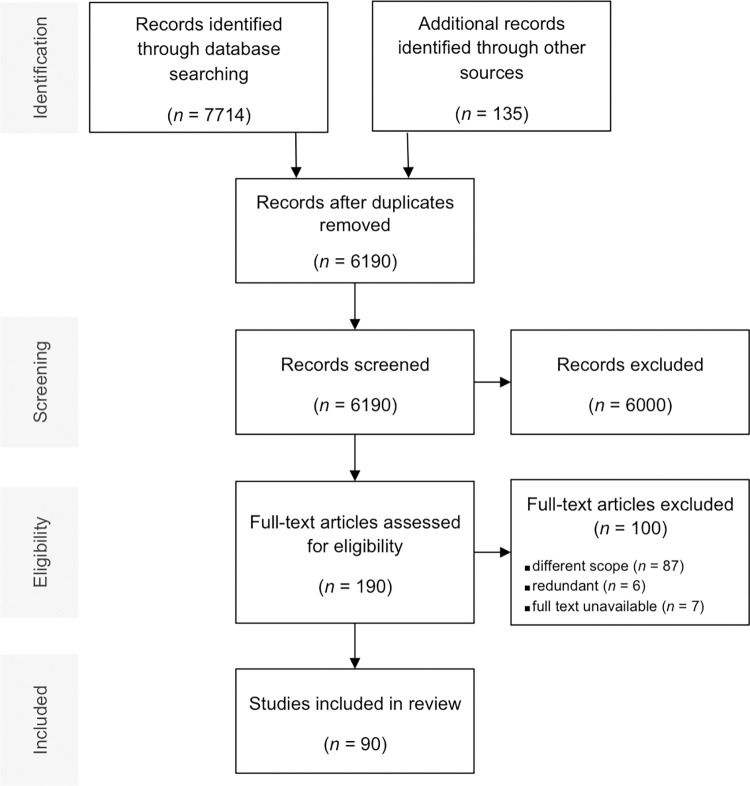
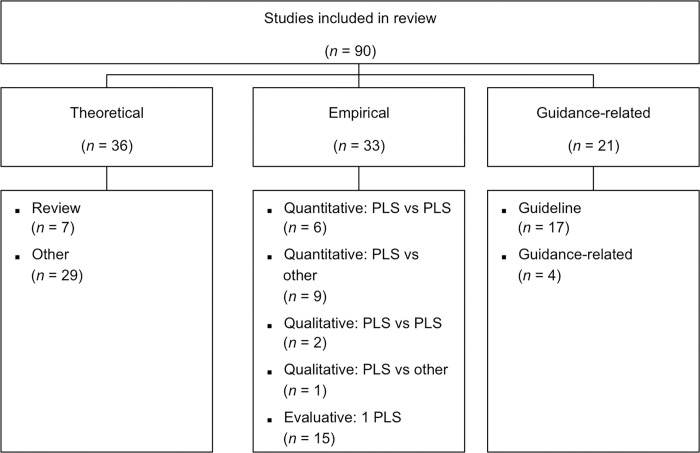
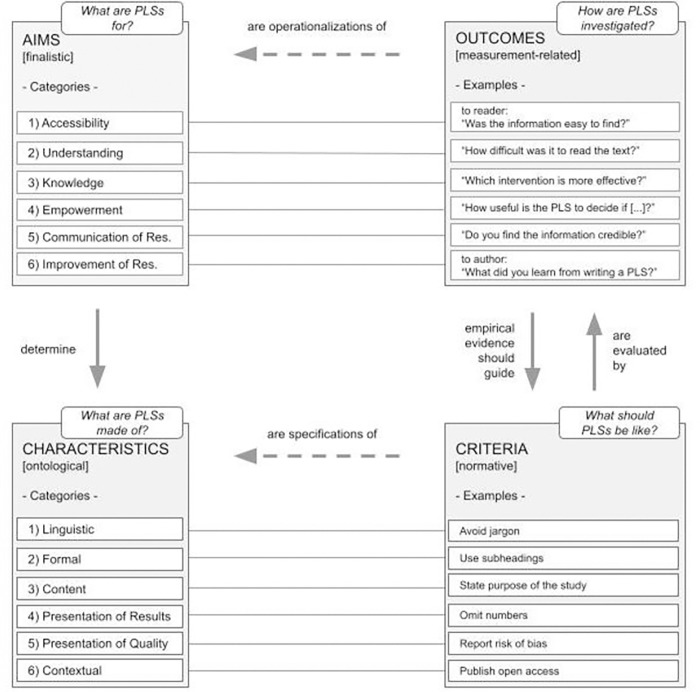
Plain language summaries (PLSs) have been introduced to communicate research in an understandable way to a nonexpert audience. Guidelines for writing PLSs have been developed and empirical research on PLSs has been conducted, but terminology and research approaches in this comparatively young field vary considerably. This prompted us to review the current state of the art of the theoretical and empirical literature on PLSs. The two main objectives of this review were to develop a conceptual framework for PLS theory, and to synthesize empirical evidence on PLS criteria. We began by searching Web of Science, PubMed, PsycInfo and PSYNDEX (last search 07/2021). In our review, we included empirical investigations of PLSs, reports on PLS development, PLS guidelines, and theoretical articles referring to PLSs. A conceptual framework was developed through content analysis. Empirical studies investigating effects of PLS criteria on defined outcomes were narratively synthesized. We identified 7,714 records, of which 90 articles met the inclusion criteria. All articles were used to develop a conceptual framework for PLSs which comprises 12 categories: six of PLS aims and six of PLS characteristics. Thirty-three articles empirically investigated effects of PLSs on several outcomes, but study designs were too heterogeneous to identify definite criteria for high-quality PLSs. Few studies identified effects of various criteria on accessibility, understanding, knowledge, communication of research, and empowerment. We did not find empirical evidence to support most of the criteria we identified in the PLS writing guidelines. We conclude that although considerable work on establishing and investigating PLSs is available, empirical evidence on criteria for high-quality PLSs remains scarce. The conceptual framework developed in this review may provide a valuable starting point for future guideline developers and PLS researchers.
Overview
The claims and statistics of this paper haven’t been checked yet.
Free: it reads the open-access text and checks the first 5 claims that cite a source we can check. Create a free account to check every claim.
Integrity signals
Registry
Cites
Statistics
Figures
Verification
Claims the paper makes
The claims and statistics of this paper haven’t been checked yet.
Free: it reads the open-access text and checks the first 5 claims that cite a source we can check. Create a free account to check every claim.
Claims other papers make about this one
Each is checked against this paper’s own text: does it say what the citing paper says it does?
The cited source says what the claim attributes to it.
In the citing paper
“Plain language summary (PLS) serve as an essential communication tool, bridging this gap by simplifying complex scientific information into clear, concise, and accessible language [5].”
From Evaluating the Capability of Large Language Model Chatbots for Generating Plain Language Summaries in Radiology (2025) · cites this paper as [5]
Self-check
Percentages, sums and reported differences re-computed from the paper’s own numbers.
The self-check needs the paper’s full text.
Citations
Cites
Qualitative content analysis: theoretical foundation, basic procedures and software solution
Mayring, P. (2014) · Social Science Open Access Repository (GESIS – Leibniz Institute for the Social Sciences) · Cited by 5,434
Nutbeam, D. (2000) · Health Promotion International · doi:10.1093/heapro/15.3.259 · Cited by 5,286
Wicked Problems in Design Thinking
Buchanan, R. (1992) · Design Issues · doi:10.2307/1511637 · Cited by 3,539
Do Pressures to Publish Increase Scientists' Bias? An Empirical Support from US States Data
Fanelli, D. (2010) · PLoS ONE · doi:10.1371/journal.pone.0010271 · Cited by 805
Assessing and presenting summaries of evidence in Cochrane Reviews
Langendam, M. W., Akl, E. A., Dahm, P., Glasziou, P., Guyatt, G., & Schünemann, H. J. (2013) · Systematic Reviews · doi:10.1186/2046-4053-2-81 · Cited by 282
Buljan, I., Malički, M., Wager, E., Puljak, L., Hren, D., Kellie, F. J., West, H., Alfirević, Ž., & Marušić, A. (2017) · Journal of Clinical Epidemiology · doi:10.1016/j.jclinepi.2017.12.003 · Cited by 149
Presenting the Results of Cochrane Systematic Reviews to a Consumer Audience: A Qualitative Study
Glenton, C., Santesso, N., Rosenbaum, S., Nilsen, E. S., Rader, T., Ciapponi, A., & Dilkes, H. (2010) · Medical Decision Making · doi:10.1177/0272989x10375853 · Cited by 123
Post-normal science communication: exploring the blurring boundaries of science and journalism
Brüggemann, M., Lörcher, I., & Walter, S. (2020) · Journal of Science Communication · doi:10.22323/2.19030202 · Cited by 118
Rakedzon, T., Segev, E., Chapnik, N., Yosef, R., & Baram-Tsabari, A. (2017) · PLOS ONE · doi:10.1371/journal.pone.0181742 · Cited by 115
Lay summaries needed to enhance science communication
Kuehne, L. M., & Olden, J. D. (2015) · Proceedings of the National Academy of Sciences · doi:10.1073/pnas.1500882112 · Cited by 104
Research works printed but not linked: 24
- ALLEA. The European code of conduct for research integrity revised edition [Internet]. ALLEA—All European Academies; 2017 [cited 2021 Feb 18]. Available from: http://www.allea.org/wp-content/uploads/2017/03/ALLEA-European-Code-of-Conduct-for-Research-Integrity-2017-1.pdf
- World Medical Association. WMA Declaration of Helsinki—ethical principles for medical research involving human subjects [Internet]. 2013 [cited 2021 Feb 18]. Available from: https://www.wma.net/policies-post/wma-declaration-of-helsinki-ethical-principles-for-medical-research-involving-human-subjects/
- Rees T, Richter CA, Dennis N, James J, Gokool N. Development of a framework for publishing patient lay summaries in medical journals. [Internet]. Poster presented at: ISMPP EU 2021 [cited 2021 Feb 18]; Available from: https://www.parexel.com/application/files_previous/5214/8518/4096/Patient_Lay_Summaries_Framework_ISMPP_Poster_2017.pdf
- American Psychological Association. Guidance for translational abstracts and public significance statements: Demonstrating the public significance of research [Internet]. American Psychological Association. 2018 [cited 2020 Dec 3]. Available from: https://www.apa.org/pubs/journals/resources/translational-messages
- Translate Cochrane evidence [Internet]. Cochrane. 2021 [cited 2021 Apr 20]. Available from: https://www.cochrane.org/join-cochrane/translate
- eLife. Plain-language Summaries: Results of the 2016 eLife digest reader survey [Internet]. Inside eLife. 2017 [cited 2020 Dec 21]. Available from: https://elifesciences.org/inside-elife/19c97b89/plain-language-summaries-results-of-the-2016-elife-digest-reader-survey
- Ferrar T, Conran E. How readable are plain language summaries? [Internet]. Poster presented at: ISMPP EU 2021 [cited 2021 Feb 18]; Available from: https://www.porterhousemedical.com/wp-content/uploads/2021/02/ISMPP-EU-2021-poster_v1.0.pdf
- Rosenbaum S. Improving the user experience of evidence. A design approach to evidence-informed health care [Internet] [PhD Thesis]. The Oslo School of Architecture and Design; 2010 [cited 2021 Feb 18]. Available from: https://aho.brage.unit.no/aho-xmlui/bitstream/handle/11250/93062/Rosenbaum_thesis.pdf?sequence=1
- Glenton C. Assessing the feasibility and acceptability of approaches for improving the quality of Plain Language Summaries in Cochrane Reviews: a pilot study. Final Report. [Internet]. Cochrane Norway, editor. 2017 [cited 2020 Dec 3]. Available from: http://community.cochrane.org/sites/default/files/uploads/inline-files/Final%20report%20PLS%20pilot%2028th%20February%202017_0.pdf
- Maras K. Autism Manuscript Submission Guidelines [Internet]. SAGE Journals. 2021 [cited 2020 Dec 18]. Available from: https://journals.sagepub.com/author-instructions/AUT#Lay%20Abstracts
- TransCelerate Biopharma Inc. Recommendations for drafting non-promotional lay summaries of clinical trial results [Internet]. 2015 [cited 2020 Dec 3]. Available from: http://www.transceleratebiopharmainc.com/wp-content/uploads/2015/04/TransCelerate-Non-Promotional-Language-Guidelines-v10-1.pdf
- eLife. Plain-language summaries: How to write an eLife digest [Internet]. Inside eLife. 2017 [cited 2020 Dec 21]. Available from: https://elifesciences.org/inside-elife/85518309/plain-language-summaries-how-to-write-an-elife-digest
- Cochrane. Plain Language Summary (PLS) Project 2020–1 April 2020 [Internet]. 2020 [cited 2020 Dec 3]. Available from: https://community.cochrane.org/sites/default/files/uploads/Plain%20Language%20Summary%20Project%20FINAL.pdf
- Cochrane Norway. How to write a plain language summary of a Cochrane intervention review: Checklist [Internet]. 2016 [cited 2020 Dec 3]. Available from: https://www.cochrane.no/sites/cochrane.no/files/public/uploads/checking_a_cochrane_pls_15th_june_2018.pdf
- Cochrane Methods. Methodological Expectations of Cochrane Intervention Reviews (MECIR): Standards for the reporting of plain language summaries in new Cochrane Intervention Reviews 2013 [Internet]. 1st ed. 2013 [cited 2020 Dec 3]. Available from: https://methods.cochrane.org/sites/default/files/public/uploads/pleacs_2019.pdf
- People and Nature. Plain Language Summary Guidelines [Internet]. British Ecological Society Journals. [cited 2020 Dec 21]. Available from: https://besjournals.onlinelibrary.wiley.com/pb-assets/hub-assets/besjournals/2575-8314_PaN/People%20and%20Nature%20Plain%20Language%20Summary%20Guidelines-1540981909900.pdf
- AGU. Creating a Plain Language Summary [Internet]. AGU Advancing Earth and Space Science. [cited 2020 Dec 21]. Available from: https://www.agu.org/-/media/Files/Share-and-Advocate-for-Science/Toolkit—PLS.pdf
- Taylor & Francis Group. Plain language summaries author guidelines for development, submission & publication [Internet]. Taylor and Francis Author Services. 2021 [cited 2021 Feb 18]. Available from: https://authorservices.taylorandfrancis.com/wp-content/uploads/2021/03/TF-PLS-Guidelines-for-Authors-08-Mar-21.pdf
- Halprin A. Plain Language Summaries Explained in Plain Language [Internet]. Eos. [cited 2021 Jul 22]. Available from: https://eos.org/editors-vox/plain-language-summaries-explained-in-plain-language
- Walker J, Dormer L. Publishing plain language summaries of publications as stand-alone journal articles: a publisher’s case study [Internet]. Poster presented at: 2021 Virtual European Meeting of the International Society for Medical Publication Professionals (ISMPP); 2021 [cited 2021 Feb 18]. Available from: https://plainlanguagesummaries.com/wp-content/uploads/2021/01/PLS-poster-A3-3.pdf
- Norway Cochrane. How to write a plain language summary of a Cochrane intervention review [Internet]. 2019 [cited 2020 Dec 3]. Available from: https://www.cochrane.no/sites/cochrane.no/files/public/uploads/how_to_write_a_cochrane_pls_12th_february_2019.pdf
- Cerejo C, Pai S, Isomura H, Ioi Y, Stesukinai K-I, Ishizuka N. Current state and challenges for plain-language summary development in Japan: Poster supplementary information [Internet]. Cactus Life Sciences Thought Leadership blog. 2021 [cited 2021 Jul 22]. Available from: https://lifesciences.cactusglobal.com/thought-leadership/current-state-and-challenges-for-plain-language-summary-development-in-japan-poster-supplementary-information/
- Jakus D, Behmen D, Buljan I, Marušić A, Puljak L. Efficacy of reminders for increasing volunteer engagement in translating Cochrane plain language summaries: a pilot randomised controlled trial. BMJ Evid-Based Med. 2021 Apr; 26(2): 49– 50. doi: 10.1136/bmjebm-2020-111378 32636205 · DOI
- Morville P. User Experience Design [Internet]. Semantic Studios. 2004 [cited 2021 Apr 20]. Available from: http://semanticstudios.com/user_experience_design/
Cited by
Items 101–125 of 125
Pal, A., Gani, S. M. D., Elger, B. S., Allemann, S. S., Wangmo, T., & Abel, T. (2026) · Patient Education and Counseling · doi:10.1016/j.pec.2026.109642
Catalá-López, F., Ganuza, E., Alonso‐Arroyo, A., Perna, R., Tricco, A. C., Hutton, B., Colin, C., Tejedor-Romero, L., Ridao, M., Bautista-Puig, N., et al. (2026) · BMJ Open · doi:10.1136/bmjopen-2025-115612
“58 –”
A 360 Degree Qualitative Ethical Assessment of Reporting Patient Reported Outcomes
Huang, A. P., Corcoran, J., Zizzi, C. E., DeFehr, C., Contento, A., Ross, L. F., & Kluger, B. (2026) · Journal of Empirical Research on Human Research Ethics · doi:10.1177/15562646261441724
“Some (Penlington et al., 2020; Sgro et al., 2023) but not many (Getz & Farides-Mitchell, 2019; Kyte et al., 2019) researchers return aggregate post-study data to participants but face dissemination barriers(Pal et al., 2024; Stoll et al., 2022).”
Alonso, M. I. (2026) · Journal of Documentation · doi:10.1108/jd-03-2026-0165
Plain language summaries in education: the PLS-4-EBP framework to support evidence-based practice
Reinwarth, F., Knogler, M., & Seidel, T. (2026) · Frontiers in Education · doi:10.3389/feduc.2026.1756481
A new era of accessible research in the Journal of Medical Imaging and Radiation Sciences
Rosewall, T., & McCuaig, C. (2026) · Journal of medical imaging and radiation sciences · doi:10.1016/j.jmir.2026.102426
Ober, M. (2026) · Digital Commons - DU (University of Denver) · doi:10.56902/etdcrp.2026.19
Gauvin, F., Moat, K. A., Smith, M., Irons, A., & Lavis, J. (2022) · MacSphere (McMaster University) · doi:10.71548/336
Citizen brief: Putting evidence at the centre of everyday life in Ontario
Gauvin, F., Moat, K. A., Smith, M., Irons, A., & Lavis, J. (2022) · MacSphere (McMaster University) · doi:10.71548/355
Bridging the gap between experts and the public: why polling methods need to be more accessible
Shulman, H. C., Lerner, B., Holbert, R. L., & Winneg, K. M. (2026) · Frontiers in Communication · doi:10.3389/fcomm.2026.1905733
Kishore, A. (2026) · Research Square · doi:10.21203/rs.3.rs-10822636/v1
Estrategias de difusión para revistas científicas en entornos digitales
Machin‐Mastromatteo, J. D. (2026) · Revista Estudios de la Información · doi:10.54167/rei.v4i1.2444
A guide to writing and publishing effective plain language summaries in Headache
Piccinin, M. A., Gibler, R. C., & Vallimont, J. (2026) · Headache The Journal of Head and Face Pain · doi:10.1111/head.70203
Asare, B. A., Abassah-Konadu, E., Otoo, D. D., Asante, H. A., Amankwah, I., Afriyie-Twumasi, A., Dalaba, M. A., Immurana, M., Aberese-Ako, M., Yevutsey, S., et al. (2026) · BMC Public Health · doi:10.1186/s12889-026-29249-1
The Polish Frequency List Derived from the Balanced Subcorpus of the National Corpus of Polish
Moździerz, T. (2026) · International Journal of Lexicography · doi:10.1093/ijl/ecag032
Plain Language in Interactive Systems: A Systematic Mapping of Domains, Practices, and Challenges
Oliveira, R., Salgado, L. C. D. C., & Cappelli, C. (2026) · Journal on Interactive Systems · doi:10.5753/jis.2026.7741
Developing a Project Proposal for Inter-Faculty Translation: A Translation Clinic at UNIGE
Buffat, M. J. G. (2026) · Archive ouverte UNIGE (University of Geneva)
Centre for Online and Distance Education (CODE) (2025) · SAS-Space (University of London)
A war of words: Wittgenstein, language games, and the loss of trust in the 21st century
Dooyema, D. (2026) · Frontiers in Communication · doi:10.3389/fcomm.2026.1862032
Syamilah, G., Rohman, M., Mulyadi, S. N., Arbaizan, T. F., Ramdhani, W., & Rizkyanfi, M. W. (2026) · International Journal of Technology and Education Research · doi:10.63922/ijeter.v4i02.3512
Monitoring Marine Seismic Surveys Through Sustainable Development Management, South Africa
SOMHLAHLO, S. (2025) · Nelson Mandela University Research Repository
Wallace, S. J., Deslandes, R., Ross, B. B. Y., Breitenstein, C., Martínez‐Ferreiro, S., Beesley, E., Beesley, K., Jamieson, P., Barron, K., Ryan, B., et al. (2026) · Aphasiology · doi:10.1080/02687038.2026.2755001
Horvath, K., Krebs-Oesch, D., Braun, L., & Zufferey, J. D. (2026) · doi:10.3278/9783763980017
Blech, C., Naefgen, C., & Gaschler, R. (2026) · Psychology Learning & Teaching · doi:10.1177/14757257261502855
Cao, W., Lin, F., He, R., Chester, E. G., Shendre, A., Liu, J., Costantine, M. M., Quinney, S. K., & Li, L. (2026) · doi:10.2196/preprints.116649
Metadata
- Authors
- Stoll, M., Kerwer, M., Lieb, K., & Chasiotis, A.
- Affiliations
- Leibniz Institute for Psychology (ZPID) (DE)
- Leibniz Institute for Resilience Research (DE)
- Corresponding author
- Stoll, Marlene
- Venue
- PLOS ONE
- Publisher
- Public Library of Science (PLoS)
- Published
- 2022-06-06
- Volume
- 17
- Issue
- 6
- Pages
- e0268789
- ISSN
- 1932-6203 (ISSN-L)
- PMC
- PMC9170105
- OpenAlex
- W4281978380
- Cited by
- 89
- References
- 71
- Citations by year
- 2026: 22 · 2025: 20 · 2024: 28 · 2023: 17 · 2022: 1
- FWCI
- 3.19
- Type
- journal article
- Language
- en
- Open access
- gold
- doi.org
- Licence
- Locations
- PLoS ONE (publishedVersion, cc-by)
- PubMed Central (publishedVersion, cc-by)
- PubMed (publishedVersion)
- Informationszentrum Lebenswissenschaften (ZB MED) (submittedVersion, cc-by)
- RePEc: Research Papers in Economics (submittedVersion)
- DOAJ (DOAJ: Directory of Open Access Journals) (submittedVersion, cc-by-sa)
- Topics
- Health Sciences › Health Professions › General Health Professions › Health Literacy and Information Accessibility
- Social Sciences › Linguistics and Language › Text Readability and Simplification
- Health Sciences › Health Professions › General Health Professions › Health Policy Implementation Science
- Keywords
- plain language summaries, science communication, writing guidelines, conceptual framework, accessibility, understanding, knowledge improvement, empowerment, scholarly communication
- MeSH terms
- Language, Empirical Research, Research Report
About these checks
Registry, retraction, Cites and statistics results are computed, not judged, with one exception: a printed reference that no index lists is read once by a model before it counts as a citation error. Claims are extracted by a model and kept only when their quote appears verbatim in the text; each cited source is then checked, with a model’s help, for whether it says what the claim relies on. Those verdicts can be wrong — read the claim’s quote and the cited source before relying on one.
Statistics and arithmetic are recomputed, not judged.
Confidence bands are shown only for fields calibrated on our annotated test set. None is calibrated yet, so no band is shown.
What counts as a claim ›How we measure confidence ›How we check this ›
Are you an author, or do you see a problem with this page? Request a review
Data sources
Bibliographic data: Semantic Scholar, OpenAlex, Crossref.
Contains information from the Semantic Scholar Academic Graph Datasets, made available under the ODC Attribution License (ODC-BY 1.0).
Semantic Scholar’s data is described in: Kinney, R., et al. (2023). The Semantic Scholar Open Data Platform. arXiv:2301.10140.
