

Early marriage and its associated factors among women in Ethiopia: Systematic reviews and meta-analysis.
Open accessThe DOI matches its Crossref record; 44 of the 49 references it cites were found in a registry or an index, and 4 are not checked yet; none of the 4 sources its claims cite is checked for support yet.
Abstract
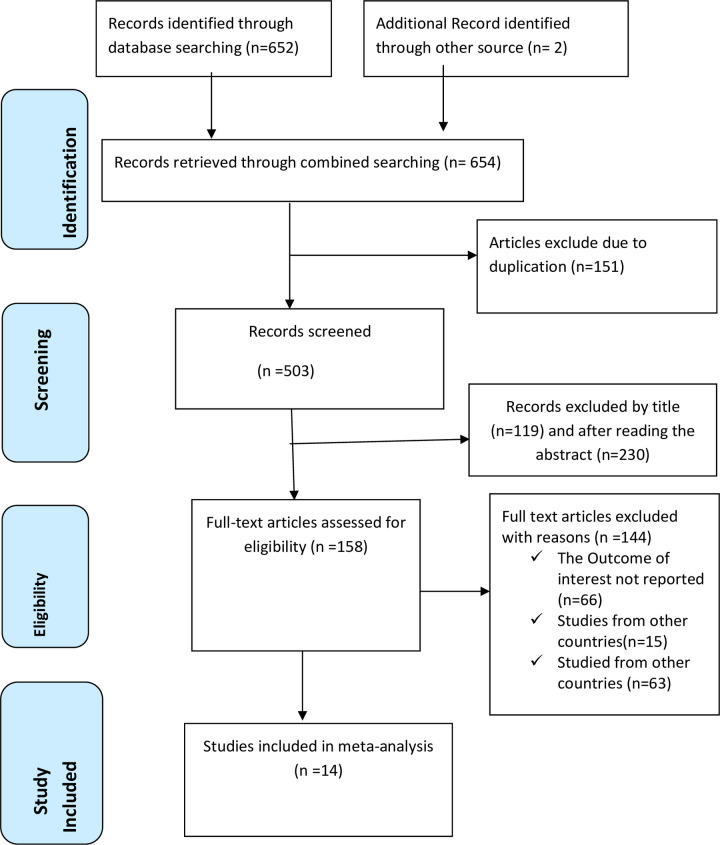
... Out of a total of 654 articles, 14 papers with 67,040 research participants were included ... The pooled prevalence of early marriage among women in Ethiopia was 56.34% ... No formal education, rural residence, and low household wealth were associated with early marriage.
Checked 2026-11-22 · 4 references not checked yet
Overview
CoChat Summary
## TL;DR
This systematic review and meta-analysis estimated that 56.34% of women in Ethiopia married before age 18. Early marriage was more common among women with lower education, those living in rural areas, and those whose marriages were decided by parents.
## Key findings
- From 654 retrieved articles, 14 studies were included, covering 67,040 participants.
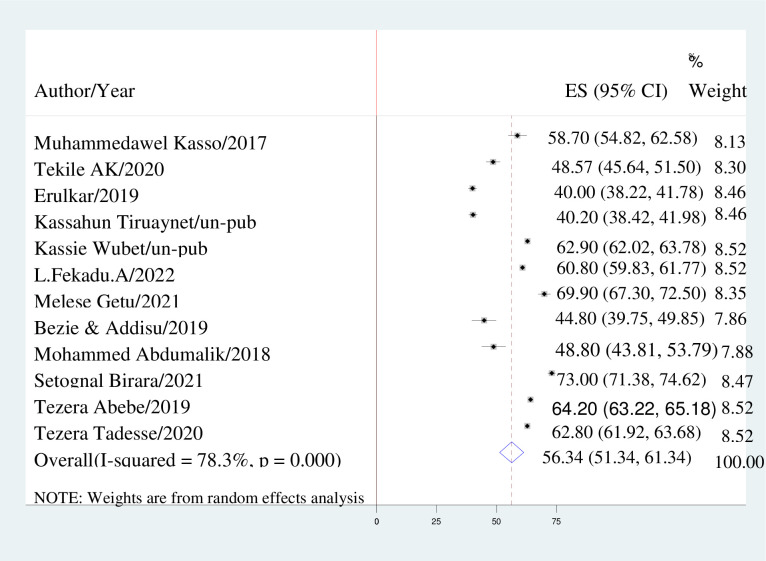
- The pooled prevalence of early marriage among Ethiopian women was 56.34% (95% CI: 51.34–61.34), with substantial heterogeneity (I2 = 78.3%).
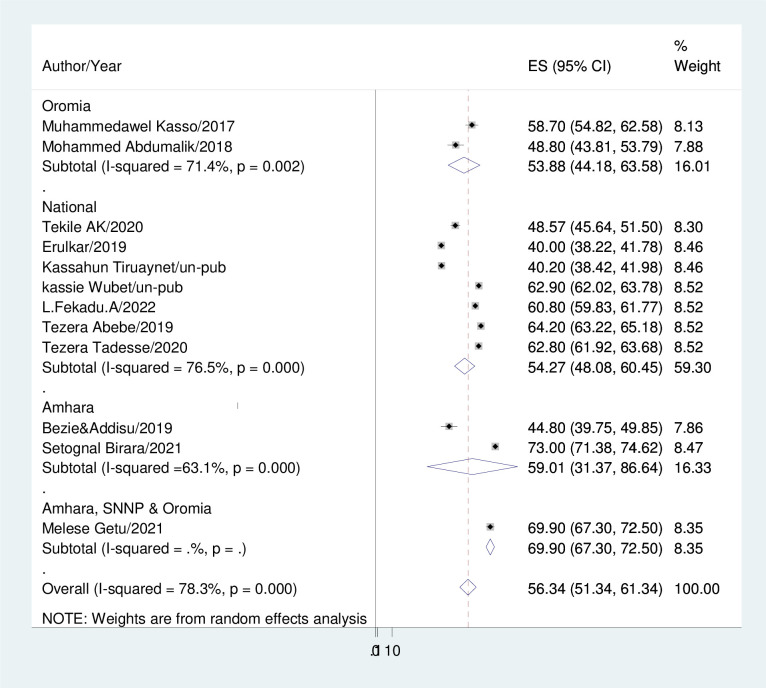
- By region, prevalence was highest in Amhara (59.01%) and lowest in Oromia (53.88%).
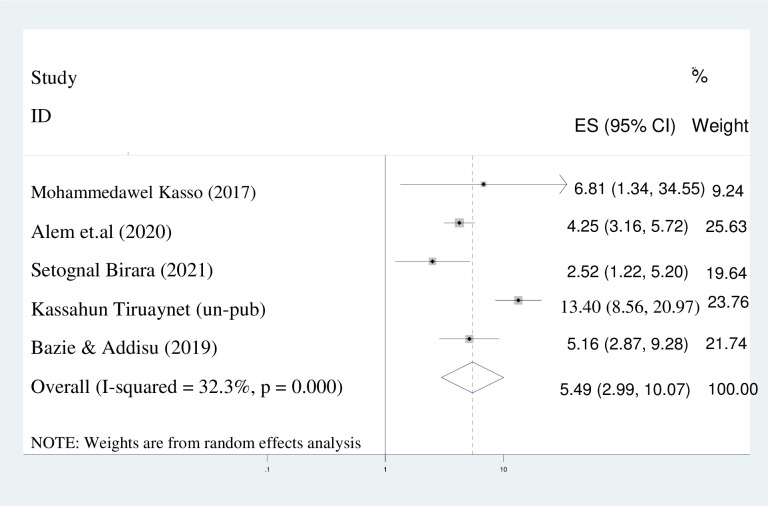
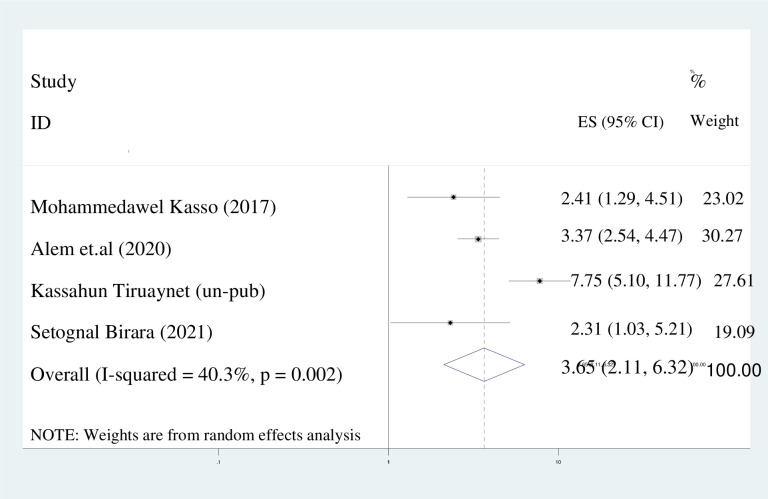
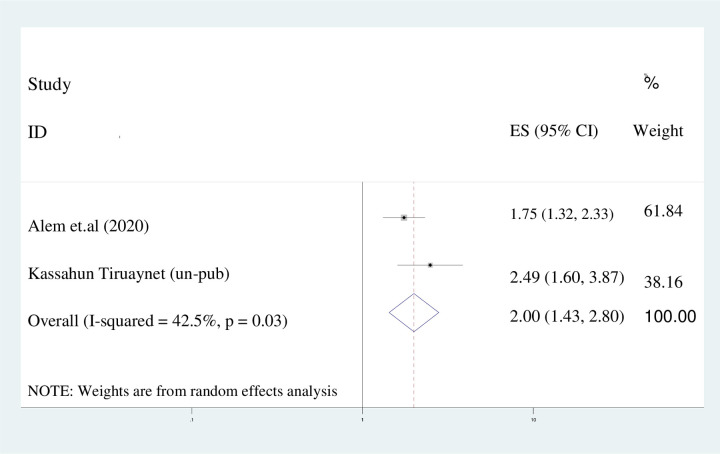
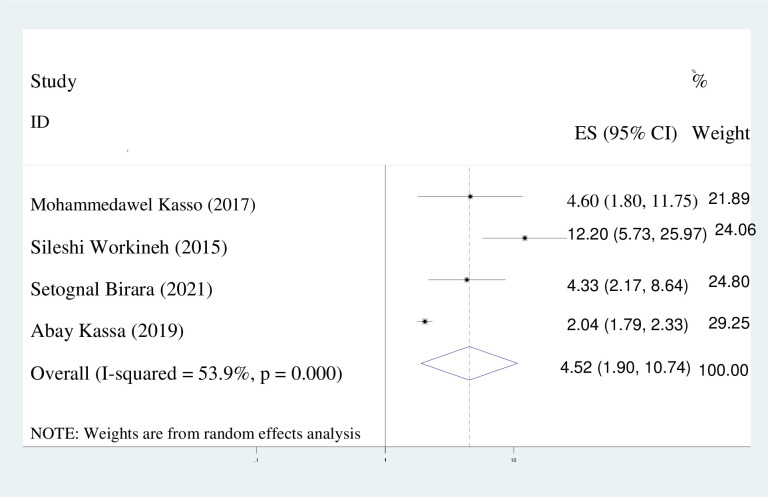
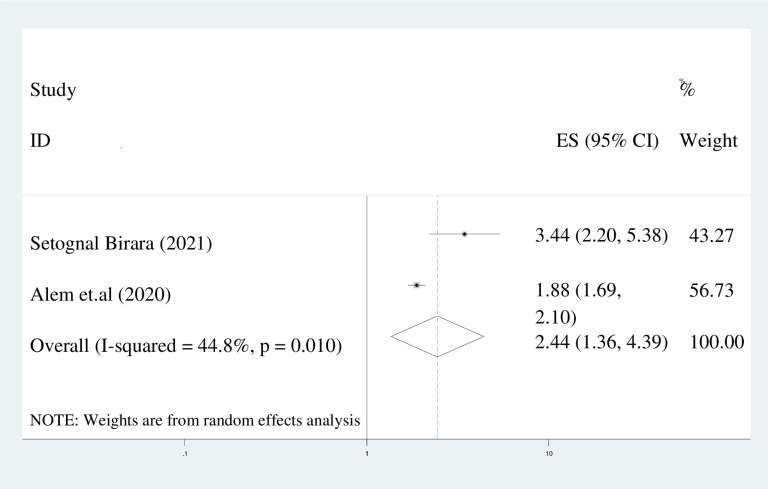
- Associated factors included no formal education (AOR = 5.49; 95% CI: 2.99, 10.07), primary education (AOR = 3.65; 95% CI: 2.11, 6.32), secondary education (AOR = 2.49; 95% CI: 1.60, 3.87), rural residency (AOR = 4.52; 95% CI: 1.90, 10.74), and parent-made marriage decisions (AOR = 2.44; 95% CI: 1.36, 4.39).
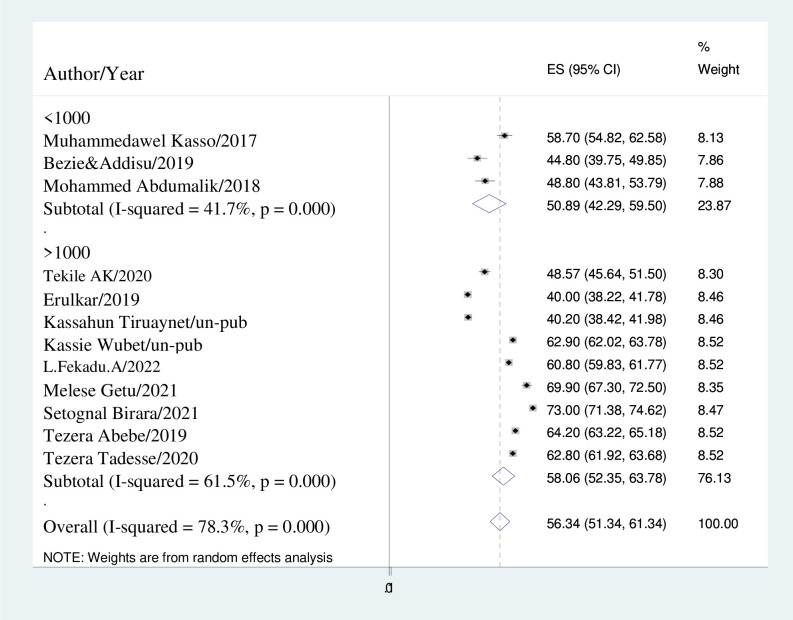
- Subgroup analysis showed prevalence of 58.06% in studies with sample sizes >1000 and 50.89% in studies with sample sizes <1000.
## Methods
- Systematic review and meta-analysis following PRISMA; protocol registered in PROSPERO (CRD42023445490).
- Searched PubMed, Science Direct, Scopus, EMBASE, and Google Scholar from November 15, 2022 to December 21, 2022; included English-language full-text studies conducted in Ethiopia that reported early marriage.
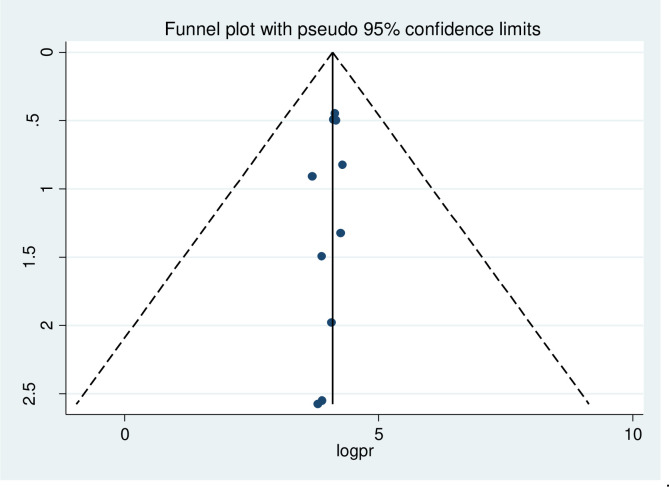
- Included 14 cross-sectional, community-based studies; extracted data in Excel and analyzed in STATA 14 using a random-effects model, subgroup analysis, sensitivity analysis, meta-regression, and publication-bias tests (Begg, Egger, funnel plot).
## Limitations
- The paper states it included only English-language publications.
- The paper states that lack of data from Benishangul Gumuz, Addis Ababa, Afar, Gambella, Somalia, Dire Dawa, and Harare may limit national representativeness.
- Evident from the text: all included studies were cross-sectional, so the meta-analysis can summarize associations but cannot establish causality.
Model-written summary. Check it against the paper before relying on it.
Integrity signals
Registry
Cites
Statistics
Figures
Verification
Claims the paper makes
0 Valid · 0 Not valid · 4 Not checked · 26 Own results and interpretations
A result the paper reports from its own data — it cites no other source for it, so there is none to check. The quote shows it is in the paper.
In the paper
“The pooled prevalence of early marriage among women in Ethiopia was 56.34% (95% CI: 51.34–61.34), I2 = 78.3%).”
- Also stated in: § Meta-analysis · plain
“The overall estimate of early marriage among Ethiopian women was found to be 56.34% (95% CI: 51.34, 61.34), as depicted in Fig 2.”
- Also stated in: § Discussion · plain
“As a result, 56.34% (95% CI: 51.34–61.34) of Ethiopians were found to have married before the age of 18.”
§ Early marriage and its associated factors among women in Ethiopia: Systematic reviews and meta-analysis > Abstract > Results
plainn = 67,040- Asserted: passes — The authors put it forward as true.
- Checkable: passes — It can be checked against evidence.
- Load-bearing: passes — The paper’s conclusions depend on it.
- Based: passes — The paper gives a reason why it holds.
- Rests on an assumption not shown here.
- Also stated in: § Meta-analysis · plain
A result the paper reports from its own data — it cites no other source for it, so there is none to check. The quote shows it is in the paper.
In the paper
“The present investigation revealed that individuals with a secondary level of education exhibited a 2.5-fold increase in the likelihood of early marriage compared to their peers (AOR = 2.49; 95%CI: 1.60, 3.87).”
- Also stated in: § Results · plain
“No formal education (AOR = 5.49; 95%CI: 2.99, 10.07), primary education (AOR = 3.65; 95%CI: 2.11, 6.32), secondary education (AOR = 2.49; 95%CI: 1.60, 3.87), rural residency (AOR = 4.52; 95%CI: 1.90, 10.74) and decision made by parents (AOR = 2.44; 95%CI: 1.36, 4.39) were associated factors.”
- Also stated in: § Discussion · plain
“The study found that compared to women with higher education, women with primary and secondary education were 3.6 and 2.5 times more likely to be married before the age of 18 respectively.”
§ Early marriage and its associated factors among women in Ethiopia: Systematic reviews and meta-analysis > Results > Meta-analysis
plainstates an associationn = 67,040- Asserted: passes — The authors put it forward as true.
- Checkable: passes — It can be checked against evidence.
- Load-bearing: passes — The paper’s conclusions depend on it.
- Based: passes — The paper gives a reason why it holds.
- Rests on an assumption not shown here.
- Also stated in: § Results · plain
A result the paper reports from its own data — it cites no other source for it, so there is none to check. The quote shows it is in the paper.
In the paper
“Conversely, studies with sample sizes below 1000 indicated a prevalence of 50.89% (95% CI: 42.29, 59.50); I2 = 41.7% (Fig 4).”
§ Early marriage and its associated factors among women in Ethiopia: Systematic reviews and meta-analysis > Results > Meta-analysis
plain- Asserted: passes — The authors put it forward as true.
- Checkable: passes — It can be checked against evidence.
- Load-bearing: unclear — It is unclear whether the paper’s conclusions depend on it.
- Based: passes — The paper gives a reason why it holds.
A result the paper reports from its own data — it cites no other source for it, so there is none to check. The quote shows it is in the paper.
In the paper
“Based on the findings of this investigation, it was determined that women lacking formal education were at a significantly higher risk of marrying at an earlier age, with a 5-fold increase in likelihood compared to their formally educated counterparts (AOR = 5.49; 95%CI: 2.99, 10.07).”
- Also stated in: § Results · plain
“No formal education (AOR = 5.49; 95%CI: 2.99, 10.07), primary education (AOR = 3.65; 95%CI: 2.11, 6.32), secondary education (AOR = 2.49; 95%CI: 1.60, 3.87), rural residency (AOR = 4.52; 95%CI: 1.90, 10.74) and decision made by parents (AOR = 2.44; 95%CI: 1.36, 4.39) were associated factors.”
- Also stated in: § Discussion · plain
“Young girls who did not have formal schooling were 5.5 times more likely to get married young than those who did.”
§ Early marriage and its associated factors among women in Ethiopia: Systematic reviews and meta-analysis > Results > Meta-analysis
plainstates an associationn = 67,040- Asserted: passes — The authors put it forward as true.
- Checkable: passes — It can be checked against evidence.
- Load-bearing: passes — The paper’s conclusions depend on it.
- Based: passes — The paper gives a reason why it holds.
- Rests on an assumption not shown here.
- Also stated in: § Results · plain
A result the paper reports from its own data — it cites no other source for it, so there is none to check. The quote shows it is in the paper.
In the paper
“A sub-group analysis was conducted to adjust the stated heterogeneity (I2 = 78.3%) of the study, based on sample size and study region.”
§ Early marriage and its associated factors among women in Ethiopia: Systematic reviews and meta-analysis > Results > Meta-analysis
plain- Asserted: passes — The authors put it forward as true.
- Checkable: passes — It can be checked against evidence.
- Load-bearing: unclear — It is unclear whether the paper’s conclusions depend on it.
- Based: passes — The paper gives a reason why it holds.
14 more claims
Create a free account to see all 30 claims and every source verdict.
- It may state two separate claims as one. 5
- Probably not a substantial claim. 9
Claims other papers make about this one
Each is checked against this paper’s own text: does it say what the citing paper says it does?
The cited source says what the claim attributes to it.
In the citing paper
“Furthermore, research has shown that rural women are more likely to marry early than their urban counterparts 18,24 .”
From Predictors of age at first marriage among rural women in the West Guji Zone, Southern Ethiopia, 2024: a community-based cross-sectional study (2025) · cites this paper as [24]
Citations
Cites
Preferred Reporting Items for Systematic Reviews and Meta-Analyses: the PRISMA statement
Moher, D., Liberati, A., Tetzlaff, J., Altman, D. G., & for the PRISMA Group (2009) · BMJ · doi:10.1136/bmj.b2535 · Cited by 83,823
Preferred Reporting Items for Systematic Reviews and Meta-Analyses: The PRISMA Statement
Moher, D., Liberati, A., Tetzlaff, J., Altman, D. G., & The PRISMA Group (2009) · PLoS Medicine · doi:10.1371/journal.pmed.1000097 · Cited by 64,042
Preferred reporting items for systematic reviews and meta-analyses: The PRISMA statement
Moher, D., Liberati, A., Tetzlaff, J., Altman, D. G., & the PRISMA Group* (2009) · Annals of Internal Medicine · doi:10.7326/0003-4819-151-4-200908180-00135 · Cited by 37,554
Quantifying heterogeneity in a meta‐analysis
Higgins, J. P. T., & Thompson, S. G. (2002) · Statistics in Medicine · doi:10.1002/sim.1186 · Cited by 36,763
Conducting Meta-Analyses in R with the metafor Package
Viechtbauer, W. (2010) · Journal of Statistical Software · doi:10.18637/jss.v036.i03 · Cited by 20,464
Wang, G., Ma, R., Qiao, G., Wada, K., Aizawa, Y., & Satoh, T. (2015) · Integrative Medicine International · doi:10.1159/000368408 · Cited by 18,657
Hoy, D., Brooks, P., Woolf, A., Blyth, F., March, L., Bain, C., Baker, P., Smith, E., & Buchbinder, R. (2012) · Journal of Clinical Epidemiology · doi:10.1016/j.jclinepi.2011.11.014 · Cited by 2,555 · cited 1×
“The present study employed the bias assessment tool developed by Hoy et al. [43], which comprises ten items that evaluate four domains of bias, as well as internal and external validity.”
MethodRaj, A., Saggurti, N., Balaiah, D., & Silverman, J. G. (2009) · The Lancet · doi:10.1016/s0140-6736(09)60246-4 · Cited by 445
Economic Impacts of Child Marriage: A Review of the Literature
Parsons, J., Edmeades, J., Kes, A., Petroni, S., Sexton, M., & Wodon, Q. (2015) · The Review of Faith & International Affairs · doi:10.1080/15570274.2015.1075757 · Cited by 375
Raj, A., Saggurti, N., Winter, M., Labonte, A., Decker, M. R., Balaiah, D., & Silverman, J. G. (2010) · BMJ · doi:10.1136/bmj.b4258 · Cited by 290
Research works printed but not linked: 27
- Rodgers B. Child marriage in Ethiopia and its associated human rights violations. Policy Journal. 2012; 16: 11– 2.
- USAID. Ending child marriage and meeting the needs of married children: The USAID vision for action. US Agency for International Development Pennsylvania Avenue, Washington, DC (2012)
- Child-marriage/ UNICEF, “ Child marriage around the world. 2020,”.
- The National Council of Childhood and Motherhood (NCCM). Child rights observatory, supported by UNICEF: ending Child Marriage. Policy Action. 2017; 1: 1– 4.
- El-Loaiza ES, Wong S. Marrying too young. End child marriage; 2012 [cited Sep 26, 2019]. Available from: http://www.unfpa.org/sites/default/files/pub-pdf/MarryingTooYoung.pdf.
- United Nations Children’s Fund [UNICEF], Ending Child Marriage: A Profile of Progress in Ethiopia, New York UNICEF, 2018.
- Nguyen MC, Wodon Q. Impact of child marriage on literacy and education attainment in Africa. Washington, DC: UNICEF and UNESCO Statistics. 2014.
- Workineh S, Kibretb GD, Degu G. Determinants of early marriage among female children in Sinan district, Northwest Ethiopia. Health Science Journal. 2015; 9(6): 1.
- Myers J. and Rowan H., Breaking Vows: Early and Forced Marriage and Girls, Education’, Plan, UK, 2011
- Agaba P., Atuhaire L., and Rutaremwa G., “ Determinants of age at first marriage among women in Western Uganda,” in European population conference ed. Castro Martin T, Vienna, Austria, 2010.
- Roudi-Fahimi F. Child marriage in the Middle East and North Africa. Washington, DC: Population Reference Bureau; 2010. Available from: https://www.prb.org/menachildmarriage/.
- DeGroot R, Kuunyem MY, Palermo T. Child marriage and associated outcomes in northern Ghana: a cross-sectional study. BMC Public Health. 2018; 18: 285 doi: 10.1186/s12889-018-5166-6 29482546 PMC5827991 · DOI · Paper page
- Aboualsoltani F, Rahmani SA, Pourbarghi M, Dolatkhah H, Aghazadeh AM. The frequency of consanguineous marriages and their effects on offspring in Tabriz city. Egypt J Med Hum Gene. 2009; 10: 198– 207.
- International Planned Parenthood Federation and the Forum on Marriage and the Rights of Women and Girls and UNFPA, “ Ending Child Marriage: A Guide for Global Policy Action,” 2006, documents /publications /2006/ endchildmarriage.pdf.
- Malhotra A., Warner A., McGonagle A., and Lee-Rife S., Solutions to End Child Marriage, International Center for Research on Women, Washington, DC, USA, 2011
- Y Mitiku D Kiffle D Siyoum B Birlie 2018 Determinants of Time to First Marriage Among Rural Women in Ethiopia3;(1): 1– 6
- Moola S, Munn Z, Tufanaru C, Aromataris E, Sears K, Sfetcu R, et al. Checklist for analytical cross-sectional studies. Joanna Briggs Institute Reviewer’s Manual. 2017. Available from: JBI critical appraisal checklist for analytical cross-sectional Studies 2017
- Viechtbauer W. Conducting Meta-Analyses in R with the metaphor Package. J Stat Softw 2010; 36.
- Workineh S., Kibretb G. D., and Degu G., “ Determinants of early marriage among female children in Sinan district, Northwest Ethiopia,” Health Science Journal., vol. 9, no. 6, p. 1, 2015
- Kaso Muhammedawel, Bogale Daniel, Markos Desalegn. Prevalence of Early Marriage and Its Consequences among Reproductive Age Women in Bale Zone, Ethiopia, AJSI Vol. 2, Issue 1 May 2017
- Wubet Kassie. Factors Associated With Early Marriage and School Dropout In Ethiopia: An Application of Bivariate Binary Multilevel With Spatial Effect Data From Ethiopia Demographic and Health Survey 2016
- Muthengi Eunice N. and Erulkar Annabel. 2011. "Delaying early marriage among disadvantaged rural girls in Amhara, Ethiopia, through social support, education, and community awareness," Promoting Healthy, Safe, and Productive Transitions to Adulthood Brief no. 20. New York: Population Council 2011
- Nashwa M. Radwan, Ibrahim A. Kabbash, Eman E. Abd-Ellatif, Mira M. Abu-Elenin. Early Marriage Determinants and Implications among Egyptian Women in Gharbia Governorate: Journal of High Institute of Public Health 2021; 51(2): 58– 66.
- Farid AW Ghrayeb, Mohamed Rusli A, Mohd Ismail I, Nahed F Ghrayeb), Ayesha Al Rifai. Prevalence of Early Marriage among Women in Rural Palestinian Community: A Cross-Sectional Study. International Medical Journal Vol. 22, No. 4, pp. 291– 294, August 2015
- Haq I., " Relationship between age at marriage, education, and fertility among the residence of Bangladesh," American Journal of Social Science Research, vol. 4, no. 2, pp. 33– 39, 2018
- Wodon Q., Male C., Nayihouba A., et al., Economic Impacts of Child Marriage: Global Synthesis Report, The World Bank and The International Center for Research on Women (ICRW), Washington, DC, USA, 2017.
- Hidayana IM, Noor IR, Benedicta GD, Prahara H, Zahro FA, Kartikawati R, et al. Factors influencing child marriage, teenage pregnancy and female genital mutilation/circumcision in Lombok Barat and Sukabumi districts, Indonesia. Indonesia. Res. Yes I Do Programme. Dec 2016.
Cited by
RETRACTED: Exploring determinants of early marriage among women in Bangladesh: A multilevel analysis
Rashid, M. M., Siddiqi, M. N. A., Al-Amin, M., Rahman, M. M., Roy, T. K., Rahman, M., Islam, M. J., & Rahman, O. (2024) · PLoS ONE · doi:10.1371/journal.pone.0312755 · Cited by 24
“We first conducted a rapid review on early marriage by performing a comprehensive search of several electronic databases including PubMed, Medline, Embase, and CINAHL, and identified the relevant studies conducted in Bangladesh and other LMICs [5–10].”
BackgroundMethodRetractedDemographic consequences of social movements: local protests delay marriage formation in Ethiopia
Andriano, L., & Ebbinghaus, M. (2024) · Social Forces · doi:10.1093/sf/soae112 · Cited by 2
“Despite these developments,Ethiopia remains one of the poorest countries on the continent, with a high prevalence of early marriages that adversely affect the health and socioeconomic outcomes of young women (Gebeyehu et al. 2023).”
Shifa, J. E., Adams, J., & Demant, D. (2025) · BMC Psychiatry · doi:10.1186/s12888-025-06550-8 · Cited by 2
“This may be explained by high levels of gender-based violence in Ethiopia [80, 81, 96], traditional gender roles and expectations in Ethiopia [82, 83], and emotion-focused coping strategies in females that increase vulnerability to depression and anxiety [97].”
Zhao, Q., & Zhao, D. (2025) · PLoS ONE · doi:10.1371/journal.pone.0338259 · Cited by 2
Adola, S. G., Wirtu, D., & Dheresa, M. (2024) · F1000Research · doi:10.12688/f1000research.157735.1 · Cited by 2
Metadata
- Authors
- Gebeyehu, N. A., Gesese, M. M., Tegegne, K. D., Kebede, Y. S., Kassie, G. A., Mengstie, M. A., Zemene, M. A., Moges, N., Bantie, B., Feleke, S. F., Dejenie, T. A., Abebe, E. C., Anley, D. T., Dessie, A. M., Bayih, W. A., & Adella, G. A.
- Affiliations
- Wolaita Sodo University (ET)
- Wollo University (ET)
- Debre Tabor University (ET)
- Woldia University (ET)
- University of Gondar (ET)
- Corresponding author
- Gebeyehu, Natnael Atnafu
- ORCID
- Venue
- PLOS ONE
- Publisher
- Public Library of Science (PLoS)
- Published
- 2023-11-22
- Volume
- 18
- Issue
- 11
- Pages
- e0292625
- ISSN
- 1932-6203 (ISSN-L)
- PMC
- PMC10664944
- OpenAlex
- W4388894561
- Cited by
- 11
- References
- 44
- Citations by year
- 2026: 1 · 2025: 7 · 2024: 3
- FWCI
- 0.55
- Type
- journal article
- Language
- en
- Open access
- gold
- doi.org
- Licence
- Locations
- PLoS ONE (publishedVersion, cc-by)
- PubMed Central (publishedVersion, cc-by)
- PubMed (publishedVersion)
- RePEc: Research Papers in Economics (submittedVersion)
- DOAJ (DOAJ: Directory of Open Access Journals) (submittedVersion, cc-by-sa)
- Greater South Information System
- Topics
- Social Sciences › Sociology and Political Science › Marriage and Family Dynamics
- Health Sciences › Medicine › Public Health, Environmental and Occupational Health › Adolescent Sexual and Reproductive Health
- Social Sciences › Demography › Family Dynamics and Relationships
- Keywords
- early marriage, women's education, rural residence, parental decision-making, associated factors, Ethiopia, Amhara region, Oromia
- MeSH terms
- Systematic Reviews as Topic, Educational Status, Ethiopia, Female, Humans, Male, Marriage, Mothers, Prevalence
About these checks
Registry, retraction, Cites and statistics results are computed, not judged, with one exception: a printed reference that no index lists is read once by a model before it counts as a citation error. Claims are extracted by a model and kept only when their quote appears verbatim in the text; each cited source is then checked, with a model’s help, for whether it says what the claim relies on. Those verdicts can be wrong — read the claim’s quote and the cited source before relying on one.
A language model drew the claims from the paper on 2026-10-10, under version 3 of the claim definition (model deepseek-v4.1-flash, prompt extract-v3).
A second model labelled each claim on 2026-10-10 (model jev-1.13-20260917, definition revision gold-guideline-v0.2).
Statistics and arithmetic are recomputed, not judged.
Confidence bands are shown only for fields calibrated on our annotated test set. None is calibrated yet, so no band is shown.
What counts as a claim ›How we measure confidence ›How we check this ›
Are you an author, or do you see a problem with this page? Request a review
Data sources
Bibliographic data: Semantic Scholar, OpenAlex, Crossref.
Contains information from the Semantic Scholar Academic Graph Datasets, made available under the ODC Attribution License (ODC-BY 1.0).
Semantic Scholar’s data is described in: Kinney, R., et al. (2023). The Semantic Scholar Open Data Platform. arXiv:2301.10140.
