

The DOI matches its Crossref record; 18 of the 18 references it cites were found in a registry or an index.
The effect of real-time EF automatic tool on cardiac ultrasound performance among medical students
Open accessAbstract
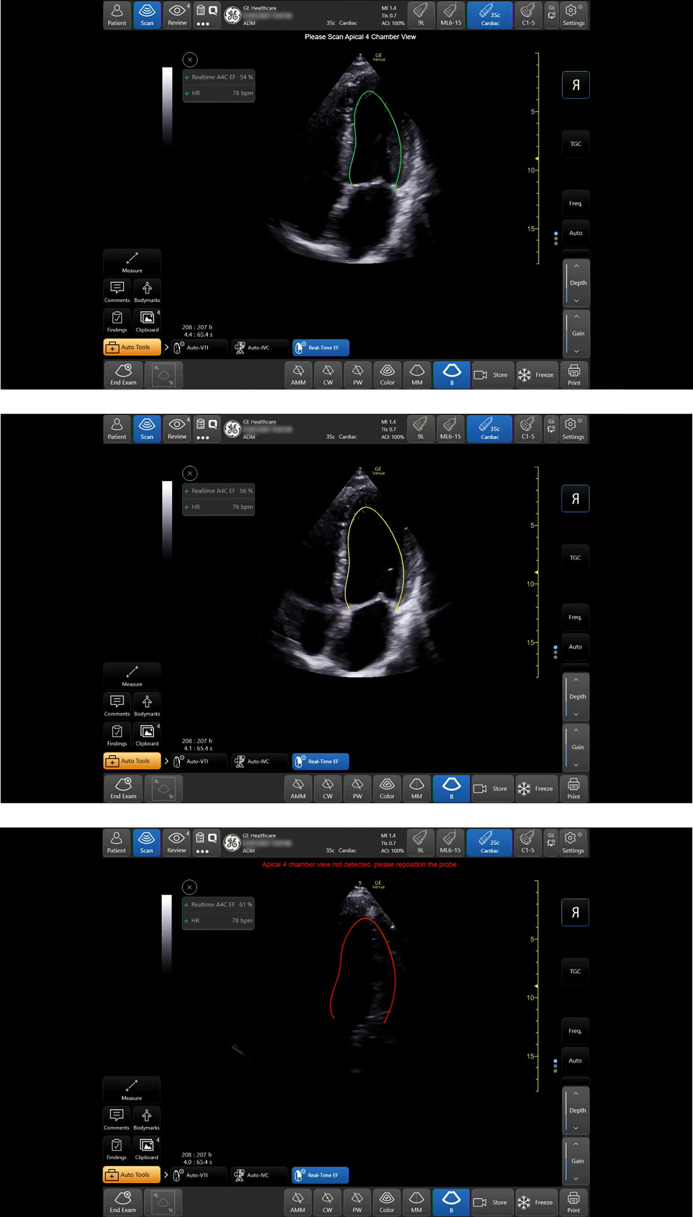
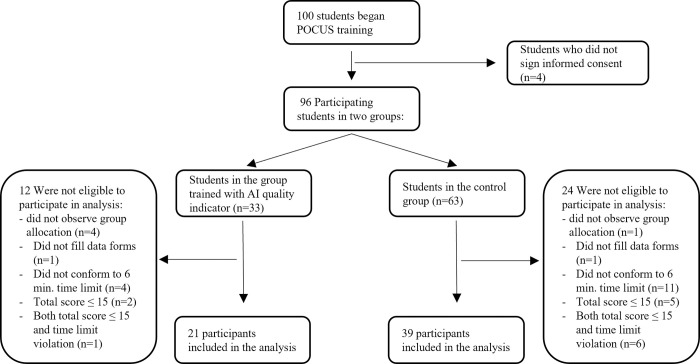
Purpose: Point-of-care ultrasound (POCUS) is a sensitive, safe, and efficient tool used in many clinical settings and is an essential part of medical education in the United States. Numerous studies present improved diagnostic performances and positive clinical outcomes among POCUS users. However, others stress the degree to which the modality is user-dependent, rendering high-quality POCUS training necessary in medical education. In this study, the authors aimed to investigate the potential of an artificial intelligence (AI) based quality indicator tool as a teaching device for cardiac POCUS performance. Methods: The authors integrated the quality indicator tool into the pre-clinical cardiac ultrasound course for 4th-year medical students and analyzed their performances. The analysis included 60 students who were assigned to one of two groups as follows: the intervention group using the AI-based quality indicator tool and the control group. Quality indicator users utilized the tool during both the course and the final test. At the end of the course, the authors tested the standard echocardiographic views, and an experienced clinician blindly graded the recorded clips. Results were analyzed and compared between the groups. Results: The results showed an advantage in quality indictor users’ median overall scores (P = 0.002) with a relative risk of 2.3 (95% CI: 1.10, 4.93, P = 0.03) for obtaining correct cardiac views. In addition, quality indicator users also had a statistically significant advantage in the overall image quality in various cardiac views. Conclusions: The AI-based quality indicator improved cardiac ultrasound performances among medical students who were trained with it compared to the control group, even in cardiac views in which the indicator was inactive. Performance scores, as well as image quality, were better in the AI-based group. Such tools can potentially enhance ultrasound training, warranting the expansion of the application to more views and prompting further studies on long-term learning effects.
Overview
The claims and statistics of this paper haven’t been checked yet.
Run the check — free, no account needed. It reads the open-access text and checks the sources it cites.
Integrity signals
Registry
Cites
Statistics
Figures
Verification
Claims the paper makes
The claims and statistics of this paper haven’t been checked yet.
Run the check — free, no account needed. It reads the open-access text and checks the sources it cites.
Claims other papers make about this one
Each is checked against this paper’s own text: does it say what the citing paper says it does?
The source backs part of the claim, not all of it — or backs it for a different population, condition or comparison.
In the citing paper
“In cardiology, AI-assisted teaching has been used to help learn how to perform echocardiography [91, 92] and to evaluate the determination of left ventricular ejection fraction (LVEF) [93]. In addition, AI helped accelerate progression from novice to expert with ultrasound use [93].”
From Artificial intelligence in undergraduate medical education: an updated scoping review (2025) · cites this paper as [91]
Experimental — accuracy not yet measured
Self-check
Percentages, sums and reported differences re-computed from the paper’s own numbers.
The self-check needs the paper’s full text.
Citations
Cites
Fast and accurate view classification of echocardiograms using deep learning
Madani, A., Arnaout, R., Mofrad, M., & Arnaout, R. (2018) · npj Digital Medicine · doi:10.1038/s41746-017-0013-1 · Cited by 585
Narang, A., Bae, R. Y., Hong, H., Thomas, Y., Surette, S., Cadieu, C. F., Chaudhry, A. K., Martin, R. P., McCarthy, P. M., Rubenson, D. S., et al. (2021) · JAMA Cardiology · doi:10.1001/jamacardio.2021.0185 · Cited by 468
Time to Add a Fifth Pillar to Bedside Physical Examination
Narula, J., Chandrashekhar, Y., & Braunwald, E. (2018) · JAMA Cardiology · doi:10.1001/jamacardio.2018.0001 · Cited by 360
The State of Ultrasound Education in U.S. Medical Schools
Bahner, D. P., Goldman, E., Way, D. P., Royall, N. A., & Liu, Y. T. (2014) · Academic Medicine · doi:10.1097/acm.0000000000000414 · Cited by 356
Point-of-Care Ultrasound in Medical Education — Stop Listening and Look
Solomon, S. D., & Saldaña, F. (2014) · New England Journal of Medicine · doi:10.1056/nejmp1311944 · Cited by 284
Moghaddasi, H., & Nourian, S. (2016) · Computers in Biology and Medicine · doi:10.1016/j.compbiomed.2016.03.026 · Cited by 109
Utilization of Artificial Intelligence in Echocardiography
Kusunose, K., Haga, A., Abe, T., & Sata, M. (2019) · Circulation Journal · doi:10.1253/circj.cj-19-0420 · Cited by 102
A Pilot Study of the Clinical Impact of Hand‐Carried Cardiac Ultrasound in the Medical Clinic
Croft, L. B., Duvall, W. L., & Goldman, M. E. (2006) · Echocardiography · doi:10.1111/j.1540-8175.2006.00240.x · Cited by 101
Hand-Carried Ultrasound Improves the Bedside Cardiovascular Examination
Kobal, S. L., Atar, S., & Siegel, R. J. (2004) · CHEST Journal · doi:10.1378/chest.126.3.693 · Cited by 93
Point of care ultrasound for basic haemodynamic assessment: novice compared with an expert operator
Royse, C. F., Seah, J. L., Donelan, L., & Royse, A. G. (2006) · Anaesthesia · doi:10.1111/j.1365-2044.2006.04746.x · Cited by 68
Gohar, E., Herling, A., Mazuz, M., Tsaban, G., Gat, T., Kobal, S. L., & Fuchs, L. (2023) · Journal of Clinical Medicine · doi:10.3390/jcm12041352 · Cited by 60
Self-citationCanadian Association of Radiologists Position Statement on Point-of-Care Ultrasound
Chawla, T. P., Cresswell, M., Dhillon, S. S., Greer, M. C., Hartery, A., Keough, V., & Patlas, M. N. (2019) · Canadian Association of Radiologists Journal · doi:10.1016/j.carj.2019.06.001 · Cited by 55
Nathanson, R., Williams, J. P., Gupta, N., Rezigh, A. C., Mader, M. J., Haro, E. K., Drum, B., O'Brien, E., Khosla, R., Boyd, J. S., et al. (2023) · The American Journal of Medicine · doi:10.1016/j.amjmed.2023.01.038 · Cited by 47
Golan, Y. B.-B., Sadeh, R., Mizrakli, Y., Shafat, T., Sagy, I., Slutsky, T., Kobal, S. L., Novack, V., & Fuchs, L. (2020) · Ultrasound in Medicine & Biology · doi:10.1016/j.ultrasmedbio.2020.03.023 · Cited by 43
Self-citationHoffmann, B., Bessman, E. S., Um, P., Ding, R., & McCarthy, M. L. (2010) · Emergency Medicine Journal · doi:10.1136/emj.2009.086462 · Cited by 30
Point of care ultrasound: the next evolution of medical education
Gilbertson, E. A., Hatton, N. D., & Ryan, J. J. (2020) · Annals of Translational Medicine · doi:10.21037/atm.2020.04.41 · Cited by 20
Can Dialysis Patients Identify and Diagnose Pulmonary Congestion Using Self-Lung Ultrasound?
Schneider, E., Maimon, N., Hasidim, A. A., Shnaider, A., Migliozzi, G., Haviv, Y. S., Halpern, D., Ganem, B. A., & Fuchs, L. (2023) · Journal of Clinical Medicine · doi:10.3390/jcm12113829 · Cited by 18
Self-citationTsaban, G., Galante, O., Almog, Y., Ullman, Y., & Fuchs, L. (2021) · Critical Care · doi:10.1186/s13054-021-03770-8 · Cited by 6
Self-citation
Cited by
Artificial intelligence in undergraduate medical education: an updated scoping review
Simoni, J., Urtubia-Fernandez, J., Mengual, E., Simoni, D. A., Royo, M., Egaña-Yin, D., Hertog, O. L. A., López-Ortiz, L., Muñoz-Tomás, A., Santiago-Martínez, P., et al. (2025) · BMC Medical Education · doi:10.1186/s12909-025-08188-2 · Cited by 62
“In cardiology, AI-assisted teaching has been used to help learn how to perform echocardiography [91, 92] and to evaluate the determination of left ventricular ejection fraction (LVEF) [93].”
Roveta, A., Castello, L. M., Massarino, C., Francese, A., Ugo, F., & Maconi, A. (2025) · AI · doi:10.3390/ai6090227 · Cited by 49
AI-Enhanced POCUS in Emergency Care
Puticiu, M. I., Cimpoesu, D. C., POP, F. B.-D., Ciumanghel, I., Rotaru, L. T., Opriță, B., Butoi, M. A., Belghiru, V. I., Tat, R. M., & Golea, A. C. (2026) · Diagnostics · doi:10.3390/diagnostics16020353 · Cited by 10
Lai, N. M., Lim, Y. S., Thein, W. M., Bhargava, P., Thomas, P., & Ong, Q. C. (2026) · JMIR Medical Education · doi:10.2196/88933 · Cited by 12
Comparative Evaluation of Self-Learning Versus Instructor-Guided Cardiac Ultrasonography Training
Ilan, O., Perlin, A., Peles, I., Shitrit, I. B., & Fuchs, L. (2025) · Academic Medicine · doi:10.1097/acm.0000000000006020 · Cited by 4
Self-citation
Metadata
- Authors
- Aronovitz, N., Hazan, I., Jedwab, R., Ben Shitrit, I., Quinn, A., Wacht, O., & Fuchs, L.
- Affiliations
- Ben-Gurion University of the Negev (IL)
- Corresponding author
- Aronovitz, Noam
- Venue
- PLOS ONE
- Publisher
- Public Library of Science (PLoS)
- Published
- 2024-03-28
- Volume
- 19
- Issue
- 3
- Pages
- e0299461
- ISSN
- 1932-6203 (ISSN-L)
- PMC
- PMC10977790
- OpenAlex
- W4393253708
- Cited by
- 19
- References
- 18
- Citations by year
- 2026: 6 · 2025: 13
- FWCI
- 7.10
- Type
- journal article
- Language
- en
- Open access
- gold
- doi.org
- Licence
- Locations
- PLoS ONE (publishedVersion, cc-by)
- PubMed Central (publishedVersion, cc-by)
- PubMed (publishedVersion)
- DOAJ (DOAJ: Directory of Open Access Journals) (submittedVersion, cc-by-sa)
- Funders
- Ben-Gurion University of the Negev
- Topics
- Health Sciences › Medicine › Critical Care and Intensive Care Medicine › Ultrasound in Clinical Applications
- Health Sciences › Medicine › Health Informatics › Artificial Intelligence in Healthcare and Education
- Social Sciences › Education › Innovations in Medical Education
- Keywords
- point-of-care ultrasound, echocardiography, medical student training, real-time feedback
- MeSH terms
- Artificial Intelligence, Echocardiography, Humans, Students, Medical, Ultrasonography, Point-of-Care Systems
About these checks
Registry, retraction, Cites and statistics results are computed, not judged, with one exception: a printed reference that no index lists is read once by a model before it counts as a citation error. Claims are extracted by a model and kept only when their quote appears verbatim in the text; each cited source is then checked, with a model’s help, for whether it says what the claim relies on. Those verdicts can be wrong — read the claim’s quote and the cited source before relying on one.
Statistics and arithmetic are recomputed, not judged.
Confidence bands are shown only for fields calibrated on our annotated test set. None is calibrated yet, so no band is shown.
What counts as a claim ›How we measure confidence ›How we check this ›
Are you an author, or do you see a problem with this page? Request a review
Data sources
Bibliographic data: Semantic Scholar, OpenAlex, Crossref.
Contains information from the Semantic Scholar Academic Graph Datasets, made available under the ODC Attribution License (ODC-BY 1.0).
Semantic Scholar’s data is described in: Kinney, R., et al. (2023). The Semantic Scholar Open Data Platform. arXiv:2301.10140.
