

The DOI matches its Crossref record; 78 of the 78 references it cites were found in a registry or an index.
Post-transcriptional control drives Aurora kinase A expression in human cancers
Open accessPublished version of a preprint
Abstract
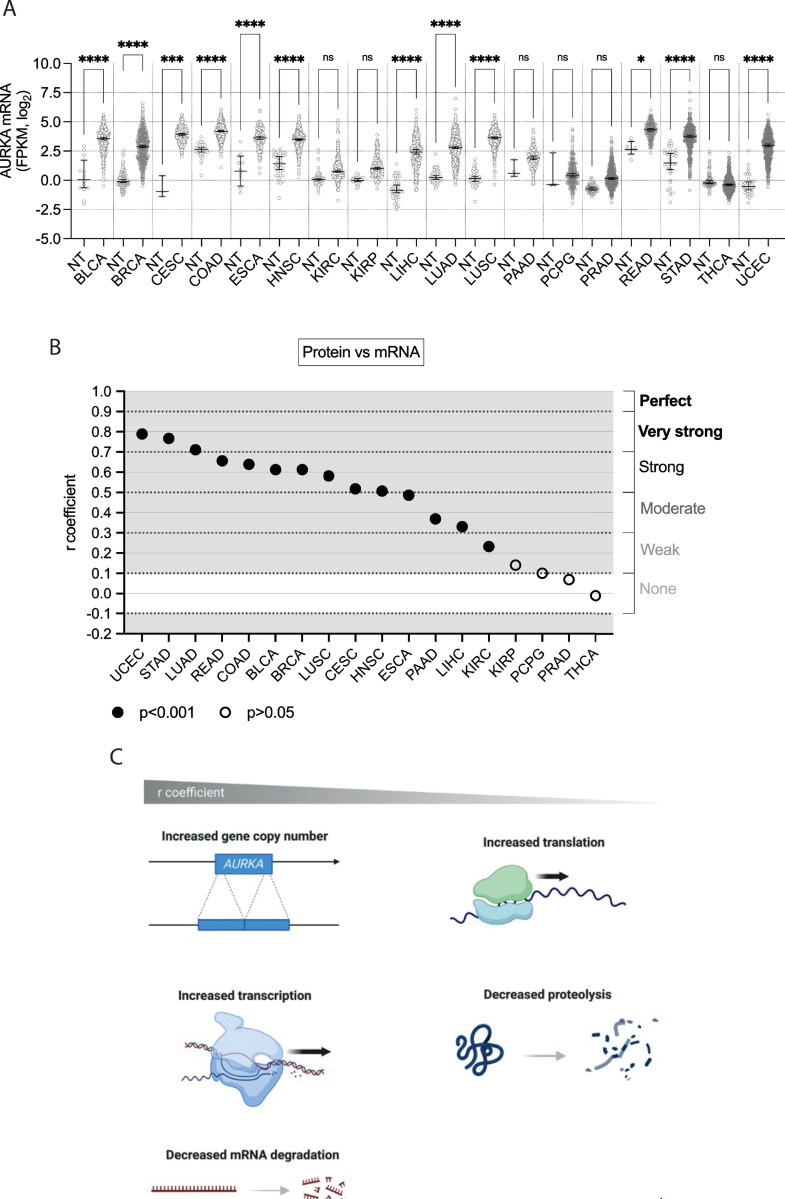
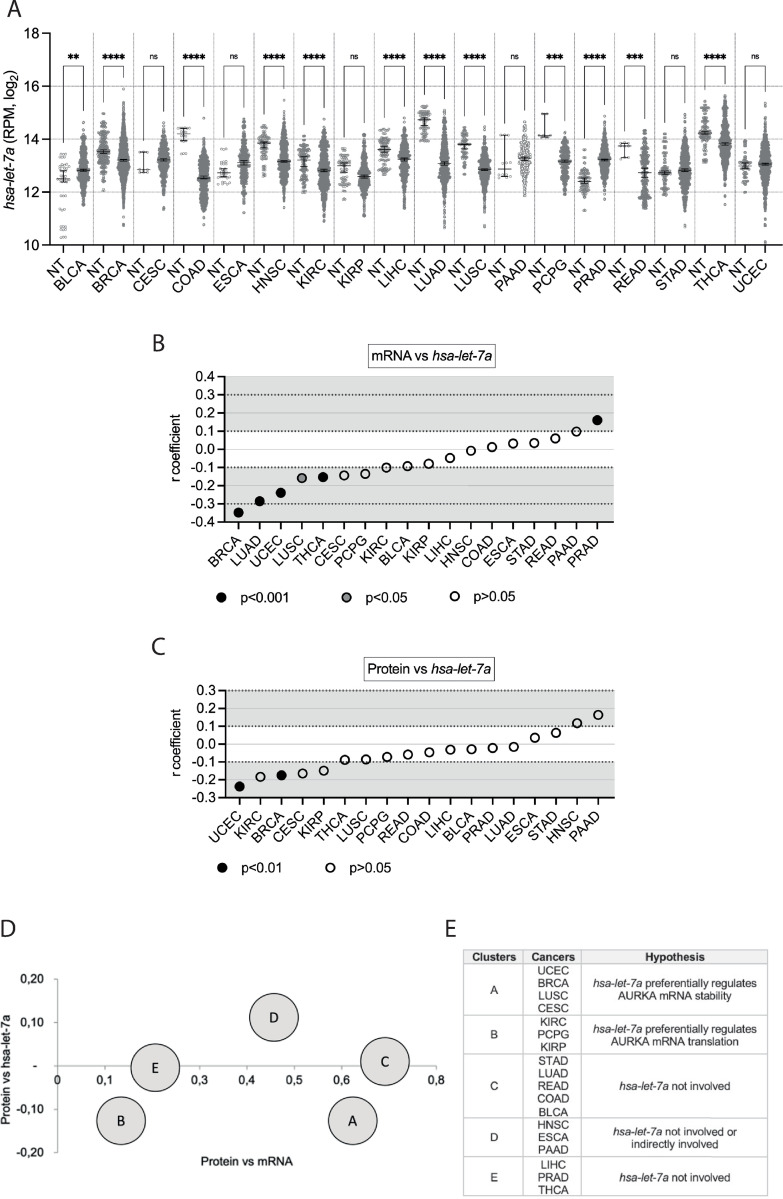
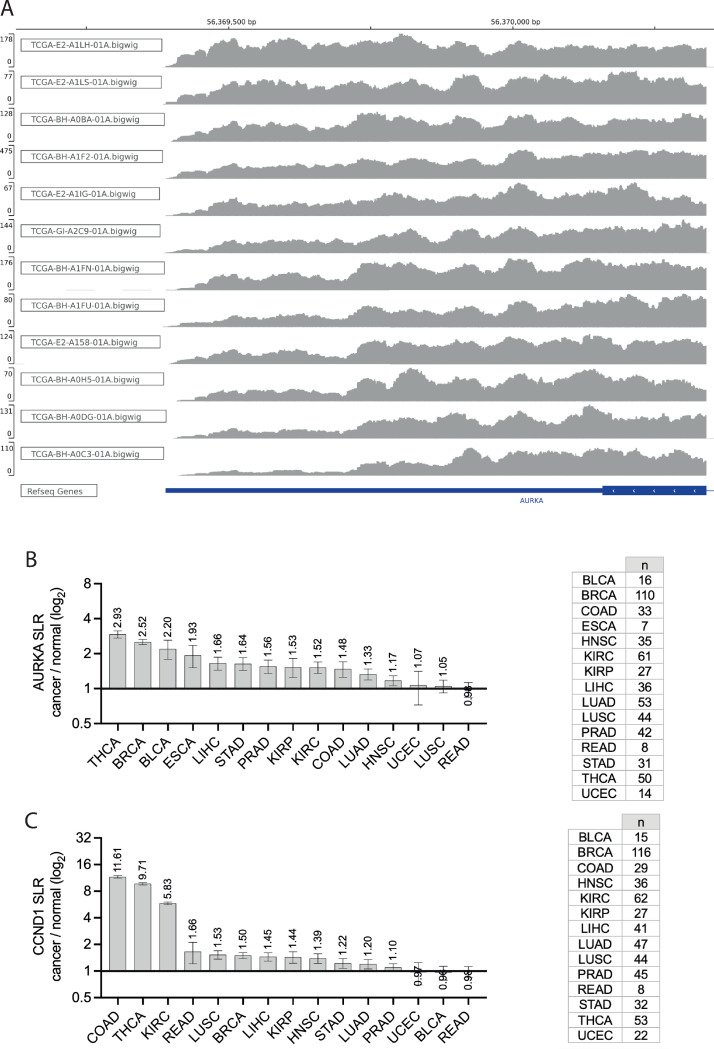
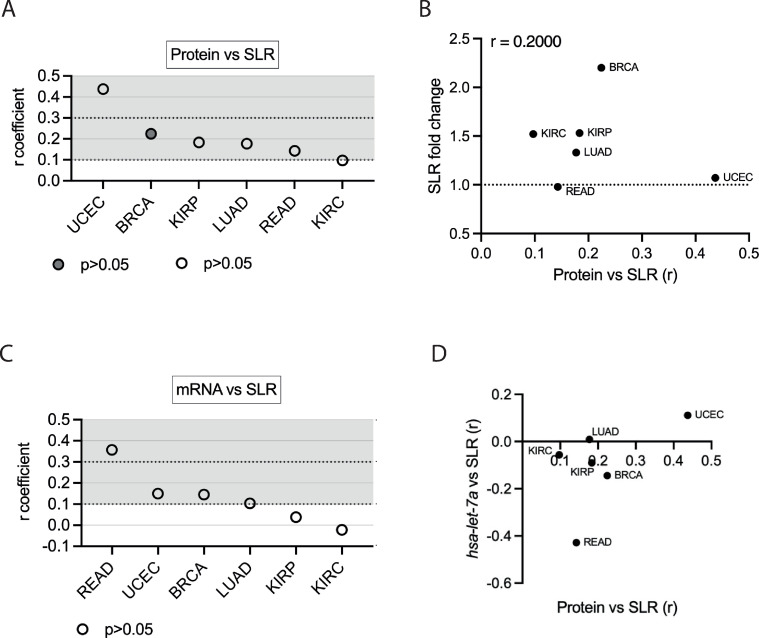
Aurora kinase A (AURKA) is a major regulator of the cell cycle. A prominent association exists between high expression of AURKA and cancer, and impairment of AURKA levels can trigger its oncogenic activity. In order to explore the contribution of post-transcriptional regulation to AURKA expression in different cancers, we carried out a meta-analysis of -omics data of 18 cancer types from The Cancer Genome Atlas (TCGA). Our study confirmed a general trend for increased AURKA mRNA in cancer compared to normal tissues and revealed that AURKA expression is highly dependent on post-transcriptional control in several cancers. Correlation and clustering analyses of AURKA mRNA and protein expression, and expression of AURKA-targeting hsa-let-7a miRNA, unveiled that hsa-let-7a is likely involved to varying extents in controlling AURKA expression in cancers. We then measured differences in the short/long ratio (SLR) of the two alternative cleavage and polyadenylation (APA) isoforms of AURKA mRNA across cancers compared to the respective healthy counterparts. We suggest that the interplay between APA and hsa-let-7a targeting of AURKA mRNA may influence AURKA expression in some cancers. hsa-let-7a and APA may also independently contribute to altered AURKA levels. Therefore, we argue that AURKA mRNA and protein expression are often discordant in cancer as a result of dynamic post-transcriptional regulation.
Overview
The claims and statistics of this paper haven’t been checked yet.
Run the check — free, no account needed. It reads the open-access text and checks the sources it cites.
Integrity signals
Registry
Cites
Statistics
Figures
Verification
Claims the paper makes
The claims and statistics of this paper haven’t been checked yet.
Run the check — free, no account needed. It reads the open-access text and checks the sources it cites.
Self-check
Percentages, sums and reported differences re-computed from the paper’s own numbers.
The self-check needs the paper’s full text.
Citations
Cites
Database resources of the National Center for Biotechnology Information: update
Wheeler, D. L. (2004) · Nucleic Acids Research · doi:10.1093/nar/gkh073 · Cited by 10,641
Global quantification of mammalian gene expression control
Schwanhäusser, B., Busse, D., Li, N., Dittmar, G., Schuchhardt, J., Wolf, J., Chen, W., & Selbach, M. (2011) · Nature · doi:10.1038/nature10098 · Cited by 6,566 · cited 1×
“…than those measured between hsa-let-7a and AURKA mRNA expression but might reflect a connection between hsa-let-7a and protein levels, underpinned by a role of hsa-let-7a in either AURKA mRNA abundance or translation rate, according to whether a link exists between hsa-let-7a and AURKA mRNA or not.”
BackgroundUALCAN: A Portal for Facilitating Tumor Subgroup Gene Expression and Survival Analyses
Chandrashekar, D. S., Bashel, B., Balasubramanya, S. A. H., Creighton, C. J., Ponce-Rodriguez, I., Chakravarthi, B. V. S. K., & Varambally, S. (2017) · Neoplasia · doi:10.1016/j.neo.2017.05.002 · Cited by 6,086
GEPIA2: an enhanced web server for large-scale expression profiling and interactive analysis
Tang, Z., Kang, B., Li, C., Chen, T., & Zhang, Z. (2019) · Nucleic Acids Research · doi:10.1093/nar/gkz430 · Cited by 5,318
miRBase: from microRNA sequences to function
Kozomara, A., Birgaoanu, M., & Griffiths-Jones, S. (2019) · Nucleic Acids Research · doi:10.1093/nar/gky1141 · Cited by 4,843
Review The Cancer Genome Atlas (TCGA): an immeasurable source of knowledge
Tomczak, K. J., Czerwińska, P., & Wiznerowicz, M. (2015) · Współczesna Onkologia · doi:10.5114/wo.2014.47136 · Cited by 3,880
Tumour heterogeneity and resistance to cancer therapies
Dagogo-Jack, I., & Shaw, A. T. (2018) · Nature Reviews Clinical Oncology · doi:10.1038/nrclinonc.2017.166 · Cited by 3,846
GENCODE reference annotation for the human and mouse genomes
Frankish, A., Diekhans, M., Ferreira, A.-M., Johnson, R., Jungreis, I., Loveland, J. E., Mudge, J. M., Sisu, C., Wright, J. C., Armstrong, J. C., et al. (2018) · Nucleic Acids Research · doi:10.1093/nar/gky955 · Cited by 3,018
Database resources of the national center for biotechnology information
Sayers, E. W., Bolton, E. E., Brister, J. R., Canese, K., Chan, J., Comeau, D. C., Connor, R., Funk, K., Kelly, C., Kim, S., et al. (2022) · Nucleic Acids Research · doi:10.1093/nar/gkab1112 · Cited by 2,812
Cunningham, F., Allen, J. E., Allen, J., Alvarez-Jarreta, J., Amode, M. R., Armean, I. M., Austine-Orimoloye, O., Azov, A. G., Barnes, I., Bennett, R., et al. (2022) · Nucleic Acids Research · doi:10.1093/nar/gkab1049 · Cited by 1,923
Mayr, C., & Bartel, D. P. (2009) · Cell · doi:10.1016/j.cell.2009.06.016 · Cited by 1,613
Tumour amplified kinase STK15/BTAK induces centrosome amplification, aneuploidy and transformation
Zhou, H., Kuang, J., Zhong, L., Kuo, W.-L., Gray, J., Sahin, A., Brinkley, B., & Sen, S. (1998) · Nature Genetics · doi:10.1038/2496 · Cited by 1,276
The let-7 MicroRNA Represses Cell Proliferation Pathways in Human Cells
Johnson, C. D., Esquela-Kerscher, A., Stefani, G., Byrom, M., Kelnar, K., Ovcharenko, D., Wilson, M., Wang, X., Shelton, J., Shingara, J., et al. (2007) · Cancer Research · doi:10.1158/0008-5472.can-07-1083 · Cited by 1,224
Metabolomics: A New Tool to Reveal the Nature of Diabetic Kidney Disease
Huang, G., Li, M., Li, Y. J., & Mao, Y. (2022) · Laboratory Medicine · doi:10.1093/labmed/lmac041 · Cited by 933
Aurora-A — A guardian of poles
Marumoto, T., Zhang, D., & Saya, H. (2005) · Nature Reviews Cancer · doi:10.1038/nrc1526 · Cited by 697
Koussounadis, A., Langdon, S. P., Um, I. H., Harrison, D. J., & Smith, V. A. (2015) · Scientific Reports · doi:10.1038/srep10775 · Cited by 671
A quantitative atlas of polyadenylation in five mammalsPreprint
Derti, A., Garrett-Engele, P. W., MacIsaac, K. D., Stevens, R. C., Sriram, S., Chen, R., Rohl, C. A., Johnson, J. M., & Babak, T. (2012) · Genome Research · doi:10.1101/gr.132563.111 · Cited by 665
Targeting AURKA in Cancer: molecular mechanisms and opportunities for Cancer therapy
Du, R., Huang, C., Liu, K., Li, X., & Dong, Z. (2021) · Molecular Cancer · doi:10.1186/s12943-020-01305-3 · Cited by 586
Xia, Z., Donehower, L. A., Cooper, T. A., Neilson, J. R., Wheeler, D. A., Wagner, E. J., & Li, W. (2014) · Nature Communications · doi:10.1038/ncomms6274 · Cited by 576
A joint NCBI and EMBL-EBI transcript set for clinical genomics and research
Morales, J., Pujar, S., Loveland, J. E., Astashyn, A., Bennett, R., Berry, A., Cox, E., Davidson, C., Ermolaeva, O., Farrell, C. M., et al. (2022) · Nature · doi:10.1038/s41586-022-04558-8 · Cited by 571
Alternative cleavage and polyadenylation in health and disease
Gruber, A. J., & Zavolan, M. (2019) · Nature Reviews Genetics · doi:10.1038/s41576-019-0145-z · Cited by 497
The functional diversity of Aurora kinases: a comprehensive review
Willems, E., Dedobbeleer, M., Digregorio, M., Lombard, A., Lumapat, P. N., & Rogister, B. (2018) · Cell Division · doi:10.1186/s13008-018-0040-6 · Cited by 416
Bueno, M. J., & Malumbres, M. (2011) · Biochimica et Biophysica Acta (BBA) - Molecular Basis of Disease · doi:10.1016/j.bbadis.2011.02.002 · Cited by 410
Context-specific regulation and function of mRNA alternative polyadenylation
Mitschka, S., & Mayr, C. (2022) · Nature Reviews Molecular Cell Biology · doi:10.1038/s41580-022-00507-5 · Cited by 336
Biogenesis and regulation of the let-7 miRNAs and their functional implications
Lee, H., Han, S., Kwon, C. S., & Lee, D. (2016) · Protein & Cell · doi:10.1007/s13238-015-0212-y · Cited by 330
Overexpression and Amplification of Aurora-A in Hepatocellular Carcinoma
Jeng, Y.-M., Peng, S.-Y., Lin, C.-Y., & Hsu, H.-C. (2004) · Clinical Cancer Research · doi:10.1158/1078-0432.ccr-1057-03 · Cited by 304
Activation and overexpression of centrosome kinase BTAK/Aurora-A in human ovarian cancer.
Gritsko, T. M., Coppola, D., Paciga, J. E., Yang, L., Sun, M., Shelley, S. A., Fiorica, J. V., Nicosia, S. V., & Cheng, J. Q. (2003) · PubMed · Cited by 303
Aurora Kinase Inhibitors: Current Status and Outlook
Bavetsias, V., & Linardopoulos, S. (2015) · Frontiers in Oncology · doi:10.3389/fonc.2015.00278 · Cited by 285
Microrna Let-7: An Emerging Next-Generation Cancer Therapeutic
Barh, D., Malhotra, R., Ravi, B., & Sindhurani, P. (2010) · Current Oncology · doi:10.3747/co.v17i1.356 · Cited by 256
Post-transcriptional regulation across human tissues
Franks, A., Airoldi, E., & Slavov, N. (2017) · PLOS Computational Biology · doi:10.1371/journal.pcbi.1005535 · Cited by 219
Hata, T., Furukawa, T., Sunamura, M., Egawa, S., Motoi, F., Ohmura, N., Marumoto, T., Saya, H., & Horii, A. (2005) · Cancer Research · doi:10.1158/0008-5472.can-04-3981 · Cited by 216
Gruber, A. J., Schmidt, R., Gruber, A. J., Martin, G., Ghosh, S., Belmadani, M., Keller, W., & Zavolan, M. (2016) · Genome Research · doi:10.1101/gr.202432.115 · Cited by 214
Regulation of let-7 and its target oncogenes (Review)
WANG, X., Cao, L., Wang, Y., Wang, X., Liu, N., & You, Y. (2012) · Oncology Letters · doi:10.3892/ol.2012.609 · Cited by 198
Comprehensive Characterization of Alternative Polyadenylation in Human Cancer
Xiang, Y., Ye, Y., Lou, Y., Yang, Y., Cai, C. C., Zhang, Z., Mills, T., Chen, N., Kim, Y.-J., Ozguc, F. M., et al. (2017) · JNCI Journal of the National Cancer Institute · doi:10.1093/jnci/djx223 · Cited by 183
Altered RNA Processing in Cancer Pathogenesis and Therapy
Obeng, E. A., Stewart, C., & Abdel-Wahab, O. I. (2019) · Cancer Discovery · doi:10.1158/2159-8290.cd-19-0399 · Cited by 149
APAtrap: identification and quantification of alternative polyadenylation sites from RNA-seq data
Ye, C., Long, Y., Ji, G., Li, Q. Q., & Wu, X. (2018) · Bioinformatics · doi:10.1093/bioinformatics/bty029 · Cited by 117
Role of let-7 family microRNA in breast cancer
Thammaiah, C. K., & Jayaram, S. (2016) · Non-coding RNA Research · doi:10.1016/j.ncrna.2016.10.003 · Cited by 114
Shortening of 3′UTRs Correlates with Poor Prognosis in Breast and Lung Cancer
Lembo, A., Cunto, F. D., & Provero, P. (2012) · PLoS ONE · doi:10.1371/journal.pone.0031129 · Cited by 113
Li, C., Kato, M. V., Shiue, L., Shively, J. E., Ares, M., & Lin, R.-J. (2006) · Cancer Research · doi:10.1158/0008-5472.can-05-2593 · Cited by 101
The Role of Non-Coding RNAs in Controlling Cell Cycle Related Proteins in Cancer Cells
Ghafouri‐Fard, S., Shoorei, H., Anamag, F. T., & Taheri, M. N. (2020) · Frontiers in Oncology · doi:10.3389/fonc.2020.608975 · Cited by 98
Chen, Y., Davidson, N., Wan, Y. K., Patel, H., Yao, F., Low, H. M., Hendra, C., Watten, L., Sim, A. D., Sawyer, C., et al. (2021) · bioRxiv (Cold Spring Harbor Laboratory) · doi:10.1101/2021.04.21.440736 · Cited by 92
Avery‐Kiejda, K. A., Braye, S. G., Mathe, A., Forbes, J., & Scott, R. J. (2014) · BMC Cancer · doi:10.1186/1471-2407-14-51 · Cited by 91
Xu, J., Wu, X., Zhou, W.-H., Liu, A.-W., Wu, J.-B., Deng, J.-Y., Yue, C.-F., Yang, S.-B., Wang, J., Yuan, Z.-Y., et al. (2013) · PLoS ONE · doi:10.1371/journal.pone.0056919 · Cited by 87
Shi, Y., Zhang, Y., Ran, F., Liu, J., Lin, J., Hao, X., Ding, L., & Ye, Q. (2020) · Cancer Letters · doi:10.1016/j.canlet.2020.09.012 · Cited by 83
Tanshinones suppress AURKA through up-regulation of miR-32 expression in non-small cell lung cancer
Ma, Z., Zhang, B.-J., Wang, D.-T., et al. (2015) · Oncotarget · doi:10.18632/oncotarget.3933 · Cited by 82
Novel prognostic and predictive microRNA targets for triple‐negative breast cancer
Turashvili, G., Lightbody, E. D., Tyryshkin, K., Sengupta, S., Elliott, B. E., Madarnas, Y., Ghaffari, A., Day, A. G., & Nicol, C. J. B. (2018) · The FASEB Journal · doi:10.1096/fj.201800120r · Cited by 82
The contribution of alternative polyadenylation to the cancer phenotype
Masamha, C. P., & Wagner, E. J. (2017) · Carcinogenesis · doi:10.1093/carcin/bgx096 · Cited by 80
Cell Cycle Regulation by Alternative Polyadenylation of CCND1
Wang, Q., He, G., Hou, M., Chen, L., Chen, S., Xu, A., & Fu, Y. (2018) · Scientific Reports · doi:10.1038/s41598-018-25141-0 · Cited by 75
Aurora kinase targeting in lung cancer reduces KRAS-induced transformation
dos Santos, E. O., Carneiro-Lobo, T. C., Aoki, M. N., Levantini, E., & Bassères, D. S. (2016) · Molecular Cancer · doi:10.1186/s12943-016-0494-6 · Cited by 64
Wang, R., Ascanelli, C., Abdelbaki, A., Fung, A., Rasmusson, T., Michaelides, I. N., Roberts, K., & Lindon, C. (2021) · Communications Biology · doi:10.1038/s42003-021-02158-2 · Cited by 64
Self-citation3′UTR shortening and EGF signaling: implications for breast cancer
Akman, H. B., Oyken, M., Tuncer, T., Can, T., & Erson-Bensan, A. E. (2015) · Human Molecular Genetics · doi:10.1093/hmg/ddv391 · Cited by 62
3′UTR heterogeneity and cancer progression
Chan, J. J., Tabatabaeian, H., & Tay, Y. (2022) · Trends in Cell Biology · doi:10.1016/j.tcb.2022.10.001 · Cited by 60
Yang, Y., Ding, L., Zhou, Q., Li, F., Cao, Y.-H., Sun, J., Zhou, X., & Liu, A. (2020) · Cancer Cell International · doi:10.1186/s12935-019-1072-y · Cited by 51
Zhang, H., Bao, J., Zhao, S., Huo, Z., & Li, B. (2020) · Archives of Medical Science · doi:10.5114/aoms.2019.91351 · Cited by 50
Wang, L., Lang, G., Xue, M., Liu, Y., Chen, L., Yao, L., Li, X., Wang, P., Hu, X., & Shao, Z. (2020) · Theranostics · doi:10.7150/thno.40944 · Cited by 50
Lai, C.-H., Huang, Y.-C., Lee, J., Tseng, J. T.-C., Chang, K., Chen, Y., Ding, N.-J., Huang, P.-H., Chang, W., Lin, B., et al. (2017) · Cell Death and Disease · doi:10.1038/cddis.2016.479 · Cited by 46
Zhang, J., Li, B., Yang, Q., Zhang, P., & Wang, H. (2015) · Japanese Journal of Clinical Oncology · doi:10.1093/jjco/hyv058 · Cited by 45
Lu, Y., Liu, Y., Jiang, J., Xi, Z., Zhong, N., Shi, S., Wang, J., & Wei, X. (2014) · Oncology Reports · doi:10.3892/or.2014.3194 · Cited by 40
Miralaei, N., Majd, A., Ghaedi, K., Peymani, M., & Safaei, M. (2021) · Cancer Medicine · doi:10.1002/cam4.4161 · Cited by 40
Estrogen receptor beta impacts hormone-induced alternative mRNA splicing in breast cancer cells
Noël, D. D., Scafoglio, C., Rinaldi, A., Memoli, D., Giurato, G., Nassa, G., Ravo, M., Rizzo, F. M., Tarallo, R., & Weisz, A. (2015) · BMC Genomics · doi:10.1186/s12864-015-1541-1 · Cited by 36
Yuan, Y., Yu, H., Mu, S.-M., Dong, Y., & Li, D. Y. (2019) · Technology in Cancer Research & Treatment · doi:10.1177/1533033819851833 · Cited by 36
Translational up‐regulation of Aurora‐A in EGFR‐overexpressed cancer
Lai, C.-H., Tseng, J. T.-C., Lee, Y., Chen, Y., Lee, J.-C., Lin, B., Huang, T., Liu, Y., Leu, T., Liu, Y., et al. (2009) · Journal of Cellular and Molecular Medicine · doi:10.1111/j.1582-4934.2009.00919.x · Cited by 33
Recurrent tumor-specific regulation of alternative polyadenylation of cancer-related genes
Xue, Z., Warren, R. L., Gibb, E. A., MacMillan, D., Wong, J., Chiu, R., Hammond, S. A., Yang, C., Nip, K. M., Ennis, C. A., et al. (2018) · BMC Genomics · doi:10.1186/s12864-018-4903-7 · Cited by 33
Dysregulating IRES-Dependent Translation Contributes to Overexpression of Oncogenic Aurora A Kinase
Dobson, T., Chen, J., & Krushel, L. A. (2013) · Molecular Cancer Research · doi:10.1158/1541-7786.mcr-12-0707 · Cited by 32
Wang, C., Yan, Q., Hu, M., Qin, D., & Feng, Z. (2016) · Targeted Oncology · doi:10.1007/s11523-016-0436-7 · Cited by 31
Novel, highly potent PROTACs targeting AURORA-A kinase
Božilović, J., Eing, L., Berger, B., Adhikari, B., Weckesser, J., Berner, N., Wilhelm, S., Küster, B., Wolf, E., & Knapp, S. (2022) · Current Research in Chemical Biology · doi:10.1016/j.crchbi.2022.100032 · Cited by 28
Zingone, A., Sinha, S., Ante, M., Nguyen, C. D., Daujotyte, D., Bowman, E. D., Sinha, N., Mitchell, K. A., Chen, Q., Yan, C., et al. (2021) · Nature Communications · doi:10.1038/s41467-021-25763-5 · Cited by 25
Silencing Aurora-A with siRNA inhibits cell proliferation in human lung adenocarcinoma cells
Zhong, N., Shi, S., Wang, Z., Wu, G., Wang, Y., Ma, Q., Wang, H., Liu, Y., & Wang, J. (2016) · International Journal of Oncology · doi:10.3892/ijo.2016.3605 · Cited by 22
Cacioppo, R., & Lindon, C. (2022) · Open Biology · doi:10.1098/rsob.220134 · Cited by 21
Self-citationShan, B., Zhao, R., Zhou, J., Zhang, M., Qi, X., Wang, T., Gong, J., Wu, Y., Zhu, Y., Yang, W., et al. (2020) · BioMed Research International · doi:10.1155/2020/8916729 · Cited by 20
MicroRNA-based regulation of Aurora A kinase in breast cancer
Fadaka, A. O., Sibuyi, N. R. S., Madiehe, A. M., & Meyer, M. (2020) · Oncotarget · doi:10.18632/oncotarget.27811 · Cited by 18
Tanshinone Inhibits NSCLC by Downregulating AURKA Through Let-7a-5p
Liu, X., Zou, H., Zhao, Y., Chen, H., Liu, T., Wu, Z., Yang, C., Li, Q., & Li, Y. (2020) · Frontiers in Genetics · doi:10.3389/fgene.2020.00838 · Cited by 15
Cacioppo, R., Akman, H. B., Tuncer, T., Erson-Bensan, A. E., & Lindon, C. (2023) · eLife · doi:10.7554/elife.87253 · Cited by 15
Self-citationAlternative polyadenylation associated with prognosis and therapy in colorectal cancer
Zhang, Y., Xu, Y., & Wang, Y. (2022) · Scientific Reports · doi:10.1038/s41598-022-11089-9 · Cited by 11
Yang, X., Wu, J. F., Xu, W. L., Tan, S. H., Chen, C., Wang, X., Sun, J., & Kang, Y. (2018) · OncoTargets and Therapy · doi:10.2147/ott.s164233 · Cited by 9
Almilaibary, A. (2022) · Medical Oncology · doi:10.1007/s12032-022-01852-3 · Cited by 8
Lu, K., Yuan, X., Zhao, L., Wang, B., & Zhang, Y. (2023) · Frontiers in Genetics · doi:10.3389/fgene.2022.996180 · Cited by 6
Wu, P., Wang, C., Hsieh, M., Lee, C., Wang, P.-H., Lin, C., Yang, S., & Lee, M. (2021) · International Journal of Medical Sciences · doi:10.7150/ijms.58516 · Cited by 4
Metadata
- Authors
- Cacioppo, R., Rad, D., Pagani, G., Gandellini, P., & Lindon, C.
- Affiliations
- MRC Laboratory of Molecular Biology (GB)
- University of Cambridge (GB)
- University of Milan (IT)
- Corresponding author
- Cacioppo, Roberta
- Lindon, Catherine
- Venue
- PLOS ONE
- Publisher
- Public Library of Science (PLoS)
- Published
- 2024-11-11
- Volume
- 19
- Issue
- 11
- Pages
- e0310625
- ISSN
- 1932-6203 (ISSN-L)
- PMC
- PMC11554201
- OpenAlex
- W4404241562
- Cited by
- 3
- References
- 78
- Citations by year
- 2026: 2 · 2025: 1
- FWCI
- 0.12
- Type
- journal article
- Language
- en
- Open access
- gold
- doi.org
- Licence
- Locations
- PLoS ONE (publishedVersion, cc-by)
- bioRxiv (Cold Spring Harbor Laboratory) (acceptedVersion, cc-by)
- PubMed Central (publishedVersion, cc-by)
- PubMed (publishedVersion)
- Apollo (University of Cambridge) (submittedVersion, cc-by)
- Archivio Istituzionale della Ricerca (Universita Degli Studi Di Milano) (submittedVersion, cc-by)
- DOAJ (DOAJ: Directory of Open Access Journals) (submittedVersion, cc-by-sa)
- Funders
- Biotechnology and Biological Sciences Research Council (BB/R004137/1)
- Department of Pharmacology, University of Cambridge
- Topics
- Life Sciences › Biochemistry, Genetics and Molecular Biology › Molecular Biology › RNA Research and Splicing
- Life Sciences › Biochemistry, Genetics and Molecular Biology › Cancer Research › Cancer-related molecular mechanisms research
- Life Sciences › Biochemistry, Genetics and Molecular Biology › Cancer Research › MicroRNA in disease regulation
- Keywords
- AURKA, post-transcriptional regulation, alternative polyadenylation, microRNA, cancer, cell cycle regulation, mRNA isoforms
- MeSH terms
- Humans, Neoplasms, RNA Processing, Post-Transcriptional, RNA, Messenger, Gene Expression Regulation, Neoplastic, Polyadenylation, MicroRNAs, Aurora Kinase A
About these checks
Registry, retraction, Cites and statistics results are computed, not judged, with one exception: a printed reference that no index lists is read once by a model before it counts as a citation error. Claims are extracted by a model and kept only when their quote appears verbatim in the text; each cited source is then checked, with a model’s help, for whether it says what the claim relies on. Those verdicts can be wrong — read the claim’s quote and the cited source before relying on one.
Statistics and arithmetic are recomputed, not judged.
Confidence bands are shown only for fields calibrated on our annotated test set. None is calibrated yet, so no band is shown.
What counts as a claim ›How we measure confidence ›How we check this ›
Are you an author, or do you see a problem with this page? Request a review
Data sources
Bibliographic data: Semantic Scholar, OpenAlex, Crossref.
Contains information from the Semantic Scholar Academic Graph Datasets, made available under the ODC Attribution License (ODC-BY 1.0).
Semantic Scholar’s data is described in: Kinney, R., et al. (2023). The Semantic Scholar Open Data Platform. arXiv:2301.10140.
