

LSTM-based estimation of lithium-ion battery SOH using data characteristics and spatio-temporal attention
Open accessThe DOI matches its Crossref record; 30 of the 30 references it cites were found in a registry or an index.
Abstract
As the primary power source for electric vehicles, the accurate estimation of the State of Health (SOH) of lithium-ion batteries is crucial for ensuring the reliable operation of the power system. Long Short-Term Memory (LSTM), a special type of recurrent neural network, achieves sequence information estimation through a gating mechanism. However, traditional LSTM-based SOH estimation methods do not account for the fact that the degradation sequence of battery SOH exhibits trend-like nonlinearity and significant dynamic variations between samples. Therefore, this paper proposes an LSTM-based lithium-ion SOH estimation method incorporating data characteristics and spatio-temporal attention. First, considering the trend-like nonlinearity of the degradation sequence, which is initially gradual and then rapid, input features are filtered and divided into trend and non-trend features. Then, to address the significant dynamic variations between samples, especially for capacity regeneration,a spatio-temporal attention mechanism is designed to extract spatio-temporal features from multidimensional non-trend features. Subsequently, an LSTM model is built with trend features, spatio-temporal features, and actual capacity as inputs to estimate capacity. Finally, the model is trained and tested on different datasets. Experimental results demonstrate that the proposed method outperforms traditional methods in terms of SOH estimation accuracy and robustness.
Overview
The claims and statistics of this paper haven’t been checked yet.
Free: it reads the open-access text and checks the first 5 claims that cite a source we can check. Create a free account to check every claim.
Integrity signals
Registry
Cites
Statistics
Figures
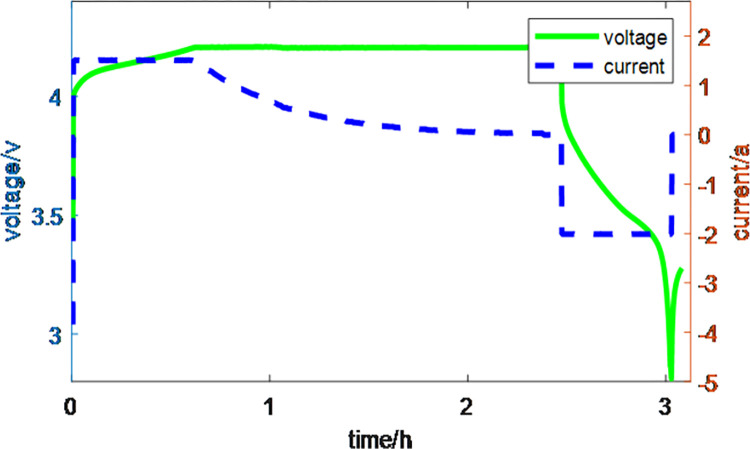
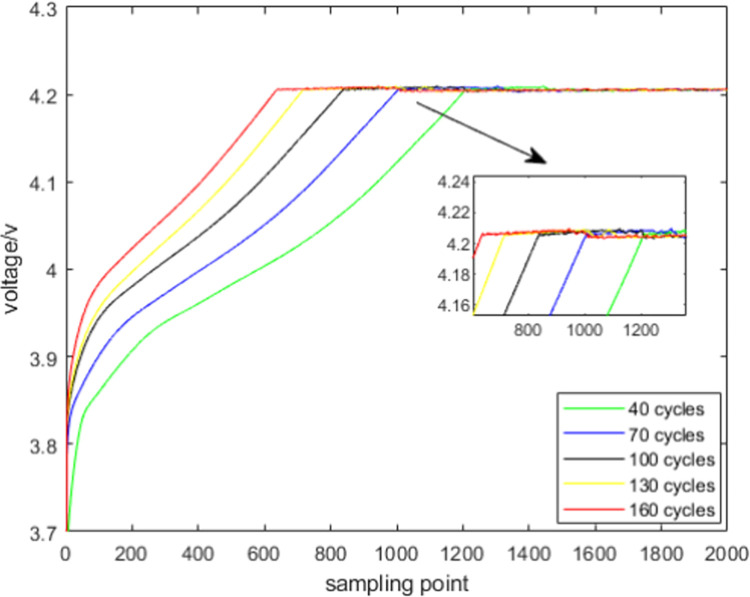
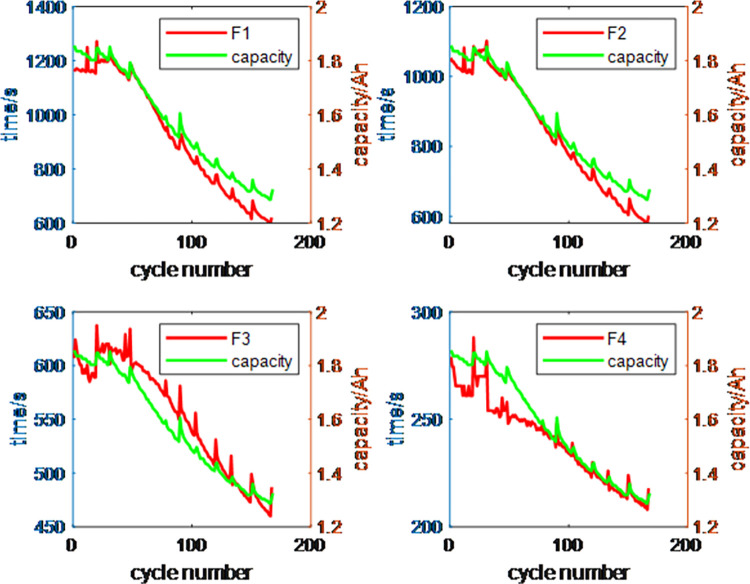
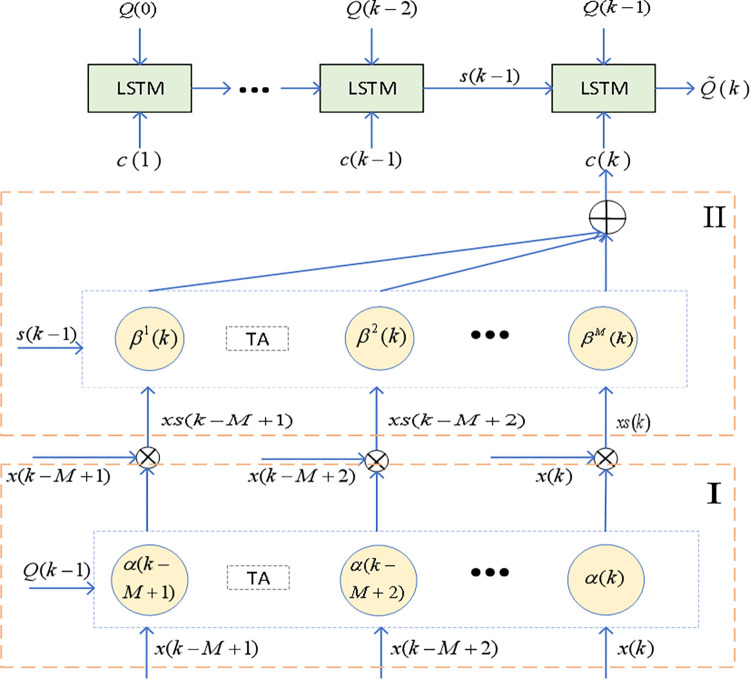
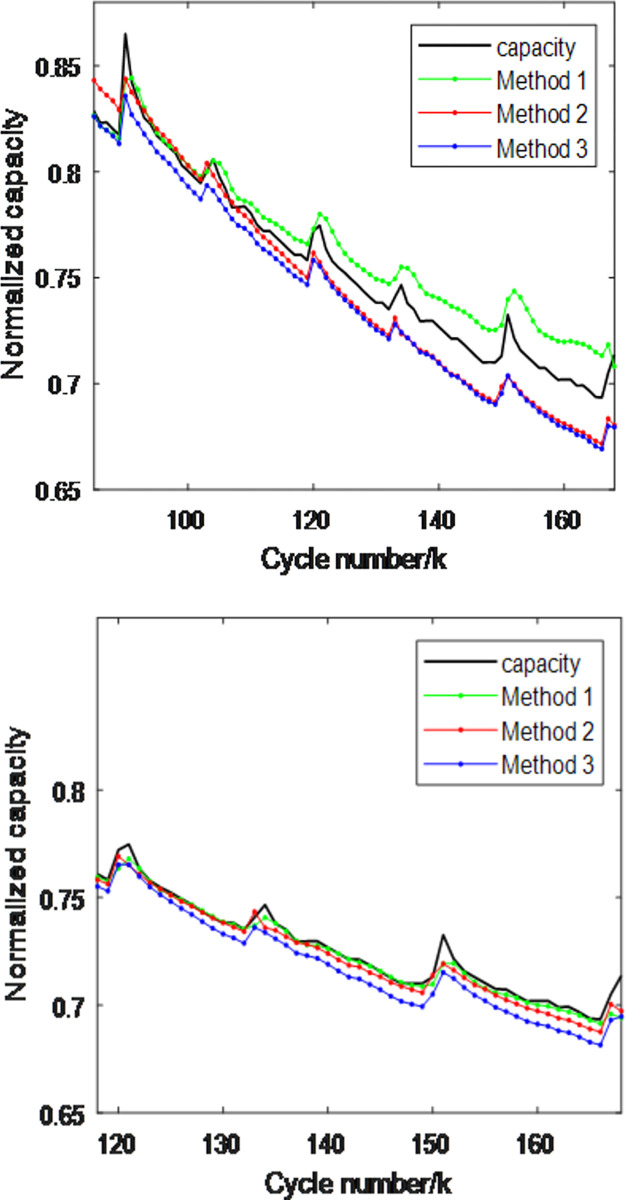
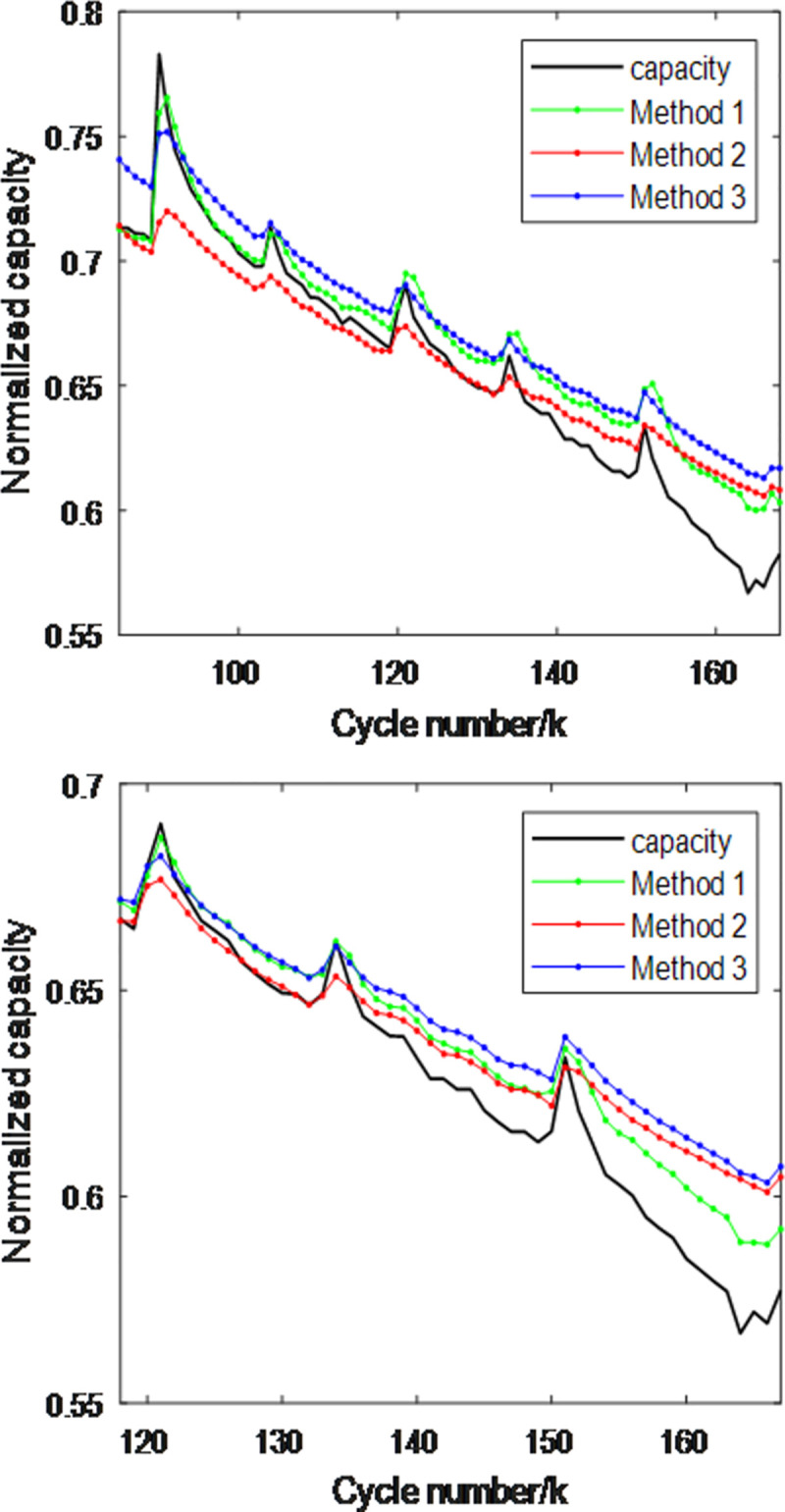
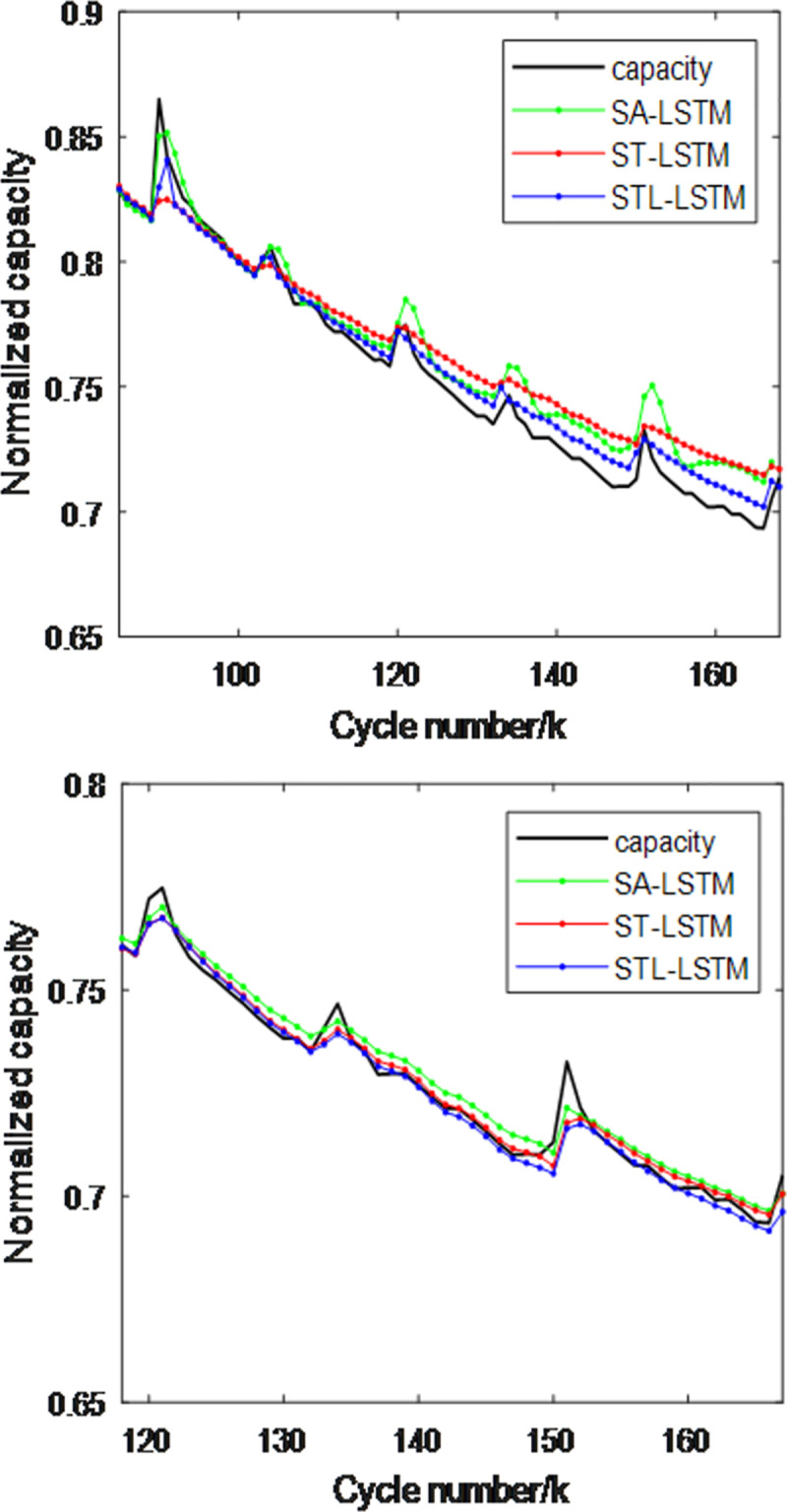
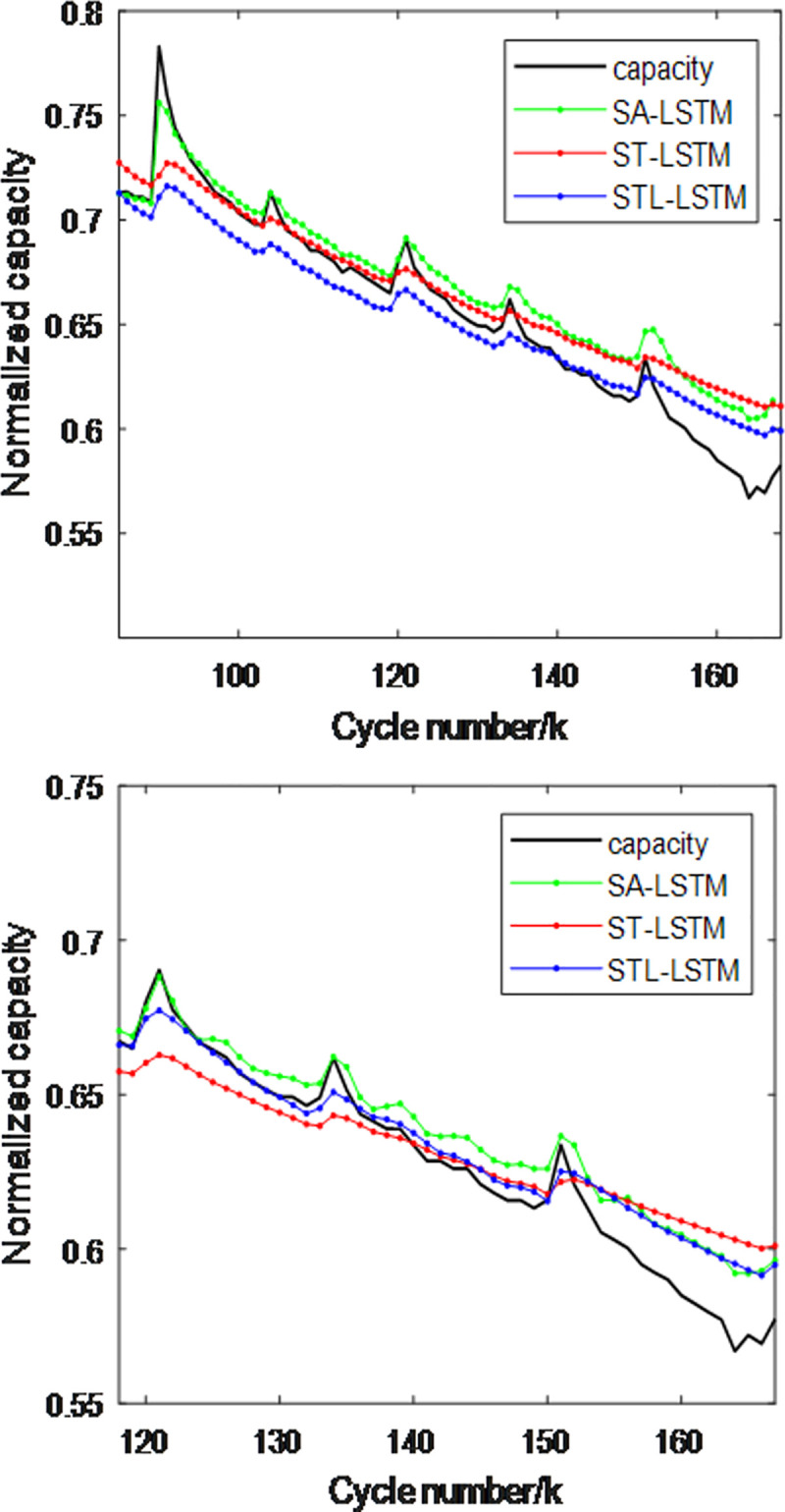
Verification
Claims the paper makes
The claims and statistics of this paper haven’t been checked yet.
Free: it reads the open-access text and checks the first 5 claims that cite a source we can check. Create a free account to check every claim.
Claims other papers make about this one
Each is checked against this paper’s own text: does it say what the citing paper says it does?
The check wasn’t confident either way, so it gives no verdict — never disputed.
In the citing paper
“Resistance measurements in the range of 10 μ Ohm can be obtained using high-end instrumentation [69].”
From Artificial Intelligence Approaches for SOH Estimation in Lithium-Ion Batteries: A Comprehensive Review of Progress, Critical Evaluations, Challenges, and Toward Future Outlooks (2025) · cites this paper as [69]
Experimental — accuracy not yet measured
Self-check
Percentages, sums and reported differences re-computed from the paper’s own numbers.
The self-check needs the paper’s full text.
Citations
Cites
Zhang, Y., Xiong, R., He, H., & Pecht, M. G. (2018) · IEEE Transactions on Vehicular Technology · doi:10.1109/tvt.2018.2805189 · Cited by 1,326
Liu, K., Shang, Y., Ouyang, Q., & Widanage, W. D. (2021) · IEEE Transactions on Industrial Electronics · doi:10.1109/tie.2020.2973876 · Cited by 833
A Data-Driven Auto-CNN-LSTM Prediction Model for Lithium-Ion Battery Remaining Useful Life
Ren, L., Dong, J., Wang, X., Meng, Z., Zhao, L., & Deen, M. J. (2021) · IEEE Transactions on Industrial Informatics · doi:10.1109/tii.2020.3008223 · Cited by 690
Deep Learning With Spatiotemporal Attention-Based LSTM for Industrial Soft Sensor Model Development
Yuan, X., Li, L., Shardt, Y. A. W., Wang, Y., & Yang, C. (2021) · IEEE Transactions on Industrial Electronics · doi:10.1109/tie.2020.2984443 · Cited by 524
Tan, Y., & Zhao, G. (2020) · IEEE Transactions on Industrial Electronics · doi:10.1109/tie.2019.2946551 · Cited by 376
Data-Driven Battery State of Health Estimation Based on Random Partial Charging Data
Deng, Z., Hu, X., Li, P., Lin, X., & Bian, X. (2022) · IEEE Transactions on Power Electronics · doi:10.1109/tpel.2021.3134701 · Cited by 359 · cited 1×
“Instead, they derive insights from battery performance test data and state monitoring data, extracting the latent health status information and its evolutionary trends, thus enabling SOH estimation [13].”
Wang, D., Yang, F., Tsui, K.-L., Zhou, Q., & Bae, S. J. (2016) · IEEE Transactions on Instrumentation and Measurement · doi:10.1109/tim.2016.2534258 · Cited by 287
Zhang, Q., Huang, C.-G., Li, H., Feng, G., & Peng, W. (2022) · IEEE Transactions on Transportation Electrification · doi:10.1109/tte.2022.3160021 · Cited by 263
Shu, X., Shen, J., Li, G., Zhang, Y., Chen, Z., & Liu, Y. (2021) · IEEE Transactions on Transportation Electrification · doi:10.1109/tte.2021.3074638 · Cited by 230
He, J., Wei, Z., Bian, X., & Yan, F. (2020) · IEEE Transactions on Transportation Electrification · doi:10.1109/tte.2020.2994543 · Cited by 208
Cited by
Li, T., Wang, D., Zhang, Y., & Gong, T. (2025) · Journal of Power Sources · doi:10.1016/j.jpowsour.2025.237776 · Cited by 13
Ding, T., von Jouanne, A., Dong, L. F., Fang, X., Fang, T., Rivas, P., & Yokochi, A. (2026) · Energies · doi:10.3390/en19020562 · Cited by 15
“For example, Xu et al. developed an LSTM model augmented with spatio-temporal attention to separate degradation sequences into trend and dynamic components, improving robustness against capacity regeneration and enhancing prediction accuracy [63].”
Khan, W., Aziz, A., Yousaf, M. Z., Feng, R., Mao, Y., Latif, M. W., Tonghao, W., Khan, B., Mabunda, N. E., & Ali, A. A. (2025) · International Journal of Electrochemical Science · doi:10.1016/j.ijoes.2025.101218 · Cited by 10
Few-shot state-of-health prediction for lithium-ion batteries with LSTM network
Tang, Q., Peng, H., Wang, Y., Zhu, T., & Ouyang, Y. (2025) · Energy · doi:10.1016/j.energy.2025.138078 · Cited by 13
Kumar, D., Nasimov, R., Singh, A., Jha, A., Jha, A., & Rizwan, M. (2025) · Applied Computational Intelligence and Soft Computing · doi:10.1155/acis/5516151 · Cited by 8
“Resistance measurements in the range of 10 μ Ohm can be obtained using high-end instrumentation [69].”
Fast estimation of lithium-ion battery state of health using time series classification
Petrella, A., Marzolla, M., & Mercuri, F. (2025) · Journal of Energy Storage · doi:10.1016/j.est.2025.118747 · Cited by 10
Explainable OptiCNN-SLSTM hybrid model for enhanced lithium-ion battery state of health prediction
Singh, A., Singh, S., Kamboj, R. K., & Bala, A. (2025) · Scientific Reports · doi:10.1038/s41598-025-28091-6 · Cited by 12
Lu, C.-Y., Hsu, H.-Y., Chen, B.-S., Huang, W.-L., & Ho, W. (2025) · Electronics · doi:10.3390/electronics14224488 · Cited by 8
“Recent LSTM architectures have achieved robust SOH estimation for lithium-ion batteries, including attention-enhanced variants [12,13].”
Explainable parallel GRU–LSTM model for predictive maintenance of lithium-ion batteries
Kamboj, R. K., Singh, M. K., Singh, A., & Bala, A. (2026) · Ionics · doi:10.1007/s11581-026-07053-6 · Cited by 4
Real-Time Self-Learning Digital Twin for Lithium-Ion Battery Energy Storage Systems in Smart Grids
Eltamaly, A. M., Almutairi, Z. A., & Al-Senaidi, S. H. (2026) · Processes · doi:10.3390/pr14121864 · Cited by 4
Predicting Lithium-Ion Battery Health Status Using LSTM-Based Models
Pan, Y.-T., & Chen, C. (2025) · International Conference on Advanced Robotics and Intelligent Systems (ARIS) · doi:10.1109/aris66143.2025.11163442 · Cited by 2
Xu, W., & Yan, D. (2025) · Processes · doi:10.3390/pr13113467 · Cited by 2
Liu, J., Wu, C., Wang, L., Guo, S., Liu, L., Wu, Y., & Ye, J. (2026) · Energy Technology · doi:10.1002/ente.202501897 · Cited by 2
Tian, H. L., Peng, J., Duan, W., Zhu, W., Yu, H., & Dong, L. (2025) · Ionics · doi:10.1007/s11581-025-06683-6 · Cited by 1
Hussain, A., & Hussain, T. (2026) · Discover Electronics · doi:10.1007/s44291-025-00152-0 · Cited by 2
“…[39], [42], [43], [54] – SoC estimation, SoH/RUL prediction, ensembles, fog/edge, IoT pipelines, inter-cell DL: [11], [13], [24], [27], [30], [38], [40], [44], [45], [46], [50], [57], [59], [61] – Statistical (ARIMAX) and classical ML methods struggle with non-linear ageing and covariate shift.”
A Systematic Review of AI-Based Digital Twins for Lithium-Ion Battery Sustainability
Nguyen, L. H. M., Pham, Q. B., Nguyen, M. H., Pham, H. D., & Stojcevski, A. (2026) · Lecture notes in electrical engineering · doi:10.1007/978-981-95-6063-9_54 · Cited by 2
AI-Driven Predictive Maintenance and Battery Management in Electric Vehicles
Sheema, D., Farhan, S. T., & Sahith, S. H. (2026) · International Conference on Mobile Computing and Sustainable Informatics (ICMCSI) · doi:10.1109/icmcsi67283.2026.11412821 · Cited by 1
“Sequence-learning models such as Long Short-Term Memory (LSTM) networks and hybrid CNN – LSTM architectures can capture temporal dependencies in voltage, current, temperature, and cycling patterns [2], [3], [7].”
Li, T., Wang, D., Zhang, Y., & Gong, T. (2026) · Electric Power Systems Research · doi:10.1016/j.epsr.2026.113277 · Cited by 1
XGBoost-Driven State-of-Power Estimation for Lithium-Ion Batteries in Battery Management SystemPreprint
Kumar, S., Vinod Kumar, D. M., & Deshmukh, R. (2025) · Research Square · doi:10.21203/rs.3.rs-7108239/v1
Succetti, F., Rosato, A., Panella, M., Araneo, R., & Dell’Era, A. (2025) · IEEE International Conference on Environment and Electrical Engineering and IEEE Industrial and Commercial Power Systems Europe (EEEIC / I&CPS Europe) · doi:10.1109/eeeic/icpseurope64998.2025.11169164
Hybrid BiLSTM-RF Framework for Lithium-Ion Battery State of Health and RUL Prediction
Lu, I., Zhao, K., Liu, E., Hung, M., Song, R., Lin, C., Cha, A., Zou, Y., & Shi, L. Z. (2025) · IEEE ... International Conference on Data Mining workshops · doi:10.1109/icdmw69685.2025.00413
“● Flexibility: This framework generalizes to both short-horizon SOH tracking and long-term RUL forecasting [7], [9], demonstrating its adaptability.”
Battery State of Health (SoH) Estimation using LSTM-Based Deep Learning
Jenna, O. S. E., Wei, F. F., Qiang, C. Z., & Eng, D. Y. (2025) · Power Electronics and Power System Conference (PEPSC) · doi:10.1109/pepsc67251.2025.11453323
Xu, S., Lin, Q., Tian, Y., Ge, Y., Wu, M., & Luo, K. (2026) · International Conference on Power Electronics and Electric Drives (PEED) · doi:10.1109/peed69047.2026.00030
“Xu et al. [12] proposed an LSTM-based SOH estimation method with spatio-temporal attention and feature classification, achieving higher accuracy and robustness.”
Raynukaazhakarsamy, D. (2025) · Journal of Artificial Intelligence Machine Learning and Neural Network · doi:10.55529/jaimlnn.52.118.127
TASoH: An End-to-End TCN-Attention Framework for eVTOL Battery State-of-Health Estimation
Jin, Y. (2026) · International Conference on Image Processing and Artificial Intelligence (ICIPAI) · doi:10.1109/icipai70034.2026.11605624
“First, recurrent neural networks (RNNs), such as long short-term memory (LSTM) models, face a serial computation bottleneck when processing long-term degradation sequences [6], leading to prolonged training times and a failure to capture spatiotemporal correlations efficiently.”
Yang, H., Hu, H., Chaoyu, J., & Wang, J. (2026) · Energies · doi:10.3390/en19143448
Chen, M. (2026) · International Conference on Energy Systems and Electrical Power (ICESEP) · doi:10.1109/icesep70386.2026.11607856
Demirci, O., & Taşkın, S. (2026) · Sustainable Energy Technologies and Assessments · doi:10.1016/j.seta.2026.105340
Amir, M., Burke, A., Xu, Z., & Bashir, M. (2026) · Journal of Energy Storage · doi:10.1016/j.est.2026.124126
Liang, F., Zhou, X., Haiqing, Y., Zhang, T., & Liu, Y. (2026) · Journal of Energy Storage · doi:10.1016/j.est.2026.124183
Mehta, S. K., Nygård, H. S., & Senanayaka, J. S. L. (2026) · Journal of Energy Storage · doi:10.1016/j.est.2026.125229
Metadata
- Authors
- Xu, G., Xu, J., & Zhu, Y.
- Affiliations
- Huzhou Normal University (CN)
- Corresponding author
- Xu, Jingyun
- Venue
- PLOS ONE
- Publisher
- Public Library of Science (PLoS)
- Published
- 2024-12-26
- Volume
- 19
- Issue
- 12
- Pages
- e0312856
- ISSN
- 1932-6203 (ISSN-L)
- PMC
- PMC11671002
- OpenAlex
- W4405804085
- Cited by
- 33
- References
- 30
- Citations by year
- 2026: 18 · 2025: 15
- FWCI
- 3.54
- Type
- journal article
- Language
- en
- Open access
- gold
- doi.org
- Licence
- Locations
- PLoS ONE (publishedVersion, cc-by)
- PubMed Central (publishedVersion, cc-by)
- PubMed (publishedVersion)
- RePEc: Research Papers in Economics (submittedVersion)
- DOAJ (DOAJ: Directory of Open Access Journals) (submittedVersion, cc-by-sa)
- Funders
- Zhejiang Provincial Natural Science Foundation of China under Grant (No. LTGS23E070002)
- Topics
- Physical Sciences › Engineering › Automotive Engineering › Battery Modeling and Management
- Physical Sciences › Engineering › Electrical and Electronic Engineering › Advancements in Battery Materials
- Physical Sciences › Engineering › Automotive Engineering › Electric and Hybrid Vehicle Technologies
- Keywords
- lithium-ion batteries, state of health estimation, spatio-temporal attention, long short-term memory, battery degradation, capacity recovery, electric vehicle batteries, recurrent neural networks
- MeSH terms
- Ions, Lithium, Electric Power Supplies, Neural Networks, Computer, Spatio-Temporal Analysis
About these checks
Registry, retraction, Cites and statistics results are computed, not judged, with one exception: a printed reference that no index lists is read once by a model before it counts as a citation error. Claims are extracted by a model and kept only when their quote appears verbatim in the text; each cited source is then checked, with a model’s help, for whether it says what the claim relies on. Those verdicts can be wrong — read the claim’s quote and the cited source before relying on one.
Statistics and arithmetic are recomputed, not judged.
Confidence bands are shown only for fields calibrated on our annotated test set. None is calibrated yet, so no band is shown.
What counts as a claim ›How we measure confidence ›How we check this ›
Are you an author, or do you see a problem with this page? Request a review
Data sources
Bibliographic data: Semantic Scholar, OpenAlex, Crossref.
Contains information from the Semantic Scholar Academic Graph Datasets, made available under the ODC Attribution License (ODC-BY 1.0).
Semantic Scholar’s data is described in: Kinney, R., et al. (2023). The Semantic Scholar Open Data Platform. arXiv:2301.10140.
