

Essential Gene Identification and Drug Target Prioritization in Aspergillus fumigatus
Open accessThe DOI matches its Crossref record; 44 of the 45 references it cites were found in a registry or an index.
Abstract
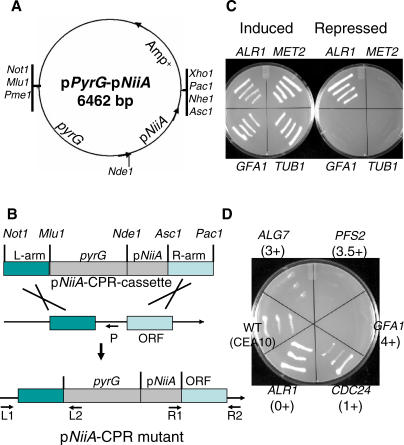
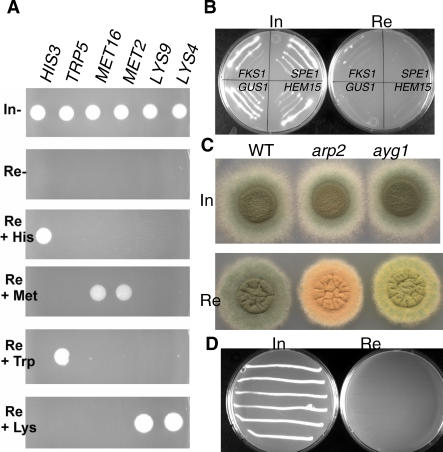
Aspergillus fumigatus is the most prevalent airborne filamentous fungal pathogen in humans, causing severe and often fatal invasive infections in immunocompromised patients. Currently available antifungal drugs to treat invasive aspergillosis have limited modes of action, and few are safe and effective. To identify and prioritize antifungal drug targets, we have developed a conditional promoter replacement (CPR) strategy using the nitrogen-regulated A. fumigatus NiiA promoter (pNiiA). The gene essentiality for 35 A. fumigatus genes was directly demonstrated by this pNiiA-CPR strategy from a set of 54 genes representing broad biological functions whose orthologs are confirmed to be essential for growth in Candida albicans and Saccharomyces cerevisiae. Extending this approach, we show that the ERG11 gene family (ERG11A and ERG11B) is essential in A. fumigatus despite neither member being essential individually. In addition, we demonstrate the pNiiA-CPR strategy is suitable for in vivo phenotypic analyses, as a number of conditional mutants, including an ERG11 double mutant (erg11BDelta, pNiiA-ERG11A), failed to establish a terminal infection in an immunocompromised mouse model of systemic aspergillosis. Collectively, the pNiiA-CPR strategy enables a rapid and reliable means to directly identify, phenotypically characterize, and facilitate target-based whole cell assays to screen A. fumigatus essential genes for cognate antifungal inhibitors.
Overview
The claims and statistics of this paper haven’t been checked yet.
Free: it reads the open-access text and checks the first 5 claims that cite a source we can check. Create a free account to check every claim.
Integrity signals
Registry
Cites
Statistics
Figures
Verification
Claims the paper makes
The claims and statistics of this paper haven’t been checked yet.
Free: it reads the open-access text and checks the first 5 claims that cite a source we can check. Create a free account to check every claim.
Claims other papers make about this one
Each is checked against this paper’s own text: does it say what the citing paper says it does?
The cited source doesn’t support the claim as written.
In the citing paper
“The field lacks efficient conditional systems; most of them are leaky or use nonphysiological nutritional conditions, such as ALCA or NIIA, and cannot be used in animal models (159).”
From Aspergillus fumigatus and Aspergillosis in 2019 (2019) · cites this paper as [159]
Checked by a reasoning model — may be wrong.
Experimental — accuracy not yet measured
Self-check
Percentages, sums and reported differences re-computed from the paper’s own numbers.
The self-check needs the paper’s full text.
Citations
Cites
National Committee for Clinical Laboratory Standards
Bruck, E. (1980) · Pediatrics · doi:10.1542/peds.65.1.187 · Cited by 14,751
Quantification of mRNA using real-time reverse transcription PCR (RT-PCR): trends and problems
Bustin, S. (2002) · Journal of Molecular Endocrinology · doi:10.1677/jme.0.0290023 · Cited by 2,546 · cited 22×
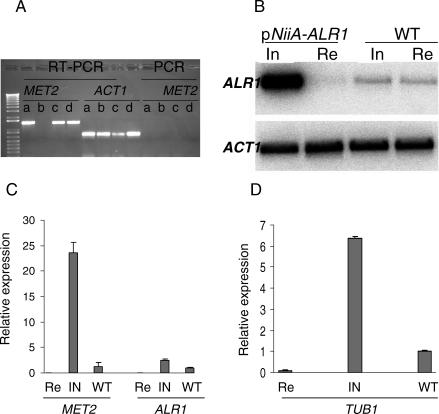
“The relative expression level normalized to total input RNA [43] is displayed on the y-axis.”
BackgroundMethodInfluentialAspergillus fumigatus and Aspergillosis
Latgé, J.-P. (1999) · Clinical Microbiology Reviews · doi:10.1128/cmr.12.2.310 · Cited by 2,307 · cited 2×
“, those with HIV infection or AIDS, solid organ and bone marrow transplant recipients, and those receiving chemotherapy) are highly susceptible to invasive aspergillosis, a fatal systemic infection [1,3,4].”
BackgroundGenomic sequence of the pathogenic and allergenic filamentous fungus Aspergillus fumigatus
Nierman, W. C., Pain, A., Anderson, M. J., Wortman, J. R., Kim, H. S., Arroyo, J., Berriman, M., Abe, K., Archer, D. B., Bermejo, C., et al. (2005) · Nature · doi:10.1038/nature04332 · Cited by 1,391 · cited 2×
“fumigatus strain AF293 [20], as well as a second clinical isolate used in this study, CEA10, where approximately 103 coverage has been obtained (N.”
MethodSequencing of Aspergillus nidulans and comparative analysis with A. fumigatus and A. oryzae
Galagan, J. E., Calvo, S. E., Cuomo, C., Ma, L.-J., Wortman, J. R., Batzoglou, S., Lee, S.-I., Baştürkmen, M., Spevak, C. C., Clutterbuck, J., et al. (2005) · Nature · doi:10.1038/nature04341 · Cited by 1,365
Colot, H. V., Park, G., Turner, G. E., Ringelberg, C., Crew, C. M., Litvinkova, L., Weiss, R. L., Borkovich, K. A., & Dunlap, J. C. (2006) · Proceedings of the National Academy of Sciences · doi:10.1073/pnas.0601456103 · Cited by 1,117
The induction and repression of nitrate reductase in the fungus Aspergillus nidulans
Cove, D. J. (1966) · Biochimica et Biophysica Acta (BBA) - Enzymology and Biological Oxidation · doi:10.1016/s0926-6593(66)80120-0 · Cited by 1,038
Transformation by integration in Aspergillus nidulans
Tilburn, J., Scazzocchio, C., Taylor, G. G., Zabicky-Zissman, J. H., Lockington, R. A., & Davies, R. W. (1983) · Gene · doi:10.1016/0378-1119(83)90191-9 · Cited by 662 · cited 1×
“by protoplast transformation according to established procedures with minor modifications [”
MethodAspergillus Infections in Transplant Recipients
Singh, N., & Paterson, D. L. (2005) · Clinical Microbiology Reviews · doi:10.1128/cmr.18.1.44-69.2005 · Cited by 579 · cited 1×
“, those with HIV infection or AIDS, solid organ and bone marrow transplant recipients, and those receiving chemotherapy) are highly susceptible to invasive aspergillosis, a fatal systemic infection [1,3,4].”
BackgroundGenomic profiling of drug sensitivities via induced haploinsufficiency
Giaever, G., Shoemaker, D. D., Jones, T. W., Liang, H., Winzeler, E. A., Astromoff, A., & Davis, R. W. (1999) · Nature Genetics · doi:10.1038/6791 · Cited by 570 · cited 2×
“A comprehensive determination of all the essential genes has been achieved in the nonpathogenic yeast Saccharomyces cerevisiae [6,7].”
Background
Cited by
Aspergillus fumigatus and Aspergillosis in 2019
Latgé, J.-P., & Chamilos, G. (2019) · Clinical Microbiology Reviews · doi:10.1128/cmr.00140-18 · Cited by 1,400
“ALCA or NIIA, and cannot be used in animal models (159).”
The cell wall: a carbohydrate armour for the fungal cell
Latgé, J. (2007) · Molecular Microbiology · doi:10.1111/j.1365-2958.2007.05872.x · Cited by 987
“The role of GEFs might be interchangeable, however, as, in contrast to yeast, the unique orthologue of ROM2 is not essential in A. fumigatus (Hu et al., 2007).”
BackgroundEfflux-Mediated Antifungal Drug Resistance
Cannon, R. D., Lamping, E., Holmes, A. R., Niimi, K., Baret, P. V., Keniya, M. V., Tanabe, K., Niimi, M., Goffeau, A., & Monk, B. C. (2009) · Clinical Microbiology Reviews · doi:10.1128/cmr.00051-08 · Cited by 608
“Gene knockout experiments have shown that Cyp51p is essential for A. fumigatus and that A. fumigatus Cyp51Ap (AfuCyp51Ap), not AfuCyp51Bp, is responsible for the innate resistance to FLC and KTC (140, 221).”
BackgroundInfluentialAntifungal Resistance and New Strategies to Control Fungal Infections
Vandeputte, P., Ferrari, S., & Coste, A. T. (2012) · International Journal of Microbiology · doi:10.1155/2012/713687 · Cited by 505
“cerevisiae [268], of which 35 were defined as essential in A.”
BackgroundLuo, H., Lin, Y., Gao, F., Zhang, C.-T., & Zhang, R. (2014) · Nucleic Acids Research · doi:10.1093/nar/gkt1131 · Cited by 530
“Streptococcus pneumoniae 72 Tn-seq Yes (23) Streptococcus sanguinis 218 Single-gene knockout Yes (41) Vibrio cholerae 789 Tn-seq Yes (71) Archaea Methanococcus maripaludis 519 Tn-seq Yes (27) Eukaryotes Arabidopsis thaliana 358 Single-gene knockout No (48) Aspergillus fumigatus 35 Conditional promoter replacement No (…”
Background
Metadata
- Authors
- Hu, W., Sillaots, S., Lemieux, S., Davison, J., Kauffman, S., Breton, A., Linteau, A., Xin, C., Bowman, J., Becker, J., Jiang, B., & Roemer, T.
- Affiliations
- University of Tennessee at Knoxville (US)
- Merck & Co., Inc., Rahway, NJ, USA (United States) (US)
- Corresponding author
- Roemer, Terry
- Venue
- PLoS Pathogens
- Publisher
- Public Library of Science (PLoS)
- Published
- 2007-03-09
- Volume
- 3
- Issue
- 3
- Pages
- e24
- ISSN
- 1553-7366 (ISSN-L)
- 1553-7374
- PMC
- PMC1817658
- OpenAlex
- W1997751445
- Semantic Scholar
- 1bd06504edcbe2a0d978a4c42c5c2a032e7f6b59
- Cited by
- 237
- References
- 45
- Citations by year
- 2026: 5 · 2025: 4 · 2024: 5 · 2023: 11 · 2022: 9 · 2021: 18 · 2020: 21 · 2019: 12 · 2018: 17 · 2017: 12 · 2016: 10 · 2015: 18 · 2014: 18 · 2013: 10 · 2012: 17
- FWCI
- 4.50
- Type
- journal article
- Language
- en
- Open access
- gold
- doi.org
- Locations
- PLoS Pathogens (publishedVersion, cc-by)
- PubMed Central (publishedVersion, cc-by)
- PubMed (publishedVersion)
- DOAJ (DOAJ: Directory of Open Access Journals) (submittedVersion, cc-by-sa)
- Figshare (submittedVersion, cc-by)
- Funders
- Genome Canada
- Topics
- Life Sciences › Biochemistry, Genetics and Molecular Biology › Molecular Biology › Fungal and yeast genetics research
- Health Sciences › Medicine › Infectious Diseases › Antifungal resistance and susceptibility
- Life Sciences › Immunology and Microbiology › Applied Microbiology and Biotechnology › Microbial Natural Products and Biosynthesis
- Keywords
- Aspergillus fumigatus, essential genes, antifungal drug targets, nitrogen regulation, ergosterol biosynthesis, invasive aspergillosis, immunocompromised mouse model, conditional mutants
- MeSH terms
- Animals, Antifungal Agents, Aspergillosis, Aspergillus fumigatus, Cytochrome P-450 Enzyme System, Disease Models, Animal, DNA, Fungal, Genes, Fungal, Male, Mice, Nude, Molecular Sequence Data, Nitrate Reductases, Oxidoreductases, Phenotype, Promoter Regions, Genetic, Recombination, Genetic, RNA, Messenger, Transcription, Genetic, Virulence, Gene Expression Regulation, Fungal, Drug Delivery Systems, Genes, Essential, Mice, Sterol 14-Demethylase
About these checks
Registry, retraction, Cites and statistics results are computed, not judged, with one exception: a printed reference that no index lists is read once by a model before it counts as a citation error. Claims are extracted by a model and kept only when their quote appears verbatim in the text; each cited source is then checked, with a model’s help, for whether it says what the claim relies on. Those verdicts can be wrong — read the claim’s quote and the cited source before relying on one.
Statistics and arithmetic are recomputed, not judged.
Confidence bands are shown only for fields calibrated on our annotated test set. None is calibrated yet, so no band is shown.
What counts as a claim ›How we measure confidence ›How we check this ›
Are you an author, or do you see a problem with this page? Request a review
How to cite
Cite CoChat for the checks on this page, and the paper for its own findings.
- This page
- CoChat. (2026). Citation check: Essential Gene Identification and Drug Target Prioritization in Aspergillus fumigatus. https://app.cochat.ai/papers/10.1371/journal.ppat.0030024
- The paper
- Hu, W., Sillaots, S., Lemieux, S., Davison, J., Kauffman, S., Breton, A., Linteau, A., Xin, C., Bowman, J., Becker, J., Jiang, B., & Roemer, T. (2007). Essential Gene Identification and Drug Target Prioritization in Aspergillus fumigatus. PLoS Pathogens. https://doi.org/10.1371/journal.ppat.0030024
Data sources
Bibliographic data: Semantic Scholar, OpenAlex, Crossref.
Contains information from the Semantic Scholar Academic Graph Datasets, made available under the ODC Attribution License (ODC-BY 1.0).
Semantic Scholar’s data is described in: Kinney, R., et al. (2023). The Semantic Scholar Open Data Platform. arXiv:2301.10140.
