

Nod1 Signaling Overcomes Resistance of S. pneumoniae to Opsonophagocytic Killing
Open accessThe DOI matches its Crossref record; 49 of the 49 references it cites were found in a registry or an index.
Abstract
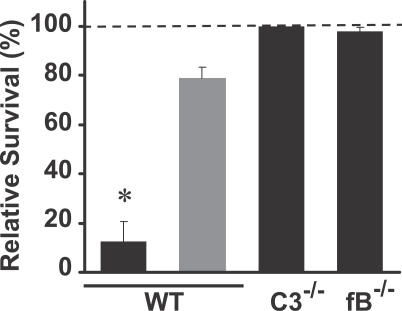
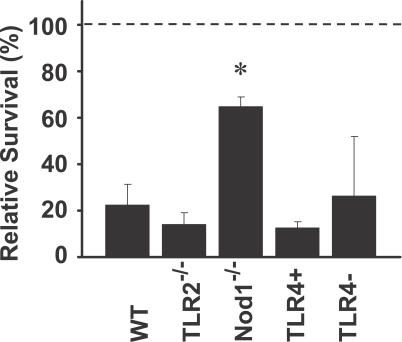
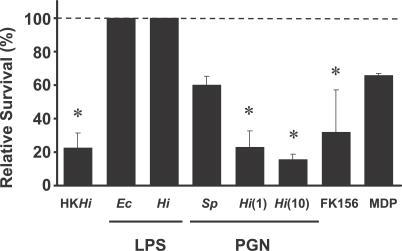
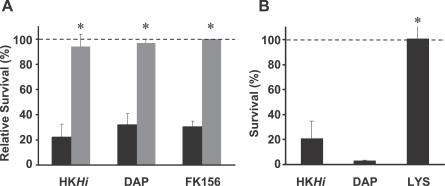
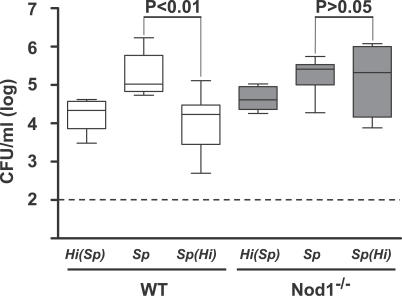
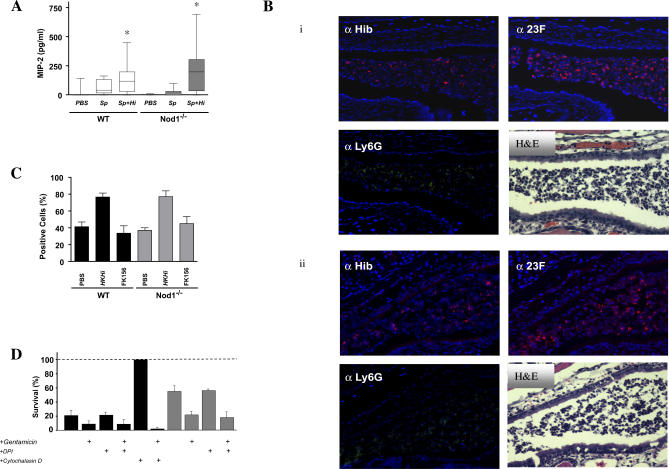
Airway infection by the Gram-positive pathogen Streptococcus pneumoniae (Sp) leads to recruitment of neutrophils but limited bacterial killing by these cells. Co-colonization by Sp and a Gram-negative species, Haemophilus influenzae (Hi), provides sufficient stimulus to induce neutrophil and complement-mediated clearance of Sp from the mucosal surface in a murine model. Products from Hi, but not Sp, also promote killing of Sp by ex vivo neutrophil-enriched peritoneal exudate cells. Here we identify the stimulus from Hi as its peptidoglycan. Enhancement of opsonophagocytic killing was facilitated by signaling through nucleotide-binding oligomerization domain-1 (Nod1), which is involved in recognition of gamma-D-glutamyl-meso-diaminopimelic acid (meso-DAP) contained in cell walls of Hi but not Sp. Neutrophils from mice treated with Hi or compounds containing meso-DAP, including synthetic peptidoglycan fragments, showed increased Sp killing in a Nod1-dependent manner. Moreover, Nod1(-/-) mice showed reduced Hi-induced clearance of Sp during co-colonization. These observations offer insight into mechanisms of microbial competition and demonstrate the importance of Nod1 in neutrophil-mediated clearance of bacteria in vivo.
Overview
The claims and statistics of this paper haven’t been checked yet.
Free: it reads the open-access text and checks the first 5 claims that cite a source we can check. Create a free account to check every claim.
Integrity signals
Registry
Cites
Statistics
Figures
Verification
Claims the paper makes
The claims and statistics of this paper haven’t been checked yet.
Free: it reads the open-access text and checks the first 5 claims that cite a source we can check. Create a free account to check every claim.
Claims other papers make about this one
Each is checked against this paper’s own text: does it say what the citing paper says it does?
The source backs part of the claim, not all of it — or backs it for a different population, condition or comparison.
In the citing paper
“gut microbiota-induced priming of innate immune cells at the intestinal mucosa was shown to affect respiratory health; for example, through NOD1 receptor-mediated activation of the neutrophils that are required for the clearance of Streptococcus pneumoniae in the URT72,166.”
From The microbiota of the respiratory tract: gatekeeper to respiratory health (2017) · cites this paper as [72]
Experimental — accuracy not yet measuredThe cited source says what the claim attributes to it.
In the citing paper
“Furthermore, colonization resistance may be enhanced by interactions with the host immune system.”
From The microbiota of the respiratory tract: gatekeeper to respiratory health (2017) · cites this paper as [72]
The cited source says what the claim attributes to it.
In the citing paper
“However, specific members of the microbiota have been identified that can actively exclude pathogens from the nasopharyngeal niche.”
From The microbiota of the respiratory tract: gatekeeper to respiratory health (2017) · cites this paper as [72]
The cited source says what the claim attributes to it.
In the citing paper
“For example, neutrophils seemed more able to kill S. pneumoniae following priming with Haemophilus influenzae72.”
From The microbiota of the respiratory tract: gatekeeper to respiratory health (2017) · cites this paper as [72]
Self-check
Percentages, sums and reported differences re-computed from the paper’s own numbers.
The self-check needs the paper’s full text.
Citations
Cites
Defective LPS Signaling in C3H/HeJ and C57BL/10ScCr Mice: Mutations in Tlr4 Gene
Poltorak, A., He, X., Smirnova, I., Liu, M.-Y., Huffel, C. V., Du, X., Birdwell, D., Alejos, E., Silva, M., Galanos, C., et al. (1998) · Science · doi:10.1126/science.282.5396.2085 · Cited by 7,631
Current Protocols in Immunology
(2018) · Current Protocols in Immunology · doi:10.1002/(issn)1934-368x · Cited by 3,566
Westphal, O. (1965) · Medical Entomology and Zoology · Cited by 2,533
Nod2 Is a General Sensor of Peptidoglycan through Muramyl Dipeptide (MDP) Detection
Girardin, S. E., Boneca, I. G., Viala, J., Chamaillard, M., Labigne, A., Thomas, G., Philpott, D. J., & Sansonetti, P. J. (2003) · Journal of Biological Chemistry · doi:10.1074/jbc.c200651200 · Cited by 2,408 · cited 3×
“In addition, another peptidoglycan fragment, muramyl dipeptide (MDP), common among most Gram-negative and Gram-positive bacteria, is the minimal structure needed for responses involving a separate cytoplasmic immune signaling molecule, Nod2 [12].”
BackgroundInfluentialNod1 Detects a Unique Muropeptide from Gram-Negative Bacterial Peptidoglycan
Girardin, S. E., Boneca, I. G., Carneiro, L. A. M., Antignac, A., Jéhanno, M., Viala, J., Tedin, K., Taha, M.-K., Labigne, A., Zäthringer, U., et al. (2003) · Science · doi:10.1126/science.1084677 · Cited by 1,577 · cited 1×
“Peptidoglycan fragments containing the minimal structure c-D-glutamyl-meso-diaminopimelic acid (meso-DAP) found in Gram-negative bacteria, including Hi, act through a cytoplasmic signaling molecule, nucleotide-binding oligomerization domain-1 (Nod1) [8–10].”
BackgroundChamaillard, M., Hashimoto, M., Horie, Y., Masumoto, J., Qiu, S., Saab, L., Ogura, Y., Kawasaki, A., Fukase, K., Kusumoto, S., et al. (2003) · Nature Immunology · doi:10.1038/ni945 · Cited by 1,323 · cited 1×
“Peptidoglycan fragments containing the minimal structure c-D-glutamyl-meso-diaminopimelic acid (meso-DAP) found in Gram-negative bacteria, including Hi, act through a cytoplasmic signaling molecule, nucleotide-binding oligomerization domain-1 (Nod1) [8–10].”
BackgroundNod1 responds to peptidoglycan delivered by the Helicobacter pylori cag pathogenicity island
Viala, J., Chaput, C., Boneca, I. G., Cardona, A., Girardin, S. E., Moran, A. P., Athman, R., Mémet, S., Huerre, M. R., Coyle, A. J., et al. (2004) · Nature Immunology · doi:10.1038/ni1131 · Cited by 1,226
NOD-LRR PROTEINS: Role in Host-Microbial Interactions and Inflammatory Disease
Inohara, N., Chamaillard, M., McDonald, C., & Nuñez, G. (2005) · Annual Review of Biochemistry · doi:10.1146/annurev.biochem.74.082803.133347 · Cited by 991 · cited 2×
“Pathways for the recognition of and response to peptidoglycan fragments leading to NF-jB-dependent transcriptional activation and pro-inflammatory responses have been partially characterized [7].”
BackgroundNod-like proteins in immunity, inflammation and disease
Fritz, J. H., Ferrero, R. L., Philpott, D. J., & Girardin, S. E. (2006) · Nature Immunology · doi:10.1038/ni1412 · Cited by 892 · cited 1×
“effects of bacteria or their cell wall products in vitro, our understanding of its contribution to innate immune responses to bacterial infection in vivo remains limited (reviewed in [7,19]).”
BackgroundCoxon, A., Rieu, P., Barkalow, F. J., Askari, S., Sharpe, A. H., von Andrian, U. H., Arnaout, M. A., & Mayadas, T. N. (1996) · Immunity · doi:10.1016/s1074-7613(00)80278-2 · Cited by 627 · cited 1×
“Mac-1 (CD11b/ CD18)-deficient mice (Jackson Laboratories) have a targeted mutation in the gene for integrin alpha M or CR3 [35].”
Background
Research works printed but not linked: 1
- Weiser J Nahm M 2007 Immunity to extracellular bacteria Paul WE Fundamental immunology Baltimore Lippincott, Williams and Wilkins In press.
Cited by
The microbiota of the respiratory tract: gatekeeper to respiratory health
Man, W. H., de Steenhuijsen Piters, W. A. A., & Bogaert, D. (2017) · Nature Reviews Microbiology · doi:10.1038/nrmicro.2017.14 · Cited by 1,384
“In addition, gut microbiota-induced priming of innate immune cells at the intestinal mucosa was shown to affect respiratory health; for example, through NOD1 receptor-mediated activation of the neutrophils that are required for the clearance of Streptococcus pneumoniae in the URT 72, 166 .”
BackgroundRecognition of peptidoglycan from the microbiota by Nod1 enhances systemic innate immunity
Clarke, T. B., Davis, K. M., Lysenko, E. S., Zhou, A. Y., Yu, Y., & Weiser, J. N. (2010) · Nature Medicine · doi:10.1038/nm.2087 · Cited by 1,154
Self-citationStreptococcus pneumoniae: transmission, colonization and invasion
Weiser, J. N., Ferreira, D. M., & Paton, J. C. (2018) · Nature Reviews Microbiology · doi:10.1038/s41579-018-0001-8 · Cited by 1,098
Self-citationFrom bacterial killing to immune modulation: Recent insights into the functions of lysozyme
Ragland, S. A., & Criss, A. K. (2017) · PLOS Pathogens · doi:10.1371/journal.ppat.1006512 · Cited by 877
Role of Pore-Forming Toxins in Bacterial Infectious Diseases
Los, F. C. O., Randis, T. M., Aroian, R. V., & Ratner, A. J. (2013) · Microbiology and Molecular Biology Reviews · doi:10.1128/mmbr.00052-12 · Cited by 402
Self-citationBertrand, M. J. M., Doiron, K., Labbé, K., Korneluk, R. G., Barker, P. A., & Saleh, M. (2009) · Immunity · doi:10.1016/j.immuni.2009.04.011 · Cited by 340
“IP injection of DAP or synthetic NOD1 agonists (KF1B and FK156) has been shown to stimulate chemokine production and neutrophil infiltration in the peritoneum in wild-type but not in Nod1-deficient mice (Inohara et al., 2003; Lysenko et al., 2007; Masumoto et al., 2006).”
BackgroundBacterial cell wall assembly: still an attractive antibacterial target
Bugg, T. D. H., Braddick, D., Dowson, C. G., & Roper, D. I. (2011) · Trends in Biotechnology · doi:10.1016/j.tibtech.2010.12.006 · Cited by 265
Self-citationUnleashing the therapeutic potential of NOD-like receptors
Geddes, K., Magalhães, J. G., & Girardin, S. E. (2009) · Nature Reviews Drug Discovery · doi:10.1038/nrd2783 · Cited by 232
Mechanisms of Bacterial Colonization of the Respiratory Tract
Siegel, S. J., & Weiser, J. N. (2015) · Annual Review of Microbiology · doi:10.1146/annurev-micro-091014-104209 · Cited by 211
“influenzae peptidoglycan to promote pneumococcal clearance (57).”
Self-citationDavis, K. M., Nakamura, S., & Weiser, J. N. (2011) · Journal of Clinical Investigation · doi:10.1172/jci57761 · Cited by 190
Self-citationHuman Neutrophils Kill Streptococcus pneumoniae via Serine Proteases
Standish, A. J., & Weiser, J. N. (2009) · The Journal of Immunology · doi:10.4049/jimmunol.0900688 · Cited by 174
“For this, OPH reactions were treated with gentimicin for 20 min to kill any extracellular bacteria (29).”
MethodSelf-citationThe pneumococcus: why a commensal misbehaves
Weiser, J. N. (2010) · Journal of Molecular Medicine · doi:10.1007/s00109-009-0557-x · Cited by 179
Self-citationAlarmins, inflammasomes and immunity
Ojcius, D., & Saïd-Sadier, N. (2012) · Biomedical Journal · doi:10.4103/2319-4170.104408 · Cited by 161
“On the other hand, Nod2 is activated in response to infection with the protozoan parasite Toxoplasma gondii,([127]) and Nod1 and Nod2 had been previously reported to sense infection by a large number of bacteria.([128-134]) Another study revealed a key role for Nod2 in viral infection, since Nod2-deficient mice are mo…”
BackgroundMicrobial Interactions in the Respiratory Tract
Murphy, T. F., Bakaletz, L. O., & Smeesters, P. R. (2009) · Pediatric Infectious Disease Journal · doi:10.1097/inf.0b013e3181b6d7ec · Cited by 165
“pneumoniae.(46) These studies demonstrate that the host innate immune response may influence the competition between species and therefore impacts the composition of the colonizing flora.”
BackgroundMucosal Administration of Flagellin Protects Mice from Streptococcus pneumoniae Lung Infection
Muñoz, N., Van Maele, L., Marqués, J. M., Rial, A., Sirard, J.-C., & Chabalgoity, J. A. (2010) · Infection and Immunity · doi:10.1128/iai.00224-10 · Cited by 149
“established that heat-killed Haemophilus influenzae can specifically increase the capacity of PMN to kill pneumococci in a Nod1-dependent manner (22, 23).”
BackgroundDalia, A. B., & Weiser, J. N. (2011) · Cell Host & Microbe · doi:10.1016/j.chom.2011.09.009 · Cited by 137
“…are controlled by host neutrophils, which kill this pathogen via opsonophagocytosis (OPH), a process that requires opsonization of bacteria by the complement system (Dalia et al., 2010; Lysenko et al., 2007; Matthias et al., 486 Cell Host & Microbe 10, 486–496, November 17, 2011 ª2011 Els 2008).”
BackgroundSelf-citationPorcherie, A., Cunha, P., Trotereau, A., Roussel, P., Gilbert, F. B., Rainard, P., & Germon, P. (2012) · Veterinary Research · doi:10.1186/1297-9716-43-14 · Cited by 130
Negi, S., Pahari, S., Bashir, H., & Agrewala, J. N. (2019) · Frontiers in Immunology · doi:10.3389/fimmu.2019.01142 · Cited by 116
“Recently, signals delivered by gut microbes were documented to influence functions of innate immune cells (14, 47).”
BackgroundGhanem, E. N. B., Clark, S. A., Roggensack, S. E., McIver, S. R., Alcaide, P., Haydon, P. G., & Leong, J. M. (2015) · PLoS Pathogens · doi:10.1371/journal.ppat.1005126 · Cited by 114
“Bone marrow PMNs were isolated from the femurs of mice as previously described [43] and enriched using Percoll (Sigma) density gradient centrifugation.”
MethodLysenko, E. S., Lijek, R. S., Brown, S. P., & Weiser, J. N. (2010) · Current Biology · doi:10.1016/j.cub.2010.05.051 · Cited by 110
Self-citationImpact of cigarette smoke exposure on host–bacterial pathogen interactions
Garmendia, J., Morey, P., & Bengoechea, J. A. (2011) · European Respiratory Journal · doi:10.1183/09031936.00061911 · Cited by 118
Weimer, K. E. D., Armbruster, C. E., Juneau, R. A., Hong, W., Pang, B., & Swords, W. E. (2010) · The Journal of Infectious Diseases · doi:10.1086/656046 · Cited by 103
“influenzae, most notably by priming enhanced host innate responses to clear the pneumococcal infection [7-9].”
BackgroundEtiology and Impact of Coinfections in Children Hospitalized With Community-Acquired Pneumonia
Nolan, V. G., Arnold, S. R., Bramley, A. M., Ampofo, K., Williams, D. J., Grijalva, C. G., Self, W. H., Anderson, E. J., Wunderink, R. G., Edwards, K. M., et al. (2017) · The Journal of Infectious Diseases · doi:10.1093/infdis/jix641 · Cited by 102
“This may be due to the low numbers of bacterial infections in the study, or it may be related to competition within the upper respiratory tract between bacteria, as has been observed in bacterial coinfection models [24].”
BackgroundThe microbiome: an integral player in immune homeostasis and inflammation in the respiratory tract
Perdijk, O., Azzoni, R., & Marsland, B. J. (2023) · Physiological Reviews · doi:10.1152/physrev.00020.2023 · Cited by 105
NOD-Like Receptors in Lung Diseases
Chaput, C., Sander, L. E., Suttorp, N., & Opitz, B. (2013) · Frontiers in Immunology · doi:10.3389/fimmu.2013.00393 · Cited by 69
Matthias, K. A., Roche, A. M., Standish, A. J., Shchepetov, M., & Weiser, J. N. (2008) · The Journal of Immunology · doi:10.4049/jimmunol.180.9.6246 · Cited by 72
Self-citationCo-infection subverts mucosal immunity in the upper respiratory tract
Lijek, R. S., & Weiser, J. N. (2012) · Current Opinion in Immunology · doi:10.1016/j.coi.2012.05.005 · Cited by 59
Self-citationCalcineurin/NFAT signaling and innate host defence: a role for NOD1-mediated phagocytic functions
Vandewalle, A., Tourneur, E., Bens, M., Chassin, C., & Werts, C. (2014) · Cell Communication and Signaling · doi:10.1186/1478-811x-12-8 · Cited by 65
Intracellular sensors of extracellular bacteria
Clarke, T. B., & Weiser, J. N. (2011) · Immunological Reviews · doi:10.1111/j.1600-065x.2011.01039.x · Cited by 61
Self-citationPark, S. B., Hikima, J.-I., Suzuki, Y., Ohtani, M., Nho, S. W., Cha, I. S., Jang, H. B., Kondo, H., Hırono, I., Aoki, T., et al. (2011) · Developmental & Comparative Immunology · doi:10.1016/j.dci.2011.11.007 · Cited by 55
“2006), Escherichia coli (Kim et al., 2004), Campylobacter jejuni (Zilbauer et al., 2007), and Helicobacter pylori (Viala et al., 2004); as well as that of some Gram-positive bacteria such as Clostridium difficile (Hasegawa et al., 2011) and Streptococcus pneumoniae (Lysenko et al., 2007).”
BackgroundInfluentialTourneur, E., Ben Mkaddem, S., Chassin, C., Bens, M., Goujon, J.-M., Charles, N., Pellefigues, C., Aloulou, M., Hertig, A., Monteiro, R. C., et al. (2013) · PLoS Pathogens · doi:10.1371/journal.ppat.1003152 · Cited by 48
“Recent studies have demonstrated that Nod1 plays a key role in the migration of neutrophils into the intestine and liver [18], and in activating phagocytic mechanisms of bacterial killing [19,20].”
BackgroundRole of toll-like receptors and nod-like receptors in acute lung infection
Le, J., Kulatheepan, Y., & Jeyaseelan, S. (2023) · Frontiers in Immunology · doi:10.3389/fimmu.2023.1249098 · Cited by 56
“In another report, expression of the influenza virus M2 protein, a proton-specific ion channel, in the Golgi apparatus was found to induce NLRP3 inflammasome activation (69, 127, 128).”
BackgroundRuane, K. M., Lloyd, A. J., Fülöp, V., Dowson, C. G., Barreteau, H., Boniface, A., Dementin, S., Blanot, D., Mengin‐Lecreulx, D., Gobec, S., et al. (2013) · Journal of Biological Chemistry · doi:10.1074/jbc.m113.508135 · Cited by 53
Self-citationBerçot, B., Kannengiesser, C., Oudin, C., Grandchamp, B., Pors, M.-J. S.-L., Mouly, S. J., & Elbim, C. (2009) · Journal of Clinical Microbiology · doi:10.1128/jcm.00561-09 · Cited by 46
“Finally, it has been recently reported that Nod-mediated inflammatory stimulation in response to peptidoglycans triggers an increase in the ability of PMNs to phagocytose opsonized pneumococci, leading to engulfment and killing (11).”
BackgroundMuñoz‐Wolf, N., & Lavelle, E. C. (2016) · Methods in molecular biology · doi:10.1007/978-1-4939-3566-6_1 · Cited by 49
Neutrophil Recruitment in Pneumococcal Pneumonia
Palmer, C. S., & Kimmey, J. M. (2022) · Frontiers in Cellular and Infection Microbiology · doi:10.3389/fcimb.2022.894644 · Cited by 46
“Deletion of either does not affect neutrophil influx but does lead to bacterial burden increase in some tissues (Lysenko et al., 2007; Davis et al., 2011).”
BackgroundZola, T. A., Lysenko, E. S., & Weiser, J. N. (2008) · The Journal of Immunology · doi:10.4049/jimmunol.181.11.7909 · Cited by 38
“This population of cells was characterized previously using flow cytometric analysis for staining of granulocytes with anti-mouse Ly-6G mAb and CD11b (BD Biosciences) (18).”
BackgroundMethodSelf-citationJuárez, E., Carranza, C., Hernández‐Sánchez, F., Loyola, E., Escobedo, D., León‐Contreras, J. C., Hernández‐Pando, R., Torres, M., & Sada, E. (2014) · BMC Pulmonary Medicine · doi:10.1186/1471-2466-14-152 · Cited by 38
Bhalla, M., Simmons, S. R., Abamonte, A., Herring, S. E., Roggensack, S. E., & Ghanem, E. N. B. (2020) · Aging Cell · doi:10.1111/acel.13218 · Cited by 34
Siwapornchai, N., Lee, J. N., Tchalla, E. Y. I., Bhalla, M., Yeoh, J. H., Roggensack, S. E., Leong, J. M., & Ghanem, E. N. B. (2020) · Journal of Leukocyte Biology · doi:10.1002/jlb.4ma0120-115rr · Cited by 35
“4 Opsonophagocytic killing assay 167 The ability of PMNs to kill pneumococci was assessed ex vivo through an 168 Opsonophagocytic (OPH) killing assay as previously described (3, 22).”
MethodSimmons, S. R., Tchalla, E. Y. I., Bhalla, M., & Ghanem, E. N. B. (2022) · Frontiers in Cellular and Infection Microbiology · doi:10.3389/fcimb.2022.849224 · Cited by 34
Nasopharyngeal Bacterial Carriage in the Conjugate Vaccine Era with a Focus on Pneumococci
Devine, V. T., Jefferies, J. M., Clarke, S. C., & Faust, S. N. (2015) · Journal of Immunology Research · doi:10.1155/2015/394368 · Cited by 29
“[81] E.”
Down-regulation of NOD1 in neutrophils of periparturient dairy cows
Tan, X., Li, W., Guo, J., & Zhou, J. (2012) · Veterinary Immunology and Immunopathology · doi:10.1016/j.vetimm.2012.09.004 · Cited by 29
Theivanthiran, B., Batra, S., Balamayooran, G., Cai, S., Kobayashi, K. S., Flavell, R. A., & Jeyaseelan, S. (2011) · Infection and Immunity · doi:10.1128/iai.05641-11 · Cited by 28
The p53-Target Gene Puma Drives Neutrophil-Mediated Protection against Lethal Bacterial Sepsis
Garrison, S. P., Thornton, J. A., Häcker, H., Webby, R. J., Rehg, J. E., Parganas, E., Zambetti, G. P., & TUOMANEN, E. I. (2010) · PLoS Pathogens · doi:10.1371/journal.ppat.1001240 · Cited by 26
“Bacterial was determined by washing the neutrophils in PBS, lysing the cells in sterile H2O and determining bacterial growth from serial dilutions of lysates grown on blood agar plates [46].”
MethodNOD-Like Receptor Signaling in Cholesteatoma
Leichtle, A., Klenke, C., Ebmeyer, J., Därr, M., Bruchhage, K., Hoffmann, A. S., Ryan, A. F., Wollenberg, B., & Sudhoff, H. H. (2015) · BioMed Research International · doi:10.1155/2015/408169 · Cited by 24
“For example, Lysenko and colleagues demonstrated that NOD1 is crucial to neutrophil-mediated clearance of bacterial infection in vivo and that opsonophagocytic killing of bacteria in vitro is significantly reduced in NOD1-deficient neutrophils [21].”
BackgroundReid, D. W., Latham, R. D., Lamont, I. L., Cámara, M., & Roddam, L. F. (2013) · Journal of Cystic Fibrosis · doi:10.1016/j.jcf.2013.03.008 · Cited by 24
“pneumoniae survival, but these inter-species interactions and the clinical implications have to date not been explored in CF [40,41].”
BackgroundLung Microbiome in Human Health and Diseases
Chauhan, N. S. (2021) · Elsevier eBooks · doi:10.1016/b978-0-12-819265-8.00077-2 · Cited by 26
Panel 5: Microbiology and Immunology Panel
Murphy, T. F., Chonmaitree, T., Barenkamp, S. J., Kyd, J. M., Nokso‐Koivisto, J., Patel, J. A., Heikkinen, T., Yamanaka, N., Ogra, P. L. O., Swords, W. E., et al. (2013) · Otolaryngology · doi:10.1177/0194599812459636 · Cited by 24
“Local recognition of peptidoglycan from a gram-negative bacterium, such as NTHi, induces signaling through the Nod-1 that enhanced the killing of complement-opsonized S pneumoniae by neutrophils.(247) Peptidoglycan from the gut translocates to neutrophils in the bone marrow and influences neutrophil function.”
Associations between Potential Bacterial Pathogens in the Nasopharynx of HIV Infected Children
Bhattacharya, S., Niyogi, S. K., Bhattacharyya, S., Arya, B. K., Chauhan, N., & Mandal, S. (2012) · The Indian Journal of Pediatrics · doi:10.1007/s12098-012-0762-4 · Cited by 21
Bhalla, M., Heinzinger, L. R., Morenikeji, O. B., Marzullo, B. J., Thomas, B. N., & Ghanem, E. N. B. (2021) · Infection and Immunity · doi:10.1128/iai.00258-21 · Cited by 23
“To do this, we used a well-established ex vivo opsonophagocytic killing assay (7, 31) 276 where we isolated PMNs (Ly6G+) from the bone marrow of young C57BL/6 wild type (WT) mice 277 and treated them with either Actinomycin D (transcription inhibitor (32)) or Cycloheximide 278 (translation inhibitor (33)) at concentra…”
MethodGut microbes extend reach to systemic innate immunity
Philpott, D. J., & Girardin, S. E. (2010) · Nature Medicine · doi:10.1038/nm0210-160 · Cited by 18
Bee, G. C. W., Lokken-Toyli, K. L., Yeung, S. T., Rodriguez, L., Zangari, T., Anderson, E. E., Ghosh, S., Rothlin, C. V., Brodin, P., Khanna, K. M., et al. (2023) · Immunity · doi:10.1016/j.immuni.2023.03.018 · Cited by 17
Self-citationParia, A., Makesh, M., Chaudhari, A., Purushothaman, C. S., & Rajendran, K. V. (2018) · Fish & Shellfish Immunology · doi:10.1016/j.fsi.2018.04.061 · Cited by 18
Lemire, P., Roy, D., Fittipaldi, N., Okura, M., Takamatsu, D., Bergman, E., & Segura, M. (2014) · PLoS ONE · doi:10.1371/journal.pone.0113940 · Cited by 19
Consonni, A., Miglietti, M., Luca, C. M. G. D., Cazzaniga, F. A., Ciullini, A., Dellarole, I. L., Bufano, G., Fonzo, A. D., Giaccone, G., Baggi, F., et al. (2022) · Brain Sciences · doi:10.3390/brainsci12111579 · Cited by 15
“Thus, establishing and maintaining a balanced microbiota in the URT resilient to pathogenic expansion and invasion is vital for respiratory health [55,56].”
BackgroundChen, H.-H., Hsu, M., Wu, T., Li, H.-C., Chen, C., Janapatla, R. P., Su, L., & Chiu, C. (2018) · Journal of Microbiology Immunology and Infection · doi:10.1016/j.jmii.2018.04.001 · Cited by 15
Lindgren, N. R., Novak, L., Hunt, B. C., McDaniel, M. S., & Swords, W. E. (2021) · Infection and Immunity · doi:10.1128/iai.00568-21 · Cited by 14
“interspecies interaction, or by priming the host response (30-33).”
BackgroundAdjuvant Immunotherapies as a Novel Approach to Bacterial Infections
Helbig, E. T., Opitz, B., & Sander, L. E. (2013) · Immunotherapy · doi:10.2217/imt.13.17 · Cited by 17
Li, Y., Pan, G., Wang, S., Li, Z., Yang, R., Jiang, Y., Chen, Y., Li, S. C., & Shen, B. (2024) · Briefings in Bioinformatics · doi:10.1093/bib/bbae620 · Cited by 9
Nakamura, S., Ikeda-Dantsuji, Y., Jin, L., Higashi, Y., Abe, M., Inukai, T., Nagi, M., Urai, M., & Miyazaki, Y. (2019) · Antimicrobial Agents and Chemotherapy · doi:10.1128/aac.02364-18 · Cited by 10
“Opsonophagocytic killing assay was performed as previously described (43).”
MethodKaur, R., Wischmeyer, J., Morris, M. C., & Pichichero, M. E. (2017) · Journal of Medical Microbiology · doi:10.1099/jmm.0.000587 · Cited by 9
“It has been shown that Hflu out-competes Spn for survival through signalling of nucleotide-binding oligomerization domain-1 (Nod1) to facilitate host clearance of Spn [21], but when grown in broth, we found that Spn predominates over Hflu.”
BackgroundThe metabolic, microbial and immunological demands of pneumococcal colonisation
Neill, D. R., & Clarke, T. B. (2025) · PLoS Pathogens · doi:10.1371/journal.ppat.1013675 · Cited by 8
“Mechanistic studies have revealed that peptidoglycan from H. influenzae activates the Nod1 pattern recognition receptor which promotes clearance of the pneumococcus from the upper airway via the activity of neutrophils [101].”
Self-citationSignificance of immunotherapy for human bacterial diseases and antibacterial drug discovery
Mir, M. A., Hamdani, S. S., & Qadri, H. (2022) · Elsevier eBooks · doi:10.1016/b978-0-323-96127-1.00004-8 · Cited by 7
Niño-Castaño, V. E., Penteado, L. D. A., Silva-Pereira, L., Bazzano, J. M. R., Orlando, A. B., Salina, A. C. G., Dejani, N. N., Bonato, V. L. D., Serezani, C. H., & de Medeiros, A. I. (2022) · ImmunoHorizons · doi:10.4049/immunohorizons.2200001 · Cited by 7
NLRs: Nucleotide-Binding Domain and Leucine-Rich-Repeat-Containing Proteins
Carneiro, L. A. M., Fritz, J. H., Kufer, T. A., Travassos, L. H., Benkő, S., & Philpott, D. J. (2009) · EcoSal Plus · doi:10.1128/ecosalplus.8.8.3 · Cited by 5
Functional genomics to identify therapeutic prophylactic targets
Frank, C. G., & Bengoechea, J. A. (2010) · Environmental Microbiology Reports · doi:10.1111/j.1758-2229.2009.00068.x · Cited by 1
NOD1 and NOD2 and the Immune Response to Bacteria
Kaparakis‐Liaskos, M., Goethel, A., & Philpott, D. J. (2019) · Springer eBooks · doi:10.1007/978-3-030-28703-0_12 · Cited by 1
Terrasse, R. (2013) · theses.fr (ABES) · doi:10.70675/c79a77faz86f5z413cz83caz2fc4fc5451d2 · Cited by 1
Nod1 and Nod2 in innate immune responses, adaptive immunity and bacterial infection.
Bourhis, L. L. (2010) · TSpace (University of Toronto) · Cited by 1
Recognition and clearance of Streptococcus pneumoniae by the innate immune system.
Beiter, T. (2007) · Figshare
Role of NOD2/RIP2 signaling in acute bacterial pneumonia and sepsis
Theivanthiran, B. (2013) · Louisiana State University · doi:10.31390/gradschool_dissertations.638
NOD receptor recognition of peptidoglycan
Boneca, I. G. (2010) · Elsevier eBooks · doi:10.1016/b978-0-12-374546-0.00032-8
Nakamura, S., Yanagihara, K., & Kohno, S. (2014) · Kansenshogaku zasshi · doi:10.11150/kansenshogakuzasshi.88.669
Nod1 and Nod2 and the Immune Response to Bacteria
Kaparakis‐Liaskos, M., & Philpott, D. J. (2013) · Springer eBooks · doi:10.1007/978-1-4614-8256-7_10
“were capable of inducing neutrophils to phagocytose opsonised Gram-positive S pneumoniae [ 73 ].”
BackgroundCerundolo, V., & Napolitani, G. (2010) · Faculty Opinions – Post-Publication Peer Review of the Biomedical Literature · doi:10.3410/f.2145956.2093074
Mizgerd, J. P. (2010) · Faculty Opinions – Post-Publication Peer Review of the Biomedical Literature · doi:10.3410/f.2145956.2057054
Colichio, G. B. C. (2020) · Digital Library of Theses and Dissertations (Universidade de São Paulo) · doi:10.11606/d.87.2020.tde-13092023-095425
Role of the Lectin Pathway Recognition Molecule Ficolin A in Fighting Pneumococcal Infection
Haleem, S. K. (2012) · OpenGrey (Institut de l'Information Scientifique et Technique)
Zhang, Q., Li, D., Liu, B., Zhang, Y., Li, M., Guo, R., Ni, Y., Chen, S., Ni, B., Qiu, L., et al. (2026) · Advanced Science · doi:10.1002/advs.76589
Metadata
- Authors
- Lysenko, E. S., Clarke, T. B., Shchepetov, M., Ratner, A. J., Roper, D. I., Dowson, C. G., & Weiser, J. N.
- Affiliations
- University of Warwick (GB)
- University of Pennsylvania (US)
- Corresponding author
- Weiser, Jeffrey N
- Venue
- PLoS Pathogens
- Publisher
- Public Library of Science (PLoS)
- Published
- 2007-08-24
- Volume
- 3
- Issue
- 8
- Pages
- e118
- ISSN
- 1553-7366 (ISSN-L)
- 1553-7374
- PMC
- PMC1950946
- OpenAlex
- W2111374509
- Cited by
- 79
- References
- 49
- Citations by year
- 2026: 1 · 2025: 1 · 2024: 1 · 2023: 3 · 2022: 5 · 2021: 3 · 2020: 3 · 2019: 3 · 2018: 3 · 2017: 4 · 2016: 1 · 2015: 4 · 2014: 4 · 2013: 9 · 2012: 6
- FWCI
- 2.60
- Type
- journal article
- Language
- en
- Open access
- gold
- doi.org
- Locations
- PLoS Pathogens (publishedVersion, cc-by)
- PubMed Central (publishedVersion, cc-by)
- PubMed (publishedVersion)
- Warwick Research Archive Portal (University of Warwick) (acceptedVersion)
- DOAJ (DOAJ: Directory of Open Access Journals) (submittedVersion, cc-by-sa)
- Funders
- Directorate for Biological Sciences
- Biotechnology and Biological Sciences Research Council
- National Institute of Allergy and Infectious Diseases (R01AI038446, AI05467, AI 38446, K08AI065450, R21AI044231, AI065450, R01AI044231, AI44231, R37AI038446)
- National Institute of Diabetes and Digestive and Kidney Diseases (P30DK50306, P30DK050306)
- Topics
- Life Sciences › Immunology and Microbiology › Immunology › Immune Response and Inflammation
- Life Sciences › Immunology and Microbiology › Immunology › Neutrophil, Myeloperoxidase and Oxidative Mechanisms
- Life Sciences › Immunology and Microbiology › Immunology › Inflammation biomarkers and pathways
- Keywords
- Streptococcus pneumoniae, Haemophilus influenzae, opsonophagocytic killing, neutrophils, peptidoglycan, co-colonization, microbial competition, innate immunity, airway infection
- MeSH terms
- Animals, Humans, Immunity, Innate, Mice, Inbred C57BL, Neutrophils, Opsonin Proteins, Peptidoglycan, Phagocytosis, Pneumonia, Pneumococcal, Streptococcus pneumoniae, Signal Transduction, Mice, Knockout, Mice, Congenic, Neutrophil Infiltration, Gene Silencing, Adaptor Proteins, Signal Transducing, Mice, Nod1 Signaling Adaptor Protein
About these checks
Registry, retraction, Cites and statistics results are computed, not judged, with one exception: a printed reference that no index lists is read once by a model before it counts as a citation error. Claims are extracted by a model and kept only when their quote appears verbatim in the text; each cited source is then checked, with a model’s help, for whether it says what the claim relies on. Those verdicts can be wrong — read the claim’s quote and the cited source before relying on one.
Statistics and arithmetic are recomputed, not judged.
Confidence bands are shown only for fields calibrated on our annotated test set. None is calibrated yet, so no band is shown.
What counts as a claim ›How we measure confidence ›How we check this ›
Are you an author, or do you see a problem with this page? Request a review
Data sources
Bibliographic data: Semantic Scholar, OpenAlex, Crossref.
Contains information from the Semantic Scholar Academic Graph Datasets, made available under the ODC Attribution License (ODC-BY 1.0).
Semantic Scholar’s data is described in: Kinney, R., et al. (2023). The Semantic Scholar Open Data Platform. arXiv:2301.10140.
