

The DOI matches its Crossref record; 75 of the 75 references it cites were found in a registry or an index.
Mosquitoes Put the Brake on Arbovirus Evolution: Experimental Evolution Reveals Slower Mutation Accumulation in Mosquito Than Vertebrate Cells
Open accessAbstract
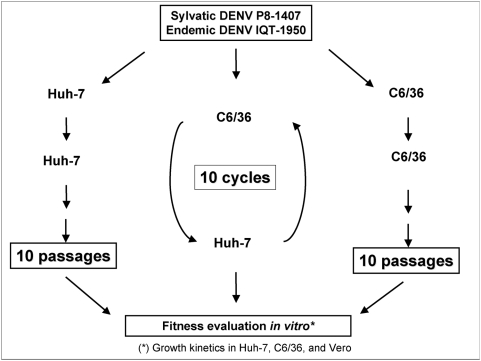
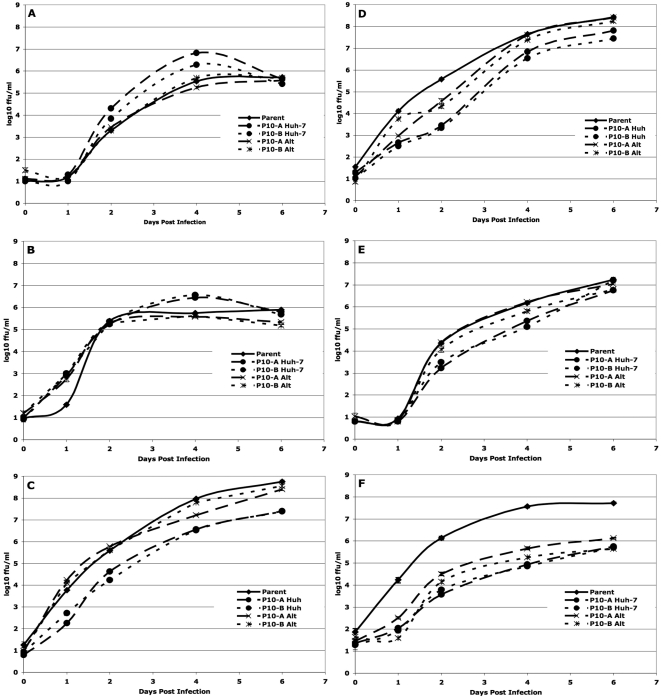
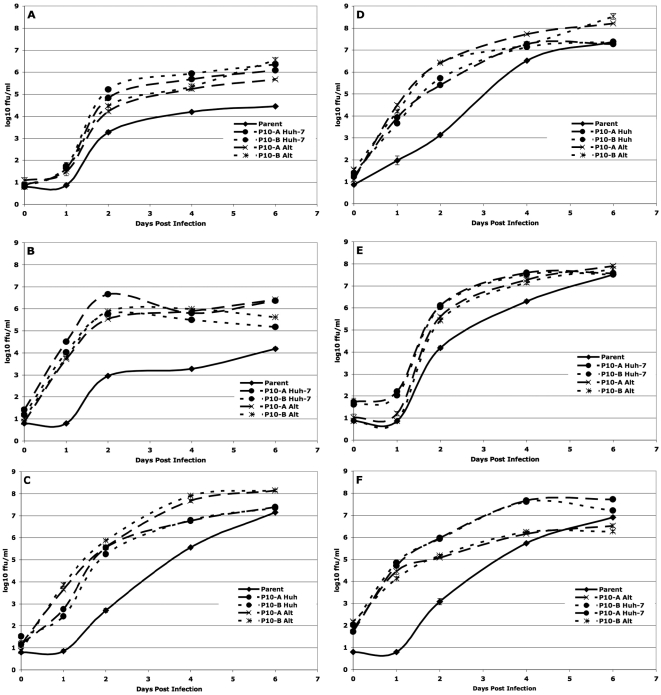
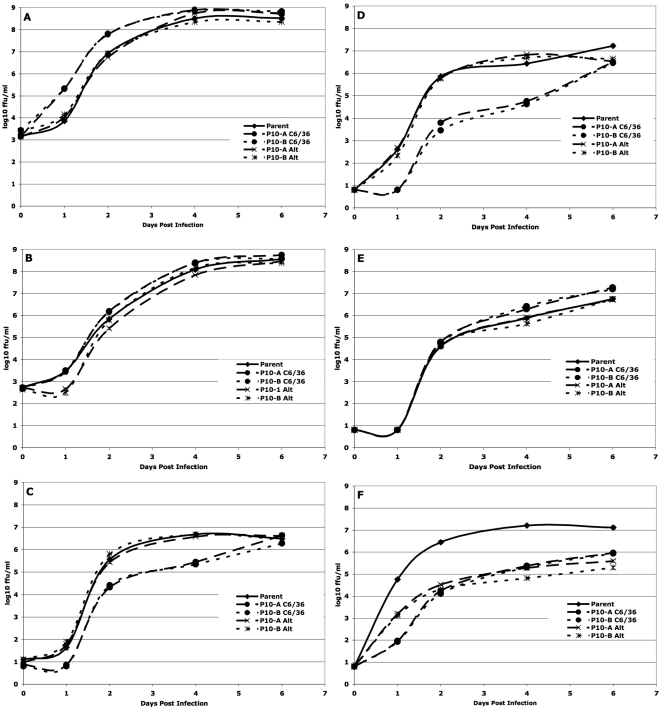
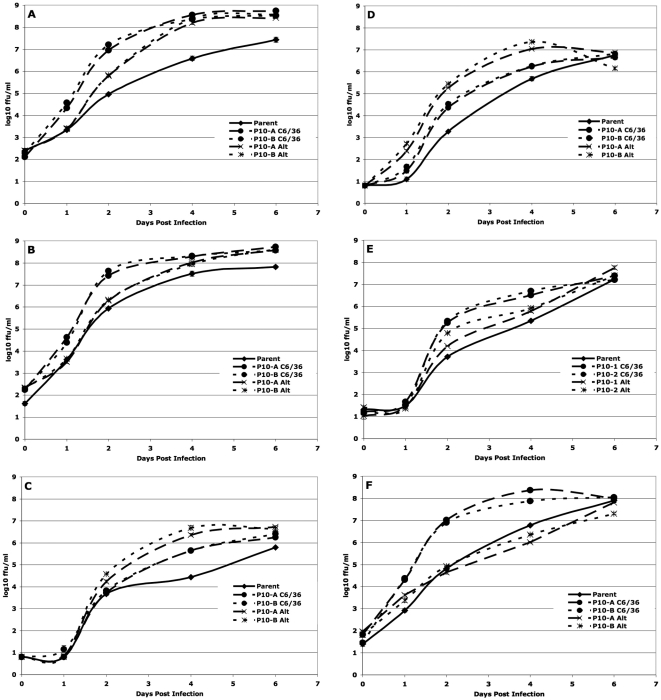
Like other arthropod-borne viruses (arboviruses), mosquito-borne dengue virus (DENV) is maintained in an alternating cycle of replication in arthropod and vertebrate hosts. The trade-off hypothesis suggests that this alternation constrains DENV evolution because a fitness increase in one host usually diminishes fitness in the other. Moreover, the hypothesis predicts that releasing DENV from host alternation should facilitate adaptation. To test this prediction, DENV was serially passaged in either a single human cell line (Huh-7), a single mosquito cell line (C6/36), or in alternating passages between Huh-7 and C6/36 cells. After 10 passages, consensus mutations were identified and fitness was assayed by evaluating replication kinetics in both cell types as well as in a novel cell type (Vero) that was not utilized in any of the passage series. Viruses allowed to specialize in single host cell types exhibited fitness gains in the cell type in which they were passaged, but fitness losses in the bypassed cell type, and most alternating passages, exhibited fitness gains in both cell types. Interestingly, fitness gains were observed in the alternately passaged, cloned viruses, an observation that may be attributed to the acquisition of both host cell-specific and amphi-cell-specific adaptations or to recovery from the fitness losses due to the genetic bottleneck of biological cloning. Amino acid changes common to both passage series suggested convergent evolution to replication in cell culture via positive selection. However, intriguingly, mutations accumulated more rapidly in viruses passed in Huh-7 cells than in those passed in C6/36 cells or in alternation. These results support the hypothesis that releasing DENV from host alternation facilitates adaptation, but there is limited support for the hypothesis that such alternation necessitates a fitness trade-off. Moreover, these findings suggest that patterns of genetic evolution may differ between viruses replicating in mammalian and mosquito cells.
Overview
The claims and statistics of this paper haven’t been checked yet.
Run the check — free, no account needed. It reads the open-access text and checks the sources it cites.
Integrity signals
Registry
Cites
Statistics
Figures
Verification
Claims the paper makes
The claims and statistics of this paper haven’t been checked yet.
Run the check — free, no account needed. It reads the open-access text and checks the sources it cites.
Claims other papers make about this one
Each is checked against this paper’s own text: does it say what the citing paper says it does?
The source backs part of the claim, not all of it — or backs it for a different population, condition or comparison.
In the citing paper
“The trade-off hypothesis predicts that constraining evolution in one host species diminishes fitness in the other (Vasilakis et al., 2009).”
From Codon Pair Bias Is a Direct Consequence of Dinucleotide Bias (2016) · cites this paper as Vasilakis et al., 2009
Experimental — accuracy not yet measured
Self-check
Percentages, sums and reported differences re-computed from the paper’s own numbers.
The self-check needs the paper’s full text.
Citations
Cites
Dengue and Dengue Hemorrhagic Fever
Gubler, D. J. (1998) · Clinical Microbiology Reviews · doi:10.1128/cmr.11.3.480 · Cited by 4,394
Risk factors for human disease emergence
Taylor, L. H., Latham, S. M., & woolhouse, M. E. J. (2001) · Philosophical Transactions of the Royal Society of London. Series B: Biological Sciences · doi:10.1098/rstb.2001.0888 · Cited by 2,835
Rates of Molecular Evolution in RNA Viruses: A Quantitative Phylogenetic Analysis
Jenkins, G. M., Rambaut, A., Pybus, O. G., & Holmes, E. C. (2002) · Journal of Molecular Evolution · doi:10.1007/s00239-001-0064-3 · Cited by 693
Origins of Dengue Type 2 Viruses Associated with Increased Pathogenicity in the Americas
Rico-Hesse, R., Harrison, L. M., Salas, R. A., Tovar, D., Nisalak, A., Ramos, C., Bóshell, J., de Mesa, M. T. R., Nogueira, R. M. R., & da Rosa, A. T. (1997) · Virology · doi:10.1006/viro.1997.8504 · Cited by 676
Dengue Virus Structural Differences That Correlate with Pathogenesis
Leitmeyer, K. C., Vaughn, D. W., Watts, D. M., Salas, R., Villalobos, I., de Chacon, Ramos, C., & Rico-Hesse, R. (1999) · Journal of Virology · doi:10.1128/jvi.73.6.4738-4747.1999 · Cited by 622
Origin and Evolution of Viruses
Holland, J. J., & Domingo, E. (1998) · Virus Genes · doi:10.1023/a:1007989407305 · Cited by 524
Kliks, S. C., Nisalak, A., Brandt, W. E., Wahl, L. M., & Burke, D. S. (1989) · American Journal of Tropical Medicine and Hygiene · doi:10.4269/ajtmh.1989.40.444 · Cited by 519
Fitness of RNA virus decreased by Muller’s ratchet
Chao, L. (1990) · Nature · doi:10.1038/348454a0 · Cited by 488
Dengue and dengue hemorrhagic fever : Its history and resurgence as a global public health problem
GUBLER, D. J. (1997) · Medical Entomology and Zoology · Cited by 453
Evolutionary Relationships of Endemic/Epidemic and Sylvatic Dengue Viruses
Wang, E., Ni, H., Xu, R., Barrett, A. D. T., Watowich, S. J., Gubler, D. J., & Weaver, S. C. (2000) · Journal of Virology · doi:10.1128/jvi.74.7.3227-3234.2000 · Cited by 445
Self-citation
Cited by
Sorted by citations
Grubaugh, N. D., Gangavarapu, K., Quick, J., Matteson, N. L., de Jesus, J. G., Main, B. J., Tan, A. L., Paul, L. M., Brackney, D. E., Grewal, S., et al. (2019) · Genome biology · doi:10.1186/s13059-018-1618-7 · Cited by 979
Vasilakis, N., Cardosa, J., Hanley, K. A., Holmes, E. C., & Weaver, S. C. (2011) · Nature Reviews Microbiology · doi:10.1038/nrmicro2595 · Cited by 401
Self-citationC6/36 Aedes albopictus Cells Have a Dysfunctional Antiviral RNA Interference Response
Brackney, D. E., Scott, J. C., Sagawa, F., Woodward, J. E., Miller, N., Schilkey, F., Mudge, J., Wilusz, J., Olson, K. E., Blair, C. D., et al. (2010) · PLoS neglected tropical diseases · doi:10.1371/journal.pntd.0000856 · Cited by 327
Chen, R., & Vasilakis, N. (2011) · Viruses · doi:10.3390/v3091562 · Cited by 297
Self-citationArbovirus high fidelity variant loses fitness in mosquitoes and mice
Coffey, L. L., Beeharry, Y., Bordería, A. V., Blanc, H., & Vignuzzi, M. (2011) · Proceedings of the National Academy of Sciences · doi:10.1073/pnas.1111650108 · Cited by 249
Dengue viruses cluster antigenically but not as discrete serotypes
Katzelnick, L. C., Fonville, J. M., Gromowski, G. D., Bustos‐Arriaga, J., Green, A., James, S. L., Lau, L., Montoya, M., Wang, C., VanBlargan, L. A., et al. (2015) · Science · doi:10.1126/science.aac5017 · Cited by 239
Self-citationScott, J. C., Brackney, D. E., Campbell, C. L., Bondu, V., Hjelle, B. L., Ebel, G. D., Olson, K. E., & Blair, C. D. (2010) · PLoS neglected tropical diseases · doi:10.1371/journal.pntd.0000848 · Cited by 236
The Role of Temperature in Shaping Mosquito-Borne Viruses Transmission
Bellone, R., & Failloux, A. (2020) · Frontiers in Microbiology · doi:10.3389/fmicb.2020.584846 · Cited by 197
Dengue Virus RNA Structure Specialization Facilitates Host Adaptation
Villordo, S. M., Filomatori, C. V., Sánchez-Vargas, I., Blair, C. D., & Gamarnik, A. V. (2015) · PLoS Pathogens · doi:10.1371/journal.ppat.1004604 · Cited by 178
Flavivirus-Mosquito Interactions
Huang, Y. S., Higgs, S., Horne, K. M., & Vanlandingham, D. L. (2014) · Viruses · doi:10.3390/v6114703 · Cited by 174
Coffey, L. L., & Vignuzzi, M. (2010) · Journal of Virology · doi:10.1128/jvi.01918-10 · Cited by 166
Factors Shaping the Adaptive Landscape for Arboviruses: Implications for the Emergence of Disease
Coffey, L. L., Forrester, N. L., Tsetsarkin, K. A., Vasilakis, N., & Weaver, S. C. (2013) · Future Microbiology · doi:10.2217/fmb.12.139 · Cited by 181
Self-citationIdentifying genetic markers of adaptation for surveillance of viral host jumps
Pepin, K. M., Lass, S., Pulliam, J. R. C., Read, A. F., & Lloyd‐Smith, J. O. (2010) · Nature Reviews Microbiology · doi:10.1038/nrmicro2440 · Cited by 166
Dengue in Latin America: Systematic Review of Molecular Epidemiological Trends
Ramos‐Castañeda, J., dos Santos, F. B., Martínez-Vega, R. A., de Araújo, J. M. G., Graham, J., & Sarti, E. (2017) · PLoS neglected tropical diseases · doi:10.1371/journal.pntd.0005224 · Cited by 161
Codon Pair Bias Is a Direct Consequence of Dinucleotide Bias
Kunec, D., & Osterrieder, N. (2016) · Cell Reports · doi:10.1016/j.celrep.2015.12.011 · Cited by 159
“constraining evolution in one host species diminishes fitness in the other (Vasilakis et al., 2009).”
BackgroundInfluentialBedhomme, S., Lafforgue, G., & Elena, S. F. (2011) · Molecular Biology and Evolution · doi:10.1093/molbev/msr314 · Cited by 144
Grubaugh, N. D., Weger‐Lucarelli, J., Murrieta, R. A., Fauver, J. R., Garcia-Luna, S., Prasad, A. N., Black, W. C., & Ebel, G. D. (2016) · Cell Host & Microbe · doi:10.1016/j.chom.2016.03.002 · Cited by 146
Bono, L. M., Smith, L. B., Pfennig, D. W., & Burch, C. L. (2016) · Molecular Ecology · doi:10.1111/mec.13979 · Cited by 143
Role of the Vector in Arbovirus Transmission
Conway, M. J., Colpitts, T. M., & Fikrig, E. (2014) · Annual Review of Virology · doi:10.1146/annurev-virology-031413-085513 · Cited by 138
Filomatori, C. V., Carballeda, J. M., Villordo, S. M., Aguirre, S., Pallarés, H. M., Maestre, A. M., Sánchez-Vargas, I., Blair, C. D., Cintia, F., Morales, M. A., et al. (2017) · PLoS Pathogens · doi:10.1371/journal.ppat.1006265 · Cited by 120
West Nile Virus Experimental Evolution in vivo and the Trade-off Hypothesis
Deardorff, E. R., Fitzpatrick, K. A., Slyke, G. V., Shi, P., Kramer, L. D., & Ebel, G. D. (2011) · PLoS Pathogens · doi:10.1371/journal.ppat.1002335 · Cited by 114
Self-citationRozen-Gagnon, K., Stapleford, K. A., Mongelli, V. C., Blanc, H., Failloux, A., Saleh, M., & Vignuzzi, M. (2014) · PLoS Pathogens · doi:10.1371/journal.ppat.1003877 · Cited by 116
Insights into Arbovirus Evolution and Adaptation from Experimental Studies
Ciota, A. T., & Kramer, L. D. (2010) · Viruses · doi:10.3390/v2122594 · Cited by 112
Pollett, S., Melendrez, M. C., Berry, I. M., Duchêne, S., Salje, H., Cummings, D. A. T., & Jarman, R. G. (2018) · Infection Genetics and Evolution · doi:10.1016/j.meegid.2018.04.032 · Cited by 107
Arthritogenic alphaviruses: epidemiological and clinical perspective on emerging arboviruses
Zaid, A., Burt, F. J., Liu, X., Poo, Y. S., Zandi, K., Suhrbier, A., Weaver, S. C., Texeira, M. M., & Mahalingam, S. (2020) · The Lancet Infectious Diseases · doi:10.1016/s1473-3099(20)30491-6 · Cited by 103
Self-citationTabachnick, W. J. (2016) · Annual Review of Virology · doi:10.1146/annurev-virology-110615-035630 · Cited by 86
The comparative genomics of viral emergence
Holmes, E. C. (2009) · Proceedings of the National Academy of Sciences · doi:10.1073/pnas.0906193106 · Cited by 89
Eilat Virus Host Range Restriction Is Present at Multiple Levels of the Virus Life Cycle
Nasar, F., Gorchakov, R. V., Tesh, R. B., & Weaver, S. C. (2014) · Journal of Virology · doi:10.1128/jvi.01856-14 · Cited by 82
Self-citationNougaırède, A., de Fabritus, L., Aubry, F., Gould, E. A., Holmes, E. C., & de Lamballerie, X. N. (2013) · PLoS Pathogens · doi:10.1371/journal.ppat.1003172 · Cited by 77
African and Asian Zika Virus Isolates Display Phenotypic Differences Both In Vitro and In Vivo
Smith, D. R., Sprague, T. R., Hollidge, B. S., Trefry, S. V., Padilla, S. L., Bellanca, S. A., Golden, J. W., Coyne, S. R., Kulesh, D. A., Miller, L. J., et al. (2017) · American Journal of Tropical Medicine and Hygiene · doi:10.4269/ajtmh.17-0685 · Cited by 73
Self-citationInter- and Intra-Host Viral Diversity in a Large Seasonal DENV2 Outbreak
Romano, C. M., Lauck, M., Salvador, F. S., Lima, C. R., Villas-Boas, L. S., de Araújo, E. S. A., Levi, J. E., Pannuti, C. S., O’Connor, D. H., & Kallas, E. G. (2013) · PLoS ONE · doi:10.1371/journal.pone.0070318 · Cited by 72
Walker, T., Jeffries, C. L., Mansfield, K. L., & Johnson, N. (2014) · Parasites & Vectors · doi:10.1186/1756-3305-7-382 · Cited by 71
Kumar, S., Patil, J. A., Cecilia, D., Cherian, S., Barde, P., Walimbe, A. M., Yadav, P. D., Yergolkar, P. N., Shah, P. S., Padbidri, V. S., et al. (2009) · Journal of General Virology · doi:10.1099/vir.0.017954-0 · Cited by 72
Vector Competence: What Has Zika Virus Taught Us?
Azar, S. R., & Weaver, S. C. (2019) · Viruses · doi:10.3390/v11090867 · Cited by 68
Self-citationHapuarachchi, H. C., Koo, C., Kek, R., Xu, H., Lai, Y. L., Liu, L., Kok, S. Y., Shi, Y., Lee, R. T. C., Lee, K.-S., et al. (2016) · Scientific Reports · doi:10.1038/srep22592 · Cited by 68
Dolan, P., Taguwa, S., Rangel, M. A., Acevedo, A., Hagai, T., Andino, R., & Frydman, J. (2021) · eLife · doi:10.7554/elife.61921 · Cited by 63
Dengue viruses cleave STING in humans but not in nonhuman primates, their presumed natural reservoir
Stabell, A. C., Meyerson, N. R., Gullberg, R. C., Gilchrist, A. R., Webb, K. J., Old, W. M., Perera, R. M., & Sawyer, S. L. (2018) · eLife · doi:10.7554/elife.31919 · Cited by 70
Tick Cell Lines for Study of Crimean-Congo Hemorrhagic Fever Virus and Other Arboviruses
Bell‐Sakyi, L., Kohl, A., Bente, D. A., & Fazakerley, J. K. (2011) · Vector-Borne and Zoonotic Diseases · doi:10.1089/vbz.2011.0766 · Cited by 66
Bara, J. J., Rapti, Z., Cáceres, C. E., & Muturi, E. J. (2015) · PLoS ONE · doi:10.1371/journal.pone.0126703 · Cited by 63
STOCHASTIC TEMPERATURES IMPEDE RNA VIRUS ADAPTATION
Alto, B. W., Wasik, B. R., Morales, N. M., & Turner, P. E. (2013) · Evolution · doi:10.1111/evo.12034 · Cited by 60
Sessions, O. M., Wilm, A., Kamaraj, U. S., Choy, M. M. J., Chow, A. Y., Chong, Y., Ong, X. M., Nagarajan, N., Cook, A. R., & Ooi, E. E. (2015) · PLoS neglected tropical diseases · doi:10.1371/journal.pntd.0004044 · Cited by 60
Kenney, J. L., & Brault, A. C. (2014) · Advances in virus research · doi:10.1016/b978-0-12-800172-1.00002-1 · Cited by 59
Self-citationEmerging viruses: why they are not jacks of all trades?
Bedhomme, S., Hillung, J., & Elena, S. F. (2014) · Current Opinion in Virology · doi:10.1016/j.coviro.2014.10.006 · Cited by 59
Experimental Evolution as an Underutilized Tool for Studying Beneficial Animal–Microbe Interactions
Hoang, K. L., Morran, L. T., & Gerardo, N. M. (2016) · Frontiers in Microbiology · doi:10.3389/fmicb.2016.01444 · Cited by 57
Regla-Nava, J. Á., Wang, Y.-T., Fontes-Garfias, C. R., Liu, Y., Syed, T., Susantono, M., Gonzalez, A., Viramontes, K. M., Verma, S. K., Kim, K., et al. (2022) · Cell Reports · doi:10.1016/j.celrep.2022.110655 · Cited by 56
Mathur, K., Anand, A., Dubey, S., Mishra, N. S., Bhatnagar, R. K., & Sunil, S. (2016) · Scientific Reports · doi:10.1038/srep38065 · Cited by 54
Ciota, A. T., Jia, Y., Payne, A. F., Slyke, G. V., Davis, L. J., Young, D. S., Ehrbar, D. J., & Kramer, L. D. (2009) · PLoS ONE · doi:10.1371/journal.pone.0007876 · Cited by 53
ROLE OF EVOLVED HOST BREADTH IN THE INITIAL EMERGENCE OF AN RNA VIRUS
Turner, P. E., Morales, N. M., Alto, B. W., & Remold, S. K. (2010) · Evolution · doi:10.1111/j.1558-5646.2010.01051.x · Cited by 55
Genetic and phenotypic characterization of sylvatic dengue virus type 4 strains
Rossi, S. L., Nasar, F., Cardosa, J., Mayer, S. V., Tesh, R. B., Hanley, K. A., Weaver, S. C., & Vasilakis, N. (2011) · Virology · doi:10.1016/j.virol.2011.11.018 · Cited by 51
Self-citationSeverson, D. W., & Behura, S. K. (2016) · Insects · doi:10.3390/insects7040058 · Cited by 55
Phylogenetic history demonstrates two different lineages of dengue type 1 virus in Colombia
Méndez, J. A., Usme-Ciro, J. A., Domingo, C., Rey-Benito, G. J., Sánchez, J. A., Tenório, A., & Gallego-Gómez, J. C. (2010) · Virology Journal · doi:10.1186/1743-422x-7-226 · Cited by 52
Growth and adaptation of Zika virus in mammalian and mosquito cells
Moser, L. A., Boylan, B. T., Moreira, F. R., Myers, L. J., Svenson, E. L., Fedorova, N. B., Pickett, B. E., & Bernard, K. A. (2018) · PLoS neglected tropical diseases · doi:10.1371/journal.pntd.0006880 · Cited by 51
Phylogenetic reconstruction of dengue virus type 2 in Colombia
Méndez, J. A., Usme-Ciro, J. A., Domingo, C., Rey-Benito, G. J., Sánchez, J. A., Tenório, A., & Gallego-Gómez, J. C. (2012) · Virology Journal · doi:10.1186/1743-422x-9-64 · Cited by 51
Marshall, J. M., Raban, R. R., Kandul, N. P., Edula, J. R., León, T. M., & Akbari, O. S. (2019) · Frontiers in Genetics · doi:10.3389/fgene.2019.01072 · Cited by 51
Moreno‐Pérez, M. G., Garcı́a, I., Fraile, A., & García‐Arenal, F. (2016) · Journal of Virology · doi:10.1128/jvi.00737-16 · Cited by 48
Weger‐Lucarelli, J., Garcia-Luna, S., Rückert, C., Byas, A. D., O’Connor, S. L., Aliota, M. T., Friedrich, T. C., O’Connor, D. H., & Ebel, G. D. (2018) · Virology · doi:10.1016/j.virol.2018.06.004 · Cited by 42
Adventitious viruses persistently infect three commonly used mosquito cell lines
Weger‐Lucarelli, J., Rückert, C., Grubaugh, N. D., Misencik, M. J., Armstrong, P. M., Stenglein, M. D., Ebel, G. D., & Brackney, D. E. (2018) · Virology · doi:10.1016/j.virol.2018.06.007 · Cited by 44
The evolution of parasite host range in heterogeneous host populations
Gibson, A. K., Baffoe‐Bonnie, H., Penley, M. J., Lin, J., Owens, R., Khalid, A., & Morran, L. T. (2020) · Journal of Evolutionary Biology · doi:10.1111/jeb.13608 · Cited by 42
Effects of life history and ecology on virus evolutionary potential
Chisholm, P. J., Busch, J. W., & Crowder, D. W. (2019) · Virus Research · doi:10.1016/j.virusres.2019.02.018 · Cited by 39
Genetic diversity and lineage dynamic of dengue virus serotype 1 (DENV-1) in Cambodia
Duong, V., Simmons, C. P., Gavotte, L., Viari, A., Ong, S., Chantha, N., Lennon, N. J., Birren, B. W., Vong, S., Farrar, J., et al. (2011) · Infection Genetics and Evolution · doi:10.1016/j.meegid.2011.06.019 · Cited by 37
Evolutionary potential of the extrinsic incubation period of dengue virus inAedes aegypti
Ye, Y. H., Chenoweth, S. F., Carrasco, A. M., Allen, S. L., Frentiu, F. D., van den Hurk, A. F., Beebe, N. W., & McGraw, E. A. (2016) · Evolution · doi:10.1111/evo.13039 · Cited by 37
Monath, T. P. C., Gershman, M. D., Staples, J. E., & Barrett, A. D. T. (2013) · Elsevier eBooks · doi:10.1016/b978-1-4557-0090-5.00043-4 · Cited by 37
Adaptive Changes in Alphavirus mRNA Translation Allowed Colonization of Vertebrate Hosts
Ventoso, I. (2012) · Journal of Virology · doi:10.1128/jvi.01114-12 · Cited by 37
Effects of Arbovirus Multi-Host Life Cycles on Dinucleotide and Codon Usage Patterns
Sexton, N. R., & Ebel, G. D. (2019) · Viruses · doi:10.3390/v11070643 · Cited by 34
Eilat virus displays a narrow mosquito vector range
Nasar, F., Haddow, A. D., Tesh, R. B., & Weaver, S. C. (2014) · Parasites & Vectors · doi:10.1186/s13071-014-0595-2 · Cited by 34
Self-citationSpecific and Nonspecific Host Adaptation during Arboviral Experimental Evolution
Novella, I. S., Presloid, J. B., Smith, S. D., & Wilke, C. O. (2011) · Microbial Physiology · doi:10.1159/000332752 · Cited by 31
Morley, V. J., Noval, M. G., Chen, R., Weaver, S. C., Vignuzzi, M., Stapleford, K. A., & Turner, P. E. (2018) · Virus Evolution · doi:10.1093/ve/vey012 · Cited by 31
Self-citationInfluence of mosquito genotype on transcriptional response to dengue virus infection
Behura, S. K., Gomez-Machorro, C., deBruyn, B. S., Lovin, D. D., Harker, B. W., Romero-Severson, J., Mori, A., & Severson, D. W. (2014) · Functional & Integrative Genomics · doi:10.1007/s10142-014-0376-1 · Cited by 31
Arribas, M., Kubota, K., Cabanillas, L., & Lázaro, E. (2014) · PLoS ONE · doi:10.1371/journal.pone.0100940 · Cited by 30
Recombination in West Nile Virus: minimal contribution to genomic diversity
Pickett, B. E., & Lefkowitz, E. J. (2009) · Virology Journal · doi:10.1186/1743-422x-6-165 · Cited by 30
Viral population dynamics and virulence thresholds
Lancaster, K. Z., & Pfeiffer, J. K. (2012) · Current Opinion in Microbiology · doi:10.1016/j.mib.2012.05.007 · Cited by 30
Ko, H., Salem, G. M., Chang, G. J., & Chao, D. (2020) · Frontiers in Microbiology · doi:10.3389/fmicb.2020.01371 · Cited by 28
O’Connor, O., Ou, T. P., Aubry, F., Dabo, S., Russet, S., Girault, D., In, S., Minier, M., Lequime, S., Hoem, T., et al. (2021) · Emerging Microbes & Infections · doi:10.1080/22221751.2021.1944789 · Cited by 27
Behura, S. K., & Severson, D. W. (2013) · BMC Microbiology · doi:10.1186/1471-2180-13-37 · Cited by 29
Viral mutation and substitution: units and levels
Belshaw, R. D., Sanjuán, R., & Pybus, O. G. (2011) · Current Opinion in Virology · doi:10.1016/j.coviro.2011.08.004 · Cited by 28
Fu, Q., İnankur, B., Yin, J., Striker, R., & Lan, Q. (2015) · Journal of Medical Entomology · doi:10.1093/jme/tjv101 · Cited by 28
Parallel Evolution of HIV-1 in a Long-Term Experiment
Bertels, F., Leemann, C., Metzner, K. J., & Regoes, R. R. (2019) · Molecular Biology and Evolution · doi:10.1093/molbev/msz155 · Cited by 28
Arias-Goeta, C., Moutailler, S., Mousson, L., Zouache, K., Thiberge, J.-M., Caro, V., Rougeon, F., & Failloux, A. (2014) · Infection Genetics and Evolution · doi:10.1016/j.meegid.2014.03.015 · Cited by 28
Muturi, E. J., & Bara, J. J. (2015) · Parasites & Vectors · doi:10.1186/s13071-015-0667-y · Cited by 26
Koo, C., Tien, W. P., Xu, H., Ong, J., Rajarethinam, J., Lai, Y. L., Ng, L. C., & Hapuarachchi, H. C. (2018) · iScience · doi:10.1016/j.isci.2018.07.008 · Cited by 28
Koh, C., Audsley, M. D., Giallonardo, F. D., Kerton, E. J., Young, P. R., Holmes, E. C., & McGraw, E. A. (2019) · Virus Evolution · doi:10.1093/ve/vez012 · Cited by 25
Selective Factors Associated with the Evolution of Codon Usage in Natural Populations of Arboviruses
Velázquez-Salinas, L., Zárate, S., Eschbaumer, M., Lobo, F. P., Gladue, D. P., Arzt, J., Novella, I. S., & Rodrı́guez, L. L. (2016) · PLoS ONE · doi:10.1371/journal.pone.0159943 · Cited by 23
Experimental adaptation of dengue virus 1 to Aedes albopictus mosquitoes by in vivo selection
Bellone, R., Lequime, S., Jupille, H., Göertz, G. P., Aubry, F., Mousson, L., Piorkowski, G., Yen, P., Gabiane, G., Vazeille, M., et al. (2020) · Scientific Reports · doi:10.1038/s41598-020-75042-4 · Cited by 26
Experimental Evolution and the Nature of Biodiversity
Kassen, R. (2024) · doi:10.1093/oso/9780192898661.001.0001 · Cited by 24
Human-Pathogenic Kasokero Virus in Field-Collected Ticks
Schuh, A. J., Amman, B. R., Patel, K., Sealy, T. K., Swanepoel, R., & Towner, J. S. (2020) · Emerging infectious diseases · doi:10.3201/eid2612.202411 · Cited by 22
Xing, S., Du, J., Gao, S., Tian, Z., Zheng, Y., Liu, G., Luo, J., & Yin, H. (2016) · Infection Genetics and Evolution · doi:10.1016/j.meegid.2016.01.012 · Cited by 22
Rapid Evolution of Enhanced Zika Virus Virulence during Direct Vertebrate Transmission Chains
Riemersma, K. K., Jaeger, A. S., Crooks, C. M., Braun, K. M., Weger‐Lucarelli, J., Ebel, G. D., Friedrich, T. C., & Aliota, M. T. (2021) · Journal of Virology · doi:10.1128/jvi.02218-20 · Cited by 22
Evolution of Chikungunya virus in mosquito cells
Ali, S. M., Amroun, A., de Lamballerie, X. N., & Nougaırède, A. (2018) · Scientific Reports · doi:10.1038/s41598-018-34561-x · Cited by 21
Vignuzzi, M., & Higgs, S. (2017) · Annual Review of Virology · doi:10.1146/annurev-virology-101416-041757 · Cited by 22
Gutiérrez-Barbosa, H., Castañeda, N. Y., & Castellanos, J. E. (2019) · The Brazilian Journal of Infectious Diseases · doi:10.1016/j.bjid.2019.11.003 · Cited by 19
Azerigyik, F. A., Faizah, A. N., Kobayashi, D., Amoa‐Bosompem, M., Matsumura, R., Kai, I., Sasaki, T., Higa, Y., Isawa, H., Iwanaga, S., et al. (2023) · Parasites & Vectors · doi:10.1186/s13071-023-05713-4 · Cited by 18
Consequences of in vitro host shift for St. Louis encephalitis virus
Ciota, A. T., Payne, A. F., Ngo, K. A., & Kramer, L. D. (2014) · Journal of General Virology · doi:10.1099/vir.0.063545-0 · Cited by 18
Phylogenetic insights into the transmission dynamics of arthropod-borne viruses
Hill, V., Dellicour, S., Giovanetti, M., & Grubaugh, N. D. (2025) · Nature Reviews Genetics · doi:10.1038/s41576-025-00854-x · Cited by 17
Quintero-Gil, C., Ospina, M., Osorio-Benitez, J. E., & Martínez‐Gutierrez, M. (2014) · The Journal of Infection in Developing Countries · doi:10.3855/jidc.3978 · Cited by 17
The Role of the Mosquito in a Dengue Human Infection Model
Mores, C. N., Christofferson, R. C., & Davidson, S. A. (2014) · The Journal of Infectious Diseases · doi:10.1093/infdis/jiu110 · Cited by 16
ZIKV Demonstrates Minimal Pathologic Effects and Mosquito Infectivity in Viremic Cynomolgus Macaques
Azar, S. R., Rossi, S. L., Haller, S. L., Yun, R., Huang, J. H., Plante, J. A., Zhou, J., Olano, J. P., Roundy, C. M., Hanley, K. A., et al. (2018) · Viruses · doi:10.3390/v10110661 · Cited by 16
Self-citationSelf-protection and survival of arbovirus-infected mosquito cells
López-Montero, N., & Risco, C. (2010) · Cellular Microbiology · doi:10.1111/j.1462-5822.2010.01536.x · Cited by 15
Lü, Z., Liu, H. D., Fu, S., Lu, X., Dong, Q., Zhang, S., Tong, S., Li, M., Li, W., Tang, Q., et al. (2011) · Virology Journal · doi:10.1186/1743-422x-8-282 · Cited by 16
Reyes-Ruíz, J. M., Osuna‐Ramos, J. F., Bautista‐Carbajal, P., Jaworski, E. A., Soto-Acosta, R., Cervantes-Salazar, M., Angel-Ambrocio, A. H., Castillo-Munguía, J. P., Chávez‐Munguía, B., Nova-Ocampo, M. D., et al. (2019) · Virology · doi:10.1016/j.virol.2019.02.018 · Cited by 15
Negative frequency‐dependent selection maintains coexisting genotypes during fluctuating selection
Turner, C. B., Buskirk, S. W., Harris, K. B., & Cooper, V. S. (2019) · Molecular Ecology · doi:10.1111/mec.15307 · Cited by 15
Metadata
- Authors
- Vasilakis, N., Deardorff, E. R., Kenney, J. L., Rossi, S. L., Hanley, K. A., & Weaver, S. C.
- Affiliations
- The University of Texas Medical Branch at Galveston (US)
- New Mexico State University (US)
- Corresponding author
- Weaver, Scott C.
- Venue
- PLoS Pathogens
- Publisher
- Public Library of Science (PLoS)
- Published
- 2009-06-05
- Volume
- 5
- Issue
- 6
- Pages
- e1000467
- ISSN
- 1553-7366 (ISSN-L)
- 1553-7374
- PMC
- PMC2685980
- OpenAlex
- W2098987669
- Cited by
- 191
- References
- 75
- Citations by year
- 2026: 8 · 2025: 5 · 2024: 24 · 2023: 6 · 2022: 3 · 2021: 15 · 2020: 13 · 2019: 13 · 2018: 11 · 2017: 8 · 2016: 12 · 2015: 11 · 2014: 21 · 2013: 8 · 2012: 5
- FWCI
- 6.43
- Type
- journal article
- Language
- en
- Open access
- gold
- doi.org
- Locations
- PLoS Pathogens (publishedVersion, cc-by)
- PubMed Central (publishedVersion, cc-by)
- PubMed (publishedVersion)
- DOAJ (DOAJ: Directory of Open Access Journals) (submittedVersion, cc-by-sa)
- Funders
- National Institutes of Health (NIH T32)
- Centers for Disease Control and Prevention (T01 CCT622892)
- U.S. Public Health Service (T01/CCT 622892)
- National Institute of Allergy and Infectious Diseases (R01AI069145, AI069145)
- National Center for Research Resources (P20RR016480)
- Topics
- Life Sciences › Biochemistry, Genetics and Molecular Biology › Genetics › Evolution and Genetic Dynamics
- Health Sciences › Medicine › Public Health, Environmental and Occupational Health › Mosquito-borne diseases and control
- Physical Sciences › Mathematics › Applied Mathematics › Mathematical and Theoretical Epidemiology and Ecology Models
- Keywords
- dengue virus, mosquito-borne arboviruses, host alternation, trade-off hypothesis, host adaptation, viral fitness, mutation accumulation, serial passage, C6/36 cells, Huh7 cells, Vero cells, convergent evolution, positive selection, host cell specificity
- MeSH terms
- Adaptation, Biological, Aedes, Analysis of Variance, Animals, Arboviruses, Cell Line, Chlorocebus aethiops, Dengue Virus, Humans, Kinetics, Mutation, Research Design, Selection, Genetic, Serial Passage, Vero Cells, Virulence, Virus Replication, Consensus Sequence, Sequence Analysis, RNA, Evolution, Molecular, Cell Line, Tumor
About these checks
Registry, retraction, Cites and statistics results are computed, not judged, with one exception: a printed reference that no index lists is read once by a model before it counts as a citation error. Claims are extracted by a model and kept only when their quote appears verbatim in the text; each cited source is then checked, with a model’s help, for whether it says what the claim relies on. Those verdicts can be wrong — read the claim’s quote and the cited source before relying on one.
Statistics and arithmetic are recomputed, not judged.
Confidence bands are shown only for fields calibrated on our annotated test set. None is calibrated yet, so no band is shown.
What counts as a claim ›How we measure confidence ›How we check this ›
Are you an author, or do you see a problem with this page? Request a review
