

Reverse Genetics in Candida albicans Predicts ARF Cycling Is Essential for Drug Resistance and Virulence
Open accessThe DOI matches its Crossref record; 103 of the 103 references it cites were found in a registry or an index.
Abstract
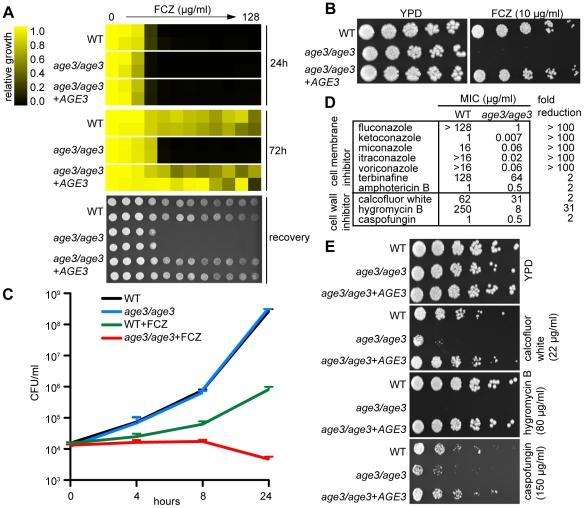
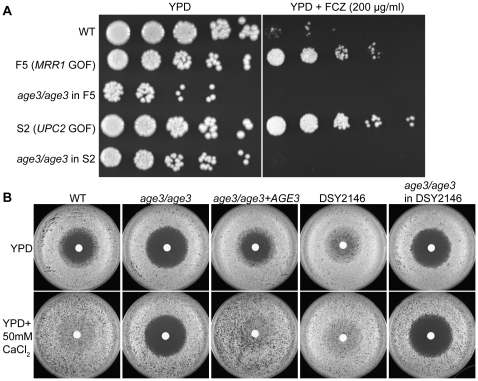
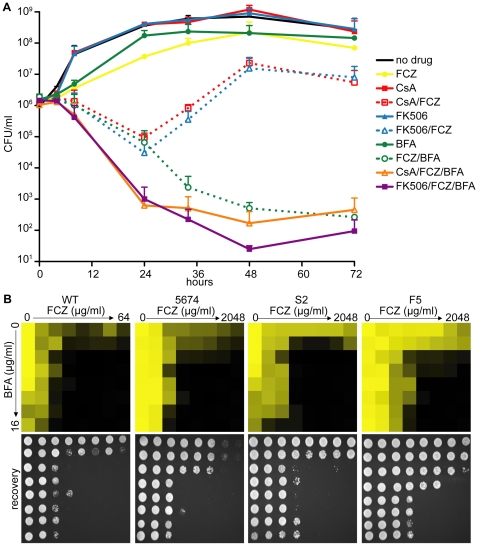
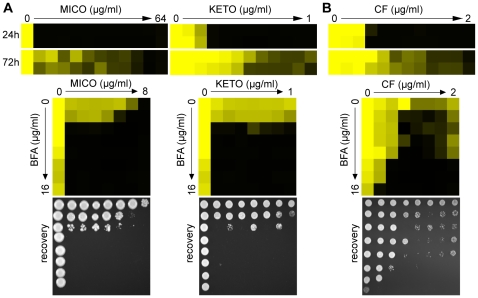
Candida albicans, the major fungal pathogen of humans, causes life-threatening infections in immunocompromised individuals. Due to limited available therapy options, this can frequently lead to therapy failure and emergence of drug resistance. To improve current treatment strategies, we have combined comprehensive chemical-genomic screening in Saccharomyces cerevisiae and validation in C. albicans with the goal of identifying compounds that can couple with the fungistatic drug fluconazole to make it fungicidal. Among the genes identified in the yeast screen, we found that only AGE3, which codes for an ADP-ribosylation factor GTPase activating effector protein, abrogates fluconazole tolerance in C. albicans. The age3 mutant was more sensitive to other sterols and cell wall inhibitors, including caspofungin. The deletion of AGE3 in drug resistant clinical isolates and in constitutively active calcineurin signaling mutants restored fluconazole sensitivity. We confirmed chemically the AGE3-dependent drug sensitivity by showing a potent fungicidal synergy between fluconazole and brefeldin A (an inhibitor of the guanine nucleotide exchange factor for ADP ribosylation factors) in wild type C. albicans as well as in drug resistant clinical isolates. Addition of calcineurin inhibitors to the fluconazole/brefeldin A combination only initially improved pathogen killing. Brefeldin A synergized with different drugs in non-albicans Candida species as well as Aspergillus fumigatus. Microarray studies showed that core transcriptional responses to two different drug classes are not significantly altered in age3 mutants. The therapeutic potential of inhibiting ARF activities was demonstrated by in vivo studies that showed age3 mutants are avirulent in wild type mice, attenuated in virulence in immunocompromised mice and that fluconazole treatment was significantly more efficacious when ARF signaling was genetically compromised. This work describes a new, widely conserved, broad-spectrum mechanism involved in fungal drug resistance and virulence and offers a potential route for single or improved combination therapies.
Overview
The claims and statistics of this paper haven’t been checked yet.
Free: it reads the open-access text and checks the first 5 claims that cite a source we can check. Create a free account to check every claim.
Integrity signals
Registry
Cites
Statistics
Figures
Verification
Claims the paper makes
The claims and statistics of this paper haven’t been checked yet.
Free: it reads the open-access text and checks the first 5 claims that cite a source we can check. Create a free account to check every claim.
Claims other papers make about this one
Each is checked against this paper’s own text: does it say what the citing paper says it does?
The source backs part of the claim, not all of it — or backs it for a different population, condition or comparison.
In the citing paper
“Several adjuvants, including cyclosporine A (CsA), a calcineurin inhibitor, geldanamycin (GdA), an Hsp90 inhibitor, rapamycin, a target of rapamycin (TOR) inhibitor, and brefeldin A, a guanine nucleotide exchange factor inhibitor, have exhibited the capacity to induce fungicidal effects on FLC in laboratory studies [11,13,14,15].”
From Pitavastatin Calcium Confers Fungicidal Properties to Fluconazole by Inhibiting Ubiquinone Biosynthesis and Generating Reactive Oxygen Species (2024) · cites this paper as [13]
Experimental — accuracy not yet measuredThe source backs part of the claim, not all of it — or backs it for a different population, condition or comparison.
In the citing paper
“Many compounds have been found to make FLC fungicidal, such as GdA, CsA, brefeldin A, and so on [13,28,35,37].”
From Pitavastatin Calcium Confers Fungicidal Properties to Fluconazole by Inhibiting Ubiquinone Biosynthesis and Generating Reactive Oxygen Species (2024) · cites this paper as [13]
Experimental — accuracy not yet measured
Self-check
Percentages, sums and reported differences re-computed from the paper’s own numbers.
The self-check needs the paper’s full text.
Citations
Cites
Epidemiology of Invasive Candidiasis: a Persistent Public Health Problem
Pfaller, M. A., & Diekema, D. J. (2007) · Clinical Microbiology Reviews · doi:10.1128/cmr.00029-06 · Cited by 4,174 · cited 1×
“The growing population of these at-risk groups is reflected in an increase in invasive fungal infection over the last three decades [3].”
BackgroundTargeting RAS signalling pathways in cancer therapy
Downward, J. (2003) · Nature Reviews Cancer · doi:10.1038/nrc969 · Cited by 3,256 · cited 1×
“Increasing evidence also shows that a variety of small G protein signaling pathways of the Ras superfamily, like RHO, RAS and ARF, have been linked to tumorigenesis [81,82,83].”
BackgroundPappas, P. G., Kauffman, C. A., Andes, D., Benjamin, D. K., Calandra, T. F., Edwards, J. E., Filler, S. G., Fisher, J. F., Kullberg, B.-J., Zeichner, L. O., et al. (2009) · Clinical Infectious Diseases · doi:10.1086/596757 · Cited by 3,191
Rex, J. H., & Clinical (2008) · Clinical and Laboratory Standards Institute eBooks · Cited by 1,573
Sahai, E., & Marshall, C. J. (2002) · Nature Reviews Cancer · doi:10.1038/nrc725 · Cited by 1,261 · cited 1×
“Increasing evidence also shows that a variety of small G protein signaling pathways of the Ras superfamily, like RHO, RAS and ARF, have been linked to tumorigenesis [81,82,83].”
Background(1953) · PubMed · Cited by 942
The SAT1 flipper, an optimized tool for gene disruption in Candida albicans
Reuß, O., Vik, Å., Kolter, R., & Morschhäuser, J. (2004) · Gene · doi:10.1016/j.gene.2004.06.021 · Cited by 742
Hsp90 Potentiates the Rapid Evolution of New Traits: Drug Resistance in Diverse Fungi
Cowen, L. E., & Lindquist, S. (2005) · Science · doi:10.1126/science.1118370 · Cited by 698 · cited 1×
“Second, consistent with previous observations that long term azole resistance evolves towards HSP90/calcineurin-independency [20], cells treated with calcineurin inhibitors plus FCZ recover after prolonged incubation, while BFA/FCZ treated cells do not.”
BackgroundOne-step transformation of yeast in stationary phase
Chen, D.-C., Yang, B.-C., & Kuo, T.-T. (1992) · Current Genetics · doi:10.1007/bf00318659 · Cited by 697 · cited 1×
“Transformation was carried out according to standard protocols [93] and selected on synthetic media (2% dextrose, 6.”
MethodPfaller, M. A., & Diekema, D. J. (2004) · Journal of Clinical Microbiology · doi:10.1128/jcm.42.10.4419-4431.2004 · Cited by 694 · cited 1×
“Candida and Aspergillus species together account for ,70% of all invasive fungal infections, with Candida albicans and Aspergillus fumigatus predominating [7,8,9].”
Background
Research works printed but not linked: 1
- Cowen L Steinbach W 2008 Stress, Drugs, and Evolution: the Role of Cellular Signaling in Fungal Drug Resistance. Eukaryotic Cell 7 747 764 18375617 PMC2394973 · DOI · Paper page
Cited by
Regulatory circuitry governing fungal development, drug resistance, and disease.
Shapiro, R. S., Robbins, N., & Cowen, L. E. (2011) · Microbiology and Molecular Biology Reviews · doi:10.1128/mmbr.00045-10 · Cited by 576
“Furthermore, age3 mutants have attenuated virulence in a wild-type mouse model of disseminated disease and an improved response to fluconazole in an immunocompromised mouse model (170), providing a genetic proof of principle for a new combinatorial therapy for C.”
BackgroundInfluentialAntifungal Resistance and New Strategies to Control Fungal Infections
Vandeputte, P., Ferrari, S., & Coste, A. T. (2012) · International Journal of Microbiology · doi:10.1155/2012/713687 · Cited by 505
“Using the GRACE (gene replacement and conditional expression) or CPR (conditional promoter replacement) technologies, some research groups have assessed the essentiality of C. albicans and Aspergillus fumigatus genes [267, 268].”
BackgroundInfluentialLaFayette, S. L., Collins, C., Zaas, A. K., Schell, W. A., Betancourt-Quiroz, M., Gunatilaka, A. A. L., Perfect, J. R., & Cowen, L. E. (2010) · PLoS Pathogens · doi:10.1371/journal.ppat.1001069 · Cited by 329
Antifungal Drugs: The Current Armamentarium and Development of New Agents
Robbins, N., Wright, G. D., & Cowen, L. E. (2016) · Microbiology Spectrum · doi:10.1128/microbiolspec.funk-0002-2016 · Cited by 271
“Other notable examples include potentiation of azole activity by pharmacological inhibition of ADP-ribosylation factors (154), protein kinase C (105), and protein translation (155).”
BackgroundRosenberg, A., Ene, I. V., Bibi, M., Zakin, S., Segal, E. S., Ziv, N., Dahan, A. M., Colombo, A. L., Bennett, R. J., & Berman, J. (2018) · Nature Communications · doi:10.1038/s41467-018-04926-x · Cited by 270
Combinatorial strategies for combating invasive fungal infections
Spitzer, M., Robbins, N., & Wright, G. D. (2017) · Virulence · doi:10.1080/21505594.2016.1196300 · Cited by 218
Cross‐species discovery of syncretic drug combinations that potentiate the antifungal fluconazole
Spitzer, M., Griffiths, E., Blakely, K. M., Wildenhain, J., Ejim, L., Rossi, L., De Pascale, G., Curak, J., Brown, E., Tyers, M., et al. (2011) · Molecular Systems Biology · doi:10.1038/msb.2011.31 · Cited by 183
“…compounds have successfully yielded combinations that are active against pathogenic fungi, including the combination of fluconazole with chemical inhibitors of Hsp90, calcineurin or ARF (Cowen et al, 2009; Singh et al, 2009; Epp et al, 2010) and the antibiotic polymyxin B (Zhai et al, 2010).”
InfluentialBing, J., Hu, T., Zheng, Q., Muñoz, J. F., Cuomo, C. A., & Huang, G. (2020) · Antimicrobial Agents and Chemotherapy · doi:10.1128/aac.01466-20 · Cited by 86
“albicans affects chemical and drug resistance (30).”
Chaillot, J., Tebbji, F., Remmal, A., Boone, C., Brown, G. W., Bellaoui, M., & Sellam, A. (2015) · Antimicrobial Agents and Chemotherapy · doi:10.1128/aac.00551-15 · Cited by 82
“albicans and other human fungal pathogens (22).”
Candida albicans targets that potentially synergize with fluconazole
Lu, H., Shrivastava, M., Whiteway, M., & Jiang, Y. (2021) · Critical Reviews in Microbiology · doi:10.1080/1040841x.2021.1884641 · Cited by 81
Self-citationHameed, S., Dhamgaye, S., Singh, A., Goswami, S. K., & Prasad, R. (2011) · PLoS ONE · doi:10.1371/journal.pone.0018684 · Cited by 69
“Moreover, even in strains where calcineurin pathway is stimulated or constitutively expressed, AGE3 dependent azole sensitivity is not rescued [24].”
BackgroundVincent, B. M., Langlois, J.-B., Srinivas, R., Lancaster, A. K., Scherz-Shouval, R., Whitesell, L., Tidor, B., Buchwald, S. L., & Lindquist, S. (2016) · Cell Chemical Biology · doi:10.1016/j.chembiol.2016.06.016 · Cited by 58
“…by 10μM Inz-1 to that of other small molecules that sensitize C. albicans to azoles, including inhibitors of Hsp90, Calcineurin, PKC, histone deacetylases, PKA, and ARF cycling (Cowen and Lindquist, 2005; Epp et al., 2010; LaFayette et al., 2010; Marchetti et al., 2000; Smith and Edlind, 2002).”
Control of morphology and virulence by ADP-ribosylation factors (Arf) in Mucor circinelloides
Patiño-Medina, J. A., Maldonado-Herrera, G., Arques, C. P., Alejandre‐Castañeda, V., Reyes-Mares, N. Y., Valle-Maldonado, M. I., Campos‐García, J., Ortíz‐Alvarado, R., Jácome-Galarza, I. E., Ramírez-Díaz, M. I., et al. (2017) · Current Genetics · doi:10.1007/s00294-017-0798-0 · Cited by 56
The zinc cluster transcription factor Ahr1p directs Mcm1p regulation of Candida albicans adhesion
Askew, C., Sellam, A., Epp, E., Mallick, J., Hogues, H., Mullick, A., Nantel, A., & Whiteway, M. (2011) · Molecular Microbiology · doi:10.1111/j.1365-2958.2010.07504.x · Cited by 51
“The nourseothricin marker was used as previously described (Epp et al., 2010b).”
BackgroundMethodSelf-citationUPC2A Is Required for High-Level Azole Antifungal Resistance in Candida glabrata
Whaley, S. G., Caudle, K. E., Vermitsky, J.-P., Chadwick, S. G., Toner, G., Barker, K. S., Gygax, S. E., & Rogers, P. D. (2014) · Antimicrobial Agents and Chemotherapy · doi:10.1128/aac.02217-13 · Cited by 52
“was used to assess regrowth of the cultures (36).”
MethodVandeputte, P., Pradervand, S., Ischer, F., Coste, A. T., Ferrari, S., Harshman, K., & Sanglard, D. (2012) · Eukaryotic Cell · doi:10.1128/ec.00134-12 · Cited by 51
“3683 (AGE3, involved in drug resistance and virulence [21, 39]), orf19.”
BackgroundRole of Arf GTPases in fungal morphogenesis and virulence
Labbaoui, H., Bogliolo, S., Ghugtyal, V., Solis, N. V., Filler, S. G., Arkowitz, R. A., & Bassilana, M. (2017) · PLOS Pathogens · doi:10.1371/journal.ppat.1006205 · Cited by 47
“In the HDC model, 100% and 75% of mice infected with Δ /pTetARF2 and arl1/arl1 , respectively, survived 3 weeks after injection, while all of the mice infected with the WT strain died within 11 days (Fig 2A).”
InfluentialClathrin- and Arp2/3-Independent Endocytosis in the Fungal Pathogen Candida albicans
Epp, E., Nazarova, E., Regan, H., Douglas, L. M., Konopka, J. B., Vogel, J., & Whiteway, M. S. (2013) · mBio · doi:10.1128/mbio.00476-13 · Cited by 51
“The second ARP2 allele was deleted with the nourseothricin-based approach, using pSFS2A as described previously (56).”
MethodSelf-citationLi, X., Yu, C., Huang, X., & Sun, S. (2016) · PLoS ONE · doi:10.1371/journal.pone.0168936 · Cited by 44
Calcium signaling mediates antifungal activity of triazole drugs in the Aspergilli
Liu, F., Pu, L., Zheng, Q.-Q., Zhang, Y., Gao, R., Xu, X.-S., Zhang, S., & Lü, L. (2014) · Fungal Genetics and Biology · doi:10.1016/j.fgb.2014.12.005 · Cited by 45
Feng, Y., Lu, H., Whiteway, M., & Jiang, Y. (2023) · Journal of Global Antimicrobial Resistance · doi:10.1016/j.jgar.2023.10.019 · Cited by 40
Self-citationVasicek, E. M., Berkow, E. L., Bruno, V. M., Mitchell, A. P., Wiederhold, N. P., Barker, K. S., & Rogers, P. D. (2014) · Antimicrobial Agents and Chemotherapy · doi:10.1128/aac.00064-14 · Cited by 36
“12 clinical isolate (12-99) known to constitutively maintain four of the most common mechanisms 254 of azole resistance: overexpression of CDR1 and CDR2, overexpression of MDR1, 255 overexpression of ERG11, and a mutation in ERG11 (36).”
BackgroundSong, J., Liu, X., Zhai, P., Huang, J., & Lu, L. (2016) · Fungal Genetics and Biology · doi:10.1016/j.fgb.2016.07.001 · Cited by 36
Potentiation of Azole Antifungals by 2-Adamantanamine
LaFleur, M. D., Sun, L., Lister, I., Keating, J., Nantel, A., Long, L., Ghannoum, M., North, J., Lee, R. E., Coleman, K., et al. (2013) · Antimicrobial Agents and Chemotherapy · doi:10.1128/aac.00294-13 · Cited by 35
Khandelwal, N., Wasi, M., Nair, R., Gupta, M., Kumar, M., Mondal, A. K., Gaur, N. A., & Prasad, R. (2019) · Antimicrobial Agents and Chemotherapy · doi:10.1128/aac.01347-18 · Cited by 36
“Briefly, the planktonic growth culture plates were carefully shaken, and a 2- l aliquot of each well was spotted on fresh YEPD recovery plates, as described previously (50), to measure the extent to which cells recovered from the drug treatments.”
MethodThe molecular mechanism of azole resistance in Aspergillus fumigatus: from bedside to bench and back
Wei, X., Zhang, Y., & Lü, L. (2015) · The Journal of Microbiology · doi:10.1007/s12275-015-5014-7 · Cited by 36
“Many lines of evidence have shown that fungi are able to develop drug resistance by modifying intracellular signaling pathways involved in stress response (Cowen, 2008, 2009; Epp et al., 2010).”
Lu, H., Li, W., Whiteway, M., Wang, H., Zhu, S., Ji, Z., Feng, Y., Yan, L., Fang, T., Li, L., et al. (2023) · mBio · doi:10.1128/mbio.02639-22 · Cited by 30
“kinase C (PKC) signaling (9), ADP ribosylation factor (10), and iron homeostasis (6) are”
BackgroundMethodInfluentialSelf-citationSellam, A., Tebbji, F., Whiteway, M. S., & Nantel, A. (2012) · PLoS ONE · doi:10.1371/journal.pone.0043956 · Cited by 30
“albicans we screened a compilation of mutants from various publicly available libraries [8–12], concentrating on mutants for genes encoding TFs”
MethodSelf-citationDetermining the mode of action of bioactive compounds
Azad, M. A., & Wright, G. D. (2012) · Bioorganic & Medicinal Chemistry · doi:10.1016/j.bmc.2011.10.088 · Cited by 35
Lettner, T., Zeidler, U., Gimona, M., Hauser, M., Breitenbach, M., & Bito, A. (2010) · PLoS ONE · doi:10.1371/journal.pone.0011993 · Cited by 26
“albicans and antifungal therapy which both are affected by deletion of AGE3 [38].”
BackgroundInfluentialWang, H., Ji, Z., Feng, Y., Yan, T., Cao, Y., Lu, H., & Jiang, Y. (2022) · Frontiers in Pharmacology · doi:10.3389/fphar.2022.1101553 · Cited by 30
“, 2018), brefeldin A (a Golgi stress inducer) (Epp et al., 2010), tunicamycin (an endoplasmic reticulum stress inducer) (Sellam et al.”
BackgroundPatiño-Medina, J. A., Valle-Maldonado, M. I., Maldonado-Herrera, G., Arques, C. P., Jácome-Galarza, I. E., Díaz‐Pérez, C., Díaz-Pérez, A. L., Araiza-Cervantes, C. A., Villagómez-Castro, J. C., Campos‐García, J., et al. (2019) · Fungal Genetics and Biology · doi:10.1016/j.fgb.2019.04.011 · Cited by 29
Antifungal Drugs: The Current Armamentarium and Development of New Agents
Robbins, N., Wright, G. D., & Cowen, L. E. (2017) · ASM Press eBooks · doi:10.1128/9781555819583.ch44 · Cited by 27
pH-Dependant Antifungal Activity of Valproic Acid against the Human Fungal Pathogen Candida albicans
Chaillot, J., Tebbji, F., García, C., Würtele, H., Pelletier, R., & Sellam, A. (2017) · Frontiers in Microbiology · doi:10.3389/fmicb.2017.01956 · Cited by 25
“Synergism was assessed by calculating the fractional inhibitory concentration (FIC) index as described by Epp et al. (2010).”
MethodAntifungal Efficacy of Antimicrobial Peptide Octominin II against Candida albicans
Jayasinghe, J. N. C., Whang, I., & Zoysa, M. D. (2023) · International Journal of Molecular Sciences · doi:10.3390/ijms241814053 · Cited by 23
Jia, Y., Tang, R.-J., Wang, L., Zhang, X., Wang, Y., Jia, X.-M., & Jiang, Y.-Y. (2012) · PLoS ONE · doi:10.1371/journal.pone.0048369 · Cited by 19
“Several lines of evidence suggested that iron, AGE3 and HSP90 mediated antifungal drug susceptibilities cross talk with the calcineurin signaling pathway [17,32,33,34] and calcineurin could be targeted to enhance FLC therapy [16,35,36].”
BackgroundMicro- and Nanoscale Approaches in Antifungal Drug Discovery
Willaert, R. (2018) · Fermentation · doi:10.3390/fermentation4020043 · Cited by 18
“Direct tests of synergistic compounds have successfully yielded combinations that are active against pathogenic fungi, such as the combination of fluconazole with chemical inhibitors (such as 17-AAG and 17-DMAG) of Hsp90 [80], calcineurin (such as miconazole, ketoconazole), or adenosine diphosphate (ADP) ribosylation…”
BackgroundNewer Patents in Antimycotic Therapy
Shahid, S. K. (2016) · Pharmaceutical Patent Analyst · doi:10.4155/ppa-2015-0001 · Cited by 18
Proper Sterol Distribution Is Required for Candida albicans Hyphal Formation and Virulence
McCourt, P. C., Liu, H., Parker, J. E., Ebert, C., Donigan, M., Bata, A., Giordano, C., Kelly, S. L., & Nickels, J. T. (2016) · G3 Genes Genomes Genetics · doi:10.1534/g3.116.033969 · Cited by 18
“There are several avirulent C. albicans mutants that cause elevated kidney CFUs (Douglas et al. 2009; Epp et al. 2010), so there is precedence for this observation.”
Schrevens, S., Durandau, E., Tran, V. D. T., & Sanglard, D. (2022) · Virulence · doi:10.1080/21505594.2022.2095716 · Cited by 17
Sá, L. G. D. A. V., da Silva, C. R., de Rosana, S. C., Neto, J. B., Sampaio, L. S., do Nascimento, F. B. S. A., Barroso, F. D. D., da Silva, L. J., Queiroz, H. A., Cândido, T. M., et al. (2019) · Future Microbiology · doi:10.2217/fmb-2019-0075 · Cited by 17
Li, W., Feng, Y., Feng, Z., Wang, L., Whiteway, M., Lu, H., & Jiang, Y. (2024) · Antioxidants · doi:10.3390/antiox13060667 · Cited by 14
“…cyclosporine A (CsA), a calcineurin inhibitor, geldanamycin (GdA), an Hsp90 inhibitor, rapamycin, a target of rapamycin (TOR) inhibitor, and brefeldin A, a guanine nucleotide exchange factor inhibitor, have exhibited the capacity to induce fungicidal effects on FLC in laboratory studies [11,13–15].”
BackgroundSelf-citationTruong, T., Zeng, G., Lim, T. K., Cao, T., Pang, L. M., Lee, Y. M., Lin, Q., Wang, Y., & Seneviratne, C. J. (2019) · PROTEOMICS · doi:10.1002/pmic.201900240 · Cited by 14
Li, W., Whiteway, M., Hang, S., Yu, J., Lu, H., & Jiang, Y. (2025) · Nature Communications · doi:10.1038/s41467-025-62131-z · Cited by 13
Self-citationSillo, F., Garbelotto, M. M., Giordano, L., & Gonthier, P. (2021) · NeoBiota · doi:10.3897/neobiota.65.64031 · Cited by 10
“To explain the advantages provided by the presence of these alleles, it should be noted that mutants of the fungus Candida albicans (C.P. Robin) Berkhout with modifications in genes affecting vesicular trafficking are plagued by defects in the cytoskeleton (Epp et al. 2010).”
BackgroundAneuploidy enables adaptation to brefeldin A in Candida albicans
Wang, W., Wang, C., Dong, Y., Yang, F. J., & Xu, Y. (2025) · Frontiers in Cellular and Infection Microbiology · doi:10.3389/fcimb.2025.1562726 · Cited by 7
Candida albicans Biofilms, Heterogeneity and Antifungal Drug Tolerance
LaFleur, M. D. (2011) · The Open Mycology Journal · doi:10.2174/1874437001105010021 · Cited by 9
Host-Fungal Interactions: Pathogenicity versus Immunity
Tavanti, A., Naglik, J. R., & Osherov, N. (2012) · International Journal of Microbiology · doi:10.1155/2012/562480 · Cited by 5
“Notably, fungal cell wall melanin was dispensable for Aspergillus virulence when fungal spores were injected into the fly hemolymph but was important for establishment of invasive infection though Drosophila epithelia [20].”
BackgroundInfluentialFeng, Y., Zhen, C., Li, W., Whiteway, M. S., Fang, X., Shen, X., Jiang, Y., & Lu, H. (2026) · Microbiological Research · doi:10.1016/j.micres.2026.128595 · Cited by 4
Self-citationMicroevolution of Antifungal Drug Resistance
Cowen, L. E. (2014) · Springer eBooks · doi:10.1007/978-1-4939-0667-3_19-1 · Cited by 2
“Chemical and genomic screens promise to reveal many diverse molecules and genes that control antifungal drug resistance, offering possibility for therapeutic exploitation (LaFayette et al. 2010; Spitzer et al. 2011; Epp et al. 2010; Zhang et al. 2007).”
BackgroundThe Activity of Nourseothricin Against Drug-Resistant Bacteria
ALManseeqanaa, L. H., Ali, M. R., & Ogaili, R. H. (2024) · Academic International Journal of Medical Sciences · doi:10.59675/m124 · Cited by 2
Evolution of Drug Resistance in Fungi
Hill, J. A., Hoot, S. J., White, T. C., & Cowen, L. E. (2012) · Wiley eBooks · doi:10.1002/9781118308165.ch8 · Cited by 1
Morphogenesis in Candida albicans: How to Stay Focused
Bassilana, M., & Follette, P. J. (2011) · Topics in current genetics · doi:10.1007/978-3-642-22916-9_8 · Cited by 1
Seeking Antifungal Drug Synergies
Whiteway, M. S. (2012) · Microbe Magazine · doi:10.1128/microbe.7.233.1 · Cited by 1
Self-citationVasicek, E. M. (2013) · doi:10.21007/etd.cghs.2013.0335
“After 2 days (48 hours) the mkc1Δ/Δ mutant was unable to grow in the presence of fluconazole compared to the parent strain, but after 6 days the mutant showed signs of growth (244).”
Sun, N. (2013) · DigitalGeorgetown (Georgetown University Library)
Willaert, R. (2018) · MDPI eBooks · doi:10.3390/books978-3-03897-432-1
Étude de l'homéostasie de la taille chez la levure opportuniste Candida albicans
Chaillot, J. (2019) · Corpus Université Laval (Université Laval)
(2010) · Yeast · doi:10.1002/yea.1720
The Activity of Nourseothricin Against Drug-Resistant Bacteria
ALManseeqanaa, L. H., Ogaili, R. H., & Ali, M. R. (2023) · Academic International Journal of Medical Sciences · doi:10.59675/m132
The Functional Genomic Assessment of Candida albicans Genes Involved in Morphogenesis
Farheen, A. (2024) · TSpace (University of Toronto)
Rôle des petites protéines G de type Arf dans la morphogenèse et la virulence de Candida albicans
Labbaoui, H. (2017) · theses.fr (ABES) · doi:10.70675/a82268dcz2e38z4662z8c8bz5fc4853980cc
Feng, R., Wang, S., Wu, J., Wang, T., Cao, Y., Feng, A., & Sun, S. (2026) · Future Microbiology · doi:10.1080/17460913.2026.2721915
Metadata
- Authors
- Epp, E., Vanier, G., Harcus, D., Lee, A. Y., Jansen, G., Hallett, M., Sheppard, D. C., Thomas, D. Y., Munro, C. A., Mullick, A., & Whiteway, M.
- Affiliations
- Biotechnology Research Institute (CA)
- McGill University (CA)
- University of Aberdeen (GB)
- Corresponding author
- Whiteway, Malcolm
- Venue
- PLoS Pathogens
- Publisher
- Public Library of Science (PLoS)
- Published
- 2010-02-05
- Volume
- 6
- Issue
- 2
- Pages
- e1000753
- ISSN
- 1553-7366 (ISSN-L)
- 1553-7374
- PMC
- PMC2816695
- OpenAlex
- W2084577762
- Cited by
- 61
- References
- 103
- Citations by year
- 2026: 2 · 2025: 3 · 2024: 2 · 2023: 3 · 2022: 3 · 2021: 2 · 2020: 1 · 2019: 4 · 2018: 3 · 2017: 4 · 2016: 7 · 2015: 2 · 2014: 4 · 2013: 4 · 2012: 7
- FWCI
- 4.34
- Type
- journal article
- Language
- en
- Open access
- gold
- doi.org
- Locations
- PLoS Pathogens (publishedVersion, cc-by)
- PubMed Central (publishedVersion, cc-by)
- PubMed (publishedVersion)
- NPARC (submittedVersion)
- Aberdeen University Research Archive (Aberdeen University) (submittedVersion)
- DOAJ (DOAJ: Directory of Open Access Journals) (submittedVersion)
- Figshare (submittedVersion, cc-by)
- Funders
- Canadian Institutes of Health Research (CTP79843, 79843_1, 42516_3)
- Natural Sciences and Engineering Research Council of Canada
- Topics
- Health Sciences › Medicine › Infectious Diseases › Antifungal resistance and susceptibility
- Life Sciences › Biochemistry, Genetics and Molecular Biology › Molecular Biology › Fungal and yeast genetics research
- Life Sciences › Agricultural and Biological Sciences › Plant Science › Fungal Plant Pathogen Control
- Keywords
- Candida albicans, ADP-ribosylation factor, fluconazole resistance, drug resistance, virulence, brefeldin A, calcineurin signaling, caspofungin, drug synergy, combination therapy, non-albicans Candida, Aspergillus fumigatus, cell wall inhibitors
- MeSH terms
- Animals, Antifungal Agents, Candida albicans, Drug Synergism, Drug Therapy, Combination, Virulence, Fluconazole, Gene Expression, Brefeldin A, Oligonucleotide Array Sequence Analysis, ADP-Ribosylation Factors, Two-Hybrid System Techniques, Drug Resistance, Fungal, Mice
About these checks
Registry, retraction, Cites and statistics results are computed, not judged, with one exception: a printed reference that no index lists is read once by a model before it counts as a citation error. Claims are extracted by a model and kept only when their quote appears verbatim in the text; each cited source is then checked, with a model’s help, for whether it says what the claim relies on. Those verdicts can be wrong — read the claim’s quote and the cited source before relying on one.
Statistics and arithmetic are recomputed, not judged.
Confidence bands are shown only for fields calibrated on our annotated test set. None is calibrated yet, so no band is shown.
What counts as a claim ›How we measure confidence ›How we check this ›
Are you an author, or do you see a problem with this page? Request a review
Data sources
Bibliographic data: Semantic Scholar, OpenAlex, Crossref.
Contains information from the Semantic Scholar Academic Graph Datasets, made available under the ODC Attribution License (ODC-BY 1.0).
Semantic Scholar’s data is described in: Kinney, R., et al. (2023). The Semantic Scholar Open Data Platform. arXiv:2301.10140.
