

Reverse Genetics in Candida albicans Predicts ARF Cycling Is Essential for Drug Resistance and Virulence
Open accessThe DOI matches its Crossref record; 103 of the 103 references it cites were found in a registry or an index.
Abstract
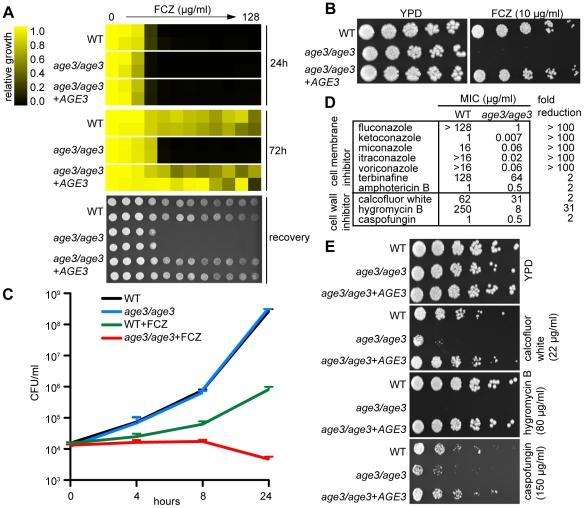
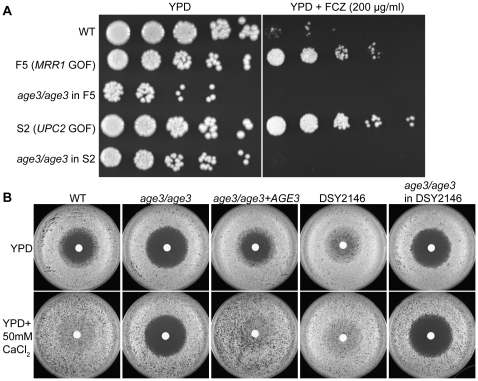
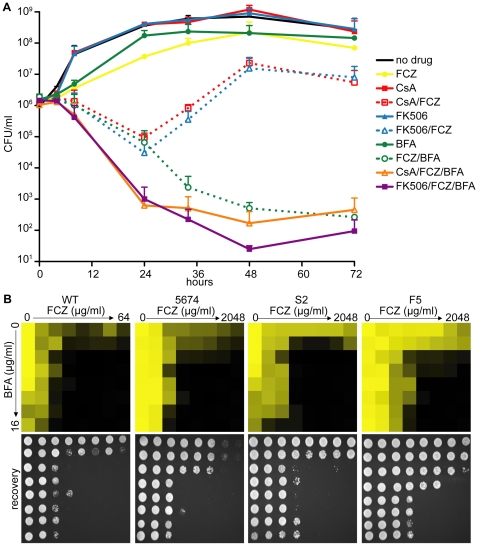
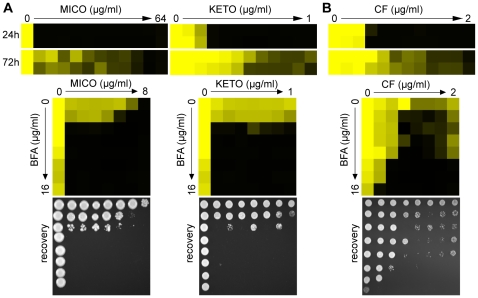
Candida albicans, the major fungal pathogen of humans, causes life-threatening infections in immunocompromised individuals. Due to limited available therapy options, this can frequently lead to therapy failure and emergence of drug resistance. To improve current treatment strategies, we have combined comprehensive chemical-genomic screening in Saccharomyces cerevisiae and validation in C. albicans with the goal of identifying compounds that can couple with the fungistatic drug fluconazole to make it fungicidal. Among the genes identified in the yeast screen, we found that only AGE3, which codes for an ADP-ribosylation factor GTPase activating effector protein, abrogates fluconazole tolerance in C. albicans. The age3 mutant was more sensitive to other sterols and cell wall inhibitors, including caspofungin. The deletion of AGE3 in drug resistant clinical isolates and in constitutively active calcineurin signaling mutants restored fluconazole sensitivity. We confirmed chemically the AGE3-dependent drug sensitivity by showing a potent fungicidal synergy between fluconazole and brefeldin A (an inhibitor of the guanine nucleotide exchange factor for ADP ribosylation factors) in wild type C. albicans as well as in drug resistant clinical isolates. Addition of calcineurin inhibitors to the fluconazole/brefeldin A combination only initially improved pathogen killing. Brefeldin A synergized with different drugs in non-albicans Candida species as well as Aspergillus fumigatus. Microarray studies showed that core transcriptional responses to two different drug classes are not significantly altered in age3 mutants. The therapeutic potential of inhibiting ARF activities was demonstrated by in vivo studies that showed age3 mutants are avirulent in wild type mice, attenuated in virulence in immunocompromised mice and that fluconazole treatment was significantly more efficacious when ARF signaling was genetically compromised. This work describes a new, widely conserved, broad-spectrum mechanism involved in fungal drug resistance and virulence and offers a potential route for single or improved combination therapies.
Overview
The claims and statistics of this paper haven’t been checked yet.
Free: it reads the open-access text and checks the first 5 claims that cite a source we can check. Create a free account to check every claim.
Integrity signals
Registry
Cites
Statistics
Figures
Verification
Claims the paper makes
The claims and statistics of this paper haven’t been checked yet.
Free: it reads the open-access text and checks the first 5 claims that cite a source we can check. Create a free account to check every claim.
Claims other papers make about this one
Each is checked against this paper’s own text: does it say what the citing paper says it does?
The source backs part of the claim, not all of it — or backs it for a different population, condition or comparison.
In the citing paper
“Several adjuvants, including cyclosporine A (CsA), a calcineurin inhibitor, geldanamycin (GdA), an Hsp90 inhibitor, rapamycin, a target of rapamycin (TOR) inhibitor, and brefeldin A, a guanine nucleotide exchange factor inhibitor, have exhibited the capacity to induce fungicidal effects on FLC in laboratory studies [11,13,14,15].”
From Pitavastatin Calcium Confers Fungicidal Properties to Fluconazole by Inhibiting Ubiquinone Biosynthesis and Generating Reactive Oxygen Species (2024) · cites this paper as [13]
Experimental — accuracy not yet measuredThe source backs part of the claim, not all of it — or backs it for a different population, condition or comparison.
In the citing paper
“Many compounds have been found to make FLC fungicidal, such as GdA, CsA, brefeldin A, and so on [13,28,35,37].”
From Pitavastatin Calcium Confers Fungicidal Properties to Fluconazole by Inhibiting Ubiquinone Biosynthesis and Generating Reactive Oxygen Species (2024) · cites this paper as [13]
Experimental — accuracy not yet measured
Self-check
Percentages, sums and reported differences re-computed from the paper’s own numbers.
The self-check needs the paper’s full text.
Citations
Cites
Epidemiology of Invasive Candidiasis: a Persistent Public Health Problem
Pfaller, M. A., & Diekema, D. J. (2007) · Clinical Microbiology Reviews · doi:10.1128/cmr.00029-06 · Cited by 4,174 · cited 1×
“The growing population of these at-risk groups is reflected in an increase in invasive fungal infection over the last three decades [3].”
BackgroundTargeting RAS signalling pathways in cancer therapy
Downward, J. (2003) · Nature Reviews Cancer · doi:10.1038/nrc969 · Cited by 3,256 · cited 1×
“Increasing evidence also shows that a variety of small G protein signaling pathways of the Ras superfamily, like RHO, RAS and ARF, have been linked to tumorigenesis [81,82,83].”
BackgroundPappas, P. G., Kauffman, C. A., Andes, D., Benjamin, D. K., Calandra, T. F., Edwards, J. E., Filler, S. G., Fisher, J. F., Kullberg, B.-J., Zeichner, L. O., et al. (2009) · Clinical Infectious Diseases · doi:10.1086/596757 · Cited by 3,191
Rex, J. H., & Clinical (2008) · Clinical and Laboratory Standards Institute eBooks · Cited by 1,573
Sahai, E., & Marshall, C. J. (2002) · Nature Reviews Cancer · doi:10.1038/nrc725 · Cited by 1,261 · cited 1×
“Increasing evidence also shows that a variety of small G protein signaling pathways of the Ras superfamily, like RHO, RAS and ARF, have been linked to tumorigenesis [81,82,83].”
Background(1953) · PubMed · Cited by 942
The SAT1 flipper, an optimized tool for gene disruption in Candida albicans
Reuß, O., Vik, Å., Kolter, R., & Morschhäuser, J. (2004) · Gene · doi:10.1016/j.gene.2004.06.021 · Cited by 742
Hsp90 Potentiates the Rapid Evolution of New Traits: Drug Resistance in Diverse Fungi
Cowen, L. E., & Lindquist, S. (2005) · Science · doi:10.1126/science.1118370 · Cited by 698 · cited 1×
“Second, consistent with previous observations that long term azole resistance evolves towards HSP90/calcineurin-independency [20], cells treated with calcineurin inhibitors plus FCZ recover after prolonged incubation, while BFA/FCZ treated cells do not.”
BackgroundOne-step transformation of yeast in stationary phase
Chen, D.-C., Yang, B.-C., & Kuo, T.-T. (1992) · Current Genetics · doi:10.1007/bf00318659 · Cited by 697 · cited 1×
“Transformation was carried out according to standard protocols [93] and selected on synthetic media (2% dextrose, 6.”
MethodPfaller, M. A., & Diekema, D. J. (2004) · Journal of Clinical Microbiology · doi:10.1128/jcm.42.10.4419-4431.2004 · Cited by 694 · cited 1×
“Candida and Aspergillus species together account for ,70% of all invasive fungal infections, with Candida albicans and Aspergillus fumigatus predominating [7,8,9].”
BackgroundParczewska, O. K., Posaconazol, przeciwgrzybicze, L., Anidulafungina, Micafungina, & wrażliwość, O. (2009) · Cited by 656
Resistance to Antifungal Agents: Mechanisms and Clinical Impact
Kanafani, Z. A., & Perfect, J. R. (2008) · Clinical Infectious Diseases · doi:10.1086/524071 · Cited by 619
Efflux-Mediated Antifungal Drug Resistance
Cannon, R. D., Lamping, E., Holmes, A. R., Niimi, K., Baret, P. V., Keniya, M. V., Tanabe, K., Niimi, M., Goffeau, A., & Monk, B. C. (2009) · Clinical Microbiology Reviews · doi:10.1128/cmr.00051-08 · Cited by 608
Noble, S. M., & Johnson, A. D. (2005) · Eukaryotic Cell · doi:10.1128/ec.4.2.298-309.2005 · Cited by 592 · cited 1×
“albicans strains SC5314 (isolate) and SN95 (a standard laboratory auxotrophic mutant used to construct deletion mutants) [98] (Table S2), WT usually refers to SN95 unless indicated otherwise.”
The Small G Proteins of the Arf Family and Their Regulators
Gillingham, A. K., & Munro, S. (2007) · Annual Review of Cell and Developmental Biology · doi:10.1146/annurev.cellbio.23.090506.123209 · Cited by 591 · cited 1×
“the membrane) and actin cytoskeleton organization [39,40,41,42].”
[27] Preparation of high molecular weight RNA
Köhrer, K., & Domdey, H. (1991) · Methods in Enzymology · doi:10.1016/0076-6879(91)94030-g · Cited by 563 · cited 1×
“RNA was extracted according to the hot-phenol protocol [103].”
MethodStructural Basis for Activation of ARF GTPase
Goldberg, J. (1998) · Cell · doi:10.1016/s0092-8674(00)81754-7 · Cited by 549 · cited 1×
“Clearly, one future challenge lies in finding fungal-specific ARF activity inhibitors that retain favorable bioavailability in vivo, a challenge that can now be approached cost- and time-effectively through virtual screening with both mammalian and yeast crystal structures of different ARF cycling proteins at hand [43…”
BackgroundLeroy, O., Gangneux, J.-P., Montravers, P., Mira, J.-P., Gouin, F., Sollet, J.-P., Carlet, J., Reynes, J., Rosenheim, M., Regnier, B., et al. (2009) · Critical Care Medicine · doi:10.1097/ccm.0b013e31819efac0 · Cited by 535 · cited 2×
“krusei are notoriously difficult to treat with FCZ [7,8,12].”
BackgroundChanging epidemiology of systemic fungal infections
Richardson, M., & Lass-Flörl, C. (2008) · Clinical Microbiology and Infection · doi:10.1111/j.1469-0691.2008.01978.x · Cited by 524 · cited 1×
“Despite available therapy options mortality rates approaching 30–50% (Candida species) and 30–80% (Aspergillus species) remain high [5,6].”
BackgroundChemogenomic profiling: Identifying the functional interactions of small molecules in yeast
Giaever, G., Flaherty, P., Kumm, J., Proctor, M., Nislow, C., Jaramillo, D. F., Chu, A. M., Jordan, M. I., Arkin, A. P., & Davis, R. W. (2004) · Proceedings of the National Academy of Sciences · doi:10.1073/pnas.0307490100 · Cited by 504 · cited 1×
“cerevisiae, and have been effective for elucidating drug targets or revealing insights into the modes of action of bioactive compounds [23,24,25,26,27].”
BackgroundInvasive Fungal Pathogens: Current Epidemiological Trends
Pfaller, M. A., Pappas, P. G., & Wingard, J. R. (2006) · Clinical Infectious Diseases · doi:10.1086/504490 · Cited by 448
Nucci, M., & Marr, K. A. (2005) · Clinical Infectious Diseases · doi:10.1086/432060 · Cited by 435 · cited 1×
“Particularly affected are immunocompromised individuals with cancer or AIDS, people undergoing organ and hematopoietic stem cell transplantation (HSCT), and those receiving immunosuppressive therapy or implantable prosthetic devices [1,2].”
BackgroundCowen, L. E., Singh, S. D., Köhler, J. R., Collins, C., Zaas, A. K., Schell, W. A., Aziz, H., Mylonakis, E., Perfect, J. R., Whitesell, L., et al. (2009) · Proceedings of the National Academy of Sciences · doi:10.1073/pnas.0813394106 · Cited by 413 · cited 4×
“fumigatus in vitro as well as in insect and mouse infection models [16,17].”
BackgroundMethodInfluentialSanglard, D., Ischer, F., Parkinson, T., Falconer, D., & Bille, J. (2003) · Antimicrobial Agents and Chemotherapy · doi:10.1128/aac.47.8.2404-2412.2003 · Cited by 398 · cited 1×
“mutant was sensitive to a variety of drugs, including BFA [61].”
BackgroundMorphogenesis in Candida albicans
Whiteway, M., & Bachewich, C. (2007) · Annual Review of Microbiology · doi:10.1146/annurev.micro.61.080706.093341 · Cited by 388 · cited 2×
“albicans pathogenicity is hyphal formation [57].”
BackgroundSelf-citationThe direct cost and incidence of systemic fungal infections
Wilson, L. S., Reyes, C. M., Stolpman, M., Speckman, J., Allen, K., & Beney, J. (2002) · Value in Health · doi:10.1046/j.1524-4733.2002.51108.x · Cited by 374 · cited 1×
“6 billion in the US alone [4].”
Hsp90 Governs Echinocandin Resistance in the Pathogenic Yeast Candida albicans via Calcineurin
Singh, S. D., Robbins, N., Zaas, A. K., Schell, W. A., Perfect, J. R., & Cowen, L. E. (2009) · PLoS Pathogens · doi:10.1371/journal.ppat.1000532 · Cited by 362 · cited 3×
“Additional phenotypes that calcineurin inhibition shares with ARF inhibition include synergism with azoles and echinocandins as well as reduced virulence in the bloodstream of the host [17,19,87].”
BackgroundMorschhäuser, J., Barker, K. S., Liu, T. T., Blaß-Warmuth, J., Homayouni, R., & Rogers, P. D. (2007) · PLoS Pathogens · doi:10.1371/journal.ppat.0030164 · Cited by 355 · cited 2×
“albicans [35,52,53].”
Sanglard, D., Ischer, F., Marchetti, O., Entenza, J., & Bille, J. (2003) · Molecular Microbiology · doi:10.1046/j.1365-2958.2003.03495.x · Cited by 350 · cited 11×
“One explanation, for instance, why calcineurin mutants are avirulent is that they do not survive in the presence of FBS or Ca ions present in host serum [19,88].”
BackgroundInfluentialMoss, J., & Vaughan, M. (1998) · Journal of Biological Chemistry · doi:10.1074/jbc.273.34.21431 · Cited by 344 · cited 1×
“factors) [38].”
Calcineurin is essential for survival during membrane stress in Candida albicans
Cruz, M. C., Goldstein, A. L., Blankenship, J. R., Del Poeta, M., Davis, D., Cardenas, M. E., Perfect, J. R., McCusker, J. H., & Heitman, J. (2002) · The EMBO Journal · doi:10.1093/emboj/21.4.546 · Cited by 342 · cited 1×
“Previous work established that when HSP90 or calcineurin is genetically or pharmacologically inhibited in different fungal species, cells show a similar loss of tolerance and are not able to survive membrane stress [17,18,22,86].”
BackgroundGEFs: structural basis for their activation of small GTP-binding proteins
Cherfils, J., & Chardin, P. (1999) · Trends in Biochemical Sciences · doi:10.1016/s0968-0004(99)01429-2 · Cited by 341 · cited 1×
“Clearly, one future challenge lies in finding fungal-specific ARF activity inhibitors that retain favorable bioavailability in vivo, a challenge that can now be approached cost- and time-effectively through virtual screening with both mammalian and yeast crystal structures of different ARF cycling proteins at hand [43…”
BackgroundStructural snapshots of the mechanism and inhibition of a guanine nucleotide exchange factor
Renault, L., Guibert, B., & Cherfils, J. (2003) · Nature · doi:10.1038/nature02197 · Cited by 320 · cited 1×
“Clearly, one future challenge lies in finding fungal-specific ARF activity inhibitors that retain favorable bioavailability in vivo, a challenge that can now be approached cost- and time-effectively through virtual screening with both mammalian and yeast crystal structures of different ARF cycling proteins at hand [43…”
BackgroundHarnessing calcineurin as a novel anti-infective agent against invasive fungal infections.
Steinbach, W. J., Reedy, J. L., Cramer, R. A., Perfect, J. R., & Heitman, J. (2007) · Nature Reviews Microbiology · doi:10.1038/nrmicro1680 · Cited by 313 · cited 3×
“While a non-immunosuppressive FK506 analogue (L-685, 818) has been identified, proprietary restrictions have currently prevented further testing [22].”
BackgroundLiu, T. T., Lee, R. E. B., Barker, K. S., Lee, R. E., Wei, L., Homayouni, R., & Rogers, P. D. (2005) · Antimicrobial Agents and Chemotherapy · doi:10.1128/aac.49.6.2226-2236.2005 · Cited by 313 · cited 1×
“in two independent studies [52,56].”
The evolution of fungal drug resistance: modulating the trajectory from genotype to phenotype.
Cowen, L. E. (2008) · Nature Reviews Microbiology · doi:10.1038/nrmicro1835 · Cited by 311 · cited 3×
“well as drug resistant clinical isolates [10,19], we tested whether constitutive calcineurin signaling could reverse the AGE3-depen-”
BackgroundPachl, J., Svoboda, P., Jacobs, F., Vandewoude, K., van der Hoven, B., Spronk, P., Masterson, G., Malbrain, M., Aoun, M., Garbino, J., et al. (2006) · Clinical Infectious Diseases · doi:10.1086/503428 · Cited by 307 · cited 1×
“This approach has recently been validated in a randomized, placebocontrolled trial, where approved antifungals were combined with immune regulatory agents [15].”
BackgroundApoptotic crosstalk between the endoplasmic reticulum and mitochondria controlled by Bcl-2
Häcki, J., Egger, L., Monney, L., Conus, S., Rossé, T., Fellay, I., & Borner, C. (2000) · Oncogene · doi:10.1038/sj.onc.1203592 · Cited by 301 · cited 1×
“The ability of BFA to induce apoptosis in cancer cells has stimulated an interest for developing BFA as an anti-cancer therapeutic agent [75,76,77,78,79,80].”
BackgroundA molecular barcoded yeast ORF library enables mode-of-action analysis of bioactive compounds
Ho, C. H., Magtanong, L., Barker, S. L., Gresham, D., Nishimura, S., Natarajan, P., Koh, J. L. Y., Porter, J., Gray, C. A., Andersen, R. J., et al. (2009) · Nature Biotechnology · doi:10.1038/nbt.1534 · Cited by 292 · cited 1×
“cerevisiae, and have been effective for elucidating drug targets or revealing insights into the modes of action of bioactive compounds [23,24,25,26,27].”
BackgroundSanglard, D., Coste, A., & Ferrari, S. (2009) · FEMS Yeast Research · doi:10.1111/j.1567-1364.2009.00578.x · Cited by 285 · cited 1×
“While different fungal drug resistance mechanisms are now well understood [69,70], various virulence-related attributes have been described that help Candida to cause infections [57,59,71].”
BackgroundStress, drugs, and evolution: the role of cellular signaling in fungal drug resistance.
Cowen, L. E., & Steinbach, W. J. (2008) · Eukaryotic Cell · doi:10.1128/ec.00041-08 · Cited by 285 · cited 1×
“While different fungal drug resistance mechanisms are now well understood [69,70], various virulence-related attributes have been described that help Candida to cause infections [57,59,71].”
BackgroundTranscriptional regulation of carbohydrate metabolism in the human pathogen Candida albicans
Askew, C., Sellam, A., Epp, E., Hogues, H., Mullick, A., Nantel, A., & Whiteway, M. (2009) · PLoS Pathogens · doi:10.1371/journal.ppat.1000612 · Cited by 260 · cited 4×
“RNase easy kit (Qiagen), as described [67].”
BackgroundMethodSelf-citationGenome-Wide Fitness Test and Mechanism-of-Action Studies of Inhibitory Compounds in Candida albicans
Xu, D., Jiang, B., Ketela, T., Lemieux, S., Veillette, K., Martel, N., Davison, J., Sillaots, S., Trosok, S., Bachewich, C., et al. (2007) · PLoS Pathogens · doi:10.1371/journal.ppat.0030092 · Cited by 254 · cited 1×
“Similar approaches have only recently been applied directly to fungal pathogens [28].”
BackgroundPotent Synergism of the Combination of Fluconazole and Cyclosporine in Candida albicans
Marchetti, O., Moreillon, P., Glauser, M. P., Bille, J., & Sanglard, D. (2000) · Antimicrobial Agents and Chemotherapy · doi:10.1128/aac.44.9.2373-2381.2000 · Cited by 252 · cited 1×
“Previous work established that when HSP90 or calcineurin is genetically or pharmacologically inhibited in different fungal species, cells show a similar loss of tolerance and are not able to survive membrane stress [17,18,22,86].”
BackgroundMossessova, E., Corpina, R. A., & Goldberg, J. (2003) · Molecular Cell · doi:10.1016/s1097-2765(03)00475-1 · Cited by 242 · cited 1×
“Clearly, one future challenge lies in finding fungal-specific ARF activity inhibitors that retain favorable bioavailability in vivo, a challenge that can now be approached cost- and time-effectively through virtual screening with both mammalian and yeast crystal structures of different ARF cycling proteins at hand [43…”
BackgroundThe genetic basis of fluconazole resistance development in Candida albicans
Morschhäuser, J. (2002) · Biochimica et Biophysica Acta (BBA) - Molecular Basis of Disease · doi:10.1016/s0925-4439(02)00087-x · Cited by 237 · cited 1×
“drug pumps or alterations in sterol biosynthesis [13,33,34].”
BackgroundDunkel, N., Liu, T. T., Barker, K. S., Homayouni, R., Morschhäuser, J., & Rogers, P. D. (2008) · Eukaryotic Cell · doi:10.1128/ec.00103-08 · Cited by 236 · cited 1×
“terol biosynthesis genes [35,36].”
CRZ1 , a target of the calcineurin pathway in Candida albicans
Karababa, M., Valentino, E., Pardini, G., Coste, A. T., Bille, J., & Sanglard, D. (2006) · Molecular Microbiology · doi:10.1111/j.1365-2958.2005.05037.x · Cited by 231 · cited 1×
“albicans [35,52,53].”
Stevens, D. A., Espiritu, M., & Parmar, R. (2004) · Antimicrobial Agents and Chemotherapy · doi:10.1128/aac.48.9.3407-3411.2004 · Cited by 217 · cited 1×
“albicans can start to grow at supra MIC concentrations of CF, an outcome referred to as the paradoxical or trailing growth effect [50,51].”
BackgroundAn integrated platform of genomic assays reveals small-molecule bioactivities
Hoon, S., M Smith, A., Wallace, I. M., Suresh, S., Miranda, M., Fung, E., Proctor, M., Shokat, K. M., Zhang, C., Davis, R. W., et al. (2008) · Nature Chemical Biology · doi:10.1038/nchembio.100 · Cited by 201 · cited 1×
“cerevisiae, and have been effective for elucidating drug targets or revealing insights into the modes of action of bioactive compounds [23,24,25,26,27].”
BackgroundGola, S., Martin, R., Walther, A., Dünkler, A., & Wendland, J. (2003) · Yeast · doi:10.1002/yea.1044 · Cited by 191 · cited 1×
“For the AGE3 deletion mutant, long 100mer primers flanking up- and downstream sequences, respectively, of the coding sequence of AGE3 were used to amplify marker cassettes pFA-HIS1 and pFA-ARG4 [92].”
MethodRegulation of actin cytoskeleton dynamics by Arf-family GTPases
Myers, K. R., & Casanova, J. E. (2008) · Trends in Cell Biology · doi:10.1016/j.tcb.2008.02.002 · Cited by 185 · cited 1×
“the membrane) and actin cytoskeleton organization [39,40,41,42].”
Davis, D. A., Bruno, V. M., Loza, L., Filler, S. G., & Mitchell, A. P. (2002) · Genetics · doi:10.1093/genetics/162.4.1573 · Cited by 184
Structure of the Sec7 domain of the Arf exchange factor ARNO
Cherfils, J., Ménétrey, J., Mathieu, M., Le Bras, G., Robineau, S., Béraud-Dufour, S., Antonny, B., & Chardin, P. (1998) · Nature · doi:10.1038/32210 · Cited by 180 · cited 1×
“Clearly, one future challenge lies in finding fungal-specific ARF activity inhibitors that retain favorable bioavailability in vivo, a challenge that can now be approached cost- and time-effectively through virtual screening with both mammalian and yeast crystal structures of different ARF cycling proteins at hand [43…”
BackgroundTargeting virulence: A new paradigm for antifungals
Gauwerky, K., Borelli, C., & Korting, H. C. (2009) · Drug Discovery Today · doi:10.1016/j.drudis.2008.11.013 · Cited by 174 · cited 3×
“While different fungal drug resistance mechanisms are now well understood [69,70], various virulence-related attributes have been described that help Candida to cause infections [57,59,71].”
BackgroundPoon, P. P. (1999) · The EMBO Journal · doi:10.1093/emboj/18.3.555 · Cited by 172 · cited 2×
“Thus, it remains possible that some aspects of ARF signaling continue to function in the absence of AGE3 under drug conditions, a suggestion that is supported by work in yeast that demonstrated that several ARF GAPs provide redundant functions [39,40].”
ResultWayne, P. S. (2002) · Medical Entomology and Zoology · Cited by 159
Control of the C. albicans Cell Wall Damage Response by Transcriptional Regulator Cas5
Bruno, V. M., Kalachikov, S., Subaran, R., Nobile, C. J., Kyratsous, C., & Mitchell, A. P. (2006) · PLoS Pathogens · doi:10.1371/journal.ppat.0020021 · Cited by 157 · cited 2×
“For the caspofungin microarray experiment, logarithmically growing cells were treated with 125 ng/ml caspofungin for one hour, as previously described [52].”
MethodResultEvolution of Eukaryotic Transcription Circuits
Tuch, B. B., Li, H., & Johnson, A. D. (2008) · Science · doi:10.1126/science.1152398 · Cited by 156
Recent advances and challenges in the treatment of invasive fungal infections
Shao, P., Huang, L., & Hsueh, P. (2007) · International Journal of Antimicrobial Agents · doi:10.1016/j.ijantimicag.2007.07.019 · Cited by 155 · cited 1×
“Despite available therapy options mortality rates approaching 30–50% (Candida species) and 30–80% (Aspergillus species) remain high [5,6].”
BackgroundYeast glycosylation mutants are sensitive to aminoglycosides.
Dean, N. (1995) · Proceedings of the National Academy of Sciences · doi:10.1073/pnas.92.5.1287 · Cited by 149 · cited 2×
“phenotype usually seen in glycosylation mutants [31,32]”
BackgroundDecumbin, a New Compound from a Species of Penicillium
Singleton, V. L., Bohonos, N., & Ullstrup, A. J. (1958) · Nature · doi:10.1038/1811072a0 · Cited by 145 · cited 1×
“Clearly, one future challenge lies in finding fungal-specific ARF activity inhibitors that retain favorable bioavailability in vivo, a challenge that can now be approached cost- and time-effectively through virtual screening with both mammalian and yeast crystal structures of different ARF cycling proteins at hand [43…”
BackgroundTranscription Factor Substitution during the Evolution of Fungal Ribosome Regulation
Hogues, H., Lavoie, H., Sellam, A., Mangos, M., Roemer, T., Purisima, E. O., Nantel, A., & Whiteway, M. S. (2008) · Molecular Cell · doi:10.1016/j.molcel.2008.02.006 · Cited by 136 · cited 1×
“albicans [65,66,67], reorganization of transcriptional regulation might in general account for C.”
BackgroundSelf-citationSaccharomyces cerevisiae Gcs1 is an ADP-ribosylation factor GTPase-activating protein.
Poon, P. P., Wang, X., Rotman, M., Huber, I., Cukierman, E., Cassel, D., Singer, R. A., & Johnston, G. C. (1996) · Proceedings of the National Academy of Sciences · doi:10.1073/pnas.93.19.10074 · Cited by 127 · cited 1×
“, which encodes an ARF GAP (ADP-Ribosylation Factor GTPase Activating Protein)”
BackgroundGenome-Wide Expression and Location Analyses of the Candida albicans Tac1p Regulon
Liu, T. T., Znaidi, S., Barker, K. S., Xu, L., Homayouni, R., Saidane, S., Morschhäuser, J., Nantel, A., Raymond, M., & Rogers, P. D. (2007) · Eukaryotic Cell · doi:10.1128/ec.00327-07 · Cited by 123
Calcineurin Is Essential for Virulence in Candida albicans
Bader, T., Bodendorfer, B., Schröppel, K., & Morschhäuser, J. (2003) · Infection and Immunity · doi:10.1128/iai.71.9.5344-5354.2003 · Cited by 121 · cited 1×
“Additional phenotypes that calcineurin inhibition shares with ARF inhibition include synergism with azoles and echinocandins as well as reduced virulence in the bloodstream of the host [17,19,87].”
BackgroundZnaidi, S., Weber, S., Zin Al-Abdin, O., Bomme, P., Saidane, S., Drouin, S., Lemieux, S., De Deken, X., Robert, F., & Raymond, M. (2008) · Eukaryotic Cell · doi:10.1128/ec.00070-08 · Cited by 119 · cited 1×
“albicans in regards of drug resistance [63,64], as Figure 7.”
BackgroundBrefeldin A Is a Potent Inducer of Apoptosis in Human Cancer Cells Independently of p53
Shao, R., Shimizu, T., & Pommier, Y. G. (1996) · Experimental Cell Research · doi:10.1006/excr.1996.0266 · Cited by 114 · cited 1×
“The ability of BFA to induce apoptosis in cancer cells has stimulated an interest for developing BFA as an anti-cancer therapeutic agent [75,76,77,78,79,80].”
BackgroundMarchetti, O., Entenza, J. M., Sanglard, D., Bille, J., Glauser, M. P., & Moreillon, P. (2000) · Antimicrobial Agents and Chemotherapy · doi:10.1128/aac.44.11.2932-2938.2000 · Cited by 113 · cited 1×
“albicans [10,16,17,18,19,20,21].”
Calcineurin Is Required for Candida albicans To Survive Calcium Stress in Serum
Blankenship, J. R., & Heitman, J. (2005) · Infection and Immunity · doi:10.1128/iai.73.9.5767-5774.2005 · Cited by 111 · cited 1×
“One explanation, for instance, why calcineurin mutants are avirulent is that they do not survive in the presence of FBS or Ca ions present in host serum [19,88].”
BackgroundHidden killers: persistence of opportunistic fungal pathogens in the human host
d’Enfert, C. (2009) · Current Opinion in Microbiology · doi:10.1016/j.mib.2009.05.008 · Cited by 108
Timmers, H. T. M., & Tora, L. (2004) · Trends in Biochemical Sciences · doi:10.1016/j.tibs.2004.11.007 · Cited by 108
Butcher, R. A., Bhullar, B., Perlstein, E. O., Marsischky, G., LaBaer, J., & Schreiber, S. L. (2006) · Nature Chemical Biology · doi:10.1038/nchembio762 · Cited by 107 · cited 1×
“cerevisiae, and have been effective for elucidating drug targets or revealing insights into the modes of action of bioactive compounds [23,24,25,26,27].”
BackgroundThe zinc cluster transcription factor Tac1p regulates PDR16 expression in Candida albicans
Znaidi, S., De Deken, X., Weber, S., Rigby, T., Nantel, A., & Raymond, M. (2007) · Molecular Microbiology · doi:10.1111/j.1365-2958.2007.05931.x · Cited by 97 · cited 2×
“Comparative Genome Hybridization (CGH) analysis was done as previously described [49] with the following modifications.”
BackgroundMethodRole of Ndt80p in Sterol Metabolism Regulation and Azole Resistance in Candida albicans
Sellam, A., Tebbji, F., & Nantel, A. (2009) · Eukaryotic Cell · doi:10.1128/ec.00074-09 · Cited by 91 · cited 1×
“lipids [54,55].”
In search of the holy grail of antifungal therapy.
Chapman, S. W., Sullivan, D. C., & Cleary, J. D. (2008) · PubMed Central · Cited by 87
Sellam, A., Askew, C., Epp, E., Lavoie, H., Whiteway, M., & Nantel, A. (2009) · Molecular Biology of the Cell · doi:10.1091/mbc.e08-11-1093 · Cited by 87 · cited 1×
“another subunit of the SAGA complex, Ada2p, has been linked to increased drug sensitivity in our screen as well as in two previous studies [52,60].”
ResultSelf-citationAneuploid Chromosomes Are Highly Unstable during DNA Transformation of Candida albicans
Bouchonville, K., Forche, A., Tang, K. E. S., Selmecki, A., & Berman, J. (2009) · Eukaryotic Cell · doi:10.1128/ec.00209-09 · Cited by 85 · cited 1×
“albicans can frequently lead to aneuploidy [95,96], we verified the absence of any chromosomal rearrangements by Comparative Genome Hybridization (CGH) and found that deletion mutants of AGE3 were aneuploidy free (Figure S4).”
BackgroundChemogenomic profiling predicts antifungal synergies
Jansen, G., Lee, A. Y., Epp, E., Fredette, A., Surprenant, J., Harcus, D., Scott, M., Tan, E., Nishimura, T., Whiteway, M., et al. (2009) · Molecular Systems Biology · doi:10.1038/msb.2009.95 · Cited by 80 · cited 4×
“cerevisiae and found 22 FCZ-cidal genes (Table S1) [29].”
BackgroundMethodSelf-citationPoon, P. P., Nothwehr, S. F., Singer, R. A., & Johnston, G. C. (2001) · The Journal of Cell Biology · doi:10.1083/jcb.200108075 · Cited by 80 · cited 2×
“Thus, it remains possible that some aspects of ARF signaling continue to function in the absence of AGE3 under drug conditions, a suggestion that is supported by work in yeast that demonstrated that several ARF GAPs provide redundant functions [39,40].”
ResultFleischhacker, M., Radecke, C., Schulz, B., & Ruhnke, M. (2008) · European Journal of Clinical Microbiology & Infectious Diseases · doi:10.1007/s10096-007-0411-4 · Cited by 78 · cited 1×
“albicans can start to grow at supra MIC concentrations of CF, an outcome referred to as the paradoxical or trailing growth effect [50,51].”
BackgroundDysregulated Inflammatory Response to Candida albicans in a C5-Deficient Mouse Strain
Mullick, A., Elias, M., Picard, S., Bourget, L., Jovcevski, O., Gauthier, S., Tuite, A., Harakidas, P., Bihun, C., Massie, B., et al. (2004) · Infection and Immunity · doi:10.1128/iai.72.10.5868-5876.2004 · Cited by 78 · cited 2×
“WT, age3 mutant and age3 revertant were therefore injected in an immunocompromised C5-deficient A/J mouse model [58].”
MethodSelf-citationArfGAP family proteins in cell adhesion, migration and tumor invasion
Sabe, H., Onodera, Y., Mazaki, Y., & Hashimoto, S. (2006) · Current Opinion in Cell Biology · doi:10.1016/j.ceb.2006.08.002 · Cited by 77 · cited 1×
“Increasing evidence also shows that a variety of small G protein signaling pathways of the Ras superfamily, like RHO, RAS and ARF, have been linked to tumorigenesis [81,82,83].”
BackgroundSynthesis and Anticancer Activity of Brefeldin A Ester Derivatives
Anadu, N. O., Davisson, V. J., & Cushman, M. (2006) · Journal of Medicinal Chemistry · doi:10.1021/jm0602817 · Cited by 77 · cited 1×
“One reason why the in vitro synergy failed to translate to in vivo conditions could be that BFA has low bioavailability characteristics [72] and efforts to chemically improve these unfavorable properties have not been successful so far [73,74].”
BackgroundSata, M., Moss, J., & Vaughan, M. M. (1999) · Proceedings of the National Academy of Sciences · doi:10.1073/pnas.96.6.2752 · Cited by 74 · cited 1×
“Clearly, one future challenge lies in finding fungal-specific ARF activity inhibitors that retain favorable bioavailability in vivo, a challenge that can now be approached cost- and time-effectively through virtual screening with both mammalian and yeast crystal structures of different ARF cycling proteins at hand [43…”
BackgroundSequence resources at the Candida Genome Database
Arnaud, M. B., Costanzo, M. C., Skrzypek, M. S., Shah, P., Binkley, G., Lane, C., Miyasato, S. R., & Sherlock, G. (2007) · Nucleic Acids Research · doi:10.1093/nar/gkl899 · Cited by 73 · cited 1×
“5059) has already been named ‘GCS1’ in the Candida literature [91].”
BackgroundBrefeldin A-Mediated Apoptosis Requires the Activation of Caspases and Is Inhibited by Bcl-2
Guo, H., Tittle, T. V., Allen, H., & Maziarz, R. T. (1998) · Experimental Cell Research · doi:10.1006/excr.1998.4235 · Cited by 70 · cited 1×
“The ability of BFA to induce apoptosis in cancer cells has stimulated an interest for developing BFA as an anti-cancer therapeutic agent [75,76,77,78,79,80].”
BackgroundBarchiesi, F., Di Francesco, L. F., Compagnucci, P., Arzeni, D., Giacometti, A., & Scalise, G. (1998) · Journal of Antimicrobial Chemotherapy · doi:10.1093/jac/41.1.59 · Cited by 69 · cited 1×
“5, the standard threshold [100,101].”
Structures of Yeast ARF2 and ARL1
Amor, J. C., Horton, J. R., Zhu, X., Wang, Y., Sullards, C., Ringe, D., Cheng, X., & Kahn, R. (2001) · Journal of Biological Chemistry · doi:10.1074/jbc.m106660200 · Cited by 68
Jia, N., Arthington-Skaggs, B., Lee, W., Pierson, C. A., Lees, N. D., Eckstein, J., Barbuch, R., & Bard, M. (2002) · Antimicrobial Agents and Chemotherapy · doi:10.1128/aac.46.4.947-957.2002 · Cited by 61 · cited 1×
“albicans [68].”
Arbour, M., Epp, E., Hogues, H., Sellam, A., Lacroix, C., Rauceo, J., Mitchell, A., Whiteway, M., & Nantel, A. (2009) · FEMS Yeast Research · doi:10.1111/j.1567-1364.2009.00563.x · Cited by 56 · cited 1×
“albicans can frequently lead to aneuploidy [95,96], we verified the absence of any chromosomal rearrangements by Comparative Genome Hybridization (CGH) and found that deletion mutants of AGE3 were aneuploidy free (Figure S4).”
BackgroundSelf-citationZhu, J.-W., Nagasawa, H., Nagura, F., Mohamad, S. B., Uto, Y., Ohkura, K., & Hori, H. (2000) · Bioorganic & Medicinal Chemistry · doi:10.1016/s0968-0896(99)00297-7 · Cited by 55 · cited 1×
“The ability of BFA to induce apoptosis in cancer cells has stimulated an interest for developing BFA as an anti-cancer therapeutic agent [75,76,77,78,79,80].”
BackgroundChemical-genetic approaches for exploring the mode of action of natural products
López, A., Parsons, A. B., Nislow, C., Giaever, G. N., & Boone, C. M. (2008) · Birkhäuser Basel eBooks · doi:10.1007/978-3-7643-8595-8_5 · Cited by 43 · cited 1×
“cerevisiae, and have been effective for elucidating drug targets or revealing insights into the modes of action of bioactive compounds [23,24,25,26,27].”
BackgroundDean, N., & Poster, J. B. (1996) · Glycobiology · doi:10.1093/glycob/6.1.73 · Cited by 42
PCR-based gene targeting in Candida albicans
Walther, A., & Wendland, J. (2008) · Nature Protocols · doi:10.1038/nprot.2008.137 · Cited by 42 · cited 1×
“Correct marker integration was PCR-verified as described [94].”
MethodLepak, A., Nett, J., Lincoln, L., Marchillo, K., & Andes, D. (2006) · Antimicrobial Agents and Chemotherapy · doi:10.1128/aac.50.4.1311-1319.2006 · Cited by 42 · cited 1×
“lipids [54,55].”
Fox, B. M., Vroman, J. A., Fanwick, P. E., & Cushman, M. (2001) · Journal of Medicinal Chemistry · doi:10.1021/jm010054z · Cited by 41 · cited 1×
“One reason why the in vitro synergy failed to translate to in vivo conditions could be that BFA has low bioavailability characteristics [72] and efforts to chemically improve these unfavorable properties have not been successful so far [73,74].”
BackgroundNojiri, H., Manya, H., Isono, H., Yamana, H., & Nojima, S. (1999) · FEBS Letters · doi:10.1016/s0014-5793(99)00709-7 · Cited by 36 · cited 1×
“The ability of BFA to induce apoptosis in cancer cells has stimulated an interest for developing BFA as an anti-cancer therapeutic agent [75,76,77,78,79,80].”
BackgroundCandida infection in HIV positive patients 1985–2007
Träder, C., Kowol, S., & Arastéh, K. (2008) · Mycoses · doi:10.1111/j.1439-0507.2008.01574.x · Cited by 34 · cited 1×
“For each of the three major classes of antifungals (polyenes, azoles, echinocandins) isolation of drug-resistant clinical strains has been reported [11,12,13]; azoleresistant Candida, in particular, is now common among isolates from HIV-positive patients [14].”
BackgroundZhu, J.-W., Hori, H., Nojiri, H., Tsukuda, T., & Taira, Z. (1997) · Bioorganic & Medicinal Chemistry Letters · doi:10.1016/s0960-894x(96)00588-4 · Cited by 31 · cited 1×
“The ability of BFA to induce apoptosis in cancer cells has stimulated an interest for developing BFA as an anti-cancer therapeutic agent [75,76,77,78,79,80].”
BackgroundMicroarrays for Studying Pathogenicity in Candida Albicans
Nantel, A., Rigby, T., Hogues, H., & Whiteway, M. (2006) · Medical Mycology · doi:10.1002/9780470057414.ch9 · Cited by 24 · cited 2×
“At least three biological replicates including dye swaps were used for each condition on double spotted ORF microarrays (6,394 intragenic 70-mer oligonucleotide probes) [104].”
MethodSelf-citationBrüning‐Richardson, A., Ishikawa, T., Kneusel, R. E., Matern, U., Lottspeich, F., & Wieland, F. (1992) · Journal of Biological Chemistry · doi:10.1016/s0021-9258(18)42575-6 · Cited by 23 · cited 1×
“One reason why the in vitro synergy failed to translate to in vivo conditions could be that BFA has low bioavailability characteristics [72] and efforts to chemically improve these unfavorable properties have not been successful so far [73,74].”
BackgroundMutants of with altered protein glycosylation are affected in cell wall morphogenesis
Uccelletti, D., Farina, F., Morlupi, A., & Palleschi, C. (1999) · Research in Microbiology · doi:10.1016/s0923-2508(99)80041-2 · Cited by 14 · cited 1×
“with altered chitin structures along the cell wall [30].”
Background
Research works printed but not linked: 1
- Cowen L Steinbach W 2008 Stress, Drugs, and Evolution: the Role of Cellular Signaling in Fungal Drug Resistance. Eukaryotic Cell 7 747 764 18375617 PMC2394973 · DOI · Paper page
Cited by
Regulatory circuitry governing fungal development, drug resistance, and disease.
Shapiro, R. S., Robbins, N., & Cowen, L. E. (2011) · Microbiology and Molecular Biology Reviews · doi:10.1128/mmbr.00045-10 · Cited by 576
“Furthermore, age3 mutants have attenuated virulence in a wild-type mouse model of disseminated disease and an improved response to fluconazole in an immunocompromised mouse model (170), providing a genetic proof of principle for a new combinatorial therapy for C.”
BackgroundInfluentialAntifungal Resistance and New Strategies to Control Fungal Infections
Vandeputte, P., Ferrari, S., & Coste, A. T. (2012) · International Journal of Microbiology · doi:10.1155/2012/713687 · Cited by 505
“Using the GRACE (gene replacement and conditional expression) or CPR (conditional promoter replacement) technologies, some research groups have assessed the essentiality of C. albicans and Aspergillus fumigatus genes [267, 268].”
BackgroundInfluentialLaFayette, S. L., Collins, C., Zaas, A. K., Schell, W. A., Betancourt-Quiroz, M., Gunatilaka, A. A. L., Perfect, J. R., & Cowen, L. E. (2010) · PLoS Pathogens · doi:10.1371/journal.ppat.1001069 · Cited by 329
Antifungal Drugs: The Current Armamentarium and Development of New Agents
Robbins, N., Wright, G. D., & Cowen, L. E. (2016) · Microbiology Spectrum · doi:10.1128/microbiolspec.funk-0002-2016 · Cited by 271
“Other notable examples include potentiation of azole activity by pharmacological inhibition of ADP-ribosylation factors (154), protein kinase C (105), and protein translation (155).”
BackgroundRosenberg, A., Ene, I. V., Bibi, M., Zakin, S., Segal, E. S., Ziv, N., Dahan, A. M., Colombo, A. L., Bennett, R. J., & Berman, J. (2018) · Nature Communications · doi:10.1038/s41467-018-04926-x · Cited by 270
Metadata
- Authors
- Epp, E., Vanier, G., Harcus, D., Lee, A. Y., Jansen, G., Hallett, M., Sheppard, D. C., Thomas, D. Y., Munro, C. A., Mullick, A., & Whiteway, M.
- Affiliations
- Biotechnology Research Institute (CA)
- McGill University (CA)
- University of Aberdeen (GB)
- Corresponding author
- Whiteway, Malcolm
- Venue
- PLoS Pathogens
- Publisher
- Public Library of Science (PLoS)
- Published
- 2010-02-05
- Volume
- 6
- Issue
- 2
- Pages
- e1000753
- ISSN
- 1553-7366 (ISSN-L)
- 1553-7374
- PMC
- PMC2816695
- OpenAlex
- W2084577762
- Cited by
- 61
- References
- 103
- Citations by year
- 2026: 2 · 2025: 3 · 2024: 2 · 2023: 3 · 2022: 3 · 2021: 2 · 2020: 1 · 2019: 4 · 2018: 3 · 2017: 4 · 2016: 7 · 2015: 2 · 2014: 4 · 2013: 4 · 2012: 7
- FWCI
- 4.34
- Type
- journal article
- Language
- en
- Open access
- gold
- doi.org
- Locations
- PLoS Pathogens (publishedVersion, cc-by)
- PubMed Central (publishedVersion, cc-by)
- PubMed (publishedVersion)
- NPARC (submittedVersion)
- Aberdeen University Research Archive (Aberdeen University) (submittedVersion)
- DOAJ (DOAJ: Directory of Open Access Journals) (submittedVersion)
- Figshare (submittedVersion, cc-by)
- Funders
- Canadian Institutes of Health Research (CTP79843, 79843_1, 42516_3)
- Natural Sciences and Engineering Research Council of Canada
- Topics
- Health Sciences › Medicine › Infectious Diseases › Antifungal resistance and susceptibility
- Life Sciences › Biochemistry, Genetics and Molecular Biology › Molecular Biology › Fungal and yeast genetics research
- Life Sciences › Agricultural and Biological Sciences › Plant Science › Fungal Plant Pathogen Control
- Keywords
- Candida albicans, ADP-ribosylation factor, fluconazole resistance, drug resistance, virulence, brefeldin A, calcineurin signaling, caspofungin, drug synergy, combination therapy, non-albicans Candida, Aspergillus fumigatus, cell wall inhibitors
- MeSH terms
- Animals, Antifungal Agents, Candida albicans, Drug Synergism, Drug Therapy, Combination, Virulence, Fluconazole, Gene Expression, Brefeldin A, Oligonucleotide Array Sequence Analysis, ADP-Ribosylation Factors, Two-Hybrid System Techniques, Drug Resistance, Fungal, Mice
About these checks
Registry, retraction, Cites and statistics results are computed, not judged, with one exception: a printed reference that no index lists is read once by a model before it counts as a citation error. Claims are extracted by a model and kept only when their quote appears verbatim in the text; each cited source is then checked, with a model’s help, for whether it says what the claim relies on. Those verdicts can be wrong — read the claim’s quote and the cited source before relying on one.
Statistics and arithmetic are recomputed, not judged.
Confidence bands are shown only for fields calibrated on our annotated test set. None is calibrated yet, so no band is shown.
What counts as a claim ›How we measure confidence ›How we check this ›
Are you an author, or do you see a problem with this page? Request a review
Data sources
Bibliographic data: Semantic Scholar, OpenAlex, Crossref.
Contains information from the Semantic Scholar Academic Graph Datasets, made available under the ODC Attribution License (ODC-BY 1.0).
Semantic Scholar’s data is described in: Kinney, R., et al. (2023). The Semantic Scholar Open Data Platform. arXiv:2301.10140.
