

Membrane Damage Elicits an Immunomodulatory Program in Staphylococcus aureus
Open accessThe DOI matches its Crossref record; 61 of the 62 references it cites were found in a registry or an index.
Abstract
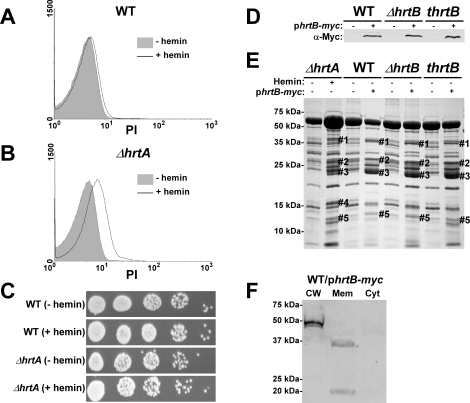
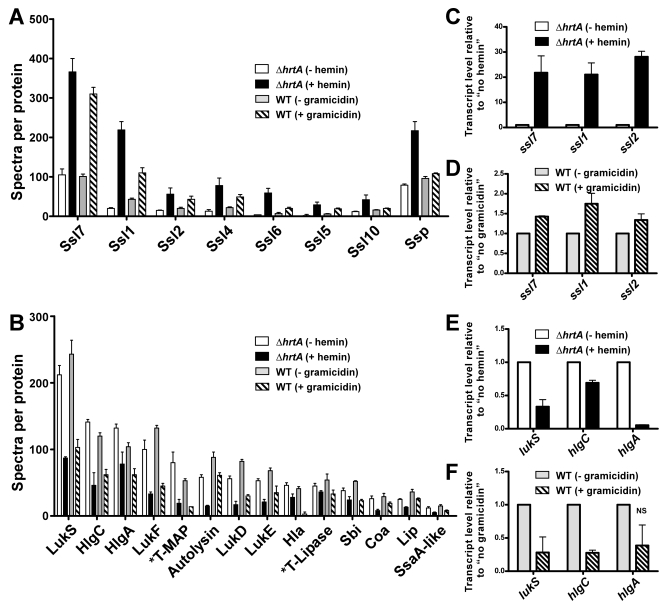
The Staphylococcus aureus HrtAB system is a hemin-regulated ABC transporter composed of an ATPase (HrtA) and a permease (HrtB) that protect S. aureus against hemin toxicity. S. aureus strains lacking hrtA exhibit liver-specific hyper-virulence and upon hemin exposure over-express and secrete immunomodulatory factors that interfere with neutrophil recruitment to the site of infection. It has been proposed that heme accumulation in strains lacking hrtAB is the signal which triggers S. aureus to elaborate this anti-neutrophil response. However, we report here that S. aureus strains expressing catalytically inactive HrtA do not elaborate the same secreted protein profile. This result indicates that the physical absence of HrtA is responsible for the increased expression of immunomodulatory factors, whereas deficiencies in the ATPase activity of HrtA do not contribute to this process. Furthermore, HrtB expression in strains lacking hrtA decreases membrane integrity consistent with dysregulated permease function. Based on these findings, we propose a model whereby hemin-mediated over-expression of HrtB in the absence of HrtA damages the staphylococcal membrane through pore formation. In turn, S. aureus senses this membrane damage, triggering the increased expression of immunomodulatory factors. In support of this model, wildtype S. aureus treated with anti-staphylococcal channel-forming peptides produce a secreted protein profile that mimics the effect of treating DeltahrtA with hemin. These results suggest that S. aureus senses membrane damage and elaborates a gene expression program that protects the organism from the innate immune response of the host.
Overview
The claims and statistics of this paper haven’t been checked yet.
Free: it reads the open-access text and checks the first 5 claims that cite a source we can check. Create a free account to check every claim.
Integrity signals
Registry
Cites
Statistics
Figures





Verification
Claims the paper makes
The claims and statistics of this paper haven’t been checked yet.
Free: it reads the open-access text and checks the first 5 claims that cite a source we can check. Create a free account to check every claim.
Claims other papers make about this one
Each is checked against this paper’s own text: does it say what the citing paper says it does?
In the citing paper
“Further experiments revealed that inactivation of HrtA leads to membrane damage which triggers increased expression and secretion of immunomodulatory factors [132].”
From Metal ion acquisition in Staphylococcus aureus: overcoming nutritional immunity (2012) · cites this paper as [132]
In the citing paper
“This phenomenon has a dramatic effect on the virulence of S. aureus (discussed below).”
From Molecular Mechanisms of Staphylococcus aureus Iron Acquisition (2011) · cites this paper as [4]
In the citing paper
“HrtB expression in the absence of HrtA results in a decrease in the integrity of the membrane and an altered protein secretion profile (4).”
From Molecular Mechanisms of Staphylococcus aureus Iron Acquisition (2011) · cites this paper as [4]
In the citing paper
“The increased secretion of immunomodulatory proteins that leads to the hypervirulent phenotype is due to a loss of membrane integrity in the hrtA mutant (4).”
From Molecular Mechanisms of Staphylococcus aureus Iron Acquisition (2011) · cites this paper as [4]
Self-check
Percentages, sums and reported differences re-computed from the paper’s own numbers.
The self-check needs the paper’s full text.
Citations
Cites
Staphylococcus aureus Infections
Lowy, F. D. (1998) · New England Journal of Medicine · doi:10.1056/nejm199808203390806 · Cited by 6,005
Antimicrobial peptides: pore formers or metabolic inhibitors in bacteria?
Brogden, K. A. (2005) · Nature Reviews Microbiology · doi:10.1038/nrmicro1098 · Cited by 5,829 · cited 2×
“In general, AMPs exert their antimicrobial activity through pore formation or membrane barrier disruption, however some AMPs mediate their antibacterial activity through altering septum formation or inhibiting cell-wall, nucleic-acid, or protein synthesis [34,35,36].”
BackgroundKlevens, R. M. (2007) · JAMA · doi:10.1001/jama.298.15.1763 · Cited by 3,726 · cited 1×
“more serious diseases such as endocarditis, septicemia, pneumonia and toxic shock syndrome [3,4].”
BackgroundMode of action of membrane active antimicrobial peptides
Shai, Y. (2002) · Peptide Science · doi:10.1002/bip.10260 · Cited by 1,576 · cited 2×
“On the other hand, several AMPs, including the widely expressed human LL37, have been described to perturb membranes through what is known as the ‘‘carpet’’ or ‘‘detergent like’’ mechanism [23,37].”
BackgroundStructure, Function, and Evolution of Bacterial ATP-Binding Cassette Systems
Davidson, A. L., Dassa, E., Orelle, C., & Chen, J. (2008) · Microbiology and Molecular Biology Reviews · doi:10.1128/mmbr.00031-07 · Cited by 1,420 · cited 1×
“the transport of solutes across the membrane [17,18].”
BackgroundDiekema, D. J., Pfaller, M. A., Schmitz, F. J., Smayevsky, J., Bell, J., Jones, R. N., Beach, M., & SENTRY Participants Group (2001) · Clinical Infectious Diseases · doi:10.1086/320184 · Cited by 1,362
Isolation and Characterization of Human μ-Defensin-3, a Novel Human Inducible Peptide Antibiotic
Harder, J., Bartels, J., Christophers, E., & Schröder, J.-M. (2001) · Journal of Biological Chemistry · doi:10.1074/jbc.m008557200 · Cited by 1,311
Autoinduction and signal transduction in the regulation of staphylococcal virulence
Novick, R. P. (2003) · Molecular Microbiology · doi:10.1046/j.1365-2958.2003.03526.x · Cited by 1,280 · cited 1×
“aureus [40,41,42].”
Wertheim, H. F., Vos, M. C., Ott, A., van Belkum, A., Voss, A., Kluytmans, J. A., van Keulen, P. H., Vandenbroucke-Grauls, C. M., Meester, M. H., & Verbrugh, H. A. (2004) · The Lancet · doi:10.1016/s0140-6736(04)16897-9 · Cited by 892 · cited 1×
“of the population [1].”
The ATP switch model for ABC transporters
Higgins, C. F., & Linton, K. J. (2004) · Nature Structural & Molecular Biology · doi:10.1038/nsmb836 · Cited by 748 · cited 1×
“export waste and toxic products [16].”
Cited by
Sully, E. K., Malachowa, N., Elmore, B. O., Alexander, S. M., Femling, J. K., Gray, B. M., DeLeo, F. R., Otto, M., Cheung, A. L., Edwards, B. S., et al. (2014) · PLoS Pathogens · doi:10.1371/journal.ppat.1004174 · Cited by 386
“S4B), properties that are altered by antibiotic compounds that could affect agr signaling [24,25] and that could be impaired by agr-independent, non-specific toxic effects [6].”
BackgroundMethodMolecular Mechanisms of Staphylococcus aureus Iron Acquisition
Hammer, N. D., & Skaar, E. P. (2011) · Annual Review of Microbiology · doi:10.1146/annurev-micro-090110-102851 · Cited by 379
“HrtB expression in the absence of HrtA results in a decrease in the integrity of the membrane and an altered protein secretion profile (4).”
BackgroundSelf-citationA play in four acts: Staphylococcus aureus abscess formation
Cheng, A. G., DeDent, A. C., Schneewind, O., & Missiakas, D. (2011) · Trends in Microbiology · doi:10.1016/j.tim.2011.01.007 · Cited by 310
Brackman, G., Breyne, K., De Rycke, R., Vermote, A., Van Nieuwerburgh, F., Meyer, E., Van Calenbergh, S., & Coenye, T. (2016) · Scientific Reports · doi:10.1038/srep20321 · Cited by 174
Metal ion acquisition in Staphylococcus aureus: overcoming nutritional immunity
Cassat, J. E., & Skaar, E. P. (2012) · Seminars in Immunopathology · doi:10.1007/s00281-011-0294-4 · Cited by 155
“Further experiments revealed that inactivation of HrtA leads to membrane damage which triggers increased expression and secretion of immunomodulatory factors [132].”
BackgroundSelf-citationGray, B., Hall, P., & Gresham, H. (2013) · Sensors · doi:10.3390/s130405130 · Cited by 128
“The α- and β-chains of hemoglobin also antagonize agr signaling, most likely by inhibiting AIP secretion following hemoglobin-mediated membrane disruption [122,124,125].”
BackgroundMenaquinone biosynthesis potentiates haem toxicity in Staphylococcus aureus
Wakeman, C. A., Hammer, N. D., Stauff, D. L., Attia, A. S., Anzaldi, L. L., Dikalov, S. I., Calcutt, M. W., & Skaar, E. P. (2012) · Molecular Microbiology · doi:10.1111/mmi.12063 · Cited by 94
“aureus (Torres et al., 2007; Attia et al., 2010), the impact of haem toxicity during staphylococcal infection remains to be fully”
BackgroundSelf-citationSap Transporter Mediated Import and Subsequent Degradation of Antimicrobial Peptides in Haemophilus
Shelton, C. L., Raffel, F. K., Beatty, W. L., Johnson, S. M., & Mason, K. M. (2011) · PLoS Pathogens · doi:10.1371/journal.ppat.1002360 · Cited by 93
“[17,18], and release of proteins that function to adsorb extracellular AMPs [19].”
BackgroundMolecular Basis of Virulence in Staphylococcus aureus Mastitis
Maréchal, C. L., Seyffert, N., Jardin, J., Hernández, D., Jan, G., Rault, L., Azevedo, V., François, P., Schrenzel, J., van de Guchte, M., et al. (2011) · PLoS ONE · doi:10.1371/journal.pone.0027354 · Cited by 93
“aureus against hemin toxicity [41].”
Rot is a key regulator of S taphylococcus aureus biofilm formation
Mootz, J. M., Benson, M. A., Heim, C. E., Crosby, H. A., Kavanaugh, J. S., Dunman, P. M., Kielian, T., Torres, V. J., & Horswill, A. R. (2015) · Molecular Microbiology · doi:10.1111/mmi.12943 · Cited by 86
“Proteins were then subjected to in-gel trypsin digestion and peptide extraction, and the resulting peptides were then analyzed as described previously (Attia et al., 2010).”
MethodSelf-citationMahdally, N. H., George, R. F., Kashef, M. T., Al‐Ghobashy, M. A., Murad, F. E., & Attia, A. S. (2021) · Frontiers in Microbiology · doi:10.3389/fmicb.2021.700494 · Cited by 74
“The 16S rRNA transcript was used as a normalizer using the primer pair (5-TGAGATGTTGGGTTAAGTCCCGCA3) and (5-CGGTTTCGCTGCCCTTTGTATTGT-3) (Attia et al., 2010).”
MethodSelf-citationThe theft of host heme by Gram-positive pathogenic bacteria
Nobles, C. L., & Maresso, A. W. (2011) · Metallomics · doi:10.1039/c1mt00047k · Cited by 71
Rot and SaeRS Cooperate To Activate Expression of the Staphylococcal Superantigen-Like Exoproteins
Benson, M. A., Lilo, S., Nygaard, T., Voyich, J. M., & Torres, V. J. (2012) · Journal of Bacteriology · doi:10.1128/jb.00706-12 · Cited by 68
“Among the staphylococcal virulence factors, the Ssls are believed to be an important component of this host immune evasion strategy (3, 7, 17, 52).”
BackgroundMethodSelf-citationBenson, M. A., Lilo, S., Wasserman, G. A., Thoendel, M., Smith, A. P., Horswill, A. R., Fraser, J. D., Novick, R. P., Shopsin, B., & Torres, V. J. (2011) · Molecular Microbiology · doi:10.1111/j.1365-2958.2011.07720.x · Cited by 76
“Exoproteins were produced and processed as described before (Attia et al., 2010; Torres et al., 2010).”
BackgroundMethodInfluentialSelf-citationKnippel, R. J., Wexler, A. G., Miller, J. M., Beavers, W. N., Weiss, A., de Crécy-Lagard, V., Edmonds, K. A., Giedroc, D. P., & Skaar, E. P. (2020) · Cell Host & Microbe · doi:10.1016/j.chom.2020.05.015 · Cited by 62
Self-citationArya, R., & Princy, S. A. (2013) · Future Microbiology · doi:10.2217/fmb.13.92 · Cited by 56
“set9 Exotoxin + Exotoxin‐like proteins [78]”
Rebets, Y. V., Lupoli, T. J., Qiao, Y., Schirner, K., Villet, R. A., Hooper, D. C., Kahne, D. E., & Walker, S. (2013) · ACS Chemical Biology · doi:10.1021/cb4006744 · Cited by 52
Differential activation of Staphylococcus aureus heme detoxification machinery by heme analogues
Wakeman, C. A., Stauff, D. L., Zhang, Y., & Skaar, E. P. (2014) · Journal of Bacteriology · doi:10.1128/jb.01067-13 · Cited by 45
“strain expressing the phrtB::xylE reporter fusion was previously described (6, 10, 12, 13, 21).”
MethodSelf-citationExploring Staphylococcus aureus pathways to disease for vaccine development
DeDent, A. C., Kim, H. K., Missiakas, D. M., & Schneewind, O. (2011) · Seminars in Immunopathology · doi:10.1007/s00281-011-0299-z · Cited by 41
Koymans, K. J., Goldmann, O., Karlsson, C. A. Q., Sital, W., Thänert, R., Bisschop, A., Vrieling, M., Malmström, J. A., van Kessel, K. P. M., de Haas, C. J. C., et al. (2017) · Journal of Innate Immunity · doi:10.1159/000479100 · Cited by 34
“Upregulation of ssl transcripts has been described under several conditions: in whole blood, upon contact with neutrophils, and under pore-mediated membrane stress [20–22] .”
Staphylococcus aureus HemX Modulates Glutamyl-tRNA Reductase Abundance To Regulate Heme Biosynthesis
Choby, J. E., Grunenwald, C. M., Celis, A. I., Gerdes, S., DuBois, J. L., & Skaar, E. P. (2018) · mBio · doi:10.1128/mbio.02287-17 · Cited by 34
Self-citationGrażul, M., Balcerczak, E., & Sienkiewicz, M. (2023) · International Journal of Environmental Research and Public Health · doi:10.3390/ijerph20065155 · Cited by 29
“16S rRNA [35] 5′- TGAGATGTTGGGTTAAGTCCCGCA-3′ 5′-CGGTTTCGCTGCCCTTTGTATTGT-3′”
Antibacterial photosensitization through activation of coproporphyrinogen oxidase
Surdel, M. C., Horvath, D. J., Lojek, L. J., Fullen, A. R., Simpson, J., Dutter, B. F., Salleng, K. J., Ford, J. B., Jenkins, J. L., Raju, N., et al. (2017) · Proceedings of the National Academy of Sciences · doi:10.1073/pnas.1700469114 · Cited by 28
Self-citationAttia, A. S., Cassat, J. E., Aranmolate, S. O., Zimmerman, L. J., Boyd, K. L., & Skaar, E. P. (2013) · Pathogens and Disease · doi:10.1111/2049-632x.12063 · Cited by 25
“Creation of strains for complementation of Δusp2 The usp2 ORF was PCR-amplified using the primers AA526 (5′CATATGATTACTTACAAAAATAT-3′, NdeI site underlined) and AA534 (5′GGATATCAGTTTCTGTTCGCCGCCATTTTGATATTTTTCACGTAATTGAGTTGTT-3′, EcoRV site underlined), digested with NdeI and EcoRV, then ligated into the vector phrtBm…”
MethodSelf-citationHeme in Bacterial Pathogenesis and as an Antimicrobial Target
Chen, P.-Y., & Skaar, E. P. (2025) · Chemical Reviews · doi:10.1021/acs.chemrev.5c00528 · Cited by 21
Self-citationA Small Membrane Stabilizing Protein Critical to the Pathogenicity of Staphylococcus aureus
Duggan, S., Laabei, M., Alnahari, A. A., O’Brien, E. C., Lacey, K. A., Bacon, L., Heesom, K., Fu, C.-L., Otto, M., Skaar, E., et al. (2020) · Infection and Immunity · doi:10.1128/iai.00162-20 · Cited by 23
“Membrane stability was determined as previously described (44, 45).”
Self-citationThomsen, L. E., Gottlieb, C. T., Gottschalk, S., Wodskou, T. T., Kristensen, H., Gram, L., & Ingmer, H. (2010) · BMC Microbiology · doi:10.1186/1471-2180-10-307 · Cited by 19
“Recent work has shown that exposing hrtA mutants to hemin, leads to increased protein secretion, however, when exposing hssR mutants to hemin, a similar change in secretion was not observed [14,20].”
Bacterial Nitric Oxide Synthase Is Required for the Staphylococcus aureus Response to Heme Stress
Surdel, M. C., Dutter, B. F., Sulikowski, G. A., & Skaar, E. P. (2016) · ACS Infectious Diseases · doi:10.1021/acsinfecdis.6b00081 · Cited by 18
Self-citationCastaneroxy A From the Leaves of Castanea sativa Inhibits Virulence in Staphylococcus aureus
Salam, A. M., Porras, G., Cho, Y.-S. K., Severn, M. M., Risener, C. J., Marquez, L., Lyles, J. T., Bacsa, J., Horswill, A. R., & Quave, C. L. (2021) · Frontiers in Pharmacology · doi:10.3389/fphar.2021.640179 · Cited by 17
“These are properties known to be impacted by antibiotics and thus lead to decreased agr expression (Attia et al., 2010; Dengler et al., 2011).”
BackgroundNakonieczna, J., Kossakowska-Zwierucho, M., Filipiak, M., Hewelt-Belka, W., Grinholc, M., & Bielawski, K. P. (2015) · Applied Microbiology and Biotechnology · doi:10.1007/s00253-015-7145-5 · Cited by 14
“This is exemplified by the observation that HrtB expression compromises the membrane structure in S. aureus strains that lack HrtA (Attia et al. 2010).”
BackgroundBonar, E., Bukowski, M., Hydzik, M., Jankowska, U., Kędracka–Krok, S., Groborz, M., Dubin, G., Akkerboom, V., Międzobrodzki, J., Sabat, A. J., et al. (2018) · Frontiers in Cellular and Infection Microbiology · doi:10.3389/fcimb.2018.00313 · Cited by 12
“In hrtA mutants, such a phenotype was associated with the loss of membrane integrity and increased secretion of immunomodulatory proteins (Attia et al., 2010).”
BackgroundBacteria Are New Targets for Inhibitors of Human Farnesyltransferase
Weber, L., Hagemann, A., Kaltenhäuser, J., Besser, M., Rockenfeller, P., Ehrhardt, A., Stuermer, E. K., & Bachmann, H. S. (2021) · Frontiers in Microbiology · doi:10.3389/fmicb.2021.628283 · Cited by 11
Bacterial superantigens and superantigen-like toxins
Langley, R. J., Fraser, J. D., & Proft, T. (2015) · Elsevier eBooks · doi:10.1016/b978-0-12-800188-2.00032-x · Cited by 14
Elhakim, Y. A., Ali, A. E., Hosny, A. E.-D. M. S., & Abdeltawab, N. F. (2021) · Pathogens · doi:10.3390/pathogens10101228 · Cited by 9
Chen, Y., Hammer, E. E., & Richards, V. P. (2018) · Molecular Phylogenetics and Evolution · doi:10.1016/j.ympev.2018.03.034 · Cited by 9
Herrin, B. E., Islam, S., Rentschler, K. N., Pert, L. H., Kopanski, S. P., & Wakeman, C. A. (2021) · Microbiology · doi:10.1099/mic.0.001044 · Cited by 4
“The ΔhrtB mutant lacking the haem detoxification system was previously characterized [20, 27].”
BackgroundMethodPathogenesis of Haemophilus influenzae in Humans
Harrison, A., & Mason, K. M. (2015) · Wiley eBooks · doi:10.1002/9781118644843.ch27 · Cited by 3
Alanko, I., Sandberg, R., Brockmann, E., de Haas, C. J. C., van Strijp, J. A. G., Lamminmäki, U., & Salo‐Ahen, O. M. H. (2023) · MicrobiologyOpen · doi:10.1002/mbo3.1371 · Cited by 2
“In addition, the expression of the SSLs is upregulated under cell stress: when exposed to human whole blood and during hemin‐mediated membrane damage (Attia et al., 2010; Malachowa et al., 2011).”
BackgroundKobayashi, S. D., & DeLeo, F. R. (2012) · Elsevier eBooks · doi:10.1016/b978-0-12-382227-7.00094-x · Cited by 1
Kessel, C. I. (2017) · Cited by 2
Thakkar, N., Gajera, G., Godse, C., DeSouza, A., Mehta, D., & Kothari, V. (2024) · Pharmaceutics · doi:10.3390/pharmaceutics16060726 · Cited by 1
“Overexpression of hrtB can lead to dysregulated pore formation, and its up-regulation has also been reported in S. aureus challenged with channel-forming antimicrobial peptides [102].”
BackgroundDuggan, S., Laabei, M., Alnahari, A., O’Brien, E. C., Lacey, K. A., Bacon, L., Heesom, K., Fu, C.-L., Otto, M., Skaar, E., et al. (2019) · bioRxiv (Cold Spring Harbor Laboratory) · doi:10.1101/712737 · Cited by 1
Self-citationKobayashi, S. D., & DeLeo, F. R. (2019) · Elsevier eBooks · doi:10.1016/b978-0-12-801496-7.00005-8
Fliss, O., Guay, L.-D., Pham, N.-P., Leprohon, P., Fava, N., Pagotto, F., Ouellette, M., Biron, É., & Fliss, I. (2026) · Probiotics and Antimicrobial Proteins · doi:10.1007/s12602-026-11140-5
Metadata
- Authors
- Attia, A. S., Benson, M. A., Stauff, D. L., Torres, V. J., & Skaar, E. P.
- Affiliations
- Cairo University (EG)
- New York University (US)
- Vanderbilt University Medical Center (US)
- Corresponding author
- Skaar, Eric P.
- Venue
- PLoS Pathogens
- Publisher
- Public Library of Science (PLoS)
- Published
- 2010-03-12
- Volume
- 6
- Issue
- 3
- Pages
- e1000802
- ISSN
- 1553-7366 (ISSN-L)
- 1553-7374
- PMC
- PMC2837406
- OpenAlex
- W1974193789
- Cited by
- 44
- References
- 62
- Citations by year
- 2026: 1 · 2025: 1 · 2024: 1 · 2023: 2 · 2021: 5 · 2020: 2 · 2019: 2 · 2018: 3 · 2017: 3 · 2016: 2 · 2015: 4 · 2014: 2 · 2013: 4 · 2012: 3
- FWCI
- 3.31
- Type
- journal article
- Language
- en
- Open access
- gold
- doi.org
- Locations
- PLoS Pathogens (publishedVersion, cc-by)
- PubMed Central (publishedVersion, cc-by)
- PubMed (publishedVersion)
- DOAJ (DOAJ: Directory of Open Access Journals) (submittedVersion, cc-by-sa)
- Figshare (submittedVersion, cc-by)
- Greater South Information System
- Funders
- Burroughs Wellcome Fund
- Vanderbilt University (T32 HL069765)
- Vanderbilt University Medical Center
- U.S. Public Health Service
- National Heart, Lung, and Blood Institute (T32HL069765)
- National Institute of Allergy and Infectious Diseases (AI073843, AI69233, F32AI071487, R01AI069233, AI071487, R01AI073843)
- Topics
- Health Sciences › Medicine › Infectious Diseases › Antimicrobial Resistance in Staphylococcus
- Life Sciences › Biochemistry, Genetics and Molecular Biology › Genetics › Bacterial Genetics and Biotechnology
- Life Sciences › Immunology and Microbiology › Microbiology › Escherichia coli research studies
- Keywords
- Staphylococcus aureus, immunomodulatory factors, neutrophil recruitment, membrane permeability, pore formation, channel-forming peptides, innate immune evasion, secreted proteins
- MeSH terms
- Adenosine Triphosphatases, Animals, Anti-Bacterial Agents, Cell Movement, Exotoxins, Female, Gramicidin, Hemin, Immunologic Factors, Mice, Inbred BALB C, Neutrophils, Staphylococcal Skin Infections, Staphylococcus aureus, Transcription, Genetic, Virulence, Up-Regulation, Gene Expression Regulation, Bacterial, ATP-Binding Cassette Transporters, Membrane Transport Proteins, Mice
About these checks
Registry, retraction, Cites and statistics results are computed, not judged, with one exception: a printed reference that no index lists is read once by a model before it counts as a citation error. Claims are extracted by a model and kept only when their quote appears verbatim in the text; each cited source is then checked, with a model’s help, for whether it says what the claim relies on. Those verdicts can be wrong — read the claim’s quote and the cited source before relying on one.
Statistics and arithmetic are recomputed, not judged.
Confidence bands are shown only for fields calibrated on our annotated test set. None is calibrated yet, so no band is shown.
What counts as a claim ›How we measure confidence ›How we check this ›
Are you an author, or do you see a problem with this page? Request a review
Data sources
Bibliographic data: Semantic Scholar, OpenAlex, Crossref.
Contains information from the Semantic Scholar Academic Graph Datasets, made available under the ODC Attribution License (ODC-BY 1.0).
Semantic Scholar’s data is described in: Kinney, R., et al. (2023). The Semantic Scholar Open Data Platform. arXiv:2301.10140.
