

Stage Specific Assessment of Candida albicans Phagocytosis by Macrophages Identifies Cell Wall Composition and Morphogenesis as Key Determinants
Open accessThe DOI matches its Crossref record; 48 of the 48 references it cites were found in a registry or an index.
Abstract
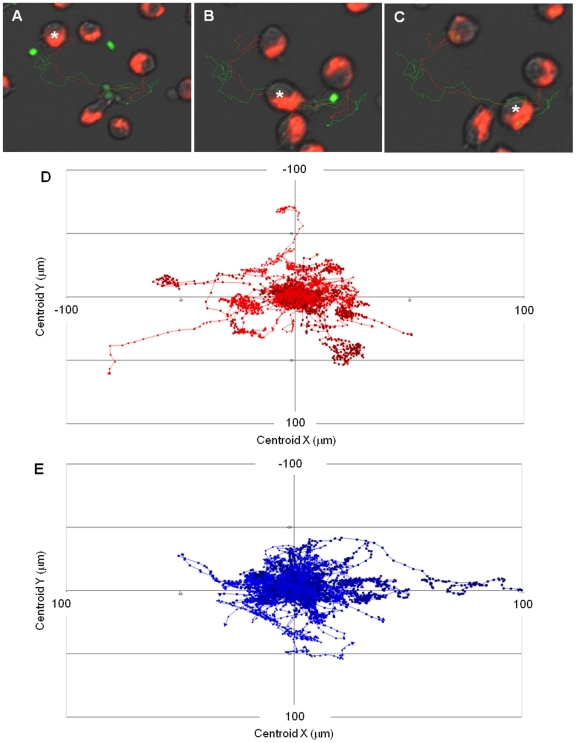
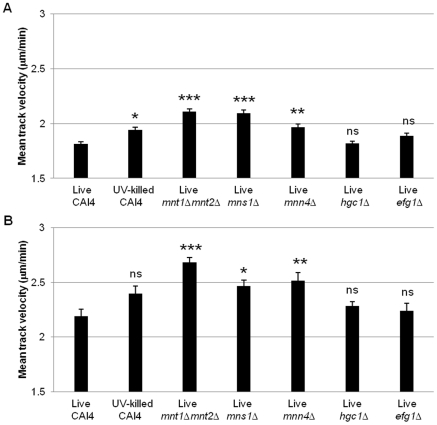
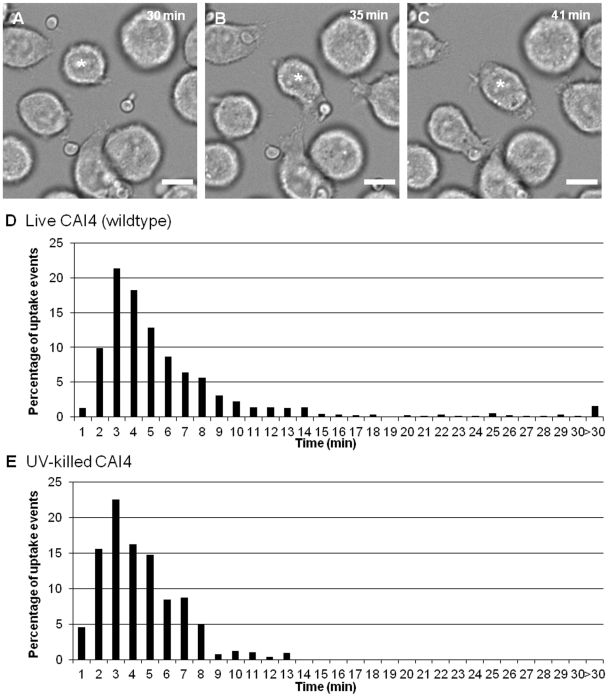
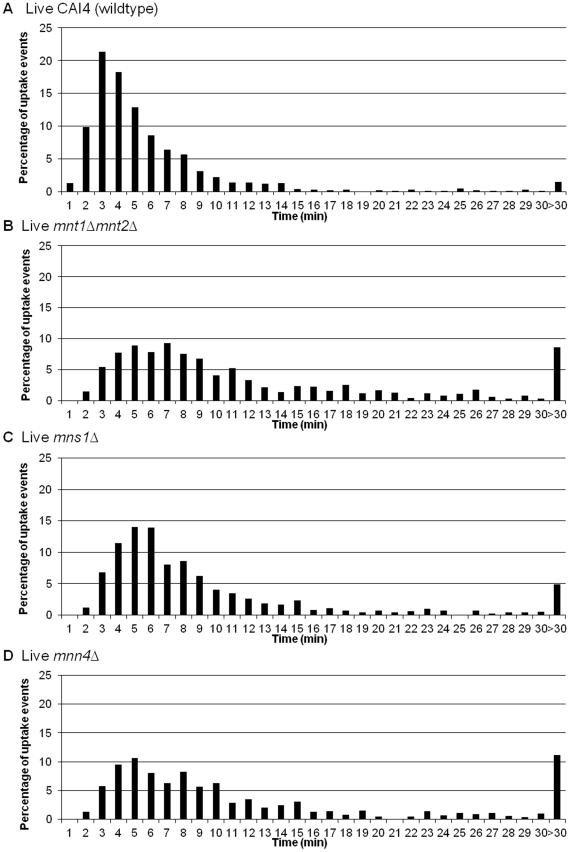
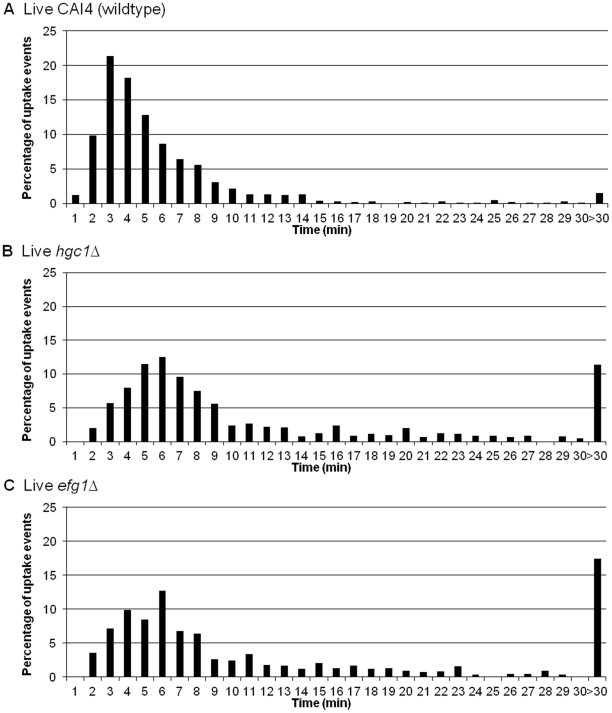
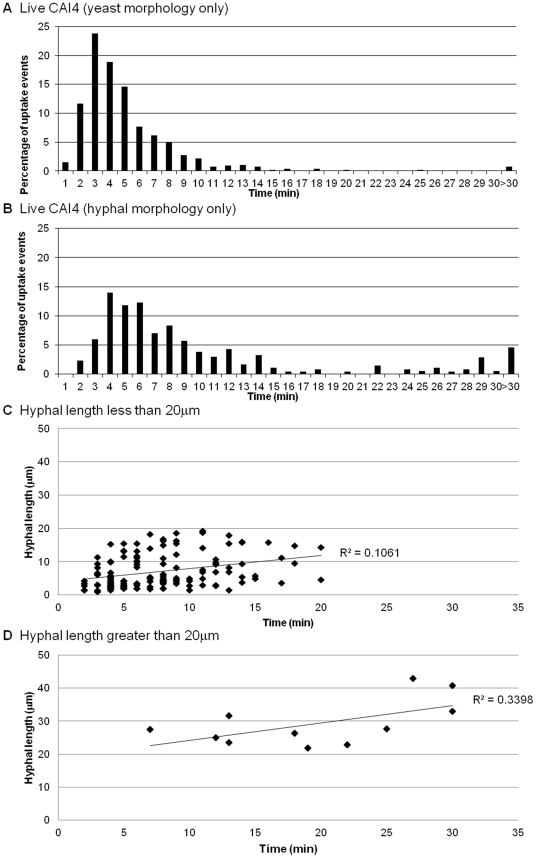
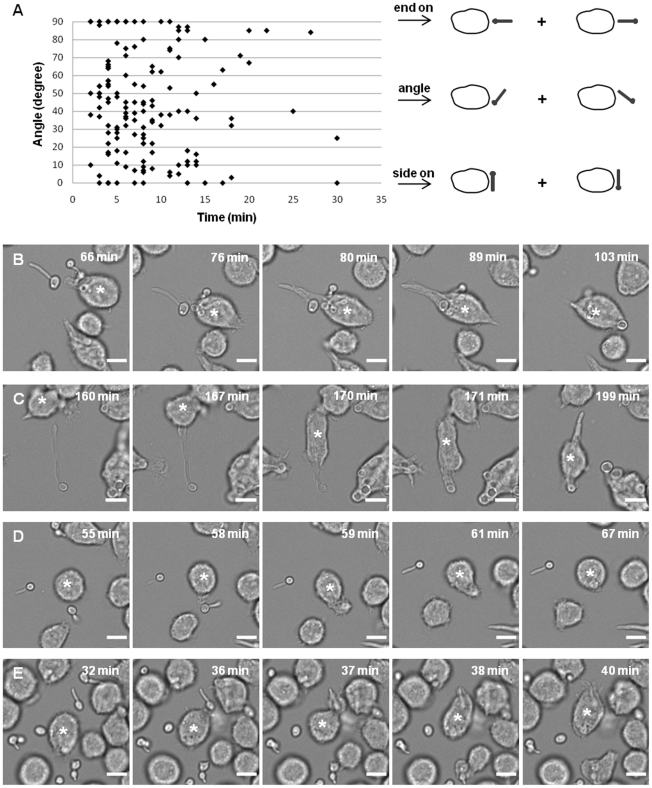
Candida albicans is a major life-threatening human fungal pathogen. Host defence against systemic Candida infection relies mainly on phagocytosis of fungal cells by cells of the innate immune system. In this study, we have employed video microscopy, coupled with sophisticated image analysis tools, to assess the contribution of distinct C. albicans cell wall components and yeast-hypha morphogenesis to specific stages of phagocytosis by macrophages. We show that macrophage migration towards C. albicans was dependent on the glycosylation status of the fungal cell wall, but not cell viability or morphogenic switching from yeast to hyphal forms. This was not a consequence of differences in maximal macrophage track velocity, but stems from a greater percentage of macrophages pursuing glycosylation deficient C. albicans during the first hour of the phagocytosis assay. The rate of engulfment of C. albicans attached to the macrophage surface was significantly delayed for glycosylation and yeast-locked morphogenetic mutant strains, but enhanced for non-viable cells. Hyphal cells were engulfed at a slower rate than yeast cells, especially those with hyphae in excess of 20 µm, but there was no correlation between hyphal length and the rate of engulfment below this threshold. We show that spatial orientation of the hypha and whether hyphal C. albicans attached to the macrophage via the yeast or hyphal end were also important determinants of the rate of engulfment. Breaking down the overall phagocytic process into its individual components revealed novel insights into what determines the speed and effectiveness of C. albicans phagocytosis by macrophages.
Overview
The claims and statistics of this paper haven’t been checked yet.
Free: it reads the open-access text and checks the first 5 claims that cite a source we can check. Create a free account to check every claim.
Integrity signals
Registry
Cites
Statistics
Figures
Verification
Claims the paper makes
The claims and statistics of this paper haven’t been checked yet.
Free: it reads the open-access text and checks the first 5 claims that cite a source we can check. Create a free account to check every claim.
Self-check
Percentages, sums and reported differences re-computed from the paper’s own numbers.
The self-check needs the paper’s full text.
Citations
Cites
Role of target geometry in phagocytosis
Champion, J. A., & Mitragotri, S. (2006) · Proceedings of the National Academy of Sciences · doi:10.1073/pnas.0600997103 · Cited by 2,074 · cited 1×
“This in turn may reflect differences in the wall chemistry of the hyphal tip compared to the mother cell, or be due to the efficiency of the assembly of proteins of the phagocytic cup for objects of different sizes and shapes [45].”
BackgroundNonfilamentous C. albicans Mutants Are Avirulent
Lo, H.-J., Köhler, J. R., DiDomenico, B., Loebenberg, D., Cacciapuoti, A., & Fink, G. R. (1997) · Cell · doi:10.1016/s0092-8674(00)80358-x · Cited by 1,809 · cited 3×
“albicans [37], and its ability to switch between yeast and hyphal forms is thought to contribute to pathogenesis [24,25,38,39].”
BackgroundGrowth of Candida albicans hyphae
Sudbery, P. E. (2011) · Nature Reviews Microbiology · doi:10.1038/nrmicro2636 · Cited by 1,110 · cited 1×
“albicans [37], and its ability to switch between yeast and hyphal forms is thought to contribute to pathogenesis [24,25,38,39].”
BackgroundAn integrated model of the recognition of Candida albicans by the innate immune system
Netea, M. G., Brown, G. D., Kullberg, B. J., & Gow, N. A. R. (2008) · Nature Reviews Microbiology · doi:10.1038/nrmicro1815 · Cited by 946 · cited 1×
“The fungal cell wall is the first point of contact with the innate immune system and plays an important role in recognition and phagocytosis by host immune cells [2].”
BackgroundSelf-citationNetea, M. G. (2006) · Journal of Clinical Investigation · doi:10.1172/jci27114 · Cited by 753
Saville, S. P., Lazzell, A. L., Monteagudo, C., & Lopez-Ribot, J. L. (2003) · Eukaryotic Cell · doi:10.1128/ec.2.5.1053-1060.2003 · Cited by 655 · cited 1×
“albicans mutants that are unable to form filaments are less virulent [40], although conversely, mutants that are unable to grow as yeast are also less virulent [41].”
BackgroundDendritic Cells Discriminate between Yeasts and Hyphae of the Fungus Candida albicans
d'Ostiani, C. F., Del Sero, G., Bacci, A., Montagnoli, C., Spreca, A., Mencacci, A., Ricciardi-Castagnoli, P., & Romani, L. (2000) · The Journal of Experimental Medicine · doi:10.1084/jem.191.10.1661 · Cited by 493
Fungal morphogenesis and host invasion
Gow, N. A. R., Brown, A. J. P., & Odds, F. C. (2002) · Current Opinion in Microbiology · doi:10.1016/s1369-5274(02)00338-7 · Cited by 482 · cited 1×
“albicans [37], and its ability to switch between yeast and hyphal forms is thought to contribute to pathogenesis [24,25,38,39].”
BackgroundSelf-citationWells, C. A., Salvage-Jones, J. A., Li, X., Hitchens, K., Butcher, S., Murray, R. Z., Beckhouse, A. G., Lo, Y.-L.-S., Manzanero, S., Cobbold, C., et al. (2008) · The Journal of Immunology · doi:10.4049/jimmunol.180.11.7404 · Cited by 433 · cited 1×
“albicans recognition, including the scavenger receptors CD36 and SCARF1 [15], TLR9 recognition of nucleic acids [16], dectin-2 [17] and the C-type lectin mincle [18].”
BackgroundInnate Antifungal Immunity: The Key Role of Phagocytes
Brown, G. D. (2011) · Annual Review of Immunology · doi:10.1146/annurev-immunol-030409-101229 · Cited by 419 · cited 2×
“Phagocytic clearance of fungal pathogens may be considered to consist of four distinct stages;(i) accumulation of phagocytes at the site where fungal cells are located; (ii) recognition of fungal pathogen-associated molecular patterns (PAMPs) through pattern recognition receptors (PRRs) (reviewed in [11]; (iii) engulf…”
Background
Research works printed but not linked: 3
- Hobson RP Munro CA Bates S MacCallum DM Cutler JE 2004 Loss of cell wall mannosylphosphate in Candida albicans does not influence macrophage recognition. J Biol Chem 279 39628 39635 15271989 · DOI · Paper page
- McKenzie CG Koser U Lewis LE Bain JM Mora-Montes HM 2010 Contribution of Candida albicans cell wall components to recognition by and escape from murine macrophages. Infect Immun 78 1650 1658 20123707 PMC2849426 · DOI · Paper page
- Mora-Montes HM Bates S Netea MG Castillo L Brand A 2010 A multifunctional mannosyltransferase family in Candida albicans determines cell wall mannan structure and host-fungus interactions. J Biol Chem 285 12087 12095 20164191 PMC2852947 · DOI · Paper page
Cited by
Interactions of fungal pathogens with phagocytes
Erwig, L. P., & Gow, N. A. R. (2016) · Nature Reviews Microbiology · doi:10.1038/nrmicro.2015.21 · Cited by 626
Self-citationd'Enfert, C., Kaune, A.-K., Alaban, L.-R., Chakraborty, S., Cole, N., Delavy, M., Kosmala, D., Marsaux, B., Fróis-Martins, R., Morelli, M., et al. (2021) · FEMS Microbiology Reviews · doi:10.1093/femsre/fuaa060 · Cited by 347
Modulation of Immune Responses by Particle Size and Shape
Baranov, M. V., Kumar, M., Sacanna, S., Thutupalli, S., & van den Bogaart, G. (2021) · Frontiers in Immunology · doi:10.3389/fimmu.2020.607945 · Cited by 324
“albicans that cannot form hyphae (and therefore have more spherical shapes) was significantly slower than for strains that formed hyphae (7).”
BackgroundInfluentialLactate signalling regulates fungal β-glucan masking and immune evasion
Ballou, E. R., Avelar, G. M., Childers, D. S., Mackie, J., Bain, J. M., Wagener, J., Kastora, S. L., Panea, M. D., Hardison, S. E., Walker, L. A., et al. (2016) · Nature Microbiology · doi:10.1038/nmicrobiol.2016.238 · Cited by 269
Self-citationMetabolism impacts upon Candida immunogenicity and pathogenicity at multiple levels
Brown, A. J. P., Brown, G. D., Netea, M. G., & Gow, N. A. R. (2014) · Trends in Microbiology · doi:10.1016/j.tim.2014.07.001 · Cited by 258
Self-citation
Metadata
- Authors
- Lewis, L. E., Bain, J. M., Lowes, C., Gillespie, C., Rudkin, F. M., Gow, N. A. R., & Erwig, L.-P.
- Affiliations
- University of Aberdeen (GB)
- Corresponding author
- Erwig, Lars-Peter
- Venue
- PLoS Pathogens
- Publisher
- Public Library of Science (PLoS)
- Published
- 2012-03-15
- Volume
- 8
- Issue
- 3
- Pages
- e1002578
- ISSN
- 1553-7366 (ISSN-L)
- 1553-7374
- PMC
- PMC3305454
- OpenAlex
- W2019174191
- Cited by
- 150
- References
- 48
- Citations by year
- 2026: 6 · 2025: 7 · 2024: 7 · 2023: 7 · 2022: 12 · 2021: 15 · 2020: 11 · 2019: 5 · 2018: 8 · 2017: 11 · 2016: 13 · 2015: 12 · 2014: 14 · 2013: 16 · 2012: 6
- FWCI
- 10.65
- Type
- journal article
- Language
- en
- Open access
- gold
- doi.org
- Locations
- PLoS Pathogens (publishedVersion, cc-by)
- PubMed Central (publishedVersion, cc-by)
- PubMed (publishedVersion)
- Aberdeen University Research Archive (Aberdeen University) (submittedVersion)
- DOAJ (DOAJ: Directory of Open Access Journals) (submittedVersion, cc-by-sa)
- Figshare (submittedVersion, cc-by)
- Funders
- Wellcome Trust (097377/Z/11/Z, 089930, 080088, 075470)
- European Commission (260338)
- University of Aberdeen
- Topics
- Health Sciences › Medicine › Infectious Diseases › Antifungal resistance and susceptibility
- Life Sciences › Biochemistry, Genetics and Molecular Biology › Molecular Biology › Fungal and yeast genetics research
- Health Sciences › Medicine › Infectious Diseases › Fungal Infections and Studies
- Keywords
- Candida albicans, phagocytosis, macrophages, hyphal length, macrophage migration, fungal virulence factors
- MeSH terms
- Animals, Candida albicans, Candidiasis, Cell Movement, Cell Wall, Disease Models, Animal, Female, Glycosylation, Immunity, Innate, Mice, Inbred BALB C, Phagocytosis, Macrophages, Peritoneal, Mice
About these checks
Registry, retraction, Cites and statistics results are computed, not judged, with one exception: a printed reference that no index lists is read once by a model before it counts as a citation error. Claims are extracted by a model and kept only when their quote appears verbatim in the text; each cited source is then checked, with a model’s help, for whether it says what the claim relies on. Those verdicts can be wrong — read the claim’s quote and the cited source before relying on one.
Statistics and arithmetic are recomputed, not judged.
Confidence bands are shown only for fields calibrated on our annotated test set. None is calibrated yet, so no band is shown.
What counts as a claim ›How we measure confidence ›How we check this ›
Are you an author, or do you see a problem with this page? Request a review
How to cite
Cite CoChat for the checks on this page, and the paper for its own findings.
- This page
- CoChat. (2026). Citation check: Stage Specific Assessment of Candida albicans Phagocytosis by Macrophages Identifies Cell Wall Composition and Morphogenesis as Key Determinants. https://app.cochat.ai/papers/10.1371/journal.ppat.1002578
- The paper
- Lewis, L. E., Bain, J. M., Lowes, C., Gillespie, C., Rudkin, F. M., Gow, N. A. R., & Erwig, L.-P. (2012). Stage Specific Assessment of Candida albicans Phagocytosis by Macrophages Identifies Cell Wall Composition and Morphogenesis as Key Determinants. PLoS Pathogens. https://doi.org/10.1371/journal.ppat.1002578
Data sources
Bibliographic data: Semantic Scholar, OpenAlex, Crossref.
Contains information from the Semantic Scholar Academic Graph Datasets, made available under the ODC Attribution License (ODC-BY 1.0).
Semantic Scholar’s data is described in: Kinney, R., et al. (2023). The Semantic Scholar Open Data Platform. arXiv:2301.10140.
