

Stage Specific Assessment of Candida albicans Phagocytosis by Macrophages Identifies Cell Wall Composition and Morphogenesis as Key Determinants
Open accessThe DOI matches its Crossref record; 48 of the 48 references it cites were found in a registry or an index.
Abstract
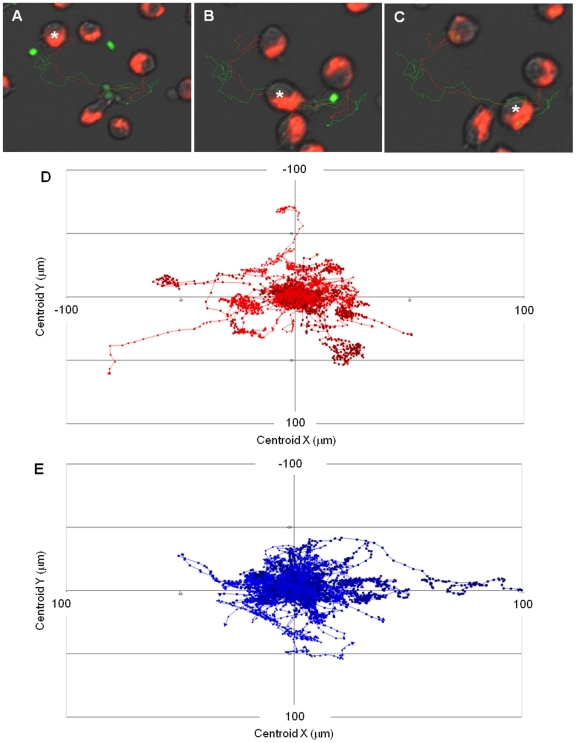
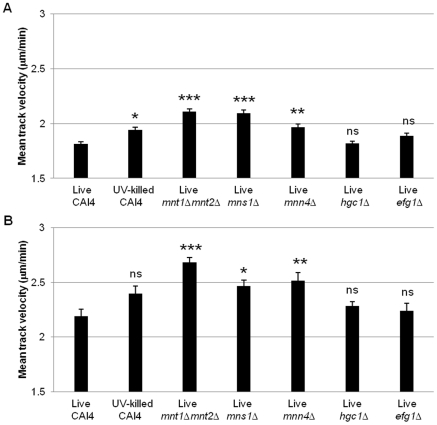
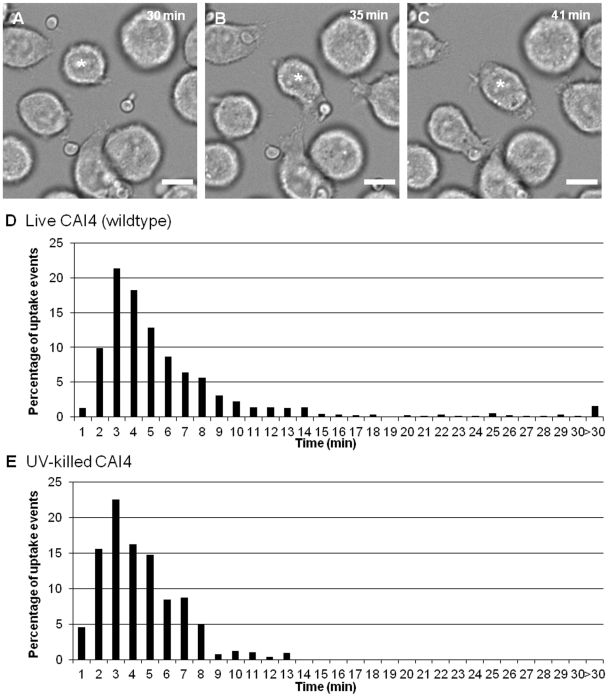
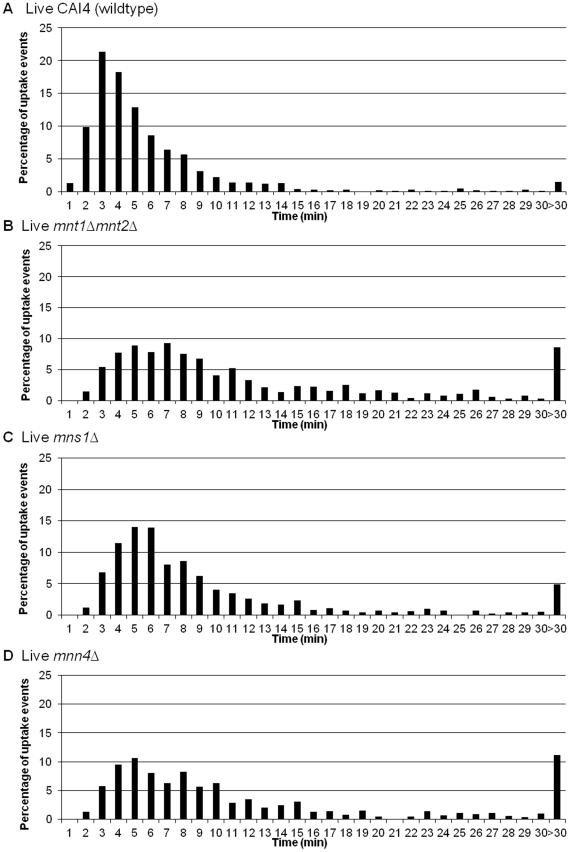
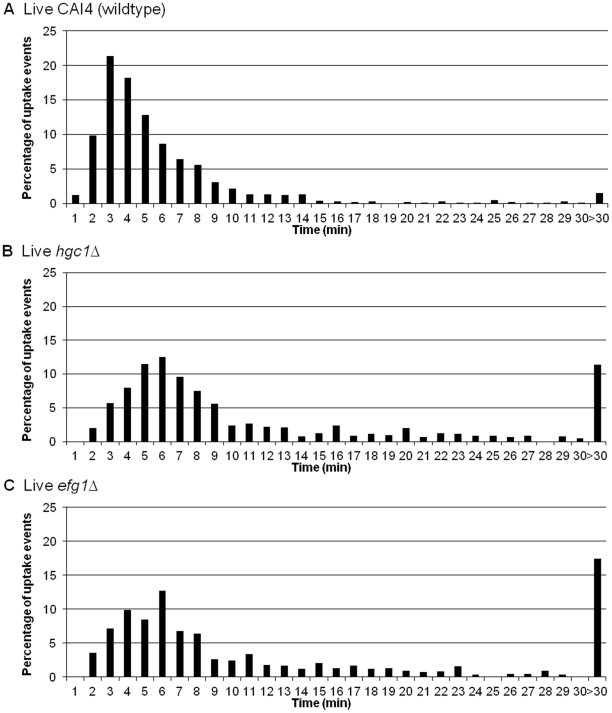
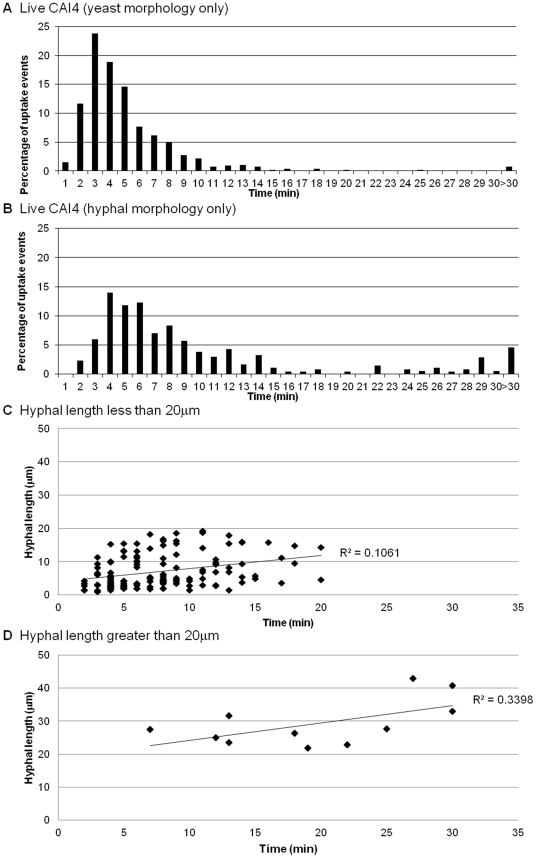
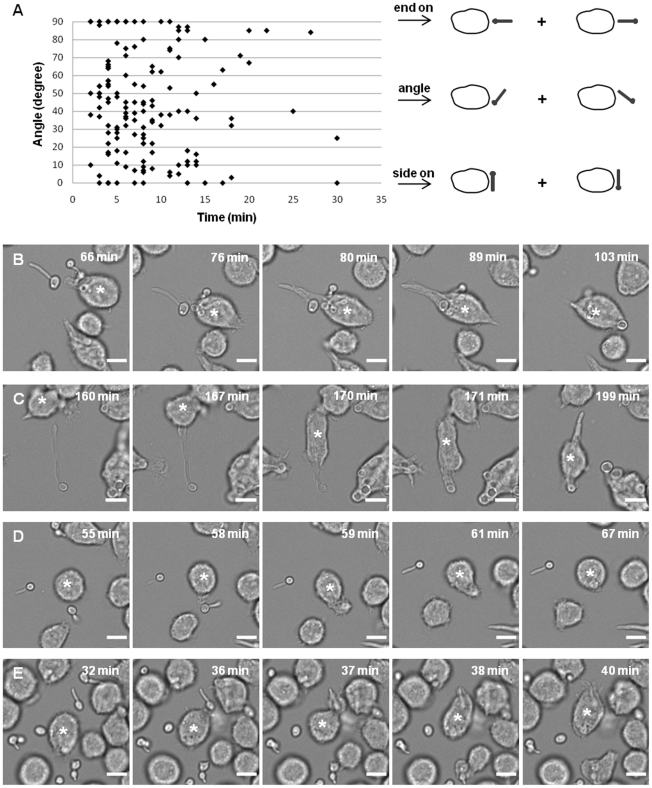
Candida albicans is a major life-threatening human fungal pathogen. Host defence against systemic Candida infection relies mainly on phagocytosis of fungal cells by cells of the innate immune system. In this study, we have employed video microscopy, coupled with sophisticated image analysis tools, to assess the contribution of distinct C. albicans cell wall components and yeast-hypha morphogenesis to specific stages of phagocytosis by macrophages. We show that macrophage migration towards C. albicans was dependent on the glycosylation status of the fungal cell wall, but not cell viability or morphogenic switching from yeast to hyphal forms. This was not a consequence of differences in maximal macrophage track velocity, but stems from a greater percentage of macrophages pursuing glycosylation deficient C. albicans during the first hour of the phagocytosis assay. The rate of engulfment of C. albicans attached to the macrophage surface was significantly delayed for glycosylation and yeast-locked morphogenetic mutant strains, but enhanced for non-viable cells. Hyphal cells were engulfed at a slower rate than yeast cells, especially those with hyphae in excess of 20 µm, but there was no correlation between hyphal length and the rate of engulfment below this threshold. We show that spatial orientation of the hypha and whether hyphal C. albicans attached to the macrophage via the yeast or hyphal end were also important determinants of the rate of engulfment. Breaking down the overall phagocytic process into its individual components revealed novel insights into what determines the speed and effectiveness of C. albicans phagocytosis by macrophages.
Overview
The claims and statistics of this paper haven’t been checked yet.
Free: it reads the open-access text and checks the first 5 claims that cite a source we can check. Create a free account to check every claim.
Integrity signals
Registry
Cites
Statistics
Figures
Verification
Claims the paper makes
The claims and statistics of this paper haven’t been checked yet.
Free: it reads the open-access text and checks the first 5 claims that cite a source we can check. Create a free account to check every claim.
Self-check
Percentages, sums and reported differences re-computed from the paper’s own numbers.
The self-check needs the paper’s full text.
Citations
Cites
Role of target geometry in phagocytosis
Champion, J. A., & Mitragotri, S. (2006) · Proceedings of the National Academy of Sciences · doi:10.1073/pnas.0600997103 · Cited by 2,074 · cited 1×
“This in turn may reflect differences in the wall chemistry of the hyphal tip compared to the mother cell, or be due to the efficiency of the assembly of proteins of the phagocytic cup for objects of different sizes and shapes [45].”
BackgroundNonfilamentous C. albicans Mutants Are Avirulent
Lo, H.-J., Köhler, J. R., DiDomenico, B., Loebenberg, D., Cacciapuoti, A., & Fink, G. R. (1997) · Cell · doi:10.1016/s0092-8674(00)80358-x · Cited by 1,809 · cited 3×
“albicans [37], and its ability to switch between yeast and hyphal forms is thought to contribute to pathogenesis [24,25,38,39].”
BackgroundGrowth of Candida albicans hyphae
Sudbery, P. E. (2011) · Nature Reviews Microbiology · doi:10.1038/nrmicro2636 · Cited by 1,110 · cited 1×
“albicans [37], and its ability to switch between yeast and hyphal forms is thought to contribute to pathogenesis [24,25,38,39].”
BackgroundAn integrated model of the recognition of Candida albicans by the innate immune system
Netea, M. G., Brown, G. D., Kullberg, B. J., & Gow, N. A. R. (2008) · Nature Reviews Microbiology · doi:10.1038/nrmicro1815 · Cited by 946 · cited 1×
“The fungal cell wall is the first point of contact with the innate immune system and plays an important role in recognition and phagocytosis by host immune cells [2].”
BackgroundSelf-citationNetea, M. G. (2006) · Journal of Clinical Investigation · doi:10.1172/jci27114 · Cited by 753
Saville, S. P., Lazzell, A. L., Monteagudo, C., & Lopez-Ribot, J. L. (2003) · Eukaryotic Cell · doi:10.1128/ec.2.5.1053-1060.2003 · Cited by 655 · cited 1×
“albicans mutants that are unable to form filaments are less virulent [40], although conversely, mutants that are unable to grow as yeast are also less virulent [41].”
BackgroundDendritic Cells Discriminate between Yeasts and Hyphae of the Fungus Candida albicans
d'Ostiani, C. F., Del Sero, G., Bacci, A., Montagnoli, C., Spreca, A., Mencacci, A., Ricciardi-Castagnoli, P., & Romani, L. (2000) · The Journal of Experimental Medicine · doi:10.1084/jem.191.10.1661 · Cited by 493
Fungal morphogenesis and host invasion
Gow, N. A. R., Brown, A. J. P., & Odds, F. C. (2002) · Current Opinion in Microbiology · doi:10.1016/s1369-5274(02)00338-7 · Cited by 482 · cited 1×
“albicans [37], and its ability to switch between yeast and hyphal forms is thought to contribute to pathogenesis [24,25,38,39].”
BackgroundSelf-citationWells, C. A., Salvage-Jones, J. A., Li, X., Hitchens, K., Butcher, S., Murray, R. Z., Beckhouse, A. G., Lo, Y.-L.-S., Manzanero, S., Cobbold, C., et al. (2008) · The Journal of Immunology · doi:10.4049/jimmunol.180.11.7404 · Cited by 433 · cited 1×
“albicans recognition, including the scavenger receptors CD36 and SCARF1 [15], TLR9 recognition of nucleic acids [16], dectin-2 [17] and the C-type lectin mincle [18].”
BackgroundInnate Antifungal Immunity: The Key Role of Phagocytes
Brown, G. D. (2011) · Annual Review of Immunology · doi:10.1146/annurev-immunol-030409-101229 · Cited by 419 · cited 2×
“Phagocytic clearance of fungal pathogens may be considered to consist of four distinct stages;(i) accumulation of phagocytes at the site where fungal cells are located; (ii) recognition of fungal pathogen-associated molecular patterns (PAMPs) through pattern recognition receptors (PRRs) (reviewed in [11]; (iii) engulf…”
Background
Research works printed but not linked: 3
- Hobson RP Munro CA Bates S MacCallum DM Cutler JE 2004 Loss of cell wall mannosylphosphate in Candida albicans does not influence macrophage recognition. J Biol Chem 279 39628 39635 15271989 · DOI · Paper page
- McKenzie CG Koser U Lewis LE Bain JM Mora-Montes HM 2010 Contribution of Candida albicans cell wall components to recognition by and escape from murine macrophages. Infect Immun 78 1650 1658 20123707 PMC2849426 · DOI · Paper page
- Mora-Montes HM Bates S Netea MG Castillo L Brand A 2010 A multifunctional mannosyltransferase family in Candida albicans determines cell wall mannan structure and host-fungus interactions. J Biol Chem 285 12087 12095 20164191 PMC2852947 · DOI · Paper page
Cited by
Items 101–155 of 155
Deng, F.-S., & Lin, C. (2018) · Virulence · doi:10.1080/21505594.2018.1456228 · Cited by 9
Commensal to Pathogen Transition of Candida albicans
Niemiec, M. J., Kapitan, M., Polke, M., & Jacobsen, I. D. (2017) · Elsevier eBooks · doi:10.1016/b978-0-12-809633-8.12077-1 · Cited by 9
Dean, N., Jones, R., DaSilva, J., Chionchio, G., & Ng, H. (2022) · Genetics · doi:10.1093/genetics/iyac048 · Cited by 7
Candida albicans/Macrophage Biointerface on Human and Porcine Decellularized Adipose Matrices
Cicuéndez, M., Casarrubios, L., Rojo, J. M., Madarieta, I., García‐Urkía, N., Murua, O., Olalde, B., Briz, N., Diez‐Orejas, R., & Portolés, M. T. (2021) · Journal of Fungi · doi:10.3390/jof7050392 · Cited by 7
“Moreover, hyphal cells are difficult to be engulfed by macrophages [16,17].”
BackgroundInhibition of morphological transition and hyphae extension in Candida spp. by occidiofungin
Kumpakha, R., & Gordon, D. M. (2022) · Journal of Applied Microbiology · doi:10.1111/jam.15425 · Cited by 7
“, it is the hyphae form of the fungus that is pathogenic as the filamentous morphology is linked to its ability to invade host tissues and evade host immune clearance by preventing macrophage engulfment (KepplerRoss et al., 2010; Lewis et al., 2012).”
BackgroundCuevas-Tello, J. C., la Rosa, A. M.-D., Quistian-Navarro, J. L., Martínez‐Gamboa, A., González-Lara, M. F., López-García, N. I., Rangel‐Cordero, A., López-Jácome, L. E., Cervantes-Hernández, M. I., Franco‐Cendejas, R., et al. (2025) · Medical Mycology · doi:10.1093/mmy/myaf097 · Cited by 8
Paulo, E. A., de Souza, C. M., Perini, H. F., Almeida, R. S., Costa, I. C., Pavanelli, W. R., Furlaneto-Maia, L., & Furlaneto, M. C. (2023) · Microbial Pathogenesis · doi:10.1016/j.micpath.2023.106186 · Cited by 6
Quantifying Receptor-Mediated Phagocytosis and Inflammatory Responses to Fungi in Immune Cells
Asamaphan, P., Brown, G. D., & Willment, J. A. (2021) · Methods in molecular biology · doi:10.1007/978-1-0716-1182-1_11 · Cited by 6
Alonso, M. F., Bain, J. M., Rudkin, F. M., Erwig, L. P., Brown, A. J. P., & Gow, N. A. R. (2022) · The Cell Surface · doi:10.1016/j.tcsw.2022.100082 · Cited by 5
“Phagocytosis by macrophages and neutrophils is a key element of the innate host defence response to invading fungal pathogens (Lewis et al., 2012; Rudkin et al., 2013; Bain et al., 2021; Godoy et al., 2022).”
BackgroundResultInfluentialSelf-citationRaiyan, S., Rahman, M. A., Mamun, M. A. A., Asim, M. M. H., Makki, A. A., Hajjar, D., Alelwani, W., Tangpong, J., & Mathew, B. (2020) · Journal of Biomedical Materials Research Part A · doi:10.1002/jbm.a.37103 · Cited by 5
Commensal to Pathogen Transition of Candida albicans
Jacobsen, I. D., Niemiec, M. J., Kapitan, M., & Polke, M. (2020) · Elsevier eBooks · doi:10.1016/b978-0-12-809633-8.21281-8 · Cited by 6
Benzo[a]phenoxazine derivative C34 efficacy against fluconazole-resistant Candida spp.
Pacheco, M. I., Carvalho-Pereira, J., Costa‐Barbosa, A., Marques, F., Durães, P. M., Gonçalves, M. S. T., Sousa, M. J., & Sampaio, P. (2025) · Microbial Pathogenesis · doi:10.1016/j.micpath.2025.107498 · Cited by 4
Passivating the Background of Living Microbes with a Zwitterionic Peptide for Therapies
Fang, L., Cai, S., McMullen, P., Hsu, Y.-C., Chen, M. Y. Q., & Jiang, S. (2024) · Bioconjugate Chemistry · doi:10.1021/acs.bioconjchem.3c00549 · Cited by 4
Phagosome maturation during fungal infection
McFadden, M. J., O’Riordan, M. X., & O’Meara, T. R. (2026) · Current Opinion in Microbiology · doi:10.1016/j.mib.2026.102710 · Cited by 3
“The composition of the fungal cell wall is an important determinant of recognition and phagocytosis, and glycosylation of cell wall components can influence these processes [23].”
Baker, C. P., Laba, S., Warner, J., Shepherd, K., Wilson, H. M., & Arthur, J. S. C. (2026) · Scientific Reports · doi:10.1038/s41598-026-39429-z · Cited by 3
“Macrophages can phagocytose C. albicans both in its yeast and hyphal form, although uptake of hyphal cells longer than 20 μm is greatly perturbed 21 .”
Manczinger, M., Bocsik, A., Kocsis, G. F., Vörös, A., Hegedüs, Z., Ördögh, L., Kondorosi, É., Marton, A., Vízler, C., Tubak, V., et al. (2015) · BioMed Research International · doi:10.1155/2015/398045 · Cited by 5
“albicanswas found to be engulfed more rapidly by macrophages than the hyphal form [5].”
BackgroundBlair, B. A., Bragdon, E., Dhillon, G. K., Baker, N., Stasiak, L. A., Muthig, M., Miramón, P., Lorenz, M. C., & Wheeler, R. T. (2025) · mBio · doi:10.1128/mbio.00529-25 · Cited by 4
“C. albicans is known to limit immune recruitment and phagocytosis during infection; although morphological switching can regulate phagocyte recruitment, few molecular details are known about how this occurs (30, 32, 33).”
Evaluating the Role of Candida albicans as a Potential Oral Carcinogen
Amirinia, F., Motamedi, M., Ardi, P., & Jabrodini, A. (2025) · Interdisciplinary Perspectives on Infectious Diseases · doi:10.1155/ipid/4057977 · Cited by 2
“Furthermore, candidalysin activates matrix metalloproteinases (MMPs), especially MMP-9, facilitating tumor invasion, angiogenesis, and metastasis by degrading the extracellular matrix and stimulating angiogenic factors such as vascular endothelial growth factor (VEGF) [47–49].”
Macrophages at work: phagocytosis of urinary fungi
Poloni, J. A. T., Perazella, M. A., & Neild, G. H. (2013) · Clinical Kidney Journal · doi:10.1093/ckj/sfs184 · Cited by 2
Neutrophils phagocytosing fungal hyphae in urinary sediment
Poloni, J. A. T., Garcia, C. D., Rotta, L. N., & Urban, C. F. (2021) · Brazilian Journal of Nephrology · doi:10.1590/2175-8239-jbn-2019-0245 · Cited by 2
Jones, C. R., Zhang, Z. J., & Tsai, H.-J. (2023) · Methods in molecular biology · doi:10.1007/978-1-0716-3199-7_1 · Cited by 3
Río, M. D., Radicioni, M. B., Cutine, A. M., Mariño, K. V., Mora-Montes, H. M., Cagnoni, A. J., & Regente, M. C. (2024) · Glycobiology · doi:10.1093/glycob/cwae058 · Cited by 2
Genomic Innovation and Virulence Evolution in the Emerging Human Fungal Pathogen Candida auris
Gifford, H., Rhodes, J. L., Wilson, D., & Farrer, R. A. (2024) · The mycota · doi:10.1007/978-3-031-75666-5_10 · Cited by 2
Zhou, Y., Li, J., Wang, D., Peng, L., & Chen, K. (2025) · Neuropharmacology · doi:10.1016/j.neuropharm.2025.110760 · Cited by 2
Dutta, A., Sahu, S. R., Utkalaja, B. G., Parida, S. S., Patel, S. K., Kumari, P., & Acharya, N. (2025) · npj Vaccines · doi:10.1038/s41541-025-01291-x · Cited by 1
Nehemia, M., Cohen, H., Gruzman, O., Amador, T. M. V., Levy, S. B., Grisaru‐Granovsky, S., & Menachem-Zidon, O. B. (2026) · Biomedicines · doi:10.3390/biomedicines14050994 · Cited by 2
“In Candida albicans , cell wall glycosylation influences recognition efficiency and macrophage recruitment [37], whereas in Aspergillus fumigatus , dormant conidia are typically internalized with limited signaling, while germinating hyphae induce stronger inflammatory responses, including IL-1 β -…”
Z-Nucleic Acids: A Regulator of Macrophage PANoptosis and Fungal Biofilm in Fungal Keratitis
Gao, N., Ma, Y., Zhang, M., Cui, M., Li, X., & Yang, R. (2026) · Investigative Ophthalmology & Visual Science · doi:10.1167/iovs.67.10.6 · Cited by 1
“10 Second, active fungal hyphae secrete extracellular polysaccharides, proteins, nucleic acids, and lipids to form extracellular matrix (ECM), which further assembles into fungal biofilms.”
Bain, J. M., Lewis, L. E., & Erwig, L. (2012) · Immunology and Cell Biology · doi:10.1038/icb.2012.38 · Cited by 1
Self-citationThe neutralN-linked glycans of the ustilaginomycete yeastSympodiomycopsis paphiopedili
Flores, R. J. D., Ohashi, T., Kawasaki, H., & Fujiyama, K. (2017) · Yeast · doi:10.1002/yea.3233 · Cited by 1
“…and N-linked mannan branching were also found to directly affect cell wall structure and cell surface recognition, host defence mechanisms against C. albicans, macrophage migration and rate of phagocytosis (Mora-Montes et al., 2010; Lewis et al., 2012; McKenzie et al., 2010; Sheth et al., 2011).”
BackgroundGupta, A. (2019) · Minerva Access (University of Melbourne) · Cited by 1
Low, T. (2020) · TSpace (University of Toronto) · Cited by 1
Damiens, S. (2012) · theses.fr (ABES) · doi:10.70675/39146b55z55d8z4201za86fz5ea93720b610 · Cited by 2
Role of urease in pH modulation and virulence of Fusarium oxysporum
Schäfer, K. (2014) · LA Referencia (Red Federada de Repositorios Institucionales de Publicaciones Científicas) · Cited by 1
fungal pathogen Candida albicans and the outcome of the host-pathogen
Okai, B., Lyall, N., & Bain, J. M. (2015)
Self-citationCaracterização das bases moleculares da suscetibilidade imunológica à infecção por Candida albicans
Agustinho, D. P. (2015) · RIUnB Institutional Repository (University of Brasília) · doi:10.26512/2015.02.t.18734
Lopes, M. D. C. G. (2013) · Portuguese National Funding Agency for Science, Research and Technology (RCAAP Project by FCT)
Characterization of the ATO Gene Family in Alternative Carbon Metabolism
Danhof, H. A. (2016) · Digital Commons-TMC (Texas Medical Center)
Az opportunista humánpatogén Candida parapsilosis patomechanizmusának molekuláris szabályozottsága
Tóth, R. (2016) · SZTE Repository of Dissertations (University of Szeged) · doi:10.14232/phd.3187
Capilla, B. H. (2016) · Tesis Doctorals en Xarxa (Consorci de Serveis Universitaris de Catalunya) · Cited by 1
Breda, L. C. D. (2020) · Digital Library of Theses and Dissertations (Universidade de São Paulo) · doi:10.11606/t.42.2020.tde-16122019-161916
Chronic invasive candidiasis in murine CARD9-deficiency
Landekic, M. (2021) · eScholarship@McGill (McGill) · doi:10.82308/17175 · Cited by 1
Interactions Between Intracellular Fungal Pathogens and Host Phagocytes
Case, N. T., Robbins, N., & Cowen, L. E. (2022) · Elsevier eBooks · doi:10.1016/b978-0-12-821618-7.00042-0
Cowen, L. E., & Veri, A. O. (2019) · Faculty Opinions – Post-Publication Peer Review of the Biomedical Literature · doi:10.3410/f.734605464.793556591
Hall, R. A. (2020) · Faculty Opinions – Post-Publication Peer Review of the Biomedical Literature · doi:10.3410/f.737290440.793577208
Chenine, A. S., Boual, Z., El-Hadj, M. D. O., Addoun, N., Mahfoudi, R., Khemili, A., Bey, D., Belkhalfa, H., Rahmani, Y., Dubessay, P., et al. (2024) · Bioactive Carbohydrates and Dietary Fibre · doi:10.1016/j.bcdf.2024.100446
MDR in Candida: The Real Storm
Srivastava, P., Tiwari, S., Kumar, M., Murhekar, M. V., & Dwivedi, G. R. (2024) · Springer eBooks · doi:10.1007/978-981-97-4909-6_4
Bantel, Y. (2019) · OPUS Publication Server of the University of Stuttgart (University of Stuttgart) · doi:10.18419/opus-10679
(2018) · Institutional Research Information System (University of Udine)
Le granulome à Candida : modèle de persistance pour l’étude de l’interaction hôte-pathogène
Misme‐Aucouturier, B. (2017) · theses.fr (ABES) · doi:10.70675/417f4a06z6c24z44b4z83c1z00d64e72fb36
candida albicans sur puce : approche biomécanique de la plasticité morphogénétique de c. albicans
Albert, L. (2022) · theses.fr (ABES) · doi:10.70675/1f188066z3dd4z4ecbz8c2fzf2377b89514f · Cited by 2
Fonctions et biosynthèse des β-1,6-glucanes de la paroi cellulaire chez Candida albicans
Bekirian, C. (2024) · theses.fr (ABES) · doi:10.70675/b1028289z0c26z4acaz8f96z18e5c0c94464
Zhu, H., Wang, X., & Shao, J. (2026) · Biochimie · doi:10.1016/j.biochi.2026.09.004
Parra‐Giraldo, C. M., Estrada‐Valbuena, J. J., Vargas‐Casanova, Y., Aldea, I., Clemente, L. F., Gil, C., Martínez‐López, R., & Monteoliva, L. (2026) · bioRxiv (Cold Spring Harbor Laboratory) · doi:10.64898/2026.09.19.752827
“Morphological transitions are known to influence macrophage interactions, and although the relationship is complex, differences in hyphal architecture can affect recognition and engulfment (Lewis et al., 2012).”
Análise dos macrófagos M1 e M2 durante a infecção por Sporothrix schenckii em modelo murino
Alegranci, P. (2013) · Americanae (AECID Library) · Cited by 2
Metadata
- Authors
- Lewis, L. E., Bain, J. M., Lowes, C., Gillespie, C., Rudkin, F. M., Gow, N. A. R., & Erwig, L.-P.
- Affiliations
- University of Aberdeen (GB)
- Corresponding author
- Erwig, Lars-Peter
- Venue
- PLoS Pathogens
- Publisher
- Public Library of Science (PLoS)
- Published
- 2012-03-15
- Volume
- 8
- Issue
- 3
- Pages
- e1002578
- ISSN
- 1553-7366 (ISSN-L)
- 1553-7374
- PMC
- PMC3305454
- OpenAlex
- W2019174191
- Cited by
- 150
- References
- 48
- Citations by year
- 2026: 6 · 2025: 7 · 2024: 7 · 2023: 7 · 2022: 12 · 2021: 15 · 2020: 11 · 2019: 5 · 2018: 8 · 2017: 11 · 2016: 13 · 2015: 12 · 2014: 14 · 2013: 16 · 2012: 6
- FWCI
- 10.65
- Type
- journal article
- Language
- en
- Open access
- gold
- doi.org
- Locations
- PLoS Pathogens (publishedVersion, cc-by)
- PubMed Central (publishedVersion, cc-by)
- PubMed (publishedVersion)
- Aberdeen University Research Archive (Aberdeen University) (submittedVersion)
- DOAJ (DOAJ: Directory of Open Access Journals) (submittedVersion, cc-by-sa)
- Figshare (submittedVersion, cc-by)
- Funders
- Wellcome Trust (097377/Z/11/Z, 089930, 080088, 075470)
- European Commission (260338)
- University of Aberdeen
- Topics
- Health Sciences › Medicine › Infectious Diseases › Antifungal resistance and susceptibility
- Life Sciences › Biochemistry, Genetics and Molecular Biology › Molecular Biology › Fungal and yeast genetics research
- Health Sciences › Medicine › Infectious Diseases › Fungal Infections and Studies
- Keywords
- Candida albicans, phagocytosis, macrophages, hyphal length, macrophage migration, fungal virulence factors
- MeSH terms
- Animals, Candida albicans, Candidiasis, Cell Movement, Cell Wall, Disease Models, Animal, Female, Glycosylation, Immunity, Innate, Mice, Inbred BALB C, Phagocytosis, Macrophages, Peritoneal, Mice
About these checks
Registry, retraction, Cites and statistics results are computed, not judged, with one exception: a printed reference that no index lists is read once by a model before it counts as a citation error. Claims are extracted by a model and kept only when their quote appears verbatim in the text; each cited source is then checked, with a model’s help, for whether it says what the claim relies on. Those verdicts can be wrong — read the claim’s quote and the cited source before relying on one.
Statistics and arithmetic are recomputed, not judged.
Confidence bands are shown only for fields calibrated on our annotated test set. None is calibrated yet, so no band is shown.
What counts as a claim ›How we measure confidence ›How we check this ›
Are you an author, or do you see a problem with this page? Request a review
Data sources
Bibliographic data: Semantic Scholar, OpenAlex, Crossref.
Contains information from the Semantic Scholar Academic Graph Datasets, made available under the ODC Attribution License (ODC-BY 1.0).
Semantic Scholar’s data is described in: Kinney, R., et al. (2023). The Semantic Scholar Open Data Platform. arXiv:2301.10140.
