

A GATA Transcription Factor Recruits Hda1 in Response to Reduced Tor1 Signaling to Establish a Hyphal Chromatin State in Candida albicans
Open accessThe DOI matches its Crossref record; 46 of the 47 references it cites were found in a registry or an index.
Abstract
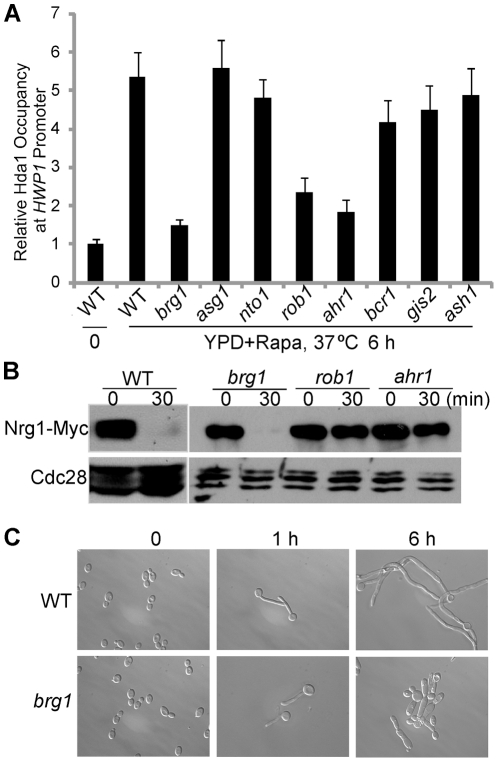
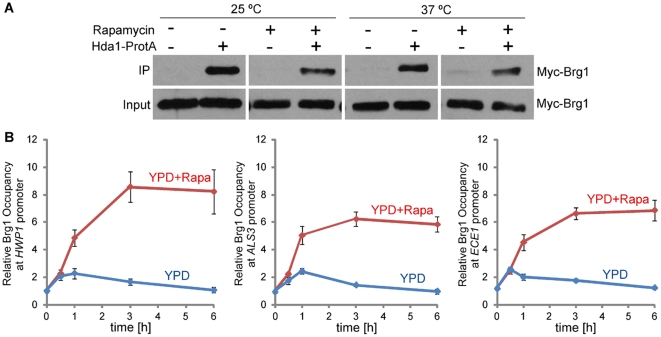
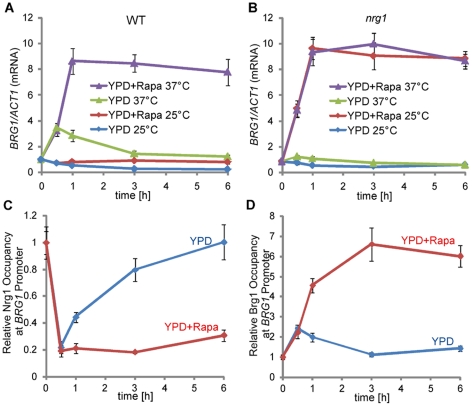
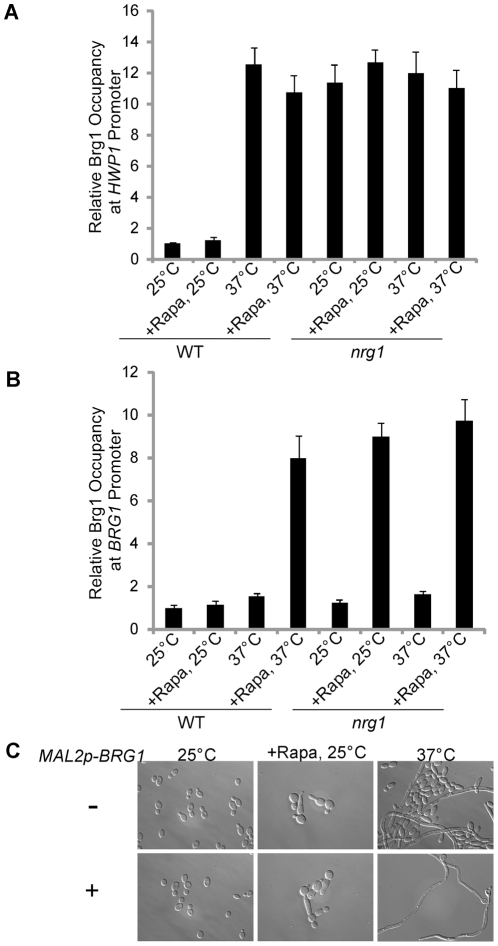
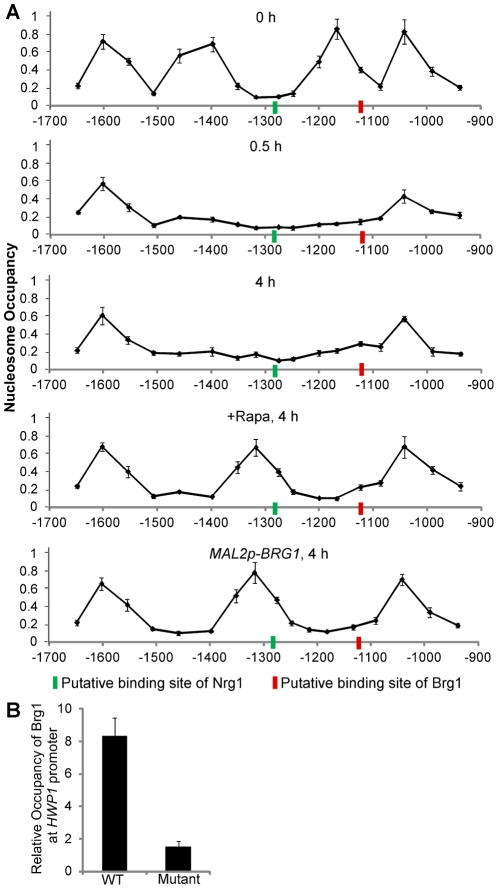
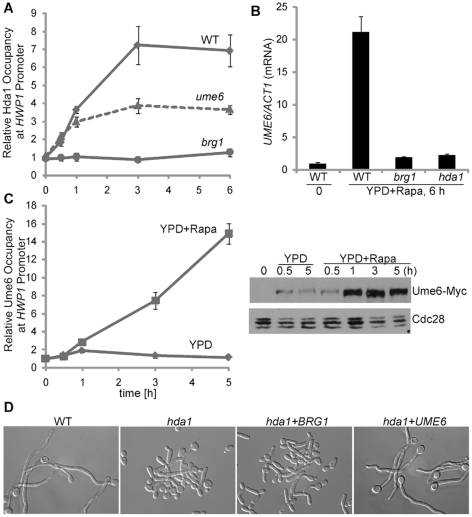
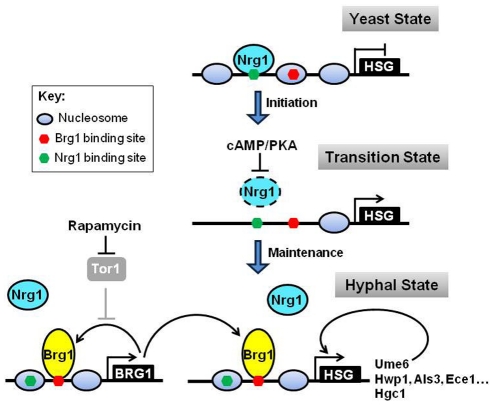
Candida albicans is an important opportunistic fungal pathogen of immunocompromised individuals. One critical virulence attribute is its morphogenetic plasticity. Hyphal development requires two temporally linked changes in promoter chromatin, which is sequentially regulated by temporarily clearing the transcription inhibitor Nrg1 upon activation of the cAMP/PKA pathway and promoter recruitment of the histone deacetylase Hda1 under reduced Tor1 signaling. Molecular mechanisms for the temporal connection and the link to Tor1 signaling are not clear. Here, through a forward genetic screen, we report the identification of the GATA family transcription factor Brg1 as the factor that recruits Hda1 to promoters of hypha-specific genes during hyphal elongation. BRG1 expression requires both the removal of Nrg1 and a sub-growth inhibitory level of rapamycin; therefore, it is a sensitive readout of Tor1 signaling. Interestingly, promoters of hypha-specific genes are not accessible to Brg1 in yeast cells. Furthermore, ectopic expression of Brg1 cannot induce hyphae, but can sustain hyphal development. Nucleosome mapping of a hypha-specific promoter shows that Nrg1 binding sites are in nucleosome free regions in yeast cells, whereas Brg1 binding sites are occupied by nucleosomes. Nucleosome disassembly during hyphal initiation exposes the binding sites for both regulators. During hyphal elongation, Brg1-mediated Hda1 recruitment causes nucleosome repositioning and occlusion of Nrg1 binding sites. We suggest that nucleosome repositioning is the underlying mechanism for the yeast-hyphal transition. The hypha-specific regulator Ume6 is a key downstream target of Brg1 and functions after Brg1 as a built-in positive feedback regulator of the hyphal transcriptional program to sustain hyphal development. With the levels of Nrg1 and Brg1 dynamically and sensitively controlled by the two major cellular growth pathways, temporal changes in nucleosome positioning during the yeast-to-hypha transition provide a mechanism for signal integration and cell fate specification. This mechanism is likely used broadly in development.
Overview
The claims and statistics of this paper haven’t been checked yet.
Free: it reads the open-access text and checks the first 5 claims that cite a source we can check. Create a free account to check every claim.
Integrity signals
Registry
Cites
Statistics
Figures
Verification
Claims the paper makes
The claims and statistics of this paper haven’t been checked yet.
Free: it reads the open-access text and checks the first 5 claims that cite a source we can check. Create a free account to check every claim.
Claims other papers make about this one
Each is checked against this paper’s own text: does it say what the citing paper says it does?
The cited source says what the claim attributes to it.
In the citing paper
“Recently, it has been demonstrated that chromatin and chromatin-modifying enzymes are important for mediating the expression of morphogenesis-related genes in C. albicans (21, 22).”
From A Histone Deacetylase Complex Mediates Biofilm Dispersal and Drug Resistance in Candida albicans (2014) · cites this paper as [21]
Self-check
Percentages, sums and reported differences re-computed from the paper’s own numbers.
The self-check needs the paper’s full text.
Citations
Cites
Virulence factors of Candida albicans
Calderone, R. A., & Fonzi, W. A. (2001) · Trends in Microbiology · doi:10.1016/s0966-842x(01)02094-7 · Cited by 1,331 · cited 1×
“Candida albicans is a major opportunistic fungal pathogen of humans [1,2].”
BackgroundOdds, F. C. (1979) · Medical Entomology and Zoology · Cited by 1,297
Genome-Scale Identification of Nucleosome Positions in S. cerevisiae
Yuan, G.-C., Liu, Y.-J., Dion, M. F., Slack, M. D., Wu, L. F., Altschuler, S. J., & Rando, O. J. (2005) · Science · doi:10.1126/science.1112178 · Cited by 1,139 · cited 1×
“Nucleosomes are generally inhibitory to transcription factor binding, and changes in nucleosome position are associated with changes in gene expression by affecting the accessibility of transcription factors to promoters”
BackgroundThe TOR signalling pathway controls nuclear localization of nutrient-regulated transcription factors
Beck, T., & Hall, M. N. (1999) · Nature · doi:10.1038/45287 · Cited by 924 · cited 2×
“Gln3 and Gat1, two GATA family transcription activators for genes that are subject to nitrogen catabolite repression, are targets of the TOR kinases in Saccharomyces cerevisiae [23].”
BackgroundA Recently Evolved Transcriptional Network Controls Biofilm Development in Candida albicans
Nobile, C. J., Fox, E. P., Nett, J. E., Sorrells, T. R., Mitrovich, Q. M., Hernday, A. D., Tuch, B. B., Andes, D. R., & Johnson, A. D. (2012) · Cell · doi:10.1016/j.cell.2011.10.048 · Cited by 711 · cited 2×
“Brg1 sites [red]: [A/C]GGTA[C/A]) [46].”
Saville, S. P., Lazzell, A. L., Monteagudo, C., & Lopez-Ribot, J. L. (2003) · Eukaryotic Cell · doi:10.1128/ec.2.5.1053-1060.2003 · Cited by 655 · cited 1×
“Considering that misregulation of either Nrg1 or Ume6 level causes altered virulence [9,40], our identification of Brg1 as an output of the Tor1 signaling that regulates Nrg1 binding and Ume6 expression should provide a better understanding of the molecular mechanisms that control the yeast-hyphal development in its h…”
BackgroundAls3 Is a Candida albicans Invasin That Binds to Cadherins and Induces Endocytosis by Host Cells
Phan, Q. T., Myers, C. L., Fu, Y., Sheppard, D. C., Yeaman, M. R., Welch, W. H., Ibrahim, A. S., Edwards, J. E., & Filler, S. G. (2007) · PLoS Biology · doi:10.1371/journal.pbio.0050064 · Cited by 641 · cited 1×
“For example, HWP1, ALS3, and RBT5 encode cell wall proteins that are important for adhesion to host cells and iron acquisition from the host [5–8].”
BackgroundAdhesive and Mammalian Transglutaminase Substrate Properties of Candida albicans Hwp1
Staab, J. F., Bradway, S. D., Fidel, P. L., & Sundstrom, P. (1999) · Science · doi:10.1126/science.283.5407.1535 · Cited by 607 · cited 1×
“encode cell wall proteins that are important for adhesion to host cells and iron acquisition from the host”
BackgroundFungal morphogenesis and host invasion
Gow, N. A. R., Brown, A. J. P., & Odds, F. C. (2002) · Current Opinion in Microbiology · doi:10.1016/s1369-5274(02)00338-7 · Cited by 482 · cited 1×
“Mutants that are defective in hyphal formation display much reduced virulence in animal models of systemic candidiasis [3,4].”
BackgroundNRG1 represses yeast–hypha morphogenesis and hypha‐specific gene expression in Candida albicans
Murad, A. M. A., Leng, P., Straffon, M., Wishart, J., Macaskill, S., MacCallum, D., Schnell, N., Talibi, D., Marechal, D., Tekaia, F., et al. (2001) · The EMBO Journal · doi:10.1093/emboj/20.17.4742 · Cited by 452 · cited 3×
“CCCT/C containing sequences [20] and Brg1 binds to the DNA”
Background
Research works printed but not linked: 1
- Nobile CJ Fox EP Nett JE Sorrells TR Mitrovich QM A Recently Evolved Transcriptional Network Controls Biofilm Development in Candida albicans. Cell 148 126 138 22265407 PMC3266547 · DOI · Paper page
Cited by
Candida albicans cell-type switching and functional plasticity in the mammalian host
Noble, S. M., Gianetti, B. A., & Witchley, J. N. (2017) · Nature Reviews Microbiology · doi:10.1038/nrmicro.2016.157 · Cited by 521
Witchley, J. N., Penumetcha, P., Abon, N. V., Woolford, C. A., Mitchell, A. P., & Noble, S. M. (2019) · Cell Host & Microbe · doi:10.1016/j.chom.2019.02.008 · Cited by 240
“As shown in the schematic in Figure 1D, Efg1, Rob1, Brg1, and Tec1 activate the expression of genes associated with yeastto-hypha morphogenesis (Lassak et al., 2011; Leng et al., 2001; Lu et al., 2012; Nobile et al., 2012).”
BackgroundCandida albicans hyphal initiation and elongation
Lu, Y., Su, C., & Liu, H. (2014) · Trends in Microbiology · doi:10.1016/j.tim.2014.09.001 · Cited by 193
Self-citationPolke, M., Hube, B., & Jacobsen, I. D. (2015) · Advances in Applied Microbiology · doi:10.1016/bs.aambs.2014.12.002 · Cited by 184
A Core Filamentation Response Network in Candida albicans Is Restricted to Eight Genes
Martin, R., Albrecht-Eckardt, D., Brunke, S., Hube, B., Hünniger, K., & Kurzai, O. (2013) · PLoS ONE · doi:10.1371/journal.pone.0058613 · Cited by 129
“Modification of histone proteins has shown to be involved in regulation of morphogenesis [58] and it was recently shown that chromatin remodeling plays an important role in allowing Nrg1 to get access to its target DNA sequences [21,22].”
BackgroundCandida albicans Hyphae: From Growth Initiation to Invasion
Desai, J. (2018) · Journal of Fungi · doi:10.3390/jof4010010 · Cited by 117
“It is achieved via the GATA transcription factor- Brg1 mediated recruitment of Hda1, which restricts Nrg1 access to the promoters of hyphal genes [60].”
BackgroundRegulation of Candida albicans Hyphal Morphogenesis by Endogenous Signals
Kornitzer, D. (2019) · Journal of Fungi · doi:10.3390/jof5010021 · Cited by 106
Chauvel, M., Nesseir, A., Cabral, V., Znaidi, S., Goyard, S., Bachellier-Bassi, S., Firon, A., Legrand, M., Diogo, D., Naulleau, C., et al. (2012) · PLoS ONE · doi:10.1371/journal.pone.0045912 · Cited by 102
“Noticeably, OE of SFL2 and BRG1 has been previously shown to trigger hyphal growth [30,54,60,61].”
BackgroundHnisz, D., Bardet, A. F., Nobile, C. J., Petryshyn, A., Glaser, W., Schöck, U., Stark, A., & Kuchler, K. (2012) · PLoS Genetics · doi:10.1371/journal.pgen.1003118 · Cited by 100
“The relief of Nrg1 repression enables expression of hyphal-specific genes such as the TFs Brg1 and Tec1, which once expressed, repress the promoters of the yeast-specific regulators and reinforce their own expression (Figure 6A).”
BackgroundInfluentialSu, C., Lu, Y., & Liu, H. (2013) · Molecular Biology of the Cell · doi:10.1091/mbc.e12-06-0477 · Cited by 94
“We showed that Ume6 functions after Brg1 and Hda1 (Lu et al., 2012).”
InfluentialSelf-citationA Histone Deacetylase Complex Mediates Biofilm Dispersal and Drug Resistance in Candida albicans
Nobile, C. J., Fox, E. P., Hartooni, N., Mitchell, K. F., Hnisz, D., Andes, D. R., Kuchler, K., & Johnson, A. D. (2014) · mBio · doi:10.1128/mbio.01201-14 · Cited by 87
Lu, Y., Su, C., Solis, N. V., Filler, S. G., & Liu, H. (2013) · Cell Host & Microbe · doi:10.1016/j.chom.2013.10.008 · Cited by 85
“Serum, N-acetylglucosamine, or nutrient limitation activates the expression of Brg1, leading to sustained expression of hypha-specific genes through changes in promoter chromatin that occlude Nrg1 binding (Lu et al., 2012; Lu et al., 2011; Su et al., 2013).”
BackgroundSelf-citationHistone Deacetylases and Their Inhibition in Candida Species
Garnaud, C., Champleboux, M., Maubon, D., Cornet, M., & Govin, J. (2016) · Frontiers in Microbiology · doi:10.3389/fmicb.2016.01238 · Cited by 81
“Class II HDACs: Hda1 and Hos3 Hda1 was identified in 2001 and was shown to play an important role in hyphal development (see below).”
BackgroundLin, X., Alspaugh, J. A., Liu, H., & Harris, S. (2014) · Cold Spring Harbor Perspectives in Medicine · doi:10.1101/cshperspect.a019679 · Cited by 100
“The accumulated Brg1 recruits the Hda1 histone deacetylase to promoters of hypha-specific genes, leading to nucleosome repositioning, obstruction of Nrg1 binding sites, and sustained hyphal development (Lu et al. 2011, 2012).”
BackgroundSelf-citationFunction and subcellular localization of Gcn5, a histone acetyltransferase in Candida albicans.
Chang, P., Fan, X., & Chen, J. (2015) · Fungal Genetics and Biology · doi:10.1016/j.fgb.2015.01.011 · Cited by 73
Ras Signaling Gets Fine-Tuned: Regulation of Multiple Pathogenic Traits of Candida albicans
Inglis, D. O., & Sherlock, G. (2013) · Eukaryotic Cell · doi:10.1128/ec.00094-13 · Cited by 66
“Brg1 recruits the Hda1 histone deacetylase to hyphaspecific promoters during hyphal cell elongation under conditions of reduced Tor1 signaling (77) and therefore may play a role during hyphal elongation in biofilm formation.”
BackgroundInfluentialRegulatory mechanisms controlling morphology and pathogenesis in Candida albicans
Kadosh, D. (2019) · Current Opinion in Microbiology · doi:10.1016/j.mib.2019.04.005 · Cited by 79
“This has been shown directly for certain transcription factors, such as Brg1 and Rep1 [63,64].”
BackgroundHypoxia and Temperature Regulated Morphogenesis in Candida albicans
Desai, P. R., van Wijlick, L., Kurtz, D., Juchimiuk, M., & Ernst, J. F. (2015) · PLOS Genetics · doi:10.1371/journal.pgen.1005447 · Cited by 61
“We analyzed the mode of joint target gene regulation by the Efg1/Ace2 proteins by focusing on BCR1 [52,66,67] and BRG1 (GAT2) [51,68,69], which regulate filamentation and were found to get hypoxically down- and, respectively, upregulated.”
Comparative Evolution of Morphological Regulatory Functions in Candida Species
Lackey, E., Vipulanandan, G., Childers, D. S., & Kadosh, D. (2013) · Eukaryotic Cell · doi:10.1128/ec.00164-13 · Cited by 61
“Hyphal growth, in turn, is maintained by inhibition of the Tor pathway, which allows a strong activator of filamentation, Brg1, to occupy hypha-specific promoters in place of Nrg1 (76).”
BackgroundInfluentialShekhar-Guturja, T., Tebung, W. A., Mount, H., Liu, N., Köhler, J. R., Whiteway, M., & Cowen, L. E. (2016) · Antimicrobial Agents and Chemotherapy · doi:10.1128/aac.01959-16 · Cited by 59
“Maintenance requires reduced TOR signaling to facilitate the activation and accumulation of the transcription factor Brg1 at hyphal gene promoters and recruitment of the histone deacetylase (HDAC) Hda1 (38).”
BackgroundNutrient and Stress Sensing in Pathogenic Yeasts
Rutherford, J. C., Bahn, Y., van den Berg, B., Heitman, J., & Xue, C. (2019) · Frontiers in Microbiology · doi:10.3389/fmicb.2019.00442 · Cited by 64
“Inhibition of TORC1 results in the activation of the GATA transcription factor Brg1, which is involved in the regulation of hypha-specific genes and blocking the recruitment of the Nrg1-Tip1 transcriptional repressor complex (Lu et al., 2012; Su et al., 2013).”
BackgroundMorphology Changes in Human Fungal Pathogens upon Interaction with the Host
Li, Z., & Nielsen, K. (2017) · Journal of Fungi · doi:10.3390/jof3040066 · Cited by 53
“Nrg1 represses expression of its downstream target Brg1, which directly upregulates Ume6 and the hypha-specific G1 cyclin Hgc1 via interaction with the histone deacetylase Hda1 [24].”
From Genes to Networks: The Regulatory Circuitry Controlling Candida albicans Morphogenesis
Basso, V., d’Enfert, C., Znaidi, S., & Bachellier‐Bassi, S. (2018) · Current topics in microbiology and immunology · doi:10.1007/82_2018_144 · Cited by 60
A genome-wide transcriptional analysis of morphology determination in Candida albicans
Carlisle, P. L., & Kadosh, D. (2013) · Molecular Biology of the Cell · doi:10.1091/mbc.e12-01-0065 · Cited by 49
“, 2008); a recent independent study also suggested that Ume6 functions as a positive feedback regulator of hyphal genes (Lu et al., 2012).”
BackgroundExploiting Fungal Virulence-Regulating Transcription Factors As Novel Antifungal Drug Targets
Bahn, Y.-S. (2015) · PLOS Pathogens · doi:10.1371/journal.ppat.1004936 · Cited by 44
“albicans by recruiting the histone deacetylase Hda1 to the promoters of hypha-specific genes, while the cAMP/PKA-dependent removal of Nrg1 is required for hyphal initiation [28].”
BackgroundLi, Y., Li, H., Sui, M., Li, M., Wang, J., Meng, Y., Sun, T., Liang, Q., Suo, C., Gao, X., et al. (2019) · Communications Biology · doi:10.1038/s42003-019-0419-1 · Cited by 42
Histone deacetylase-mediated morphological transition in Candida albicans
Kim, J., Lee, J., & Lee, J. (2015) · The Journal of Microbiology · doi:10.1007/s12275-015-5488-3 · Cited by 47
“Hda1 is recruited to the promoter regions of hypha-specific genes by interacting with Brg1, and blocks Nrg1 binding to these regions (Lu et al., 2012).”
BackgroundInfluentialFungal KATs/KDACs: A New Highway to Better Antifungal Drugs?
Kuchler, K., Jenull, S., Shivarathri, R., & Chauhan, N. (2016) · PLOS Pathogens · doi:10.1371/journal.ppat.1005938 · Cited by 40
Huang, X., Chen, X., He, Y., Yu, X., Li, S., Gao, N., Niu, L., Mao, Y., Wang, Y., Wu, X., et al. (2017) · PLOS Pathogens · doi:10.1371/journal.ppat.1006414 · Cited by 38
Lu, Y., Su, C., Ray, S., Yuan, Y., & Liu, H. (2019) · mBio · doi:10.1128/mbio.02320-18 · Cited by 38
“Nutrient limitation, serum, or Nacetylglucosamine activates the expression of transcription factor Brg1 to recruit the Hda1 histone deacetylase to promoters of hypha-specific genes, leading to nucleosome repositioning, obstruction of Nrg1 binding sites, and sustained hyphal development (16).”
Self-citationHistone Acetylation/Deacetylation in Candida Albicans and their Potential as Antifungal Targets
Su, S., Li, X., Yang, X., Li, Y., Chen, X., Sun, S., & Jia, S. (2020) · Future Microbiology · doi:10.2217/fmb-2019-0343 · Cited by 36
Candida albicans: Adapting to Succeed
Kadosh, D., & Lopez-Ribot, J. L. (2013) · Cell Host & Microbe · doi:10.1016/j.chom.2013.10.016 · Cited by 35
“…has demonstrated that a chromatin-remodeling pathway, involving the Brg1 transcription factor and Hda1 histone deacetylase, is required for maintenance of C. albicans hyphal growth in response to serum,N-acetylglucosamine, or nutrient limitation under normal air conditions (Lu et al., 2011, 2012).”
BackgroundBasso, V., Znaidi, S., Lagage, V., Cabral, V., Schönherr, F. A., LeibundGut‐Landmann, S., d’Enfert, C., & Bachellier‐Bassi, S. (2017) · Molecular Microbiology · doi:10.1111/mmi.13758 · Cited by 37
“Negative regulation of HSGs is mediated by the transcriptional repressor Tup1, in association with the DNA-binding proteins Nrg1, Rfg1 and Sfl1 and the co-repressor Ssn6 (Keleher et al., 1992; Smith and Johnson, 2000; Conlan and Tzamarias, 2001; Garcı́a-S anchez et al., 2005; Kadosh and John- son, 2005).”
BackgroundInfluentialMerge and separation of NuA4 and SWR1 complexes control cell fate plasticity in Candida albicans
Wang, X., Zhu, W., Chang, P., Wu, H., Liu, H., & Chen, J. (2018) · Cell Discovery · doi:10.1038/s41421-018-0043-0 · Cited by 38
Self-citationSu, C., Yu, J., Sun, Q., Liu, Q., & Lü, Y. (2018) · Molecular Microbiology · doi:10.1111/mmi.13944 · Cited by 35
“germ tube after dilution (Lu et al., 2012), deletion of”
BackgroundMethodSelf-citationSaputo, S., Kumar, A., & Krysan, D. J. (2014) · Eukaryotic Cell · doi:10.1128/ec.00148-14 · Cited by 37
“Tec1 (42) and Brg1 (43) both are known regulators of gene transcription during morphogenesis, and expression of each has been shown to increase when cells are shifted to inducing media.”
BackgroundInfluentialFlanagan, P. R., Liu, N.-N., Fitzpatrick, D. J., Hokamp, K., Köhler, J. R., & Moran, G. P. (2017) · mSphere · doi:10.1128/msphere.00477-17 · Cited by 37
“Inhibition of TORC1 results in activation of the GATA transcription factor Brg1, which is involved in modification of the promoters of hypha-specific genes and blocking recruitment of the Nrg1-Tup1 transcriptional repressor complex (5, 7).”
Jenull, S., Tscherner, M., Gulati, M., Nobile, C. J., Chauhan, N., & Kuchler, K. (2017) · Scientific Reports · doi:10.1038/s41598-017-08239-9 · Cited by 28
Childers, D. S., & Kadosh, D. (2015) · PLoS ONE · doi:10.1371/journal.pone.0122775 · Cited by 31
“Brg1 has previously been shown to be required for UME6 expression during growth in YEPD at 37°C with rapamycin [44].”
BackgroundInfluentialWakade, R. S., Huang, M. Y., Mitchell, A. P., Wellington, M. A., & Krysan, D. J. (2021) · mSphere · doi:10.1128/msphere.00436-21 · Cited by 31
“The TF Brg1 also plays an important role in the regulation of filamentation through a feedback loop with Nrg1, a repressor of filamentation (19, 20).”
BackgroundWakade, R. S., Ristow, L. C., Wellington, M. A., & Krysan, D. J. (2023) · eLife · doi:10.7554/elife.85114 · Cited by 28
Greig, J. A., Sudbery, I. M., Richardson, J. P., Naglik, J. R., Wang, Y., & Sudbery, P. E. (2015) · PLOS Pathogens · doi:10.1371/journal.ppat.1004630 · Cited by 25
“Significantly, we observe a peak in Fkh2 phosphorylation after 40 min of hyphal induction, which is consistent with the timing of chromatin reorganisation that results in the ejection of the repressor Nrg1 from the promoter of hyphal-expressed genes, a requirement for the long-term maintenance of hyphal growth [62, 63…”
BackgroundIntraspecies Transcriptional Profiling Reveals Key Regulators of Candida albicans Pathogenic Traits
Wang, J. M., Woodruff, A. L., Dunn, M. J., Fillinger, R. J., Bennett, R. J., & Anderson, M. Z. (2021) · mBio · doi:10.1128/mbio.00586-21 · Cited by 25
“The priming of filamentation via ME30 genes is supported by defined roles for Brg1 in recruiting Hda1, a histone deacetylase that remodels chromatin at the promoters of hypha-specific genes and occluding Nrg1, a negative regulator of filamentation (66, 83).”
BackgroundZhu, W., Fan, X., Zhao, Q., Xu, Y., Wang, X., & Chen, J. (2020) · Molecular Microbiology · doi:10.1111/mmi.14619 · Cited by 27
“Flo8 is a hypha-specific transcriptional factor that is essential for hyphal initiation (Cao et al., 2006), and Brg1 is a transcription factor that is essential for hyphal elongation (Lu et al., 2011, 2012).”
BackgroundWooten, D. J., Zañudo, J. G. T., Murrugarra, D., Perry, A. M., Dongari‐Bagtzoglou, A. I., Laubenbacher, R., Nobile, C. J., & Albert, R. (2021) · PLoS Computational Biology · doi:10.1371/journal.pcbi.1008690 · Cited by 24
McCrory, C., Verma, J., Tucey, T. M., Turner, R., Weerasinghe, H., Beilharz, T. H., & Traven, A. (2023) · mBio · doi:10.1128/mbio.02605-23 · Cited by 21
“Chromatin regulation has been implicated in hyphal growth and the transcription of hyphal-specific genes, including their regulation by Nrg1 (49, 53–56).”
BackgroundShaping Up for Battle: Morphological Control Mechanisms in Human Fungal Pathogens
Kadosh, D. (2013) · PLoS Pathogens · doi:10.1371/journal.ppat.1003795 · Cited by 22
“In order to maintain hypha-specific gene expression and develop extended hyphae, Hda1 histone deacetylase is subsequently recruited to the promoter by the transcriptional regulator Brg1 in the presence of reduced Tor signaling [37].”
BackgroundRao, K. H., Paul, S., & Ghosh, S. (2021) · Journal of Fungi · doi:10.3390/jof7010065 · Cited by 25
“It is known for filamentation induction and acts as a transcriptional regulator that works through Tor1 signaling pathway [14,42] in response to various environmental factors, such as serum [35,43,44].”
BackgroundInfluentialFunction and Regulation of Cph2 in Candida albicans
Lane, S., Lena, P. D., Tormanen, K., Baldi, P., & Liu, H. (2015) · Eukaryotic Cell · doi:10.1128/ec.00102-15 · Cited by 23
“The wild-type cells converted to yeast growth in YPD at 30°C by 5 h, and rapamycin was able to sustain hyphae under this condition, as shown previously (44, 45).”
Self-citationSolis, N. V., Wakade, R. S., Glazier, V. E., Ollinger, T. L., Wellington, M. A., Mitchell, A. P., Filler, S. G., & Krysan, D. J. (2022) · mBio · doi:10.1128/mbio.03447-21 · Cited by 21
Candida albicans requires iron to sustain hyphal growth
Luo, G., Wang, T., Zhang, J., Zhang, P., & Lu, Y. (2021) · Biochemical and Biophysical Research Communications · doi:10.1016/j.bbrc.2021.05.039 · Cited by 18
Stress- and metabolic responses of Candida albicans require Tor1 kinase N-terminal HEAT repeats
Qi, W., Acosta‐Zaldívar, M., Flanagan, P. R., Liu, N.-N., Jani, N. M., Fierro, J. F., Andrés, M. T. A., Moran, G. P., & Köhler, J. R. (2022) · PLoS Pathogens · doi:10.1371/journal.ppat.1010089 · Cited by 20
G-protein-coupled Receptors in Fungi
El-Defrawy, M. M. H., & Hesham, A. E. (2020) · Fungal biology · doi:10.1007/978-3-030-41870-0_3 · Cited by 23
Qasim, M. N., Arevalo, A. V., Nobile, C. J., & Hernday, A. D. (2021) · Journal of Fungi · doi:10.3390/jof7010037 · Cited by 20
“66 Filamentation, Biofilm formation [48,51,52]”
Kadosh, D. (2017) · Springer eBooks · doi:10.1007/978-3-319-50409-4_4 · Cited by 18
Cyclic strain of poly (methyl methacrylate) surfaces triggered the pathogenicity of Candida albicans
Montoya, C., Kurylec, J., Ossa, A., & Orrego, S. (2023) · Acta Biomaterialia · doi:10.1016/j.actbio.2023.08.037 · Cited by 15
Kramara, J., Kim, M.-J., Ollinger, T. L., Ristow, L. C., Wakade, R. S., Żarnowski, R., Wellington, M. A., Andes, D. R., Mitchell, A. P., & Krysan, D. J. (2024) · mBio · doi:10.1128/mbio.01249-24 · Cited by 17
Emerging roles of SWI/SNF remodelers in fungal pathogens
Balachandra, V. K., & Ghosh, S. (2022) · Current Genetics · doi:10.1007/s00294-021-01219-7 · Cited by 14
Linking Sfl1 Regulation of Hyphal Development to Stress Response Kinases in Candida albicans
Unoje, O., Yang, M., Lü, Y., Su, C., & Liu, H. (2020) · mSphere · doi:10.1128/msphere.00672-19 · Cited by 17
“Growth under nutrient-poor conditions or in the presence of serum promotes the expression and binding of transcription factor Brg1 to the promoters of hyphal genes, leading to chromatin remodeling and gene expression (28, 29, 32, 33).”
BackgroundMethodSelf-citationWakade, R. S., Wellington, M. A., & Krysan, D. J. (2024) · mSphere · doi:10.1128/msphere.00785-23 · Cited by 11
“At the initiation of normal in vitro filamentation, NRG1 expression is reduced, and its gene product, Nrg1, is degraded (12).”
BackgroundLong, Z., Peiying, W., Yu, Q., Wang, B., Li, D., Yang, C., Liu, L., Duan, G., & Sun, W. (2024) · Phytopathology Research · doi:10.1186/s42483-024-00230-3 · Cited by 11
“The GATA transcription factor Brg1 in Candida albicans recruits Hda1 to the promoters of hypha-specific genes to regulate hyphal development (Lu et al. 2012).”
BackgroundKim, S., Nguyen, Q. B., Wolyniak, M. J., Frechette, G. M., Lehman, C. R., Fox, B. K., & Sundstrom, P. (2018) · PLoS ONE · doi:10.1371/journal.pone.0192260 · Cited by 12
Adaptive evolution of Candida albicans through modulating TOR signaling
Zhang, Y., Yang, L., Zhao, Y., Xiong, K., Cui, H., Wang, T., Liu, X., Su, C., & Lü, Y. (2025) · mBio · doi:10.1128/mbio.03947-24 · Cited by 10
“To explore the genetic basis for the TOR suppression in the evolved clinical isolates, the sequences of TORC1 , as well as BRG1 and HOG1 , which are implicated in TOR signaling-mediated sustained hyphal development (35, 36), were checked through our whole-genome sequencing data.”
Self-citationA highly conserved tRNA modification contributes to C. albicans filamentation and virulence
Böttcher, B., Kienast, S. D., Leufken, J., Eggers, C., Sharma, P., Leufken, C. M., Morgner, B., Drexler, H. C. A., Schulz, D., Allert, S., et al. (2024) · Microbiology Spectrum · doi:10.1128/spectrum.04255-22 · Cited by 9
“In addition to the generally conserved TOR functions in nutrient signaling, reduced Tor1 activity contributes to C. albicans yeast-to-hyphae transition via nucleosome repositioning that allows expression of hyphae-associated genes (94).”
BackgroundDas, S., Goswami, A. M., & Saha, T. (2022) · Microbial Pathogenesis · doi:10.1016/j.micpath.2022.105418 · Cited by 9
The zinc cluster transcription factor Rha1 is a positive filamentation regulator in Candida albicans
Omran, R. P., Ramírez-Zavala, B., Tebung, W. A., Yao, S., Feng, J., Law, C. O., Dumeaux, V., Morschhäuser, J., & Whiteway, M. S. (2021) · Genetics · doi:10.1093/genetics/iyab155 · Cited by 10
Zhao, Q., Dai, B., Wu, H., Zhu, W., & Chen, J. (2022) · Molecular Microbiology · doi:10.1111/mmi.14954 · Cited by 8
Inhibiting roles of farnesol and HOG in morphological switching of Candida albicans.
Wang, X., He, H., Liu, J., Xie, S., & Han, J. (2020) · PubMed Central · Cited by 13
Li, Y., Li, H., Sun, T., & Ding, C. (2021) · Frontiers in Cellular and Infection Microbiology · doi:10.3389/fcimb.2021.774340 · Cited by 6
“…activities of fungi, including host adaptability, genome stability, production of virulence factors, synthesis of secondary metabolites, and fungal drug resistance (Lee et al., 2009; Wurtele et al., 2010; Lu et al., 2012; Lamoth et al., 2014; Brandao et al., 2015; Freire-Beneitez et al., 2016).”
BackgroundZhu, L., Liu, Q., Zhao, C., Zhu, M., Yang, X., & Yang, J. (2025) · Mycology: An International Journal on Fungal Biology · doi:10.1080/21501203.2024.2425170 · Cited by 4
“Nrg1 is a transcriptional repressor regulating mycelium gene expression; it mainly interacts with the nucleosome-free region of target gene promoters (Lu et al. 2012).”
Hughes, E. S., Tuck, L., He, Z., Ballou, E. R., & Wallace, E. W. J. (2025) · mSphere · doi:10.1128/msphere.00191-25 · Cited by 4
“Several of these homologs have reported roles in regulating growth and environmental responses (38–41).”
Schöpf, C., Geschwindt, A., Knapp, M., Seybold, A., Coraça-Huber, D. C., Ausserlechner, M. J., Romanelli, A., & Marx, F. (2025) · Journal of Fungi · doi:10.3390/jof12010011 · Cited by 2
“Stress-mediated modulation of Tor1 signaling in yeast cells has been reported to be an important factor in the regulation of BRG1 [30,75,76].”
Fróis-Martins, R., Mertens, S., Tran, V. D. T., Maufrais, C., d’Enfert, C., Sanglard, D., & LeibundGut‐Landmann, S. (2026) · mBio · doi:10.1128/mbio.00415-26 · Cited by 2
“Brg1 regulates the NRG1 hyphal repressor gene via mRNA destabilization (11) and chromatin remodeling (46).”
Examining the effects of BRG1 over-expression on Candida albicans strains growing as pseudohyphae
Mariscal, J., Thomas, D. P., & Cleary, I. A. (2023) · Folia Microbiologica · doi:10.1007/s12223-023-01034-2 · Cited by 2
“In addition to affecting NRG1 expression, BRG1 serves to activate the hyphal growth program (Lu et al. 2012; Cleary et al. 2012; Do et al. 2022).”
BackgroundChai, Z., Li, Y., Zhang, J., Ding, C., Tong, X., & Zhang, Z. (2024) · Microbiology Spectrum · doi:10.1128/spectrum.00038-24 · Cited by 1
“Li et al . have confirmed that there were two main deacetylase families present in Cryptococcus neoformans : HDAC family (histone deacetylase, including Dac2–6, 8, and 11) and sirtuin family (including Dac1, 7, and 9) (16).”
BackgroundNagar, P., Teli, B. B., Dinesh, D., & Natarajan, K. (2025) · Genetics · doi:10.1093/genetics/iyaf159 · Cited by 1
Peterson, M. R., Au, S., Ho, A. N., & Liu, H. (2026) · mSphere · doi:10.1128/msphere.00689-25 · Cited by 1
“Hyphal maintenance requires active sensing of the growth environment (6–9).”
Self-citationKim, M. (2026) · Mycological Progress · doi:10.1007/s11557-026-02151-1 · Cited by 1
“Such interactions could influence promoter selectivity, cooperative binding, or chromatin engagement, offering a plausible mechanistic explanation for the functional heterogeneity observed among fungal GATA TFs (Lu et al. 2012).”
A bacterial metabolite rewires fungal metabolism, triggering the hyphae-to-yeast transition
Bharathwaj, M., Hofferek, V., Swaminathan, A., Turner, R. E., Olivier, F. A. B., Prabhakaran, M., Zhang, Y., McConville, M. J., Challis, G. L., Beilharz, T. H., et al. (2026) · Current Biology · doi:10.1016/j.cub.2026.07.057 · Cited by 1
Impact of Chromatin Changes in Pathogenesis of Infectious Diseases
Ropolo, A. S., & Touz, M. C. (2016) · Elsevier eBooks · doi:10.1016/b978-0-12-802389-1.00019-8
Shekhar‐Guturja, T. (2016) · TSpace (University of Toronto)
Nabeela, S., & Uppuluri, P. (2025) · Springer series on biofilms · doi:10.1007/978-3-031-93315-8_9 · Cited by 1
Osmani, A. E. (2013) · Spectrum Research Repository (Concordia University)
Long, Z., Peiying, W., Yu, Q., Wang, B., Li, D., Yang, C., Liu, L., Duan, G., & Sun, W. (2024) · Figshare · doi:10.6084/m9.figshare.26677670
Long, Z., Peiying, W., Yu, Q., Wang, B., Li, D., Yang, C., Liu, L., Duan, G., & Sun, W. (2024) · Figshare · doi:10.6084/m9.figshare.26677673
Poonia, P., Srivastav, M. K., Nagar, P., & Natarajan, K. (2026) · bioRxiv (Cold Spring Harbor Laboratory) · doi:10.64898/2026.02.06.704420
Etude fonctionnelle et inhibition de la protéine Bdf1 chez Candida albicans
Champleboux, M. (2016) · theses.fr (ABES) · doi:10.70675/07079ce8z25e3z45dfz98e6ze8e3ccbc6182 · Cited by 1
Etude structurale du remodeleur de la chromatine RSC chez Candida albicans
Dupeyron, R. (2023) · theses.fr (ABES) · doi:10.70675/5f7d1879zcfb3z42d7z91e1z9a2a37a29c1f
Khalid, M. Z., Zheng, X., Han, R., & Cao, L. (2026) · Frontiers in Microbiology · doi:10.3389/fmicb.2026.1818098
“Furthermore, BRG1 activates the expression of the central hyphal regulator UME6 , establishing a powerful positive feedback loop that drives and sustains hyphal elongation (Lu et al., 2012).”
InfluentialImpact of chromatin changes in pathogenesis of infectious diseases: A pathogen view
Ropolo, A., Touz, M. C., Feliziani, C., & Rivero, M. R. (2026) · Elsevier eBooks · doi:10.1016/b978-0-443-19001-8.00029-5
Metadata
- Authors
- Lu, Y., Su, C., & Liu, H.
- Affiliations
- University of California, Irvine (US)
- Corresponding author
- Liu, Haoping
- Venue
- PLoS Pathogens
- Publisher
- Public Library of Science (PLoS)
- Published
- 2012-04-19
- Volume
- 8
- Issue
- 4
- Pages
- e1002663
- ISSN
- 1553-7366 (ISSN-L)
- 1553-7374
- PMC
- PMC3334898
- OpenAlex
- W2057932064
- Cited by
- 92
- References
- 47
- Citations by year
- 2026: 7 · 2025: 7 · 2024: 6 · 2023: 6 · 2022: 5 · 2021: 9 · 2020: 5 · 2019: 6 · 2018: 5 · 2017: 6 · 2016: 7 · 2015: 8 · 2014: 4 · 2013: 7 · 2012: 4
- FWCI
- 2.96
- Type
- journal article
- Language
- en
- Open access
- gold
- doi.org
- Locations
- PLoS Pathogens (publishedVersion, cc-by)
- Europe PMC (PubMed Central) (publishedVersion, cc-by)
- PubMed Central (publishedVersion, cc-by)
- PubMed (publishedVersion)
- DOAJ (DOAJ: Directory of Open Access Journals) (submittedVersion, cc-by-sa)
- eScholarship (California Digital Library) (submittedVersion, cc-by)
- Figshare (submittedVersion, cc-by)
- Funders
- National Institutes of Health (R01GM, GM76516)
- National Institute of General Medical Sciences (GM76516, P50GM076516)
- National Institute of Allergy and Infectious Diseases (R01GM/AI55155, R01AI099190)
- Topics
- Life Sciences › Biochemistry, Genetics and Molecular Biology › Molecular Biology › Fungal and yeast genetics research
- Life Sciences › Biochemistry, Genetics and Molecular Biology › Molecular Biology › Genomics and Chromatin Dynamics
- Health Sciences › Medicine › Infectious Diseases › Antifungal resistance and susceptibility
- Keywords
- Candida albicans, hyphal development, neuregulin-1, nucleosome repositioning, promoter chromatin, yeast-to-hypha transition, Ume6, cAMP/PKA signaling, morphogenesis, cell fate specification, forward genetic screen
- MeSH terms
- Candida albicans, Fungal Proteins, Histone Deacetylases, Transcription Factors, Signal Transduction, Gene Expression Regulation, Fungal, Phosphatidylinositol 3-Kinases, Hyphae
About these checks
Registry, retraction, Cites and statistics results are computed, not judged, with one exception: a printed reference that no index lists is read once by a model before it counts as a citation error. Claims are extracted by a model and kept only when their quote appears verbatim in the text; each cited source is then checked, with a model’s help, for whether it says what the claim relies on. Those verdicts can be wrong — read the claim’s quote and the cited source before relying on one.
Statistics and arithmetic are recomputed, not judged.
Confidence bands are shown only for fields calibrated on our annotated test set. None is calibrated yet, so no band is shown.
What counts as a claim ›How we measure confidence ›How we check this ›
Are you an author, or do you see a problem with this page? Request a review
Data sources
Bibliographic data: Semantic Scholar, OpenAlex, Crossref.
Contains information from the Semantic Scholar Academic Graph Datasets, made available under the ODC Attribution License (ODC-BY 1.0).
Semantic Scholar’s data is described in: Kinney, R., et al. (2023). The Semantic Scholar Open Data Platform. arXiv:2301.10140.
