

The DOI matches its Crossref record; 59 of the 59 references it cites were found in a registry or an index.
A Candida Biofilm-Induced Pathway for Matrix Glucan Delivery: Implications for Drug Resistance
Open accessAbstract
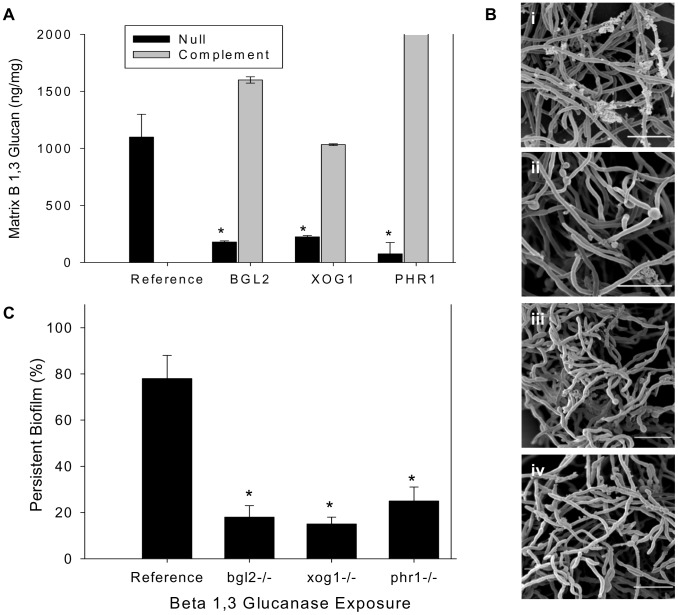
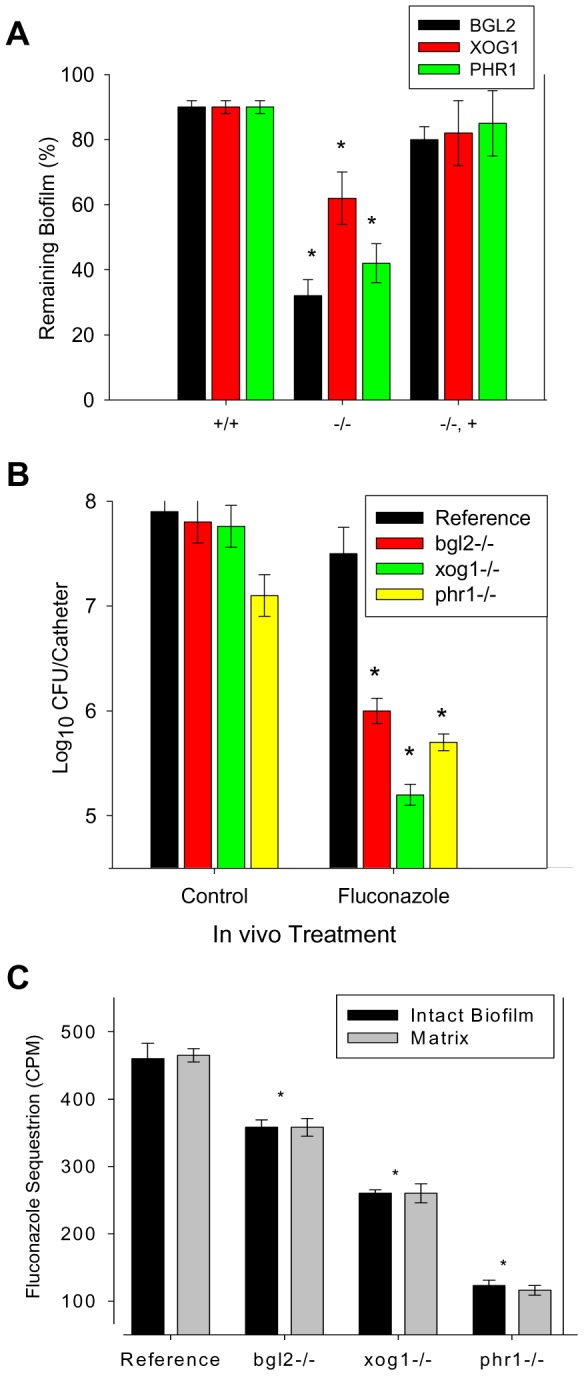
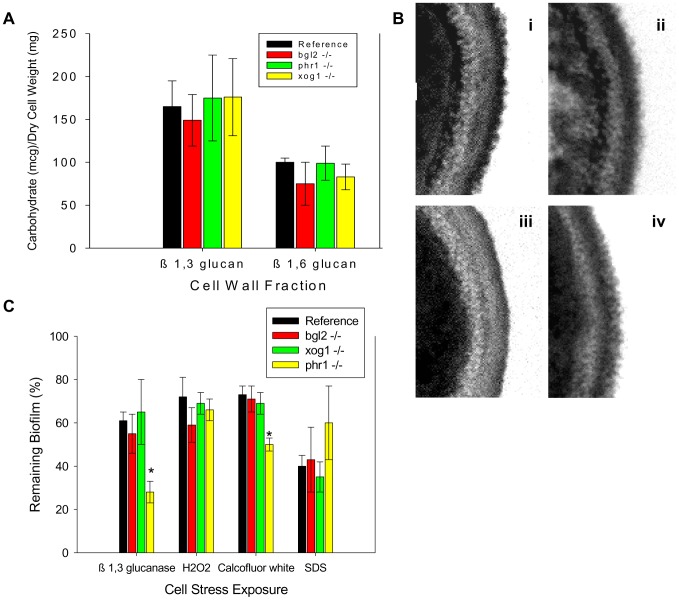
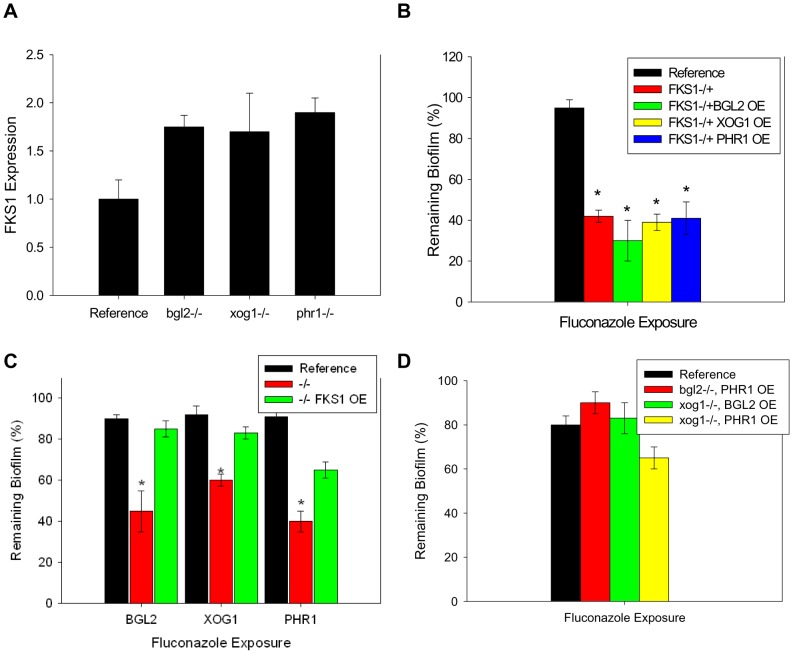
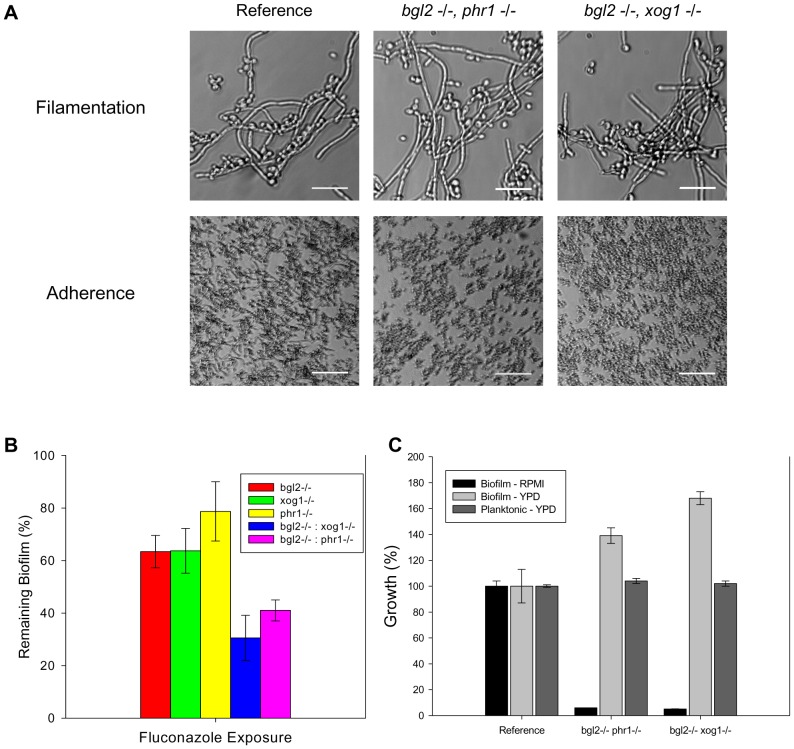
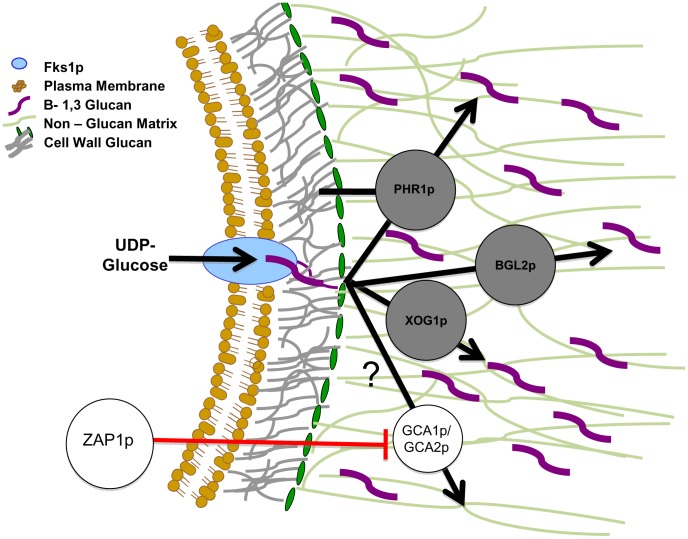
Extracellular polysaccharides are key constituents of the biofilm matrix of many microorganisms. One critical carbohydrate component of Candida albicans biofilms, β-1,3 glucan, has been linked to biofilm protection from antifungal agents. In this study, we identify three glucan modification enzymes that function to deliver glucan from the cell to the extracellular matrix. These enzymes include two predicted glucan transferases and an exo-glucanase, encoded by BGL2, PHR1, and XOG1, respectively. We show that the enzymes are crucial for both delivery of β-1,3 glucan to the biofilm matrix and for accumulation of mature matrix biomass. The enzymes do not appear to impact cell wall glucan content of biofilm cells, nor are they necessary for filamentation or biofilm formation. We demonstrate that mutants lacking these genes exhibit enhanced susceptibility to the commonly used antifungal, fluconazole, during biofilm growth only. Transcriptional analysis and biofilm phenotypes of strains with multiple mutations suggest that these enzymes act in a complementary fashion to distribute matrix downstream of the primary β-1,3 glucan synthase encoded by FKS1. Furthermore, our observations suggest that this matrix delivery pathway works independently from the C. albicans ZAP1 matrix formation regulatory pathway. These glucan modification enzymes appear to play a biofilm-specific role in mediating the delivery and organization of mature biofilm matrix. We propose that the discovery of inhibitors for these enzymes would provide promising anti-biofilm therapeutics.
Overview
The claims and statistics of this paper haven’t been checked yet.
Run the check — free, no account needed. It reads the open-access text and checks the sources it cites.
Integrity signals
Registry
Cites
Statistics
Figures
Verification
Claims the paper makes
The claims and statistics of this paper haven’t been checked yet.
Run the check — free, no account needed. It reads the open-access text and checks the sources it cites.
Claims other papers make about this one
Each is checked against this paper’s own text: does it say what the citing paper says it does?
The source backs part of the claim, not all of it — or backs it for a different population, condition or comparison.
In the citing paper
“This complex has been linked to the antifungal resistance biofilm phenotype via sequestration of antifungal (20, 22).”
From Dual function of Candida auris mannosyltransferase, MNT5, in biofilm community protection from antifungal therapy and the host (2025) · cites this paper as [22]
Experimental — accuracy not yet measuredIn the citing paper
“the biofilm matrix glucan has demonstrated the ability to bind and sequester antifungal drugs, including fluconazole, preventing them from acting intracellularly.”
From Molecular and genetic basis of azole antifungal resistance in the opportunistic pathogenic fungus Candida albicans (2020) · cites this paper as [179]
In the citing paper
“Finally, Taff et al. [110] identified two glucan transferases and an exo-glucanase that deliver glucan from the cell to the extracellular matrix, playing a biofilm-specific role, by mediating the distribution and organization of mature biofilm matrix.”
From Candida glabrata Biofilms: How Far Have We Come? (2017) · cites this paper as [110]
In the citing paper
“Genes involved in production and delivery of β-1,3-glucans include the synthase-encoding gene FKS1 and the genes BGL2, XOG1, and PHR1, which encode proteins involved in the modification and transport of β-glucans (132, 189).”
From Candida albicans Biofilms and Human Disease (2015) · cites this paper as [189]
Self-check
Percentages, sums and reported differences re-computed from the paper’s own numbers.
The self-check needs the paper’s full text.
Citations
Cites
Analysis of Relative Gene Expression Data Using Real-Time Quantitative PCR and the 2−ΔΔCT Method
Livak, K. J., & Schmittgen, T. D. (2001) · Methods · doi:10.1006/meth.2001.1262 · Cited by 180,860
Flemming, H.-C., & Wingender, J. (2010) · Nature Reviews Microbiology · doi:10.1038/nrmicro2415 · Cited by 10,137
Biofilms: Survival Mechanisms of Clinically Relevant Microorganisms
Donlan, R. M., & Costerton, J. W. (2002) · Clinical Microbiology Reviews · doi:10.1128/cmr.15.2.167-193.2002 · Cited by 6,644
Epidemiology of Invasive Candidiasis: a Persistent Public Health Problem
Pfaller, M. A., & Diekema, D. J. (2007) · Clinical Microbiology Reviews · doi:10.1128/cmr.00029-06 · Cited by 4,174 · cited 1×
“infections in hospitalized patients [1,2].”
Mutation of the mouse klotho gene leads to a syndrome resembling ageing
Kuro-o, M., Matsumura, Y., Aizawa, H., Kawaguchi, H., Suga, T., Utsugi, T., Ohyama, Y., Kurabayashi, M., Kaname, T., Kume, E., et al. (1997) · Nature · doi:10.1038/36285 · Cited by 3,837
Pappas, P. G., Kauffman, C. A., Andes, D., Benjamin, D. K., Calandra, T. F., Edwards, J. E., Filler, S. G., Fisher, J. F., Kullberg, B.-J., Zeichner, L. O., et al. (2009) · Clinical Infectious Diseases · doi:10.1086/596757 · Cited by 3,191
Self-citationChandra, J., Kuhn, D. M., Mukherjee, P. K., Hoyer, L. L., McCormick, T., & Ghannoum, M. A. (2001) · Journal of Bacteriology · doi:10.1128/jb.183.18.5385-5394.2001 · Cited by 1,578
Candida biofilms and their role in infection
Douglas, L. J. (2003) · Trends in Microbiology · doi:10.1016/s0966-842x(02)00002-1 · Cited by 1,150
Bowen, W. H., & Koo, H. (2011) · Caries Research · doi:10.1159/000324598 · Cited by 1,085
Candida Infections of Medical Devices
Kojic, E. M., & Darouiche, R. O. (2004) · Clinical Microbiology Reviews · doi:10.1128/cmr.17.2.255-267.2004 · Cited by 1,055
Research works printed but not linked: 2
- [32]Nett JE, Crawford K, Marchillo K, Andes DR (2010) Role of Fks1p and matrix glucan in Candida albicans biofilm resistance to an echinocandin, pyrimidine, and polyene. Antimicrob Agents Chemother 54: 3505– 3508. 20516280 PMC2916329
- [51]Nett JE, Sanchez H, Cain MT, Andes DR (2010) Genetic basis of Candida biofilm resistance due to drug-sequestering matrix glucan. J Infect Dis 202: 171– 175. 20497051 PMC2880631
Cited by
Sorted by citations
Items 201–291 of 291
Biotechnological applications of biofilms formed by osmotolerant and halotolerant yeasts
Andreu, C., & del Olmo, M. (2023) · Applied Microbiology and Biotechnology · doi:10.1007/s00253-023-12589-y · Cited by 9
Bugli, F., Sterbini, F. P., Cacaci, M., Martini, C., Lancellotti, S., Stigliano, E., Torelli, R., Arena, V., Caira, M., Posteraro, P., et al. (2014) · Pathogens and Disease · doi:10.1111/2049-632x.12152 · Cited by 9
Updates on Therapeutic Strategies Against Candida (and Aspergillus) Biofilm Related Infections
Muakkassa, F., & Ghannoum, M. A. (2016) · Advances in experimental medicine and biology · doi:10.1007/5584_2016_11 · Cited by 9
Inhibition of Candida albicans Biofilm Formation and Attenuation of Its Virulence by Liriope muscari
Lee, J.-H., Song, H., & Kim, K. (2024) · Antibiotics · doi:10.3390/antibiotics13050434 · Cited by 9
Lobo, C. I. V., Barbugli, P. A., Rocha, G. R., & Klein, M. I. (2022) · ACS Omega · doi:10.1021/acsomega.2c02318 · Cited by 8
Costa, A. C. B. P., Omran, R. P., Correia‐Mesquita, T. O., Dumeaux, V., & Whiteway, M. S. (2019) · Scientific Reports · doi:10.1038/s41598-019-45624-y · Cited by 9
Pathogenic Yeasts Deploy Cell Surface Receptors to Acquire Iron in Vertebrate Hosts
Kronstad, J. W., Cadieux, B., & Jung, W. H. (2013) · PLoS Pathogens · doi:10.1371/journal.ppat.1003498 · Cited by 7
Biofilm-Mediated Urinary Tract Infections
Agarwal, J., & Radera, S. (2019) · Springer eBooks · doi:10.1007/978-3-030-30757-8_13 · Cited by 8
Multi-Omics Profiling of Candida albicans Grown on Solid Versus Liquid Media
Alhameed, R. A., Semreen, M. H., Hamad, M., Giddey, A. D., Sulaiman, A., Bataineh, M. T. A., Al-Hroub, H. M., Bustanji, Y. K., Alzoubi, K. H., & Soares, N. C. (2023) · Microorganisms · doi:10.3390/microorganisms11122831 · Cited by 7
Formation, Resistance, and Pathogenicity of Fungal Biofilms: Current Trends and Future Challenges
Aguilar-Marcelino, L., Al‐Ani, L. K. T., Soares, F. E. D. F., Moreira, A. L. E., Téllez‐Téllez, M., Castañeda-Ramírez, G. S., Acosta-Urdapilleta, M. D. L., Dı́az-Godı́nez, G., & Pineda-Alegría, J. A. (2021) · Fungal biology · doi:10.1007/978-3-030-60659-6_18 · Cited by 7
Candida albicans Biofilm Development and Its Genetic Control
Desai, J. V., & Mitchell, A. P. (2015) · ASM Press eBooks · doi:10.1128/9781555817466.ch5 · Cited by 8
Self-citationMulti-arm ε-polylysines exhibit broad-spectrum antifungal activities against Candida species
Cao, Y., Liu, M., Han, M., & Ji, S. (2023) · Biomaterials Science · doi:10.1039/d3bm01233f · Cited by 7
From Biology to Drug Development: New Approaches to Combat the Threat of Fungal Biofilms
Pierce, C. G., Srinivasan, A., Ramasubramanian, A. K., & Lopez-Ribot, J. L. (2015) · ASM Press eBooks · doi:10.1128/9781555817466.ch19 · Cited by 7
Falsetta, M. L., & Koo, H. (2014) · Current Oral Health Reports · doi:10.1007/s40496-013-0011-6 · Cited by 7
Oliveira, L. T., Marcos, C. M., Cabral, A. K. L. F., Medina‐Alarcón, K. P., Pires, R. H., Fusco‐Almeida, A. M., & Mendes‐Giannini, M. J. S. (2024) · Frontiers in Microbiology · doi:10.3389/fmicb.2024.1354140 · Cited by 7
Gonçalves, B., Pires, D. P., Fernandes, L. C., Pacheco, M., Ferreira, T., Osório, H., Soares, A. R., Henriques, M., & Silva, S. (2024) · Microbiology Spectrum · doi:10.1128/spectrum.01201-24 · Cited by 6
Ross, Z. K., Alsayegh, S., Zhao, Y., McPherson, S., Munro, C. A., & Lorenz, A. (2025) · Microbiological Research · doi:10.1016/j.micres.2025.128322 · Cited by 7
The Extracellular Matrix of Yeasts: A Key Player in the Microbial Biology Change of Paradigm
Lucas, C., & da Silva, C. F. (2023) · Frontiers in Bioscience-Elite · doi:10.31083/j.fbe1502013 · Cited by 6
Basotra, S. D., Kumari, Y., Vij, M., Tyagi, A., Sharma, D., & Bhattacharyya, M. S. (2024) · ACS Infectious Diseases · doi:10.1021/acsinfecdis.4c00155 · Cited by 6
Kumar, A., Francis, A., Hans, S., & Thakur, A. (2024) · Springer eBooks · doi:10.1007/978-981-97-4909-6_8 · Cited by 6
Production and Isolation of the Candida Species Biofilm Extracellular Matrix
Heredia, M. Y., & Andes, D. R. (2022) · Methods in molecular biology · doi:10.1007/978-1-0716-2549-1_19 · Cited by 6
Self-citationDiagnostic of Fungal Infections Related to Biofilms
Sanguinetti, M., & Posteraro, B. (2016) · Advances in experimental medicine and biology · doi:10.1007/5584_2016_9 · Cited by 6
Characterization of Pneumocystis murina Bgl2, an Endo-β-1,3-Glucanase and Glucanosyltransferase
Kutty, G., Davis, A. S., Schuck, K. N., Masterson, M., Wang, H., Liu, Y., & Kovacs, J. A. (2019) · The Journal of Infectious Diseases · doi:10.1093/infdis/jiz172 · Cited by 6
Candida albicans Mrv8, is involved in epithelial damage and biofilm formation
Costa, A. C. B. P., Back‐Brito, G. N., Mayer, F. L., Hube, B., & Wilson, D. (2020) · FEMS Yeast Research · doi:10.1093/femsyr/foaa033 · Cited by 6
Bhattacharyya, S., Gupta, P., Banerjee, G., Jain, A., & Singh, M. (2014) · International Journal of Applied and Basic Medical Research · doi:10.4103/2229-516x.140721 · Cited by 6
Zarnowski, R., Horton, M. V., Johnson, C. J., Vang, P. C., Uram, J., Fernando, L. D. P., Vlach, J., Heiss, C., Azadi, P., Nett, J. E., et al. (2025) · mBio · doi:10.1128/mbio.00346-25 · Cited by 5
“Previous studies have demonstrated the importance of the extracellular matrix in protection of the Candida biofilm community from antifungal drugs, including for C. auris (17, 18, 22).”
Self-citationValente, M. R., Alcântara, L. M., Cintra, D. S., Mendoza, S. R., Medeiros, E. G., Gomes, K. X., Honorato, L., Almeida, M. D. A., Vieira, C. B., Nosanchuk, J. D., et al. (2024) · Microbiology Spectrum · doi:10.1128/spectrum.01746-24 · Cited by 5
Sfl1 is required for Candida albicans biofilm formation under acidic conditions
Gonçalves, B., BARBOSA, A. B. D. O., Soares, A. R., Henriques, M., & Silva, S. M. (2023) · Biochimie · doi:10.1016/j.biochi.2023.01.011 · Cited by 5
Micafungin induced apoptosis in Candida parapsilosis independent of its susceptibility to micafungin
Shirazi, F., Lewis, R. E., & Kontoyiannis, D. P. (2015) · Microbial Cell · doi:10.15698/mic2015.11.236 · Cited by 5
Jordão, C. C., Klein, M. I., Barbugli, P. A., Ferrisse, T. M., de Moraes, J. C. G., & Pavarina, A. C. (2025) · Photochemical & Photobiological Sciences · doi:10.1007/s43630-025-00727-6 · Cited by 4
Zhao, Y., Zou, W., Su, C., & Lu, Y. (2026) · iFungi · doi:10.26599/ifungi.2026.9670011 · Cited by 4
Abreu‐Pereira, C. A., Pereira, A. L. G., Jordão, C. C., Paro, C. B., Barbugli, P. A., & Pavarina, A. C. (2025) · Journal of Dentistry · doi:10.1016/j.jdent.2025.105631 · Cited by 4
Growing Candida albicans Biofilms on Paper Support and Dynamic Conditions
Selow, M. L. C., Rymovicz, A. U. M., Ribas, C., Saad, R. S., Rosa, R. T., & Rosa, E. A. R. (2015) · Mycopathologia · doi:10.1007/s11046-015-9889-y · Cited by 4
In Vivo Candida Device Biofilm Models
Andes, D. R. (2017) · Springer eBooks · doi:10.1007/978-3-319-50409-4_7 · Cited by 4
Self-citationCandida Biofilm: Clinical Implications of Recent Advances in Research
Press, E. G., Shields, R. K., & Clancy, C. J. (2014) · Current Fungal Infection Reports · doi:10.1007/s12281-014-0176-z · Cited by 4
Meng, X., Zhao, Y., Xiang, Q., Wu, J., Gong, X., Wang, Y., Chen, L., & Zhang, P. (2025) · Chemical Engineering Journal · doi:10.1016/j.cej.2025.166603 · Cited by 3
Moursi, S. A., Saxena, R., Haider, F., Khan, M. S., Saleem, M., Ahmad, I., & Ahmad, N. (2025) · Naunyn-Schmiedeberg s Archives of Pharmacology · doi:10.1007/s00210-025-04699-3 · Cited by 3
Radchenkova, N., Stefanova, P. P., & Gouliamova, D. E. (2025) · Life · doi:10.3390/life15060889 · Cited by 3
Da, W., Shao, J., Li, Q., Shi, G., Wang, T., Wu, D., & Wang, C. (2019) · Frontiers in Microbiology · doi:10.3389/fmicb.2019.00752 · Cited by 3
Masfufatun, M., Purbowati, R., Arum, N. A., Yasinta, M. S., Sumarsih, S., & Baktir, A. (2022) · Veterinary World · doi:10.14202/vetworld.2022.1134-1140 · Cited by 3
Kumar, D., & Kumar, A. (2022) · RENDICONTI LINCEI · doi:10.1007/s12210-022-01115-3 · Cited by 3
Rąpała‐Kozik, M., Zawrotniak, M., Gogól, M., Bartnicka, D., Satała, D., Smolarz, M., Karkowska‐Kuleta, J., & Kozik, A. (2019) · IntechOpen eBooks · doi:10.5772/intechopen.81537 · Cited by 3
Preparation of Candida albicans Biofilms Using an in vivo Rat Central Venous Catheter Model
Taff, H. T., Marchillo, K., & Andes, D. R. (2013) · BIO-PROTOCOL · doi:10.21769/bioprotoc.823 · Cited by 3
Self-citationPreparation of Candida albicans Biofilms for Transmission Electron Microscopy
Taff, H. T., & Andes, D. R. (2013) · BIO-PROTOCOL · doi:10.21769/bioprotoc.822 · Cited by 3
Self-citationFungal Biofilms: Formation, Resistance and Pathogenicity
Sardi, J. D. C. O., de Souza, N., Gullo, F. P., Fusco‐Almeida, A. M., & Mendes‐Giannini, M. J. S. (2015) · CRC Press eBooks · doi:10.1201/b18707-17 · Cited by 3
The Role of Biofilm Matrix in Mediating Antifungal Resistance
Nett, J. E., & Andes, D. R. (2017) · Springer eBooks · doi:10.1007/978-1-4939-0694-9_20 · Cited by 3
Self-citationTuan, D. A., & Uyen, P. V. N. (2026) · Future Microbiology · doi:10.1080/17460913.2026.2678152 · Cited by 2
Saini, R. S., Dermawan, D., Chopra, S., Binduhayyim, R. I. H., Mosaddad, S. A., Alarcón‐Sánchez, M. A., & Heboyan, A. G. (2026) · International Dental Journal · doi:10.1016/j.identj.2026.109693 · Cited by 2
Luong, J. H. T., & Gedanken, A. (2026) · Biotechnology Advances · doi:10.1016/j.biotechadv.2026.108994 · Cited by 2
Candida albicans biofilm: formation and antifungal agents resistance
Wibawa, T. (2016) · Cited by 2
Chatzimoschou, A., Simitsopoulou, M., Antachopoulos, C., Walsh, T. J., & Roilides, E. (2015) · Mycoses · doi:10.1111/myc.12436 · Cited by 2
Metal Oxide Nanoparticles in Antifungal Application
Wagh, H. (2024) · International Journal of Therapeutic Innovation. · doi:10.55522/ijti.v2i5.0078 · Cited by 2
O’Donnell, L. E., Robertson, D. P., & Ramage, G. (2015) · Springer eBooks · doi:10.1007/978-3-662-47194-4_2 · Cited by 3
Genetic regulations of microbial biofilm
Sinha, B., Sengupta, C., Sahoo, P. K., Nath, T., & Mukherjee, O. (2022) · Elsevier eBooks · doi:10.1016/b978-0-323-88480-8.00018-2 · Cited by 2
Candida Albicans Biofilm as a Clinical Challenge
Jadhav, A. K., & Karuppayil, S. M. (2017) · Springer eBooks · doi:10.1007/978-981-10-4768-8_13 · Cited by 2
Molecular Cues and Mechanisms of Pathogenesis in Candida
Sahoo, S., & Rao, K. H. (2024) · Springer eBooks · doi:10.1007/978-981-97-4909-6_6 · Cited by 1
Chau, E. C.-T., Hau, P., Murillo, M., Tsang, C., Tam, E. W. T., Seto, S. W., Lee, C., & Chow, F. W. (2025) · Extracellular Vesicles and Circulating Nucleic Acids · doi:10.20517/evcna.2025.49 · Cited by 2
Modern therapeutic strategies to mitigate biofilm-associated infection in livestock organisms
Guchhait, K. C., Dey, S., Majumder, S., Raul, P., Ballav, S., Jana, D., Panda, A. K., & Ghosh, C. (2025) · Antonie van Leeuwenhoek · doi:10.1007/s10482-025-02220-7 · Cited by 1
Clinical Significance, Molecular Formation, and Natural Antibiofilm Agents of Candida albicans
Abdulghani, M. M. M., & Zore, G. B. (2024) · Springer eBooks · doi:10.1007/978-981-97-5165-5_9 · Cited by 1
Ivanov, M., Stojković, D. S., & Sokóvić, M. (2025) · Springer eBooks · doi:10.1007/978-981-96-1305-2_7 · Cited by 1
Ramage, G., Kean, R., Mackay, W. G., Vaccaro, A., Lopez-Ribot, J. L., & Howe, M. H. (2025) · Springer series on biofilms · doi:10.1007/978-3-031-93315-8_7 · Cited by 1
Cytrynbaum, E. G., & McClean, M. N. (2025) · Advanced Drug Delivery Reviews · doi:10.1016/j.addr.2025.115740 · Cited by 1
Santos, S. R. D., Stempinski, P. R., Wieren, A. V., Gerbig, G. R., Smith, D. F. Q., Zamith‐Miranda, D., Nosanchuk, J. D., & Casadevall, A. (2026) · Microbiology Spectrum · doi:10.1128/spectrum.02897-25 · Cited by 1
Application of natural products against fungal biofilm formation
Samreen, S., Jafri, H., & Ahmad, I. (2022) · Elsevier eBooks · doi:10.1016/b978-0-323-88480-8.00017-0 · Cited by 1
Singh, D., & Mittal, N. (2023) · Elsevier eBooks · doi:10.1016/b978-0-323-99977-9.00031-4 · Cited by 1
The Role of Biofilm Matrix in Mediating Antifungal Resistance
Nett, J. E., & Andes, D. R. (2014) · Springer eBooks · doi:10.1007/978-1-4939-0667-3_20-1 · Cited by 1
Self-citationClinical Implications of Interkingdom Fungal and Bacterial Biofilms
Ramage, G., O’Donnell, L. E., Kean, R., Townsend, E. R., & Rajendran, R. (2017) · CRC Press eBooks · doi:10.4324/9781315120119-2 · Cited by 1
ANTIFUNGAL AGENTS IN TERMS OF ACQUIRED RESISTANCE IN CANDIDA SPECIES
Iungin, O. S. (2018) · Bulletin of Problems Biology and Medicine · doi:10.29254/2077-4214-2018-2-144-83-86 · Cited by 1
The Lack of SNARE Protein Homolog Syn8 Influences Biofilm Formation of Candida glabrata
Chen, X., Iwatani, S., Kitamoto, Y., Chibana, H., & Kajiwara, S. (2021) · Frontiers in Cell and Developmental Biology · doi:10.3389/fcell.2021.607188 · Cited by 1
Genetic Insights into the Rheological Phenotype of Candida albicans BiofilmsPreprint
Abriat, C., Huang, L., Sunder, S., Bauman, J. S., Landry, G. A., Mueller, H. R. L., VanEpps, J. S., Solomon, M. J., & Kumar, A. (2026) · Research Square · doi:10.21203/rs.3.rs-8555167/v1 · Cited by 1
Suzuki, L. C. (2015) · Digital Library of Theses and Dissertations (Universidade de São Paulo) · doi:10.11606/t.85.2015.tde-28042015-150039
Rat Indwelling Urinary Catheter Model of Candida albicans
Nett, J. E., Brooks, E. G., Cabezas‐Olcoz, J., Sánchez, H., Żarnowski, R., Marchillo, K., & Andes, D. R. (2014)
Self-citationLee, K. K., & Munro, C. A. (2014) · Springer eBooks · doi:10.1007/978-3-642-55013-3_7
Mohamed, N. A. N. (2020) · University of the Western Cape Electronic Theses and Dissertations Repository (University of the Western Cape)
Fungal Infections of Human Mammary Gland During Lactation
Łubiech, K., & Twarużek, M. (2020) · Elsevier eBooks · doi:10.1016/b978-0-12-809633-8.21033-9 · Cited by 1
Management of Candida albicans infections by lactic acid bacteria
Vikrant, V., Sharma, A., Priyanka, P., & Azmi, W. (2023) · Annals of Phytomedicine An International Journal · doi:10.54085/ap.2023.12.2.8
Nett, J. E., & Holt, A. M. (2025) · Springer series on biofilms · doi:10.1007/978-3-031-93315-8_10
Self-citationComposition and Role of the Extracellular Matrix in Fungal Biofilm Drug Resistance
Kim, M.-J., Żarnowski, R., & Andes, D. R. (2025) · Springer series on biofilms · doi:10.1007/978-3-031-93315-8_8
Self-citationOsmani, A., Keçeli, S., Er, D. K., Uzuner, H., Ercan, F., & Köroğlu, A. K. (2025) · Apmis · doi:10.1111/apm.70047
Understanding Fungi-Host Dynamics: The Role of Immuno Suppression and Real-World Clinical Scenario
Mazhar, S. S., Panche, A. N., Mohiuddin, I. M., Deshmukh, R., & Harke, S. N. (2025) · Current Fungal Infection Reports · doi:10.1007/s12281-025-00514-x
Epidemiology and Management of Antifungal-Resistant Bloodstream Infections in Healthcare Settings
Sayyouh, O. (2025) · Infectious diseases · doi:10.5772/intechopen.1012710
Invasive plants of France and Indonesia : a solution against C. albicans biofilms?
Desrini, S. (2023) · theses.fr (ABES) · doi:10.70675/c34fe8a1zd810z4358z952czadabb21dea2e
Abriat, C., Huang, L., Sunder, S., Bauman, J. S., Landry, G. A., Mueller, H. R. L., VanEpps, J. S., Solomon, M. J., & Kumar, A. (2026) · Biofilm · doi:10.1016/j.bioflm.2026.100369
Antifungal turbinmicin alters functional vesicle cargo
Żarnowski, R., Nett, J. E., Bugni, T. S., & Andes, D. R. (2026) · Antimicrobial Agents and Chemotherapy · doi:10.1128/aac.00558-26
Self-citationChinthamani, S., Settem, R. P., Kauffman, K. M., & Sharma, A. (2026) · Research Square · doi:10.21203/rs.3.rs-9916188/v1
Xu, Q., Li, J., Guo, H., Liu, M., Chen, X., Jiaxin, T., Zeng, L., & Kang, X.-H. (2026) · Research Square · doi:10.21203/rs.3.rs-9981108/v1
Cristy, S. A., Walker, J. N., & Lorenz, M. C. (2026) · mBio · doi:10.1128/mbio.01785-26
Yapıcı, M., Gürsu, B. Y., Ay, K. O., Öztürk, B. Y., & Dağ, İ. (2026) · World Journal of Microbiology and Biotechnology · doi:10.1007/s11274-026-05305-1
Hamarsha, A. M., Atatra, M., Watted, N., Irekeola, A. A., Sulaiman, M. M., & Hasbullah, N. (2026) · International Journal of Molecular Sciences · doi:10.3390/ijms27209031
Metadata
- Authors
- Taff, H. T., Nett, J. E., Zarnowski, R., Ross, K. M., Sanchez, H., Cain, M. T., Hamaker, J., Mitchell, A. P., & Andes, D. R.
- Affiliations
- University of Wisconsin–Madison (US)
- Columbia University (US)
- Carnegie Mellon University (US)
- Corresponding author
- Andes, David R.
- Venue
- PLoS Pathogens
- Publisher
- Public Library of Science (PLoS)
- Published
- 2012-08-02
- Volume
- 8
- Issue
- 8
- Pages
- e1002848
- ISSN
- 1553-7366 (ISSN-L)
- 1553-7374
- PMC
- PMC3410897
- OpenAlex
- W2124380402
- Cited by
- 291
- References
- 59
- Citations by year
- 2026: 14 · 2025: 23 · 2024: 13 · 2023: 31 · 2022: 21 · 2021: 16 · 2020: 18 · 2019: 16 · 2018: 15 · 2017: 21 · 2016: 32 · 2015: 28 · 2014: 20 · 2013: 21 · 2012: 2
- FWCI
- 14.64
- Type
- journal article
- Language
- en
- Open access
- gold
- doi.org
- Locations
- PLoS Pathogens (publishedVersion, cc-by)
- Europe PMC (PubMed Central) (publishedVersion, cc-by)
- PubMed Central (publishedVersion, cc-by)
- PubMed (publishedVersion)
- DOAJ (DOAJ: Directory of Open Access Journals) (submittedVersion, cc-by-sa)
- Funders
- National Institutes of Health (NIH-R01)
- National Heart, Lung, and Blood Institute (T32HL007899)
- National Institute of General Medical Sciences (T32GM008692)
- National Institute of Allergy and Infectious Diseases (R01AI067703, R01AI073289)
- Topics
- Health Sciences › Medicine › Infectious Diseases › Antifungal resistance and susceptibility
- Life Sciences › Biochemistry, Genetics and Molecular Biology › Molecular Biology › Fungal and yeast genetics research
- Life Sciences › Biochemistry, Genetics and Molecular Biology › Molecular Biology › Bacterial biofilms and quorum sensing
- Keywords
- Candida albicans, biofilm matrix, β-1,3-glucan, BGL2, PHR1, FKS1, fluconazole susceptibility, antifungal resistance, exopolysaccharides, biofilm formation, Zap1
- MeSH terms
- Animals, Candida albicans, Candidiasis, Fungal Proteins, Glucans, Glucosyltransferases, Membrane Glycoproteins, Mutation, Biofilms, Drug Resistance, Fungal, Rats
About these checks
Registry, retraction, Cites and statistics results are computed, not judged, with one exception: a printed reference that no index lists is read once by a model before it counts as a citation error. Claims are extracted by a model and kept only when their quote appears verbatim in the text; each cited source is then checked, with a model’s help, for whether it says what the claim relies on. Those verdicts can be wrong — read the claim’s quote and the cited source before relying on one.
Statistics and arithmetic are recomputed, not judged.
Confidence bands are shown only for fields calibrated on our annotated test set. None is calibrated yet, so no band is shown.
What counts as a claim ›How we measure confidence ›How we check this ›
Are you an author, or do you see a problem with this page? Request a review
