

Deletion of the α-(1,3)-Glucan Synthase Genes Induces a Restructuring of the Conidial Cell Wall Responsible for the Avirulence of Aspergillus fumigatus
Open accessThe DOI matches its Crossref record; 59 of the 59 references it cites were found in a registry or an index.
Abstract
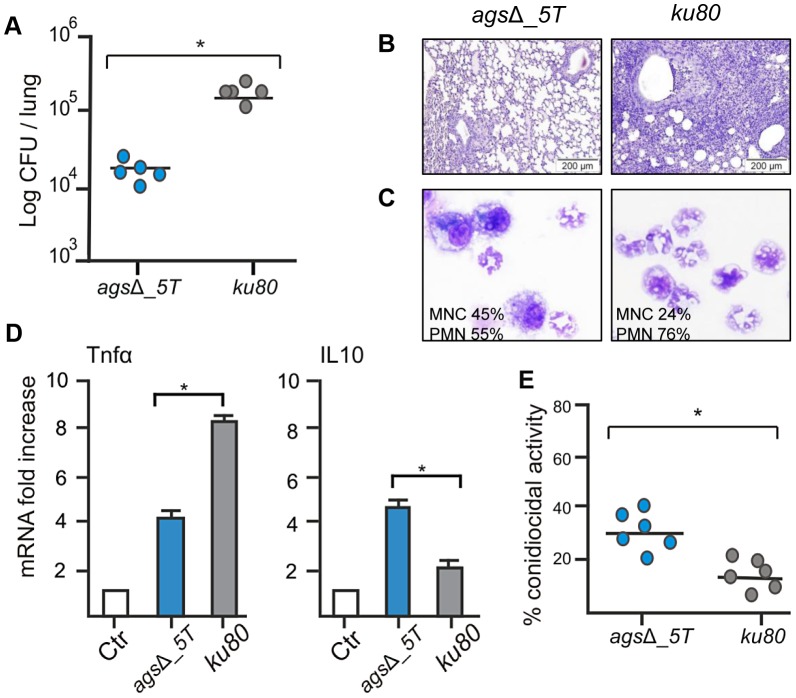
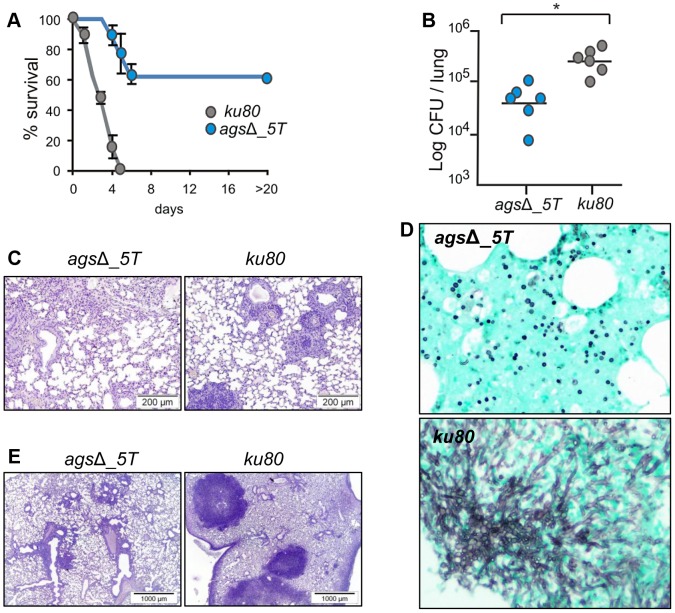
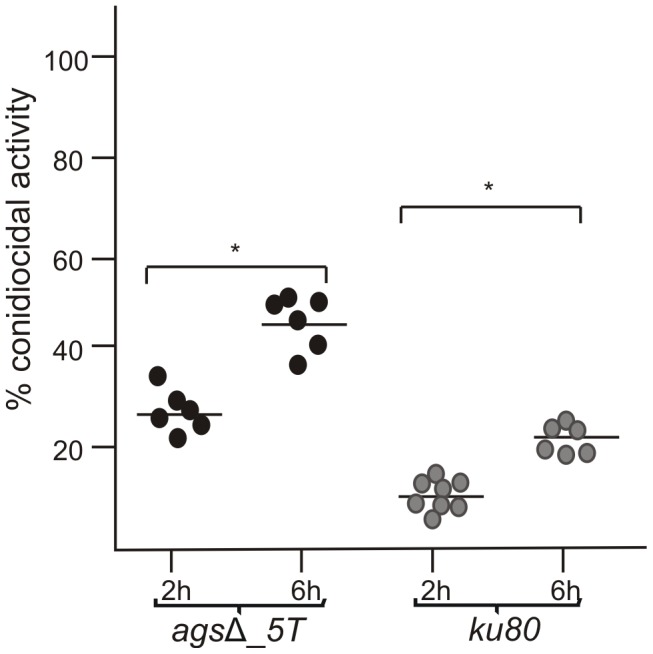
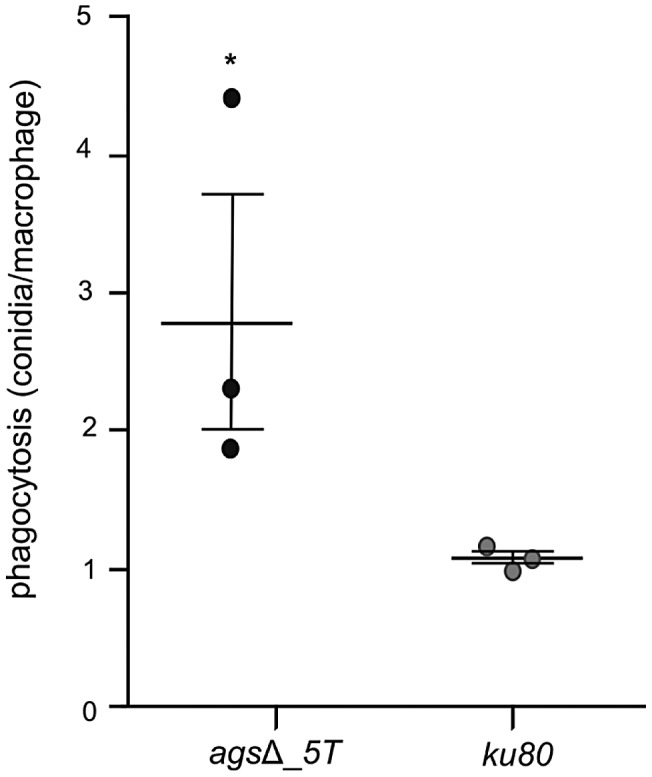
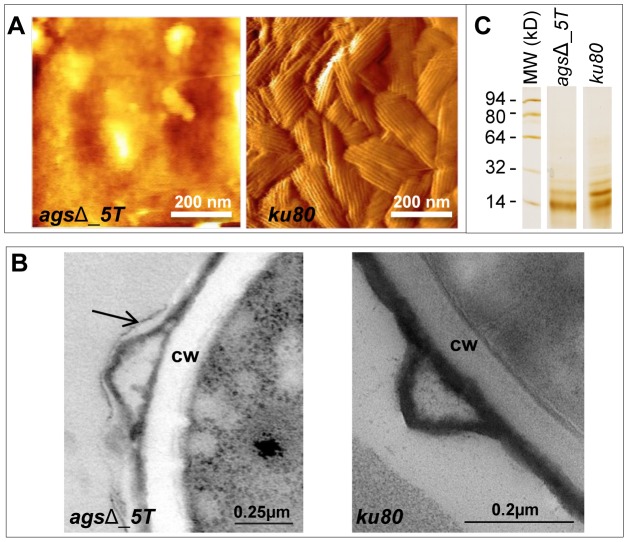
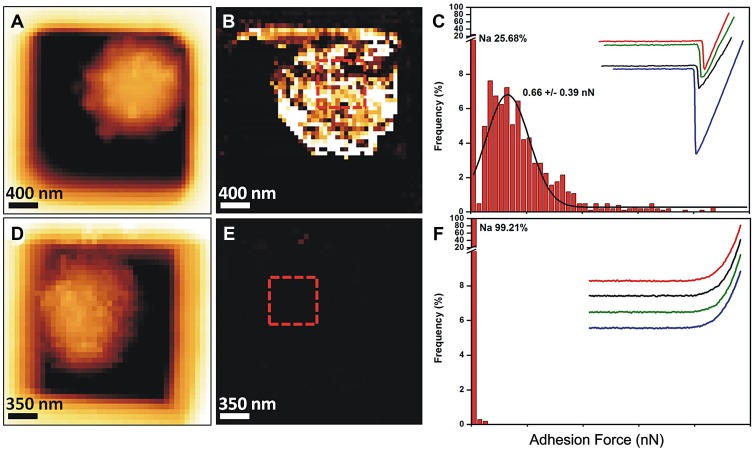
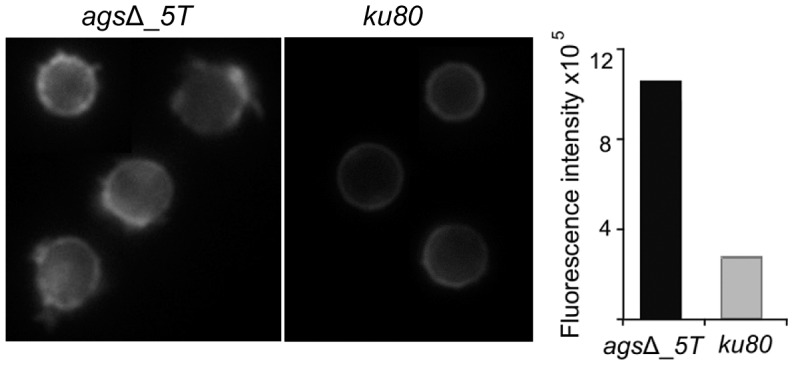
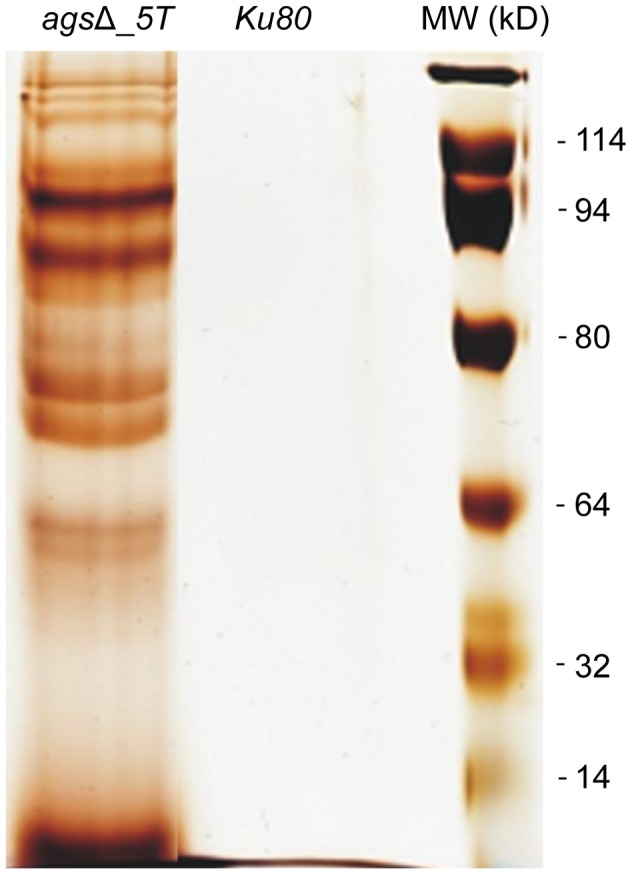
α-(1,3)-Glucan is a major component of the cell wall of Aspergillus fumigatus, an opportunistic human fungal pathogen. There are three genes (AGS1, AGS2 and AGS3) controlling the biosynthesis of α-(1,3)-glucan in this fungal species. Deletion of all the three AGS genes resulted in a triple mutant that was devoid of α-(1,3)-glucan in its cell wall; however, its growth and germination was identical to that of the parental strain in vitro. In the experimental murine aspergillosis model, this mutant was less pathogenic than the parental strain. The AGS deletion resulted in an extensive structural modification of the conidial cell wall, especially conidial surface where the rodlet layer was covered by an amorphous glycoprotein matrix. This surface modification was responsible for viability reduction of conidia in vivo, which explains decrease in the virulence of triple agsΔ mutant.
Overview
The claims and statistics of this paper haven’t been checked yet.
Free: it reads the open-access text and checks the first 5 claims that cite a source we can check. Create a free account to check every claim.
Integrity signals
Registry
Cites
Statistics
Figures
Verification
Claims the paper makes
The claims and statistics of this paper haven’t been checked yet.
Free: it reads the open-access text and checks the first 5 claims that cite a source we can check. Create a free account to check every claim.
Claims other papers make about this one
Each is checked against this paper’s own text: does it say what the citing paper says it does?
The source backs part of the claim, not all of it — or backs it for a different population, condition or comparison.
In the citing paper
“Although killing of Aspergillus conidia by AMs is undoubtedly dependent on both oxidative and nonoxidative mechanisms (240, 241)”
From Aspergillus fumigatus and Aspergillosis in 2019 (2019) · cites this paper as [241]
Experimental — accuracy not yet measuredThe source backs part of the claim, not all of it — or backs it for a different population, condition or comparison.
In the citing paper
“The mutant was less virulent than the parental strain due to exposed glycoprotein pathogen-associated molecular patterns (PAMPs), which induces a higher sensitivity to killing by phagocytes (241).”
From Aspergillus fumigatus and Aspergillosis in 2019 (2019) · cites this paper as [241]
Experimental — accuracy not yet measuredThe source backs part of the claim, not all of it — or backs it for a different population, condition or comparison.
In the citing paper
“All of these single and multiple mutants are characterized by the emergence on the conidial surface of a layer of (glyco)proteins covering the rodlets, which is responsible for conidial hydrophilicity, even though the rodlets are present.”
From Aspergillus fumigatus and Aspergillosis in 2019 (2019) · cites this paper as [241]
Experimental — accuracy not yet measuredThe cited source says what the claim attributes to it.
In the citing paper
“The presence of these molecules on the conidial surface also is responsible for stimulation of the immune response (241, 477, 478).”
From Aspergillus fumigatus and Aspergillosis in 2019 (2019) · cites this paper as [241]
The check wasn’t confident either way, so it gives no verdict — never disputed.
In the citing paper
“much of the discrepancy in the literature is related to differences in study endpoints (e.g., inhibition of growth versus killing), methodology of killing assessment (e.g., CFU plating versus conidial germination), moiety of infection, infection time points, NADPH oxidase knockout mouse strains, and method of immunosuppression used (203, 240–245).”
From Aspergillus fumigatus and Aspergillosis in 2019 (2019) · cites this paper as [241]
Experimental — accuracy not yet measured
2 more claims about this paper
Create a free account to see every claim other papers make about this one.
Self-check
Percentages, sums and reported differences re-computed from the paper’s own numbers.
The self-check needs the paper’s full text.
Citations
Cites
Bradford, M. M. (1976) · Analytical Biochemistry · doi:10.1016/0003-2697(76)90527-3 · Cited by 255,302
Blue silver: A very sensitive colloidal Coomassie G‐250 staining for proteome analysis
Candiano, G., Bruschi, M., Musante, L., Santucci, L., Ghiggeri, G. M., Carnemolla, B., Orecchia, P., Zardi, L., & Righetti, P. G. (2004) · ELECTROPHORESIS · doi:10.1002/elps.200305844 · Cited by 1,927
Surface hydrophobin prevents immune recognition of airborne fungal spores
Aimanianda, V., Bayry, J., Bozza, S., Kniemeyer, O., Perruccio, K., Elluru, S. R., Clavaud, C., Paris, S., Brakhage, A. A., Kaveri, S. V., et al. (2009) · Nature · doi:10.1038/nature08264 · Cited by 792 · cited 3×
“RodAp classically seen from HF treatment of the conidia [10] were present in the SDS-PAGE profiles of agsD and ku80 resting”
BackgroundSelf-citationHistoplasma capsulatum α-(1,3)-glucan blocks innate immune recognition by the β-glucan receptor
Rappleye, C. A., Eissenberg, L. G., & Goldman, W. E. (2007) · Proceedings of the National Academy of Sciences · doi:10.1073/pnas.0609848104 · Cited by 419
Philippe, B., Ibrahim-Granet, O., Prévost, M. C., Gougerot-Pocidalo, M. A., Sanchez Perez, M., Van der Meeren, A., & Latgé, J. P. (2003) · Infection and Immunity · doi:10.1128/iai.71.6.3034-3042.2003 · Cited by 415 · cited 2×
“Increased cytokine production seen in the macrophages over a 5 h-time period could also come from changes occurring at the surface of germinating conidia since it has been shown previously that conidia starts germinating intracellularly in the macrophage lysosome after the first 2 h of phagocytosis [15].”
BackgroundMethodSelf-citationda Silva Ferreira, M. E., Kress, M. R. V. Z., Savoldi, M., Goldman, M. H. S., Härtl, A., Heinekamp, T., Brakhage, A. A., & Goldman, G. H. (2006) · Eukaryotic Cell · doi:10.1128/ec.5.1.207-211.2006 · Cited by 403
Self-citationSecreted proteases from pathogenic fungi
Monod, M., Capoccia, S., Léchenne, B., Zaugg, C., Holdom, M., & Jousson, O. (2002) · International Journal of Medical Microbiology · doi:10.1078/1438-4221-00223 · Cited by 381
Identification and characterization of Aspergillus nidulans mutants defective in cytokinesis.
Harris, S. D., Morrell, J. L., & Hamer, J. E. (1994) · Genetics · doi:10.1093/genetics/136.2.517 · Cited by 346
Hydrophobins—Unique Fungal Proteins
Bayry, J., Aimanianda, V., Guijarro, J. I., Sunde, M., & Latgé, J.-P. (2012) · PLoS Pathogens · doi:10.1371/journal.ppat.1002700 · Cited by 323
Self-citationTasting the fungal cell wall: Tasting fungal cell wall
Latgé, J.-P. (2010) · Cellular Microbiology · doi:10.1111/j.1462-5822.2010.01474.x · Cited by 295
Self-citation
Cited by
The Fungal Cell Wall: Structure, Biosynthesis, and Function
Gow, N. A. R., Latge, J.-P., & Munro, C. A. (2017) · Microbiology Spectrum · doi:10.1128/microbiolspec.funk-0035-2016 · Cited by 1,423
“fumigatus, respectively (59, 60), without impacting the growth of the vegetative mycelium.”
BackgroundSelf-citationAspergillus fumigatus and Aspergillosis in 2019
Latgé, J.-P., & Chamilos, G. (2019) · Clinical Microbiology Reviews · doi:10.1128/cmr.00140-18 · Cited by 1,400
Self-citationThe Fungal Cell Wall: Candida, Cryptococcus, and Aspergillus Species
Garcia-Rubio, R., de Oliveira, H. C., Rivera, J., & Trevijano-Contador, N. (2020) · Frontiers in Microbiology · doi:10.3389/fmicb.2019.02993 · Cited by 917
“However, its growth and germination was not affected (Beauvais et al., 2013).”
BackgroundAspergillus fumigatus morphology and dynamic host interactions
van de Veerdonk, F. L., Gresnigt, M. S., Romani, L., Netea, M. G., & Latgé, J.-P. (2017) · Nature Reviews Microbiology · doi:10.1038/nrmicro.2017.90 · Cited by 490
Self-citationCell wall glucans of fungi. A review
Ruiz-Herrera, J., & Ortiz-Castellanos, L. (2019) · The Cell Surface · doi:10.1016/j.tcsw.2019.100022 · Cited by 306
Metadata
- Authors
- Beauvais, A., Bozza, S., Kniemeyer, O., Formosa, C., Balloy, V., Henry, C., Roberson, R. W., Dague, E., Chignard, M., Brakhage, A. A., Romani, L., & Latgé, J.-P.
- Affiliations
- Institut Pasteur (FR)
- University of Perugia (IT)
- Jena University Hospital (DE)
- Centre National de la Recherche Scientifique (FR)
- Inserm (FR)
- Arizona State University (US)
- Leibniz-Institut für Naturstoff-Forschung und Infektionsbiologie e. V. - Hans-Knöll-Institut (HKI) (DE)
- Corresponding author
- Beauvais, Anne
- ORCID
- Venue
- PLoS Pathogens
- Publisher
- Public Library of Science (PLoS)
- Published
- 2013-11-14
- Volume
- 9
- Issue
- 11
- Pages
- e1003716
- ISSN
- 1553-7366 (ISSN-L)
- 1553-7374
- PMC
- PMC3828178
- OpenAlex
- W2016291420
- Cited by
- 127
- References
- 59
- Citations by year
- 2026: 5 · 2025: 3 · 2024: 8 · 2023: 11 · 2022: 6 · 2021: 11 · 2020: 18 · 2019: 11 · 2018: 6 · 2017: 16 · 2016: 15 · 2015: 8 · 2014: 9
- FWCI
- 4.75
- Type
- journal article
- Language
- en
- Update notices
- correction (2013-11-22)
- Open access
- gold
- doi.org
- Locations
- PLoS Pathogens (publishedVersion, cc-by)
- Europe PMC (PubMed Central) (publishedVersion, cc-by)
- PubMed Central (publishedVersion, cc-by)
- PubMed (publishedVersion)
- Arizona State University Library Digital Repository (Arizona State University) (submittedVersion, cc-by)
- HAL (submittedVersion, cc-by)
- DOAJ (DOAJ: Directory of Open Access Journals) (submittedVersion, cc-by-sa)
- Figshare (submittedVersion, cc-by)
- Funders
- European Social Fund
- Topics
- Life Sciences › Biochemistry, Genetics and Molecular Biology › Molecular Biology › Fungal and yeast genetics research
- Health Sciences › Medicine › Infectious Diseases › Antifungal resistance and susceptibility
- Health Sciences › Medicine › Infectious Diseases › Fungal Infections and Studies
- Keywords
- Aspergillus fumigatus, α-1,3-glucan, AGS3, virulence, avirulence, conidial viability, fungal cell wall biosynthesis
- MeSH terms
- Animals, Aspergillosis, Aspergillus fumigatus, Cell Wall, Fungal Proteins, Glucosyltransferases, Humans, Spores, Fungal, Gene Deletion, Mice, Knockout, Fungal Polysaccharides
About these checks
Registry, retraction, Cites and statistics results are computed, not judged, with one exception: a printed reference that no index lists is read once by a model before it counts as a citation error. Claims are extracted by a model and kept only when their quote appears verbatim in the text; each cited source is then checked, with a model’s help, for whether it says what the claim relies on. Those verdicts can be wrong — read the claim’s quote and the cited source before relying on one.
Statistics and arithmetic are recomputed, not judged.
Confidence bands are shown only for fields calibrated on our annotated test set. None is calibrated yet, so no band is shown.
What counts as a claim ›How we measure confidence ›How we check this ›
Are you an author, or do you see a problem with this page? Request a review
How to cite
Cite CoChat for the checks on this page, and the paper for its own findings.
- This page
- CoChat. (2026). Citation check: Deletion of the α-(1,3)-Glucan Synthase Genes Induces a Restructuring of the Conidial Cell Wall Responsible for the Avirulence of Aspergillus fumigatus. https://app.cochat.ai/papers/10.1371/journal.ppat.1003716
- The paper
- Beauvais, A., Bozza, S., Kniemeyer, O., Formosa, C., Balloy, V., Henry, C., Roberson, R. W., Dague, E., Chignard, M., Brakhage, A. A., Romani, L., & Latgé, J.-P. (2013). Deletion of the α-(1,3)-Glucan Synthase Genes Induces a Restructuring of the Conidial Cell Wall Responsible for the Avirulence of Aspergillus fumigatus. PLoS Pathogens. https://doi.org/10.1371/journal.ppat.1003716
Data sources
Bibliographic data: Semantic Scholar, OpenAlex, Crossref.
Contains information from the Semantic Scholar Academic Graph Datasets, made available under the ODC Attribution License (ODC-BY 1.0).
Semantic Scholar’s data is described in: Kinney, R., et al. (2023). The Semantic Scholar Open Data Platform. arXiv:2301.10140.
