

The DOI matches its Crossref record; 56 of the 57 references it cites were found in a registry or an index.
Two-Component System Cross-Regulation Integrates Bacillus anthracis Response to Heme and Cell Envelope Stress
Open accessAbstract
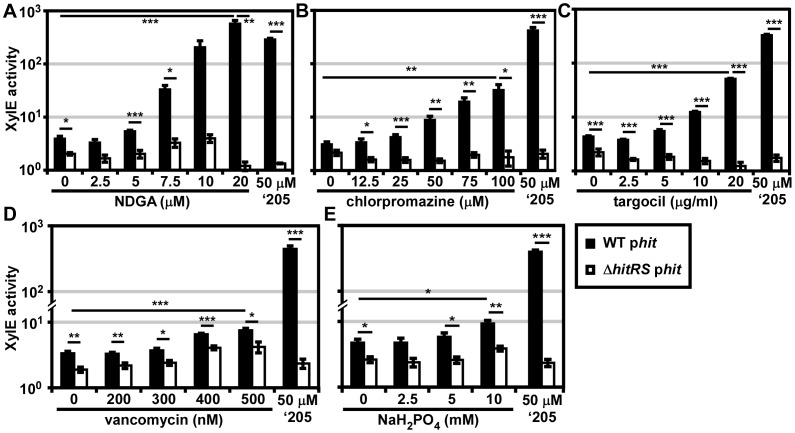
Two-component signaling systems (TCSs) are one of the mechanisms that bacteria employ to sense and adapt to changes in the environment. A prototypical TCS functions as a phosphorelay from a membrane-bound sensor histidine kinase (HK) to a cytoplasmic response regulator (RR) that controls target gene expression. Despite significant homology in the signaling domains of HKs and RRs, TCSs are thought to typically function as linear systems with little to no cross-talk between non-cognate HK-RR pairs. Here we have identified several cell envelope acting compounds that stimulate a previously uncharacterized Bacillus anthracis TCS. Furthermore, this TCS cross-signals with the heme sensing TCS HssRS; therefore, we have named it HssRS interfacing TCS (HitRS). HssRS reciprocates cross-talk to HitRS, suggesting a link between heme toxicity and cell envelope stress. The signaling between HssRS and HitRS occurs in the parental B. anthracis strain; therefore, we classify HssRS-HitRS interactions as cross-regulation. Cross-talk between HssRS and HitRS occurs at both HK-RR and post-RR signaling junctions. Finally, HitRS also regulates a previously unstudied ABC transporter implicating this transporter in the response to cell envelope stress. This chemical biology approach to probing TCS signaling provides a new model for understanding how bacterial signaling networks are integrated to enable adaptation to complex environments such as those encountered during colonization of the vertebrate host.
Overview
The claims and statistics of this paper haven’t been checked yet.
Free: it reads the open-access text and checks the first 5 claims that cite a source we can check. Create a free account to check every claim.
Integrity signals
Registry
Cites
Statistics
Figures



Verification
Claims the paper makes
The claims and statistics of this paper haven’t been checked yet.
Free: it reads the open-access text and checks the first 5 claims that cite a source we can check. Create a free account to check every claim.
Claims other papers make about this one
Each is checked against this paper’s own text: does it say what the citing paper says it does?
In the citing paper
“In B. anthracis, an HssRS orthologue controls the expression of HrtAB and cross-talks with a second TCS that responds to cellular envelope stresses”
From Heme Synthesis and Acquisition in Bacterial Pathogens (2016) · cites this paper as [238]
In the citing paper
“further implicating membrane damage as a component of heme stress [238].”
From Heme Synthesis and Acquisition in Bacterial Pathogens (2016) · cites this paper as [238]
Self-check
Percentages, sums and reported differences re-computed from the paper’s own numbers.
The self-check needs the paper’s full text.
Citations
Cites
Two-Component Signal Transduction
Stock, A. M., Robinson, V. L., & Goudreau, P. N. (2000) · Annual Review of Biochemistry · doi:10.1146/annurev.biochem.69.1.183 · Cited by 3,650
Gene Splicing by Overlap Extension: Tailor-Made Genes Using the Polymerase Chain Reaction
Horton, R. M., Cai, Z., Ho, S. N., & Pease, L. R. (2013) · BioTechniques · doi:10.2144/000114017 · Cited by 1,289 · cited 2×
“PCR-SOE DNA was digested with BamHI and EcoRI and ligated into pOS1.”
Specificity in Two-Component Signal Transduction Pathways
Laub, M. T., & Goulian, M. (2007) · Annual Review of Genetics · doi:10.1146/annurev.genet.41.042007.170548 · Cited by 748 · cited 7×
“This ‘cross-talk’ has been previously defined as the ‘‘communication between two pathways that, if eliminated, would leave intact two distinct, functioning pathways’’ [3].”
InfluentialSorting of protein a to the staphylococcal cell wall
Schneewind, O., Model, P., & Fischetti, V. A. (1992) · Cell · doi:10.1016/0092-8674(92)90101-h · Cited by 552
Rewiring the Specificity of Two-Component Signal Transduction Systems
Skerker, J. M., Perchuk, B. S., Siryaporn, A., Lubin, E. A., Ashenberg, O., Goulian, M., & Laub, M. T. (2008) · Cell · doi:10.1016/j.cell.2008.04.040 · Cited by 463
Iron-Source Preference of Staphylococcus aureus Infections
Skaar, E. P., Humayun, M., Bae, T., DeBord, K. L., & Schneewind, O. (2004) · Science · doi:10.1126/science.1099930 · Cited by 440 · cited 1×
“heme allows it to accumulate in membranes [42,43].”
Self-citationSkerker, J. M., Prasol, M. S., Perchuk, B. S., Biondi, E. G., & Laub, M. T. (2005) · PLoS Biology · doi:10.1371/journal.pbio.0030334 · Cited by 435
Gunn, J. S., & Miller, S. I. (1996) · Journal of Bacteriology · doi:10.1128/jb.178.23.6857-6864.1996 · Cited by 409 · cited 1×
“Alternatively, a protein product regulated by a RR may itself be a transcriptional regulator or phosphatase that impinges on the regulatory outputs of other TCSs [3,24,25,26].”
Multiple histidine kinases regulate entry into stationary phase and sporulation in Bacillus subtilis
Jiang, M., Shao, W., Perego, M., & Hoch, J. A. (2000) · Molecular Microbiology · doi:10.1046/j.1365-2958.2000.02148.x · Cited by 400
Goodman, A. L., Merighi, M., Hyodo, M., Ventre, I., Filloux, A., & Lory, S. (2009) · Genes & Development · doi:10.1101/gad.1739009 · Cited by 325 · cited 1×
“Even before an HK phosphorylates its cognate RR, interactions between HKs of individual TCSs can impact HK phosphorylation status and the downstream signaling cascade [18].”
EnvZ-OmpR Interaction and Osmoregulation in Escherichia coli
Cai, S. J., & Inouye, M. (2002) · Journal of Biological Chemistry · doi:10.1074/jbc.m110715200 · Cited by 312 · cited 1×
“TCS signaling purity is further maintained by a high ratio of RR:HK, which allows the cognate RR to outcompete other RRs for binding to its cognate HK [4,7].”
Fujita, M., & Losick, R. (2005) · Genes & Development · doi:10.1101/gad.1335705 · Cited by 306
Overcoming the Heme Paradox: Heme Toxicity and Tolerance in Bacterial Pathogens
Anzaldi, L. L., & Skaar, E. P. (2010) · Infection and Immunity · doi:10.1128/iai.00613-10 · Cited by 295 · cited 1×
“heme allows it to accumulate in membranes [42,43].”
Self-citationCpxR/OmpR Interplay Regulates Curli Gene Expression in Response to Osmolarity in Escherichia coli
Jubelin, G., Vianney, A., Beloin, C., Ghigo, J.-M., Lazzaroni, J.-C., Lejeune, P., & Dorel, C. (2005) · Journal of Bacteriology · doi:10.1128/jb.187.6.2038-2049.2005 · Cited by 285 · cited 1×
“This is typically manifested as two unique RRs regulating dissimilar, but overlapping DNA consensus sequences in the target promoter region [19,20,21,22].”
A Staphylococcus aureus Regulatory System that Responds to Host Heme and Modulates Virulence
Torres, V. J., Stauff, D. L., Pishchany, G., Bezbradica, J. S., Gordy, L. E., Iturregui, J., Anderson, K. L., Dunman, P. M., Joyce, S., & Skaar, E. P. (2007) · Cell Host & Microbe · doi:10.1016/j.chom.2007.03.001 · Cited by 241 · cited 1×
“Notably, HssRS is conserved in many Gram positive bacteria suggesting that this is a common mechanism by which these organisms deal with heme toxicity [31].”
Self-citationSchmitt, T. H., Frezzatti, W. A., & Schreier, S. (1993) · Archives of Biochemistry and Biophysics · doi:10.1006/abbi.1993.1566 · Cited by 217
Mode of action and in-vitro activity of vancomycin
Watanakunakorn, C. (1984) · Journal of Antimicrobial Chemotherapy · doi:10.1093/jac/14.suppl_d.7 · Cited by 197 · cited 1×
“Vancomycin is best known for inhibiting Gram positive cell wall biosynthesis, but at low concentrations it has also been shown to disrupt membrane integrity [38].”
Drug-Induced Photosensitivity: Culprit Drugs, Management and Prevention
Drucker, A. M., & Rosen, C. F. (2011) · Drug Safety · doi:10.2165/11592780-000000000-00000 · Cited by 190
Batchelor, E., Walthers, D., Kenney, L. J., & Goulian, M. (2005) · Journal of Bacteriology · doi:10.1128/jb.187.16.5723-5731.2005 · Cited by 179 · cited 1×
“This is typically manifested as two unique RRs regulating dissimilar, but overlapping DNA consensus sequences in the target promoter region [19,20,21,22].”
Bacitracin sensing in Bacillus subtilis
Rietkötter, E., Hoyer, D., & Mascher, T. (2008) · Molecular Microbiology · doi:10.1111/j.1365-2958.2008.06194.x · Cited by 173
Lü, J.-M., Nurko, J., Weakley, S. M., Jiang, J. H., Kougias, P., Lin, P. H., Yao, Q. C., & Chen, C. (2010) · PubMed · Cited by 172
Mechanism of hemolysis induced by ferriprotoporphyrin IX
Chou, A. C., & Fitch, C. D. (1981) · Journal of Clinical Investigation · doi:10.1172/jci110302 · Cited by 168
Discovery of a Small Molecule that Blocks Wall Teichoic Acid Biosynthesis in Staphylococcus aureus
Swoboda, J. G., Meredith, T. C., Campbell, J., Brown, S. L., Suzuki, T., Bollenbach, T., Malhowski, A. J., Kishony, R., Gilmore, M. S., & Walker, S. (2009) · ACS Chemical Biology · doi:10.1021/cb900151k · Cited by 152 · cited 1×
“aureus wall teichoic acid (WTA) synthesis called targocil was identified [39].”
Kostakioti, M., Hadjifrangiskou, M., Pinkner, J. S., & Hultgren, S. J. (2009) · Molecular Microbiology · doi:10.1111/j.1365-2958.2009.06826.x · Cited by 152
Determinants of specificity in two-component signal transduction
Podgornaia, A., & Laub, M. T. (2013) · Current Opinion in Microbiology · doi:10.1016/j.mib.2013.01.004 · Cited by 151 · cited 3×
“TCS signaling purity is further maintained by a high ratio of RR:HK, which allows the cognate RR to outcompete other RRs for binding to its cognate HK [4,7].”
Cross‐talk suppression between the CpxA–CpxR and EnvZ–OmpR two‐component systems in E. coli
Siryaporn, A., & Goulian, M. (2008) · Molecular Microbiology · doi:10.1111/j.1365-2958.2008.06426.x · Cited by 151 · cited 1×
“Most instances in which non-cognate HK-RR interactions have been described involve genetic manipulation of the system [6,8,9,10,11].”
Control of the Salmonella ugd gene by three two‐component regulatory systems
Mouslim, C., & Groisman, E. A. (2003) · Molecular Microbiology · doi:10.1046/j.1365-2958.2003.03318.x · Cited by 127 · cited 1×
“This is typically manifested as two unique RRs regulating dissimilar, but overlapping DNA consensus sequences in the target promoter region [19,20,21,22].”
Nitrate- and nitrite-responsive sensors NarX and NarQ of proteobacteria
Stewart, V. J. (2003) · Biochemical Society Transactions · doi:10.1042/bst0310001 · Cited by 122
Campbell, J., Singh, A. K., Swoboda, J. G., Gilmore, M. S., Wilkinson, B. J., & Walker, S. (2012) · Antimicrobial Agents and Chemotherapy · doi:10.1128/aac.05938-11 · Cited by 110 · cited 1×
“aureus revealed that hrtAB was the second most up-regulated operon next to cwrA, a small peptide of unknown function that is a reporter of cell wall stress [40].”
Kinetic Buffering of Cross Talk between Bacterial Two-Component Sensors
Groban, E. S., Clarke, E. J., Salis, H. M., Miller, S. M., & Voigt, C. A. (2009) · Journal of Molecular Biology · doi:10.1016/j.jmb.2009.05.007 · Cited by 106 · cited 2×
“Most instances in which non-cognate HK-RR interactions have been described involve genetic manipulation of the system [6,8,9,10,11].”
BslA, a pXO1‐encoded adhesin of Bacillus anthracis
Kern, J. W., & Schneewind, O. (2008) · Molecular Microbiology · doi:10.1111/j.1365-2958.2008.06169.x · Cited by 103 · cited 1×
“anthracis for mutagenesis as described previously [52].”
MethodEscherichia coli tol and rcs genes participate in the complex network affecting curli synthesis
Vianney, A., Jubelin, G., Renault, S., Dorel, C., Lejeune, P., & Lazzaroni, J. C. (2005) · Microbiology · doi:10.1099/mic.0.27913-0 · Cited by 101 · cited 1×
“Alternatively, a protein product regulated by a RR may itself be a transcriptional regulator or phosphatase that impinges on the regulatory outputs of other TCSs [3,24,25,26].”
Guckes, K. R., Kostakioti, M., Breland, E. J., Gu, A. P., Shaffer, C. L., Martinez, C. R., Hultgren, S. J., & Hadjifrangiskou, M. (2013) · Proceedings of the National Academy of Sciences · doi:10.1073/pnas.1315320110 · Cited by 99
Darwin, A. J., Tyson, K. L., Busby, S. J. W., & Stewart, V. J. (1997) · Molecular Microbiology · doi:10.1046/j.1365-2958.1997.4971855.x · Cited by 98 · cited 14×
“In these instances, both HK-RR cross-phosphorylation and differential regulation of promoters by RRs are mechanisms by which signal integration is achieved.”
InfluentialBirkey, S. M., Liu, W., Zhang, X., Duggan, M. F., & Hulett, F. M. (1998) · Molecular Microbiology · doi:10.1046/j.1365-2958.1998.01122.x · Cited by 96
Delgado, M. A., Mouslim, C., & Groisman, E. A. (2006) · Molecular Microbiology · doi:10.1111/j.1365-2958.2006.05069.x · Cited by 95 · cited 1×
“This is typically manifested as two unique RRs regulating dissimilar, but overlapping DNA consensus sequences in the target promoter region [19,20,21,22].”
Stauff, D. L., Torres, V. J., & Skaar, E. P. (2007) · Journal of Biological Chemistry · doi:10.1074/jbc.m703797200 · Cited by 95 · cited 1×
“2 mM pyrocatechol was added immediately before assaying XylE activity [56].”
Self-citationLechardeur, D., Cesselin, B., Liebl, U., Vos, M. H., Fernandez, A., Brun, C., Gruss, A., & Gaudu, P. (2012) · Journal of Biological Chemistry · doi:10.1074/jbc.m111.297531 · Cited by 93 · cited 1×
“HssRS activates the expression of the heme regulated transporter (hrtAB) which is thought to protect the bacteria from heme toxicity by exporting heme [29,30].”
Howell, A., Dubrac, S., Noone, D., Varughese, K. I., & Devine, K. M. (2005) · Molecular Microbiology · doi:10.1111/j.1365-2958.2005.05017.x · Cited by 87
Matsubara, M., Kitaoka, S., Takeda, S., & Mizuno, T. (2000) · Genes to Cells · doi:10.1046/j.1365-2443.2000.00347.x · Cited by 86
Stauff, D. L., Bagaley, D., Torres, V. J., Joyce, R., Anderson, K. L., Kuechenmeister, L., Dunman, P. M., & Skaar, E. P. (2008) · Journal of Bacteriology · doi:10.1128/jb.01921-07 · Cited by 83 · cited 1×
“Protein purification Protein purifications were carried out as described previously with the following modifications [55].”
MethodSelf-citationBacillus anthracis HssRS signalling to HrtAB regulates haem resistance during infection
Stauff, D. L., & Skaar, E. P. (2009) · Molecular Microbiology · doi:10.1111/j.1365-2958.2009.06684.x · Cited by 81 · cited 10×
“pET15b-hssR HssR expression construct with N-terminal his(6)-tag [29]”
MethodInfluentialSelf-citationSterne, M. (1946) · PubMed · Cited by 72
The interaction of hemin and bilirubin with the human red cell membrane
Kirschner-Zilber, I., Rabizadeh, E., & Shaklai, N. (1982) · Biochimica et Biophysica Acta (BBA) - Biomembranes · doi:10.1016/0005-2736(82)90234-6 · Cited by 70
Mechanisms of iron import in anthrax
Honsa, E. S., & Maresso, A. W. (2011) · BioMetals · doi:10.1007/s10534-011-9413-x · Cited by 65 · cited 1×
“anthracis lyses RBCs and imports heme from the hemoglobin released into the microenvironment in order to satisfy its need for nutrient iron [28].”
Schirner, K., Stone, L. K., & Walker, S. (2011) · ACS Chemical Biology · doi:10.1021/cb100390w · Cited by 65 · cited 1×
“anthracis TarGH remains to be determined [41].”
Silva, J. C., Haldimann, A., Prahalad, M. K., Walsh, C. T., & Wanner, B. L. (1998) · Proceedings of the National Academy of Sciences · doi:10.1073/pnas.95.20.11951 · Cited by 62 · cited 1×
“Most instances in which non-cognate HK-RR interactions have been described involve genetic manipulation of the system [6,8,9,10,11].”
Characterization of a Major Bacillus anthracis Spore Coat Protein and Its Role in Spore Inactivation
Kim, H.-S., Sherman, D., Johnson, F., & Aronson, A. I. (2004) · Journal of Bacteriology · doi:10.1128/jb.186.8.2413-2417.2004 · Cited by 54
Mike, L. A., Dutter, B. F., Stauff, D. L., Moore, J. L., Vitko, N. P., Aranmolate, O., Kehl-Fie, T. E., Sullivan, S., Reid, P. R., DuBois, J. L., et al. (2013) · Proceedings of the National Academy of Sciences · doi:10.1073/pnas.1303674110 · Cited by 50 · cited 2×
“Previously, a collection of small molecule activators of HssRS was identified in a high-throughput screen [32].”
Evolving a robust signal transduction pathway from weak cross‐talk
Siryaporn, A., Perchuk, B. S., Laub, M. T., & Goulian, M. (2010) · Molecular Systems Biology · doi:10.1038/msb.2010.105 · Cited by 46 · cited 1×
“In one example of this strategy, mutation of CpxA from Escherichia coli resulted in increased phosphotransfer to the non-cognate RR OmpR, as well as stimuli-responsiveness [12].”
de Been, M., Bart, M. J., Abee, T., Siezen, R. J., & Francke, C. (2008) · Environmental Microbiology · doi:10.1111/j.1462-2920.2008.01700.x · Cited by 42
Bacillus anthracis Factors for Phagosomal Escape
Tonello, F., & Zornetta, I. (2012) · Toxins · doi:10.3390/toxins4070536 · Cited by 32 · cited 1×
“anthracis can reach levels as high as 10(9) bacteria/ml [27].”
Recognition sites for chemotactic repellents of Bacillus subtilis
Ordal, G. (1976) · Journal of Bacteriology · doi:10.1128/jb.126.1.72-79.1976 · Cited by 23 · cited 1×
“subtilis, and one study notes that chlorpromazine inhibits cell wall biogenesis in Bacillus megaterium [36,37].”
Inhibition of Aerobic Sporing Bacilli by Hæmatin
VAN HEYNINGEN, W. E. (1948) · Nature · doi:10.1038/162114b0 · Cited by 9 · cited 2×
“In 1948, van Heyningen noted that Bacillus species exhibit differential sensitivity to heme [47].”
Klubes, P., Fay, P. J., & Cerná, I. (1971) · Biochemical Pharmacology · doi:10.1016/0006-2952(71)90061-x · Cited by 8 · cited 1×
“subtilis, and one study notes that chlorpromazine inhibits cell wall biogenesis in Bacillus megaterium [36,37].”
Cross-talk between the Histidine Protein Kinase VanS and the Response Regulator PhoB
Fisher, S. L., Jiang, W., Wanner, B. L., & Walsh, C. T. (1995) · Journal of Biological Chemistry · doi:10.1074/jbc.270.39.23143 · Cited by 2
Cited by
Heme Synthesis and Acquisition in Bacterial Pathogens
Choby, J. E., & Skaar, E. P. (2016) · Journal of Molecular Biology · doi:10.1016/j.jmb.2016.03.018 · Cited by 343
Self-citationMultikinase Networks: Two-Component Signaling Networks Integrating Multiple Stimuli
Francis, V. I., & Porter, S. L. (2019) · Annual Review of Microbiology · doi:10.1146/annurev-micro-020518-115846 · Cited by 73
Quorum Sensing and Toxin Production in Staphylococcus aureus Osteomyelitis: Pathogenesis and Paradox
Butrico, C. E., & Cassat, J. E. (2020) · Toxins · doi:10.3390/toxins12080516 · Cited by 65
“Interestingly, some activated response regulators can cross-regulate transcription of genes associated with other two-component systems [16,17].”
BackgroundFrancis, V. I., Waters, E. M., Finton-James, S. E., Gori, A., Kadioglu, A., Brown, A. R., & Porter, S. L. (2018) · Nature Communications · doi:10.1038/s41467-018-04640-8 · Cited by 80
The DNA glycosylase AlkD uses a non-base-flipping mechanism to excise bulky lesions
Mullins, E. A., Shi, R., Parsons, Z. D., Yuen, P. K., David, S. S., Igarashi, Y., & Eichman, B. F. (2015) · Nature · doi:10.1038/nature15728 · Cited by 67
“The 1-kb flanking regions surrounding alkD were inserted into the knockout-plasmid pLM4 using standard molecular biology techniques 41 .”
Metadata
- Authors
- Mike, L. A., Choby, J. E., Brinkman, P. R., Olive, L. Q., Dutter, B. F., Ivan, S. J., Gibbs, C. M., Sulikowski, G. A., Stauff, D. L., & Skaar, E. P.
- Affiliations
- Vanderbilt University (US)
- Grove City College (US)
- Vanderbilt University Medical Center (US)
- Corresponding author
- Skaar, Eric P.
- ORCID
- Venue
- PLoS Pathogens
- Publisher
- Public Library of Science (PLoS)
- Published
- 2014-03-27
- Volume
- 10
- Issue
- 3
- Pages
- e1004044
- ISSN
- 1553-7366 (ISSN-L)
- 1553-7374
- PMC
- PMC3968170
- OpenAlex
- W2047040799
- Cited by
- 49
- References
- 57
- Citations by year
- 2025: 6 · 2024: 6 · 2023: 5 · 2022: 6 · 2021: 2 · 2020: 5 · 2019: 5 · 2018: 3 · 2017: 2 · 2016: 4 · 2015: 4 · 2014: 1
- FWCI
- 2.41
- Type
- journal article
- Language
- en
- Open access
- gold
- doi.org
- Locations
- PLoS Pathogens (publishedVersion, cc-by)
- Europe PMC (PubMed Central) (publishedVersion, cc-by)
- PubMed Central (publishedVersion, cc-by)
- PubMed (publishedVersion)
- DOAJ (DOAJ: Directory of Open Access Journals) (submittedVersion, cc-by-sa)
- Figshare (submittedVersion, cc-by)
- Funders
- National Science Foundation (1156922)
- Vanderbilt University (T32 HL069765)
- Grove City College
- Searle Scholars Program
- National Institutes of Health (NIH T32, AI073843, HL069765, AI057157)
- National Heart, Lung, and Blood Institute (T32HL069765)
- National Institute of General Medical Sciences (T32GM065086)
- National Institute of Allergy and Infectious Diseases (AI 069233, AI073843, R01AI069233, U54AI057157, R01AI073843)
- Division of Chemistry
- Topics
- Life Sciences › Biochemistry, Genetics and Molecular Biology › Genetics › Bacterial Genetics and Biotechnology
- Life Sciences › Biochemistry, Genetics and Molecular Biology › Molecular Biology › Bacillus and Francisella bacterial research
- Life Sciences › Biochemistry, Genetics and Molecular Biology › Molecular Biology › Gene Regulatory Network Analysis
- Keywords
- two-component systems, cross-regulation, Bacillus anthracis, heme sensing, cell envelope stress, sensor histidine kinase, response regulator, phosphorelay, ABC transporters, chemical biology
- MeSH terms
- Bacillus anthracis, Bacterial Proteins, Cell Wall, Heme, Stress, Physiological, Signal Transduction, Gene Expression Regulation, Bacterial, Membrane Transport Proteins
About these checks
Registry, retraction, Cites and statistics results are computed, not judged, with one exception: a printed reference that no index lists is read once by a model before it counts as a citation error. Claims are extracted by a model and kept only when their quote appears verbatim in the text; each cited source is then checked, with a model’s help, for whether it says what the claim relies on. Those verdicts can be wrong — read the claim’s quote and the cited source before relying on one.
Statistics and arithmetic are recomputed, not judged.
Confidence bands are shown only for fields calibrated on our annotated test set. None is calibrated yet, so no band is shown.
What counts as a claim ›How we measure confidence ›How we check this ›
Are you an author, or do you see a problem with this page? Request a review
Data sources
Bibliographic data: Semantic Scholar, OpenAlex, Crossref.
Contains information from the Semantic Scholar Academic Graph Datasets, made available under the ODC Attribution License (ODC-BY 1.0).
Semantic Scholar’s data is described in: Kinney, R., et al. (2023). The Semantic Scholar Open Data Platform. arXiv:2301.10140.
