

A call to arms: Mustering secondary metabolites for success and survival of an opportunistic pathogen
Open accessThe DOI matches its Crossref record; 52 of the 52 references it cites were found in a registry or an index.
Abstract
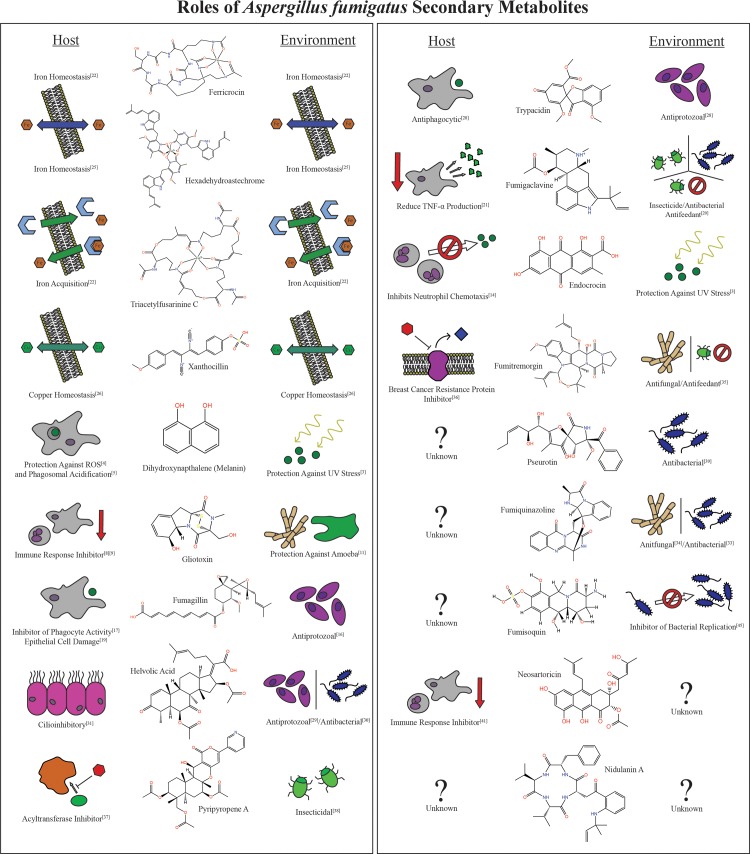
Dihydroxynapthalene melaninDihydroxynapthalene (DHN) melanin is a polymer consisting of 1,8-dihydroxynapthalene, found on the conidial surface.As an environmental benefit, DHN melanin helps to prevent
Overview
The claims and statistics of this paper haven’t been checked yet.
Free: it reads the open-access text and checks the first 5 claims that cite a source we can check. Create a free account to check every claim.
Integrity signals
Registry
Cites
Statistics
Figures
Verification
Claims the paper makes
The claims and statistics of this paper haven’t been checked yet.
Free: it reads the open-access text and checks the first 5 claims that cite a source we can check. Create a free account to check every claim.
Claims other papers make about this one
Each is checked against this paper’s own text: does it say what the citing paper says it does?
The source backs part of the claim, not all of it — or backs it for a different population, condition or comparison.
In the citing paper
“Toxic secondary metabolites produced by A. fumigatus (fumigaclavin, trypacidin, helvolic acid, gliotoxin, fumitremorgin, fumagillin, and pseurotin) do impact host cells (433, 440–443).”
From Aspergillus fumigatus and Aspergillosis in 2019 (2019) · cites this paper as [433]
Experimental — accuracy not yet measured
Self-check
Percentages, sums and reported differences re-computed from the paper’s own numbers.
The self-check needs the paper’s full text.
Citations
Cites
Pathogenesis of Aspergillus fumigatus in Invasive Aspergillosis
Dagenais, T. R. T., & Keller, N. P. (2009) · Clinical Microbiology Reviews · doi:10.1128/cmr.00055-08 · Cited by 993
Self-citationSchrettl, M., Bignell, E., Kragl, C., Joechl, C., Rogers, T., Arst, H. N., Haynes, K., & Haas, H. (2004) · The Journal of Experimental Medicine · doi:10.1084/jem.20041242 · Cited by 493
Taccone, F. S., Van den Abeele, A.-M., Bulpa, P., Misset, B., Meersseman, W., Cardoso, T., Paiva, J.-A., Blasco-Navalpotro, M., De Laere, E., Dimopoulos, G., et al. (2015) · Critical Care · doi:10.1186/s13054-014-0722-7 · Cited by 405
Hissen, A. H. T., Wan, A. N. C., Warwas, M. L., Pinto, L. J., & Moore, M. M. (2005) · Infection and Immunity · doi:10.1128/iai.73.9.5493-5503.2005 · Cited by 243
Accurate prediction of secondary metabolite gene clusters in filamentous fungi
Andersen, M. R., Nielsen, J. B., Klitgaard, A., Petersen, L. M., Zachariasen, M., Hansen, T. J., Blicher, L. H., Gotfredsen, C. H., Larsen, T. O., Nielsen, K. F., et al. (2013) · Proceedings of the National Academy of Sciences · doi:10.1073/pnas.1205532110 · Cited by 239
Li, X.-J., Zhang, Q., Zhang, A.-L., & Gao, J.-M. (2012) · Journal of Agricultural and Food Chemistry · doi:10.1021/jf300146n · Cited by 224
UV-protectant metabolites from lichens and their symbiotic partners
Nguyen, K.-H., Chollet-Krugler, M., Gouault, N., & Tomasi, S. (2013) · Natural Product Reports · doi:10.1039/c3np70064j · Cited by 216
Amitani, R., Taylor, G., Elezis, E. N., Llewellyn-Jones, C., Mitchell, J., Kuze, F., Cole, P. J., & Wilson, R. (1995) · Infection and Immunity · doi:10.1128/iai.63.9.3266-3271.1995 · Cited by 200
Recognition of DHN-melanin by a C-type lectin receptor is required for immunity to Aspergillus
Stappers, M. H. T., Clark, A. E., Aimanianda, V., Bidula, S., Reid, D. M., Asamaphan, P., Hardison, S. E., Dambuza, I. M., Valsecchi, I., Kerscher, B., et al. (2018) · Nature · doi:10.1038/nature25974 · Cited by 200
Prototype of an intertwined secondary-metabolite supercluster
Wiemann, P., Guo, C.-J., Palmer, J. M., Sekonyela, R., Wang, C. C. C., & Keller, N. P. (2013) · Proceedings of the National Academy of Sciences · doi:10.1073/pnas.1313258110 · Cited by 195
Self-citation
Cited by
Aspergillus fumigatus and Aspergillosis in 2019
Latgé, J.-P., & Chamilos, G. (2019) · Clinical Microbiology Reviews · doi:10.1128/cmr.00140-18 · Cited by 1,400
Rhodes, J., Abdolrasouli, A., Dunne, K., Sewell, T. R., Zhang, Y., Ballard, E., Brackin, A. P., van Rhijn, N., Chown, H., Tsitsopoulou, A., et al. (2022) · Nature Microbiology · doi:10.1038/s41564-022-01091-2 · Cited by 244
Aspergillus derived mycotoxins in food and the environment: Prevalence, detection, and toxicity
Navale, V., Vamkudoth, K. R., Ajmera, S., & Dhuri, V. (2021) · Toxicology Reports · doi:10.1016/j.toxrep.2021.04.013 · Cited by 234
Evolution of the human pathogenic lifestyle in fungi
Rokas, A. (2022) · Nature Microbiology · doi:10.1038/s41564-022-01112-0 · Cited by 232
A 19-isolate reference-quality global pangenome for the fungal wheat pathogen Zymoseptoria tritici
Badet, T., Oggenfuss, U., Abraham, L., McDonald, B. A., & Croll, D. (2020) · BMC Biology · doi:10.1186/s12915-020-0744-3 · Cited by 175
“Species from the genus Aspergillus produce a large diversity of secondary metabolites for which the gene clusters often segregate presence-absence (Kjærbølling et al. 2018; Raffa & Keller 2019).”
BackgroundGuruceaga, X., Perez-Cuesta, U., Abad-Diaz de Cerio, A., Gonzalez, O., Alonso, R. M., Hernando, F. L., Ramirez-Garcia, A., & Rementeria, A. (2019) · Toxins · doi:10.3390/toxins12010007 · Cited by 104
“Production of these SMs can help fungi in their adaptation to different environmental conditions, improving competitiveness against other microbes or with immune responses during infections [12].”
BackgroundSteenwyk, J. L., Mead, M. E., Knowles, S. L., Raja, H. A., Roberts, C. D., Bader, O., Houbraken, J. A. M. P., Goldman, G. H., Oberlies, N. H., & Rokas, A. (2020) · Genetics · doi:10.1534/genetics.120.303549 · Cited by 81
Kolawole, O., Meneely, J. P., Petchkongkaew, A., & Elliott, C. (2021) · Fungal Biology Reviews · doi:10.1016/j.fbr.2021.04.003 · Cited by 70
Anaerobic gut fungi are an untapped reservoir of natural products
Swift, C. L., Louie, K., Bowen, B. P., Olson, H. M., Purvine, S. O., Salamov, A. A., Mondo, S. J., Solomon, K., Wright, A., Northen, T. R., et al. (2021) · Proceedings of the National Academy of Sciences · doi:10.1073/pnas.2019855118 · Cited by 70
“Across microbial diversity, fungi are especially prolific secondary metabolite producers, with a single strain such as Aspergillus nidulans FGSC A4 producing 15 compounds characterized in the Minimum Information about a Biosynthetic Gene cluster database (4) or Aspergillus fumigatus with over 18 characterized metaboli…”
BackgroundSelf-citationAspergillus fumigatus biology, immunopathogenicity and drug resistance
van de Veerdonk, F. L., Carvalho, A., Wauters, J., Chamilos, G., & Verweij, P. E. (2025) · Nature Reviews Microbiology · doi:10.1038/s41579-025-01180-z · Cited by 70
“Among the most relevant are the inhibition of phagocytosis, the production of pro-inflammatory cytokines and neutrophil chemotaxis 122 .”
Blachowicz, A., Raffa, N., Bok, J. W., Choera, T., Knox, B. P., Lim, F. Y., Huttenlocher, A., Wang, C. C. C., Venkateswaran, K. J., & Keller, N. P. (2020) · mBio · doi:10.1128/mbio.03415-19 · Cited by 70
Self-citationGalleria mellonella as a screening tool to study virulence factors of Aspergillus fumigatus
Durieux, M.-F., Melloul, É., Jemel, S., Roisin, L., Dardé, M., Guillot, J., Dannaoui, É., & Botterel, F. (2021) · Virulence · doi:10.1080/21505594.2021.1893945 · Cited by 74
“Thus, Non-Ribosomal Peptide Synthetases (NRPS), key-enzymes involved in the biosynthesis of secondary metabolites in fungi [93], have many metabolic functions not yet elucidated.”
BackgroundRaffa, N., Won, T. H., Sukowaty, A. T., Candor, K., Cui, C., Halder, S., Dai, M., Figueroa, J. A. L., Schroeder, F. C., & Keller, N. P. (2021) · Proceedings of the National Academy of Sciences · doi:10.1073/pnas.2015224118 · Cited by 63
Self-citationAlves, V., Zamith‐Miranda, D., Frasés, S., & Nosanchuk, J. D. (2025) · Journal of Fungi · doi:10.3390/jof11020093 · Cited by 60
“Researchers have identified numerous bioactive compounds, including gliotoxin, fumagillins, and pseurotins, which are involved in virulence and immune suppression [115,116].”
Dynamic description of temporal changes of gut microbiota in broilers
Li, M., Meng, J., Wang, W., Ma, H., Zhao, Z., Ma, N., Lv, Q., Qin, Y., Geng, H.-L., Zhao, Q., et al. (2022) · Poultry Science · doi:10.1016/j.psj.2022.102037 · Cited by 54
The Toll pathway mediates Drosophila resilience to Aspergillus mycotoxins through specific Bomanins
Xu, R., Lou, Y., Tidu, A., Bulet, P., Heinekamp, T., Martin, F., Brakhage, A. A., Li, Z., Liégeois, S., & Ferrandon, D. (2022) · EMBO Reports · doi:10.15252/embr.202256036 · Cited by 51
“A. fumigatus can synthesize and secrete a vast array of toxins and secondary metabolites, the in vivo functions of which are just starting to be deciphered (Frisvad et al., 2009; Macheleidt et al., 2016; Raffa and Keller, 2019).”
Knowles, S. L., Mead, M. E., Silva, L. P., Raja, H. A., Steenwyk, J. L., Goldman, G. H., Rokas, A., & Oberlies, N. H. (2020) · mBio · doi:10.1128/mbio.03361-19 · Cited by 52
“fumigatus have been shown to be required for disease (3).”
BackgroundHost-mycobiome metabolic interactions in health and disease
Begum, N., Harzandi, A., Lee, S., Uhlén, M., Moyes, D. L., & Shoaie, S. (2022) · Gut Microbes · doi:10.1080/19490976.2022.2121576 · Cited by 49
“For instance, short-chain fatty acids (SCFA), tryptophan and branched-chain amino acids have all been identified as playing a role in immune and homeostatic responses.(61) Short-chain fatty acids (SCFAs) available within the host are necessary for regulating some fungal growth as well as modulating immune responses.”
BackgroundRokas, A., Mead, M. E., Steenwyk, J. L., Oberlies, N. H., & Goldman, G. H. (2020) · PLOS Pathogens · doi:10.1371/journal.ppat.1008315 · Cited by 50
“fumigatus [2, 19, 20, 37] and have been found to exhibit substantial genetic and phenotypic diversity among section Fumigati species.”
BackgroundDietary Exposure and Risk Assessment of Aflatoxin M1 for Children Aged 1 to 9 Years Old in Serbia
Milićević, D. R., Milešević, J. P., Gurinović, M. A., Janković, S., Đinović-Stojanović, J., Zeković, M., & Glibetić, M. (2021) · Nutrients · doi:10.3390/nu13124450 · Cited by 46
“, temperature and humidity) and/or biotic stress, toxigenic fungi and their metabolites may contaminate crops and food commodities in different phases of production and processing [2].”
BackgroundSteenwyk, J. L., Mead, M. E., de Castro, P. A., Valero, C., Damásio, A., Santos, R., LaBella, A. L., Li, Y., Knowles, S. L., Raja, H. A., et al. (2021) · Microbiology Spectrum · doi:10.1128/spectrum.00010-21 · Cited by 43
“Secondary metabolites can impact host biology and virulence (30, 72).”
BackgroundAspergillus fumigatus Acetate Utilization Impacts Virulence Traits and Pathogenicity
Ries, L. N. A., de Castro, P. A., Silva, L. P., Valero, C., dos Reis, T. F., Saborano, R., Duarte, I. F., Persinoti, G. F., Steenwyk, J. L., Rokas, A., et al. (2021) · mBio · doi:10.1128/mbio.01682-21 · Cited by 36
“fumigatus proliferation within the natural environment and mammalian host, for evasion and modulation of the host immune system, and for virulence (41).”
BackgroundRegulation of gliotoxin biosynthesis and protection in Aspergillus species
de Castro, P. A., Colabardini, A. C., Moraes, M., Horta, M. A. C., Knowles, S. L., Raja, H. A., Oberlies, N. H., Koyama, Y., Ogawa, M., Gomi, K., et al. (2022) · PLoS Genetics · doi:10.1371/journal.pgen.1009965 · Cited by 39
Bastos, R. W., Akiyama, D. Y., dos Reis, T. F., Colabardini, A. C., Luperini, R. S., de Castro, P. A., Baldini, R. L., Fill, T. P., & Goldman, G. H. (2022) · mBio · doi:10.1128/mbio.01850-22 · Cited by 35
“Pyripyropene A also shows insecticidal activity against agricultural insect pests (58, 60).”
BackgroundHamm, P. S., Montoya, K. N., Montoya, L., Cook, K., Liphardt, S. W., Taylor, J. W., Cook, J. A., & Natvig, D. O. (2022) · Frontiers in Fungal Biology · doi:10.3389/ffunb.2022.996574 · Cited by 34
“Aspergillus fumigatus has multiple adaptations that permit colonization of lung tissues, including small spore size, thermotolerance, and molecular mechanisms that allow avoidance of immune responses (Robert and Casadevall, 2009; Casadevall, 2012; Kwon-Chung and Sugui, 2013; Raffa and Keller, 2019); and in that sense…”
BackgroundLin, S.-Y., Oakley, C. E., Jenkinson, C. B., Chiang, Y., Lee, C., Jones, C. G., Seidler, P. M., Nelson, H. M., Todd, R. B., Wang, C. C. C., et al. (2023) · Chemical Science · doi:10.1039/d3sc02226a · Cited by 31
Hatmaker, E. A., Rangel‐Grimaldo, M., Raja, H. A., Pourhadi, H., Knowles, S. L., Fuller, K. K., Adams, E. M., Lightfoot, J. D., Bastos, R. W., Goldman, G. H., et al. (2022) · Microbiology Spectrum · doi:10.1128/spectrum.03069-22 · Cited by 36
“ing host biology (28, 29), as with gliotoxin in A.”
BackgroundMøller, S. A., Rasmussen, P. U., Frederiksen, M. W., & Madsen, A. M. (2022) · Environment International · doi:10.1016/j.envint.2022.107112 · Cited by 29
Shostak, K., Bonner, C., Sproule, A., Thapa, I., Shields, S. W. J., Blackwell, B. A., Vierula, J., Overy, D. P., & Subramaniam, R. (2020) · Molecular Microbiology · doi:10.1111/mmi.14575 · Cited by 26
“These include defense against competitors, inter and intra-species interactions, nutrient acquisition, and symbiotic and pathogenic interactions (Macheleidt et al., 2016; Raffa and Keller, 2019).”
BackgroundYang, X., Chen, Y., Zhang, L., He, J., Wu, Q., Li, S., Wang, D., Gou, J., Wu, Z., Zhang, K., et al. (2023) · Science China Life Sciences · doi:10.1007/s11427-022-2265-6 · Cited by 24
de Castro, P. A., Pinzan, C. F., dos Reis, T. F., Valero, C., van Rhijn, N., Menegatti, C., Migliorini, I. L. D. F., Bromley, M., Trentin, G., Almeida, F. B. D. R., et al. (2024) · Nature Communications · doi:10.1038/s41467-023-44329-1 · Cited by 25
Luptáková, D., Patil, R. H., Dobiáš, R., Stevens, D. A., Pluháček, T., Palyzová, A., Káňová, M., Navrátil, M., Vrba, Z., Hubáček, P., et al. (2023) · Microbiology Spectrum · doi:10.1128/spectrum.04068-22 · Cited by 25
“suppressive gliotoxin (Gtx) (13), fumagillin, and fumitremorgin A (14, 15).”
BackgroundTan, C., Wu, A., & Li, C. (2025) · Journal of Infection and Public Health · doi:10.1016/j.jiph.2025.102947 · Cited by 22
Nickles, G., Ludwikoski, I., Bok, J. W., & Keller, N. P. (2021) · Current Protocols · doi:10.1002/cpz1.321 · Cited by 23
“…along with A. nidulans (Caesar, Kelleher, & Keller, 2020; Romsdahl & Wang, 2019), the most thoroughly studied filamentous fungus with regard to SM characterization and ecological function of these metabolites (Boysen, Saeed, & Hillmann, 2021; Raffa & Keller, 2019; Wang, Yu, Keller, & Wang, 2021).”
BackgroundSelf-citationSeo, H., Wassano, N. S., Rawa, M. S. A., Nickles, G., Damásio, A., & Keller, N. P. (2024) · Journal of Fungi · doi:10.3390/jof10040266 · Cited by 22
“Several of its SMs have been shown to mediate various virulence traits of this pathogen [1,120].”
Self-citationMargalit, A., Sheehan, D., Carolan, J. C., & Kavanagh, K. A. (2022) · Microbiology · doi:10.1099/mic.0.001164 · Cited by 21
“Some of these secondary metabolites may play a role in evading or subverting the host immune response in vivo, and consequently many secondary metabolites such as gliotoxin, fumagillin and dihydroxynapthalene (DHN) melanin, and their effects on the host, have been well characterized [7, 9–12].”
Ali, E. M., & Abdallah, B. M. (2021) · Nanomaterials · doi:10.3390/nano12010051 · Cited by 21
“fumigatus are required for infection [7], including gliotoxin (GT), a secondary metabolite that belongs to the epipolythiodioxopiperazine class of mycotoxins [8] and is found in the sera of patients with IPA [9].”
BackgroundFungal Secondary Metabolites: Biological Activity and Potential Applications
Roy, A., Ahuja, S., & Garg, S. (2021) · Fungal biology · doi:10.1007/978-3-030-60659-6_7 · Cited by 23
Hokken, M., Coolen, J. P. M., Steenbreker, H., Zoll, J., Baltussen, T. J. H., Verweij, P. E., & Melchers, W. J. G. (2023) · Journal of Fungi · doi:10.3390/jof9080807 · Cited by 19
Natural products in the predatory defence of the filamentous fungal pathogen Aspergillus fumigatus
Boysen, J. M., Saeed, N., & Hillmann, F. (2021) · Beilstein Journal of Organic Chemistry · doi:10.3762/bjoc.17.124 · Cited by 19
Genome and Metabolome MS-Based Mining of a Marine Strain of Aspergillus affinis
Gonçalves, M. F. M., Hilário, S., Tacão, M., de Peer, Y. V., Alves, A., & Esteves, A. C. (2021) · Journal of Fungi · doi:10.3390/jof7121091 · Cited by 17
Stefanović, D., Marinković, D., Trailović, S. M., Vasiljević, M., Farkaš, H., Raj, J., Tolimir, N., Radulović, S., Nešić, V., Trailović, J. N., et al. (2023) · Microorganisms · doi:10.3390/microorganisms11030574 · Cited by 17
“The most important agro‐economic and public health classes of mycotox‐ ins, in terms of their prevalence and negative effects on human and animal health and performance, are (AFB1), ochratoxin A (OTA), zearalenone (ZEA), trichothecenes (TCT), fumonisins (FUMs), patulin (PT), alternaria toxins and ergot toxins [10].”
BackgroundThe novel spore-specific regulator SscA controls Aspergillus conidiogenesis
Son, Y.-E., Yu, J., & Park, H.-S. (2023) · mBio · doi:10.1128/mbio.01840-23 · Cited by 19
“They also modify transcription and translation activities, and the production of cellular primary metabolites and secondary metabolites for survival and protection (20– 24).”
BackgroundPopulation structure in a fungal human pathogen is potentially linked to pathogenicity
Hatmaker, E. A., Barber, A. E., Drott, M. T., Sauters, T. J. C., Gumilang, A., Alastruey‐Izquierdo, A., Garcia‐Hermoso, D., Eagan, J. L., Keller, N. P., Kontoyiannis, D. P., et al. (2025) · Nature Communications · doi:10.1038/s41467-025-62777-9 · Cited by 15
“The publicly available data were from 10 countries: China (1), Ethiopia (7), India (7), Israel (1), Japan (21), Kenya (16), Netherlands (9), Pakistan (12), the USA (141), and Vietnam (1).”
InfluentialSelf-citationMilićević, D. R., Udovički, B., Petrović, Ž., Janković, S., Radulović, S., Gurinović, M. A., & Rajković, A. (2020) · Meat Technology · doi:10.18485/meattech.2020.61.1.1 · Cited by 17
“…is not directly essential for normal fungal growth, but allows moulds to rapidly colonize the environment and compete with other organisms or inhibit competitor growth and reproduction and, therefore, gives moulds a competitive advantage within complex ecosystems (Raffa and Keller, 2019).”
BackgroundKortei, N. K., Tetteh, R. A., Wiafe‐Kwagyan, M., Amon, D. N. K., & Odamtten, G. T. (2022) · Food Science & Nutrition · doi:10.1002/fsn3.2719 · Cited by 18
Analysis of putative quadruplex-forming sequences in fungal genomes: novel antifungal targets?
Warner, E. F., Bohálová, N., Brázda, V., Waller, Z. A. E., & Bidula, S. M. (2021) · Microbial Genomics · doi:10.1099/mgen.0.000570 · Cited by 18
“…for PQS-containing genes in functions associated with virulence in pathogenic fungi such as zinc-ion binding [66], riboflavin and tryptophan biosynthesis [67], melanin [68] and secondary metabolite synthesis [69], metallo-peptidase activity [70], and the response to environmental stimuli [71].”
Riedling, O. L., David, K. T., & Rokas, A. (2024) · Current Biology · doi:10.1016/j.cub.2025.07.081 · Cited by 14
Aspergillus fumigatus Fumagillin Contributes to Host Cell Damage
Guruceaga, X., Perez‐Cuesta, U., Pellón, A., Cendon‐Sanchez, S., Pelegri‐Martinez, E., González, O., Hernando, F. L., Mayayo, E., Anguíta, J., Alonso, R. M., et al. (2021) · Journal of Fungi · doi:10.3390/jof7110936 · Cited by 14
Self-citationBelousova, E. B., Zhuravleva, O. I., Yurchenko, E. A., Oleynikova, G. K., Antonov, A. S., Kirichuk, N. N., Chausova, V. E., Khudyakova, Y. V., Menshov, A. S., Popov, R. S., et al. (2023) · Biomolecules · doi:10.3390/biom13050741 · Cited by 14
“Under the highly competitive conditions of densely populated microbial communities, marine fungi are forced to produce secondary metabolites both for aggression against competitors and for defense against them [28].”
BackgroundRinker, D. C., Sauters, T. J. C., Steffen, K., Gumilang, A., Raja, H. A., Rangel‐Grimaldo, M., Pinzan, C. F., de Castro, P. A., dos Reis, T. F., Delbaje, E., et al. (2024) · Communications Biology · doi:10.1038/s42003-024-06756-8 · Cited by 14
“In pathogenic species of Aspergillus , secondary metabolites comprise one of the better characterized sets of virulence factors that can have direct consequences on the host 51,52 .”
BackgroundMethodInfluentialLifestyles shape genome size and gene content in fungal pathogens
Fijarczyk, A., Hessenauer, P., Hamelin, R. C., & Landry, C. R. (2025) · eLife · doi:10.7554/elife.104975.4 · Cited by 14
Rush, T. A., Tannous, J., Lane, M. J., Meena, M. G., Carrell, A. A., Golan, J. J., Drott, M. T., Cottaz, S., Fort, S., Ané, J., et al. (2022) · mSystems · doi:10.1128/msystems.01052-22 · Cited by 14
“are known to modulate microbial interactions (19).”
BackgroundInfluentialSelf-citationLifestyles shape genome size and gene content in fungal pathogensPreprint
Fijarczyk, A., Hessenauer, P., Hamelin, R. C., & Landry, C. R. (2025) · eLife · doi:10.7554/elife.104975 · Cited by 13
“…genomic characteristics or processes correlated with or implicated in the evolution of pathogens include the presence of specialized gene families ( Raffa and Keller, 2019 ), horizontal gene transfer ( Sahu et al., 2023 ; McDonald et al., 2019 ), copy number variation of pathogenicity-relevant…”
Progress in the Study of Natural Antimicrobial Active Substances in Pseudomonas aeruginosa
Si, T., Wang, A., Yan, H., Kong, L., Guan, L., He, C., Ma, Y., Zhang, H., & Ma, H. (2024) · Molecules · doi:10.3390/molecules29184400 · Cited by 14
Sirtuin E deacetylase is required for full virulence of Aspergillus fumigatus
Wassano, N. S., Silva, G. B., Reis, A. H., Gerhardt, J. A., Antoniel, E. P., Akiyama, D. Y., Rezende, C. P., Neves, L. X., Vasconcelos, E. J. R., de Figueiredo, F. L., et al. (2024) · Communications Biology · doi:10.1038/s42003-024-06383-3 · Cited by 12
“FilamentousfungicanproduceawidevarietyofSMsthatcontributeto their survival, fi tness, pathogenicity, and virulence 11,63 .”
Aspergillus fumigatus from Pathogenic Fungus to Unexplored Natural Treasure: Changing the Concept
Ibrahim, S. R. M., Mohamed, H. M., Aljahdali, A. S., Murshid, S. S. A., Mohamed, S. G. A., Abdallah, H. M., & Mohamed, G. A. (2025) · Journal of Microbiology and Biotechnology · doi:10.4014/jmb.2411.11082 · Cited by 13
Production of Natural Pigments by Penicillium brevicompactum Using Agro-Industrial Byproducts
Basto, B., da Silva, N. R., Teixeira, J. A., & Silvério, S. C. (2022) · Fermentation · doi:10.3390/fermentation8100536 · Cited by 12
Berasategui, A., Salem, H., Moller, A. G., Christopher, Y., Montoya, Q. V., Conn, C. E., Read, T. D., Rodrigues, A. L., Ziemert, N., & Gerardo, N. M. (2024) · mSystems · doi:10.1128/msystems.00576-24 · Cited by 10
“Only a few Escovopsis -derived compounds have been identified (31, 32), though recent genome annotation indicates the potential to produce many more (33).”
BackgroundYurchenko, A. N., Nesterenko, L. E., Popov, R. S., Kirichuk, N. N., Chausova, V. E., Chingizova, E. A., Isaeva, M. P., & Yurchenko, E. A. (2023) · Metabolites · doi:10.3390/metabo13111138 · Cited by 11
“…fumagillin, fumigaclavines, fumitremorgins, and fumiquinazolines have previously been described as the main virulence factors of A. fu-migatus [51]. marine A. fumigatus strain [13] and its biological role may be related to adaptation to marine environments like the anti-inflammatory…”
BackgroundGenomic, transcriptomic, and ecological diversity of Penicillium species in cheese rind microbiomes
Ye, R., Biango‐Daniels, M. N., Steenwyk, J. L., Rokas, A., Louw, N. L., Nardella, R., & Wolfe, B. E. (2024) · Fungal Genetics and Biology · doi:10.1016/j.fgb.2023.103862 · Cited by 11
Sensing the threat posed by Aspergillus infection
Obar, J. J. (2020) · Current Opinion in Microbiology · doi:10.1016/j.mib.2020.08.004 · Cited by 10
Rocha, M. C., Fabri, J. H. T. M., Silva, L. P., Angolini, C. F. F., Bertolini, M. C., da Cunha, A. F., Valiante, V., Goldman, G. H., Fill, T. P., & Malavazi, I. (2021) · Genetics · doi:10.1093/genetics/iyab036 · Cited by 11
Mutational Analysis of Aspergillus fumigatus Volatile Oxylipins in a Drosophila Eclosion Assay
Almaliki, H. S., Niu, M., Keller, N. P., Yin, G., & Bennett, J. W. (2023) · Journal of Fungi · doi:10.3390/jof9040402 · Cited by 10
“fumigatus is associated with its virulence, including the production of DHN-melanin in spores, as well as proteins and toxins that are synthesized during hyphal growth [2,9,10].”
BackgroundSelf-citationMeena, M. G., Lane, M. J., Tannous, J., Carrell, A. A., Abraham, P. E., Giannone, R. J., Ané, J., Keller, N. P., Labbé, J., Geiger, A. G., et al. (2023) · PNAS Nexus · doi:10.1093/pnasnexus/pgad322 · Cited by 10
“We applied the treatments to the Af293 A. fumigatus strain because it has a well-defined repertoire of known and putative specialized metabolites (43) that are temperature-dependent (26, 27, 44 – 46); moreover, its entire genome has been sequenced (47).”
MethodSelf-citationLiu, T., Wei, W., Wang, K., Wang, E., & Yang, Q. (2019) · International Journal of Molecular Sciences · doi:10.3390/ijms20184409 · Cited by 9
Brown, A. C., Mead, M. E., Steenwyk, J. L., Goldman, G. H., & Rokas, A. (2022) · Frontiers in Fungal Biology · doi:10.3389/ffunb.2022.802494 · Cited by 9
“fumigatus-mediated disease has been of increasing interest, due to its ability to inhibit the host immune response (Raffa and Keller, 2019).”
BackgroundRahman, S., van Rhijn, N., Papastamoulis, P., Thomson, D. D., Carter, Z., Gregson, L., Fortune‐Grant, R., Rattray, M., Bromley, J. M., & Bignell, M. E. (2022) · Frontiers in Cellular and Infection Microbiology · doi:10.3389/fcimb.2022.907519 · Cited by 9
“Gliotoxin, one of the most widely studied secreted toxins of A. fumigatus is associated with induction of apoptotic cell death in several mammalian cell types (Kwon-Chung and Sugui, 2009; Raffa and Keller, 2019).”
Carriel, C. C., Halberg, S., Kotvanova, M., Pyne, S., Park, S. C., Seo, H., Schmidt, A., Calise, D. G., Ané, J., Keller, N. P., et al. (2026) · Nucleic Acids Research · doi:10.1093/nar/gkaf1439 · Cited by 8
Self-citationKortei, N. K., Gillette, V. S., Wiafe‐Kwagyan, M., Ansah, L. O., Kyei-Baffour, V. O., & Odamtten, G. T. (2024) · Toxicology Reports · doi:10.1016/j.toxrep.2024.01.009 · Cited by 8
“A. fumigatus produces a mycotoxin called fumagillin [51,113].”
BackgroundZehetbauer, F., Seidl, A., Berger, H., Sulyok, M., Kastner, F., & Strauss, J. (2022) · Fungal Genetics and Biology · doi:10.1016/j.fgb.2022.103726 · Cited by 14
Role of the osaA Gene in Aspergillus fumigatus Development, Secondary Metabolism and Virulence
Dabholkar, A., Pandit, S. S., Devkota, R., Dhingra, S., Lorber, S., Puel, O., & Calvo, A. M. (2024) · Journal of Fungi · doi:10.3390/jof10020103 · Cited by 7
“Gliotoxin’s role in A. fumigatus infection has been previously studied in depth [8,16,93,102], where it was shown to affect host macrophage phagocytosis and to inhibit the activity of other immune cells [93].”
BackgroundMolecular characterization of gliotoxin synthesis in a biofilm model of Aspergillus fumigatus
Gómez‐López, A., & Fernández-Fernández, C. (2024) · Biofilm · doi:10.1016/j.bioflm.2024.100238 · Cited by 7
Kim, W., Lichtenzveig, J., Syme, R. A., Williams, A., Peever, T. L., & Chen, W. (2019) · mSphere · doi:10.1128/msphere.00622-19 · Cited by 7
“It is always a challenging task to determine the role of secondary metabolites in an interaction with hosts or in the environment (51).”
de Castro, P. A., Akiyama, D. Y., Pinzan, C. F., dos Reis, T. F., Delbaje, E., Rocha, P. S., Izidoro, M. A., Schenkman, S., Sugimoto, S., Takeshita, N., et al. (2025) · mBio · doi:10.1128/mbio.00363-25 · Cited by 6
“Pyripyropene A is an SM previously shown as a potent inhibitor of mammalian acyl-CoA cholesterol acyltransferase (ACATS) (19–21).”
Activation of Secondary Metabolite Production in Fungi
Zehner, L. M., Krespach, M. K. C., Stroe, M. C., Rosin, M., Schroeckh, V., & Brakhage, A. A. (2023) · The mycota · doi:10.1007/978-3-031-29199-9_11 · Cited by 6
Machine-Readable Structural Information Is Essential for Natural Products Research
Steffen, K., Oberlies, N. H., & Rokas, A. (2025) · Journal of Natural Products · doi:10.1021/acs.jnatprod.5c00836 · Cited by 5
Regulation of pseurotin A biosynthesis by GliZ and zinc in Aspergillus fumigatus
Seo, H., Kang, S. H., Lee, D., & Yun, C. (2023) · Scientific Reports · doi:10.1038/s41598-023-29753-z · Cited by 5
The evolution of the gliotoxin biosynthetic gene cluster in Penicillium fungi
Balamurugan, C., Steenwyk, J. L., Goldman, G. H., & Rokas, A. (2024) · G3 Genes Genomes Genetics · doi:10.1093/g3journal/jkae063 · Cited by 5
“The role of gliotoxin in modulating host biology suggests that it is a virulence factor and, potentially, 1 major component, or “card”, of virulence in a larger “hand” that fungi possess (Casadevall 2007; Raffa and Keller 2019 ).”
BackgroundInfluentialProgress in Gliotoxin Research
Li, L., Liu, Y., Wang, Q., & Song, H. (2025) · Molecules · doi:10.3390/molecules30183665 · Cited by 6
“These metabolites serve di-Molecules verse functions, including signaling, antagonism, inflicting damage on plant and animal hosts, promoting infection, protecting fungi from host immune cells, and facilitating the acquisition of essential nutrients [74–80].”
Lehmann, A., Aguilar-Ramírez, E., Keller, N. P., & Heitman, J. (2026) · Current Biology · doi:10.1016/j.cub.2026.05.047 · Cited by 4
Self-citationFan, Y., Du, M., Zhang, W., Deng, W., Yang, E., Wang, S., Yan, L., Zhang, L., Kang, S., Steenwyk, J. L., et al. (2025) · Molecular Phylogenetics and Evolution · doi:10.1016/j.ympev.2025.108423 · Cited by 4
Modeling Approaches Reveal New Regulatory Networks in Aspergillus fumigatus Metabolism
Acerbi, E., Kohoutková, M. H., Choera, T., Keller, N. P., Frič, J., Stella, F. A., Romani, L. R., & Zelante, T. (2020) · Journal of Fungi · doi:10.3390/jof6030108 · Cited by 4
“The secondary metabolites pathways yield four known toxins, fumiquinazoline, fumitremorgin, fumigaclavine and hexadehydroastechrome [9].”
BackgroundSelf-citationDraft genome sequence of Talaromyces trachyspermus , a biocontrol fungus isolated from broomrape
Hemmati, R., Dolatabadian, A., Saeedi, S., & Batley, J. (2025) · G3 Genes Genomes Genetics · doi:10.1093/g3journal/jkaf280 · Cited by 4
“This compound has yet to be tested for antimicrobial or virulence-related properties (Raffa and Keller 2019).”
Son, Y.-E., Han, J., Lee, K.-T., & Park, H.-S. (2023) · Mycology: An International Journal on Fungal Biology · doi:10.1080/21501203.2023.2294061 · Cited by 4
“There are many virulence factors, including conidial tolerance, conidial surface and cell wall, pigment, and secondary metabolites in A. fumigatus (Hohl and Feldmesser 2007; Raffa et al. 2019).”
BackgroundWess, J., Hu, Y., Periyannan, S. K., Jones, A., & Rathjen, J. P. (2025) · Fungal Genetics and Biology · doi:10.1016/j.fgb.2024.103956 · Cited by 3
Marine Fungi: In Search of New Antibacterial Drugs
Yurchenko, E. A., Chingizova, E. A., Aminin, D. L., & Yurchenko, A. N. (2025) · Molecular Biology · doi:10.1134/s0026893324700705 · Cited by 3
“This fusidan-type triterpenoid is isolated mainly from various strains of the fungus A. fumigatus and is considered one of the factors of its virulence [41].”
Gupta, N. C., Arora, S., Kundu, A., Pankaj, S., Rao, M., & Bhattacharya, R. (2022) · Journal of Plant Science and Phytopathology · doi:10.29328/journal.jpsp.1001095 · Cited by 3
Song, Z., Zhang, H., Ye, L., Lei, Y., Wang, L., Liu, X., Soto, N. M. M., Keller, N. P., Oakley, B. R., Zhao, C., et al. (2026) · Advanced Science · doi:10.1002/advs.202519021 · Cited by 2
“Notably, during host-pathogen interactions, bioactive secondary metabolites (SMs) produced by the invading A. fumigatus play a crucial role in modulating immune responses [ 9 ].”
Self-citationLifestyles shape genome size and gene content in fungal pathogensPreprint
Fijarczyk, A., Hessenauer, P., Hamelin, R. C., & Landry, C. R. (2025) · eLife · doi:10.7554/elife.104975.3 · Cited by 2
Kumar, G., Allen, J., Songster, L. D., Rawa, M. S. A., Aguilar-Ramírez, E., Bok, J. W., Suen, P., Driscoll, B., Salogiannis, J., Keller, N. P., et al. (2026) · Current Biology · doi:10.1016/j.cub.2026.09.031 · Cited by 1
Self-citationAbdolrasouli, A., & Armstrong-James, D. P. H. (2021) · Elsevier eBooks · doi:10.1016/b978-0-08-102723-3.00116-5 · Cited by 1
Aspergilli, More Than Just Fungi: Shaping the Last Decades of Model Systems
Degola, F. (2021) · Elsevier eBooks · doi:10.1016/b978-0-12-819990-9.00033-0 · Cited by 1
Lifestyles shape genome size and gene content in fungal pathogensPreprint
Fijarczyk, A., Hessenauer, P., Hamelin, R. C., & Landry, C. R. (2025) · eLife · doi:10.7554/elife.104975.1 · Cited by 3
Kumar, G., Allen, J. L., Oster, L. D. S., Rawa, M. S. A., Ramírez, E., Bok, J. W., Suen, P., Driscoll, B., Salogiannis, J., Keller, N. P., et al. (2026) · bioRxiv (Cold Spring Harbor Laboratory) · doi:10.64898/2026.03.03.708097 · Cited by 1
“During infection and to survive in the host, it produces a variety of secondary metabolites, including helvolic acid, gliotoxin, trypacidin, fumagillin, and others 21 .”
InfluentialSelf-citationAspergillus- Human Interactions: From the Environment to Clinical Significance
Thammahong, A. (2022) · IntechOpen eBooks · doi:10.5772/intechopen.98509 · Cited by 2
Effect of Crude Drug Extracts on Trypacidin Production in Aspergillus fumigatus
Wakana, D., Inoue, N., Takeda, H., & Hosoe, T. (2022) · Advances in Microbiology · doi:10.4236/aim.2022.129037
Juglal, S. (2023) · DUT Open Scholar (Durban University of Technology) · doi:10.51415/10321/4829
Luperini, R. S. (2023) · Digital Library of Theses and Dissertations (Universidade de São Paulo) · doi:10.11606/d.17.2023.tde-17102023-105339
Metadata
- Authors
- Raffa, N., & Keller, N. P.
- Affiliations
- University of Wisconsin–Madison (US)
- Corresponding author
- Keller, Nancy P.
- Venue
- PLOS Pathogens
- Publisher
- Public Library of Science (PLoS)
- Published
- 2019-04-04
- Volume
- 15
- Issue
- 4
- Pages
- e1007606
- ISSN
- 1553-7366 (ISSN-L)
- 1553-7374
- PMC
- PMC6448812
- OpenAlex
- W2926400466
- Cited by
- 123
- References
- 51
- Citations by year
- 2026: 11 · 2025: 22 · 2024: 14 · 2023: 18 · 2022: 20 · 2021: 23 · 2020: 11 · 2019: 4
- FWCI
- 8.99
- Type
- journal article
- Language
- en
- Open access
- gold
- doi.org
- Licence
- Locations
- PLoS Pathogens (publishedVersion, cc-by)
- PubMed Central (publishedVersion, cc-by)
- PubMed (publishedVersion)
- DOAJ (DOAJ: Directory of Open Access Journals) (submittedVersion, cc-by-sa)
- Funders
- National Institutes of Health
- National Institute of General Medical Sciences (T32GM008349)
- National Institute of Allergy and Infectious Diseases (R01AI065728)
- Topics
- Life Sciences › Immunology and Microbiology › Applied Microbiology and Biotechnology › Microbial Natural Products and Biosynthesis
- Life Sciences › Agricultural and Biological Sciences › Plant Science › Plant Pathogens and Fungal Diseases
- Life Sciences › Biochemistry, Genetics and Molecular Biology › Biotechnology › Microbial Metabolism and Applications
- Keywords
- secondary metabolites, opportunistic pathogens, fungal pathogen survival, melanin
- MeSH terms
- Anti-Bacterial Agents, Aspergillosis, Aspergillus fumigatus, Humans, Opportunistic Infections, Host-Pathogen Interactions, Metabolome
About these checks
Registry, retraction, Cites and statistics results are computed, not judged, with one exception: a printed reference that no index lists is read once by a model before it counts as a citation error. Claims are extracted by a model and kept only when their quote appears verbatim in the text; each cited source is then checked, with a model’s help, for whether it says what the claim relies on. Those verdicts can be wrong — read the claim’s quote and the cited source before relying on one.
Statistics and arithmetic are recomputed, not judged.
Confidence bands are shown only for fields calibrated on our annotated test set. None is calibrated yet, so no band is shown.
What counts as a claim ›How we measure confidence ›How we check this ›
Are you an author, or do you see a problem with this page? Request a review
Data sources
Bibliographic data: Semantic Scholar, OpenAlex, Crossref.
Contains information from the Semantic Scholar Academic Graph Datasets, made available under the ODC Attribution License (ODC-BY 1.0).
Semantic Scholar’s data is described in: Kinney, R., et al. (2023). The Semantic Scholar Open Data Platform. arXiv:2301.10140.
