

Internet Cognitive-Behavioral Therapy for Painful Chronic Pancreatitis: A Pilot Feasibility Randomized Controlled Trial
Open accessThe DOI matches its Crossref record; 36 of the 37 references it cites were found in a registry or an index; 8 of the 20 sources its claims cite were checked for support.
Abstract
INTRODUCTION:Severe abdominal pain is a cardinal symptom of chronic pancreatitis (CP) associated with a high economic and societal burden. In other chronic pain conditions, cognitive-behavioral therapy (CBT) has demonstrated efficacy in improving patient outcomes (e.g., pain-related disability and depression). However, CBT has not yet been evaluated in adult patients with painful CP. We aimed to (i) evaluate the feasibility and acceptability of an adapted Internet CBT program for CP and (ii) generate pilot data regarding the effects of treatment on patient pain outcomes.METHODS:Thirty adults (mean age = 49.8 years, SD = 12.5; 80% women) with suspected or definite CP were randomized to Internet CBT (Pancreatitis Pain Course) versus control. The Pancreatitis Pain Course has 5 CBT lessons (e.g., thought challenging, relaxation, and activity pacing) delivered over 8 weeks. Pain interference, pain intensity, and quality of life were assessed at pretreatment, posttreatment, and the 3-month follow-up. Qualitative interviews were conducted at posttreatment with a subset of participants.RESULTS:Eighty percent of participants rated the program as highly acceptable; 64.3% completed all 5 lessons. Qualitative data revealed positive perceptions of program features, relevancy, and skills. Patients randomized to Internet CBT demonstrated moderate to large effects in reducing pain intensity and pain interference from baseline to 3 months. The proportion of treatment responders (>30% improvement) was significantly greater in the Internet-CBT group than in the control group (50% vs 13%, Fisher exact t test P = 0.04).DISCUSSION:In this first trial of CBT pain self-management in CP, feasibility, acceptability, and preliminary efficacy for reducing pain and disability were demonstrated. Future definitive trials of CBT are needed. © 2021 Lippincott Williams and Wilkins. All rights reserved.
Overview
CoChat Summary
## TL;DR
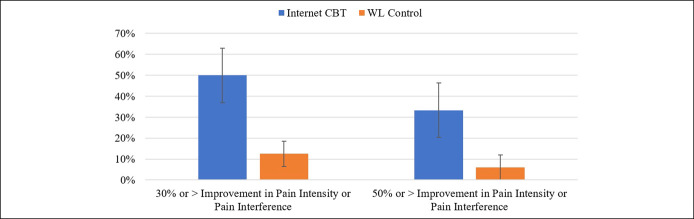
This pilot randomized controlled trial found that an Internet-delivered CBT program for adults with painful chronic pancreatitis was feasible, acceptable, and showed preliminary benefits for pain outcomes. In 30 participants, the intervention group had greater improvements in pain interference and pain intensity than wait-list control, with 50% vs 13% achieving at least 30% improvement at 3 months.
## Key findings
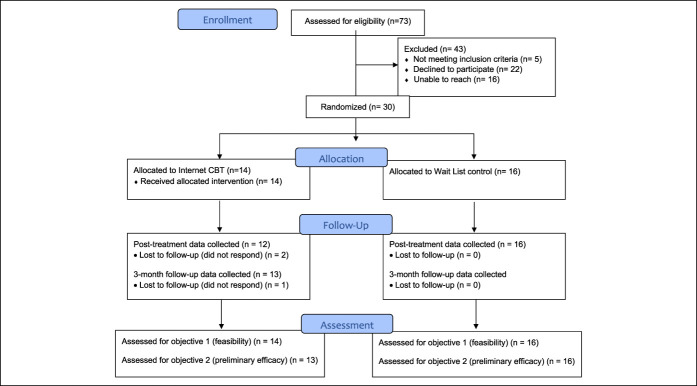
- Feasibility/engagement: 30 adults were enrolled out of 57 reached potential participants, for an overall recruitment/enrollment rate of 53%; 64.3% completed all 5 lessons and 57% completed at least 6 of 8 coaching calls.
- Acceptability: 80% of participants rated the program as highly acceptable; the mean Treatment Evaluation Inventory score was 29.7 (SD 2.5), above the paper’s acceptability threshold of 27.
- Pain outcomes: From pretreatment to 3-month follow-up, the Internet CBT group had significantly greater reductions in pain interference than control (F(1,28)=4.92, P=0.04, d=0.88) and moderate-to-large reductions in pain intensity (F(1,28)=3.65, P=0.07, d=0.76).
- Responder rates: 50% vs 13% of participants in Internet CBT vs control achieved at least 30% improvement in pain interference or pain intensity at 3 months (Fisher exact t test P=0.04); for 50% improvement, the rates were 33.3% vs 6.3% (P=0.09).
## Methods
- Design: Balanced 1:1 randomized parallel-group pilot feasibility RCT comparing Internet CBT (“Pancreatitis Pain Course”) with wait-list control; assessments were online at pretreatment, posttreatment (8 weeks), and 3-month follow-up.
- Sample/data: 30 adults with suspected or definite chronic pancreatitis, mean age 49.8 years (SD 12.5), 80% women; recruited from 5 CPDPC sites and the community; inclusion required adult age, Internet access, and moderate pain (≥4/10).
- Main analysis: Descriptive statistics for feasibility/acceptability; ANCOVA models for pain interference, pain intensity, and PANQOLI quality of life adjusting for age, sex, and baseline scores; qualitative interviews analyzed via semantic thematic analysis; responder analyses used Fisher exact t tests.
## Limitations
- Stated in the paper: The authors note they did not include a treatment expectancy measure or an attention-control comparator, so they could not separate treatment effects from expectancy/placebo effects.
- Stated in the paper: The sample was small, predominantly women, mostly college educated, and mostly White, limiting generalizability to more diverse populations.
- Stated in the paper: They call for larger studies, longer follow-up, and a broader range of outcomes to evaluate durability; they also say opioid use at baseline makes future opioid outcomes important.
- Evidence from the text: This was a pilot with only 30 participants and some analyses were underpowered or only borderline significant, so conclusions about efficacy are preliminary.
Model-written summary. Check it against the paper before relying on it.
Integrity signals
Registry
Cites
Statistics
Figures
Verification
Claims the paper makes
6 Valid · 2 Not valid · 9 Not checked · 36 Own results and interpretations
At least one cited source doesn’t support this claim or points to a different paper, and none confirmed it — see the verdicts below.
In the paper
“Given that previous pain management interventions in CP have focused almost exclusively on pharmacological and surgical approaches (e.g., (30,31)), applying CBT for painful CP is very novel.”
§ Internet Cognitive-Behavioral Therapy for Painful Chronic Pancreatitis: A Pilot Feasibility Randomized Controlled Trial > DISCUSSION
What the sources say
- Disputedcites [30] Gurusamy KS Lusuku C Davidson BR. Pregabalin for decreasing pancreatic pain in chronic pancreatitis. Cochrane Database Syst Rev 2016; 2: CD011522. 26836292 PMC8265874 sourceExperimental — accuracy not yet measured
The paper’s introduction describes an “endoscopy-first approach” as current practice for pain in chronic pancreatitis, with multiple endoscopic interventions before surgery. Its Discussion also describes previous trials comparing endoscopy with surgery. This contradicts the claim that previous interventions focused almost exclusively on medication and surgery. (LLM, conf=0.85)
Checked by a reasoning model — may be wrong.
- Not checked — no full text of the sourcecites [31] Issa Y Kempeneers MA Bruno MJ; Dutch Pancreatitis Study Group. Effect of early surgery vs endoscopy-first approach on pain in patients with chronic pancreatitis: The ESCAPE randomized clinical trial. JAMA 2020; 323(3): 237– 47. 31961419 PMC6990680 source
plain- Asserted: passes — The authors put it forward as true.
- Checkable: passes — It can be checked against evidence.
- Load-bearing: passes — The paper’s conclusions depend on it.
- Based: passes — The paper gives a reason why it holds.
- Disputed
Every source the paper cites for this claim was checked and supports it.
In the paper
“In other chronic pain conditions, cognitive-behavioral therapy (CBT) has demonstrated efficacy in improving patient outcomes (e.g., pain-related disability and depression).”
- Also stated in: § INTRODUCTION · boosted
“multiple systematic reviews and meta-analyses of CBT interventions for chronic pain demonstrate beneficial effects on pain, disability, HRQoL, and mood in many populations (9).”
§ Internet Cognitive-Behavioral Therapy for Painful Chronic Pancreatitis: A Pilot Feasibility Randomized Controlled Trial > Abstract
What the sources say
- Supportedcites [9] Williams AC Eccleston C Morley S. Psychological therapies for the management of chronic pain (excluding headache) in adults. Cochrane Database Syst Rev 2012; 11: CD007407. 23152245 PMC6483325 source
The Summary of results reports beneficial effects of CBT on disability and mood, the outcomes relevant to the citing sentence. The Disability outcomes and Mood outcomes sections specify that effects vary by comparator and follow-up time; the sentence does not claim otherwise. Page numbers are not available in the supplied passages. (LLM, conf=0.90)
boostedstates a cause- Asserted: passes — The authors put it forward as true.
- Checkable: passes — It can be checked against evidence.
- Load-bearing: passes — The paper’s conclusions depend on it.
- Based: passes — The paper gives a reason why it holds.
- Also stated in: § INTRODUCTION · boosted
Every source the paper cites for this claim was checked and supports it.
In the paper
“Our findings extend the evidence base of CBT, which has been extensively studied in other chronic pain conditions (9).”
§ Internet Cognitive-Behavioral Therapy for Painful Chronic Pancreatitis: A Pilot Feasibility Randomized Controlled Trial > DISCUSSION
What the sources say
- Supportedcites [9] Williams AC Eccleston C Morley S. Psychological therapies for the management of chronic pain (excluding headache) in adults. Cochrane Database Syst Rev 2012; 11: CD007407. 23152245 PMC6483325 source
The Discussion (Evidence base) reports data from 35 randomized trials of behavioural or cognitive behavioural therapy in adults with chronic pain excluding headache. The Summary of results says the majority of studies were of CBT, supporting the claim that CBT has been extensively studied in chronic pain conditions. (LLM, conf=0.93)
boosted- Asserted: passes — The authors put it forward as true.
- Checkable: passes — It can be checked against evidence.
- Load-bearing: unclear — It is unclear whether the paper’s conclusions depend on it.
- Based: passes — The paper gives a reason why it holds.
- Supported
A result the paper reports from its own data — it cites no other source for it, so there is none to check. The quote shows it is in the paper.
In the paper
“Initial engagement with the Internet CBT program was high, with 100% of participants completing at least 1 lesson.”
§ Internet Cognitive-Behavioral Therapy for Painful Chronic Pancreatitis: A Pilot Feasibility Randomized Controlled Trial > RESULTS > Feasibility
plainn = 30- Asserted: passes — The authors put it forward as true.
- Checkable: passes — It can be checked against evidence.
- Load-bearing: passes — The paper’s conclusions depend on it.
- Based: passes — The paper gives a reason why it holds.
A result the paper reports from its own data — it cites no other source for it, so there is none to check. The quote shows it is in the paper.
In the paper
“The remaining 30 participants (clinic n = 18, community n = 12) enrolled in the study and were included in analyses (overall recruitment/enrollment rate = 53%).”
§ Internet Cognitive-Behavioral Therapy for Painful Chronic Pancreatitis: A Pilot Feasibility Randomized Controlled Trial > RESULTS > Feasibility
plainn = 30- Asserted: passes — The authors put it forward as true.
- Checkable: passes — It can be checked against evidence.
- Load-bearing: unclear — It is unclear whether the paper’s conclusions depend on it.
- Based: passes — The paper gives a reason why it holds.
11 more claims
Create a free account to see all 53 claims and every source verdict.
- Probably not a substantial claim. 20
- It may state two separate claims as one. 27
Statistics that don’t add up
Each reported p-value recomputed from its test statistic and degrees of freedom, each partial η² from its F, and each ratio, mean difference or B printed with a p checked against its own confidence interval.
Rated minor: it would not touch a result — a value no result rests on, a p-value that stays on the same side of the significance level, or a conflict that is clerical, resolved elsewhere in the paper, or outside its own findings.
In the paper
“F (1, 28) = 4.92, P = 0.04”
§ Internet Cognitive-Behavioral Therapy for Painful Chronic Pancreatitis: A Pilot Feasibility Randomized Controlled Trial > RESULTS > Preliminary efficacy
Reported p = .04 · recomputed p = .035
Statistics recomputed
Every reported test result, recomputed from its test statistic and degrees of freedom. A result shows as not adding up only once an independent check has confirmed it.
- Doesn’t add upF(1, 28) = 4.92reported p = .04 · recomputed p = .035
“F (1, 28) = 4.92, p = .04”
- Consistentχ²(1) = 5reported p = .03 · recomputed p = .025
“χ2 (1) = 5.00, p = .03”
- ConsistentF(1, 27) = 0.14reported p = .71 · recomputed p = .711
“F (1, 27) = 0.14, p = .71”
- ConsistentF(1, 27) = 3.15reported p = .09 · recomputed p = .087
“F (1, 27) = 3.15, p = .09”
- ConsistentF(1, 28) = 3.65reported p = .07 · recomputed p = .066
“F (1, 28) = 3.65, p = .07”
2 more recomputed tests
Create a free account to see every test the Stats check recomputed.
Self-check
Percentages, sums and reported differences re-computed from the paper’s own numbers.
Self-check results appear here once an independent check has confirmed them.
Citations
Cites
Using thematic analysis in psychology
Braun, V., & Clarke, V. (2006) · Qualitative Research in Psychology · doi:10.1191/1478088706qp063oa · Cited by 194,414
Harris, P. A., Taylor, R., Thielke, R., Payne, J., Gonzalez, N., & Conde, J. G. (2009) · Journal of Biomedical Informatics · doi:10.1016/j.jbi.2008.08.010 · Cited by 51,384 · cited 1×
“All assessments were completed online through REDCap (17), a secure online data capture platform, and included standardized measures and a 7-day online daily diary to evaluate pain interference and pain intensity.”
MethodCore outcome measures for chronic pain clinical trials: IMMPACT recommendations
Dworkin, R. H., Turk, D. C., Farrar, J. T., Haythornthwaite, J. A., Jensen, M. P., Katz, N. P., Kerns, R. D., Stucki, G., Allen, R. R., Bellamy, N., et al. (2005) · Pain · doi:10.1016/j.pain.2004.09.012 · Cited by 3,732 · cited 1×
“Future studies are needed with larger samples and using a broader range of outcomes over a longer duration to examine the durability of treatment effects (34).”
BackgroundCore outcome domains for chronic pain clinical trials: IMMPACT recommendations
Turk, D. C., Dworkin, R. H., Allen, R. R., Bellamy, N., Brandenburg, N., Carr, D. B., Cleeland, C., Dionne, R., Farrar, J. T., Galer, B. S., et al. (2003) · Pain · doi:10.1016/j.pain.2003.08.001 · Cited by 3,510
Dworkin, R. H., Turk, D. C., Wyrwich, K. W., Beaton, D., Cleeland, C. S., Farrar, J. T., Haythornthwaite, J. A., Jensen, M. P., Kerns, R. D., Ader, D. N., et al. (2008) · The Journal of Pain · doi:10.1016/j.jpain.2007.09.005 · Cited by 3,471 · cited 3×
“However, at the follow-up, the Internet CBT group reported significantly greater reductions on pain interference compared with the control group, and this was a large effect size, F (1, 28)5 4.”
BackgroundMethodWhitehead, A. L., Julious, S. A., Cooper, C. L., & Campbell, M. J. (2016) · Statistical Methods in Medical Research · doi:10.1177/0962280215588241 · Cited by 1,936 · cited 1×
“8) effects with 90% power and 2-sided 5% significance (24).”
BackgroundPsychological therapies for the management of chronic pain (excluding headache) in adults
Williams, A. C. D. C., Eccleston, C., & Morley, S. (2012) · Cochrane Database of Systematic Reviews · doi:10.1002/14651858.cd007407.pub3 · Cited by 1,634
Peery, A. F., Crockett, S. D., Murphy, C. C., Lund, J. L., Dellon, E. S., Williams, J. L., Jensen, E. T., Shaheen, N. J., Barritt, A. S., Lieber, S. R., et al. (2019) · Gastroenterology · doi:10.1053/j.gastro.2018.08.063 · Cited by 1,619
Validation of the Brief Pain Inventory for chronic nonmalignant pain
Tan, G., Jensen, M. P., Thornby, J. I., & Shanti, B. F. (2004) · The Journal of Pain · doi:10.1016/j.jpain.2003.12.005 · Cited by 1,416
Eccleston, C., Blyth, F. M., Dear, B. F., Fisher, E. A., Keefe, F. J., Lynch, M. E., Palermo, T. M., Reid, M. C., & Williams, A. C. D. C. (2020) · Pain · doi:10.1097/j.pain.0000000000001885 · Cited by 480
Self-citation
Cited by
Vege, S. S., & Chari, S. T. (2022) · New England Journal of Medicine · doi:10.1056/nejmcp1809396 · Cited by 193
Self-citationGandy, M., Pang, S. T. Y., Scott, A. J., Heriseanu, A. I., Bisby, M. A., Dudeney, J., Karin, E., Titov, N., & Dear, B. F. (2022) · PAIN · doi:10.1097/j.pain.0000000000002606 · Cited by 102
Self-citationManagement of chronic pancreatitis
Hines, O. J., & Pandol, S. J. (2024) · BMJ · doi:10.1136/bmj-2023-070920 · Cited by 58
Neuroimaging Mechanism of Cognitive Behavioral Therapy in Pain Management
Bao, S., Qiao, M., Lu, Y., & Jiang, Y. (2022) · Pain Research and Management · doi:10.1155/2022/6266619 · Cited by 51
Association of Chronic Pancreatitis Pain Features With Physical, Mental, and Social Health
Yadav, D. K., Askew, R. L., Palermo, T. M., Li, L., Andersen, D. K., Chen, M., Fisher, W. E., Fogel, E. L., Forsmark, C. E., Hart, P. A., et al. (2022) · Clinical Gastroenterology and Hepatology · doi:10.1016/j.cgh.2022.09.026 · Cited by 60
Self-citationOlesen, S. S., Phillips, A. E., Faghih, M., Kuhlmann, L., Steinkohl, E., Frøkjær, J. B., Bick, B. L., Ramsey, M. L., Hart, P. A., Garg, P. K., et al. (2021) · Gut · doi:10.1136/gutjnl-2021-325855 · Cited by 45
Self-citationPain patterns in chronic pancreatitis and chronic primary pain
Tuck, N. L., Teo, K., Kuhlmann, L., Olesen, S. S., Johnson, M., Bean, D. J., Rashid, U., MacCormick, A. D., Srikumar, G., Drewes, A. M., et al. (2022) · Pancreatology · doi:10.1016/j.pan.2022.04.016 · Cited by 22
Advances in the Management of Pain in Chronic Pancreatitis
Maydeo, A. P., Kamat, N., Dalal, A., & Patil, G. K. (2023) · Current Gastroenterology Reports · doi:10.1007/s11894-023-00898-1 · Cited by 18
Pain management in chronic pancreatitis
Nag, D. S., Swain, B. P., Anand, R., Barman, T. K., & Vatsala (2024) · World Journal of Clinical Cases · doi:10.12998/wjcc.v12.i12.2016 · Cited by 17
Uç, A., Andersen, D. K., Apkarian, A. V., Bellin, M. D., Colloca, L., Drewes, A. M., Dunbar, E. K., Forsmark, C. E., Goodman, M. T., Kapural, L., et al. (2021) · Pancreas · doi:10.1097/mpa.0000000000001899 · Cited by 12
Self-citationManagement of chronic pancreatitis: recent advances and future prospects
Han, C.-X., Lv, Y.-W., & Hu, L.-H. (2024) · Therapeutic Advances in Gastroenterology · doi:10.1177/17562848241234480 · Cited by 11
16. Pain in chronic pancreatitis
van Zeggeren, L., Nabbi, R. B., Kallewaard, J. W., Steegers, M. A. H., Cohen, S. P., Kapural, L., van Santvoort, H. C., & Wolff, A. P. (2025) · Pain Practice · doi:10.1111/papr.70030 · Cited by 15
Petrik, M. L., Freeman, M. L., & Trikudanathan, G. (2022) · Pancreas · doi:10.1097/mpa.0000000000001953 · Cited by 17
Self-citationCassar, N., Cromwell, P. M., Duggan, S. N., van Veldhuisen, C. L., Boermeester, M. A., Besselink, M. G., & Conlon, K. (2024) · Digestive Surgery · doi:10.1159/000535588 · Cited by 9
“Conservative options include risk factor modi fi cation, cognitive behavioral therapy [3], mindfulness [4], and neuro-modulation [5].”
BackgroundPsychological Evaluation and Management of Chronic Pancreatitis
Palmer, B. E., & Petrik, M. L. (2022) · Gastroenterology Clinics of North America · doi:10.1016/j.gtc.2022.07.006 · Cited by 10
Daily Pain Experiences in Chronic Pancreatitis: Identifying Pain Phenotypes
Han, S. S., Li, R., & Palermo, T. M. (2023) · Pancreas · doi:10.1097/mpa.0000000000002271 · Cited by 6
Self-citationPhillips, A. E., Hughes, S. J., Andersen, D. K., Bell, A., Brand, R. E., Coté, G. A., Cowdin, A., Diazgranados, N., Dudeja, V., Duggan, S. N., et al. (2024) · Pancreas · doi:10.1097/mpa.0000000000002333 · Cited by 8
Self-citationRecent advances in the understanding and management of chronic pancreatitis pain
Walker, J., Babyok, O. L., Saloman, J. L., & Phillips, A. E. (2023) · Journal of Pancreatology · doi:10.1097/jp9.0000000000000163 · Cited by 10
“[56] Data from the study suggested efficacy of the intervention with significant reductions in pain interference, as well as nonsignificant but notable improvements in pain intensity and healthcare-related QOL in the CBT arm compared to the non-CBT arm.”
MethodKawka, M., Lucas, A., Riad, A. M., Hawkins, D., de‐Madaria, E., West, H., Jakaityte, I., Lee, M. J., Kouli, O., Ruanne, R., et al. (2024) · HPB · doi:10.1016/j.hpb.2024.04.004 · Cited by 7
“Quality of life is impaired in children with chronic pancreatitis: A multicenter study”
Agrawal, A., Srivastava, A., Mishra, P., Malik, R., Agrawal, V., Raj, A., Sarma, M. S., Poddar, U., & Bhat, N. K. (2024) · Pancreatology · doi:10.1016/j.pan.2024.06.009 · Cited by 5
Financial Toxicity in Patients With Chronic Pancreatitis
Choate, R., Wasilchenko, C., Thakur, K., Hill, R. L., Wright, E., & Conwell, D. L. (2024) · Pancreas · doi:10.1097/mpa.0000000000002384 · Cited by 7
Self-citationPrecision Medicine Treatment for Painful Chronic Pancreatitis
Guevara-Lazo, D., Clauw, D. J., & Machicado, J. D. (2025) · Current Treatment Options in Gastroenterology · doi:10.1007/s11938-025-00475-7 · Cited by 5
“This program showed to be feasible, acceptable by patients with CP, and showed preliminary efficacy in reduc - ing pain with the support of a professional coach [ 70].”
Floria, D., Fogarasi, B., Tari, E., Szabó, L., Veres, D. S., Bognár, A. S., Beáta, S., Erőss, B. M., Teutsch, B., & Hegyi, P. J. (2025) · Therapeutic Advances in Gastroenterology · doi:10.1177/17562848251386324 · Cited by 6
Chandra, S. S., Bisby, M. A., Scott, A. J., Titov, N., & Dear, B. F. (2025) · Pain · doi:10.1097/j.pain.0000000000003784 · Cited by 6
Self-citationFehér, T. D., Obeidat, M., Szentes, B. L., Papp, R., Teutsch, B., Engh, M. A., Váncsa, S., Csaba, R., Réthy, L., Hegyi, P. J., et al. (2026) · Pancreatology · doi:10.1016/j.pan.2026.01.006 · Cited by 5
Analgesic Management of Chronic Pancreatitis
Amakye, D., Razjouyan, H., & Coates, M. D. (2025) · Digestive Diseases and Sciences · doi:10.1007/s10620-025-09626-3 · Cited by 4
“[ 16].”
Palermo, T. M., Ohls, O. C., Dear, B. F., Doorenbos, A. Z., Yadav, D., Zhou, C., Bellin, M. D., Fisher, W., Fogel, E. L., Forsmark, C. E., et al. (2026) · Trials · doi:10.1186/s13063-026-09517-6 · Cited by 5
“…30 adults with painful RAP or CP assigned to CBT or wait-list control found that patients randomized to CBT demonstrated a significant reduction in pain severity and pain interference from baseline to posttreatment and 3-month follow-up compared to patients in the wait-list control condition [27].”
Self-citationAl-Moussally, F., Fogel, E. L., & Helft, P. R. (2022) · Pancreatology · doi:10.1016/j.pan.2022.05.007 · Cited by 3
Self-citationHan, C. Q., Lin, X., Lv, Y., et al. (2022) · Clinical and Translational Gastroenterology · doi:10.14309/ctg.0000000000000439 · Cited by 2
“(1) concerning Internet cognitive-behavioral therapy (CBT) for painful chronic pancreatitis (CP).”
BackgroundInternet-Delivered Cognitive Behavioural Therapy for the Management of Chronic Non-Cancer Pain
CADTH (2022) · Canadian Journal of Health Technologies · doi:10.51731/cjht.2022.462 · Cited by 1
Updates in the Management of Chronic Pancreatitis
Vaněk, P., & Freeman, M. L. (2024) · Gastroenterology Clinics of North America · doi:10.1016/j.gtc.2024.08.008 · Cited by 4
Sekhar, A. C., Kandhi, S., Ramaswamy, P., Thyagarajan, M., Kuriti, M., & Balamurugan, A. N. (2026) · Journal of Clinical Medicine · doi:10.3390/jcm15103831 · Cited by 1
“…a multidisciplinary approach that incorporates pharmacological [41,42], interventional and surgical [43,44], psychological and behavioral therapies [32,40], and lifestyle modifications [45–47], all of which are crucial for preventing disease progression and improving quality of life (Figure 2).”
Pharmacological and non-pharmacological therapies for chronic pancreatitis pain: a narrative review
Alsaleh, T., Arain, M., & George, J. (2026) · Frontiers in Physiology · doi:10.3389/fphys.2026.1857141 · Cited by 2
“…controlled trial of internet-based CBT for painful CP, participants assigned to CBT showed moderate to large improvements in pain intensity and pain interference at three months, and half achieved clinically meaningful pain reduction compared with only 13% of controls (Palermo et al., 2021).”
Zhang, Y., Yin, X., Wang, M., Chen, Y., & Zhu, Y. (2025) · Psycho-Oncologie · doi:10.18282/po3654 · Cited by 3
Palermo, T. M. (2022) · Clinical and Translational Gastroenterology · doi:10.14309/ctg.0000000000000449
“about our recently published article, Internet Cognitive-Behavioral Therapy for Painful Chronic Pancreatitis: A Pilot Feasibility Randomized Controlled Trial (1,2).”
BackgroundInfluentialSelf-citationAdjunctive Therapy in Chronic Pancreatitis
Phillips, A. E. (2023) · doi:10.1002/9781119876007.ch60
Progress in treatment of chronic pancreatitis: A review based on the ClinicalTrials.gov database
Jiang, L.-Y., Han, C. Q., & Hu, L. (2024) · World Chinese Journal of Digestology · doi:10.11569/wcjd.v32.i9.635
Innovations in pain management in patients with chronic pancreatitis
Enslin, S., Bick, B. L., Tewani, S. K., & Kaul, V. (2025) · iGIE · doi:10.1016/j.igie.2025.03.005
“28 Although data evaluating the use of acupuncture for the management of chronic pain in CP are very limited, acupuncture has been shown to be effective at reducing other chronic pain syndromes, including low back pain and headaches.”
Quality of life in children with chronic pancreatitis: An overlooked challenge
Agrawal, A., & Samanta, A. (2025) · World Journal of Clinical Pediatrics · doi:10.5409/wjcp.v14.i4.109615
陳靜儀, Xiao, K., Tong, X., & Zhao, X. (2026) · Frontiers in Medicine · doi:10.3389/fmed.2026.1721923
Yadav, D., Li, L., Andersen, D. K., Bellin, M. D., Cruz‐Monserrate, Z., Fisher, W., Fogel, E. L., Forsmark, C. E., Hart, P. A., Lee, B., et al. (2026) · Pancreas · doi:10.1097/mpa.0000000000002657
Self-citationPetrik, M. L., & Palmer, B. E. (2026) · Pancreatology · doi:10.1016/j.pan.2026.07.009
Pain management in chronic pancreatitis: beyond opioids
Olesen, S. S., Kuhlmann, L., Talukdar, R., Pandanaboyana, S., Singh, V. K., & Drewes, A. M. (2026) · The Lancet. Gastroenterology & hepatology · doi:10.1016/s2468-1253(26)00186-x · Cited by 1
Metadata
- Authors
- Palermo, T. M., Law, E. F., Topazian, M. D., Slack, K., Dear, B. F., Ko, Y. J., Vege, S. S., Fogel, E., Trikudanathan, G., Andersen, D. K., Conwell, D. L., Yadav, D., & on behalf of the Consortium for the Study of Chronic Pancreatitis, D.
- Affiliations
- University of Washington (US)
- Mayo Clinic (US)
- Seattle Children's Research Institute (US)
- Macquarie University (AU)
- Indiana University Indianapolis (US)
- University of Minnesota (US)
- National Institutes of Health (US)
- The Ohio State University (US)
- University of Pittsburgh Medical Center (US)
- Corresponding author
- Palermo, Tonya M.
- ORCID
- Venue
- Clinical and Translational Gastroenterology
- Published
- 2021-06
- Volume
- 12
- Issue
- 6
- Pages
- e00373
- ISSN
- 2155-384X (ISSN-L)
- PMC
- PMC8216675
- OpenAlex
- W3170652897
- Cited by
- 45
- References
- 37
- Citations by year
- 2026: 10 · 2025: 8 · 2024: 10 · 2023: 4 · 2022: 11 · 2021: 2
- FWCI
- 5.99
- Type
- journal article
- Language
- en
- Open access
- gold
- doi.org
- Locations
- Clinical and Translational Gastroenterology (publishedVersion, cc-by)
- PubMed Central (publishedVersion, cc-by)
- PubMed (publishedVersion)
- IUScholarWorks (Indiana University) (submittedVersion, cc-by)
- Funders
- National Institute of Diabetes and Digestive and Kidney Diseases (U01DK108327, U01DK126300, U01DK108306, U01DK108323, U01DK108288)
- National Institute of Neurological Disorders and Stroke (K23NS089966)
- Topics
- Social Sciences › Psychology › Applied Psychology › Digital Mental Health Interventions
- Health Sciences › Medicine › Surgery › Pancreatitis Pathology and Treatment
- Health Sciences › Health Professions › Physical Therapy, Sports Therapy and Rehabilitation › Musculoskeletal pain and rehabilitation
- Keywords
- chronic pancreatitis, cognitive behavioral therapy, online therapy, abdominal pain, pain self-management, pain interference, pain intensity, quality of life, treatment feasibility, acceptability
- MeSH terms
- Adult, Aged, Feasibility Studies, Female, Humans, Male, Middle Aged, Minnesota, Pain Measurement, Abdominal Pain, Cognitive Behavioral Therapy, Internet, Pancreatitis, Chronic, Young Adult, Pain Management
About these checks
Registry, retraction, Cites and statistics results are computed, not judged, with one exception: a printed reference that no index lists is read once by a model before it counts as a citation error. Claims are extracted by a model and kept only when their quote appears verbatim in the text; each cited source is then checked, with a model’s help, for whether it says what the claim relies on. Those verdicts can be wrong — read the claim’s quote and the cited source before relying on one.
The claim verdicts this report counts are experimental: their accuracy is not yet measured.
A language model drew the claims from the paper on 2026-10-11, under version 3 of the claim definition (model deepseek-v4.1-flash, prompt extract-v3).
A second model labelled each claim on 2026-10-11 (model jev-1.13-20260917, definition revision gold-guideline-v0.2).
Cited sources are checked with a language model’s help (gpt-6-sol).
Statistics and arithmetic are recomputed, not judged.
Confidence bands are shown only for fields calibrated on our annotated test set. None is calibrated yet, so no band is shown.
What counts as a claim ›How we measure confidence ›How we check this ›
Are you an author, or do you see a problem with this page? Request a review
Data sources
Bibliographic data: Semantic Scholar, OpenAlex, Crossref.
Contains information from the Semantic Scholar Academic Graph Datasets, made available under the ODC Attribution License (ODC-BY 1.0).
Semantic Scholar’s data is described in: Kinney, R., et al. (2023). The Semantic Scholar Open Data Platform. arXiv:2301.10140.
