

The DOI matches its Crossref record; 2 of the 2 references it cites were found in a registry or an index.
Rethinking Latin American Archaeology: "Affective Alliances" and Traditional Community-Engagement
Abstract
The integration of archaeology and community engagement in Latin America remains a new challenge, largely because the multiple social configurations, practices, and theories intrinsic in each need to be considered instead of creating a unified pattern. In Brazil, there are more than 16,000 communities of Indigenous, Maroon, and traditional membership, all with many demands that test the collaborative capacity of researchers. Seeking a basis for action within a decolonization perspective, this paper provides the theoretical background that outlines some benefits of an affective alliance and collaboration based on the equivalence of knowledge and practices from different epistemes. This paper also offers regional cases of the persistence of agroforestry communities that require the re-evaluation of academic and bureaucratic erasure. On one side, the Tupi Guarani of Peruíbe that manifest interest in recovering the language and practices of their ancestors. On the other side, the persistence of social and cultural practices that started in Indigenous contexts but extended beyond them, with people from different places and times joining the communities of women potters.
Overview
The claims and statistics of this paper haven’t been checked yet.
Run the check — free, no account needed. It reads the open-access text and checks the sources it cites.
Integrity signals
Registry
Cites
Statistics
Figures
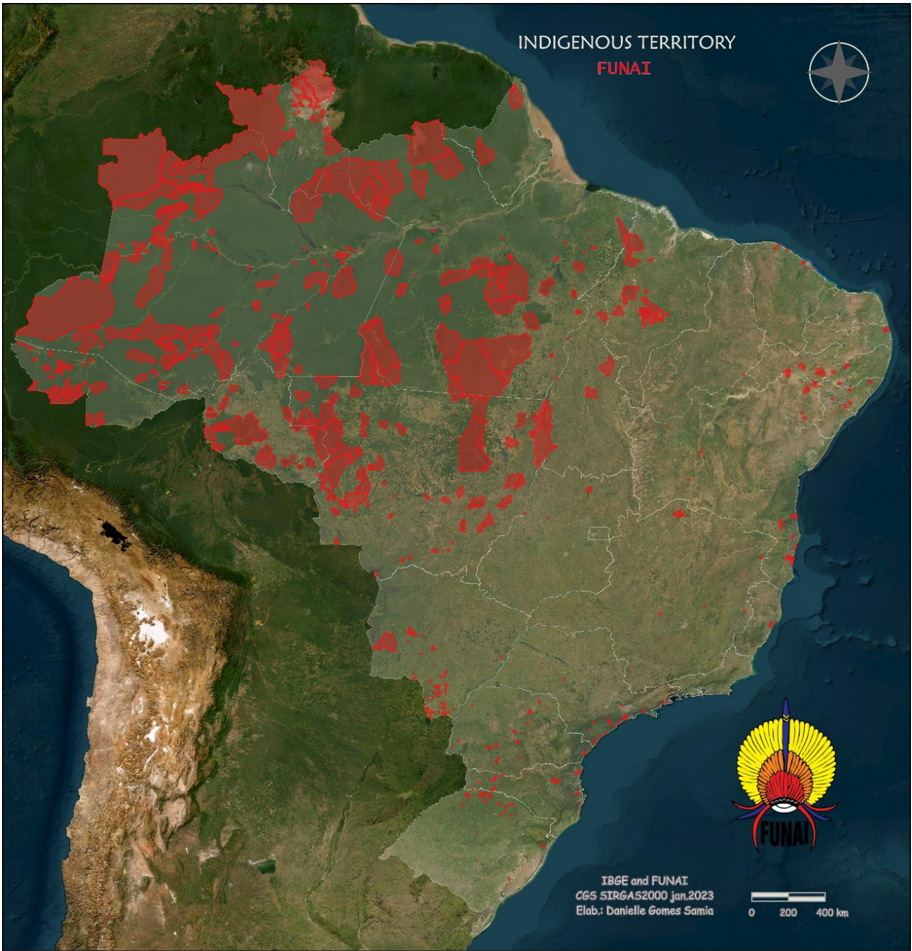
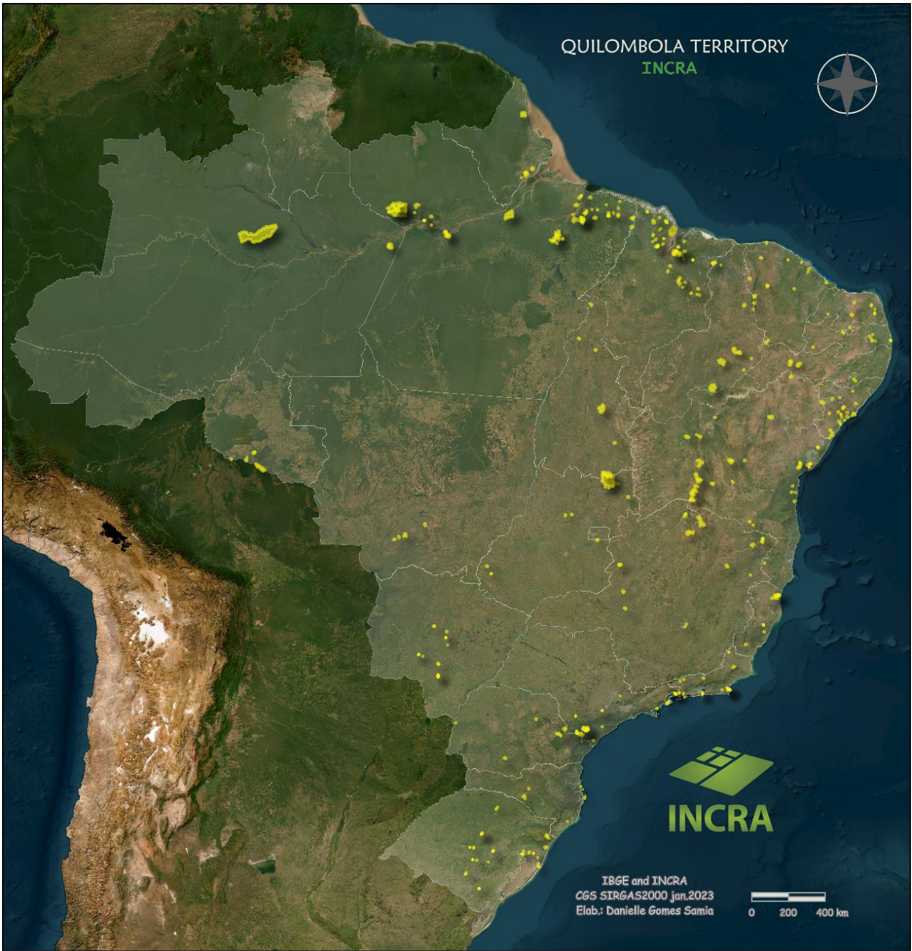
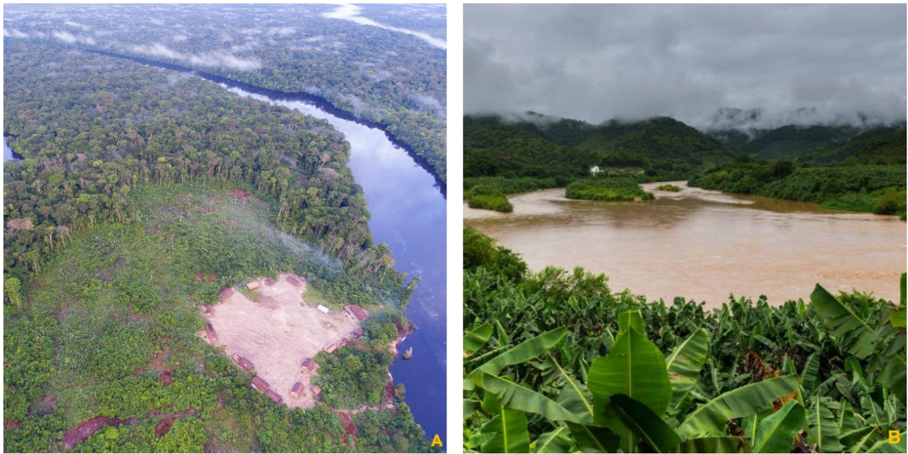
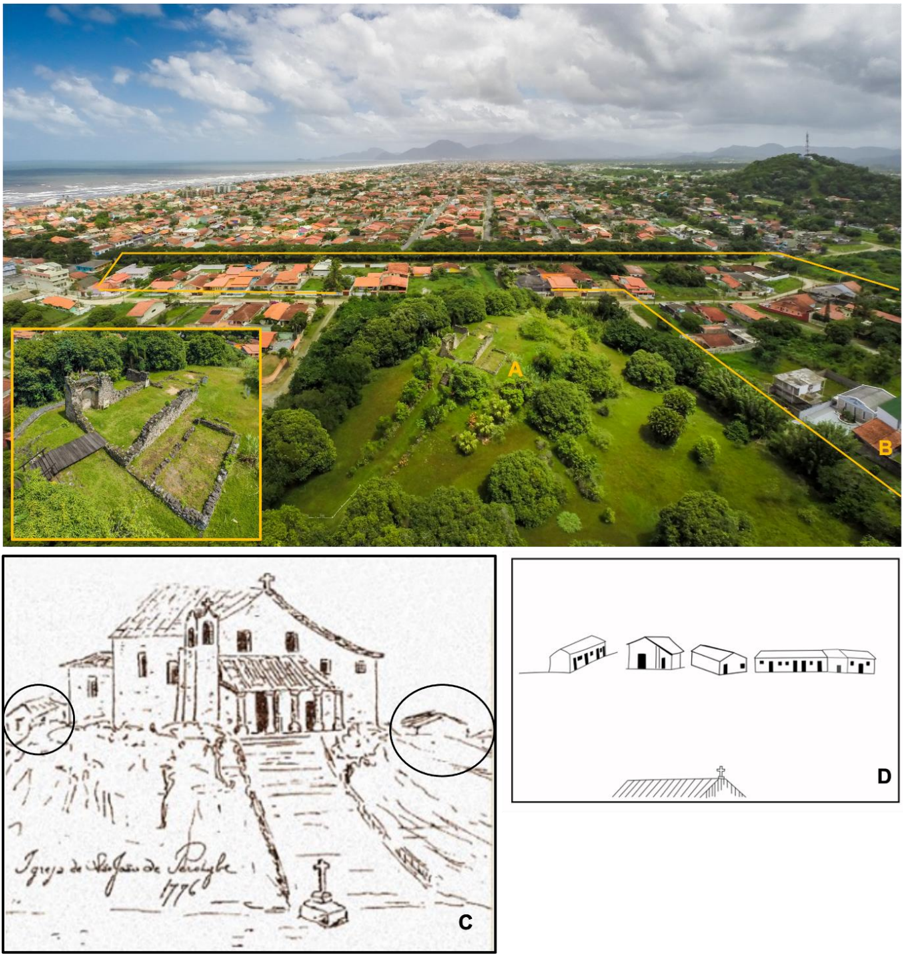
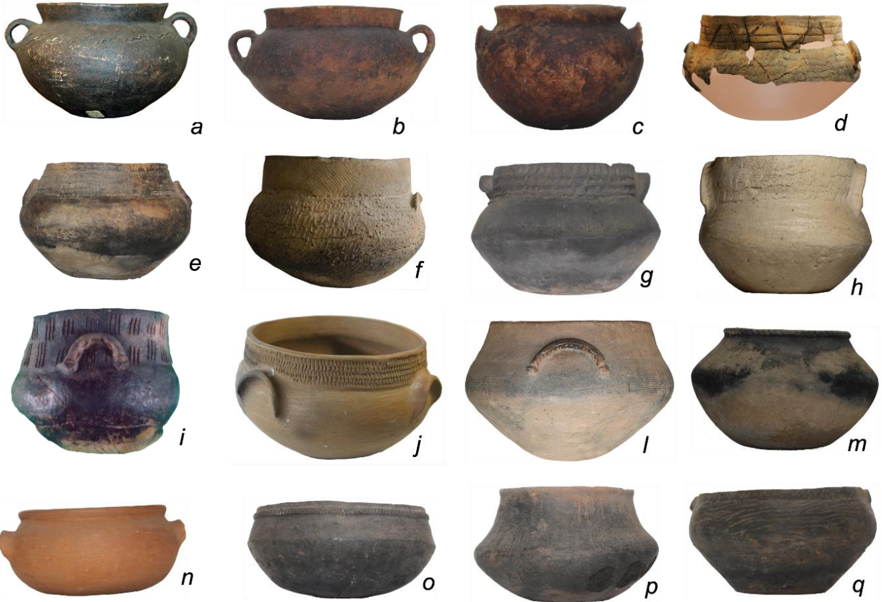
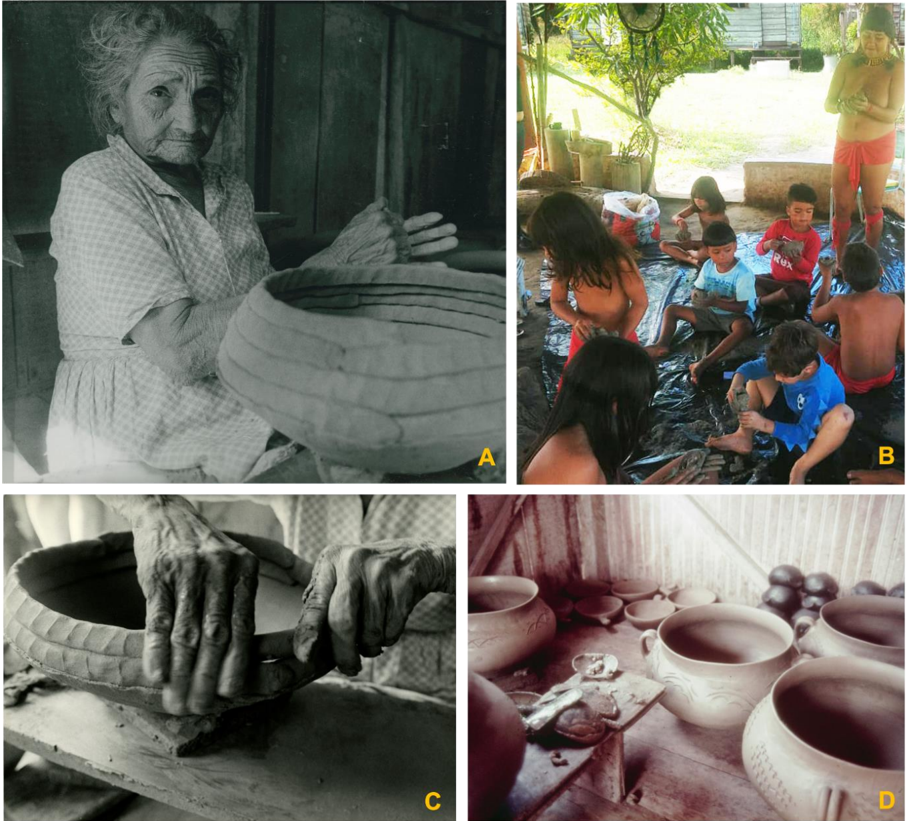
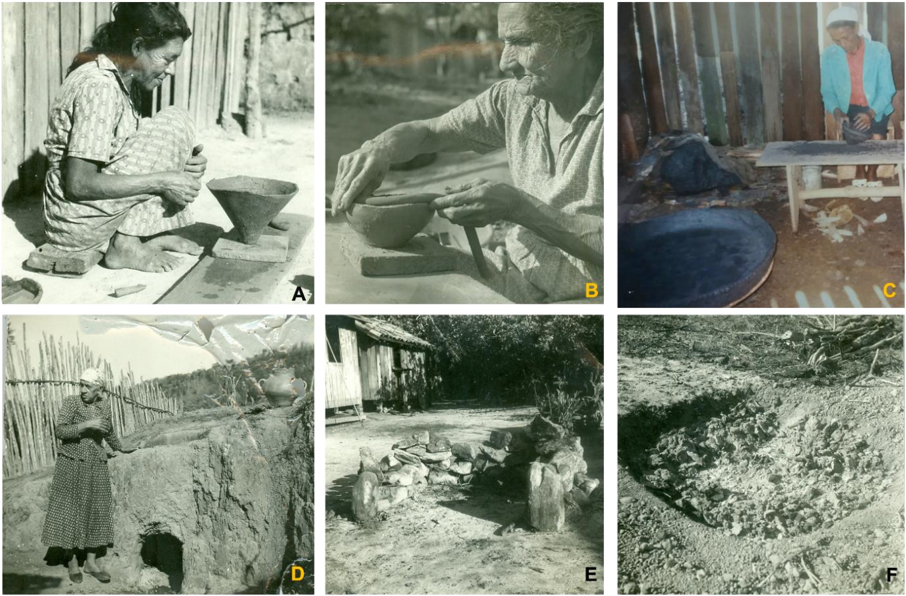
Verification
Claims the paper makes
The claims and statistics of this paper haven’t been checked yet.
Run the check — free, no account needed. It reads the open-access text and checks the sources it cites.
Claims other papers make about this one
Each is checked against this paper’s own text: does it say what the citing paper says it does?
In the citing paper
“With the archaeological records from two Rio de Janeiro sites discussed in this paper, we can conclude that Paulistaware was created before 1550 (Peixoto et al., 2022;Sallum, 2023).”
From Archaeologies of gender, kinship, and mobility in Southeast Brazil: genealogies of Tupiniquim women and the itinerancy of ceramic practices (2023) · cites this paper as Sallum, 2023
Self-check
Percentages, sums and reported differences re-computed from the paper’s own numbers.
The self-check needs the paper’s full text.
Citations
Cites
Introduction: New Directions in African Diaspora Archaeology
Lee, N. K., & Scott, J. N. (2019) · Transforming Anthropology · doi:10.1111/traa.12164 · Cited by 29
(2013) · The Death of Prehistory · doi:10.1093/acprof:osobl/9780199684595.003.0001 · Cited by 6
Research works printed but not linked: 69
- Arnold, B. 2006. 'Arierdämmerung': Race and Archaeology in Nazi Germany. World Archaeology 38 (1): pp.8-31. https://doi.org/10.1080/00438240500509744 · DOI
- Atalay, S. 2006. Indigenous Archaeology as Decolonizing Practice. The American Indian Quarterly 30 (3): pp.280-310.
- Balanzátegui Moreno, D. 2022. Narrativas del paisaje histórico afroecuatoriano en la Concepción (Carchi-Ecuador). Cadernos do Lepaarq 19 (37): pp.250-72. https://doi.org/10.15210/LEPAARQ.V19I37.22606 · DOI
- Battle-Baptiste, W. 2011. Black Feminist Archaeology. Walnut Creek: Left Coast Press.
- Bergquist-Turori, M. 2022. Te `iti nei te marama kīkau: Reconnecting Work Practices to the Land for Our Wellbeing. Seeding Relations: Beyond Settler Colonial and Racialized Ecologies -Virtual Graduate Student Conference. Mahindra Humanities Center at Harvard and Native American and Indigenous Studies at Brown University, 25-26 March.
- Casimiro, T M. 2022. Porque importa saber de cerâmica portuguesa no colonialismo atlântico? Cadernos do Lepaarq 19 (37): pp.230-49. https://doi.org/10.15210/LEPAARQ.V19I37.22651 · DOI
- Casimiro, T M and Sequeira, J. 2020. Introdução. In: Casimiro, T M and Sequeira, J. (Eds). Arqueologia contemporânea em Portugal: Séculos XIX e XX. Oeiras: Mazu Press: pp.9-16.
- Cipolla, C N, Quinn, J and Levy, J. 2019. Theory in collaborative indigenous archaeology: insights from Mohegan. American Antiquity 84 (1): pp. 127-142. https://doi.org/10.1017/aaq.2018.69 · DOI · Paper page
- Coelho, R G. 2020. Como descolonizar a arqueologia portuguesa? In: Arnaud, J M, Neves, C and Martins A. (Eds.) Arqueologia em Portugal. 2020 -O Estado da Questão. Lisboa: Associação dos Arqueólogos Portugueses/CITCEM: pp.25- 40.
- Cusicanqui, S R. 2020. Ch'ixinakax utxiwa: On Decolonising Practices and Discourses, Cambridge: Polity.
- Cusicanqui, S R and Santos, B S. 2015. Conversa del mundo. In: Santos, B S. (Ed.). Revueltas de indignación y otras conversas. La Paz: Stigma: p.80-123.
- Dring, K S, Silliman, S W, Gambrell, N, Sebastian, S, and Sidberry, R S. 2019. Authoring and Authority in Eastern Pequot Community Heritage and Archaeology. Archaeologies: Journal of the World Archaeological Congress 15 (3): pp.352-70. https://doi.org/10.1007/s11759-019-09377-4 · DOI
- Foucault, M. 1990. Qu'est-Ce Que La Critique? Critique et Aufklärung. Bulletin de la Société Française de Philosophie 84 (2): pp.35-63.
- Foucault, M. 2005 [1970]. Retornar à História. In: Foucault, M. Arqueologia das ciências e história dos sistemas de pensamento. Rio de Janeiro: Forense Universitária: pp.282- 95.
- Funari, P P, Zarankin, A, Salerno, M. (Eds.). 2010. Memories from Darkness: Archaeology of Repression and Resistance in Latin America. New York: Springer. https://doi.org/10.1007/978-1-4419-0679-3 · DOI
- Amoretti, M C and Vassallo, N. (Eds.). Meta-Philosophical Reflection on Feminist Philosophies of Science. New York: Springer: pp.151-170. https://doi.org/10.1007/978-3-319- 26348-9_9 · DOI
- González, L. 1988. Por un feminismo afrolatinoamericano. Isis Internacional -Mujeres por un desarrollo alternativo 9: pp.133-41.
- González, L. 1983. Racismo e sexismo na cultura brasileira. Ciências Sociais Hoje 2: pp.223-44.
- González, L. 2021. Racism and sexism in Brazilian culture. Women's Studies Quarterly, 49 (1): pp.371-94.
- González-Ruibal, A. 2008. Time to Destroy: An Archaeology of Supermodernity. Current Anthropology 49 (2): 247-79. https://doi.org/10.1086/526099 · DOI · Paper page
- Hamilakis, Y. 2013. Archaeology and the Senses: Human Experience, Memory, and Affect. Cambridge: Cambridge University Press. https://doi.org/10.1017/CBO9781139024655 · DOI
- Hartemann, G and Moraes, I. 2017. Contar histórias e caminhar com ancestrais: por perspectivas afrocentradas e decoloniais na arqueologia. Vestígios-Revista Latino- Americana de Arqueologia Histórica 12 (2): pp.9-34. https://doi.org/10.31239/vtg.v12i2.12196 IBGE. 2019. Base Territorial, Censos e Povos e Comunidades Tradicionais. 2019. Rio de Janeiro: IBGE. IBGE. 2019. Censo agropecuário: resultados definitivos 2017. Rio de Janeiro: IBGE. · DOI
- Flores-Muñoz J and Flores, F M. 2022. Tochan, "The House of all of us": Decolonizing Space through Nahua Oral Narratives. Ethnoarchaeology 14 (1): pp.30-50. https://doi.org/10.1080/19442890.2022.2088180 · DOI
- Krahô, C P. 2017. Mulheres-cabaças. PISEAGRAMA 11: pp.110-7.
- Krenak, A. 2015. Encontros: Ailton Krenak. In: Cohn, S. (Ed.). Encontros: Ailton Krenak. Rio de Janeiro: Azougue.
- Krenak, A. 2016. "Alianças vivas" (Interview by Cesarino, P). In: Cohn, S and Kadiwel, I (Eds.). Aílton Krenak: Coleção Tembetá. Rio de Janeiro: Azougue: pp.169-84.
- Krenak, A. 2020. Ideas to Postpone the End of the World. Translated by Anthony Doyle. Toronto: House of Anansi Press.
- Lagrou, E. 2013. No caminho da miçanga: Arte e alteridade entre os ameríndios. Revista Enfoques. Etnografia, Arte e Imagem 12: pp.18-49.
- Lightfoot, K 1995 Culture Contact Studies: Redefining the relationship between prehistoric and historical archaeology. American Antiquity 60 (2): pp.199-217. https://doi.org/10.2307/282137 · DOI · Paper page
- Lima, A, Prado, D M, Castro, R R, Andriolli, C, Carneiro, A A, Carneiro, A, Carneiro, C, Alves, D, Prado, E, Prado, E, Carneiro, H, Prado, I, Otsuka, K, Prado, M V, Sardinha, M, Prado, N, Prado, O, Franco, P, Prado, P, Prado, P S, Prado, V, Honorato, V and Souza, Z. 2022. Comunidade tradicional caiçara da Jureia (Litoral sul do Estado de São Paulo, Brasil). In: da Cunha, M C, Magalhães, S B and Adams, C. (Eds.). Povos tradicionais e biodiversidade no Brasil: contribuições dos povos indígenas, quilombolas e comunidades tradicionais para a biodiversidade, políticas e ameaças. São Paulo: SBPC: pp.16-75.
- Macuxi, J E. 2021. O encontro à beira do abismo -o grito da AIC é por mais vida. In: 34ª Bienal de São Paulo: Faz escuro mas eu canto: catálogo. São Paulo: Bienal de São Paulo: pp.86-91.
- Mathieson, L. 2018. O recenseamento escolar de 1920 na imprensa paulista: uma campanha cívica de combate ao analfabetismo. Educação & Pesquisa 44: pp.1- 20.
- McGuire, R H. 2015. Arqueología crítica y praxis. Cuba Arqueológica: Revista Digital de Arqueología 8 (1): pp.5-11.
- Mello, L C. 2022. Juntando cacos: Persistência e reexistência nas práticas cerâmicas do vale do Guaporé. Cadernos do Lepaarq 19 (37): pp.92-123. https://doi.org/10.15210/lepaarq.v19i37.22646 · DOI
- Mickel, A. 2021. Why Those Who Shovel Are Silent: A History of Local Archaeological Knowledge and Labor. Colorado: University Press of Colorado.
- Monteiro, J M. 1999. Armas e Armadilhas. In Novaes, A. (Ed.). A Outra Margem do Ocidente. São Paulo: Companhia das Letras: pp.237-50.
- Moraes, I P, Costa, L A and de Jesus L L. 2022. Arqueologia, lugar de fala e conexões afrodiaspóricas: experiências no território quilombola dos povos Aproaga - Amazônia paraense. Cadernos do Lepaarq 19 (37): pp.55-74. https://doi.org/10.15210/lepaarq.v19i37.22762 · DOI
- Noelli, F S and Ferreira, L M. 2007. A persistência da teoria da degeneração indígena e do colonialismo nos fundamentos da arqueologia brasileira. História, Ciências, Saúde-Manguinhos 14: pp.1239-64. https://doi.org/10.1590/S0104-59702007000400008 · DOI
- Noelli, F S and Sallum, M. 2019. A cerâmica paulista: cinco séculos de persistência de práticas tupiniquim em São Paulo e Paraná, Brasil. Mana. Revista de Antropologia Social 25 (3): pp.702-42. https://doi.org/10.1590/1678-49442019v25n3p701 · DOI · Paper page
- Noelli, F S and Sallum, M. 2020a. Comunidades de mulheres ceramistas e a longa trajetória de itinerância da cerâmica paulista. Revista do Museu de Arqueologia e Etnologia 34: pp.132-53. https://doi.org/10.11606/issn.2448-1750.revmae.2020.166053 · DOI
- Noelli, F S and Sallum, M. 2020b. "Para cozinhar... as panelas da Cerâmica Paulista". Habitus. Revista do Instituto Goiano de Pré-História e Antropologia 18 (2): pp.501-38. https://doi.org/10.18224/hab.v18i2.8436 · DOI
- Noelli, F S and Sallum, M. 2021. Por uma história da linguagem da Cerâmica Paulista: as práticas compartilhadas pelas mulheres. Revista Brasileira de Linguística Antropológica 13 (1): pp.367-96. https://doi.org/10.26512/rbla.v13i01.40664 · DOI
- Panich, L. 2020. Narratives of Persistence: Indigenous Negotiations of Colonialism in Alta and Baja California. Tucson: The University of Arizona Press.
- Panich, L, Allen, R and Galvan, A. 2018. The Archaeology of Native American Persistence at Mission San José. Journal of California and Great Basin Anthropology 38 (1): pp.11-29.
- Pereira, D. 2019. O "roubo das urnas": a relação do patrimônio arqueológico salvaguardado e os coletivos humanos. Habitus. Revista do Instituto Goiano de Pré- História e Antropologia 17 (1): pp.39-52. https://doi.org/10.18224/hab.v17i1.7112 · DOI
- Rocha, B C, Jácome, C, Stuchi, F F, Mongeló, G Z and Valle, R. 2013. Arqueologia pelas gentes. Revista de Arqueologia 26 (1): pp.130-40. https://doi.org/10.24885/sab.v26i1.373 · DOI
- Rubertone, P E. 2020. Native Providence: Memory, Community, and Survivance in the Northeast. Lincoln: University of Nebraska Press.
- Runia, E. 2006. Presence. History and Theory 45 (1): pp.1-29. https://doi.org/10.1111/j.1468-2303.2006.00346.x · DOI
- Sallum, M. 2015. Estudos Coloniais e Globalização: fluxos, fricções e confluências. Habitus. Revistado Instituto Goiano de Pré-História e Antropologia 13: pp.51-62. https://doi.org/10.18224/hab.v13.1.2015.51-62 · DOI
- Sallum, M. 2018. Colonialismo e ocupação tupiniquim no litoral sul de São Paulo: uma história de persistência e prática cerâmica. Unpublished PhD thesis, Universidade de São Paulo.
- Sallum, M and Noelli, F S. 2020. An Archaeology of Colonialism and the Persistence of Women Potters' Practices in Brazil: From Tupiniquim to Paulistaware. International Journal of Historical Archaeology 24 (3): pp.546-70. https://doi.org/10.1007/s10761-019-00517-8 · DOI
- Sallum, M and Noelli, F S. 2021a. "A pleasurable job"… Communities of women ceramicists and the long path of Paulistaware in Sao Paulo. Journal of Anthropological Archaeology 61 (1): pp.101-245. https://doi.org/10.1016/j.jaa.2020.101245 · DOI
- Sallum, M and Noelli, F S. 2021b. "Politics of Regard" and the Meaning of Things: The persistence of ceramic and agroforestry practices by women in São Paulo. In: Panich, L M and Gonzalez, S L. (Eds.). The Routledge Handbook of the Archaeology of Indigenous-Colonial Interaction in the Americas, London: Routledge. pp.338-56.
- Sallum, M and Noelli, F S. 2022. "Política da consideração" e o significado das coisas: A persistência de comunidades de práticas agroflorestais em São Paulo. Cadernos do Lepaarq 19 (37): pp.356-89. https://doi.org/10.15210/LEPAARQ.V19I37.22874 · DOI
- Samia, D. 2021. Arqueologia pedagógica: reflexões teóricas e conceituais. Revista de Arqueologia Pública: Revista Eletrônica do Laboratório de Arqueologia Pública da UNICAMP 17 (2): pp.179-95. https://doi.org/10.20396/rap.v16i2.8666241 · DOI
- Santos, A B. 2020. We belong to the land. Translated by C. Zigoni. AGITATE! Journal. 7 August 2020. https://agitatejournal.org/we-belong-to-the-land/
- Schmidt, P R and Kehoe, A B. 2019. Archaeologies of Listening: Beginning Thoughts. In: Schmidt, P R and Kehoe, A B. (Eds.). Archaeologies of Listening. Gainesville: University Press of Florida: pp.1-22.
- Segato, R L. 2010. Género y colonialidad: en busca de claves de lectura y de un vocabulario estratégico decolonial. In: Quijano, A and Navarrete, J M. (Eds.). La Cuestión Descolonial. Lima: Universidad Ricardo Palma/Cátedra América Latina y la Colonialidad del Poder.
- Senatore, M X and Funari, P P. 2022. Narrativas insulares en la arqueología del colonialismo moderno español y portugués. problemas y perspectivas. Cadernos do Lepaarq 19 (37): pp.75-91. https://doi.org/10.15210/lepaarq.v19i37.22717 · DOI
- Sheptak, R N and Joyce, R A. 2019. Hybrid Cultures: the visibility of the European invasion of Caribbean Honduras in the sixteenth Century. In: Hofman, C and Keehmen, K. (Eds.). Material Encounters and Indigenous Transformations in the Early Colonial Americas. Leiden: Bill. pp.221-37. https://doi.org/10.1163/9789004273689_011 · DOI
- Silliman, S W. 2009. Change and Continuity, Practice and Memory: Native American Persistence in Colonial New England. American Antiquity 74 (2): pp.211-30. https://doi.org/10.1017/S0002731600048575 · DOI
- Silliman, S W. 2012. Between the longue durée and the short purée. In: Oland, M Hart, S M and Frink, L. (Eds). Decolonizing Indigenous Histories: Exploring Prehistoric/Colonial Transitions in Archaeology. Tucson: The University of Arizona Press. pp.113-32.
- Souza, M A T. 2017. A Arqueologia dos grupos indígenas em contextos históricos. Revista de Arqueologia 30 (1): pp.144-67. https://doi.org/10.24885/sab.v30i1.505 · DOI
- Souza, R A. 2020. Deixa meu cabelo em paz e outros contos sobre Arqueologia do Racismo à Brasileira. Revista de Arqueologia 33 (2): pp.43-65. https://doi.org/10.24885/sab.v33i2.743 · DOI
- Stottman, J M. 2010. Introduction: Archaeologists as Activists. In: Stottman, J M. (Ed.). Archaeologists as Activists: Can Archaeologists Change the World? Tuscaloosa: The University of Alabama. pp.1-17.
- Todd, Z. 2016. An Indigenous Feminist's Take on the Ontological Turn: 'Ontology' is just another word for colonialism. Journal of Historical Sociology 29 (1): pp.4-22. https://doi.org/10.1111/johs.12124 · DOI · Paper page
- Wendrich, W. 2012. Archaeology and Apprenticeship: Body Knowledge, Identity, and Communities of Practice. In: Wendrich, W. (Ed.). Archaeology and Apprenticeship. Body Knowledge, Identity, and Communities of Practice. Tucson: The University of Arizona Press: pp.1-19.
- Willey, G and Phillips, P. 1958. Method and Theory in American Archaeology. Chicago: The University of Chicago Press.
- Xakriabá, C. 2020. Amansar o giz. PISEAGRAMA 14: pp.110-117.
Cited by
Sorted by citations
Noelli, F. S., Sallum, M., & Peixoto, S. A. (2023) · Journal of Social Archaeology · doi:10.1177/14696053231180273 · Cited by 7
Self-citation
Metadata
- Authors
- Sallum, M.
- Affiliations
- Museum of Archaeology and Ethnology, University of São Paulo
- Venue
- Papers from the Institute of Archaeology
- Publisher
- UCL Press
- Published
- 2023-05-09
- Volume
- 34
- Issue
- 1
- ISSN
- 2041-9015
- Cited by
- 2
- References
- 2
About these checks
Registry, retraction, Cites and statistics results are computed, not judged, with one exception: a printed reference that no index lists is read once by a model before it counts as a citation error. Claims are extracted by a model and kept only when their quote appears verbatim in the text; each cited source is then checked, with a model’s help, for whether it says what the claim relies on. Those verdicts can be wrong — read the claim’s quote and the cited source before relying on one.
Statistics and arithmetic are recomputed, not judged.
Confidence bands are shown only for fields calibrated on our annotated test set. None is calibrated yet, so no band is shown.
What counts as a claim ›How we measure confidence ›How we check this ›
Are you an author, or do you see a problem with this page? Request a review
