

Screening and optimization of extracellular pectinase produced by Bacillus thuringiensis SH7
Open accessThe DOI matches its Crossref record; 37 of the 37 references it cites were found in a registry or an index; 3 of the 16 sources its claims cite were checked for support.
Abstract
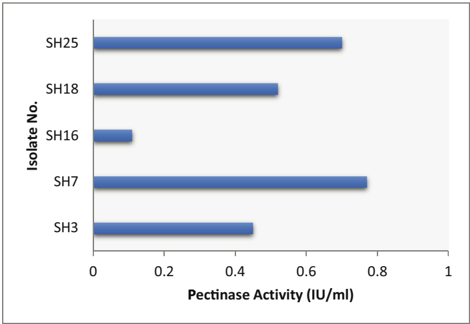
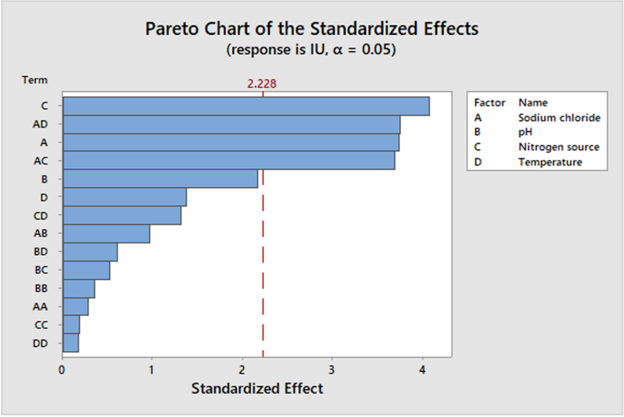
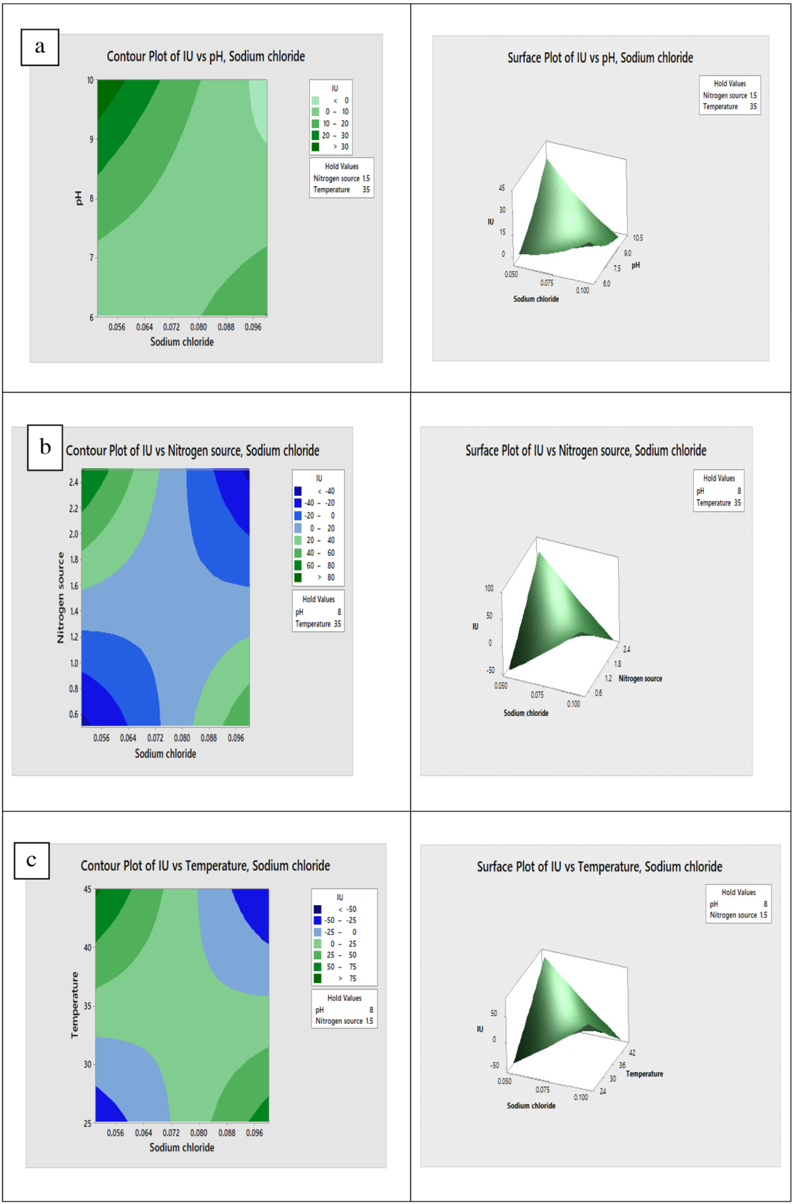
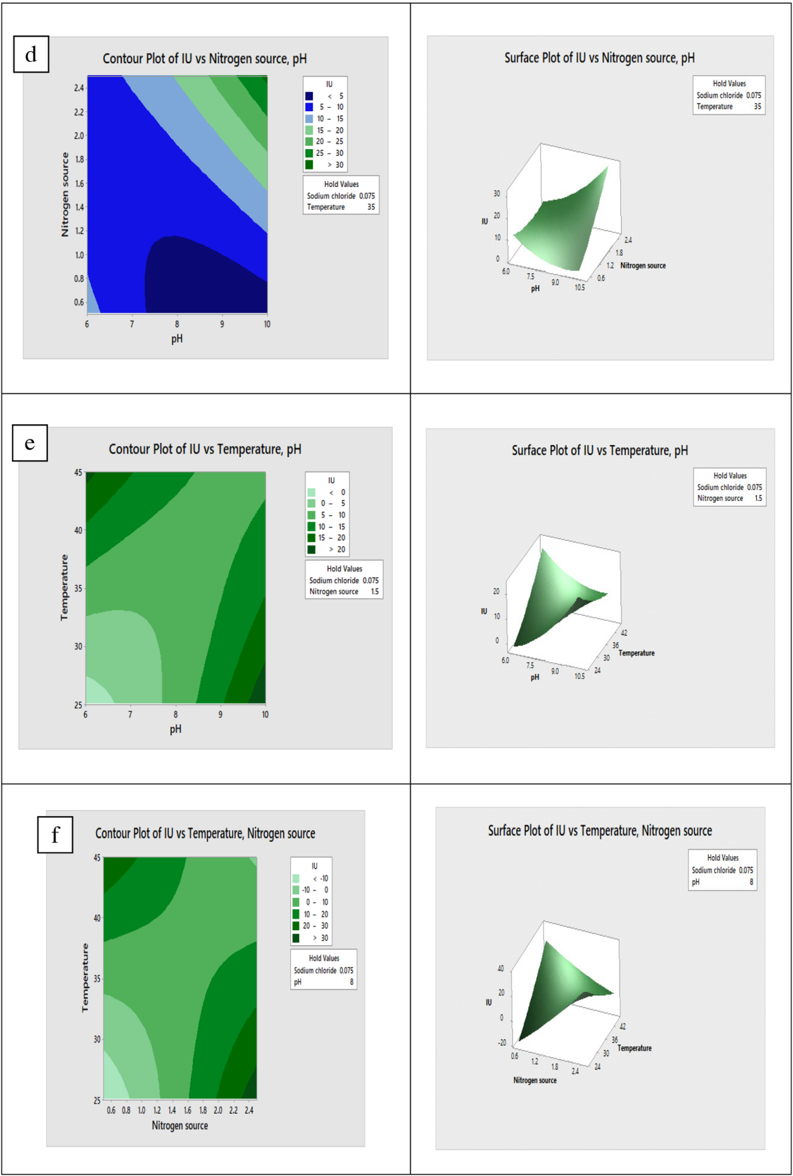
The objective of the current research was to identify and evaluate the possibility of production of pectinase, also known as pectin degrading enzymes, from indigenous bacterial strains. Qualitative screening of isolated bacterial strains showed that among 29 bacterial strains, 5 have maximum enzymatic activity. The highest pectinase producing strains were quantitatively analyzed for enzyme production. SH7 strain was found as highest pectinase producer (0.77 IU/mL) that was further analyzed to molecular level by amplification of 16s rRNA. It was found 100% similar with other reported strains of Bacillus thuringiensis . Medium optimization was performed to optimize fermentation conditions for maximum enzyme yield. An experimental design containing 12 experimental runs was designed by Plackett–Burman design (PBD). Maximum pectinase activity was obtained at 45°C after 24 h when the growth medium was supplemented with 2.5% nitrogen, 5.0% substrate, MgSO 4 as metal ion, 1% inoculum size, and pH was adjusted to 6. Factorial regression analysis of the PBD design was performed and the overall design was also found significant in terms of R square value. In PBD, the most significant factors for production were temperature, pH, metal ion concentration, and nitrogen source. Central composite design (CCD) design consisting of 26 experimental runs was employed to optimize these four significant factors. The overall model summary showed maximum pectinase activity (19.2 IU/mL) at 37°C temperature, 0.08 NaCl, 1.7% nitrogen source, and pH 8.4. In CCD, NaCl, nitrogen source, and pH were also reported as significant factors by the Pareto chart, probability plots, and 3D interactions.
Overview
CoChat Summary
TL;DR
This study isolated a pectinolytic *Bacillus thuringiensis* SH7 from soil and optimized extracellular pectinase production using Plackett–Burman design followed by central composite design. SH7 produced 0.77 IU/mL in initial screening, and CCD optimization raised reported activity to 19.2 IU/mL (or 22.5 IU/mL in the discussion) under optimized conditions.
Key findings
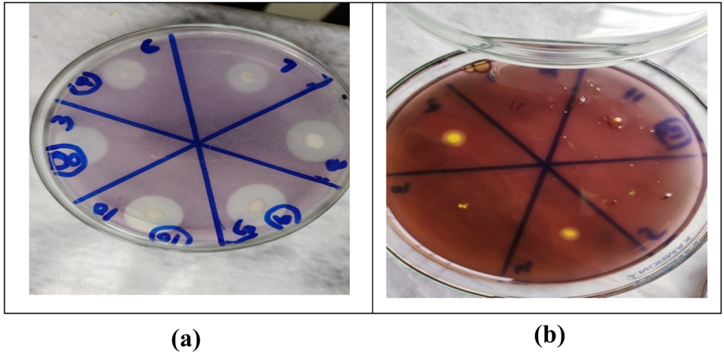
- Eight isolates (SH1, SH3, SH5, SH7, SH16, SH17, SH18, SH25) formed clear pectin-hydrolysis zones; SH7 had the largest zone and highest quantitative activity at 0.77 IU/mL.
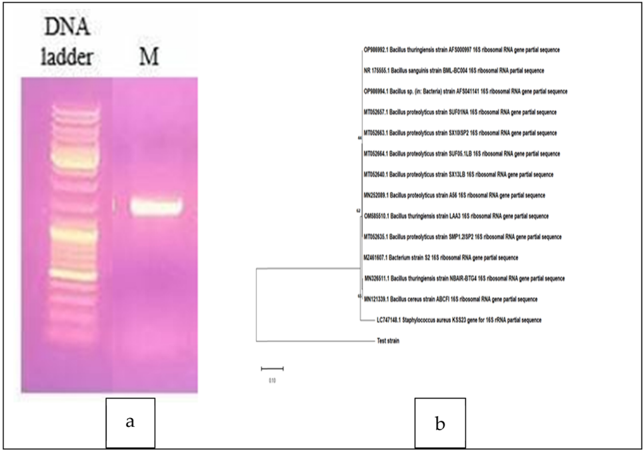
- SH7 was identified as *Bacillus thuringiensis*: 16S rRNA PCR gave a 1.5 kb band, a 1,400-nucleotide sequence was obtained, and it showed 100% similarity with *B. thuringiensis* LAA3.
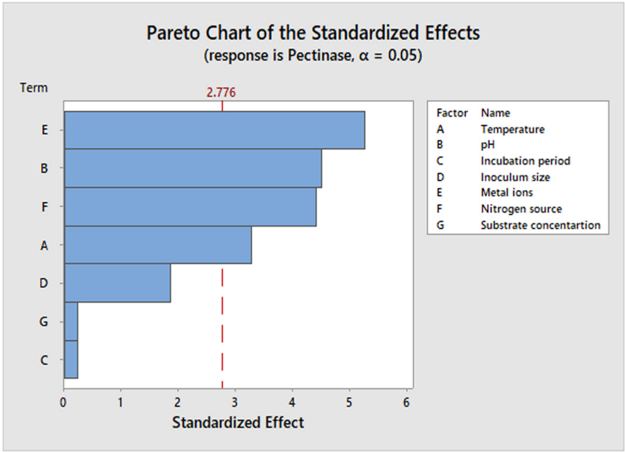
- PBD (12 runs) found temperature (P = 0.031), pH (P = 0.011), nitrogen source (P = 0.012), and metal ions (P = 0.006) significant; highest PBD activity was reported as 0.8 IU/mL in results (0.83 IU/mL in discussion).
- CCD (26 runs) reported maximum pectinase activity of 19.2 IU/mL in run 15 at 37°C, 0.08 NaCl, 1.7% nitrogen source, and pH 8.4; the discussion reports 22.5 IU/mL at 0.657% nitrogen, 0.075% NaCl, and pH 8. Model R² was 87.47% and adjusted R² 68.67%; significant linear terms were NaCl (P = 0.004), nitrogen source (P = 0.002), and pH (P = 0.055), with NaCl–nitrogen and NaCl–temperature interactions at P = 0.004.
Methods
- Soil samples were collected from fruit and vegetable dump areas of Haripur, Abbottabad, and Mansehra; isolates were obtained by tenfold serial dilution on LB media, qualitatively screened by iodine staining and enzyme index, and quantitatively assayed by submerged fermentation at 37°C, 150 rpm for 24 h using DNS at 540 nm; one unit released 1 mg reducing sugar from galacturonic acid.
- Identification used Gram staining, biochemical tests per Bergey’s Manual, 16S rRNA PCR with universal primers, sequencing, BLAST, and phylogenetic analysis in MEGA11/CLUSTAL W2.
- Optimization used PBD with seven factors at low/high levels in 12 runs, then CCD/RSM with four significant factors in 26 runs; ANOVA, R²/adjusted R², F and P values, 3D/2D plots, and model validation by comparing predicted and observed values were applied.
Limitations
- The paper does not state limitations.
- Evident from the text: inconsistent reporting includes PBD maximum 0.8 vs 0.83 IU/mL, CCD maximum 19.2 vs 22.5 IU/mL, PBD conditions pH 6 vs pH 10 and MgSO₄ vs MnSO₄, a “450°C” typo, and abstract “5 of 29” strains vs discussion “5 out of 50.”
- Evident from the text: only screening and optimization are reported; no enzyme purification, characterization, scale-up, or application data are presented.
Model-written summary. Check it against the paper before relying on it.
Integrity signals
Registry
Cites
Statistics
Figures
Verification
Claims the paper makes
2 Valid · 1 Not valid · 13 Not checked · 41 Own results and interpretations
The cited sources that could be checked couldn’t confirm or dispute this claim.
In the paper
“Indeed soil dumped with rotten vegetables and fruits is a well-known productive habitat in order to isolate pectinolytic bacteria because pectin promotes their growth by supplying nutritious requirements [26].”
What the sources say
- Could not verifycites [26] 26. Andrade MVV, Delatorre AB, Ladeira SA, Martins MLL. Production and partial characterization of alkaline polygalacturonase secreted by thermophilic Bacillus sp. SMIA-2 under submerged culture using pectin and corn steep liquor. Food Sci Technol. 2011;31:204-8. sourceExperimental — accuracy not yet measured
Our copy of Andrade et al. (2011) never addresses soil enriched with rotten vegetables and fruits as a habitat for isolating pectinolytic bacteria: the closest statements are Section 2.1 (Microorganism and culture conditions), which only says Bacillus sp. SMIA-2 was 'previously isolated from a soil sample collected in Campos dos Goytacazes, Rio de Janeiro, Brazil (NUNES; MARTINS, 2001)', and Section 3.1, which notes Bacillus spp. can utilize complex organic matter typical of wastes. The nutrient point in Section 2.2 ('both are a good source of nutrients and important metal ions') refers to pectin and corn steep liquor in the submerged-culture medium and is credited to Dias et al. (2008) and Rivas, Moldes and Dominguez (2004), not to a soil habitat; the same section reports that raising pectin concentration 'did not affect the growth of the organism'. Searches on 'soil/rotten vegetables and fruits isolation of pectinolytic bacteria', 'pectin as sole carbon source promoting growth', and 'enrichment from fruit/vegetable waste' returned no passage stating the claim. (LLM, conf=0.68)
boostedstates a cause- Asserted: passes — The authors put it forward as true.
- Checkable: passes — It can be checked against evidence.
- Load-bearing: passes — The paper’s conclusions depend on it.
- Based: passes — The paper gives a reason why it holds.
- Could not verify
A result the paper reports from its own data — it cites no other source for it, so there is none to check. The quote shows it is in the paper.
In the paper
“Temperature, NaCl, and pH were also found as optimum variables after CCD analysis.”
- Asserted: passes — The authors put it forward as true.
- Checkable: passes — It can be checked against evidence.
- Load-bearing: passes — The paper’s conclusions depend on it.
- Based: unclear — It is unclear why the paper says it holds.
A result the paper reports from its own data — it cites no other source for it, so there is none to check. The quote shows it is in the paper.
In the paper
“Qualitative screening of isolated bacterial strains showed that among 29 bacterial strains, 5 have maximum enzymatic activity.”
plain- Asserted: passes — The authors put it forward as true.
- Checkable: passes — It can be checked against evidence.
- Load-bearing: passes — The paper’s conclusions depend on it.
- Based: passes — The paper gives a reason why it holds.
A result the paper reports from its own data — it cites no other source for it, so there is none to check. The quote shows it is in the paper.
In the paper
“As depicted by these graphical representations, nitrogen concentration of 0.657386, sodium chloride of 0.075, and pH 8 resulted in a remarkable increase in the enzyme yield (22.5 IU/mL) as compared to the results of PBD (0.8 IU/mL) (Figure 6).”
plainstates a cause- Asserted: passes — The authors put it forward as true.
- Checkable: passes — It can be checked against evidence.
- Load-bearing: passes — The paper’s conclusions depend on it.
- Based: passes — The paper gives a reason why it holds.
A result the paper reports from its own data — it cites no other source for it, so there is none to check. The quote shows it is in the paper.
In the paper
“The results showed that isolate SH7 belongs to the genus Bacillus, gram (+), citrate (+), catalase (+), oxidase (-), lactose (+), glucose (+), urease (+), pectinase (+), short rod shaped in chains, aerobic, and spore forming organism.”
plainSingle case- Asserted: passes — The authors put it forward as true.
- Checkable: passes — It can be checked against evidence.
- Load-bearing: passes — The paper’s conclusions depend on it.
- Based: passes — The paper gives a reason why it holds.
27 more claims
Create a free account to see all 57 claims and to verify the 4 references still open.
- Probably not a substantial claim. 16
- It may state two separate claims as one. 16
Self-check
Percentages, sums and reported differences re-computed from the paper’s own numbers.
Each contradiction between two passages listed here was confirmed by an independent check.
Rated major: it would touch a result — a value a result rests on, reported and recomputed p-values on opposite sides of the significance level, two passages that conflict with no sign which is right, or a cited work retracted before this paper was published.
In the paper
§ 3.4.1 PBD
“highest pectinase activity (0.8 IU/mL) was obtained in run over 10 having pH 6, sodium chloride as metal ion, incubation period of 24 h, inoculum size of 1%, nitrogen source of 2.5%, substrate concentration of 5%, and temperature of 450°C.”
§ 5 Conclusion
“| 10 | 45 | 6 | 24 | 1 | MgSO 4 | 2.5 | 5 | 0.83 |”
Rated major: it would touch a result — a value a result rests on, reported and recomputed p-values on opposite sides of the significance level, two passages that conflict with no sign which is right, or a cited work retracted before this paper was published.
In the paper
§ 3.4.2 CCD
“Sodium chloride (P = 0.004), pH (0.055), and nitrogen source (0.002) were seen as significant linear term”
§ 4 Discussion
“All factors showing p values less than 0.05 was a significant variable.”
Rated minor: it would not touch a result — a value no result rests on, a p-value that stays on the same side of the significance level, or a conflict that is clerical, resolved elsewhere in the paper, or outside its own findings.
In the paper
§ Abstract
“maximum pectinase activity (19.2 IU/mL) at 37°C temperature, 0.08 NaCl, 1.7% nitrogen source, and pH 8.4.”
§ 5 Conclusion
“| 16 | 0.08 | 8.4 | 1.7 | 37 | 3.3 |”
Rated minor: it would not touch a result — a value no result rests on, a p-value that stays on the same side of the significance level, or a conflict that is clerical, resolved elsewhere in the paper, or outside its own findings.
In the paper
§ 4 Discussion
“Maximum pectinase units 0.83 IU/mL was produced in PBD when fermentation was carried for 24 h at 450°C by maintaining the medium at pH 10, inoculum size of 5%, substrate concentration of 1%, nitrogen source of 0.5%, and MnSO 4 as metal ion.”
§ 5 Conclusion
“| 10 | 45 | 6 | 24 | 1 | MgSO 4 | 2.5 | 5 | 0.83 |”
Rated minor: it would not touch a result — a value no result rests on, a p-value that stays on the same side of the significance level, or a conflict that is clerical, resolved elsewhere in the paper, or outside its own findings.
In the paper
“| B4*B4 | 1 | 0.196 | 0.196 | 0.196 | 0.196 | 0.03 | 0.864 |”
Reported 0.196 · recomputed 0.038446
1 more finding
Create a free account to see every finding of this check.
Citations
Cites
Applications of pectinases in the commercial sector: a review
Kashyap, D. R., Vohra, P. K., Chopra, S., & Tewari, R. (2001) · Bioresource Technology · doi:10.1016/s0960-8524(00)00118-8 · Cited by 1,072 · cited 1×
“Other carbohydrases are added to pectinolytic enzymes to remove the sizing agent from cotton fibers without generating any negative side effects [10].”
BackgroundWitek-Krowiak, A., Chojnacka, K., Podstawczyk, D., Dawiec, A., & Bubała, K. (2014) · Bioresource Technology · doi:10.1016/j.biortech.2014.01.021 · Cited by 667
Pectin extracted from apple pomace and citrus peel by subcritical water
Wang, X., Chen, Q., & Lü, X. (2014) · Food Hydrocolloids · doi:10.1016/j.foodhyd.2013.12.003 · Cited by 497 · cited 1×
“Pectic polymers have been suggested to play a variety of activities, such as cell growth, controlling cell–cell adhesion, wall mechanical characteristics, mediating cell porosity, acting as a source of signaling molecules (oligosaccharides), and taking part in cell organogenesis and differentiation [2].”
BackgroundFerrario, C. M., Trask, A. J., & Jessup, J. A. (2005) · American Journal of Physiology-Heart and Circulatory Physiology · doi:10.1152/ajpheart.00618.2005 · Cited by 385
Microbial pectinases: an ecofriendly tool of nature for industries
Garg, G., Singh, A., Kaur, A., Singh, R., Kaur, J., & Mahajan, R. (2016) · 3 Biotech · doi:10.1007/s13205-016-0371-4 · Cited by 271
Design of Experiments: Concept and Applications of Plackett Burman Design
Vanaja, K., & Shobha Rani, R. H. (2007) · Clinical Research and Regulatory Affairs · doi:10.1080/10601330701220520 · Cited by 254 · cited 1×
“PBD is an effective method for screening the influence of several factors on the response [31].”
MethodLiu, B.-L., & Tzeng, Y.-M. (1998) · Bioprocess Engineering · doi:10.1007/pl00008999 · Cited by 133 · cited 1×
“Liu and coworkers also reported identification of pectinase producing strain as Bacillus thuringiensis [28].”
BackgroundSharma, D. C., & Satyanarayana, T. (2006) · Bioresource Technology · doi:10.1016/j.biortech.2005.04.012 · Cited by 131 · cited 1×
“Pectinase activity was determined and used as a response, while the rest of the optimized factors were kept constant for subsequent designed experimental runs [21].”
MethodArsenic stress in rice: Redox consequences and regulation by iron
Nath, S., Panda, P., Mishra, S., Dey, M., Choudhury, S., Sahoo, L., & Panda, S. K. (2014) · Plant Physiology and Biochemistry · doi:10.1016/j.plaphy.2014.04.013 · Cited by 131 · cited 1×
“However, this technique is found as laborious and does not explain the interactions between variables [30].”
Kaur, A., Mahajan, R., Singh, A. K., Garg, G., & Sharma, J. (2010) · Bioresource Technology · doi:10.1016/j.biortech.2010.07.020 · Cited by 101 · cited 1×
“Microorganisms use this process to break down the pectin in bark, releasing fibers in the process [8].”
BackgroundCharacterization of Capsicum species using anatomical and molecular data
Dias, G. B., Gomes, V. M., Moraes, T. M. S., Zottich, U. P., Rabelo, G. R., Carvalho, A. O., Moulin, M., Gonçalves, L. S. A., Rodrigues, R., & Da Cunha, M. (2013) · Genetics and Molecular Research · doi:10.4238/2013.february.28.29 · Cited by 94 · cited 1×
“The reaction was carried out at the conditions of denaturation at 94°C for 1 min followed by 35 cycles, 55°C annealing for 30 s, 72°C extension for 1 min and final elongation at 72°C for 10 min [18].”
MethodKaur, S., Sarkar, B. C., Sharma, H. K., & Singh, C. (2009) · Food and Bioprocess Technology · doi:10.1007/s11947-008-0119-1 · Cited by 93 · cited 1×
“67%) that also confirms the accuracy of designed experiments [35].”
BackgroundReca, I. B., Lionetti, V., Camardella, L., D’Avino, R., Giardina, T., Cervone, F., & Bellincampi, D. (2012) · Plant Molecular Biology · doi:10.1007/s11103-012-9921-2 · Cited by 76 · cited 1×
“Potassium iodide is useful because when it is oxidized, a color change is produced which shows the presence of pectin polymer that gives color change [27].”
BackgroundReview on bacterial production of alkaline pectinase with special emphasis on Bacillus species
Kavuthodi, B., & Sebastian, D. (2018) · Bioscience Biotechnology Research Communications · doi:10.21786/bbrc/11.1/4 · Cited by 73 · cited 1×
“subtilis BKDS1 was also reported in previous findings [37].”
ResultProduction of Extracellular Pectinase by Bacillus Cereus Isolated From Market Solid Waste
Namasivayam, E., Ravindar. D, J., K, M., jiji, A., & Kumar, M. (2011) · Journal of Bioanalysis & Biomedicine · doi:10.4172/1948-593x.1000046 · Cited by 68 · cited 1×
“Similarly, Namasivayam isolated bacterial strain from soil sample and identified it as Bacillus thuringiensis [29].”
BackgroundSoares, M. M. C. N., Da Silva, R., Carmona, E. C., & Gomes, E. (2001) · World Journal of Microbiology and Biotechnology · doi:10.1023/a:1016667930174 · Cited by 60 · cited 1×
“According to reports, fungi, yeast, and bacteria are responsible for producing 50% of all known enzymes, followed by 35% by bacteria and the remaining 15% by either plants or animals [4].”
BackgroundAhmed, A., & Sohail, M. (2020) · Journal of King Saud University - Science · doi:10.1016/j.jksus.2019.07.002 · Cited by 60
Optimization of microwave-assisted calcium chloride pretreatment of corn stover
Li, H., & Xu, J. H. (2012) · Bioresource Technology · doi:10.1016/j.biortech.2012.09.114 · Cited by 52 · cited 1×
“They also minimize the density of fluid and enhance the recovery process [6].”
BackgroundLi, P.-J., Xia, J.-L., Shan, Y., Nie, Z.-Y., Su, D.-L., Gao, Q.-R., Zhang, C., & Ma, Y.-L. (2015) · Waste and Biomass Valorization · doi:10.1007/s12649-014-9317-4 · Cited by 51 · cited 1×
“All factors that were found statistically significant were chosen for further steps [20].”
BackgroundMICROBIAL PECTINASES: A REVIEW ON MOLECULAR AND BIOTECHNOLOGICAL PERSPECTIVES
Samanta, S. (2019) · Journal of Microbiology Biotechnology and Food Sciences · doi:10.15414/jmbfs.2019.9.2.248-266 · Cited by 49 · cited 1×
“Wine which is processed enzymatically has better stability and less filtration time as compared to other methods [7].”
ResultStatistical optimization of immobilization of yeast cells on corncob for pectinase production
Ejaz, U., Ahmed, A., & Sohail, M. (2018) · Biocatalysis and Agricultural Biotechnology · doi:10.1016/j.bcab.2018.04.011 · Cited by 48 · cited 1×
“According to standard assay, one unit of enzyme is defined as the quantity of enzyme required to release 1 mg of reducing sugar from galacturonic acid [16].”
MethodMerín, M. G., Mendoza, L. M., & Morata de Ambrosini, V. I. (2014) · Journal of Basic Microbiology · doi:10.1002/jobm.201200534 · Cited by 46 · cited 1×
“The 16S rRNA sequence was analyzed by MEGA11 software and compared to the sequences in GenBank nucleotide data library [19].”
MethodA comparative study of pectinolytic enzyme production by Bacillus species
Torimiro, N., & Okonji, E. R. (2013) · African Journal of Biotechnology · doi:10.5897/ajb2013.12421 · Cited by 40 · cited 1×
“In general, filamentous fungi are the basis of acidic pectinases, whereas bacteria are the source of alkaline pectinases [23].”
BackgroundScreening and Molecular Identification of Novel Pectinolytic Bacteria from Forest Soil
Shrestha, S., Khatiwada, J. R., Zhang, X., Chio, C., Kognou, A. L. M., Chen, F., Han, S., Chen, X., & Qin, W. (2021) · Fermentation · doi:10.3390/fermentation7010040 · Cited by 38 · cited 1×
“Gram staining and biochemical assay were performed for initial identification of isolated species [14].”
MethodKaur, A., Mahajan, R., Singh, A., Garg, G., & Sharma, J. (2011) · World Journal of Microbiology and Biotechnology · doi:10.1007/s11274-010-0457-9 · Cited by 34
Endopolygalacturonase genes and enzymes from Saccharomyces cerevisiae and Kluyveromyces marxianus
Jia, J., & Wheals, A. (2000) · Current Genetics · doi:10.1007/s002940000160 · Cited by 33 · cited 1×
“filamentous fungi as they do not experience rheological issues in fermentation broth and do not produce a mixture of pectinases [24].”
BackgroundPectinolytic yeast isolates for cold-active polygalacturonase production
Naga Padma, P., Anuradha, K., & Reddy, G. (2011) · Innovative Food Science & Emerging Technologies · doi:10.1016/j.ifset.2011.02.001 · Cited by 30 · cited 1×
“Locally isolated bacteria are yet to be investigated for biotechnological applications [25].”
BackgroundAndrade, M. V. V. D., Delatorre, A. B., Ladeira, S. A., & Martins, M. L. L. (2011) · Ciência e Tecnologia de Alimentos · doi:10.1590/s0101-20612011000100031 · Cited by 28 · cited 1×
“Indeed soil dumped with rotten vegetables and fruits is a well-known productive habitat in order to isolate pectinolytic bacteria because pectin promotes their growth by supplying nutritious requirements [26].”
BackgroundShet, A. R., Muhsinah, A. B., Alsayari, A., Achappa, S., Desai, S. V., Mahnashi, M. H., Muddapur, U. M., Shaikh, I. A., Mannasaheb, B. A., & Khan, A. A. (2022) · Fermentation · doi:10.3390/fermentation8100485 · Cited by 25
Öztürk, M., Aksoy, H. M., Potrykus, M., et al. (2018) · European Journal of Plant Pathology · doi:10.1007/s10658-018-1459-y · Cited by 24
Palaniyappan, M., Vijayagopal, V., Viswanathan, R., & Viruthagiri, T. (2009) · doi:10.4314/ajb.v8i22.66151 · Cited by 18
M, P., V, V., Renuka, V., & T, V. (2009) · African Journal of Biotechnology · doi:10.5897/ajb09.186 · Cited by 16
Nisha, M. K. (2016) · International Journal of Current Microbiology and Applied Sciences · doi:10.20546/ijcmas.2016.506.033 · Cited by 9 · cited 1×
“The enzymatic approach has replaced the harmful chemicals that were previously used in conventional scouring [9].”
BackgroundViability of Municipal Solid Waste as a source for Bioenergy products production
Abdullah, J. J., Greetham, D., Du, C., & Tucker, G. A. (2020) · International Journal of Environment Agriculture and Biotechnology · doi:10.22161/ijeab.52.7 · Cited by 7 · cited 1×
“Our results are in contrast with earlier findings that showedmaximum pectinase production (10 IU/mL) increase in the pectinase activity at 40°C and 24 h by Aspergillus niger [34].”
ResultÖztürk, M., Aksoy, H. M., Potrykus, M., et al. (2018) · European Journal of Plant Pathology · doi:10.1007/s10658-018-1486-8 · Cited by 4 · cited 1×
“Microscopic characteristics and colonial feature were also studied [17].”
BackgroundRekani, A. M., & Mero, W. M. (2023) · Al-mağallaẗ al-ʻirāqiyyaẗ li-l-ʻulūm al-bayṭariyyaẗ/Iraqi journal of veterinary sciences · doi:10.33899/ijvs.2022.134290.2358 · Cited by 4 · cited 1×
“The sequences were aligned by CLUSTAL W2 and neighborjoining tree was constructed in MEGA11 by Kimura-2-parameter [22].”
Method(2018) · doi:10.30848/pjb2019-2(41
Research works printed but not linked: 2
- 3. Chaplin MF, Bucke C. Enzyme Technology. CUP Archive. USA: Cambridge University Press; 1990.
- 12. Kamaneewan N, Tepwong P, Mookdasanit J, Wilaipun P. Properties of proteinaceous antimicrobial compound produced by bacillus thuringiensis strain SS01 isolated from mangrove forest in Thailand. J Fish Environ. 2022;46(2):15-28.
Cited by
Novel insights into Bacillus thuringiensis: Beyond its role as a bioinsecticide
Jouzani, G. S., Sharafi, R., Argentel‐Martínez, L., et al. (2024) · Research in Microbiology · doi:10.1016/j.resmic.2024.104264 · Cited by 6
Kaissar, F. Z., Bouacem, K., Benine, M. L., Mechri, S., Sharma, S. R., Singh, V. K., Bakli, M., Lebouachera, S. E. I., & Emiliani, G. (2025) · BioTech · doi:10.3390/biotech14030074 · Cited by 14
“In tea processing, Bacillus pectinases facilitate cell-wall loosening, which enhances leaf oxidation, color extraction, and foam control in instant formulations [140].”
Shah, T. A., Li, Z., Zhang, A., et al. (2024) · Research Square · doi:10.21203/rs.3.rs-4296273/v1 · Cited by 4
Self-citationShah, T. A., Li, Z., Li, Z., et al. (2025) · Biocatalysis and Biotransformation · doi:10.1080/10242422.2025.2527615 · Cited by 2
“Proteases are produced by all microorganisms, including many types of bacteria (Umar et al. 2023).”
Self-citationVio, S. A., Gonzalez, K. B. P., Gortari, M. C., Galar, M. L., Pistorio, M., & Luna, M. F. (2026) · Agriculture · doi:10.3390/agriculture16050610 · Cited by 2
Metadata
- Authors
- Umar, M., Rehman, A., Khan, I., Hayat, P., Hayat, A., Rehman, M. U., Shah, T. A., Dawoud, T. M., Hadrach, S., & Bourhia, M.
- Affiliations
- Abbottabad University of Science and Technology (PK)
- Shandong University of Technology (CN)
- King Saud University (SA)
- University of Hassan II Casablanca (MA)
- Université Ibn Zohr (MA)
- Corresponding author
- Rehman, Aneela
- Venue
- Open Chemistry
- Publisher
- Walter de Gruyter GmbH
- Published
- 2023-01-01
- Volume
- 21
- Issue
- 1
- ISSN
- 2391-5420 (ISSN-L)
- OpenAlex
- W4385213327
- Cited by
- 8
- References
- 35
- Citations by year
- 2026: 3 · 2025: 2 · 2024: 3
- FWCI
- 1.04
- Type
- journal article
- Language
- en
- Open access
- gold
- doi.org
- Locations
- Open Chemistry (publishedVersion, cc-by)
- DOAJ (DOAJ: Directory of Open Access Journals) (submittedVersion, cc-by-sa)
- Greater South Information System
- Funders
- King Saud University
- Topics
- Life Sciences › Biochemistry, Genetics and Molecular Biology › Biotechnology › Enzyme Production and Characterization
- Life Sciences › Agricultural and Biological Sciences › Plant Science › Polysaccharides and Plant Cell Walls
- Life Sciences › Agricultural and Biological Sciences › Food Science › Polysaccharides Composition and Applications
- Keywords
- pectinase, Bacillus thuringiensis, extracellular enzyme production, fermentation medium optimization, Plackett-Burman design, central composite design, 16S rRNA identification, indigenous bacteria, pH and temperature effects, nitrogen source, sodium chloride
About these checks
Registry, retraction, Cites and statistics results are computed, not judged, with one exception: a printed reference that no index lists is read once by a model before it counts as a citation error. Claims are extracted by a model and kept only when their quote appears verbatim in the text; each cited source is then checked, with a model’s help, for whether it says what the claim relies on. Those verdicts can be wrong — read the claim’s quote and the cited source before relying on one.
The claim verdicts this report counts are experimental: their accuracy is not yet measured.
A language model drew the claims from the paper on 2026-10-10, under version 3 of the claim definition (model deepseek-v4.1-flash, prompt extract-v3).
A second model labelled each claim on 2026-10-10 (model jev-1.13-20260917, definition revision gold-guideline-v0.2).
Cited sources are checked with a language model’s help (qwen3.8-omni-flash).
Statistics and arithmetic are recomputed, not judged.
Confidence bands are shown only for fields calibrated on our annotated test set. None is calibrated yet, so no band is shown.
What counts as a claim ›How we measure confidence ›How we check this ›
Are you an author, or do you see a problem with this page? Request a review
Data sources
Bibliographic data: Semantic Scholar, OpenAlex, Crossref.
Contains information from the Semantic Scholar Academic Graph Datasets, made available under the ODC Attribution License (ODC-BY 1.0).
Semantic Scholar’s data is described in: Kinney, R., et al. (2023). The Semantic Scholar Open Data Platform. arXiv:2301.10140.
