

Riffle: An Efficient Communication System With Strong Anonymity
Open accessThe DOI matches its Crossref record; 53 of the 56 references it cites were found in a registry or an index.
Abstract
Existing anonymity systems sacrifice anonymity for efficient communication or vice-versa. Onion-routing achieves low latency, high bandwidth, and scalable anonymous communication, but is susceptible to traffic analysis attacks. Designs based on DC-Nets, on the other hand, protect the users against traffic analysis attacks, but sacrifice bandwidth. Verifiable mixnets maintain strong anonymity with low bandwidth overhead, but suffer from high computation overhead instead. In this paper, we present Riffle, a bandwidth and computation efficient communication system with strong anonymity. Riffle consists of a small set of anonymity servers and a large number of users, and guarantees anonymity among all honest clients as long as there exists at least one honest server. Riffle uses a new hybrid verifiable shuffle technique and private information retrieval for bandwidth- and computation-efficient anonymous communication. Our evaluation of Riffle in file sharing and microblogging applications shows that Riffle can achieve a bandwidth of over 100KB/s per user in an anonymity set of 200 users in the case of file sharing, and handle over 100,000 users with less than 10 second latency in the case of microblogging.
Overview
The claims and statistics of this paper haven’t been checked yet.
Free: it reads the open-access text and checks the first 5 claims that cite a source we can check. Create a free account to check every claim.
Integrity signals
Registry
Cites
Statistics
Figures
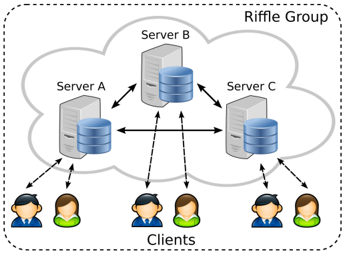
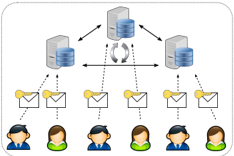
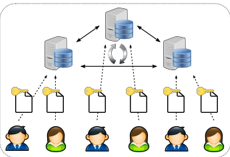
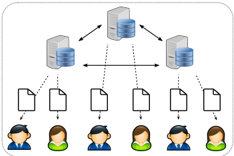
Verification
Claims the paper makes
The claims and statistics of this paper haven’t been checked yet.
Free: it reads the open-access text and checks the first 5 claims that cite a source we can check. Create a free account to check every claim.
Claims other papers make about this one
Each is checked against this paper’s own text: does it say what the citing paper says it does?
The check wasn’t confident either way, so it gives no verdict — never disputed.
In the citing paper
“Khodak et al. [270] and Jiang et al. [250] explore the connection between FL and MAML, and show how the MAML setting is a relevant framework to model the personalization objectives for FL.”
From Advances and Open Problems in Federated Learning (2021) · cites this paper as [270]
Experimental — accuracy not yet measuredThe check wasn’t confident either way, so it gives no verdict — never disputed.
In the citing paper
“Several challenging FL topics including personalization and privacy have begun to be studied in this multi-task/LTL framework [270, 250, 299].”
From Advances and Open Problems in Federated Learning (2021) · cites this paper as [270]
Experimental — accuracy not yet measured
Self-check
Percentages, sums and reported differences re-computed from the paper’s own numbers.
The self-check needs the paper’s full text.
Citations
Cites
New directions in cryptography
Diffie, W., & Hellman, M. (1976) · IEEE Transactions on Information Theory · doi:10.1109/tit.1976.1055638 · Cited by 14,713
Untraceable electronic mail, return addresses, and digital pseudonyms
Chaum, D. L. (1981) · Communications of the ACM · doi:10.1145/358549.358563 · Cited by 4,289 · cited 1×
“However, such systems are susceptible to traffic analysis attacks [36, 43] by powerful adversaries such as an authoritarian government or a state controlled ISP, and have recently been attacked by even weaker adversaries monitoring only the users’ traffic [14, 32, 39, 51].”
Tor: The Second-Generation Onion Router
Dingledine, R., Mathewson, N., & Syverson, P. (2004) · doi:10.21236/ada465464 · Cited by 4,104 · cited 1×
“The right to remain anonymous is a fundamental right in a democratic society and is crucial for freedom of speech [49].”
Chor, B., Kushilevitz, E., Goldreich, O., & Sudan, M. (1998) · Journal of the ACM · doi:10.1145/293347.293350 · Cited by 1,612
Keying Hash Functions for Message Authentication
Bellare, M., Canetti, R., & Krawczyk, H. (1996) · Lecture Notes in Computer Science · doi:10.1007/3-540-68697-5_1 · Cited by 1,580 · cited 1×
“A client only uploads a ciphertext of layered authenticated encryption of size b + mλ, where b is the size of the message, m is the number of servers, and λ is the size of the message authentication codes (MACs) [8] used with the authenticated encryption [9].”
MethodThe dining cryptographers problem: Unconditional sender and recipient untraceability
Chaum, D. (1988) · Journal of Cryptology · doi:10.1007/bf00206326 · Cited by 1,408 · cited 1×
“In this section, we describe related work, focusing on the trade-offs made by existing anonymity systems.”
BackgroundWallet Databases with Observers
Chaum, D., & Pedersen, T. P. (2007) · Lecture Notes in Computer Science · doi:10.1007/3-540-48071-4_7 · Cited by 1,292 · cited 2×
“We used ElGamal encryption using Curve25519 [11] and Neff’s shuffle [37] with Chaum-Pederson proofs [17] for the verifiable shuffle and decryption.”
MethodProbabilistic encryption & how to play mental poker keeping secret all partial information
Goldwasser, S., & Micali, S. (1982) · Proceedings of the fourteenth annual ACM symposium on Theory of computing - STOC '82 · doi:10.1145/800070.802212 · Cited by 883 · cited 1×
“To show zero-knowledge, let us assume that the encryption scheme is semantically secure [31], as assumed by [9].”
BackgroundAuthenticated Encryption: Relations among Notions and Analysis of the Generic Composition Paradigm
Bellare, M., & Namprempre, C. (2000) · Lecture Notes in Computer Science · doi:10.1007/3-540-44448-3_41 · Cited by 879
Curve25519: New Diffie-Hellman speed records
Bernstein, D. J. (2006) · Lecture Notes in Computer Science · doi:10.1007/11745853_14 · Cited by 859 · cited 1×
“We used ElGamal encryption using Curve25519 [11] and Neff’s shuffle [37] with Chaum-Pederson proofs [17] for the verifiable shuffle and decryption.”
Research works printed but not linked: 2
- [11]11. D. J. Bernstein. New stream cipher designs. chapter The Salsa20 Family of Stream Ciphers, pages 84-97. Springer- Verlag, Berlin, Heidelberg, 2008.
- [19]19. B. Chor, E. Kushilevitz, O. Goldreich, and M. Sudan. Pri- vate information retrieval. J. ACM, 45(6):965-981, Nov. 1998.
Cited by
Advances and Open Problems in Federated Learning
Kairouz, P., & McMahan, H. B. (2021) · Foundations and Trends in Machine Learning · doi:10.1561/2200000083 · Cited by 7,772
Decentralization in Bitcoin and Ethereum Networks
Gencer, A. E., Basu, S., Eyal, I., van Renesse, R., & Sirer, E. G. (2018) · Lecture Notes in Computer Science · doi:10.1007/978-3-662-58387-6_24 · Cited by 374
Distributed Differential Privacy via Shuffling
Cheu, A., Smith, A., Ullman, J., Zeber, D., & Zhilyaev, M. (2019) · Lecture Notes in Computer Science · doi:10.1007/978-3-030-17653-2_13 · Cited by 268
“, [22, 5] and citations therein).”
PIR with Compressed Queries and Amortized Query Processing
Angel, S., Chen, H., Laine, K., & Setty, S. (2018) · 2018 IEEE Symposium on Security and Privacy (SP) · doi:10.1109/sp.2018.00062 · Cited by 251
SPIRAL: Fast, High-Rate Single-Server PIR via FHE Composition
Menon, S. J., & Wu, D. J. (2022) · IEEE Symposium on Security and Privacy (S&P) · doi:10.1109/sp46214.2022.9833700 · Cited by 175
Stadium: A Distributed Metadata-Private Messaging System
Tyagi, N., Gilad, Y., Leung, D., Zaharia, M., & Zeldovich, N. (2017) · ACM SIGOPS Symposium on Operating Systems Principles (SOSP) · doi:10.1145/3132747.3132783 · Cited by 158
Private Information Retrieval with Sublinear Online Time
Corrigan-Gibbs, H., & Kogan, D. (2020) · Lecture notes in computer science · doi:10.1007/978-3-030-45721-1_3 · Cited by 133
Atom: Horizontally Scaling Strong Anonymity
Kwon, A., Corrigan-Gibbs, H., Devadas, S., & Ford, B. (2017) · ACM SIGOPS Symposium on Operating Systems Principles (SOSP) · doi:10.1145/3132747.3132755 · Cited by 110
Self-citationAnonymity Trilemma: Strong Anonymity, Low Bandwidth Overhead, Low Latency - Choose Two
Das, D., Meiser, S., Mohammadi, E., & Kate, A. (2018) · IEEE Symposium on Security and Privacy (S&P) · doi:10.1109/sp.2018.00011 · Cited by 118
“Riffle [21] uses a verifiable mix-net.”
BackgroundInfluentialThe Loopix Anonymity SystemPreprint
Piotrowska, A. M., Hayes, J., Elahi, T., Meiser, S., & Danezis, G. (2017) · arXiv (Cornell University) · doi:10.48550/arxiv.1703.00536 · Cited by 76
PrivacyAsst: Safeguarding User Privacy in Tool-Using Large Language Model Agents
Zhang, X., Xu, H., Ba, Z., Wang, Z., Hong, Y., Liu, J., Qin, Z., & Ren, K. (2024) · IEEE Transactions on Dependable and Secure Computing · doi:10.1109/tdsc.2024.3372777 · Cited by 117
Scalable and private media consumption with Popcorn.Preprint
Gupta, T., Crooks, N., Setty, S., Alvisi, L., & Walfish, M. (2015) · IACR Cryptology ePrint Archive · Cited by 66
Clarion: Anonymous Communication from Multiparty Shuffling Protocols
Eskandarian, S., & Boneh, D. (2022) · Network and Distributed System Security Symposium · doi:10.14722/ndss.2022.24141 · Cited by 57
cMix: Mixing with Minimal Real-Time Asymmetric Cryptographic Operations
Chaum, D., Das, D., Javani, F., Kate, A., Krasnova, A., de Ruiter, J., & Sherman, A. T. (2017) · Lecture notes in computer science · doi:10.1007/978-3-319-61204-1_28 · Cited by 67
Asymmetric Message Franking: Content Moderation for Metadata-Private End-to-End Encryption
Tyagi, N., Grubbs, P., Len, J., Miers, I., & Ristenpart, T. (2019) · Lecture notes in computer science · doi:10.1007/978-3-030-26954-8_8 · Cited by 59
Blinder -- Scalable, Robust Anonymous Committed Broadcast
Abraham, I., Benny Pinkas, B., & Yanai, A. (2020) · ACM SIGSAC Conference on Computer and Communications Security (CCS) · doi:10.1145/3372297.3417261 · Cited by 43
AnonRep: towards tracking-resistant anonymous reputation
Zhai, E., Wolinsky, D. I., Chen, R., Syta, E., Teng, C., & Ford, B. (2016) · Infoscience (Ecole Polytechnique Fédérale de Lausanne) · Cited by 66
Self-citationA Survey of Key Technologies for Constructing Network Covert Channel
Tian, J., Xiong, G., Li, Z., & Gou, G. (2020) · Security and Communication Networks · doi:10.1155/2020/8892896 · Cited by 54
Alpenhorn: bootstrapping secure communication without leaking metadata
Lazar, D., & Zeldovich, N. (2016) · DSpace@MIT (Massachusetts Institute of Technology) · doi:10.5555/3026877.3026921 · Cited by 83
Self-citationAnonymous Communication via Anonymous Identity‐Based Encryption and Its Application in IoT
Jiang, L., Li, T., Li, X., Atiquzzaman, M., Ahmad, H., & Wang, X. (2018) · Wireless Communications and Mobile Computing · doi:10.1155/2018/6809796 · Cited by 36
Dropping on the Edge: Flexibility and Traffic Confirmation in Onion Routing Protocols
Rochet, F., & Pereira, O. (2018) · Proceedings on Privacy Enhancing Technologies · doi:10.1515/popets-2018-0011 · Cited by 31
“Among other anonymizer proposals [2, 20, 21, 39, 43, 49, 56], Tor got popular mainly due to its ease of deployment, ease of use, high performance, censorship circumvention and active development.”
BackgroundTalek: Private Group Messaging with Hidden Access Patterns
Cheng, R., Scott, W., Masserova, E., Zhang, I., Goyal, V., Anderson, T. E., Krishnamurthy, A., & Parno, B. J. (2020) · Annual Computer Security Applications Conference · doi:10.1145/3427228.3427231 · Cited by 41
A Survey on Cyber Security Evolution and Threats: Biometric Authentication Solutions
Benarous, L., Kadri, B., & Bouridane, A. (2016) · Signal processing for security technologies · doi:10.1007/978-3-319-47301-7_15 · Cited by 30
PIRANA: Faster Multi-query PIR via Constant-weight Codes
Liu, J., Li, J., Wu, D., & Ren, K. (2024) · IEEE Symposium on Security and Privacy (S&P) · doi:10.1109/sp54263.2024.00039 · Cited by 28
Chao, D., Xu, D., Gao, F., Zhang, C., Zhang, W., & Zhu, L. (2024) · IEEE Communications Surveys & Tutorials · doi:10.1109/comst.2024.3350006 · Cited by 44
Lazar, D., Gilad, Y., & Zeldovich, N. (2019) · ACM SIGOPS Symposium on Operating Systems Principles (SOSP) · doi:10.1145/3341301.3359648 · Cited by 25
Self-citationVerifiable single-server private information retrieval from LWE with binary errors
Zhao, L., Wang, X., & Huang, X. (2020) · Information Sciences · doi:10.1016/j.ins.2020.08.071 · Cited by 31
Mycelium: Large-Scale Distributed Graph Queries with Differential Privacy
Roth, E., Newatia, K., Ma, Y., Zhong, K., Angel, S., & Haeberlen, A. (2021) · ACM SIGOPS Symposium on Operating Systems Principles (SOSP) · doi:10.1145/3477132.3483585 · Cited by 38
MixNN: protection of federated learning against inference attacks by mixing neural network layers
Lebrun, T., Boutet, A., Aalmoes, J., & Baud, A. (2022) · International Middleware Conference · doi:10.1145/3528535.3565240 · Cited by 27
“A variety of mixnets have been proposed including Aqua [26], Riffle [25], and Mixminion [17] addressing differently the tradeoff between anonymity, latency and bandwidth.”
BackgroundBarman, L., Dumur, A., Pyrgelis, A., & Hubaux, J. (2021) · Proceedings of the ACM on Interactive Mobile Wearable and Ubiquitous Technologies · doi:10.1145/3463512 · Cited by 24
Deniable Identity-Based Matchmaking Encryption for Anonymous Messaging
Cao, Y., Wei, J., Huang, X., Chen, X., & Xiang, Y. (2024) · IEEE Transactions on Dependable and Secure Computing · doi:10.1109/tdsc.2024.3479236 · Cited by 12
Network Shuffling: Privacy Amplification via Random Walks
Liew, S. P., Takahashi, T., Takagi, S., Kato, F., Cao, Y., & Yoshikawa, M. (2022) · ACM SIGMOD International Conference on Management of Data (SIGMOD) · doi:10.1145/3514221.3526162 · Cited by 23
“Another commonway of achieving anonymity is through the utilization of mix-nets [11, 35].”
BackgroundComprehensive Anonymity Trilemma: User Coordination is not enough
Das, D., Meiser, S., Mohammadi, E., & Kate, A. (2020) · Proceedings on Privacy Enhancing Technologies · doi:10.2478/popets-2020-0056 · Cited by 12
Respire: High-Rate PIR for Databases with Small Records
Burton, A., Menon, S. J., & Wu, D. J. (2024) · ACM SIGSAC Conference on Computer and Communications Security (CCS) · doi:10.1145/3658644.3690328 · Cited by 20
A Survey on Anonymous Communication Systems With a Focus on Dining Cryptographers Networks
Shirali, M., Tefke, T., Staudemeyer, R. C., & Pöhls, H. C. (2023) · IEEE Access · doi:10.1109/access.2023.3242870 · Cited by 14
XSPIR: Efficient Symmetrically Private Information Retrieval from Ring-LWE
Lin, C., Liu, Z., & Malkin, T. (2022) · Lecture notes in computer science · doi:10.1007/978-3-031-17140-6_11 · Cited by 10
Faster FHE-Based Single-Server Private Information Retrieval
Luo, M., Liu, F.-H., & Wang, H. (2024) · ACM SIGSAC Conference on Computer and Communications Security (CCS) · doi:10.1145/3658644.3690233 · Cited by 13
HSDC–Net: Secure Anonymous Messaging in Online Social Networks
Nosouhi, M. R., Yu, S., Sood, K., & Grobler, M. M. (2019) · IEEE International Conference on Trust, Security and Privacy in Computing and Communications (TrustCom) · doi:10.1109/trustcom/bigdatase.2019.00054 · Cited by 8
“Riffle [11] is another server–based protocol proposed in this area of research.”
Background2PPS — Publish/Subscribe with Provable Privacy
Gaballah, S. A., Coijanovic, C., Strufe, T., & Mühlhäuser, M. (2021) · IEEE Symposium on Reliable Distributed Systems (SRDS) · doi:10.1109/srds53918.2021.00028 · Cited by 8
Post-quantum Anonymous One-Sided Authenticated Key Exchange Without Random Oracles
Ishibashi, R., & Yoneyama, K. (2022) · Lecture notes in computer science · doi:10.1007/978-3-030-97131-1_2 · Cited by 8
Personalized Privacy Protection Solutions
Qu, Y., Nosouhi, M. R., Cui, L., & Yu, S. (2021) · Data analytics · doi:10.1007/978-981-16-3750-6_4 · Cited by 6
Achieving Dynamic Communication Path for Anti-Tracking Network
Tian, C., Zhang, Y., Yin, T., Tuo, Y., & Ge, R. (2019) · Globecom · doi:10.1109/globecom38437.2019.9013773 · Cited by 6
“In ordr to achieve that the nodes in one group collaborate to decrypt the message and only one of them can succeed, the sender use asynchronous DC-net to encrypt the message [21]– [24].”
BackgroundApproximate Distance-Comparison-Preserving Symmetric Encryption
Fuchsbauer, G., Ghosal, R., Hauke, N., & O’Neill, A. (2022) · Lecture notes in computer science · doi:10.1007/978-3-031-14791-3_6 · Cited by 8
Post-Quantum Cheating Detectable Private Information Retrieval
Zhu, L., Lin, C., Lin, F., & Zhang, L. F. (2022) · IFIP advances in information and communication technology · doi:10.1007/978-3-031-06975-8_25 · Cited by 9
Mitigating Intersection Attacks in Anonymous Microblogging
Gaballah, S. A., Nguyen, T. H., Abdullah, L., Zimmer, E., & Mühlhäuser, M. (2023) · International Conference on Availability, Reliability and Security (ARES) · doi:10.1145/3600160.3600166 · Cited by 9
Packet Scheduling with Optional Client Privacy
Beams, A., Kannan, S., & Angel, S. (2021) · ACM SIGSAC Conference on Computer and Communications Security (CCS) · doi:10.1145/3460120.3485371 · Cited by 5
On the Effectiveness of Intersection Attacks in Anonymous Microblogging
Gaballah, S. A., Abdullah, L., Tran, M. T., Zimmer, E., & Mühlhäuser, M. (2022) · Lecture notes in computer science · doi:10.1007/978-3-031-22295-5_1 · Cited by 11
OnionPIR: Effective Protection of Sensitive Metadata in Online Communication Networks
Demmler, D., Holz, M., & Schneider, T. H. (2017) · Lecture notes in computer science · doi:10.1007/978-3-319-61204-1_30 · Cited by 5
Myco: Unlocking Polylogarithmic Accesses in Metadata-Private Messaging
Kaviani, D., Rathee, D., Annem, B., & Popa, R. A. (2025) · IEEE Symposium on Security and Privacy (S&P) · doi:10.1109/sp61157.2025.00232 · Cited by 4
On Publicly-Accountable Zero-Knowledge and Small Shuffle Arguments
Fleischhacker, N., & Simkin, M. (2021) · Lecture notes in computer science · doi:10.1007/978-3-030-75248-4_22 · Cited by 3
“Shuffle arguments are used in applications like e-voting protocols [42], anonymous communication systems [18, 38], decentralized online poker [10], cryptocurrencies [20, 22], and others.”
BackgroundLightPIR: Single-Server PIR via FHE without Gaussian Noise
Xia, H., & Wang, M. (2024) · ACM Asia Conference on Computer and Communications Security (ASIA CCS) · doi:10.1145/3634737.3661140 · Cited by 2
Stopping Silent Sneaks: Defending against Malicious Mixes with Topological Engineering
Ma, X., Rochet, F., & Elahi, T. (2022) · Annual Computer Security Applications Conference · doi:10.1145/3564625.3567996 · Cited by 2
“There is a rich history of anonymous networks that claim strong anonymity [4, 6, 8, 11, 14, 18, 27, 36, 37, 39, 40, 51, 61, 68, 70, 71].”
BackgroundACS: An Efficient Messaging System with Strong Tracking-Resistance
Nan, Z., Tian, C., Sang, Y., & Zhao, G. (2022) · Lecture notes of the Institute for Computer Sciences, Social Informatics and Telecommunications Engineering · doi:10.1007/978-3-031-24386-8_4 · Cited by 2
Enhancing the Unlinkability of Circuit-Based Anonymous Communications with k-Funnels
Nunes, V., Brás, J., Carvalho, A., Barradas, D., Gallagher, K., & Santos, N. (2023) · Proceedings of the ACM on Networking · doi:10.1145/3629140 · Cited by 2
A Universally Composable Framework for the Privacy of Email Ecosystems
Chaidos, P., Fourtounelli, O., Kiayias, A., & Zacharias, T. (2018) · Lecture notes in computer science · doi:10.1007/978-3-030-03332-3_8 · Cited by 2
Incremental Offline/Online PIR (extended version).Preprint
Ma, Y., Zhong, K., Rabin, T., & Angel, S. (2021) · IACR Cryptology ePrint Archive · Cited by 2
PriFi: Low-Latency Anonymity for Organizational Networks
Barman, L., Dacosta, I., Zamani, M., Zhai, E., Pyrgelis, A., Ford, B., Feigenbaum, J., & Hubaux, J. (2020) · Proceedings on Privacy Enhancing Technologies · doi:10.2478/popets-2020-0061 · Cited by 22
“A category of ACN rely on PIR [10] and ORAM [4] to implement efficient messaging systems (Riposte [11], Riffle [37]).”
MethodSelf-citationDraughts: A Decentralized Jump-Based System for Interactive Anonymous Communication
Wang, K., You, J., Li, Y., & Chen, J. (2025) · Electronics · doi:10.3390/electronics14224439 · Cited by 1
“Riffle [32] combines a mixnet and PIR.”
MP3: A More Efficient Private Presence Protocol
Parhi, R., Schliep, M., & Hopper, N. (2018) · Lecture notes in computer science · doi:10.1007/978-3-662-58387-6_3 · Cited by 1
Easy-to-Implement Two-Server based Anonymous Communication with Simulation Security
Bowers, A., Du, J., Lin, D., & Jiang, W. (2022) · ACM Asia Conference on Computer and Communications Security (ASIA CCS) · doi:10.1145/3488932.3523264 · Cited by 1
Post-Quantum Anonymous One-Sided Authenticated Key Exchange without Random Oracles
Ishibashi, R., & Yoneyama, K. (2023) · IEICE Transactions on Fundamentals of Electronics Communications and Computer Sciences · doi:10.1587/transfun.2022dmp0001 · Cited by 1
Snatch: Online Streaming Analytics at the Network Edge
Xiao, Y., Zhao, Y., Lin, S., & Kuzmanovic, A. (2024) · European Conference on Computer Systems · doi:10.1145/3627703.3629577 · Cited by 4
“A third approach is to make the users send data through an anonymizing network, e.g., mix-net [37, 71] or Tor [62, 81], where the data and individual identities are de-coupled.”
BackgroundMetadata Privacy Beyond Tunneling for Instant Messaging
Nelson, B., Pagnin, E., & Askarov, A. (2024) · IEEE European Symposium on Security and Privacy · doi:10.1109/eurosp60621.2024.00044 · Cited by 1
Nebula: A Privacy-First Platform for Data Backhaul
Watson, J.-L., Despres, T., Tan, A., Patil, S. G., Dutta, P., & Popa, R. A. (2024) · IEEE Symposium on Security and Privacy (S&P) · doi:10.1109/sp54263.2024.00092 · Cited by 3
Encrypted MultiChannel Communication (EMC 2 ): Johnny Should Use Secret Sharing
Chandran, G. R., Demuth, K., EdalatNejad, K., Linsner, S., Reuter, C., & Schneider, T. H. (2023) · Workshop on Privacy in the Electronic Society · doi:10.1145/3689943.3695051 · Cited by 1
Aitac: an identity-based traceable anonymous communication model
Li, F., Liu, Z., Wang, Y., Wu, N., Yu, J., Gao, C., & Zhou, H. (2020) · Journal of Ambient Intelligence and Humanized Computing · doi:10.1007/s12652-020-02604-9 · Cited by 1
“Therefore, the Riffle and cMIX have good encryption performance when the number of messages is few, but with the increase of the number of members and communication messages, the time cost has increased significantly.”
InfluentialSoK on Performance Bounds in Anonymous Communication
Kuhn, C., Kitzing, F., & Strufe, T. (2020) · Workshop on Privacy in the Electronic Society · doi:10.1145/3411497.3420218 · Cited by 1
“[20], Vuvuzela [29].”
The Cost of Path Information: Routing in Anonymous Communication
Grube, T., Egert, R., Mühlhäuser, M., & Daubert, J. (2021) · IEEE Consumer Communications and Networking Conference · doi:10.1109/ccnc49032.2021.9369639 · Cited by 1
“Anonymous communication systems, for example, [1], [3], [4], [7], can be formally represented by a graph G= (V,E) (called underlay).”
BackgroundCache Enhanced Anonymity Systems Against Probabilistic Attacks
Lu, H., & Bagai, R. (2018) · Communications in computer and information science · doi:10.1007/978-3-319-92459-5_26
Asymmetric DCnets for Effective and Efficient Sender Anonymity
Grube, T., Daubert, J., & Mühlhäuser, M. (2018) · Globecom · doi:10.1109/glocom.2018.8647607 · Cited by 1
“, [4], [6], [18], without the need for extra anonymization services like Tor [1] and Mix-nets [2].”
BackgroundA New Privacy-Enhanced Technology for Fair Matchmaking With Identity Linked Wishes
Horne, D., & Nair, S. (2019) · IEEE Systems Journal · doi:10.1109/jsyst.2019.2900701
Securing Smart Home Edge Devices against Compromised Cloud ServersPreprint
Trimananda, R., Younis, A., Kwa, T., Demsky, B. C., & Xu, H. (2020) · arXiv (Cornell University) · doi:10.48550/arxiv.2006.11657
Oldenburg, L., & Tschorsch, F. (2021) · International Conference on Availability, Reliability and Security (ARES) · doi:10.1145/3465481.3469189
Qin, W., Peng, C., Yin, T., Tian, C., & Zhao, G. (2022) · Lecture notes in computer science · doi:10.1007/978-3-031-17551-0_12
Easy: Encryption-Less Anonymity System
Adoum, Y., Ahmat, D., & Hassan, M. B. (2025) · Communications in computer and information science · doi:10.1007/978-3-031-86637-1_33
Enabling Anonymous Online Streaming Analytics at the Network Edge
Xiao, Y., Gu, Y., Zhao, Y., Lin, S., & Kuzmanovic, A. (2025) · ACM Transactions on Computer Systems · doi:10.1145/3746130 · Cited by 2
“A third approach is to make the users send data through an anonymizing network, e.g., mix-net [46, 84] or Tor [74, 99], where the data and individual identities are decoupled.”
Scaling Metadata-Private Messaging Under Hardware Trust
Jiang, P., Wu, Y., Cheng, J., Xu, L., Yao, S., Wang, Q., Wang, C., & Ren, K. (2025) · IEEE Transactions on Networking · doi:10.1109/ton.2025.3625430
ShiftPIR: An Efficient PIR System with Gravity Shifting from Client to Server
Wang, Z., Zhao, L., Luo, M., Wang, Z., He, H., Lv, W., Ding, X. X., Meng, D., & Hou, R. (2025) · ACM SIGSAC Conference on Computer and Communications Security (CCS) · doi:10.1145/3719027.3765153 · Cited by 2
MsgFilter: Proactive Anti-Harassment Sender-Anonymous Messaging System
LI, S. Z. L., He, K., Shi, M., Huang, Y., Du, R., & Chen, J. (2026) · IEEE Transactions on Information Forensics and Security · doi:10.1109/tifs.2025.3650417
Wang, K., You, J., Li, Y., & Chen, J. (2026) · IEEE Consumer Communications and Networking Conference · doi:10.1109/ccnc65079.2026.11366522
GPU-accelerated Batch Private Information Retrieval with lower communication overheads
Gao, Y.-T., Zheng, B., Wang, Y., & Zhou, B. (2026) · Cybersecurity · doi:10.1186/s42400-025-00418-w
Kim, S., Ji, H., Kim, J., Choi, W., Park, J., & Ahn, J. H. (2026) · IEEE International Symposium on High-Performance Computer Architecture (HPCA) · doi:10.1109/hpca68181.2026.11408461 · Cited by 2
Anonymous Messaging Made More Flexible With PingPong
Jiang, P., Wu, Y., Xu, L., Dong, W., Chen, P., Ming, Y., Wang, C., Jia, X., & Wang, Q. (2026) · IEEE Transactions on Networking · doi:10.1109/ton.2026.3672821
InsPIRe: Communication-Efficient PIR with Server-Side Preprocessing
Mahdavi, R. A., Patel, S., Seo, J. Y., & Yeo, K. (2026) · IEEE Symposium on Security and Privacy (S&P) · doi:10.1109/sp63933.2026.00061
Metadata
- Authors
- Kwon, A., Lazar, D., Devadas, S., & Ford, B.
- Affiliations
- Massachusetts Institute of Technology (US)
- École Polytechnique Fédérale de Lausanne (CH)
- Venue
- Proceedings on Privacy Enhancing Technologies
- Published
- 2015-12-30
- Volume
- 2016
- Issue
- 2
- Pages
- 115-134
- ISSN
- 2299-0984 (ISSN-L)
- OpenAlex
- W2211872228
- Cited by
- 84
- References
- 56
- Citations by year
- 2026: 6 · 2025: 6 · 2024: 10 · 2023: 5 · 2022: 13 · 2021: 9 · 2020: 11 · 2019: 6 · 2018: 9 · 2017: 5 · 2016: 3 · 2015: 1
- FWCI
- 5.89
- Type
- journal article
- Language
- en
- Open access
- hybrid
- doi.org
- Licence
- Locations
- Proceedings on Privacy Enhancing Technologies (publishedVersion, cc-by-nc-nd)
- DOAJ (DOAJ: Directory of Open Access Journals) (submittedVersion)
- DSpace@MIT (Massachusetts Institute of Technology) (submittedVersion, cc-by-nc-nd)
- Infoscience (Ecole Polytechnique Fédérale de Lausanne) (submittedVersion, cc-by-nc-nd)
- Funders
- National Science Foundation (1413920)
- Topics
- Physical Sciences › Computer Science › Artificial Intelligence › Internet Traffic Analysis and Secure E-voting
- Physical Sciences › Computer Science › Computer Networks and Communications › Cryptography and Data Security
- Physical Sciences › Computer Science › Computer Networks and Communications › Advanced Authentication Protocols Security
- Keywords
- anonymous communication, private information retrieval, traffic analysis attacks, onion routing, spectral efficiency, computational efficiency, file sharing, microblogging, riffles
About these checks
Registry, retraction, Cites and statistics results are computed, not judged, with one exception: a printed reference that no index lists is read once by a model before it counts as a citation error. Claims are extracted by a model and kept only when their quote appears verbatim in the text; each cited source is then checked, with a model’s help, for whether it says what the claim relies on. Those verdicts can be wrong — read the claim’s quote and the cited source before relying on one.
Statistics and arithmetic are recomputed, not judged.
Confidence bands are shown only for fields calibrated on our annotated test set. None is calibrated yet, so no band is shown.
What counts as a claim ›How we measure confidence ›How we check this ›
Are you an author, or do you see a problem with this page? Request a review
Data sources
Bibliographic data: Semantic Scholar, OpenAlex, Crossref.
Contains information from the Semantic Scholar Academic Graph Datasets, made available under the ODC Attribution License (ODC-BY 1.0).
Semantic Scholar’s data is described in: Kinney, R., et al. (2023). The Semantic Scholar Open Data Platform. arXiv:2301.10140.
