

Neural mechanisms underlying state mental fatigue: a systematic review and activation likelihood estimation meta-analysis
Open accessThe DOI matches its Crossref record; 132 of the 133 references it cites were found in a registry or an index, and 1 are not checked yet; none of the 150 sources its claims cite is checked for support yet.
Abstract
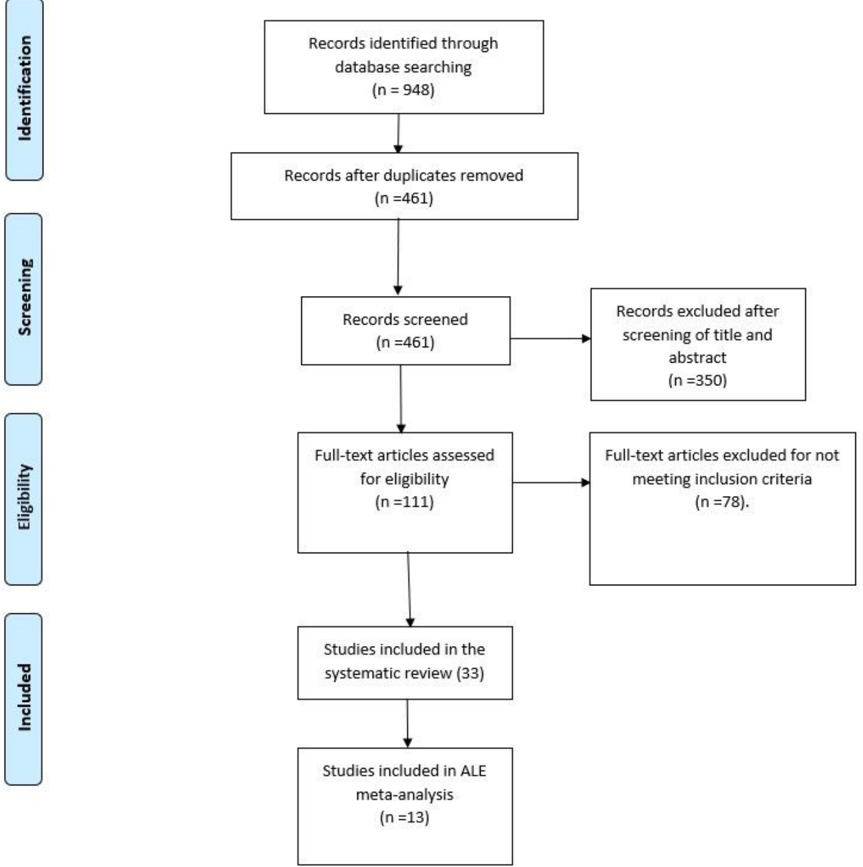
Sustained performance of cognitive tasks could lead to the development of state mental fatigue characterized by subjective sensation of mental weariness and decrease in cognitive performance. In addition to the occupational hazards associated with mental fatigue, it can also affect physical performance reducing endurance, balance, and sport-specific technical skills. Similarly, mental fatigue is a common symptom in certain chronic health conditions such as multiple sclerosis affecting quality of life of the patients. Despite its widely acknowledged negative impact, the neural mechanisms underlining this phenomenon are still not fully understood. We conducted a systematic review and activation likelihood estimation (ALE) meta-analysis of functional neuroimaging studies investigating the effect of mental fatigue due to time-on-task (TOT) on brain activity to elucidate the possible underlying mechanisms. Studies were included if they examined change in brain activity induced by experimental mental fatigue (TOT effect) or investigated the relationship between brain activity and subjective mental fatigue due to TOT. A total of 33 studies met the review’s inclusion criteria, 13 of which were included in meta-analyses. Results of the meta-analyses revealed a decrease in activity with TOT in brain areas that constitute the cognitive control network. Additionally, an increased activity with TOT, as well as negative relationship with subjective mental fatigue was found in parts of the default mode network of the brain. The changes in cognitive control and the default mode networks of the brain due to state mental fatigue observed in this study were discussed in relation to the existing theories of mental fatigue.
Checked 2026-11-24 · 1 reference not checked yet
Overview
CoChat Summary
TL;DR
This systematic review and activation likelihood estimation (ALE) meta-analysis synthesized functional neuroimaging studies of state mental fatigue induced by time-on-task (TOT). It found decreased activity in cognitive control network regions and increased activity in parts of the default mode network, with subjective mental fatigue negatively related to default mode network activity, interpreted through the “neurotoxic waste disposal” theory.
Key findings
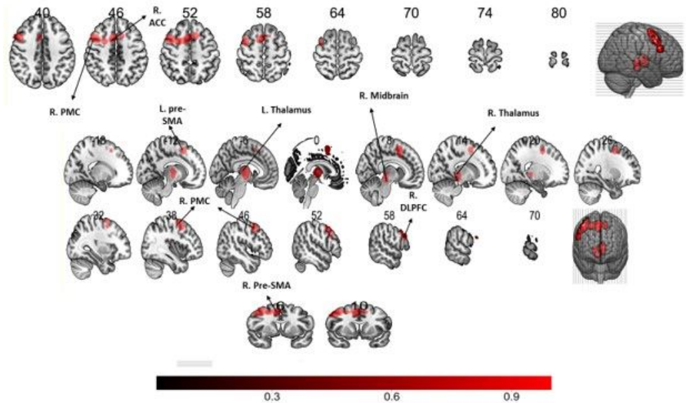
- The review included 33 studies; 13 were included in ALE meta-analyses. The TOT meta-analysis (7 studies; 132 participants) found decreased activity with mental fatigue in cognitive control network areas: right middle/superior frontal gyri (BA6, dorsal/ventral premotor), right middle frontal gyrus (BA9, DLPFC), bilateral medial frontal gyri (BA6, pre-SMA), right medial frontal gyrus (BA32, ACC), and bilateral thalamus/right midbrain red nucleus.
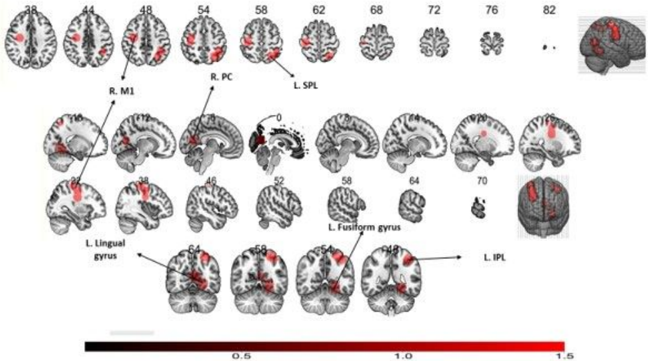
- Increased activity with TOT (3 studies; 34 participants) converged in left lingual gyrus (BA19), left fusiform gyrus (BA37), left posterior cingulate (BA30), left superior parietal lobule (BA7), left inferior parietal lobule (BA40), and right precentral gyrus (BA4, primary motor cortex).
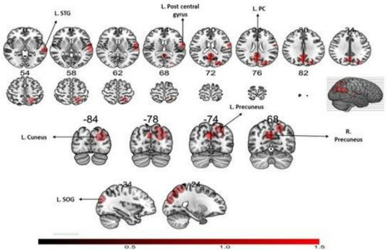
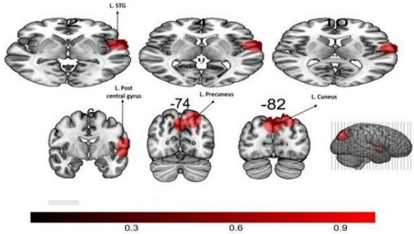
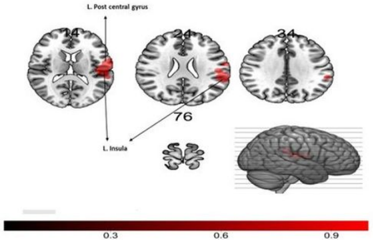
- For subjective mental fatigue, no significant convergence was found for positive relationships with brain activity. Negative relationships in healthy participants (5 studies; 17 foci; 84 participants) converged in left precuneus (BA7/31), left superior occipital gyrus (BA19), left cuneus (BA18), left posterior cingulate (BA30), left postcentral gyrus (BA43), and left superior temporal gyrus (BA22); low-load tasks also showed left postcentral gyrus (BA43) and left insula (BA13/40). Patient-group negative relationships converged in left precuneus (BA7), cuneus (BA19), postcentral gyrus (BA43), and superior temporal gyrus.
- Narrative synthesis of fNIRS and TMS studies showed mixed findings: fNIRS studies reported no significant change, increased, or decreased prefrontal activity with TOT; TMS studies reported increased M1 corticospinal excitability from 15 minutes onward in one study and decreased excitability in the 9th and 10th sets in another.
Methods
- PRISMA systematic review; databases Medline, EMBASE, Cochrane CENTRAL, Scopus, PubMed, CINAHL Plus, and PsycINFO were searched from inception until July 2021. Studies were included if they experimentally induced mental fatigue with a cognitive task and measured brain activity with fMRI, PET, fNIRS, or TMS, or examined relationships between brain activity and subjective mental fatigue. Exclusions included physical fatigue, questionnaire-only trait mental fatigue, pharmacological/sleep-deprivation interventions, and functional connectivity studies.
- ALE meta-analysis used GingerALE 3.0.2 in MNI space, with separate analyses for decreased and increased activation with TOT and for positive and negative correlations with subjective mental fatigue. Cluster-level family-wise error thresholding was set at p<0.05, voxel-level p<0.05, and 1,000 permutations. fMRI/PET studies were included if they reported whole-brain or small-volume-corrected results, standard coordinates, and TOT-related cognitive performance deterioration; studies showing improvement with TOT, ROI-only analyses, or no coordinates were excluded.
- The 33 included studies comprised 23 fMRI/PET studies (21 fMRI, 2 PET), 8 fNIRS studies, and 2 TMS studies. Cognitive task duration ranged from 10–110 minutes (median 26.5 minutes). The TOT ALE included 7 studies (132 participants; 56 decreased-activation foci and 15 increased-activation foci from 3 studies/34 participants); the correlation ALE included 6 studies.
Limitations
- The paper states that the number of included fNIRS and TMS studies was small and meta-analysis was not possible mainly due to lack of descriptive data; the number of studies in the ALE meta-analysis was also small, which may lower power; and different cognitive tasks and task durations may affect individual study effects.
- The paper states that most data leading to the conclusion came from healthy populations, so findings may not be extrapolated to patient groups, and further studies are needed.
- The text makes evident that fNIRS/TMS findings were mixed and that objective mental fatigue could not be ascertained in many of those studies because cognitive performance change was unreported or nonsignificant; the TOT ALE analysis included only healthy participants.
Model-written summary. Check it against the paper before relying on it.
Integrity signals
Registry
Cites
Statistics
Figures
Verification
Claims the paper makes
0 Valid · 0 Not valid · 75 Not checked · 71 Own results and interpretations
A result the paper reports from its own data — it cites no other source for it, so there is none to check. The quote shows it is in the paper.
In the paper
“Results of the meta-analyses revealed a decrease in activity with TOT in brain areas that constitute the cognitive control network.”
§ Neural mechanisms underlying state mental fatigue: a systematic review and activation likelihood estimation meta-analysis > Abstract
plainstates an association- Asserted: passes — The authors put it forward as true.
- Checkable: passes — It can be checked against evidence.
- Load-bearing: passes — The paper’s conclusions depend on it.
- Based: passes — The paper gives a reason why it holds.
- Rests on an assumption not shown here.
A result the paper reports from its own data — it cites no other source for it, so there is none to check. The quote shows it is in the paper.
In the paper
“In contrast, analysis considering the negative relationship between subjective mental fatigue and brain activity revealed signi cant convergence across studies in mainly the left lateralized parieto-occipital areas including precuneus (BA7), Cuneus (BA19), postcentral gyrus (BA43) and superior temporal gyrus (Fig 3c & Table 5c).”
§ Neural mechanisms underlying state mental fatigue: a systematic review and activation likelihood estimation meta-analysis > Effect of mental fatigue on brain activity (time-on-task effect)
plainstates an associationn = 78- Asserted: passes — The authors put it forward as true.
- Checkable: passes — It can be checked against evidence.
- Load-bearing: passes — The paper’s conclusions depend on it.
- Based: passes — The paper gives a reason why it holds.
None of the sources cited for this claim have been checked yet.
In the paper
“Eight studies used fNIRS to investigate the effect of mental fatigue due to TOT on different markers of brain activity (oxygenated haemoglobin concentration, deoxygenated haemoglobin concentration, cerebral oxygen exchange, oxygen saturation and total haemoglobin concentration) in the prefrontal cortex and other parts of the brain [80-87].”
§ Neural mechanisms underlying state mental fatigue: a systematic review and activation likelihood estimation meta-analysis > Functional near-infrared spectroscopy studies
What the sources say
- Not checked yetcites [80] Mantua J et al (2019) Sleep extension reduces fatigue in healthy, normally-sleeping young adults. Sleep Sci 12(1):21 source
- Not checked yetcites [81] Marcora SM, Staiano W, Manning V (2009) Mental fatigue impairs physical performance in humans. J Appl Physiol 106(3):857- 864 source
- Not checked yetcites [82] Matuz, A., van der Linden, D., Kisander, Z., Hernádi, I., Kázmér, K., and Csathó, Á. (2021). Enhanced cardiac vagal tone in mental fatigue: analysis of heart rate variability in time-on-task, recovery, and reactivity. PLoS One 16: 0238670, https://doi.org/10.1371/journal.pone.0238670. source
- Not checked yetcites [83] Meijman TF (1997) Mental fatigue and the e ciency of information processing in relation to work times. Int J Ind Ergon 20(1):31-38 source
- Not checked yetcites [84] Mishkin, M., Ungerleider, L.G., and Macko, K.A. (1983). Object vision and spatial vision: two cortical pathways. Trends Neurosci. 6: 414–417, https://doi.org/10.1016/0166-2236(83)90190-x. source
- Not checked yetcites [85] Moeller S et al (2012) Dopaminergic involvement during mental fatigue in health and cocaine addiction. Translational psychiatry 2(10):e176-e176 source
- Not checked yetcites [86] Moher D et al (2009) Reprint-preferred reporting items for systematic reviews and meta-analyses: the PRISMA statement. Phys Ther 89(9):873-880 source
- Not checked yetcites [87] Molden DC et al (2012) Motivational versus metabolic effects of carbohydrates on self-control. Psychol Sci 23(10):1137-1144 114. source
plain- Asserted: passes — The authors put it forward as true.
- Checkable: passes — It can be checked against evidence.
- Load-bearing: unclear — It is unclear whether the paper’s conclusions depend on it.
- Based: passes — The paper gives a reason why it holds.
None of the sources cited for this claim have been checked yet.
In the paper
“However, while areas of the cognitive control network including the anterior cingulate cortex, dorsolateral prefrontal cortex, dorsal pre-motor cortex and pre-supplementary motor area [89, 97] were found to show decreased activity with TOT in this review”
§ Neural mechanisms underlying state mental fatigue: a systematic review and activation likelihood estimation meta-analysis > Discussion
What the sources say
- Not checked yetcites [89] Nakagawa S et al (2013) Compensatory effort parallels midbrain deactivation during mental fatigue: an fMRI study. PLoS ONE 8(2):e56606 source
- Not checked yetcites [97] Paus T et al (1997) Time-related changes in neural systems underlying attention and arousal during the performance of an auditory vigilance task. J Cogn Neurosci 9(3):392-408 source
plainstates an association- Asserted: passes — The authors put it forward as true.
- Checkable: passes — It can be checked against evidence.
- Load-bearing: passes — The paper’s conclusions depend on it.
- Based: passes — The paper gives a reason why it holds.
None of the sources cited for this claim have been checked yet.
In the paper
“Among the studies that evaluated effect of mental fatigue due to TOT on brain activity, two studies found no signi cant change in prefrontal cortex, inferior parietal cortex and middle temporal gyrus activity [80, 87] (Table 3a).”
§ Neural mechanisms underlying state mental fatigue: a systematic review and activation likelihood estimation meta-analysis > Functional near-infrared spectroscopy studies
What the sources say
- Not checked yetcites [80] Mantua J et al (2019) Sleep extension reduces fatigue in healthy, normally-sleeping young adults. Sleep Sci 12(1):21 source
- Not checked yetcites [87] Molden DC et al (2012) Motivational versus metabolic effects of carbohydrates on self-control. Psychol Sci 23(10):1137-1144 114. source
plain- Asserted: passes — The authors put it forward as true.
- Checkable: passes — It can be checked against evidence.
- Load-bearing: unclear — It is unclear whether the paper’s conclusions depend on it.
- Based: passes — The paper gives a reason why it holds.
71 more claims
Create a free account to see all 146 claims and to verify the 150 references still open.
- Probably not a substantial claim. 36
- It may state two separate claims as one. 40
- The quote only partly states this claim. 6
Self-check
Percentages, sums and reported differences re-computed from the paper’s own numbers.
Each contradiction between two passages listed here was confirmed by an independent check.
Rated minor: it would not touch a result — a value no result rests on, a p-value that stays on the same side of the significance level, or a conflict that is clerical, resolved elsewhere in the paper, or outside its own findings.
In the paper
“Sixteen studies examined change in brain activity due to mental fatigue by comparing the brain activity at the beginning and the end parts of the task or by monitoring the change in brain activity across task duration.Seven of these studies (all involving healthy participants) were included in the ALE meta-analysis [42, 62-65, 70, 71].”
§ Neural mechanisms underlying state mental fatigue: a systematic review and activation likelihood estimation meta-analysis > Effect of mental fatigue on brain activity (time-on-task effect)
Reported 16 · recomputed 15
Rated minor: it would not touch a result — a value no result rests on, a p-value that stays on the same side of the significance level, or a conflict that is clerical, resolved elsewhere in the paper, or outside its own findings.
In the paper
§ Neural mechanisms underlying state mental fatigue: a systematic review and activation likelihood estimation meta-analysis > Effect of mental fatigue on brain activity (time-on-task effect)
“including precuneus (BA7), Cuneus (BA19), postcentral gyrus (BA43) and superior temporal gyrus”
§ Neural mechanisms underlying state mental fatigue: a systematic review and activation likelihood estimation meta-analysis > Conclusion
“1 Occipital lobe (cuneus) L 7 5.187128 1.07E-07 0.013523 -22 -74 48 1 Parietal lobe (Precuneus) L 19 3.326473 4.40E-04 0.006939 0 -82 38”
Citations
Cites
The Brain's Default Network: Anatomy, Function, and Relevance to Disease
Buckner, R. L., Andrews‐Hanna, J. R., & Schacter, D. L. (2008) · Annals of the New York Academy of Sciences · doi:10.1196/annals.1440.011 · Cited by 9,761
Sleep Drives Metabolite Clearance from the Adult Brain
Xie, L., Kang, H., Xu, Q., Chen, M. J., Liao, Y., Thiyagarajan, M., O’Donnell, J., Christensen, D. J., Nicholson, C., Iliff, J. J., et al. (2013) · Science · doi:10.1126/science.1241224 · Cited by 5,411
Object vision and spatial vision: Two cortical pathways
Mishkin, M., Ungerleider, L. G., & Macko, K. A. (1983) · Trends in Neurosciences · doi:10.1016/0166-2236(83)90190-x · Cited by 2,947
Reprint—Preferred Reporting Items for Systematic Reviews and Meta-Analyses: The PRISMA Statement
Moher, D., Liberati, A., Tetzlaff, J., Altman, D. G., & and the PRISMA Group (2009) · Physical Therapy · doi:10.1093/ptj/89.9.873 · Cited by 2,486
The expected value of control: an integrative theory of anterior cingulate cortex function
Shenhav, A., Botvinick, M. M., & Cohen, J. D. (2013) · Neuron · doi:10.1016/j.neuron.2013.07.007 · Cited by 2,321
Eickhoff, S. B., Laird, A. R., Grefkes, C., Wang, L. E., Zilles, K., & Fox, P. T. (2009) · Human Brain Mapping · doi:10.1002/hbm.20718 · Cited by 1,924
Effect of Reducing Interns' Work Hours on Serious Medical Errors in Intensive Care Units
Landrigan, C. P., Rothschild, J. M., Cronin, J. W., Kaushal, R., Burdick, E., Katz, J. T., Lilly, C. M., Stone, P. H., Lockley, S. W., Bates, D. W., et al. (2004) · New England Journal of Medicine · doi:10.1056/nejmoa041406 · Cited by 1,760
Niendam, T. A., Laird, A. R., Ray, K. L., Dean, Y. M., Glahn, D. C., & Carter, C. S. (2012) · Cognitive, Affective, & Behavioral Neuroscience · doi:10.3758/s13415-011-0083-5 · Cited by 1,700
Default-mode brain dysfunction in mental disorders: A systematic review
Broyd, S. J., Demanuele, C., Debener, S., Helps, S. K., James, C. J., & Sonuga-Barke, E. J. S. (2009) · Neuroscience & Biobehavioral Reviews · doi:10.1016/j.neubiorev.2008.09.002 · Cited by 1,675
Activation likelihood estimation meta-analysis revisited
Eickhoff, S. B., Bzdok, D., Laird, A. R., Kurth, F., & Fox, P. T. (2012) · NeuroImage · doi:10.1016/j.neuroimage.2011.09.017 · Cited by 1,443
Cited by
Wang, J., Li, Y., Yang, G.-Y., & Jin, K. (2025) · Aging and disease · doi:10.14336/ad.2024.0124-1 · Cited by 163
Wu, C.-H., Zhao, Y.-D., Yin, F.-Q., Yang, Y., Geng, L., & Xu, X. (2024) · Behavioral Sciences · doi:10.3390/bs14121125 · Cited by 69
Goodman, S. P. J., Collins, B. E. G., Shorter, K. A., Moreland, A. T., Papic, C., Hamlin, A. S., Kassman, B., & Marino, F. E. (2025) · Behavior Research Methods · doi:10.3758/s13428-025-02620-7 · Cited by 61
Assessing the Evidential Value of Mental Fatigue and Exercise Research
Holgado, D., Mesquida, C., & Román-Caballero, R. (2023) · Sports Medicine · doi:10.1007/s40279-023-01926-w · Cited by 31
Brain endurance training as a strategy for reducing mental fatigue
André, N., Audiffren, M. F., & Englert, C. (2025) · Frontiers in Psychology · doi:10.3389/fpsyg.2025.1616171 · Cited by 23
Metadata
- Authors
- Salihu, A. T., Hill, K. D., & Jaberzadeh, S.
- Affiliations
- Monash University (AU)
- Corresponding author
- Salihu, Abubakar Tijjani
- Venue
- Reviews in the Neurosciences
- Publisher
- Walter de Gruyter GmbH
- Published
- 2022-06-14
- Volume
- 33
- Issue
- 8
- Pages
- 889-917
- ISSN
- 0334-1763 (ISSN-L)
- 2191-0200
- OpenAlex
- W4282937189
- Cited by
- 57
- References
- 132
- Citations by year
- 2026: 18 · 2025: 23 · 2024: 10 · 2023: 5 · 2022: 1
- FWCI
- 1.06
- Type
- journal article
- Language
- en
- Open access
- green
- doi.org
- Licence
- cc-by
- Locations
- Reviews in the Neurosciences (publishedVersion)
- Research Square (submittedVersion, cc-by)
- PubMed (publishedVersion)
- Topics
- Social Sciences › Psychology › Experimental and Cognitive Psychology › Sleep and Work-Related Fatigue
- Life Sciences › Neuroscience › Cognitive Neuroscience › Neural and Behavioral Psychology Studies
- Life Sciences › Neuroscience › Cognitive Neuroscience › Mind wandering and attention
- Keywords
- time-on-task effects, cognitive control network, default mode network, brain activity, multiple sclerosis
- MeSH terms
- Brain, Mental Fatigue, Humans, Magnetic Resonance Imaging, Quality of Life, Likelihood Functions
About these checks
Registry, retraction, Cites and statistics results are computed, not judged, with one exception: a printed reference that no index lists is read once by a model before it counts as a citation error. Claims are extracted by a model and kept only when their quote appears verbatim in the text; each cited source is then checked, with a model’s help, for whether it says what the claim relies on. Those verdicts can be wrong — read the claim’s quote and the cited source before relying on one.
A language model drew the claims from the paper on 2026-11-24, under version 3 of the claim definition (model deepseek-v4.1-flash, prompt extract-v3).
A second model labelled each claim on 2026-11-24 (model jev-1.13-20260917, definition revision gold-guideline-v0.2).
Statistics and arithmetic are recomputed, not judged.
Confidence bands are shown only for fields calibrated on our annotated test set. None is calibrated yet, so no band is shown.
What counts as a claim ›How we measure confidence ›How we check this ›
Are you an author, or do you see a problem with this page? Request a review
How to cite
Cite CoChat for the checks on this page, and the paper for its own findings.
- This page
- CoChat. (2026). Citation check: Neural mechanisms underlying state mental fatigue: a systematic review and activation likelihood estimation meta-analysis. https://app.cochat.ai/papers/10.1515/revneuro-2022-0023
- The paper
- Salihu, A. T., Hill, K. D., & Jaberzadeh, S. (2022). Neural mechanisms underlying state mental fatigue: a systematic review and activation likelihood estimation meta-analysis. Reviews in the Neurosciences. https://doi.org/10.1515/revneuro-2022-0023
Data sources
Bibliographic data: Semantic Scholar, OpenAlex, Crossref.
Contains information from the Semantic Scholar Academic Graph Datasets, made available under the ODC Attribution License (ODC-BY 1.0).
Semantic Scholar’s data is described in: Kinney, R., et al. (2023). The Semantic Scholar Open Data Platform. arXiv:2301.10140.
